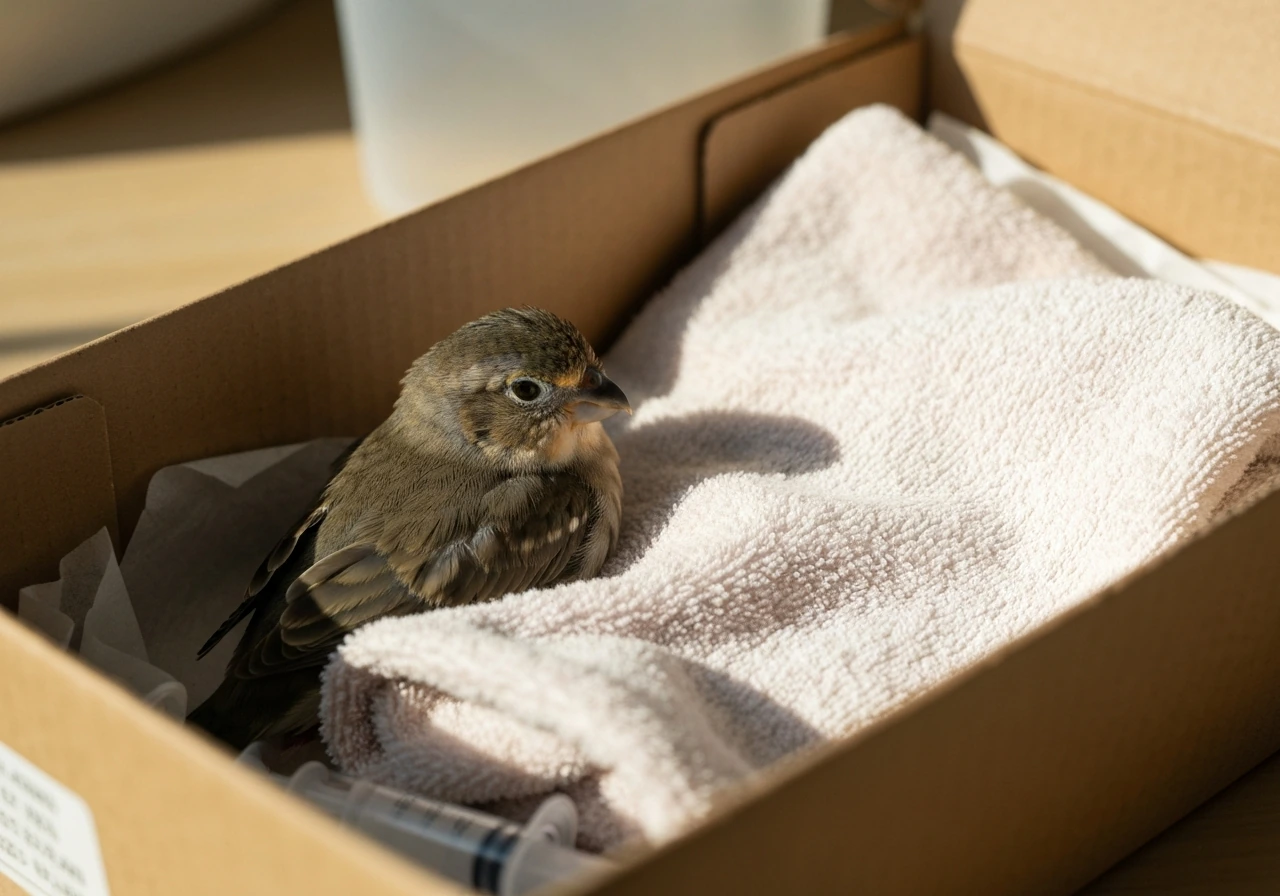
Move the bird to shade and gentle airflow immediately, then mist it lightly with room-temperature water. That's the core of cooling down an overheated bird safely. Focus on fast shade, gentle airflow, and light misting so you know how to keep your bird cool in summer without overcooling it cooling down an overheated bird safely. Everything else, including what order to do things, what to watch for, and when to stop trying to handle it yourself, builds from those two steps.
How to Cool Down a Bird Safely: Step by Step Help
Marcus Holloway
21 May 2026
Quick triage: is this actually heat stress?
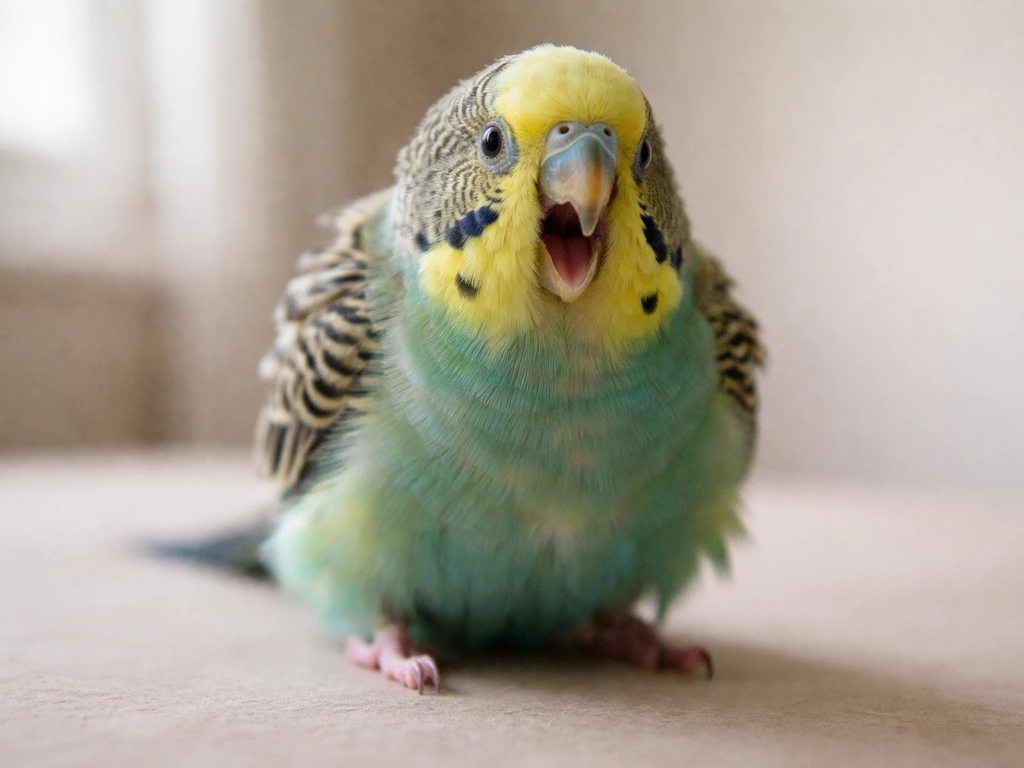
Before you start cooling, spend thirty seconds checking whether heat is really the problem. A bird that's in genuine heat distress will usually show a cluster of signs: open-mouth breathing or panting, wings held out and away from its body (to dump heat), it feels warm or even hot to the touch, and it's lethargic or unresponsive. You might find it on a hot pavement, in direct sun, or in a stuffy car or shed.
The tricky part is that some of those signs, especially open-mouth breathing and lethargy, can also point to injury, respiratory illness, or poisoning. If the bird is bleeding, has an obvious broken limb, or seems completely unresponsive rather than just heat-dazed, it may need more than cooling. In that case, containment and a call to a wildlife rehabilitator or avian vet comes first. Heat stress and serious injury can absolutely happen together, so if you're not sure, treat for both: cool gently and get professional help on the phone.
Signs that point clearly toward heat stress (and not another emergency alone) include the wing-spreading posture, panting that started after sun or heat exposure, and a bird that's still somewhat alert even if wobbly. If the bird is completely limp, not breathing normally, or has mucus visible in or around its mouth, escalate to urgent care immediately while you do basic cooling.
How to cool a bird safely: step by step
Work through these steps in order. Speed matters, but controlled cooling matters more. Cooling too aggressively is one of the most common ways people accidentally make things worse. Cooling instructions focus on immediate stabilization, but the same idea applies to bedtime routines: aim to put your bird to bed at a consistent time each evening.
- Move the bird out of direct sun and heat immediately. A shaded area with natural airflow is ideal. Indoors with a fan set to low, aimed nearby (not directly blasting), also works. Reducing the ambient heat is the single fastest thing you can do.
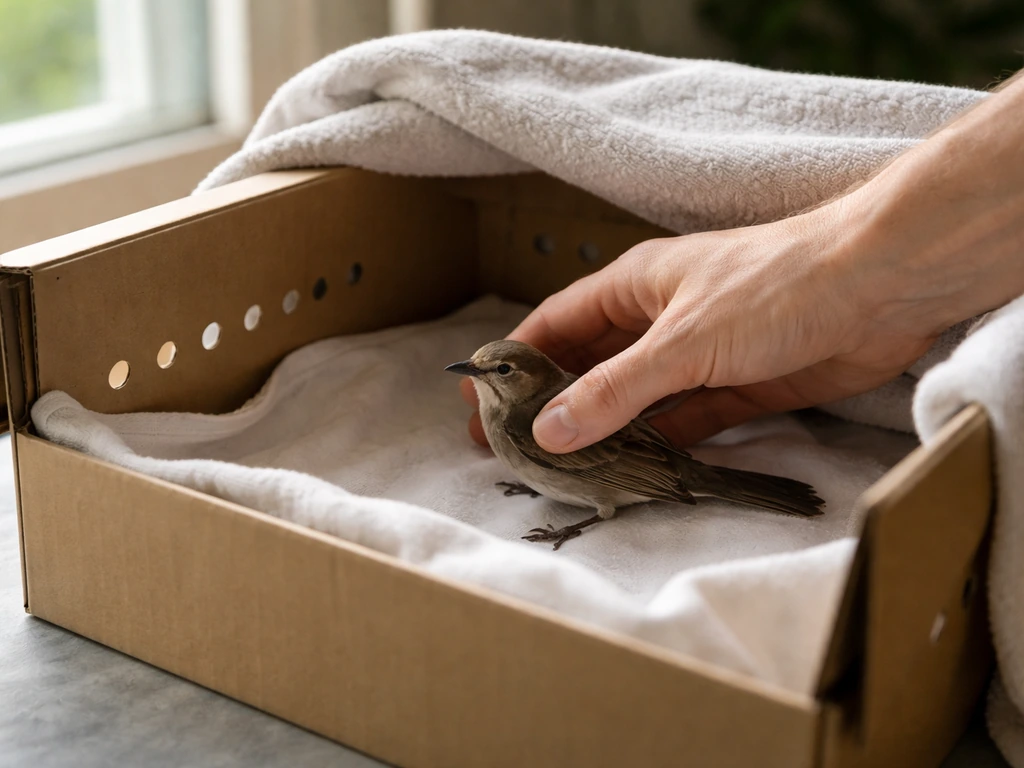
- Contain it gently. Use a cardboard box or small container lined with a light towel. This keeps the bird from injuring itself further and reduces the stress of open handling. Cut a few air holes in the box if it's enclosed.
- Mist the bird lightly with room-temperature water using a spray bottle. Focus on the feathers, feet, and legs. You're not trying to soak it, just help the evaporation process pull heat away from the skin. Room temperature means water straight from the tap, not cold from the fridge.
- If you don't have a spray bottle, dampen a small towel with room-temperature water and place the bird on top of it, or rest it gently in a very shallow dish of tepid water so only its feet are in contact. Lift the wings slightly so the water can reach the skin beneath, but don't force anything.
- Keep a low fan nearby if available. Moving air accelerates evaporative cooling, which is how birds naturally dissipate heat. Don't aim it directly at the bird's face.
- Keep the environment quiet and dark. Stress raises body temperature and makes recovery harder. Minimize handling, keep voices low, and keep other animals and people away.
- Check on the bird every few minutes. Look for the panting to slow, wings to come back to the body, and increased alertness. Most birds showing mild-to-moderate heat stress will begin to stabilize within 10 to 20 minutes of proper cooling.
What NOT to do (these mistakes are common and dangerous)
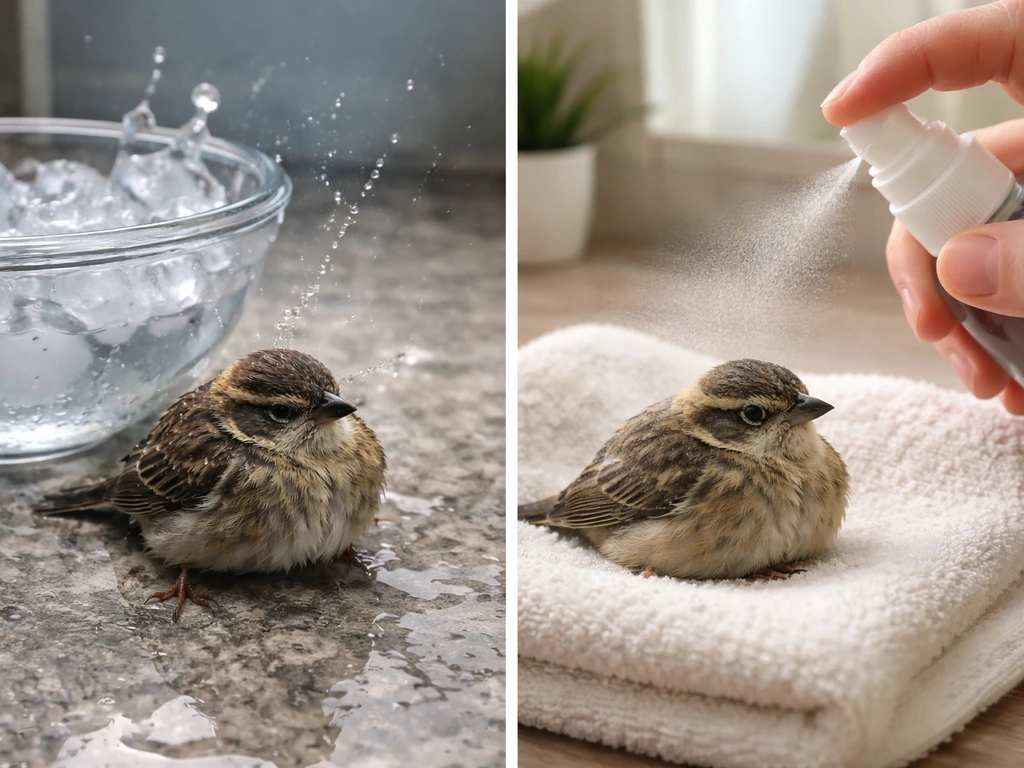
People who want to help often reach for the most dramatic-seeming solutions. In this case, dramatic equals harmful. Here's what to avoid:
- Don't use ice or ice-cold water. Sudden cold shock can cause the bird's blood vessels to constrict, trap heat inside the body, and send the bird into a different kind of crisis. Tepid or room-temperature water only.
- Don't submerge or soak the bird. Fully wetting a bird can cause rapid chilling and hypothermia, especially if it's already weakened. Waterlogged feathers also lose their insulating properties. Light misting is the right approach.
- Never squirt water into the bird's mouth. A bird in respiratory distress has limited airway control, and water can be aspirated directly into the lungs. This is a genuine emergency risk. If you want to offer water to drink, place a shallow dish nearby and let the bird drink on its own if it chooses.
- Don't force-feed water or food. This applies whether you're worried about dehydration or not. Forcing fluids into a stressed or unconscious bird can cause aspiration. Hold off on any feeding until a professional advises it.
- Don't use a hair dryer, even on a cool setting. Air movement is helpful; forced hot or unpredictable air currents are not.
- Don't keep handling the bird repeatedly to check on it. Every time you pick it up, its stress hormones spike and its temperature can rise again. Check visually from a short distance.
Hydration, shelter, and supportive care while you cool
Once the bird is in a shaded, contained space with gentle airflow and light misting underway, you've covered the most critical bases. Supportive care at this stage is mostly about not undoing what you've started.
For shelter, a cardboard box with air holes works well. It's dark, which reduces stress, and it's easy to transport if you need to get the bird to a rehabilitator. Line it with a lightly damp towel, not wet, just damp, so the bird has a cooler surface to rest on without risk of chilling.
For hydration: place a very shallow dish of room-temperature water inside the box or nearby. The RSPCA Knowledgebase also advises offering water to drink during a heatwave response, but only as advised for the animal’s condition offer water to drink only as advised for the animal’s condition. The bird will drink if it's well enough to do so. Do not try to open its beak or use a dropper. If the bird is alert and standing, it may drink voluntarily within a few minutes of stabilizing.
Keep the box out of direct sun and away from hot surfaces. If you're transporting it, don't put it in a hot car without air conditioning running. The goal of all of this is to hold the bird at a stable, cool temperature while its body recovers, not to achieve additional cooling beyond what the misting and shade have already done.
What recovery actually looks like (and what deterioration looks like)
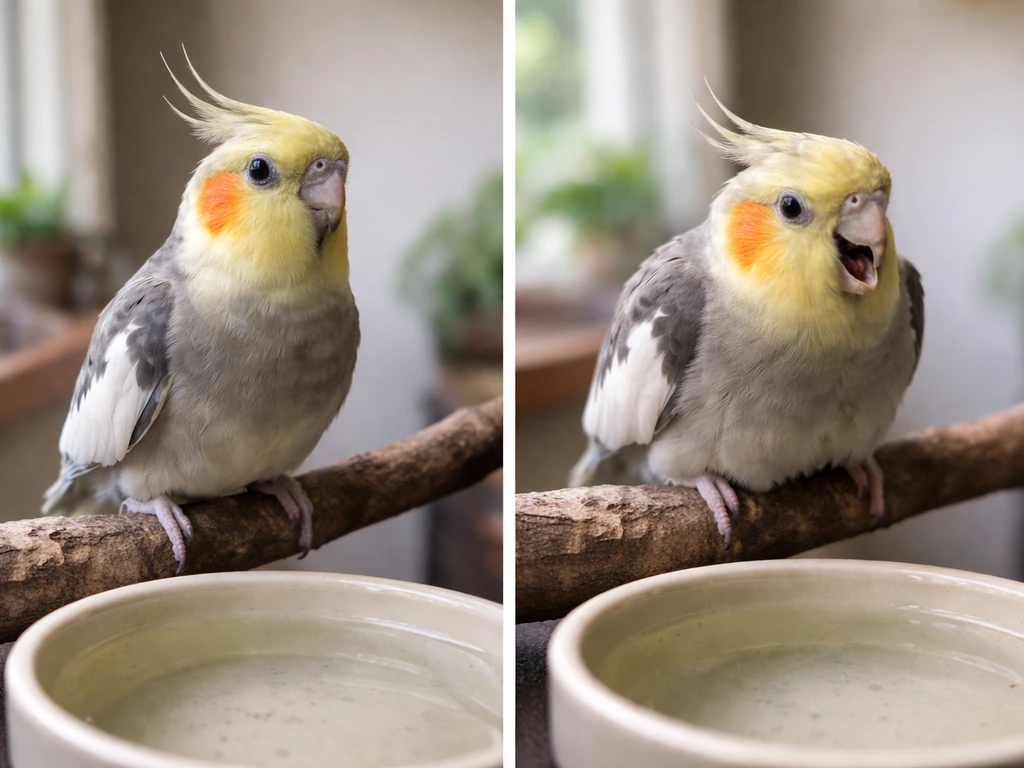
Knowing whether your efforts are working is important so you don't miss the window for getting professional help. Check on the bird every five to ten minutes, visually, without picking it up.
| Sign | What it likely means |
|---|---|
| Panting slows or stops | Core temperature is dropping, a good sign |
| Wings return to resting position against the body | Heat stress reducing |
| Bird becomes more alert, turns its head, watches surroundings | Stabilizing well |
| Bird attempts to stand or shift position | Positive recovery indicator |
| Panting continues or worsens after 15 to 20 minutes of cooling | Needs urgent professional help |
| Wings remain held out, bird is unresponsive or limp | Serious heat stroke or concurrent injury, call for help now |
| Feathers puffed up and bird seems cold or shivering | Overcooling or hypothermia developing, stop misting, add a dry layer |
| Mucus visible in or around the mouth | Possible respiratory emergency, contact a vet immediately |
| Bird loses consciousness or stops moving entirely | Emergency, contact wildlife rehab or avian vet immediately |
One thing to watch carefully: if you've been misting for a while and the bird starts to look puffy, hunched, or its feet feel cold instead of warm, you may have overcooled it. Remove any damp towel, stop misting, and let it rest in a stable, room-temperature environment. After you cool a bird safely, the next step is warming it back up gradually and only as advised for its situation. Keeping a bird warm is the opposite challenge, and it's just as serious.
When to call for urgent help
Cooling at home is first aid, not treatment. Cooling at home is first aid, not treatment, and knowing when to switch from DIY steps to professional care is key to how to keep a bird alive. It buys time, and sometimes that's all a bird needs. Because birds' cooling needs can differ at night, you should also consider whether you should cover a bird at night before you adjust its shelter should you cover a bird at night. But there are situations where it isn't enough and where waiting costs the bird its life.
Call a wildlife rehabilitator or avian vet immediately if any of the following apply:
- The bird is not responding to cooling after 15 to 20 minutes
- It's unconscious, limp, or seizing
- Panting is worsening rather than improving
- You can see blood, a broken limb, or signs of trauma alongside the heat stress
- The bird is a nestling or very young (baby birds overheat and deteriorate faster than adults)
- There's mucus or discharge from the mouth or nostrils
- You're not sure what's wrong and the bird looks seriously unwell
When you call, tell the rehab center or vet: where you found the bird, what species it appears to be (even a rough description helps), what signs you've observed, and what you've already done. That information helps them triage over the phone and tell you whether to bring it in immediately or continue supportive care while en route.
To find a wildlife rehabilitator near you, search your state or country's wildlife agency website, or look up the National Wildlife Rehabilitators Association (in the US) or RSPCA (in the UK and Australia). Many areas have emergency wildlife lines that operate outside of business hours. Don't wait until morning if the bird is in distress.
First aid for an overheated bird comes down to this: get it out of the heat, cool it gently with room-temperature water and airflow, contain it quietly, and watch closely. If the bird's heat stress is happening during a power outage, prioritize keeping it warm enough in the outage while you restore safe shelter and temperature overheated bird. If it's improving, great. If it isn't, or if you're unsure, the next step is always a professional. You've done your part by getting it stable. Letting a rehabilitator take it from there is the right call.
FAQ
What should I do first if I find a bird panting with wings held out?
Start with shade plus gentle airflow immediately, then mist lightly with room-temperature water. Do not spend time trying to identify the species or searching for supplies, focus on temperature control first, since rapid heat reduction reduces progression.
How can I tell if the bird needs urgent help beyond cooling?
If it is completely limp, not breathing normally, has mucus around the mouth, is bleeding, or has an obvious broken limb, treat it as more than heat stress. In those cases, begin gentle cooling while you arrange emergency help, and avoid long delays waiting to see if it “wakes up.”
Is it safe to put an overheated bird in the refrigerator or freezer area to cool faster?
No. Do not use cold air blasts, ice, or sub-room-temperature cooling. Rapid or very cold cooling can cause shock, so the bird should be brought down gradually using shade, gentle airflow, and light room-temperature misting.
Should I use a fan directly blowing on the bird?
Use gentle, indirect airflow rather than a direct blast. Direct strong airflow can dry out the bird and raise stress, instead place the bird in a shaded contained box where air can circulate softly around it.
How often should I mist, and when should I stop?
Misting should be light and intermittent while you monitor closely. Stop as soon as the bird looks stable and keep conditions at room temperature, if the bird becomes puffy, hunched, or its feet feel cold, remove any damp towel and stop misting.
What if the bird is soaking wet after misting?
If it is drenched, remove excess moisture and let it rest in a stable room-temperature space. Very wet skin and feathers can chill quickly or increase stress, so aim for a lightly misted surface rather than dripping wet.
Can I give water by opening the beak or using a dropper?
Avoid opening the beak or forcing liquids. Provide a very shallow dish of room-temperature water instead, and only when the bird is alert enough to drink on its own to reduce choking risk.
The bird is drinking after I set up water. Does that mean it is fully okay to release?
Not automatically. Drinking is a good sign, but you still need continued observation and professional guidance for any bird that needed more than brief cooling, especially if it was lethargic, panting heavily, or had signs that could indicate injury or illness.
How long should I keep checking every five to ten minutes?
Keep checking during the stabilization period while you decide on professional care. If there is no clear improvement, or symptoms worsen after cooling begins, escalate to a rehabilitator or avian vet rather than continuing longer at home.
Should I cover the bird with a blanket or keep it fully exposed?
Use darkness and quiet rather than full exposure. A box lined with a lightly damp towel helps reduce stress, but ensure airflow is still gentle and avoid covering it so tightly that it restricts ventilation.
What if the bird cooled down but then starts fluffed up and becomes still?
Fluffing and stillness can be part of resting, but if it is accompanied by hunched posture or cold feet, treat it as overcooling. Remove damp materials, stop misting, and move it to stable room temperature, then seek professional advice if you are unsure.
Can cooling be different at night or outdoors?
Yes. At night, temperature changes can make overcooling easier, so keep it in a stable room-temperature environment with gentle airflow and avoid adding extra cold sources. If you consider covering the bird for nighttime, prioritize maintaining safe temperature rather than just darkness.
Next Article
How to Warm Up a Bird Safely: Step-by-Step Rescue Guide
Step-by-step how to warm up a bird safely with home supplies, plus what not to do and when to call a vet