If you've found a cold, injured, or stunned bird, the first thing to do is get it into a quiet, dark, ventilated box in a warm room, around 85 to 90°F for a chilled bird, using indirect heat like a low-setting heating pad or a wrapped warm water bottle under one half of the box. Don't feed it, don't give it water yet, and don't hold it more than you have to. Warmth and quiet are the two things that help most in the first hour while you arrange proper care.
How to Warm Up a Bird Safely: Step-by-Step Rescue Guide
Marcus Holloway
17 May 2026
When warming helps, and when it can make things worse
Warming is appropriate when a bird is clearly cold or chilled: it's wet, it's fluffed up with its beak tucked into its chest, it's lethargic but breathing, or it's been caught out in cold weather. These are signs the bird needs help regulating its body temperature, and gentle warmth is genuinely stabilizing in these cases.
But warming can do real harm in other situations. If the bird is actively bleeding, has broken or deformed limbs, has been in a cat's mouth (even briefly, puncture wounds from cats carry serious infection risk), has a tilted or twisted head, or has large fluid bubbles under the skin, these are emergencies that need a vet or wildlife rehabilitator immediately. Applying heat when a bird has internal injuries or head trauma can worsen shock rather than relieve it. In those cases, the box-and-quiet part still applies, but your energy should go straight to finding professional help rather than focusing on warming.
Also worth noting: if you find a dead or visibly diseased bird, don't handle it with bare hands. Wash your hands thoroughly with soap and water any time you touch a wild bird, its feathers, or its droppings.
Quick triage before you do anything else
Before you even think about warming, take 30 seconds to look the bird over. You're trying to figure out how serious things are and whether warming is the right first step.
- Is it breathing? Watch the chest for movement. Rapid, labored breathing or open-mouthed breathing at rest is a red flag.
- Is it bleeding? Active bleeding needs gentle pressure with a clean cloth and immediate veterinary contact — not warming.
- Can it hold its head up? A bird that can't lift its head or keep its balance has likely suffered head trauma or a neurological injury.
- Are there visible wounds, broken wings, or deformed legs? These need professional assessment, not home treatment.
- Is it fluffed, lethargic, and cold to the touch but otherwise not obviously injured? That's the scenario where warming is most helpful.
- Does it look wet or soaked? A wet, chilled bird is a classic warming case — get it somewhere warm and dry as the priority.
Signs of shock include a bird that's limp, unresponsive, or barely reactive to your presence even when you pick it up. A bird in shock needs warmth, darkness, and quiet, and then a rehabilitator as fast as you can arrange it.
Safe ways to warm a bird at home
The goal is slow, gentle, indirect warmth, not fast or direct heat. Birds can overheat quickly, and warming too fast can trigger heart arrhythmias and deepen shock. Birds can overheat quickly, and warming too fast can trigger heart arrhythmias and deepen shock; for a step-by-step approach to holding the right temperature safely, see how to keep a bird warm. Here are the methods that work well with ordinary household items.
Using your hands
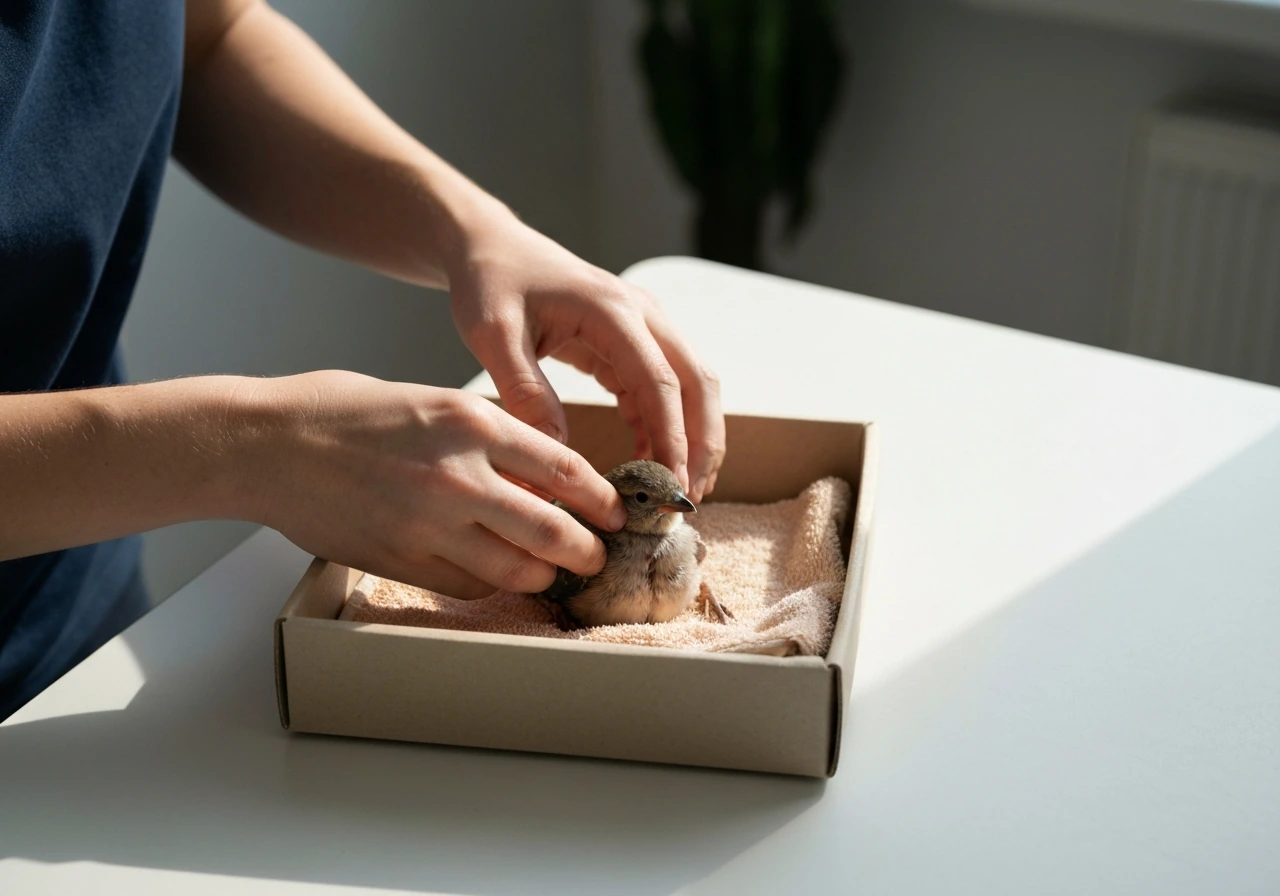
Cupping the bird loosely in both hands for a few minutes transfers body heat and can help a stunned bird recover enough to be placed in a box. Keep your grip relaxed, you're not restraining it, you're warming it. Don't do this for more than a few minutes, though, because prolonged handling stresses the bird and stress can be fatal in small birds.
The box method with a heating pad
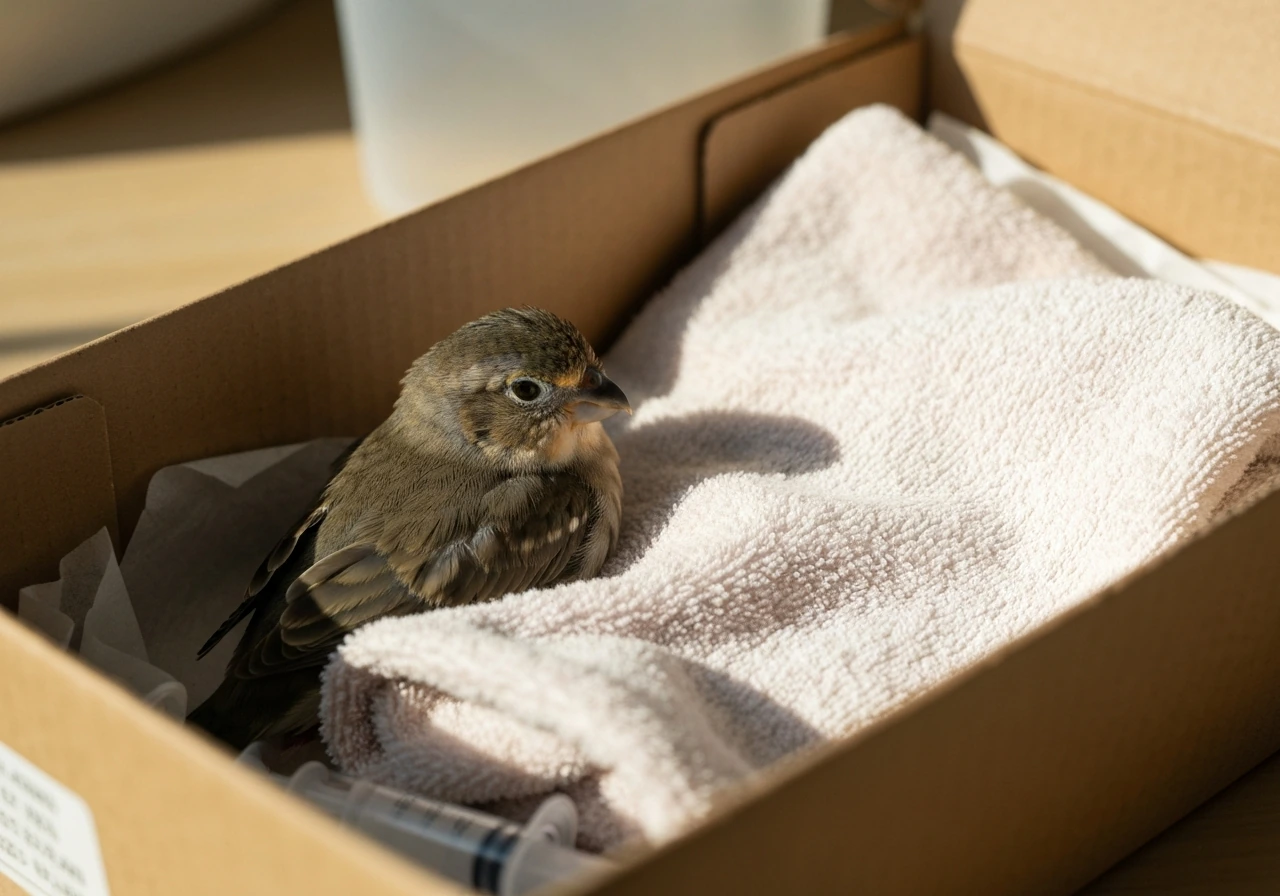
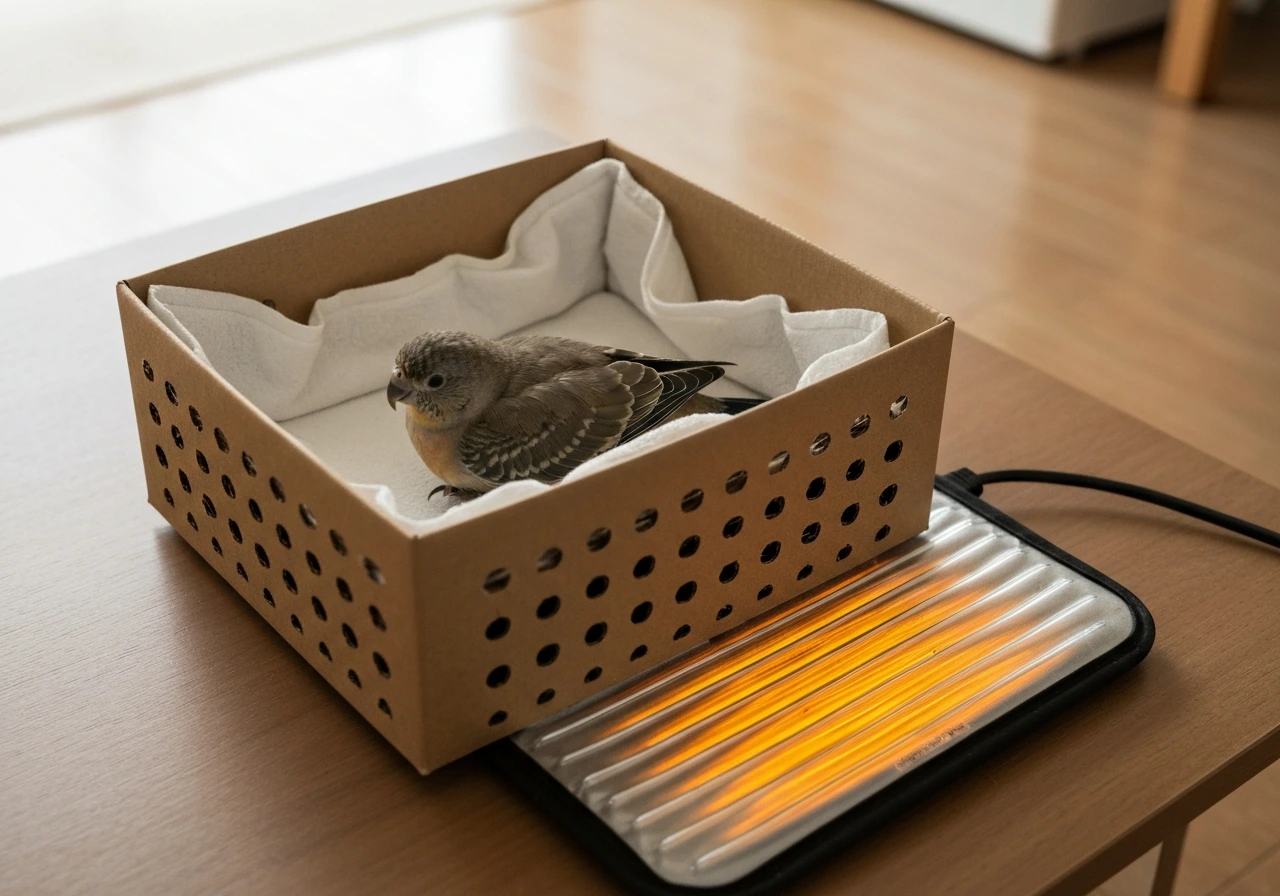
This is the most practical setup for most people. Put the bird in a cardboard box with ventilation holes punched in the sides and a loose cloth or paper towel lining the bottom. Set a heating pad on its lowest setting and place only one end of the box on it, so the other half of the box stays at room temperature. This is critical: the bird needs to be able to move away from the heat if it gets too warm. Never put the whole box on the heating pad.
Warm water bottle as a heat source
Fill a water bottle or plastic bottle with warm (not hot) water, wrap it completely in a towel or sock, and place it in one corner of the box. The towel insulation keeps direct heat off the bird while the warmth radiates gently. Check the temperature of the bottle surface with your hand, it should feel comfortably warm, like a heated car seat, not hot.
Using a lamp as a heat source
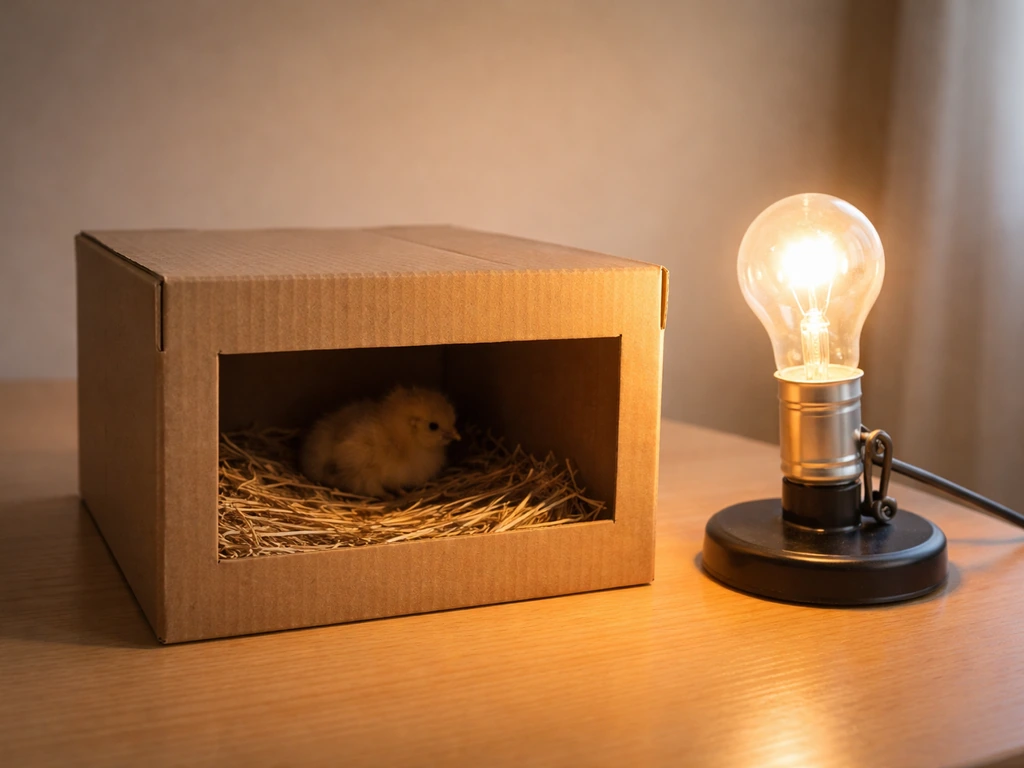
A 75-watt incandescent bulb positioned near (not inside or touching) the box can provide enough ambient warmth for a chilled bird. Position it so it warms the air around the box rather than shining directly on the bird, which can cause overheating in one spot.
Setting up the recovery environment
The environment matters as much as the heat source itself. Here's how to get it right.
- Temperature: Aim for around 85 to 90°F inside the box for a cold or chilled bird. Room temperature (around 70°F) is too cool for a bird already struggling to regulate its body heat.
- Ventilation: Punch small holes in the sides of the box — warmth needs airflow to stay at a safe, stable level and prevent CO2 buildup.
- Darkness and quiet: Cover the box with a light cloth or towel to reduce visual stress. Keep it away from pets, children, loud noise, and bright lights. Darkness alone calms birds significantly.
- Surface: Line the bottom with a non-slip cloth, paper towel, or tissue — not newspaper, which is slippery and stressful for birds trying to stand.
- Humidity: For most birds in a home setting, normal indoor humidity is fine. Don't mist or spray the bird.
- Heat gradient: Always set the heat source under or beside only part of the container so the bird has a cooler zone to retreat to.
Once the bird is in its box, put the box somewhere quiet and leave it alone. Every time you open the box to check, you're causing stress. Minimize peek-ins to once every 20 to 30 minutes unless you hear distress sounds.
How long to warm it and what improvement looks like
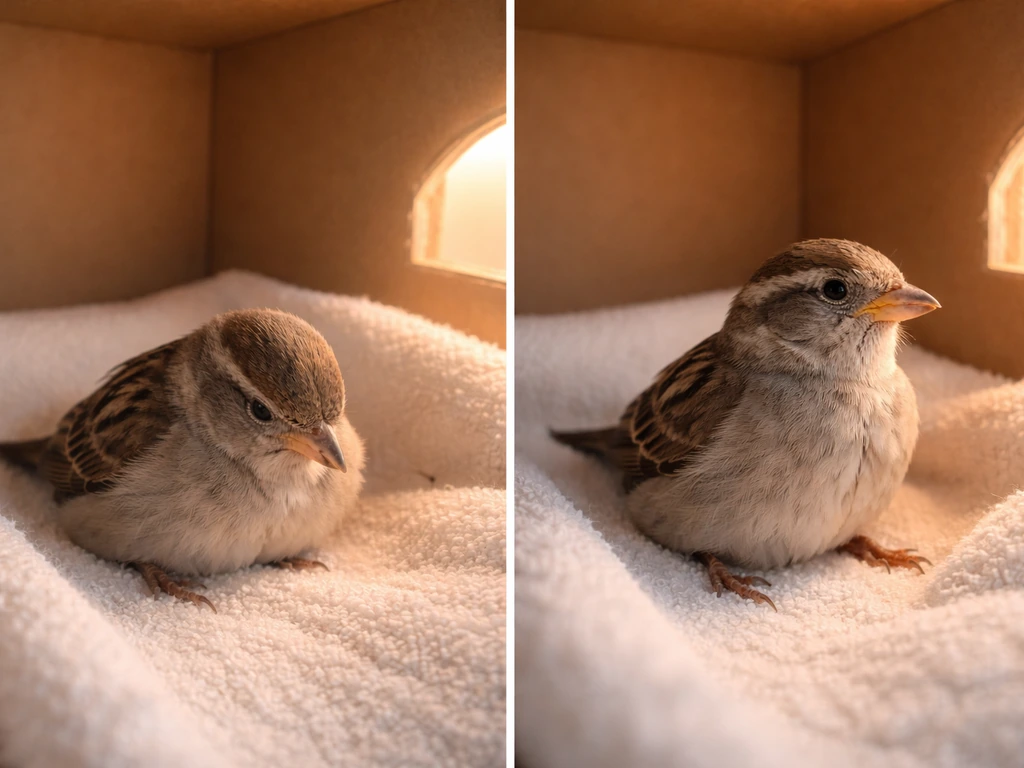
Most chilled birds that are going to respond to warming will show improvement within 30 to 60 minutes. You're looking for small but clear signs of recovery.
- The bird is holding its head up on its own.
- It's alert and tracking movement when you open the box.
- It's upright and gripping the cloth or surface beneath it.
- It's making noise — chirping, moving around — which usually means it's feeling more stable.
- Feathers begin to lie flatter instead of being puffed out.
If the bird is a wild species and it reaches this point of recovery, it may try to fly. Keep the box closed (but ventilated) and contact a wildlife rehabilitator before doing anything else. Warming is a stabilization step, not a treatment. A bird can look recovered but still have internal injuries that aren't visible.
If the bird doesn't improve after an hour, or gets worse (open-mouthed breathing, no response, going limp), that's a signal to escalate to professional help urgently. Don't keep warming indefinitely hoping things will turn around.
What not to do, the mistakes that cause real harm
This section is just as important as the warming steps, because some common instincts, giving water, cranking up the heat, can kill a bird that might otherwise have survived.
| What to avoid | Why it's harmful |
|---|---|
| Giving food or water | Feeding an incorrect diet can injure or kill a bird. Giving water to a semiconscious bird risks aspiration (water going into the lungs). Don't offer either until you've spoken to a rehabilitator. |
| Direct heat on the bird | Putting the bird directly on a heating pad, or using a hair dryer or heat lamp too close, can cause thermal burns and rapid overheating. |
| Warming too quickly | Sudden temperature change can trigger heart arrhythmias and deepen shock, especially in very chilled birds. |
| Covering the entire box with heat | The bird has no way to escape if it overheats. Always maintain a cool zone inside the container. |
| Holding or handling too much | Stress from excessive handling is a genuine killer in small birds. Warmth and darkness do the work — your hands don't need to. |
| Using hot water bottles without wrapping | Direct contact with even a moderately warm bottle can burn featherless or thin-skinned areas. Always wrap in a towel or sock. |
| Dunking or misting the bird with water | A wet bird loses heat faster. Don't add moisture unless advised by a professional. |
| Giving sports drinks, milk, or bread | None of these are appropriate for birds and can cause serious harm. No food or drink without professional guidance. |
One more thing to watch for during warming: signs that the bird is getting too hot. A bird that's overheating will hold its wings slightly away from its body and breathe with its beak open, as if panting. If you see that, remove the heat source from under the box immediately and let it cool down. If you suspect heat exhaustion, use the same immediate principle: remove the heat source and get it to a rehabilitator as quickly as possible save a bird from heat exhaustion.
What to do after the bird has stabilized
Warming buys time, it doesn't fix the underlying problem. Once the bird seems stable, here's what comes next.
Contact a wildlife rehabilitator or vet
This should be happening in parallel with warming, not after. Call your local wildlife rehabilitator, wildlife agency, or an avian vet while the bird is in its box. For wild birds especially, most jurisdictions require that a permitted wildlife rehabilitator handle the bird. They'll tell you what the bird needs next, whether rehydration is appropriate, and how to safely transport it. Don't wait until the bird looks better to make the call.
Rehydration: only when a professional says so
Every major wildlife organization gives the same advice: don't give food or water without professional guidance. A bird that looks alert and is gripping its perch might still aspirate water if it's not fully recovered. Rehydration, when appropriate, is typically done by a rehabilitator using specific fluids and techniques. Your job is to keep it warm, dark, and quiet until you can hand it off.
Keeping it warm during transport
If you're driving the bird to a vet or drop-off point, keep the box warm during transit. If you are trying to give a pet bird a bedtime routine, the safest schedule depends on species and daylight patterns rather than recovery needs what time should i put my bird to bed.
If the power is out, you can still keep your bird warm by using the box-and-heat setup and monitoring the temperature closely until help arrives keep the box warm during transit. A wrapped warm water bottle in the corner of the box works well for this. Don't put the box in a cold trunk, and keep the car at a comfortable temperature.
If you are trying to care for a bird at night, keep the environment dark and calm, because light and noise can make recovery harder cover a bird at night. Watch for overheating signs if the trip is more than 20 to 30 minutes.
Knowing when it's urgent
Get professional help immediately, not after a few hours of home care, if the bird has any of these: active bleeding, obvious broken bones, a cat or dog bite, a head tilt or twisted neck, large swellings or fluid bubbles under the skin, no improvement after an hour of warming, or no response at all to gentle stimulus. These are not cases where extra home care helps. They need a trained eye and proper equipment.
Keeping a bird alive through a cold crisis is genuinely something you can do at home with a box, a heating pad, and a quiet room. But warming is the bridge, not the destination. The goal is always to get the bird to someone who can give it the full assessment and care it needs. In the same spirit, if you are trying to help a bird during hot summer weather, focus on how to keep your bird cool in summer before you attempt any recovery steps.
FAQ
How long can I warm the bird at home before I have to get help?
Yes. Birds can cool quickly, so after placing the bird in the warm box, try to keep the room comfortably warm and avoid drafts (open doors, air vents blowing toward the box). Recheck the warm source periodically so it stays “comfortably warm,” not increasing in heat.
What counts as “improvement” during warming, and when is it not enough?
Stop and seek professional help urgently if there is no clear improvement within about an hour, or if the bird worsens at any point. “Slightly more responsive” is a sign to continue stabilizing, but if breathing changes, the bird goes limp, or it looks more distressed, do not keep warming as the only step.
Can I give water or food once the bird seems warmer and calmer?
For a wild bird, contact a wildlife rehabilitator before offering any food or water, even if it seems calm. If you do not have a rehabilitator immediately, keep the bird warm, dark, and ventilated, then hand off as soon as possible. For pet birds, follow your avian vet’s guidance, but do not use home “rehydration” or feeding methods without instruction.
What should I do if the bird is wet from rain or melted snow?
If the bird is wet from rain, gently blot off surface moisture with a dry paper towel, then place it in the box. Do not wash the bird with water, and do not soak it to “help it warm.” The goal is indirect, controlled warmth with a dry, stable environment.
Is it okay to take the bird out of the box to check its legs or breathing?
Use gentle handling time only. If you need to move the bird, do it quickly and keep the body supported while you transfer it to the box. Avoid repeatedly picking up, rotating, or “checking the legs” because prolonged handling stress can make recovery harder.
Why shouldn’t I put the whole box directly on the heating pad?
You can use a heating pad or warm bottle as described, but never place a heat source in direct contact with the bird and never warm the entire box evenly. Always create a cooler zone so the bird can move away, and monitor for overheating signs (wings away, open-mouth panting).
What should I do if I think the bird is getting too hot?
If the bird overheats, remove the heat source under or near the box right away and let the bird cool gradually in the same ventilated, dark setup. If the bird’s condition deteriorates during cooling or it still looks severely distressed, treat it as an emergency and contact a rehabilitator or avian vet immediately.
Should I cover the box to keep it dark, and will the bird still get enough air?
In most cases, yes, keep the box covered or in a dark place to reduce stimulation, but do not block ventilation holes. Dark and quiet reduce stress while warmth helps regulation. Light and noise can slow recovery, especially overnight.
The bird’s head is tilted. Should I warm it anyway?
For injured birds, especially those with head or neck issues, a twisted head can signal internal trauma. In that situation, prioritize contacting a rehabilitator and avoid extended warming sessions or repeated checks. Keep the bird in the box for minimal handling, but do not delay professional help.
What box and lining are safest for warming a bird?
Use a cardboard box with ventilation holes and a loose, absorbent lining (paper towel or cloth). Avoid tight wraps around the bird, avoid forcing perches, and do not add loose debris that could irritate breathing. The lining should be stable so the bird cannot slide excessively.
How should I keep the bird warm during a car ride to a vet or drop-off point?
When transporting, keep the box at the warm, indirect temperature you established, and protect it from temperature swings (no cold trunk, no leaving it in a hot car). Minimize opening the lid. If the trip is more than about 20 to 30 minutes, reassess warmth periodically without removing the bird for long.
Next Article
How to Keep Your Bird Cool in Summer: Safe Steps
Step-by-step tips to keep your bird cool in summer, spot heat stress, and know when to seek vet or rehab help.