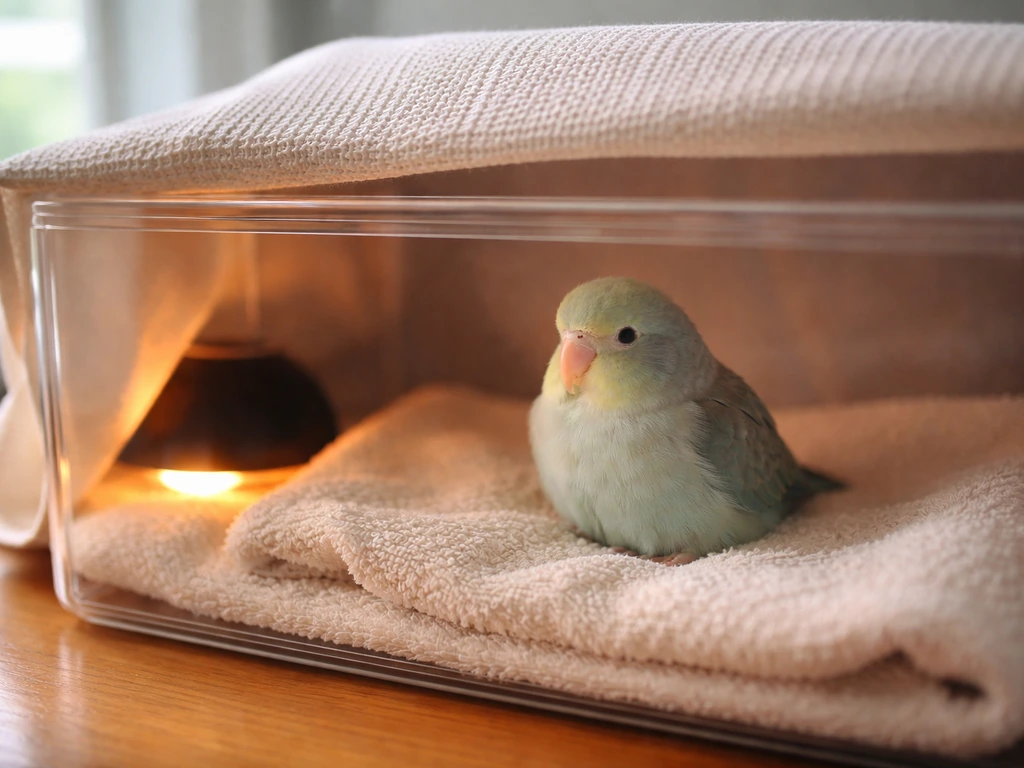
If you've just found a bird and you're trying to keep it alive right now, here's what matters most in the first 30 to 60 minutes: contain it safely, keep it warm and quiet, don't feed it, and get it to a wildlife rehabilitator or avian vet as fast as you can. Everything else in this guide supports those four things.
How to Keep a Bird Alive: Humane First Aid Checklist
Marcus Holloway
19 Apr 2026
First: check breathing, bleeding, and responsiveness
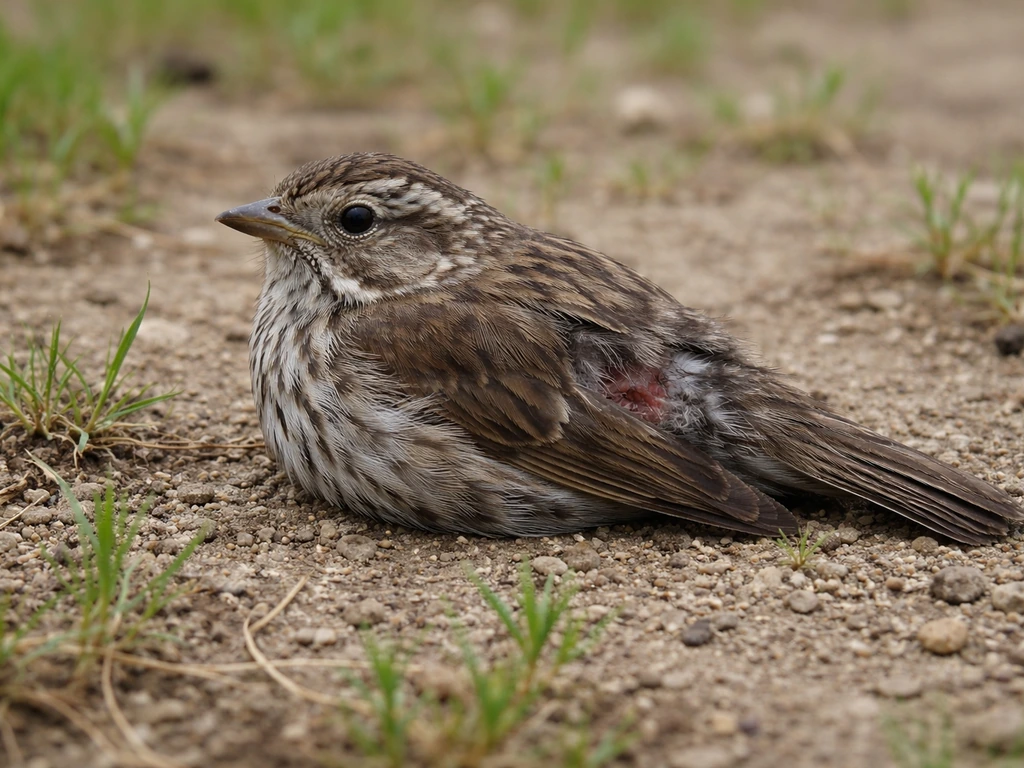
Before you do anything else, take 15 seconds to observe the bird from a short distance. You're looking for three things: is it breathing, is it bleeding, and does it react when you approach? This tells you how urgent the situation is and what you're dealing with.
Breathing: watch the chest or the base of the tail for movement. A healthy bird breathes steadily with its beak closed. Open-beak breathing in a cool environment usually means stress or respiratory distress. If the bird is gasping or making clicking sounds with each breath, that's a serious sign and needs professional attention quickly.
Bleeding: look for visible wounds, wet or matted feathers, or blood on the ground nearby. Minor bleeding from a broken feather shaft can look dramatic but isn't immediately life-threatening. Heavy bleeding from a body wound is an emergency. Don't probe wounds or try to clean them yourself. Just note what you see and relay it to a rehabilitator.
Responsiveness: a stunned bird may be limp and unresponsive but still alive. Gently cup it in both hands. If it reacts at all, even weakly, that's a positive sign. A bird that doesn't react at all, has eyes that won't open, or feels cold and stiff is in critical condition. Note the time you found it and where, since that information matters when you call for help.
Also take a quick mental note of a few other things before you pick it up: what does it look like (size, color, any beak shape you can describe), where exactly did you find it (near a window, on the ground, in a bush), and how long you think it may have been there. This background helps a rehabilitator triage over the phone.
Stabilize the bird: warmth, darkness, and quiet
Stress kills birds faster than most physical injuries. An injured or sick bird's nervous system is already overwhelmed, and every additional stimulus, noise, handling, bright light, faces peering in, makes it worse. Your goal right now is to reduce stimulation to near zero.
How to handle it safely
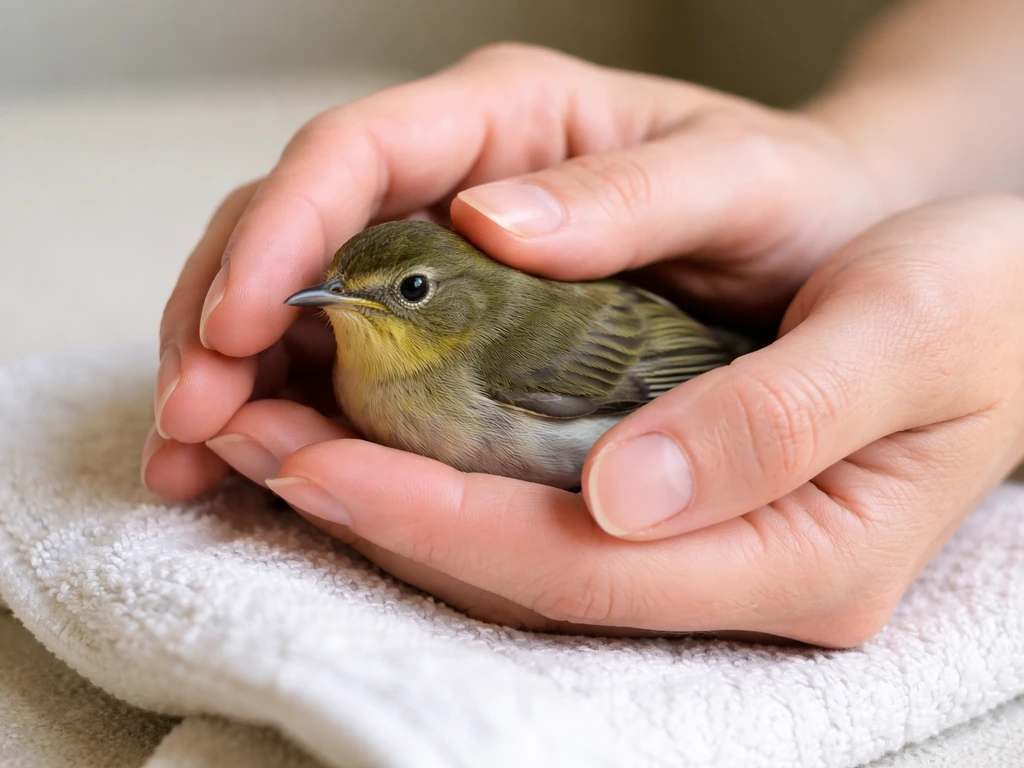
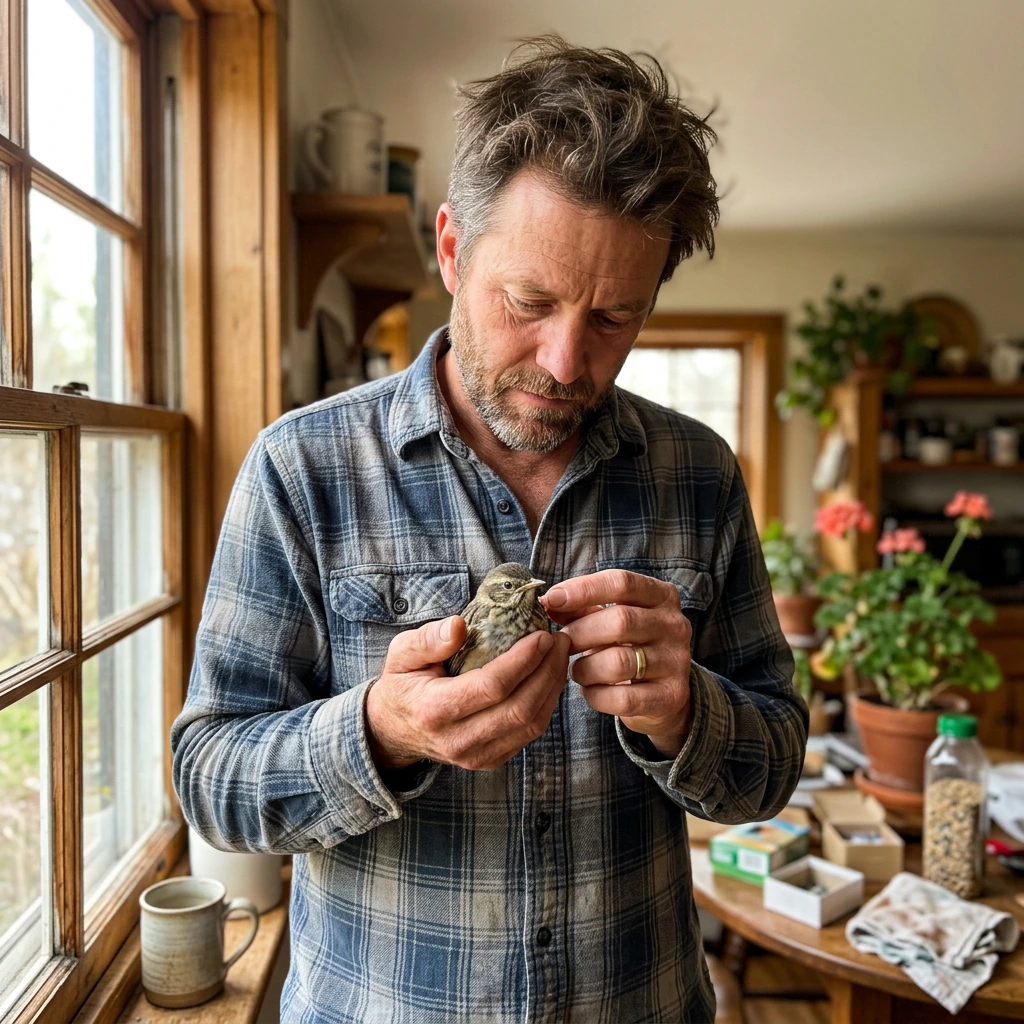
Pick the bird up by cupping it gently in both hands with its wings held softly against its body. Don't grab it by the wings or feet. A towel or cloth can help you get a gentle grip without direct skin contact, which also protects you from scratches or bites. Hold it low to the ground in case it suddenly flutters free. Once it's in your hands, move calmly and get it into a container as quickly as possible.
Warmth without overheating
Most injured birds are in some degree of shock and losing body heat fast. Keeping the bird warm is one of the most important things you can do. A bird that stays cold to the touch has a much lower chance of survival.
The safest way to provide heat is to put a heating pad set to low under one half of the box, so the bird can move toward or away from the heat as needed. If you don't have a heating pad, fill a sock with uncooked rice, microwave it for about 60 seconds, and place it inside the box but not directly against the bird. A hot water bottle wrapped in a towel works the same way.
Check the bird every 10 to 20 minutes at first. Signs of overheating include open-beak panting, wings held away from the body, or in nestlings, lying with the neck stretched out of the nest. If you see any of these, remove the heat source immediately. Overheating is just as dangerous as hypothermia, and the line between them can be narrow.
Setting up safe temporary housing
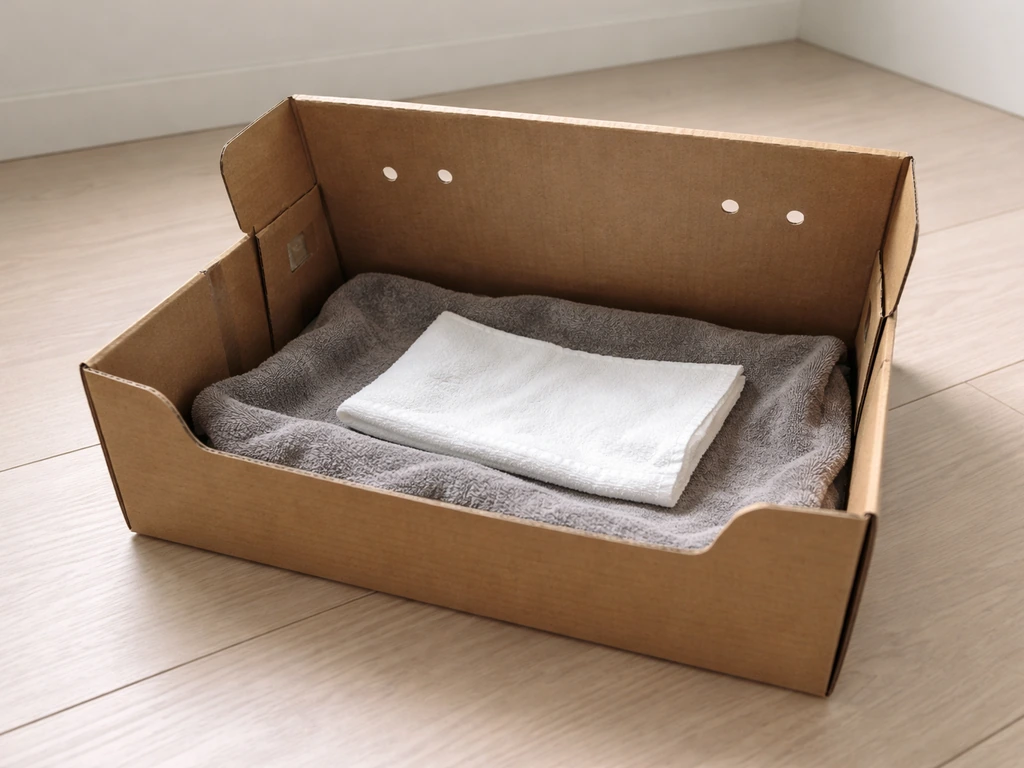
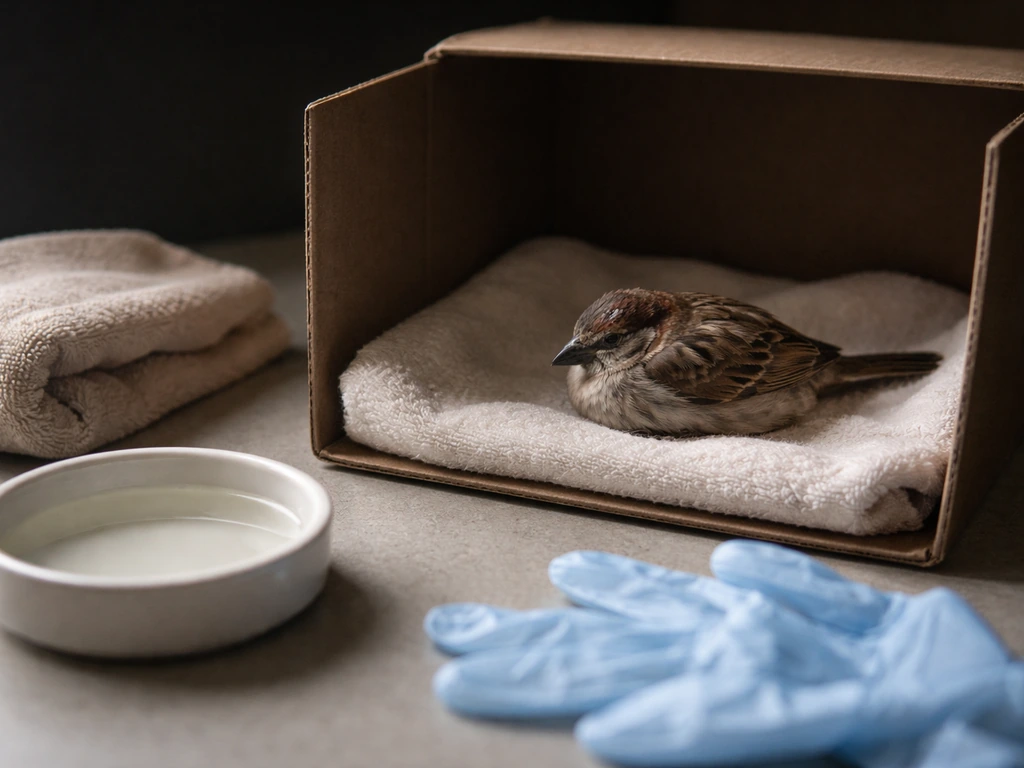
For most birds, a shoebox or similarly sized cardboard box is ideal for temporary housing. It's the right size for a songbird, it's dark inside, and the material breathes slightly. An unwaxed paper bag or a cloth tote bag also works in a pinch if you're away from home.
Line the bottom with a soft cloth, a folded paper towel, or shredded newspaper. Avoid anything with loose fibers that could tangle around the bird's feet, like terry cloth or thick fleece. Poke a few small air holes in the lid or sides if you're sealing it. The bird should not be able to see out, and ideally no one should be looking in either.
Once the bird is inside, place the box in the warmest quiet room in your home, away from pets, children, TVs, and traffic noise. Don't open the lid every few minutes to check on it. Resist the urge. Checking in constantly restresses the bird and undoes the calm you're trying to create. Set a timer and check at intervals, not constantly. You might also wonder whether a bird you found at night should be covered, and the safest choice depends on minimizing stress and exposure to light cover a bird at night.
- Use a shoebox or cardboard box with a secure lid
- Line the bottom with a soft, non-loopy cloth or paper towels
- Poke small air holes so the bird can breathe
- Place heat under half the box, not inside against the bird
- Put the box in a dark, quiet room away from pets and noise
- Do not open it repeatedly to check
Feeding and hydration: what to do and what to avoid
This is where most well-meaning people accidentally hurt the bird. The universal rule from wildlife rehabilitators is: blank" rel="noopener noreferrer">do not offer food or water to an injured or stunned bird unless a trained professional has told you specifically to do so. Audubon also advises keeping raptors calm in a dark, warm container with air holes and not giving food or water blank" rel="noopener noreferrer">do not offer food or water to an injured or stunned bird.
Here's why this matters. A traumatized or dehydrated bird's digestive system is often not functioning properly. If you feed a bird in this state, it can shut down digestion entirely. If you try to give it water with a syringe or dropper, there's a real risk of aspiration, where water enters the trachea instead of the esophagus, and aspiration pneumonia can kill a bird that might otherwise have survived.
Never squirt water directly into a bird's mouth. Never use a syringe to force fluids unless a rehabilitator or vet has walked you through exactly how and told you to do it. Even placing a water dish in the box with a stressed bird can be risky if it falls in.
What about baby birds and orphans?
Baby birds (nestlings with no feathers, or fledglings that are mostly feathered but can't fly well) need feeding more urgently than adult birds, but the same rule applies: don't feed anything without guidance from a rehabilitator. The diet of a nestling songbird is completely different from a nestling pigeon or a baby raptor. Giving the wrong food, even something that seems natural like bread, worms from the garden, or cow's milk, can cause nutritional injury or death.
If you find a baby bird, the first thing to check is whether it actually needs rescuing. A fledgling on the ground with short tail feathers, hopping around, and making noise is usually normal. Its parents are often nearby. Watch from a distance for 30 to 60 minutes before assuming it's orphaned. If you find a featherless nestling on the ground and can see the nest, you can return it. The parent will not abandon it because you touched it.
Common emergency scenarios and what to do
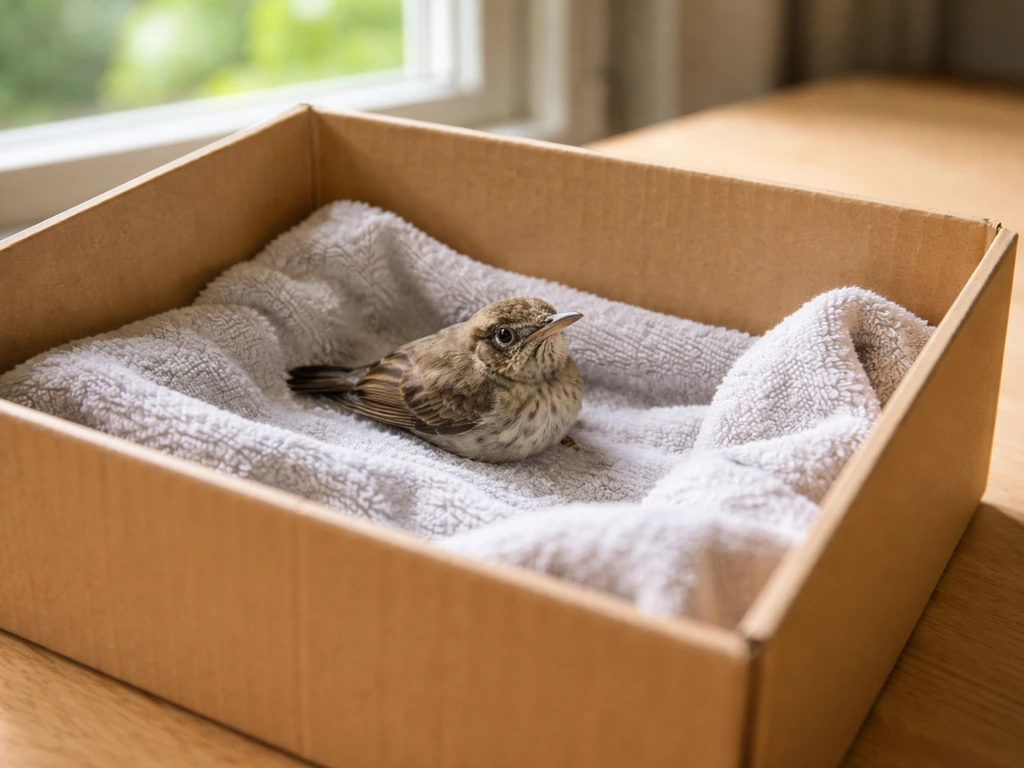
Stunned or fallen bird (likely window strike)
Window strikes are one of the most common reasons people find birds on the ground. The bird flew into glass and is dazed or temporarily unconscious. Many of these birds recover on their own within an hour if you give them a dark, quiet, warm space. In many window-strike cases, the priority is getting the bird into a dark, quiet, warm space, and if you need more specifics on how to warm up a bird, that guide covers it. Box it up as described above, wait 30 to 60 minutes, then take it outside and open the box away from traffic and predators. If it flies off, great. If it doesn't, it needs professional care.
Bleeding injuries
If you can see active bleeding, applying very gentle pressure with a clean cloth for a minute or two can help slow it while you arrange transport. Don't use hydrogen peroxide or any antiseptic. Don't probe the wound or try to remove embedded objects. Get the bird contained and contact a rehabilitator immediately. Cat or dog attacks are especially serious because even puncture wounds that look minor carry bacteria that cause fatal infections in birds within 24 to 48 hours.
Shock or chills
A bird in shock may be limp, cold to the touch, eyes partly closed, and barely responsive. Warmth is the most important intervention here. Get the bird into a warm box as quickly as possible and monitor it. Do not shake it, try to get it to eat, or put it in direct sunlight.
Keeping it warm and dark and quiet while you arrange transport is genuinely life-saving in these situations. If your home loses power, the same warmth goals apply, and this guide on how to keep your bird warm during a power outage can help you improvise safely. For more detail on warming techniques, the guidance on how to keep a bird warm and how to warm up a bird cover these approaches in depth.
Bird showing signs of heat exhaustion
If the bird is panting heavily, wings spread, lying flat, or found in direct sun on a hot day, heat exhaustion is possible. Move it to a cool, shaded area immediately. If you suspect summer heat stress, use the same approach from our guide on how to keep your bird cool in summer to prevent overheating while you wait for help. Do not put it in a heated box.
Do not pour water on it. Cool the environment gently, not the bird directly. This scenario is covered in detail in the guides on how to save a bird from heat exhaustion and <a data-article-id="F9F3A2E1-CF8A-46DD-91CF-B63C1CABE5E2">how to cool down a bird</a>. This scenario is covered in detail in the guides on how to save a bird from heat exhaustion and how to cool down a bird.
What not to do
Some of the most common instincts people have when finding a bird can make things significantly worse. This list is worth reading even if you're in a hurry.
- Do not give food or water without instruction from a rehabilitator
- Do not squirt water into the bird's mouth with a dropper or syringe
- Do not give milk, bread, crackers, or any human food
- Do not give any medication, including aspirin, ibuprofen, or any bird supplement, unless prescribed by a vet
- Do not place the bird directly on a heating pad or against a heat source with no cool side available
- Do not leave the box in direct sunlight, a hot car, or near a radiator
- Do not leave the bird outside in the open where cats, dogs, or other animals can access it
- Do not handle the bird more than necessary or let children and pets crowd around the box
- Do not try to force a wing or leg back into position
- Do not assume a bird that looks alert is fine — internal injuries aren't visible
Comparing your options: DIY temporary care vs. immediate professional help
Not every situation calls for the same approach. Here's a quick way to think about whether you can stabilize at home briefly or need to act faster.
| Situation | DIY temporary care okay? | Urgency for professional help |
|---|---|---|
| Window strike, responsive, no bleeding | Yes, up to 1 hour | Contact rehab, transport same day |
| Stunned but breathing, no visible wounds | Yes, up to 1 hour | Contact rehab, transport same day |
| Cat or dog attack, any puncture wounds | Contain only, no delay | Emergency, within hours |
| Active heavy bleeding | Contain and gentle pressure only | Emergency, within hours |
| Limp, cold, unresponsive | Warm box immediately | Emergency, call while stabilizing |
| Nestling (no feathers) on ground | Warm box, no food | Contact rehab today |
| Fledgling hopping, parents nearby | Observe first | Only if truly orphaned or injured |
| Signs of heat exhaustion, panting | Cool area, no heat box | Emergency, call immediately |
When to stop DIY care and get professional help
Temporary care is exactly that: temporary. Your job is to keep the bird stable and reduce stress until it can get to someone trained to actually treat it. Even if the bird seems to improve, it still needs professional evaluation. Internal injuries, infections, and nutritional problems aren't visible to the untrained eye.
Call a wildlife rehabilitator or avian vet right away, not after you've waited a day, if you see any of these signs:
- Open-beak breathing or gurgling sounds
- Heavy or ongoing bleeding
- Cat or dog attack with any visible puncture
- Seizures or uncontrolled trembling
- Complete unresponsiveness with no improvement after 30 minutes in a warm, dark box
- Suspected broken wing or leg
- Eyes that won't open or that appear cloudy
- Any baby bird with no feathers (nestling)
How to find help fast
Search for 'wildlife rehabilitator near me' or 'bird rehab [your city or state].' In the US, the Wildlife Rehabilitators Directory at the National Wildlife Rehabilitators Association (NWRA) and the Animal Help Now app are both useful. You can also call your local animal control, humane society, or nature center, since many can refer you to a licensed bird rehabilitator even if they don't handle wildlife themselves.
When you call, have this information ready: what the bird looks like, where and when you found it, what you observed (breathing, bleeding, responsiveness), and what you've done so far. As part of your call, ask what time you should put your bird to bed so they can guide the timing based on its condition what time should i put my bird to bed. This helps them triage over the phone and give you specific next steps.
Transporting the bird safely
Keep the box closed and stable during transport. Put it on the floor of the car or secured on a seat with a seatbelt around it, not on a lap. Keep the car quiet and at a neutral temperature, not blasting heat or AC directly at the box. Talk as little as possible. The less stimulation during transport, the better the bird's chances of arriving in stable condition.
If you're going to be driving more than 30 minutes, check that the heat source (rice sock or hot water bottle) is still warm before you leave, and bring a backup if possible. Document the time of pickup, the location where you found the bird, and anything you observed, since the rehabilitator will want all of this when you arrive.
Your action plan at a glance
- Observe from a short distance: check breathing, bleeding, and responsiveness before touching
- Gently cup the bird in both hands and place it in a lined cardboard box with a lid
- Provide gentle warmth under half the box using a heating pad on low or a warm rice sock nearby
- Put the box in a dark, quiet room away from pets, children, and noise
- Do not feed or give water unless a trained rehabilitator tells you to
- Call a wildlife rehabilitator or avian vet right away, or search for the nearest one while the bird stabilizes
- Note the time, location, and what you observed to share when you call
- Transport in a stable, quiet, temperature-controlled car with the box closed
- Hand off to a professional as soon as possible, ideally the same day
FAQ
Can I give an injured bird water to help it recover?
No, you should not put the bird in a dish or hold it upright so it can “drink.” Even if it seems thirsty, the wrong method can cause aspiration (fluid going into the windpipe). The safest move is to keep it warm, dark, and contained, then ask the rehabilitator or avian vet for specific instructions.
What if I cannot reach a rehabilitator right away?
If you cannot contact a wildlife rehabilitator or avian vet immediately, your best “holding” step is the same stabilization: warmth, quiet, and a box that limits light and sightlines. Avoid feeding, and call again or use local animal control or a humane society for referral while the bird stays warm and calm.
Should I cover the bird at night or keep it uncovered?
Covering is mainly about reducing stimulation and light, but a baby bird or window-strike adult should never be overheated while covered. Use the lowest stimulation approach possible, keep ventilation safe, and remove any covering that blocks airflow or forces the bird into direct heat from a warming source.
Is it okay to open the box often to check on the bird?
Yes. A bright, unsupervised “quick photo” or letting people watch through the lid increases stress and can worsen breathing. Instead, prepare everything, keep the container mostly undisturbed, and only open briefly if absolutely necessary to correct bedding or heat source.
How do I know if the bird is getting the right amount of warmth?
Use a half-and-half heat setup and monitor body posture. A bird that moves away from heat is a good sign, but avoid “testing” by touching the bird frequently. Let the bird choose within the box by keeping only one side warmed and checking every 10 to 20 minutes.
Can I warm the bird under a lamp or in direct sunlight?
Don’t. Direct sunlight or direct heat (like putting the bird on a radiator or under a lamp) can cause rapid overheating and worsen respiratory distress. Use indirect, controlled warmth under one half of the container or a wrapped, gentle heat source.
What should I do if the container has no ventilation or I used plastic?
Yes, and it matters. Use a type of enclosure that is secure but not airtight, with small air holes if you seal the lid. If the bird seems to be breathing hard or panting, ventilation and heat control become more urgent, so remove heat immediately and contact a professional.
Should I try to get the bird to move or perch to see if it’s okay?
Stop that instinct. Stop handling except to place or adjust the bird in the container, and do not “test flight” or reposition it upright. For shock, warmth and minimal movement are most helpful, so keep the bird low to the ground and calm until help arrives.
What details should I write down before I call the vet or rehabilitator?
Yes, document. Note the time found, exact location (indoors near a window, outdoors on pavement, in a bush), and your observations (open-beak breathing, bleeding amount, responsiveness). These details help triage because some conditions are time-sensitive, like internal bleeding or cat attack infections.
Can I clean a bird’s wound with antiseptic or hydrogen peroxide?
No. Avoid hydrogen peroxide, alcohol, ointments, or antiseptics on wounds unless a professional instructs you to. You can lightly apply gentle pressure only if there is active bleeding, then focus on containment, warmth, and fast transport.
How long should I watch a baby bird before rescuing it?
Not exactly. Most fledglings on the ground are often fine and have parents nearby, so the best step is a watch period from a distance, 30 to 60 minutes. Only intervene if it appears featherless, injured, unable to return, or clearly in danger.
Next Article
How to Keep a Bird Warm: Safe Steps for Pet, Outdoor, Wild
Humane steps to keep a bird warm safely for pets, indoor cold homes, outdoor birds, and wild rescues.