If you've just found a bird on the ground under a tree or near a building and you're not sure what to do, here's the short answer: don't panic, don't pick it up yet, and definitely don't feed it. Most birds that appear to have "fallen from the nest" are actually fine and don't need your intervention at all. But some genuinely do need help, and this guide will walk you through exactly how to tell the difference and what to do in the next hour.
What to Do With a Bird Fallen Out of the Nest
Marcus Holloway
3 Apr 2026
First: keep the area safe and calm
Before you touch anything, your first job is to make the area safer for the bird, not to rescue it. Keep cats, dogs, and curious children well away from where the bird is sitting. This is not optional. Parent birds are almost certainly nearby and will continue feeding their baby on the ground, but they won't come near if there's a dog sniffing around or kids hovering over the bird.
If you have gloves, put them on before any handling becomes necessary. If you don't, that's okay, but wash your hands thoroughly after any contact with the bird. The bird isn't going to give you a disease from a brief touch, but good hygiene matters for both of you.
Step back and observe from a distance of at least 10 to 15 feet. Give the situation a few minutes before deciding anything. A lot of "emergencies" resolve themselves once the people and pets are out of the way.
Figure out what kind of bird you're dealing with
This is the single most important step, because your entire next decision depends on it. There are two very different situations here: you've found a nestling (a very young baby bird that genuinely fell or was pushed from the nest) or a fledgling (an older chick that is supposed to be on the ground). Treating them the same way is the most common mistake people make.
Nestlings: featherless or barely feathered
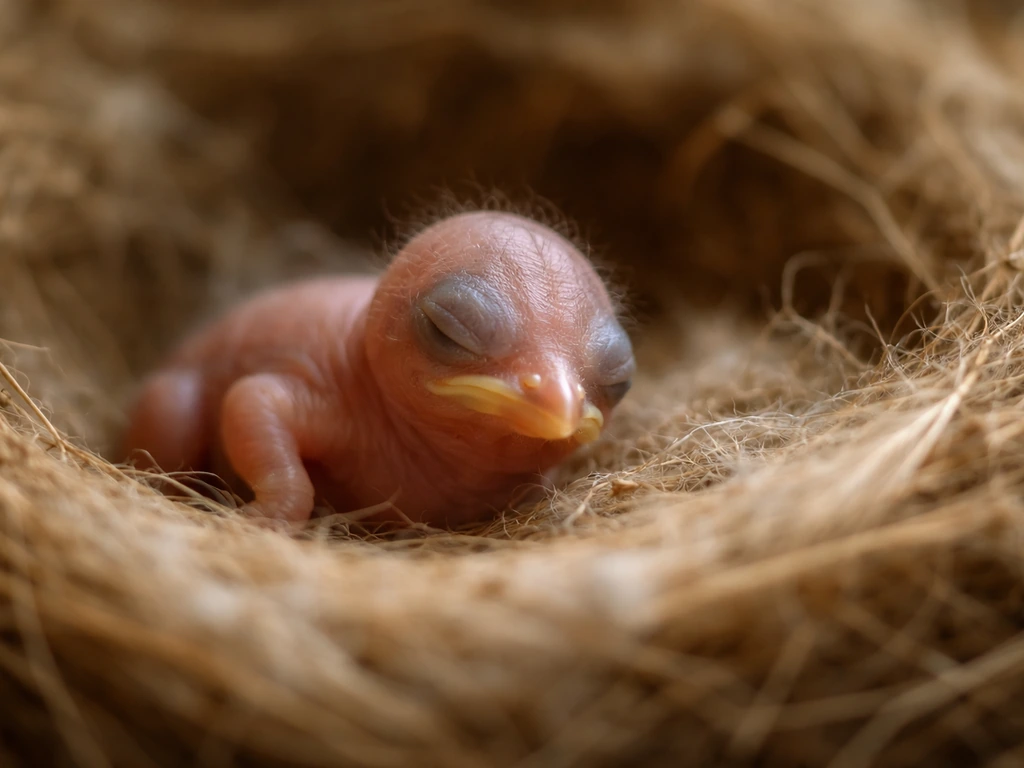
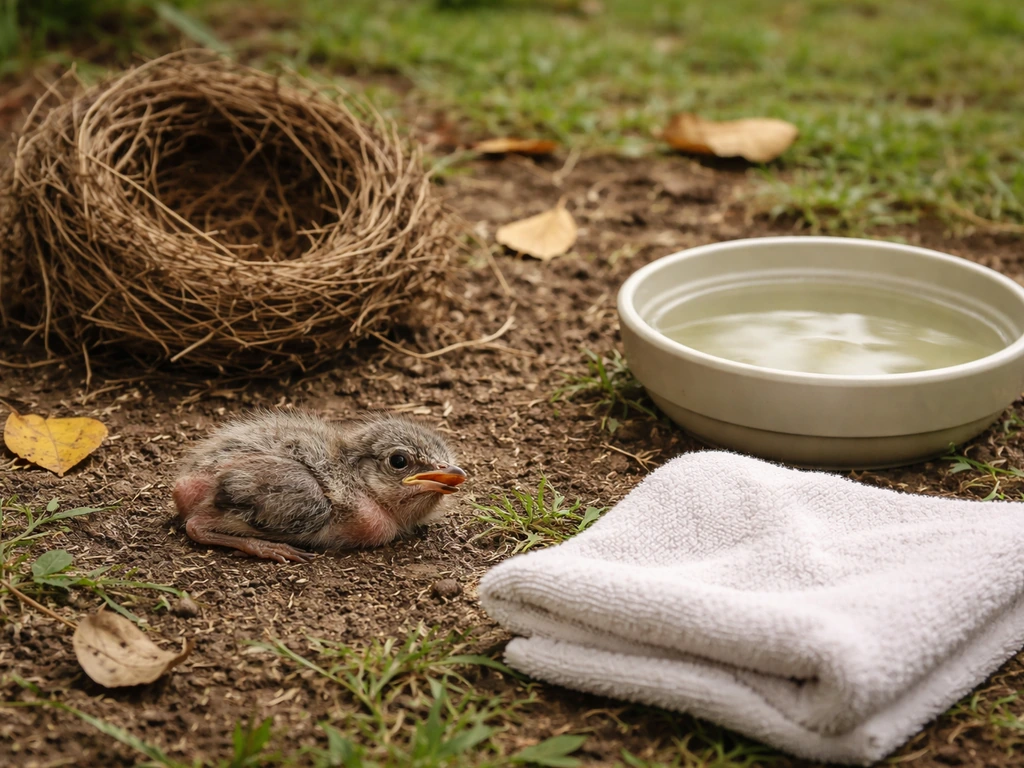
A nestling has no feathers or only a sparse fuzz of pin feathers just starting to emerge. Its eyes may be closed. It looks fragile, pink, and helpless. If you see this, the bird genuinely should not be on the ground. It either fell, was blown out, or was pushed by a sibling or predator. This bird needs to go back in a nest. If you've found a newborn bird like this, that's a nestling situation, and reuniting it with the nest is your priority.
Fledglings: feathered and hopping around
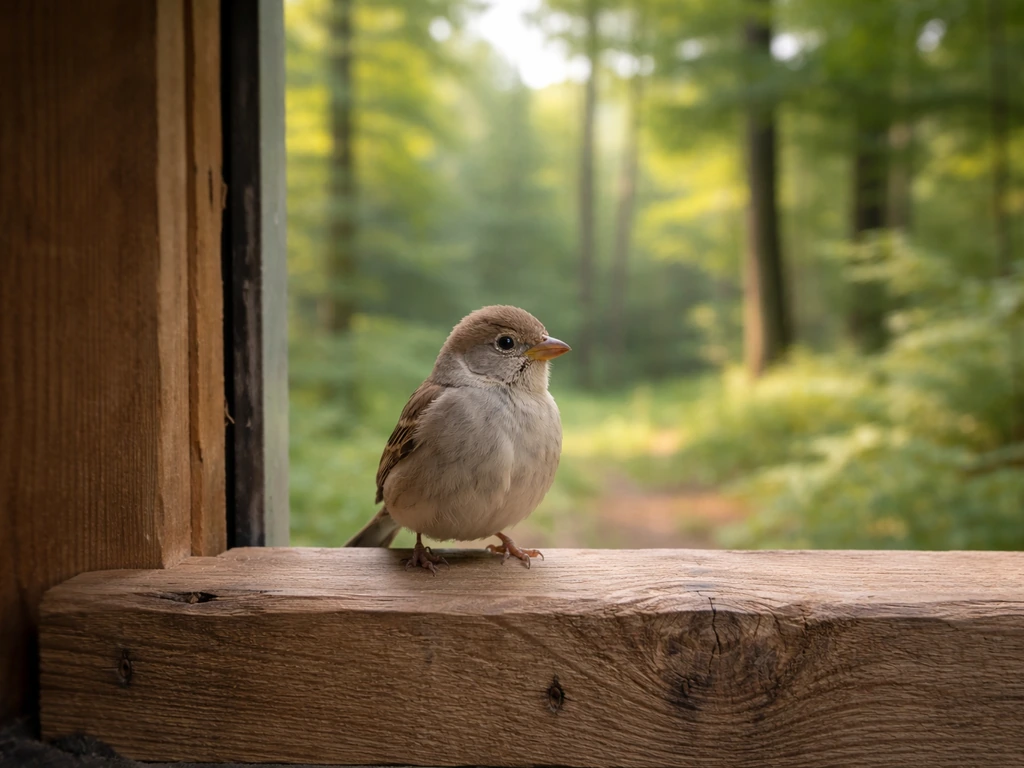
A fledgling looks like a small, slightly scruffy version of the adult bird. It has most of its feathers, its eyes are open, and it can hop and flutter, even if it can't truly fly yet. Fledglings routinely leave the nest and spend a few days hopping on the ground and low branches while their flight feathers finish developing. This is completely normal behavior, not an emergency. What to do with a fledgling bird is actually a very different question than what to do with a nestling, and in most fledgling cases, the answer is simply: leave it alone and keep pets away.
| Feature | Nestling | Fledgling |
|---|---|---|
| Feathers | None or sparse fuzz | Mostly or fully feathered |
| Eyes | Closed or just opening | Open and alert |
| Movement | Helpless, can't hop or flutter | Hops, flutters, moves around |
| Should it be on ground? | No, needs nest | Yes, this is normal |
| Parent nearby? | Usually yes, watching | Yes, actively feeding it |
| What to do | Return to nest if possible | Leave alone, monitor from distance |
Quick checks: injury, shock, and whether it can go back
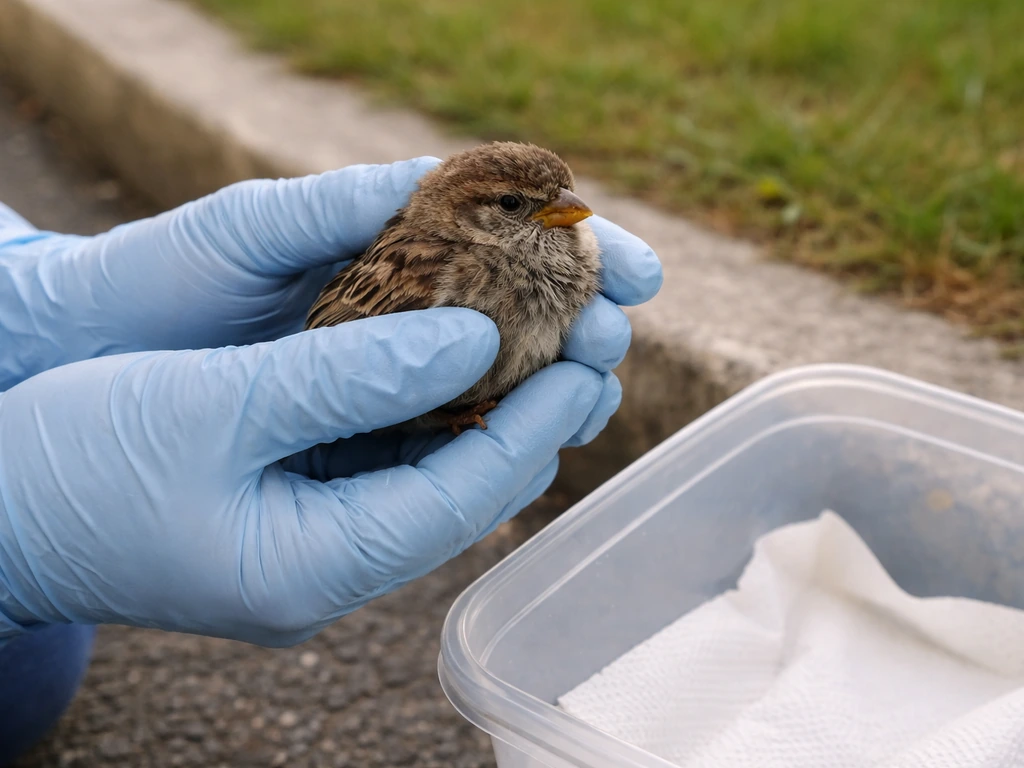
Once you've identified what kind of bird you have, do a quick visual assessment from a close but calm distance. You're looking for signs that this bird is in genuine trouble beyond just being on the ground.
- Visible broken limb (a wing or leg hanging at a wrong angle)
- Active bleeding from any part of the body
- Shivering or shaking, especially if the weather is warm
- Wings drooping unevenly
- Extreme weakness, unable to hold its head up
- Evidence it was caught or mouthed by a cat or dog
- A dead parent bird nearby
If you see any of those signs, professional help is needed and you should skip to the section on contacting a wildlife rehabilitator. If the bird looks alert, is moving around, and has none of those symptoms, take a breath. The situation may not be as urgent as it looks.
One thing worth knowing: parent birds will not reject a baby because a human touched it. That old myth has caused countless well-meaning people to leave injured nestlings on the ground out of fear of "contaminating" them with human scent. Birds don't work that way. If the bird needs to go back, you can put it back.
When and how to return the bird to the nest
If you've confirmed the bird is a nestling, it's uninjured, and you can see or reach the nest, return it. Gently scoop the bird up, keeping it cupped in your hand close to your body, and place it back in the nest. That's really it. The parents will take over from there.
If the nest is damaged but still intact and reachable, place the bird back in it even if it's a little crooked. If the nest has fallen completely to the ground, you can tuck it back into the fork of the tree or secure it to a branch as close to the original position as possible. Keep it out of direct sun and as high up and sheltered as you can manage.
If you can't find the original nest or can't reach it safely, you can make a substitute. Use a small plastic berry basket or a margarine container lined with shredded paper towels. Do not use cotton products, which can tangle around tiny feet and toes. Hang or wedge the makeshift nest on a low, sheltered branch near where you found the bird. Once you've placed the bird, back off completely and watch from a distance to see if the parents return. They usually will within 20 to 30 minutes.
After placing a nestling back, monitor from far enough away that you're not discouraging the parents from approaching. If parents haven't returned after a couple of hours, it's time to call a wildlife rehabilitator.
If the nest is gone or you can't return the bird
Sometimes the nest is completely destroyed, inaccessible on a roof or chimney, or you simply cannot find it. In that case, your goal is to keep the bird safe and warm while you get professional guidance, not to raise it yourself.
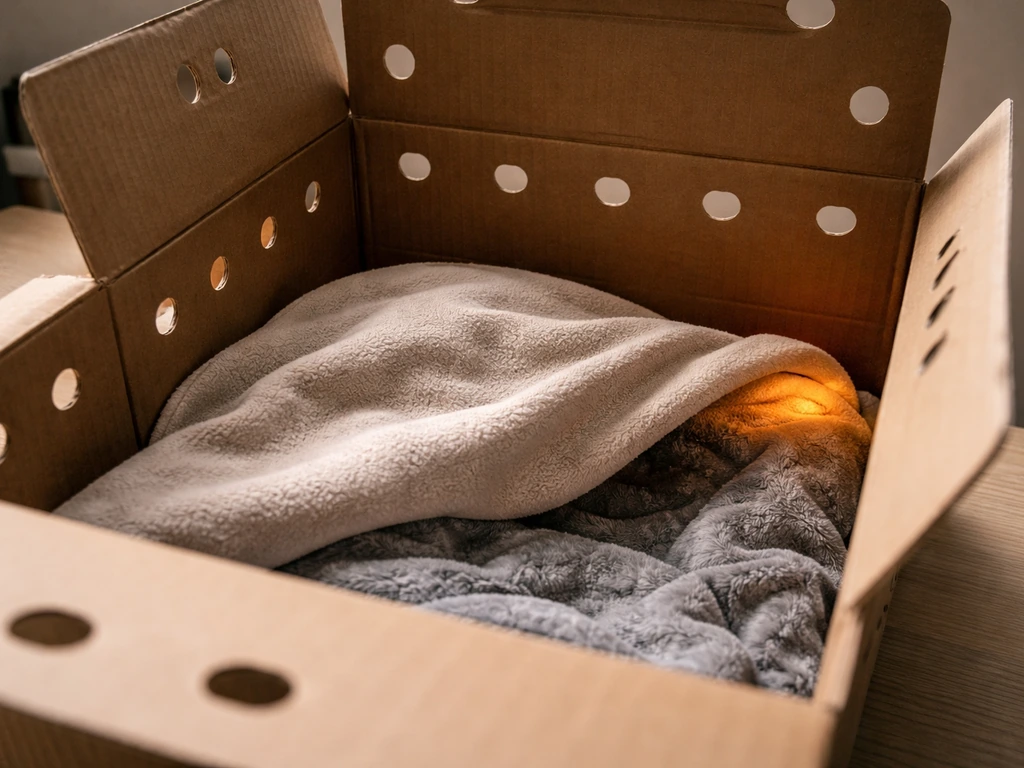
Put the bird in a small cardboard box or paper bag. Punch several small air holes in the lid or top so there's ventilation and so the bird can't escape. Line the bottom with a small folded towel or cloth twisted into a rough nest shape. Do not use cotton wool or loose fibrous materials.
If the bird is shivering or feels cold to the touch, you can add a little warmth by filling a plastic bottle or zip-lock bag with warm (not hot) water, wrapping it in a thin towel, and placing it on one side of the box so the bird can move away from it if needed. Don't heat the whole container. You want one warm side and one cooler side so the bird can regulate.
Keep the box in a quiet, dark, warm spot indoors, away from noise, pets, and activity. Darkness helps reduce stress for the bird. Don't keep checking on it every few minutes. The less handling and stimulation, the better. If you're working through what to do when a bird falls out of its nest and the nest is simply gone, this temporary containment step buys you time to reach a rehabilitator without the bird deteriorating.
A word about larger birds: if what you've found is a hawk, owl, heron, or other large predatory or wading bird, don't try to contain it on your own without speaking to a licensed rescuer first. These birds can cause real injury if handled without experience.
What NOT to do (this part matters)
This section might be the most important one in the article. The instinct to feed and care for a bird you find is completely understandable, but most well-meaning interventions cause more harm than the original fall did.
- Do not give the bird food or water. This is the number one mistake. Baby birds have very specific dietary needs depending on their species, and feeding them the wrong thing, including bread, milk, water, worms, or seeds, can cause aspiration, choking, illness, or death. Never give water by dropper or syringe. A bird that inhales even a small amount of water into its lungs can develop a fatal pneumonia very quickly.
- Do not attempt to raise it yourself. Unless you are a licensed wildlife rehabilitator, hand-rearing a wild bird is almost always a slow-motion disaster. It is also illegal in most U.S. states and many other countries without proper permits.
- Do not try to force it to fly. If it's a nestling, it isn't ready. If it's an injured fledgling, forcing activity can worsen an injury.
- Do not keep it as a pet. Beyond being illegal in most places, wild birds raised in captivity without proper training often cannot be released and cannot survive in the wild.
- Do not assume it's orphaned. Parents are often just away foraging and will return. Assuming orphan status too quickly leads to unnecessary intervention.
- Do not use cotton wool, loose fabric, or string for bedding. Feet and toes get tangled and the damage can be severe.
If you're unsure about a fledgling you found on the ground and whether it actually needs any help at all, read more about what to do with a fledgling bird on the ground before doing anything else. The answer is usually "very little."
When to call a wildlife rehabilitator or vet, and how to transport
Some situations require professional help right away. Don't wait on these:
- The bird has a visible broken bone or limb hanging at the wrong angle
- There is active bleeding
- The bird was caught, grabbed, or mouthed by a cat or dog, even briefly. Cat saliva carries bacteria that cause fatal infections in birds within hours, and there may be internal puncture wounds you can't see.
- The bird is shivering, limp, or unresponsive
- You've confirmed it's a nestling and cannot find or reach any nest
- The parents have not returned in 2 to 3 hours and you've been watching carefully
- You're not sure what species it is and it's a large or predatory-looking bird
To find a licensed wildlife rehabilitator near you, search the National Wildlife Rehabilitators Association directory (nwrawildlife. The NWRA provides a “find a rehabilitator” page you can use to locate nearby wildlife rehabilitators, wildlife centers, and related resources search the National Wildlife Rehabilitators Association directory. org) or call your local animal control office, humane society, or wildlife agency. When you call, tell them: what kind of bird (as best you can describe it), where you found it, how long it's been on the ground, and what symptoms or injuries you've observed. The more detail you give, the faster they can advise you.
For transport, use the box you've already prepared with air holes. Keep it dark, quiet, and level. Don't talk to the bird or peek at it repeatedly during the drive. Bring it directly to the rehabilitator or vet without stopping. Don't leave a box with a wild bird in a hot car, even for a few minutes.
If you can't reach a rehabilitator within an hour, call an animal welfare organization for interim phone guidance. They can walk you through how to keep the bird stable until you can hand it off properly. When you suspect a found bird needs emergency help or advice, contact Tufts Wildlife Clinic for guidance using the phone number listed on their site blank" rel="noopener noreferrer">contact the Tufts Wildlife Clinic for advice. Knowing where to take a fledgling bird before the situation turns urgent is genuinely useful, since scrambling for options while holding a fragile bird is stressful for both of you.
A few last things worth knowing
Most baby birds that end up on the ground do not need human intervention. The parents know where the bird is, they are watching it, and they are feeding it. Your best contribution is often just to keep the area clear and resist the urge to do more. Learning what to do if you find a fledgling bird is largely about learning when not to act.
That said, when a bird is genuinely injured, truly abandoned, or is a featherless nestling with no accessible nest, acting quickly and correctly makes a real difference. The steps in this guide are designed to help you make that call calmly and confidently in the first hour. If you ever find yourself wondering whether you've done it right, remember: getting the bird to a licensed professional as soon as possible is always the right call when you're uncertain.
If the situation turns out to involve raising a bird longer term, be aware that even short-term care requires more knowledge than most people expect. You can read about how to raise a bird that fell from a nest for more detail, but the honest recommendation from every wildlife organization is to get the bird to a rehabilitator before it comes to that. For older birds that are past the nestling stage but not quite adults, understanding what to do with a juvenile bird adds another useful layer of context, since the care approach shifts again once a bird reaches that in-between stage.
FAQ
What should I do first if I’m not sure whether it’s a nestling or a fledgling?
Start by clearing people and pets away and then watch from 10 to 15 feet for a few minutes. Use the feather clue: if it is mostly featherless or looks pink and fragile, treat it like a nestling and try to return it to a nest if possible, otherwise contact a rehabilitator. If it has most feathers, eyes open, and can hop or flutter, it is usually a fledgling and you should leave it alone after keeping it safe.
Is it okay to touch the bird to move it out of danger?
If you need to prevent immediate harm (for example, it’s in the path of a lawn mower or right next to a predator area like a busy sidewalk), you can gently relocate it using light handling and then back off. However, avoid repeated picking up and avoid feeding, especially if you suspect it is a nestling.
Should I feed the bird or give it water?
Do not feed. Wild baby birds have specialized diets and feeding the wrong food or technique can cause choking or aspiration. For temporary safety, focus on warmth and containment only when needed, then get it to a licensed rehabilitator if it is a nestling with no nest access or if you see injury signs.
How warm should I keep the box if I have to contain a nestling temporarily?
Aim for a mild, stable warm spot, not overheating. Provide one warm side and one cooler side by using a warm (not hot) water bottle or bag wrapped in a thin towel on one side of the container, so the bird can move away if it gets too warm.
Can I use a towel, tissue, or cotton as bedding?
Use folded paper towels or a folded towel shape for a nest substitute, but avoid cotton wool and loose fibrous materials. Fibers can tangle in toes and feet. Also avoid anything with strong odor or chemicals, like scented fabric.
What if the bird is fully feathered but still on the ground, does that mean it’s not a fledgling?
Most fledglings are fully feathered or nearly so, and still spend days hopping on the ground while building flight strength. The deciding factor is behavior and condition: if it is alert, moving, and not injured, it is usually safe to leave it while you protect it from pets and traffic.
What signs mean I should skip DIY and call a wildlife rehabilitator right away?
Contact a rehabilitator urgently if the bird has visible bleeding, severe bruising, a crooked or dangling limb, difficulty breathing (open-mouth gasping), cannot stand or right itself, is unresponsive or very lethargic, or you suspect a nestling with no nest access. Also call if it is a large predatory bird like an owl or hawk.
How long should I wait after reuniting a nestling before calling for help?
If you returned a nestling to the nest or a substitute, back away and watch from a distance. If parents have not returned after a couple of hours, it is time to call a wildlife rehabilitator for next steps.
What if I can see the nest but I can’t reach it safely?
Do not climb if it puts you at risk. Place the nestling back as high and sheltered as you can reach if that is safe, then keep the bird protected from sun and direct exposure and arrange professional help. If you cannot ensure safe positioning, use temporary containment and contact a rehabilitator.
Should I leave the nestling outside in a substitute container?
Yes, if the nest is inaccessible but you can place the substitute in a safe, sheltered spot near the original location. Once placed, step back completely so you do not discourage parental care. Avoid long periods in direct sun.
How should I transport the bird if I need to call someone?
Keep it in the prepared ventilated box or bag, maintain it dark and quiet, and keep the container level during transport. Avoid repeated checking or talking to the bird, and never leave it in a hot car even briefly.
What if the bird is attacked by a cat or dog?
Treat it as urgent. Bites and scratches can cause internal injuries even when they look minor. Keep it in a ventilated container, minimize handling, and contact a wildlife rehabilitator or emergency veterinary service as soon as possible.
Next Article
How to Release a Hand-Reared Bird Safely and Humanely
Step-by-step humane release for hand-reared wild birds: species checks, anti-imprinting care, soft vs hard release, afte