If you found a fledgling bird and need to know where to take it today, your best destination is a licensed wildlife rehabilitator. They are specifically trained and permitted to care for wild birds, including the songbirds, raptors, and waterfowl that most people encounter. If you can't reach one right now, an avian-capable veterinarian is your next best option. But before you scoop the bird up and drive anywhere, take 60 seconds to check whether it actually needs rescuing at all.
Where to Take a Fledgling Bird: What to Do Now
Marcus Holloway
7 May 2026
First, figure out what you actually found
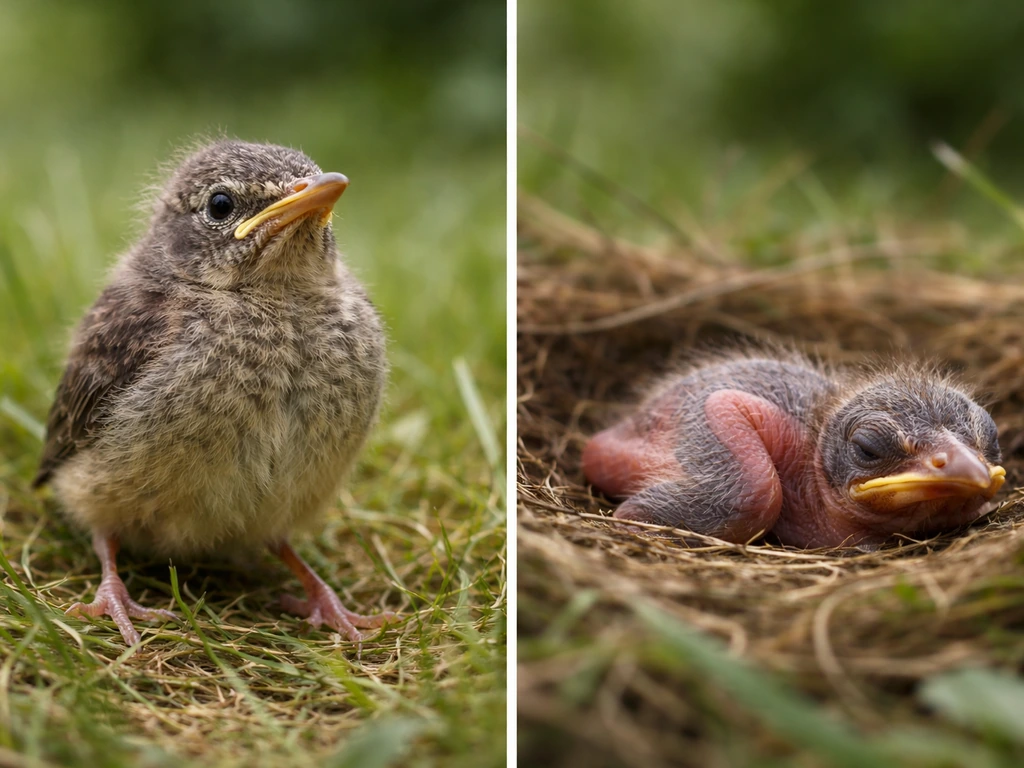
A lot of people find a bird on the ground and assume something is wrong. Often, nothing is. The key is telling a fledgling from a nestling, because those two situations call for completely different responses. If you found a newborn bird, the safest next step is to contact a licensed wildlife rehabilitator or an avian-capable veterinarian for guidance i found a newborn bird what do i do.
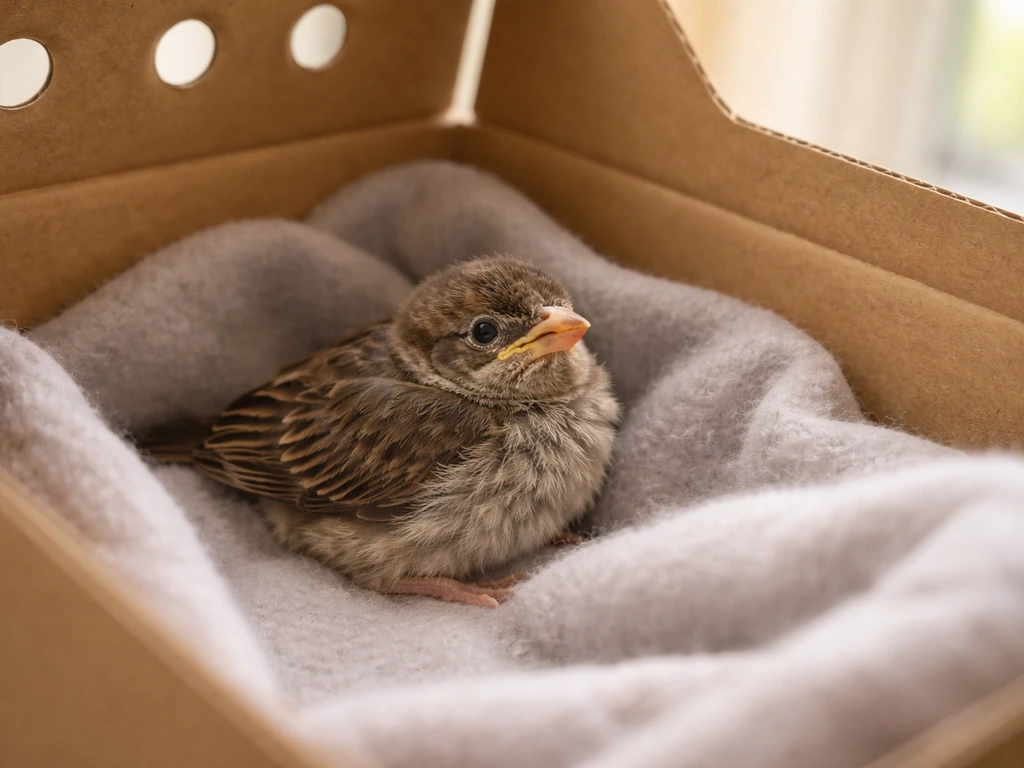
A fledgling is a bird that has most or all of its feathers, can hold itself upright, and can hop or flutter. It may look a little scraggly and awkward, but that's normal. Young songbirds leave the nest before they can fully fly, sometimes days before, and spend that time on the ground or in low shrubs while their parents continue to feed them. If you see a fully feathered bird hopping around alertly, the most likely explanation is that it's doing exactly what it's supposed to be doing.
A nestling is a very different story. Nestlings are naked or barely fuzzy, can't stand or hop, and have their eyes closed or barely open. If you found something that looks like this, it has genuinely fallen from a nest and needs help getting back, or needs a rehabilitator if the nest is gone. If a bird fell out of the nest, the right first step is to figure out whether it is truly a nestling and requires urgent help or a fledgling that should be left alone or supported safely bird fell out of the nest what should i do. Related to this situation, topics like what to do with a bird fallen out of nest and what to do if you find a fledgling bird cover these distinctions in more detail.
The quick way to sort it out: if the bird is fully feathered, alert, warm to the touch, and moving around on its own, it's almost certainly a healthy fledgling. If it's naked, cold, limp, bleeding, or just sitting there with eyes half-closed, it needs help now.
Signs a bird definitely needs help
- Bleeding or visible wounds
- A wing or leg held at an odd angle
- Cold or shivering to the touch
- Lying flat and not moving, or barely responsive
- Eyes half-closed in a slit
- Entangled in string, netting, or debris
- Being chased or cornered by a cat, dog, or other predator
- Featherless or barely fuzzy (nestling, not fledgling)
One important note on coldness: if a young bird is cold, don't return it to the nest right away. A cold bird placed back in a nest can signal distress to the parents, and they may push it out. Warm the bird first, then reassess.
What to do immediately while you arrange help
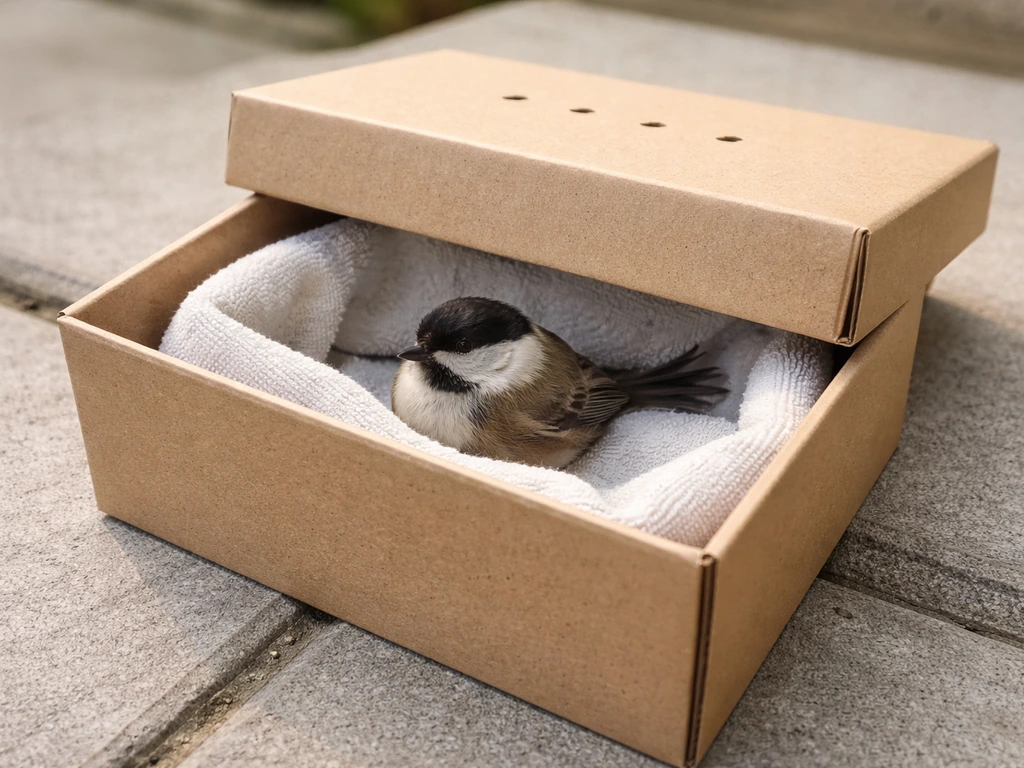
If the bird does need help, the most useful thing you can do in the next few minutes is stabilize it, not treat it. You are not expected to fix this bird. Your job is to keep it safe and calm until a professional can take over.
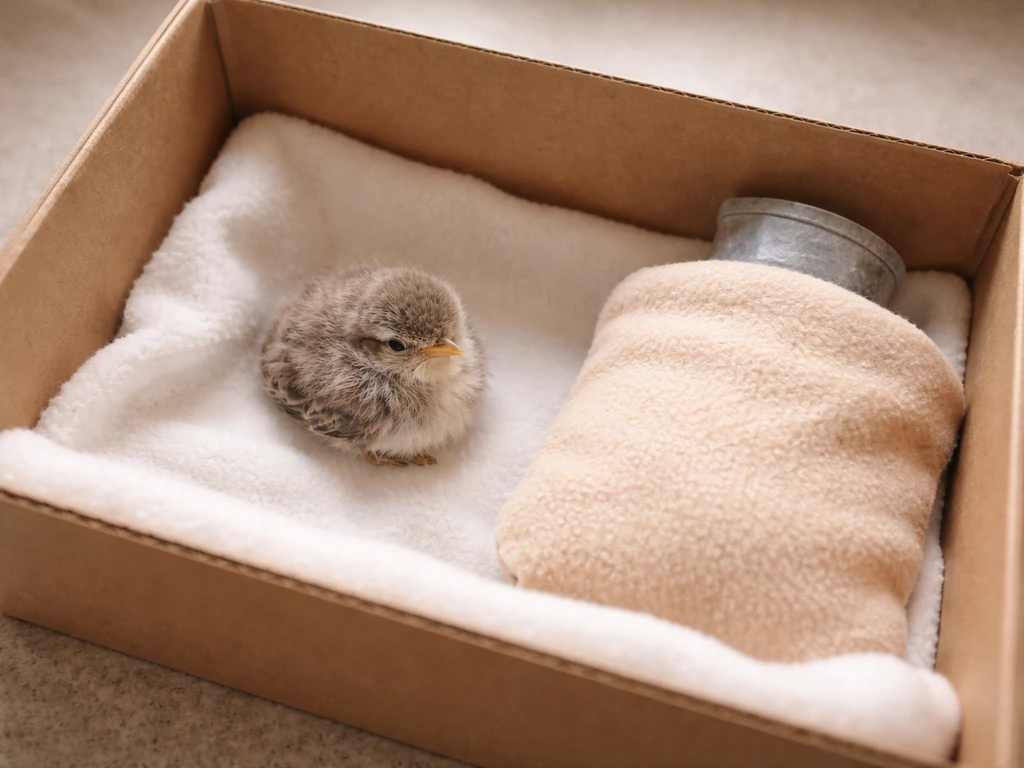
- Put the bird in a box. A cardboard box with a lid works well. Poke a few small air holes in the sides. Line the bottom with a soft cloth or paper towels, but avoid anything fluffy or looped (like terry cloth) that small claws can get caught in.
- Add gentle warmth. Place a heating pad set to low under one half of the box, so the bird can move off the heat if it gets too warm. If you don't have a heating pad, a zip-lock bag filled with warm (not hot) water wrapped in a cloth works in a pinch.
- Keep it dark and quiet. Put the box somewhere away from noise, kids, and pets. Darkness reduces stress significantly for wild birds.
- Do not give food or water. This is a firm rule from nearly every wildlife rehab organization. Birds have very specific dietary needs, and the wrong food can cause serious harm. Even water, if given incorrectly, can be aspirated into the lungs. Leave feeding to the professionals.
- Minimize handling. Every time you pick up the bird or open the box to check on it, you add stress. Resist the urge to look in frequently. Once the bird is contained and warm, leave it alone.
If it's after hours and you can't reach anyone tonight, this setup, warm, dark, quiet, no food or water, will keep the bird safe until morning. The Wildlife Center of Virginia also advises that you do not give baby birds food or water not to give baby birds food or water. Don't wait until morning to start making calls, though. Many rehab centers have after-hours lines or recorded messages with emergency contacts.
Where to take a fledgling bird: your options ranked
Not every place that handles animals can legally or practically care for a wild bird. Here's how your options stack up. If you are wondering what to do if you find a fledgling bird, the right next step is to get it to a licensed wildlife rehabilitator when possible.
| Option | Best For | Limitations |
|---|---|---|
| Licensed wildlife rehabilitator | Any wild bird, any situation | May not be open 24/7; some have intake limits by species |
| Avian-capable veterinarian | Injured birds needing immediate medical care | May charge fees; not all vets treat wild birds |
| Animal shelter or humane society | Emergency holding when nothing else is available | Most are not equipped for long-term wild bird care; treat as a bridge |
| State or local wildlife agency | When you can't find a rehabber; can direct you to permitted help | They refer rather than rehabilitate in most cases |
| General wildlife organizations or bird conservancies | Information and referrals only | Most are not licensed rehabilitators and cannot accept birds |
Licensed wildlife rehabilitators: the right first call
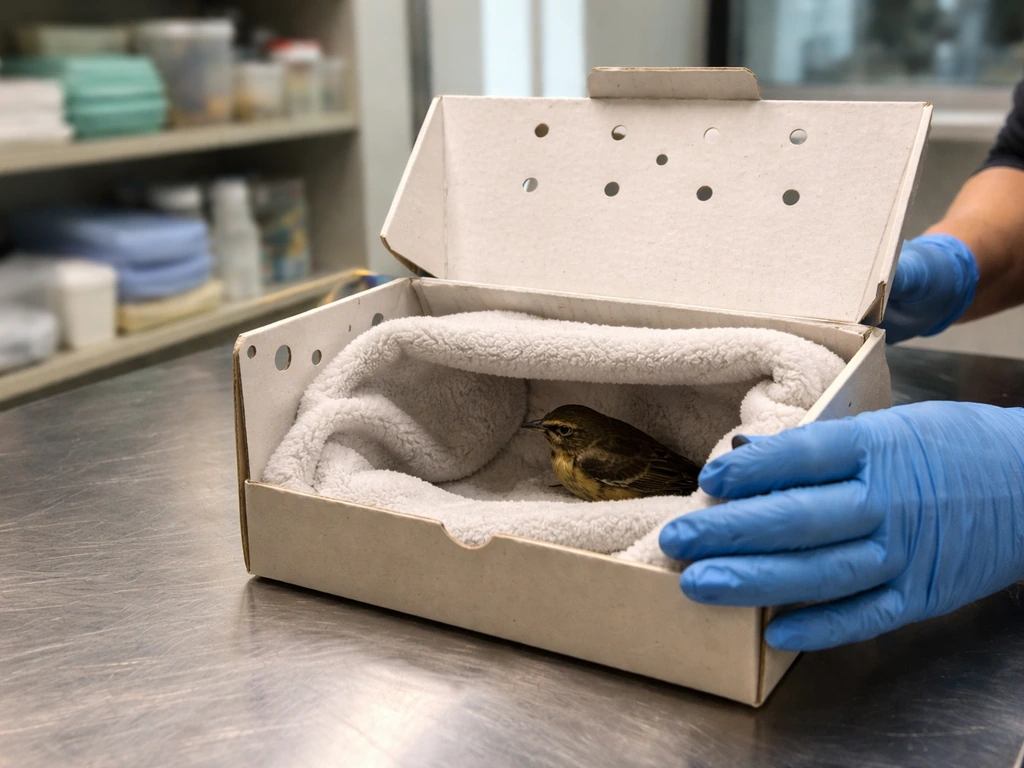
A licensed wildlife rehabilitator holds a Federal Migratory Bird Rehabilitation permit, which is required to legally care for most wild birds in the U.S., including songbirds, raptors, and waterfowl. These are the people with the training, equipment, and legal authority to actually rehabilitate the bird and release it. When you can reach one, this is your destination.
To find one near you right now, search the National Wildlife Rehabilitators Association (NWRA) directory, your state's wildlife agency website (most have a rehabilitator locator), or call your state's fish and wildlife agency directly. Some states like Massachusetts publish interactive maps of licensed rehabilitators. The Wildlife Center of Virginia also maintains a help line staffed seven days a week from 9am to 5pm.
Veterinarians: your best option for an injured bird
If the bird is actively bleeding, has a broken limb, or is in obvious medical distress, an avian-capable vet can provide immediate care that a rehabber may not be equipped to deliver. Call ahead to confirm the clinic treats wild birds before you drive over. Emergency animal hospitals are another option after hours, though not all have avian experience. A vet can stabilize the bird and often connect you with a rehabber for the next phase.
Animal shelters: a bridge, not a destination
Some animal shelters will accept a wild bird in an emergency and hold it until a rehabber can be reached. This is a reasonable option if it's the middle of the night and you have no other choice. Call before arriving, because not all shelters accept wildlife. Treat this as a temporary handoff, not a permanent solution.
How to pick the right place based on your situation
The right destination depends on three things: the bird's condition, the species you've found, and what's available near you right now.
If the bird is injured (bleeding, broken wing, trauma), prioritize getting it to a vet or wildlife emergency line first, then transfer to a rehabber once it's stabilized. If the bird is just a healthy fledgling that was picked up by a well-meaning child or cornered by a cat with no obvious injuries, a licensed rehabber is still worth a call, but the urgency is lower.
Species matters too. Raptors (hawks, owls, eagles) require a rehabber with specialized permits and experience. Not every wildlife rehab facility handles raptors. If you've found a bird of prey, call your state wildlife agency first to get a referral to a raptor-specific rehabber. Waterfowl and shorebirds similarly often go to specialists. For a common songbird fledgling, most licensed rehabbers can help.
If you're in a rural area with limited options, call your state wildlife agency. They can usually point you to the nearest permitted rehabber or give you instructions for holding the bird safely overnight. The NWRA also has a national referral network for exactly this situation.
How to transport the bird safely
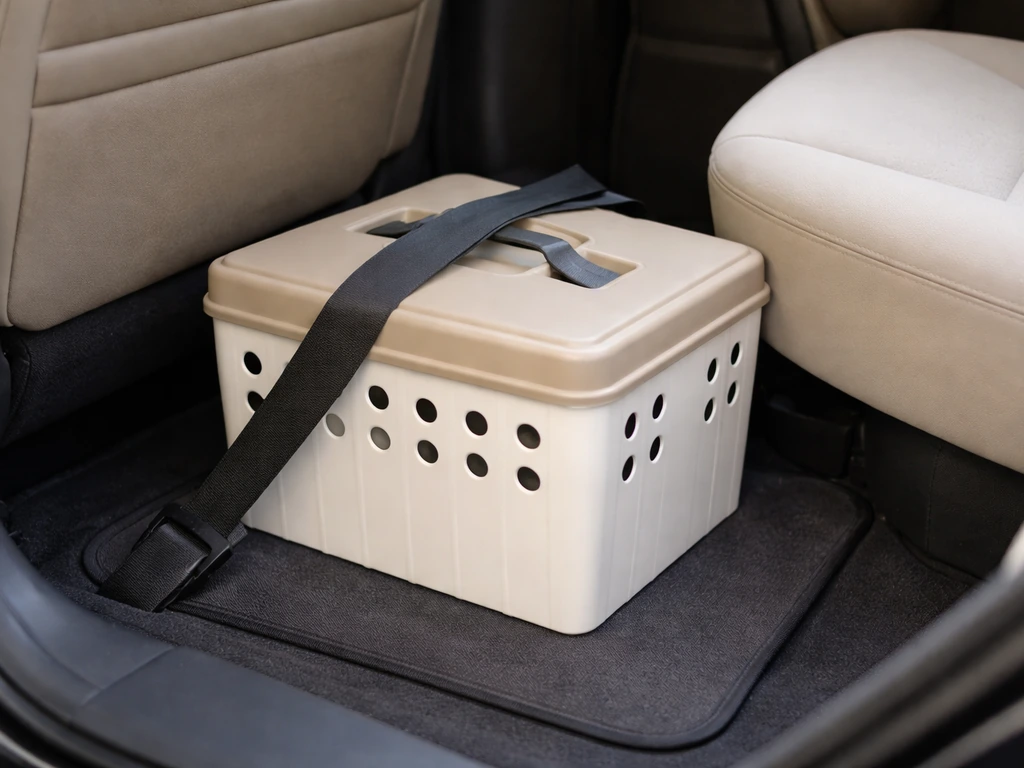
The box you used to contain the bird is also your transport container. You don't need anything fancier. Here's how to make the trip as safe as possible for the bird.
- Keep the box closed and on a flat surface during the drive, like the floor of the passenger seat or the back seat, not the trunk.
- Don't put the box in direct sunlight through the car window. Birds overheat quickly.
- Keep the car quiet. Turn off loud music. Talk calmly if at all.
- Don't open the box to check on the bird while driving.
- Drive smoothly. Sudden braking and sharp turns add stress.
- Keep the car at a comfortable room temperature, not too cold from AC, not too warm.
When you arrive, carry the box calmly and keep it level. Let the intake staff open it. They know how to handle the bird from there.
When to skip the wait and get help urgently
Most fledgling situations are not life-or-death emergencies, but some are. Get help as fast as possible if you see any of the following.
- Active bleeding that isn't stopping
- The bird was caught in a cat's or dog's mouth, even briefly (cat saliva contains bacteria that can be fatal to birds within hours even without obvious wounds)
- The bird is completely unresponsive or limp
- It's a raptor (hawk, owl, eagle, falcon) of any kind
- The bird is cold and shivering and not warming up after 20 minutes in a warm box
- You can see exposed bone, or a leg or wing is bent at an obviously wrong angle
- The bird is a protected or rare species in your area
Cat attacks deserve special mention. A bird that was grabbed by a cat and released might look completely fine but still die from bacterial infection within 24 to 48 hours if it doesn't receive antibiotics. If a cat was involved at all, treat this as urgent regardless of how the bird looks.
What happens after you hand the bird over
When you arrive at a wildlife rehab center or vet, be ready to give a brief history: where you found the bird, what it was doing when you found it, whether a cat or other animal was involved, how long you've had it, and what (if anything) you gave it. This information helps them triage and treat the bird faster.
The intake process typically involves a quick physical assessment for visible injuries, hydration status, body temperature, and overall condition. If it's a rehabber, they'll determine whether the bird is a release candidate and begin whatever care it needs, which could be as simple as observation and feeding, or as involved as wound care and weeks of rehabilitation.
Most wildlife rehab centers don't have the staff to give individual status updates on every bird they receive, so don't be discouraged if you don't hear back. Some centers will give you a case number and let you call in for updates. Ask at intake if that's an option.
One more thing: once you hand the bird over, follow the rehabber's instructions. If they tell you the bird was actually fine and should have been left alone, that's genuinely good news. The goal was always to give the bird the best chance, and sometimes that means learning what not to do next time. The goal was always to give the bird the best chance, and sometimes that means learning what not to do next time, which is also the key idea behind what to do with a juvenile bird. If you ever need guidance on how to raise a bird that fell from a nest, rely on instructions from the licensed rehabilitator handling your case. If you want a deeper dive into caring for a bird before help arrives or understanding the full range of what fledglings need, topics like what to do with a fledgling bird on the ground and how to raise a bird that fell from a nest go into more detail on those specific situations. If you want more specifics on caring steps in the meantime, see what to do with a fledgling bird.
FAQ
What if I cannot tell whether the bird is a fledgling or a nestling from a distance?
Go by mobility and temperature. A fledgling is usually fully feathered and can stand, hop, or flutter, and will feel warm. If you cannot confirm warmth, or the bird looks naked, limp, or has eyes mostly closed, treat it as a nestling until a rehabber or avian vet advises otherwise.
Should I take the bird back to the nest if it looks safe and the parents are nearby?
Only consider returning it if the bird is clearly a nestling that you are confident came from a nest and you can follow a professional’s guidance. For cold birds, the safest approach is to warm and reassess first, since coldness can change how parents respond and can lead to the bird being rejected.
Can I feed the bird or give it water while I wait for help?
Avoid offering food or water unless an avian vet or wildlife rehabilitator specifically instructs you to. In many cases the risk of choking or giving the wrong diet is higher than the benefit, so stabilization (warm, dark, quiet, contained) is the safer default.
What should I do if the bird is obviously injured but I cannot reach a rehabilitator today?
Prioritize immediate stabilization by calling an avian-capable veterinarian or an emergency animal hospital that treats wild birds, then transfer to a licensed wildlife rehabilitator if needed. Call ahead to confirm they handle wild birds, since some only see domestic species.
If a cat was involved, does it always mean the bird needs urgent care?
Yes, cat exposure is urgent even if the bird looks fine. Bacterial infection can develop after the bite or scratch, so treat it as an emergency and get it to an avian vet or wildlife emergency line as soon as possible.
Is it ever okay to bring the bird to a regular animal shelter or humane society?
Sometimes, but only as a temporary handoff and only after calling first. Many shelters cannot legally or practically rehabilitate wild birds, so ask whether they accept wildlife and whether they will hold it until a permitted rehabber can take over.
Should I contact the police or animal control if the bird is in a dangerous spot?
Often you should call your state wildlife agency or a wildlife rehabilitator first, since they know the legal and practical handling steps. Animal control can be helpful for access issues, but they may not provide species-specific triage, so confirm who will transport or receive the bird.
What information should I provide when I call a rehabber or vet?
Share where you found it (yard, street, under a shrub), what it was doing, the approximate time you picked it up, whether a cat or other animal was involved, whether you noticed bleeding or a limping wing, and how the bird feels when you touch the container area (especially whether it was cold). Avoid long stories, but do include key timing and exposure details.
How warm is “warm” enough before a rehabber takes over?
Warm enough that the bird is no longer cold to the touch and seems more alert when handled minimally. Use gentle, indirect warming in a safe container, and do not overheat. If you cannot get it to comfortable warmth or it is limp or bleeding, seek help immediately.
Do I need to wear gloves or wash my hands before and after handling?
Yes. Use disposable gloves if available and wash hands thoroughly afterward. This reduces risk to both you and the bird, particularly if the bird has been exposed to outdoor contaminants or if you suspect injury.
What if the rehab center asks me to bring it but I am too far away to travel quickly?
Call back with your location and timing. Many rehabbers can give instructions for holding the bird safely overnight, including the warm, dark, quiet setup and avoiding food or water. Start making calls immediately, since after-hours lines or recorded contacts may exist.
Where can I take the bird if I’m outside the U.S. or I’m not sure which jurisdiction applies?
Use the local permitted wildlife rehabilitation resources for your area. If you are unsure, contact your local wildlife authority or the nearest wildlife rehabilitator directory in your country, since licensing and legal requirements differ by jurisdiction.
Next Article
How to Raise a Bird That Fell From a Nest
Step-by-step care for a fallen baby bird: assess, stabilize, feed safely, warm properly, and when to seek rehab.