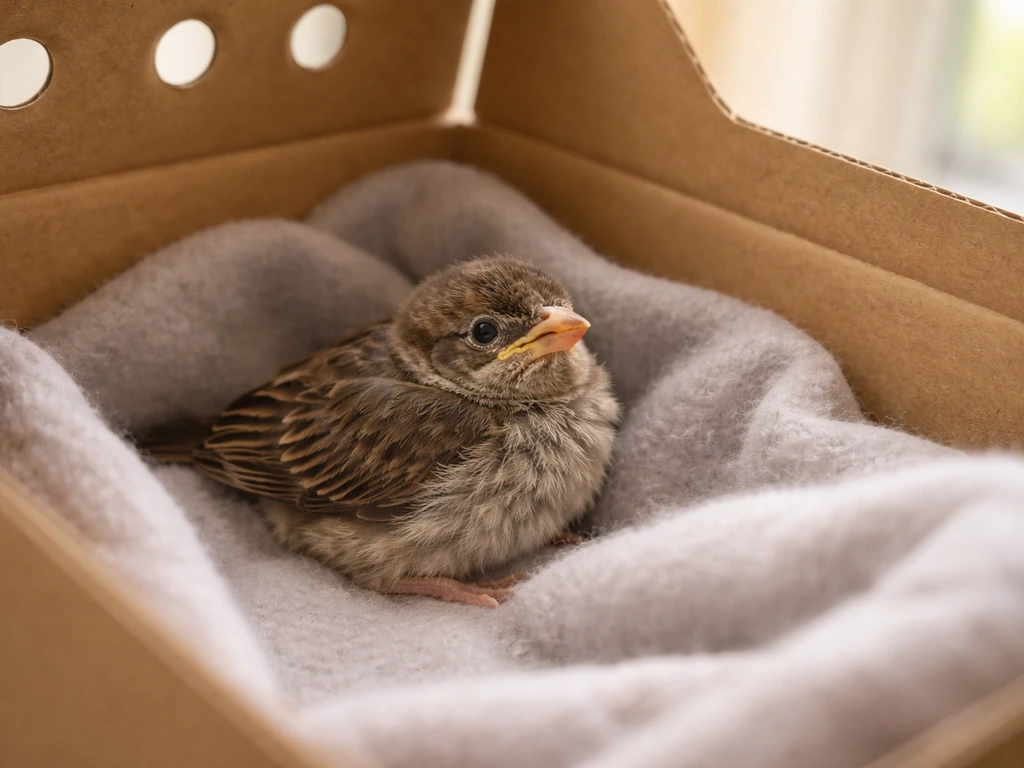
Pick the bird up gently with both hands, keep it warm, and put it somewhere quiet, dark, and safe. Do not feed it or give it water. Then figure out whether it needs to go back to its nest or straight to a wildlife rehabilitator. If you are not sure what to do with a bird fallen out of nest, use the quick nestling versus fledgling checks in the next sections before you decide on return versus rescue whether it needs to go back to its nest or straight to a wildlife rehabilitator. Those two things cover the next 15 minutes, and everything else flows from there.
I Found a Newborn Bird What Do I Do Right Now
Marcus Holloway
18 May 2026
First check: is it really a newborn or just a bird learning to fly?
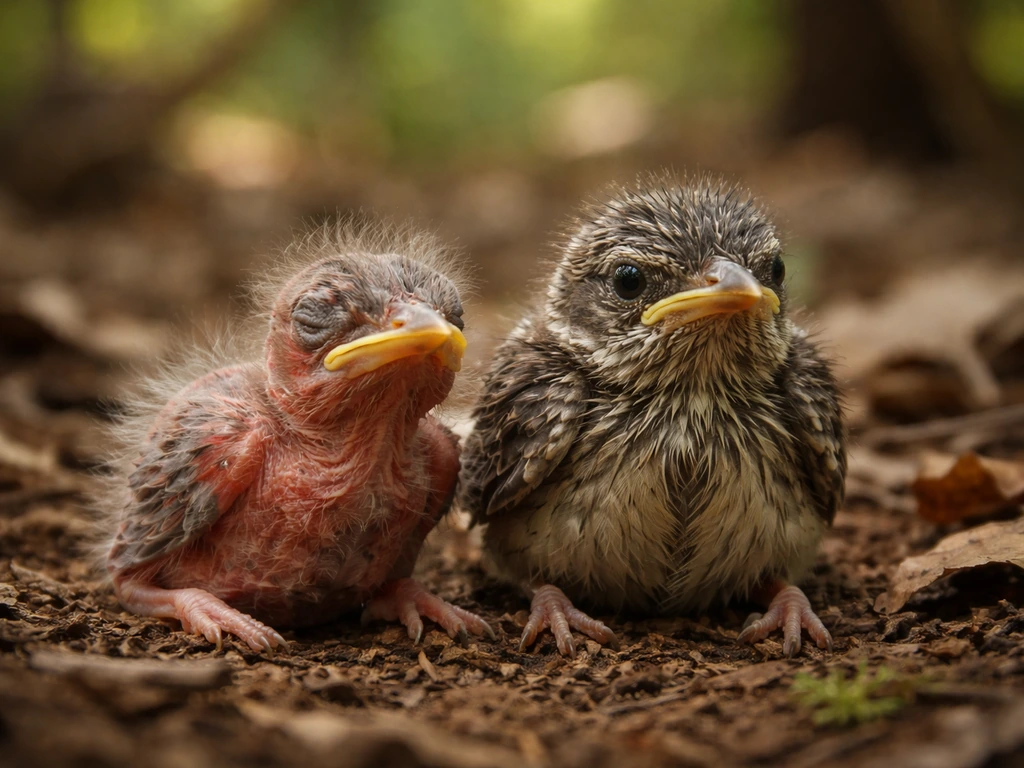
Before you do anything else, look at the bird closely. The most important question is whether it's a nestling or a fledgling, because the answer changes everything about how you help it.
A nestling is a true newborn. It has little or no feathering, pink or translucent skin, closed or barely open eyes, and it cannot hop or perch. It has absolutely no business being on the ground. If this is what you're holding, it almost certainly fell or was pushed from a nest, and it needs to go back up or get to a rehabilitator today.
A fledgling looks more like a real bird. It has most of its feathers, can hop around, and its eyes are fully open. Fledglings spend days on the ground intentionally while their parents keep feeding them. If you found a fluffy, alert bird that looks almost like a small adult, it may not need rescuing at all. The parents are likely nearby, watching from a branch.
Here's the quick test: if the bird is mostly featherless and can't right itself or hop, it's a nestling and needs immediate help. If it's fully feathered, bright-eyed, and squawking at you, it's probably a fledgling doing exactly what it's supposed to do. There's more detail on handling each situation separately, but for a true naked or near-naked newborn, keep reading here.
Also check whether a parent is hovering nearby. Parent birds often watch from trees and will return to feed a grounded chick. Watch quietly from a distance of at least 10 to 15 feet for 30 to 60 minutes before assuming the bird is orphaned. If you see a parent returning regularly and the bird looks warm and uninjured, it may be okay. But if it's cold, wet, injured, or no parent shows up, move on to the next steps.
Immediate safety steps for the baby bird
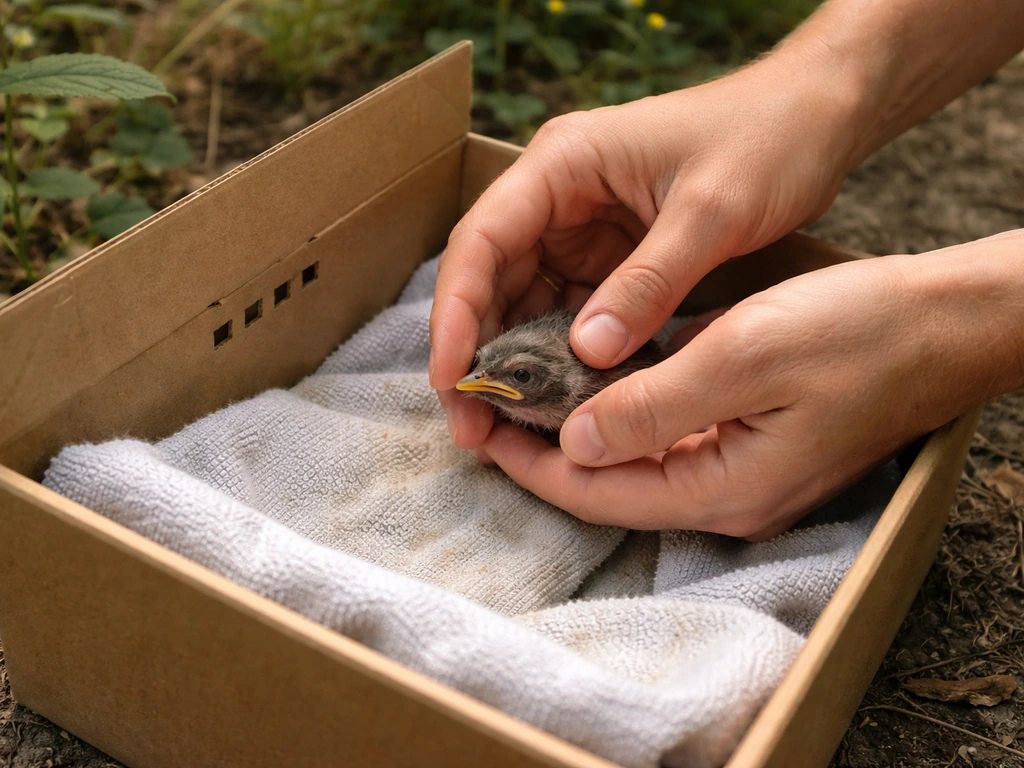
The very first priority is getting the bird out of immediate danger. If there's a cat, dog, or other animal nearby, pick the bird up now. Use light gloves if you have them, but bare hands are fine in an emergency. The idea that human scent causes parents to abandon their young is a myth.
Next, look for the nest. Check the tree directly above where you found the bird, nearby shrubs, and ledges or gutters. Nests can be small and well-hidden. If you find an intact nest, gently place the nestling back in it. That's genuinely the best outcome. If the nest has fallen, you can reattach it to the tree using a small container (a berry basket or margarine tub with drainage holes works well) wired to a branch in roughly the same spot.
If you cannot find the nest or it's destroyed, don't leave the nestling on the ground. If you cannot locate the nest, U.S. Fish & Wildlife Service guidance says to move the nestling to a shaded area instead of leaving it on the ground move it to a shaded area. The U.S. Fish & Wildlife Service says to move it to a shaded area if you can't locate the nest, but a better option at that point is a temporary rescue container you can secure out of reach of predators while you contact a rehabilitator.
One important caveat: if the bird is cold, returning it to the nest may cause more harm. A cold nestling placed next to warm eggs or siblings can cause the parent to push it out to protect the others. Warm the bird first (more on that below), then attempt the return.
How to warm the bird and set up a temporary rescue container
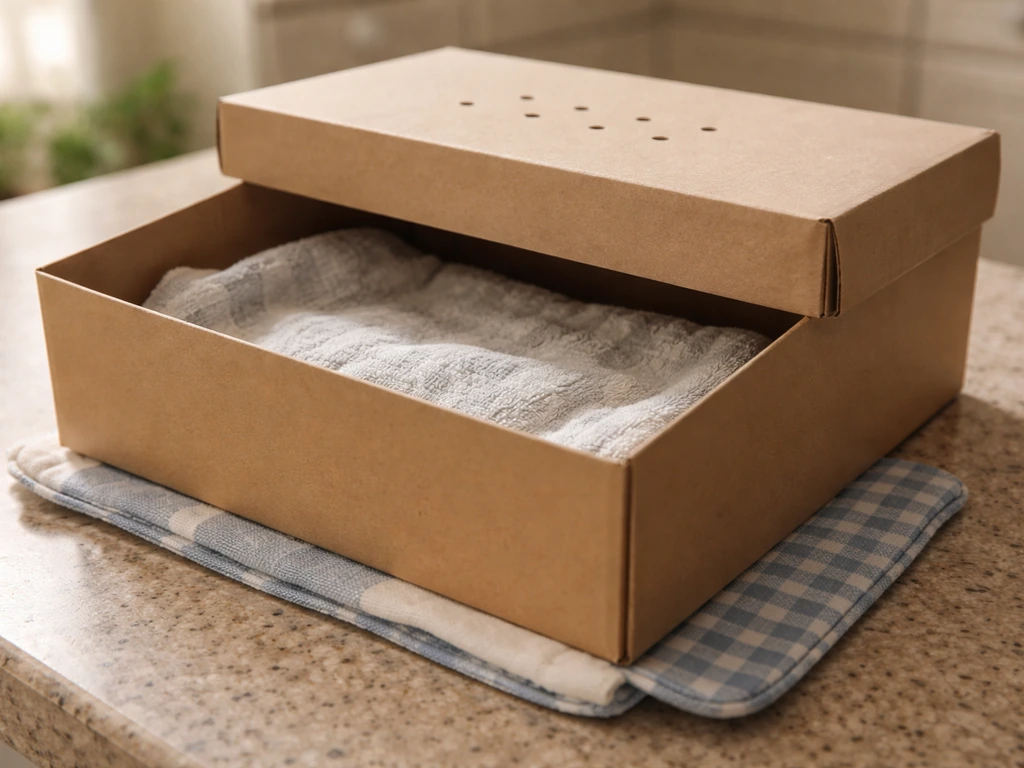
Baby birds lose body heat fast. Warming the bird gently is one of the most important things you can do while you figure out next steps.
Get a small cardboard box or shoebox. Poke a few small holes in the lid for airflow, and line the bottom with a soft cloth or paper towels. Do not use a wire cage, it will stress the bird and cause injuries. Put the box somewhere quiet, away from people, noise, and other pets.
For heat, place a heating pad set on LOW underneath one half of the box so the bird can move away from the heat if it gets too warm. The target temperature range used by most rehab organizations is around 85 to 90 degrees Fahrenheit (29 to 32 degrees Celsius). If you don't have a heating pad, fill a clean sock with dry rice and microwave it for about 30 to 45 seconds, then wrap it in a thin cloth and place it in one corner of the box. Do not put it directly against the bird. Check that it's warm but not hot before placing it inside.
Keep the box in a dim, quiet room. If the bird needs to stay in the box for more than two hours, Peace River Wildlife Center recommends keeping it partially on a low heating pad the whole time. Darkness keeps the bird calm and reduces stress, which is critical for a fragile newborn.
What not to do
This section matters as much as anything else here. Well-meaning people accidentally kill baby birds by doing things that seem helpful.
- Do not feed the bird. This is the single most important rule. Baby birds can aspirate (inhale food into their lungs) extremely easily, and even the right food given the wrong way can kill them. Wildlife Center of Virginia, Washington DFW, and nearly every rehab organization give the same instruction: no food unless a licensed rehabilitator tells you specifically what to give and how.
- Do not give water. Dripping water into a baby bird's mouth is one of the most common causes of accidental death. Birds don't drink the same way mammals do, and forcing liquid can cause aspiration pneumonia within minutes.
- Do not give milk, bread, crackers, or worms you dug up. These are all harmful. Bread and crackers have no nutritional value and can cause crop impaction. Milk causes digestive failure in birds.
- Do not use any human medications, antiseptics, or antibiotic ointments. These are toxic to birds.
- Do not keep handling the bird. Every time you pick it up, it experiences significant stress. Once it's in the box and warm, leave it alone.
- Do not attempt to raise it yourself long-term. Baby birds have very specific dietary and developmental needs that require trained hands. DIY rehab almost always ends badly for the bird.
- Do not post the bird on social media and wait for crowdsourced advice. Call an expert directly.
Assess injuries and know the high-risk situations
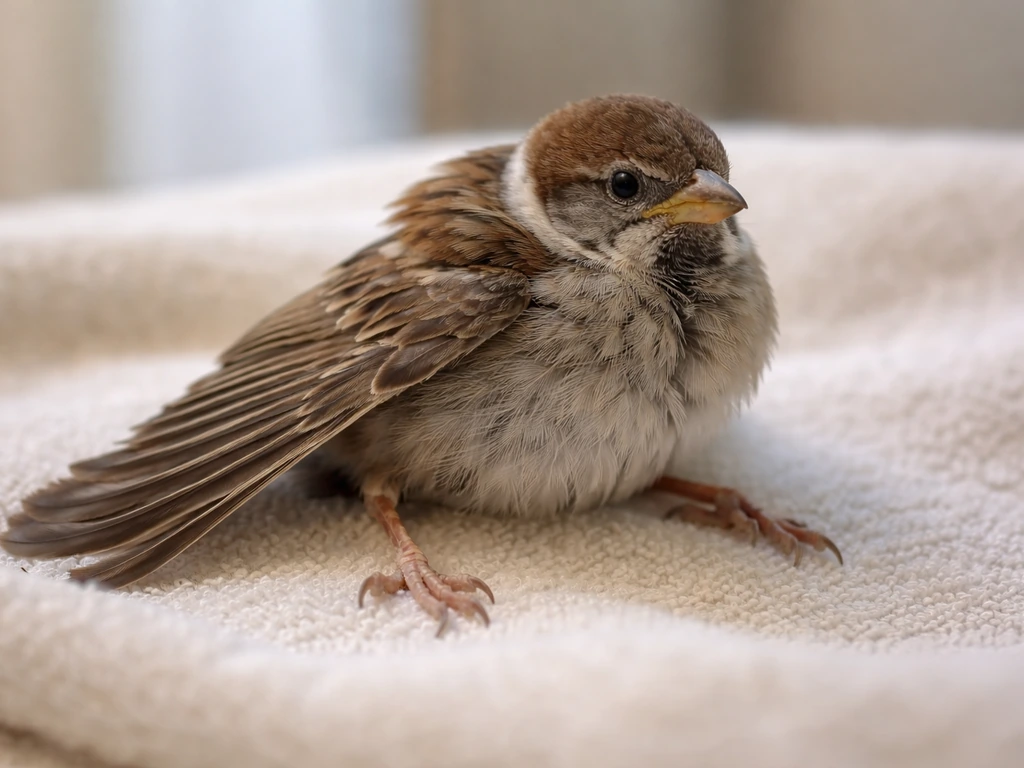
While the bird is warming up, take a quick visual look without handling it more than necessary. You're checking for obvious problems: a drooping wing that hangs away from the body, blood, open wounds, a twisted leg, labored breathing, or a bird that won't lift its head. If you see any of these, contact a rehabilitator immediately rather than waiting to see if it improves.
A few scenarios require urgent action no matter how the bird looks on the surface.
Cat or dog contact is a serious emergency even when there are no visible wounds. Cat saliva contains bacteria that cause fatal infections within hours. If a cat or dog had the bird in its mouth, even briefly, treat it as an injured bird and call a wildlife rehabilitator right away. Do not wait to see if it deteriorates.
Exposure to cold or rain is another urgent situation. A nestling that is cold, limp, or lethargic needs warmth immediately and then professional care. Get it into the warm box right away and make the call while it warms up.
Window strikes occasionally affect older nestlings that have left a nest too early. If the bird is stunned, keep it in the dark box and check again in an hour. If it's alert and responding after that time, the situation may be different, but still contact a rehabilitator for guidance.
When and how to contact a wildlife rehabilitator or avian vet
If you have a nestling that you cannot return to its nest, contact a licensed wildlife rehabilitator as soon as possible. If a bird fell out of its nest and you are unsure what to do next, contact a wildlife rehabilitator promptly call a wildlife rehabilitator as soon as possible. Don't wait until the next day. Many rehab centers take calls evenings and weekends precisely because wildlife emergencies don't follow business hours.
To find one quickly, search your state's fish and wildlife agency website, or use the Wildlife Rehabilitators directory from NWRA (National Wildlife Rehabilitators Association). Audubon also recommends calling your local state wildlife agency or a local avian vet if a rehabilitator is not immediately available. If you're unsure whether the bird actually needs help, call and ask before doing anything else.
When you call, have this information ready: the species if you can identify it (or a description), where exactly you found it, how long it's been on the ground, any visible injuries, whether a parent was seen nearby, and whether it's been exposed to a cat or dog. The more detail you give, the faster they can guide you.
For transport, keep the bird in the secure, ventilated box. Do not put food or water in the box for transport. Keep the car quiet and do not play music or talk loudly. Keep the heater at a moderate level so the car doesn't get too hot. Drive directly to the rehab center without stopping, and resist the urge to open the box and check on it repeatedly.
What happens next and how to prevent this from happening again
Once the bird is with a licensed rehabilitator, the timeline from there depends on its age and condition. Very young nestlings with no injuries can take four to eight weeks of intensive feeding and care before they're ready for release. Birds that arrived cold, injured, or after cat contact may need longer. Rehabilitators are trained for exactly this work, and the bird's chances are significantly better in their hands than in a well-meaning home setup.
You won't always get updates, and most rehab centers are understaffed volunteers. That's normal. If you drop a bird off and don't hear back, it doesn't necessarily mean bad news. You can call and ask, but understand that the focus stays on the animal.
To reduce the chances of this happening in your yard again, there are a few practical steps. Keep cats indoors during spring and early summer nesting season, which runs roughly April through July in most of the U.S. If you have outdoor cats, bell collars give birds slightly more warning, but keeping them in is far more effective. Trim back shrubs and trees carefully after checking for active nests first. If you know where a nest is, give it a wide berth and keep dogs and children away from the base of that tree until the young have fledged.
If you found a bird that's a little older and more developed than a true newborn, the situation is handled a bit differently depending on its stage. A fledgling that's hopping around with feathers but can't yet fly has its own set of guidelines, as does a bird that's clearly juvenille but not quite adult. For juveniles that are close to adult but still dependent, follow the same safety-first steps and contact a rehabilitator if you are unsure what stage the bird is in juvenile bird. If you’re dealing with a fledgling, it’s also important to know where to take a fledgling bird so you can get the right professional help fast. A fledgling often looks lively but still needs you to keep it safe and contact a wildlife rehabilitator if you are unsure about what to do next. If you’re dealing with a fledgling, the approach is different from a true newborn, and this guide can help you figure out what to do with a fledgling bird. The core rules still apply: no food or water from you, keep it safe, and call a rehabilitator if you're unsure.
FAQ
I found a newborn bird, can I feed it or give it water right away?
Do not give homemade food like bread, milk, or seed, and do not give water. Even a small amount can cause choking or aspiration, and improper nutrition can be fatal for very young nestlings. If the bird is cold, focus on warming in the ventilated box first, then contact a rehabilitator for feeding instructions.
How much should I handle the bird, and how do I pick it up safely?
If you must handle it briefly, use gentle support under the body, keep it low and stable, and avoid excessive checking. Limit time with it in the open, because cooling and stress can worsen a fragile nestling quickly. The warm, dark container should be your main “holding spot” while you decide on return versus rehab.
If I cannot find the nest, should I keep the bird outside or bring it indoors?
If the bird is warm, uninjured, and fully featherless or near-naked, you can try to return it to the nest or attempt to reattach a fallen nest after warming. If the nest cannot be found or the nest is destroyed, keep it in a secure shaded container while you contact a rehabilitator. The key difference is that “warming first” applies only when the bird’s condition allows a safe return attempt.
What container is safest for transport and short-term care?
A safe container should have airflow and be escape-proof, such as a ventilated box or small container secured from predators. Avoid wire cages, and avoid placing it on bare surfaces where it can lose heat. Keep the box dim, quiet, and partially heated so the bird can move away if it gets too warm.
I don’t have a heating pad, what’s the safest alternative to warm a newborn bird?
If you do not have a heating pad, a warm rice sock can work, but only if the bird is wrapped in a thin cloth and the heat source is in a corner, not touching the bird directly. Check frequently by feel (warm, not hot) and adjust so the box stays warm enough without overheating.
What signs mean I should contact a rehabilitator immediately, even if the bird looks “okay”?
If you notice fast breathing, a drooping wing, blood or open wounds, a twisted limb, or the bird is too weak to lift its head, treat it as urgent even if you cannot see external damage. Contact a wildlife rehabilitator immediately, because deterioration can happen quickly in cold or stressed nestlings.
My cat carried the baby bird but it seems fine, what should I do?
If a cat or dog had contact with the bird, assume hidden internal infection risk and seek help right away. Do not wait to see if symptoms develop, and do not attempt to clean inside the bird’s mouth or apply antiseptics to injuries without professional guidance. Keep it warm and contained while you call.
How long should I wait to see if the parents return, and when should I stop watching?
If you see a parent regularly feeding from nearby, and the bird is warm and looks uninjured, it may not be orphaned. Sit quietly from a distance for the short observation window, and only proceed to return or rehab if the bird stays cold, wet, injured, or no parent shows up.
Can a heating pad overheat the bird, and what temperature should I aim for?
Yes, extreme heat can be dangerous. Overheating can cause dehydration and stress, so use only low heat and provide an option to move away. If using a heating pad under one half of the box, you should aim for a gentle target range rather than “as hot as possible,” and check the bird’s condition often.
If it warms up and becomes more active, should I release it back outside immediately?
If the bird is recovered and appears alert and responsive after warming, that is still not a guarantee it can be safely left outside. At minimum, reassess whether it is a nestling versus a fledgling, and if you cannot confidently match it to the right stage, call a rehabilitator to confirm next steps.
I can’t tell if it’s a nestling or fledgling, what should I do while I figure it out?
If you are unsure whether it is a nestling, a fledgling, or an older dependent juvenile, the safest move is to treat it as needing professional guidance. Keep it warm and contained, avoid feeding or watering, and call a wildlife rehabilitator. They can often guide you based on photos or a quick description of feathering and mobility.
Next Article
Where to Take a Fledgling Bird: What to Do Now
Find out if your fledgling is truly OK, get step-by-step first aid, and choose where to take it today.