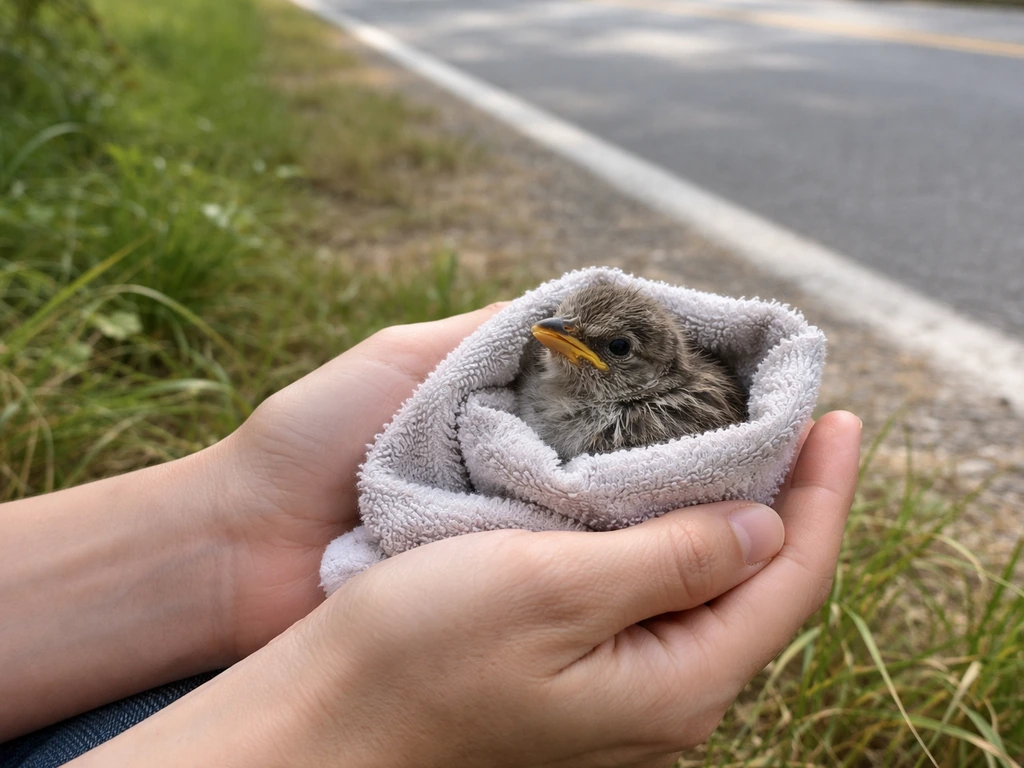
If you've found a fledgling bird on the ground and you're not sure what to do, here's the short answer: don't panic, don't feed it, and don't assume it needs rescuing just because it's on the ground. Fledglings spend a normal part of their development hopping around on the ground while their parents continue feeding them. But sometimes a bird really does need help, and knowing the difference matters. This guide walks you through every step, from the moment you spot the bird to handing it off to a professional.
What to Do With a Fledgling Bird on the Ground
Marcus Holloway
15 Apr 2026
First things first: what to do (and not do) right away
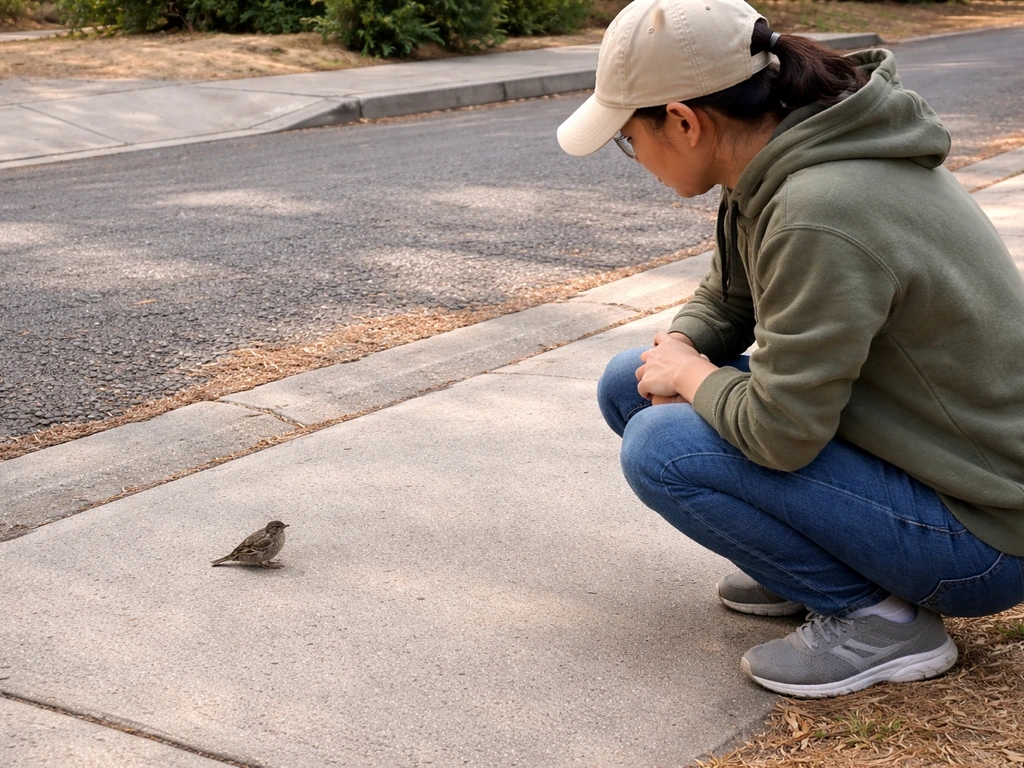
Before you touch anything, take a breath and assess from a short distance. The most important immediate step is keeping the area safe, both for you and the bird. If you have dogs or cats nearby, get them inside or on a leash immediately. A fledgling on the ground is extremely vulnerable to pets, and even a brief encounter can be fatal. Keep children calm and at a distance too.
If the bird is in immediate danger, such as sitting in the middle of a road, near an active cat, or directly in foot traffic, you can gently pick it up and move it no more than about 10 feet to a safer nearby spot like a low shrub or sheltered patch of grass. That small move can save its life without disrupting the parental bond.
Here's what not to do, and these mistakes are extremely common:
- Do not feed the bird anything. No bread, no worms, no water, no milk. Young birds can easily inhale food or liquid and develop aspiration pneumonia, which is often fatal.
- Do not give water with an eyedropper or dropper of any kind. This is one of the most dangerous things you can do.
- Do not assume the bird is orphaned just because no parent is visible. Parent birds often stay hidden nearby and watch from a distance.
- Do not try to raise or keep the bird yourself unless you are a licensed wildlife rehabilitator.
- Do not place the bird in a sealed container with no airflow.
Is this bird actually in trouble? How to tell the difference
This is the most important question you need to answer. A fledgling that is fully feathered, alert, and hopping around is very likely doing exactly what it's supposed to be doing. Its parents are probably nearby, watching and still feeding it. If the bird looks bright-eyed, reacts to your presence by hopping away, and has most of its feathers, the best thing you can do is leave it alone and give it space.
A bird that genuinely needs help will usually show clear signs. Look for any of the following:
- Visible bleeding or open wounds
- A wing or leg hanging at an unnatural angle
- Flies or fly eggs (tiny white clusters) on the body
- The bird is cold, limp, or barely responsive
- It allows you to walk right up and pick it up without any resistance
- It's been in the same spot for several hours with no sign of a parent
- It's a nestling, meaning it has sparse or no feathers and clearly fell from a nest
It also helps to understand where the bird is developmentally. Nestlings have little to no feather coverage and should not be on the ground at all. If you're dealing with a very young bird with bare skin or sparse down, that's a different situation entirely, and you can find more specific guidance on what to do with a bird that has fallen out of its nest. Fledglings, by contrast, are more developed and have most of their feathers even if their tail may still be short.
One more thing worth knowing: Cornell Lab's All About Birds points out that fledglings rarely return to the nest once they've left it, so even if you can see the nest above, putting a fledgling back in it is usually not the right move. That's different advice from what applies to nestlings, where returning to the nest is often the best option if you can do so safely.
How to pick up and contain a fledgling safely
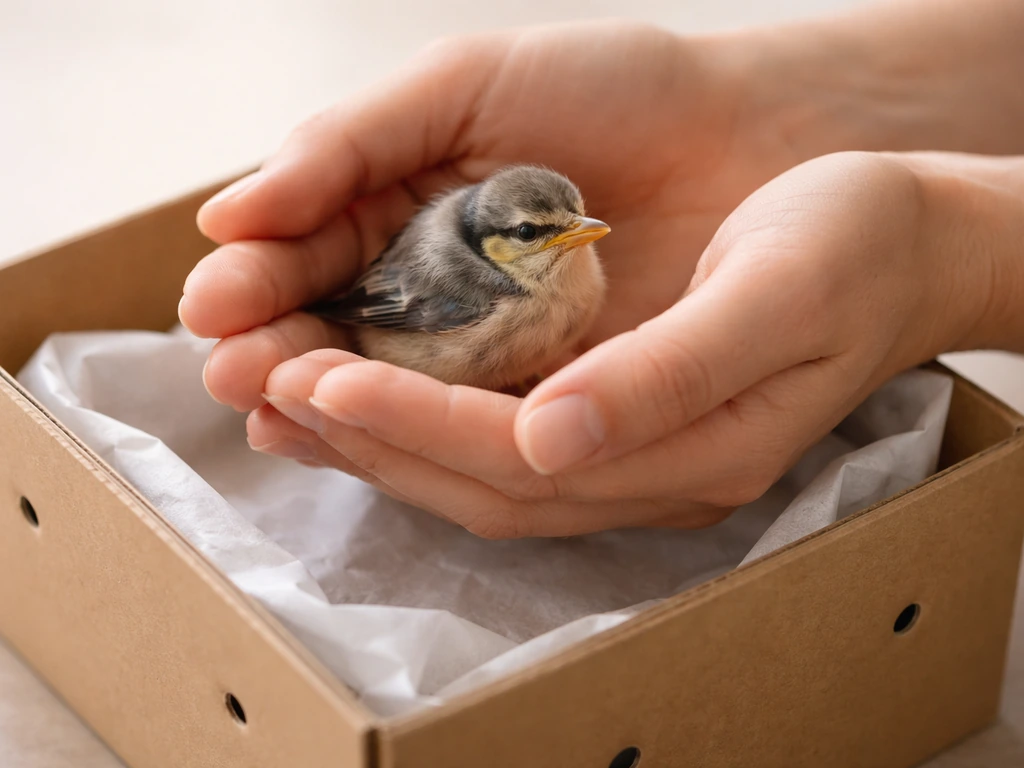
If you've decided the bird does need help, you'll need to contain it gently. Wash your hands or use thin gloves if you have them, though bare clean hands are fine. Cup the bird gently in both hands with its wings folded against its body. Don't squeeze. Move slowly and avoid making sudden noises. The bird will be stressed, and minimizing that stress is part of the job right now.
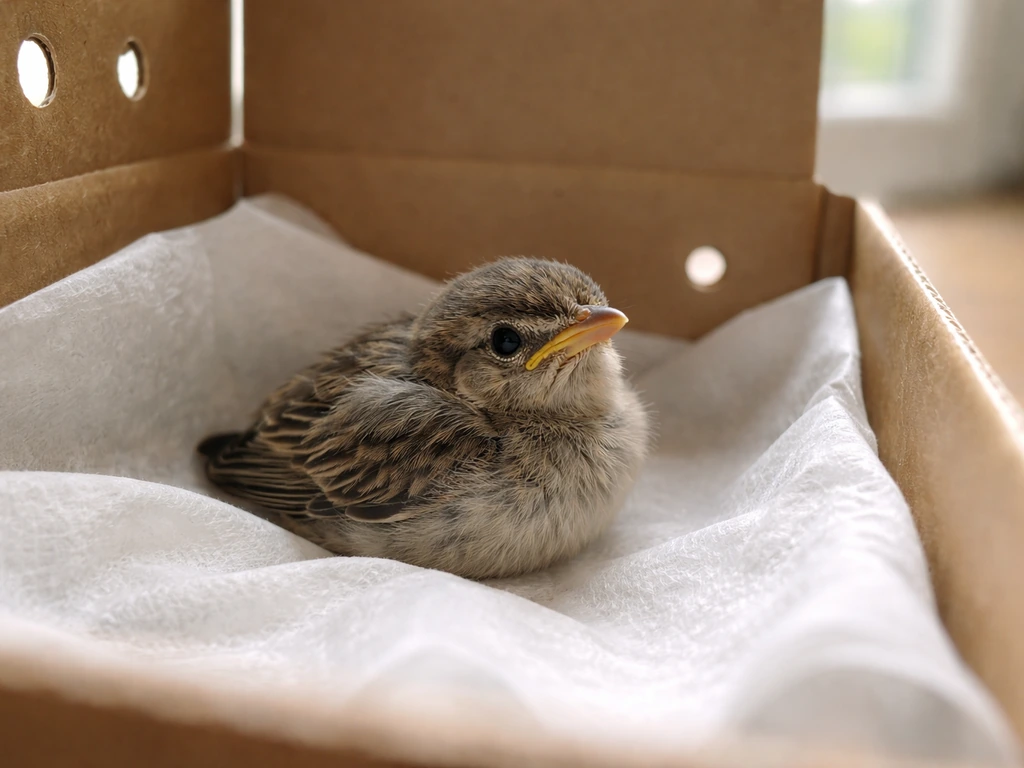
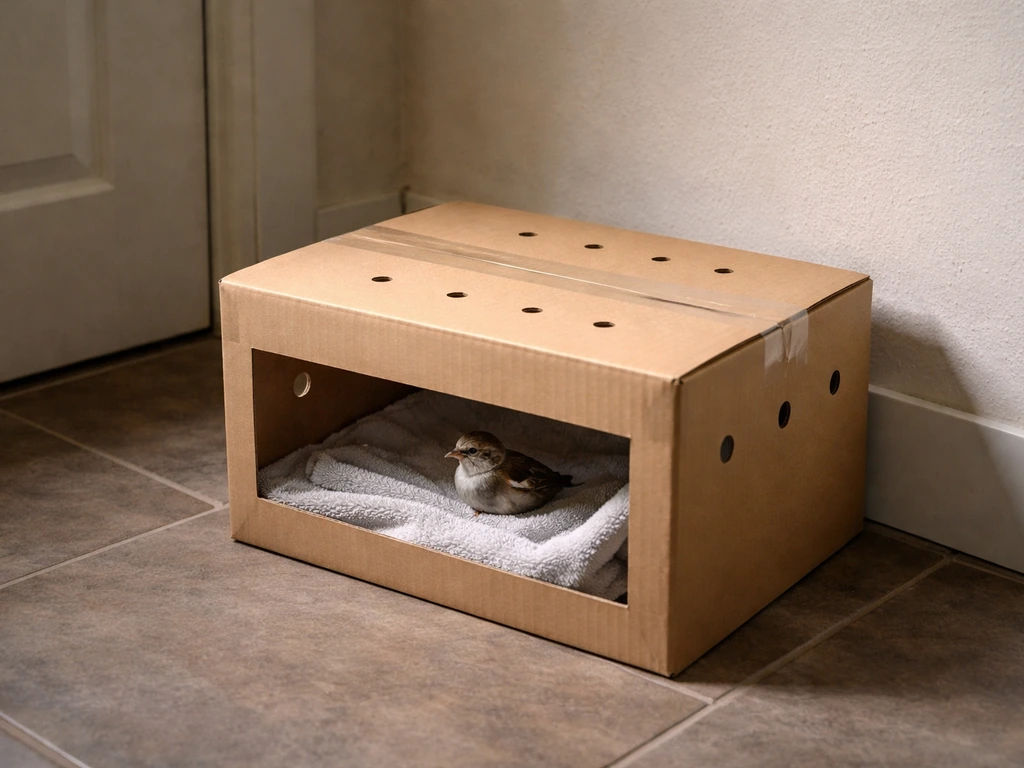
Place the bird into a cardboard box that's slightly larger than the animal, not a huge box where it can thrash around. Line the bottom with paper towels or a clean cloth. Poke several small holes in the sides or lid for ventilation, then close it. Do not leave the bird loosely wrapped in a towel inside the box, as it can overheat quickly. A simple lined box with a secure lid is ideal.
If you don't have a cardboard box, a pet carrier or a plastic bin with ventilation holes cut into it works well. The key is that the bird should be in a dark, quiet, enclosed space. Darkness reduces stress significantly.
Warming the bird without overheating it
If the bird feels cold to the touch or is shivering, gentle warmth can help stabilize it while you arrange transport. The safest method is to place a heating pad set on low under only half of the box. This creates a warm side and a cooler side, so the bird can move away from the heat if it gets too warm. Never place the heating pad under the entire box, and never set it higher than medium.
An alternative is a hot water bottle or a zip-lock bag filled with warm (not hot) water, wrapped in a thin cloth and placed to one side of the box. The goal is gentle, ambient warmth, not direct heat. If the bird is panting or moving away from the heat source, it's too warm.
Feeding and water: the short answer is don't
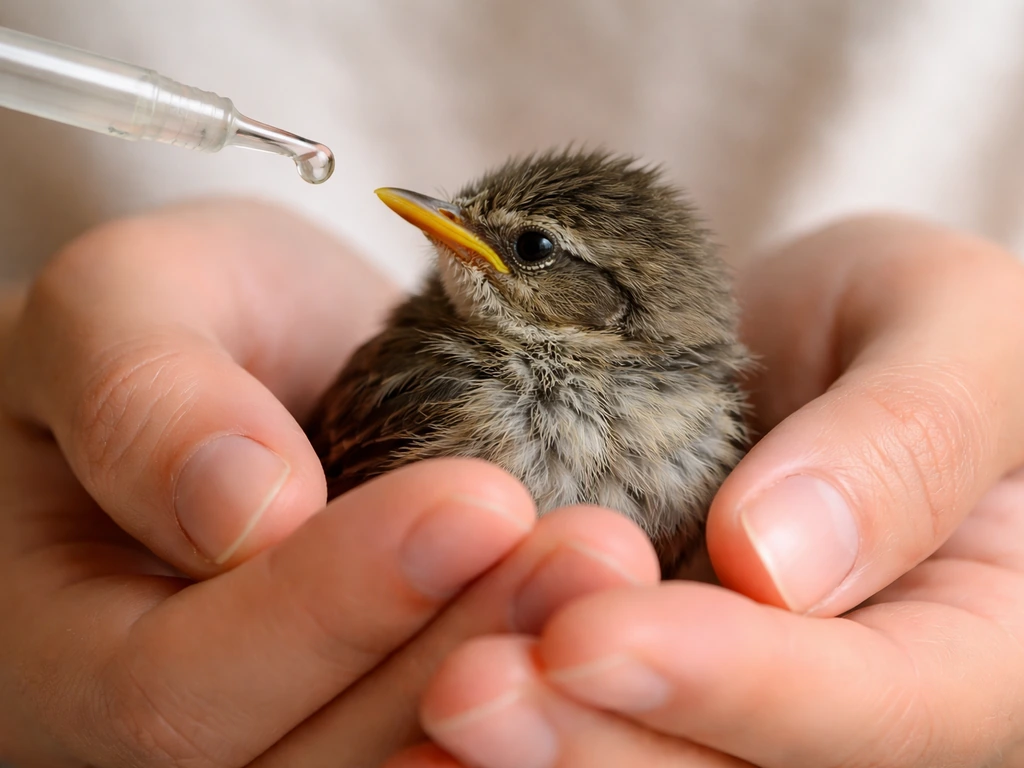
Every major wildlife rehabilitation source says the same thing: do not feed or give water to a fledgling or nestling unless you have confirmed species-specific guidance from a licensed rehabilitator. Tufts Wildlife Clinic advises keeping an injured or sick songbird warm, dark, and quiet, and not giving it food or water not give it food or water. This isn't overly cautious advice, it's genuinely important. A bird that inhales even a small amount of liquid or the wrong food can develop life-threatening aspiration pneumonia within hours.
Birds get their hydration through food in most cases, so withholding water is not cruel when you're only holding the bird for a few hours before professional help arrives. The rule is simple: no food, no water, no exceptions, until a rehabilitator tells you otherwise. If you're curious about the longer-term picture for birds that do need supplemental care, how to raise a bird that fell from a nest goes into more detail on what proper care involves and why it should be left to trained people.
Setting up temporary housing until help arrives
Once the bird is contained, find a quiet indoor spot away from pets, children, and loud noises. A bathroom, laundry room, or spare bedroom works well. Keep the room temperature around 70 to 75 degrees Fahrenheit if possible.
Set the box on a stable surface where it won't be knocked over. Keep the lid closed. Resist the urge to check on the bird constantly, as every time you open the box you're stressing it further. Check once every 30 to 60 minutes to make sure it's still breathing and hasn't injured itself trying to escape.
Do not place the box in direct sunlight, near a heat vent, or in a cold garage. Avoid placing it near a TV, speaker, or anything that produces consistent noise. The goal is boring and quiet, which is actually ideal for a stressed bird.
If you're thinking through longer-term setup questions, like what kind of enclosure or environment is appropriate, what to do with a juvenile bird covers more of those considerations for birds at different developmental stages.
When to call wildlife rehab or an avian vet
If any of the injury signs mentioned earlier are present, call a wildlife rehabilitator or avian vet right now. Washington Department of Fish & Wildlife also advises calling a permitted wildlife rehabilitator as soon as possible and following their instructions, since many may not be able to provide pick-up and instead serve as the hospital for animals in care call a wildlife rehabilitator or avian vet. Don't wait to see if the bird improves on its own. Visible bleeding, inability to stand, signs of predator attack, or a cold unresponsive bird all need professional attention as fast as possible.
Even if the bird seems stable, you should still contact a rehabilitator within a few hours. Most state fish and wildlife agencies maintain lists of licensed rehabilitators online, and the U.S. Fish and Wildlife Service recommends using those state resources to find someone equipped to handle the specific species you've found. The ASPCA, local Audubon chapters, and wildlife hotlines in your state are also good starting points.
When you call, have the following information ready:
- Your location and the location where you found the bird
- What the bird looks like (size, coloring, feather coverage)
- What you observed when you found it (was it on the ground, near a road, near a cat?)
- Any visible injuries or unusual behavior
- Approximate temperature outside and how long the bird has been in your care
- Whether the parents were seen nearby
If you're unsure where to take the bird once a professional is identified, where to take a fledgling bird breaks down your options, including wildlife rehab centers, avian vets, and what to expect from each.
What to do in the moments before pickup
Keep the bird in its dark, quiet box with gentle warmth if needed. Don't offer food or water. If you've spoken to a rehabilitator and they've given you specific instructions that differ from the general guidance here, follow their instructions, as they may know something about the species or situation that changes the approach.
When transporting the bird to a facility or meeting a rehabilitator, keep the box in a stable position in your car. Turn off loud music and keep the temperature moderate. The car ride itself is stressful, so keep it as calm as possible.
Handling principles that keep you from making things worse
The most important thing to internalize is this: your job is stabilization, not rehabilitation. You are a temporary bridge between the bird and someone qualified to help it long-term. Every minute you spend trying to feed it, interact with it, or assess its condition beyond what's needed is a minute of unnecessary stress added to an already stressed animal.
Minimize handling to what's strictly necessary. When you do handle the bird, do so in a calm, low-light environment. Keep sessions brief. Wild birds don't habituate to human contact quickly, and a bird that becomes used to people is actually harder to release successfully. This is one reason why home-rearing without a license is strongly discouraged by every major wildlife organization.
If the bird you found turns out to be healthy and just a normal fledgling doing its thing, what to do if you find a fledgling bird gives you a clear breakdown of when it's best to simply walk away and let nature take its course.
A quick reference: fledgling vs. nestling vs. hatchling
| Stage | Appearance | Found on ground? | What to do |
|---|---|---|---|
| Hatchling | Naked or barely downy, eyes closed | No, needs nest immediately | Contact rehabilitator right away; do not attempt to feed |
| Nestling | Sparse pin feathers, eyes may be open | No, should be in nest | Return to nest if possible; otherwise contact rehabilitator |
| Fledgling | Mostly feathered, short tail, alert | Yes, often normal | Observe from a distance; only intervene if injured or in danger |
If you're still uncertain which stage you're dealing with after using this table, what to do if you find a newborn bird focuses specifically on the earliest stages and how to tell them apart, which can help you make a faster, more confident decision.
The situation where a rehabilitator is definitely the right call
Some situations leave no room for uncertainty. If the bird has been attacked by a cat, call a rehabilitator immediately even if the bird looks fine. Cat saliva contains bacteria that can cause fatal infection within 24 to 48 hours in birds, and the bird needs antibiotics right away regardless of how it appears externally.
Similarly, if you're not sure whether a bird is a fledgling or something younger and more vulnerable, err on the side of getting professional input. A quick call to a wildlife hotline takes five minutes and can mean the difference between a bird that survives and one that doesn't.
For broader context on how to handle young birds across different scenarios, what to do with a fledgling bird is a solid companion read that addresses some of the more nuanced judgment calls you might face. And if the bird you found is very young and clearly fell from its nest rather than leaving it independently, what to do if a bird fell out of its nest walks through that specific scenario in detail.
The bottom line: most fledglings on the ground don't need your intervention. But when they do, acting quickly and correctly, without feeding or over-handling, gives them the best possible shot at making it to a rehabilitator in good enough shape to be released back into the wild.
FAQ
How long should I watch a fledgling before deciding it needs help?
If the bird is fully feathered, alert, and actively hopping, leave it alone and keep people and pets away. If you can safely observe from a distance for 30 to 60 minutes, you should usually see parents returning with food, which confirms it is a normal fledgling. Only intervene if it is in immediate danger (roadway, active foot traffic, or near a predator).
Can I move a fledgling back and forth to get it to the “right” spot?
Do not “test” it by putting it back where you found it or gently shaking the box to see if it moves. Once you move it a short distance for safety, the parent bond is generally not helped by repeated relocations. Instead, focus on containment (dark, quiet box) and contacting a rehabilitator if you suspect injury, exposure, or a baby that seems too young.
Is it necessary to wear gloves, and what hygiene steps should I take after handling the bird?
Wearing gloves is helpful if you have them, but it should not replace other protections. After contact, wash hands thoroughly, and avoid touching your face while handling the bird. Also keep the bird away from your kitchen or other food areas until it is transferred to a professional.
What should I do if I cannot reach a wildlife rehabilitator right away?
If you cannot immediately reach a wildlife rehabilitator, keep the bird contained, do not feed or give water, and limit handling. Call the appropriate hotline or avian vet as soon as possible, then follow their instructions. For short delays, keep the box in a quiet indoor room, and check breathing once per hour.
Is it okay to pick up the bird if it seems calm, but I’m worried it might be “in the wrong place”?
Yes, but only as a last-resort safety move. If the bird is in danger, you can pick it up and place it no more than about 10 feet to nearby shelter. If it is not in immediate danger, repeated picking up increases stress and can also cause parents to abandon the area.
How can I tell if the bird is actually cold or just sitting low on the ground?
Wild birds often look cold on the ground even when they are alive, so focus on response and breathing rather than appearance alone. A cold, unresponsive bird should be treated as urgent and requires professional help immediately. If you feel it is cold to the touch and it is responsive, provide gentle, side-only warmth while arranging transfer.
Can I offer water to prevent dehydration while I wait for help?
Do not give any water, even a small amount. The biggest risk is aspiration pneumonia from liquid entering the lungs, which can develop quickly. If you are waiting for help, the safest approach is no food and no water until the rehabilitator provides species-specific instructions.
If the bird is near my house but not in immediate danger, should I still contain it?
If the bird is in a place where you can keep it safe (for example, behind a screen door or inside a fenced yard away from pets), you can reduce disturbance and wait. If it must be moved, use the smallest change needed, and then contain it if it appears injured, too young, or repeatedly threatened by people/pets.
What injury signs mean I should call immediately, even if there’s no visible blood?
If you suspect it may be injured but cannot see bleeding, look for inability to stand, twisting, severe imbalance, or refusal to maintain a normal posture. Those signs justify calling for help even if it “looks mostly fine.” If it is attacked by a cat, treat it as urgent regardless of external appearance.
How should I transport the bird so it has the best chance of staying stable?
For a first-time transporter, keep the box stable, ventilated, and closed, then secure it so it cannot slide around during braking. Use moderate car temperature and keep radio volume low or off. Avoid direct sun on the box, since overheating can be dangerous.
Will opening the box frequently or letting it sit outside the box help it feel better?
A successful release depends partly on keeping the bird wild. Limiting handling and avoiding imprinting means you should not talk to it, pet it, or keep it outside the box for “quick checks.” Only open the box as rarely as needed to confirm breathing, and do it in low light.
The bird looks okay after a cat encounter, do I still need to call a professional?
If the bird is attacked by a cat or there is any possibility of exposure to cat saliva, call immediately, even if symptoms are subtle. The infection risk may not show right away, and antibiotics are time-sensitive.
What if I’m not sure whether it’s a fledgling or a nestling?
If you found it in a location that makes identification uncertain, err on the side of getting input. A quick call to a wildlife hotline can help determine whether it is a fledgling versus a younger nestling, which affects what actions are appropriate (like whether relocating or retrieving is considered).
When is the correct decision simply to walk away?
If it is a normal fledgling with no injury indicators, the best action is to leave it alone and create a safe buffer (keep pets in and children back). You can resume normal activity once it is out of immediate danger, since parents typically continue feeding when disturbances are minimized.
Next Article
What to Do With a Fledgling Bird: Humane Step-by-Step Help
Humane steps to help a fledgling bird: assess, stabilize injuries, keep safe, transport, and contact rehab fast.