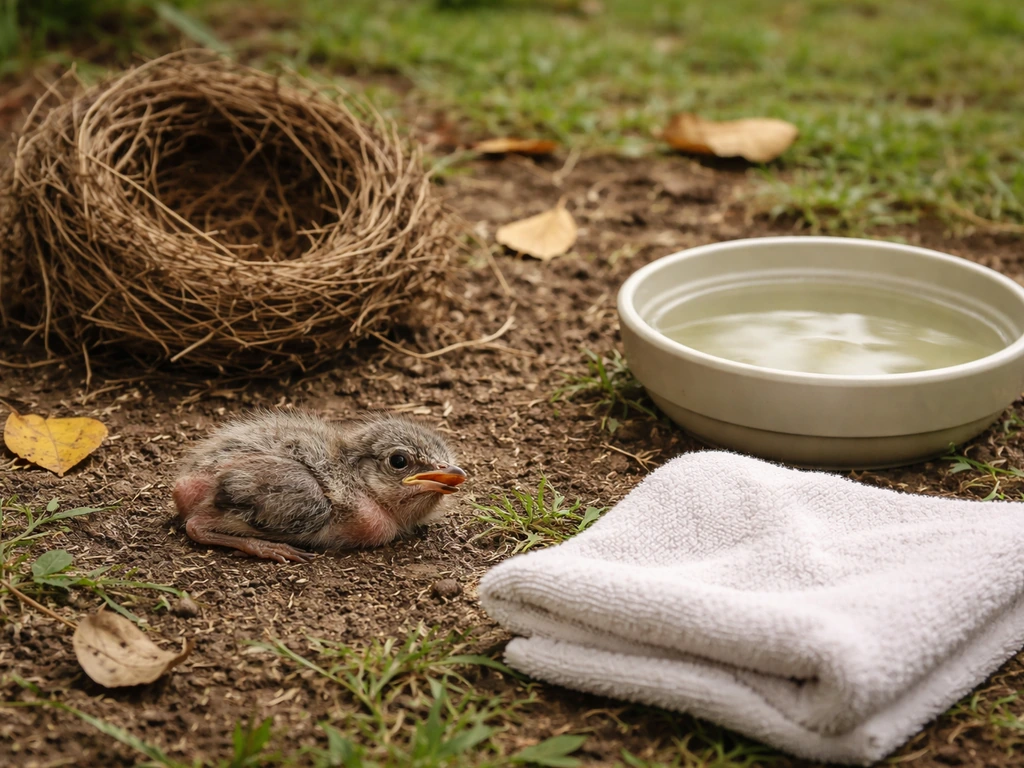
If you've found a fledgling bird, here's the short answer: in most cases, leave it alone. The bird is probably not abandoned, not in danger, and does not need your help. But there are real exceptions, and knowing the difference between a healthy fledgling doing its thing and one that genuinely needs rescue could save its life. This guide walks you through exactly what to do, step by step, whether the bird looks fine or clearly needs help.
What to Do With a Fledgling Bird: Humane Step-by-Step Help
Marcus Holloway
7 Apr 2026
Quick decision: rescue or leave it alone?
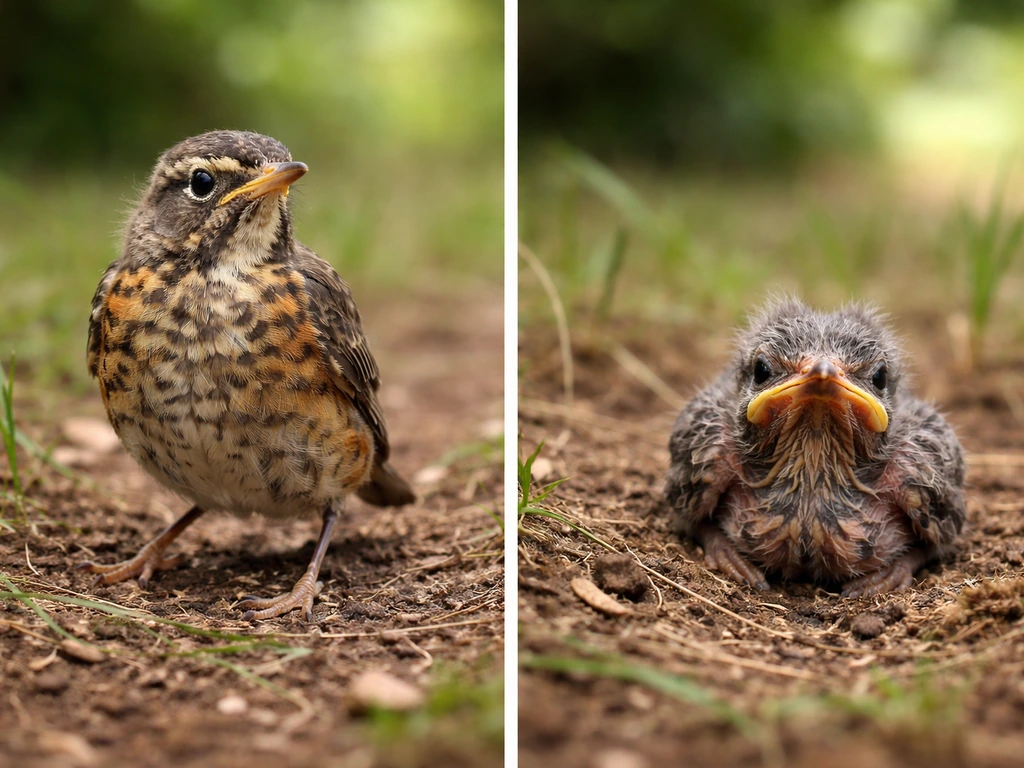
The single most important thing to understand is what a fledgling actually is. A fledgling is a young bird that has left the nest on purpose. It has most of its feathers, it can hop and flutter, and its parents are almost certainly nearby watching and still feeding it. Many people see a bird like this on the ground and assume it's fallen, lost, or abandoned. It isn't. This is a completely normal stage of bird development, and the Cornell Lab of Ornithology is direct about it: most birds people think are abandoned are healthy fledglings whose parents are close by.
The bird you need to distinguish this from is a nestling, which is a younger bird that genuinely has fallen or been knocked from the nest too early. Nestlings have sparse feathers or none at all, may have closed eyes, and cannot support themselves upright. Finding a newborn bird is a different situation entirely and requires more immediate intervention.
So the first decision is simple: look at the bird. Does it have feathers? Can it hop or move around? If yes, it's almost certainly a fledgling, and the default answer is to leave it where it is. If it looks featherless, helpless, or has its eyes shut, you're probably dealing with a nestling. Knowing what to do with a bird fallen out of the nest is a slightly different process, but the care principles overlap.
Even for a feathered fledgling, there are scenarios where you do need to act. Rescue is warranted if:
- The bird is visibly injured: bleeding, a drooping or twisted wing, a leg that isn't functioning, or wounds on the body
- It's in immediate danger from a cat, dog, car, or other hazard it cannot move away from
- It's been on the ground for more than a few hours with no sign of a parent returning, especially if night is approaching
- It seems disoriented, lethargic, or is not responding normally to your presence
- You've confirmed both parents are dead or removed from the area
If none of those apply, the RSPCA's guidance is worth repeating: do not intervene if the bird is not in danger. Watch from a distance for 30 to 60 minutes before making any decision. Parents won't return while you're standing over the bird.
Immediate safety actions at the scene
Before you touch anything, handle the most urgent threat first: nearby pets. Cats and dogs are the number one immediate danger to a fledgling on the ground. Even a brief encounter with a cat's claws or mouth can cause fatal bacterial infections. Get any pets inside or on a leash right away, and keep kids from crowding around the bird.
The U.S. Fish and Wildlife Service is explicit that one of the most useful things you can do is simply keep people and pets away from the bird and give it space. You don't have to pick it up to help it. If the fledgling appears uninjured and is just on the ground, step back at least 10 to 15 feet and watch from a distance to see whether a parent comes to feed it.
If the bird is in a genuinely dangerous spot, like the middle of a road or driveway, you can gently move it to a nearby safe location, such as under a shrub at the edge of the yard. Keep it within roughly 30 feet of where you found it so the parents can still locate it. Wild bird parents will not reject a baby because a human has touched it. That's a myth.
If you determine the bird does need help, handling a fledgling found on the ground requires calm, deliberate movement. Don't chase it or corner it, and don't attempt to grab it repeatedly. One smooth, confident scoop is much less traumatic than several failed attempts.
How to handle and temporarily house a fledgling
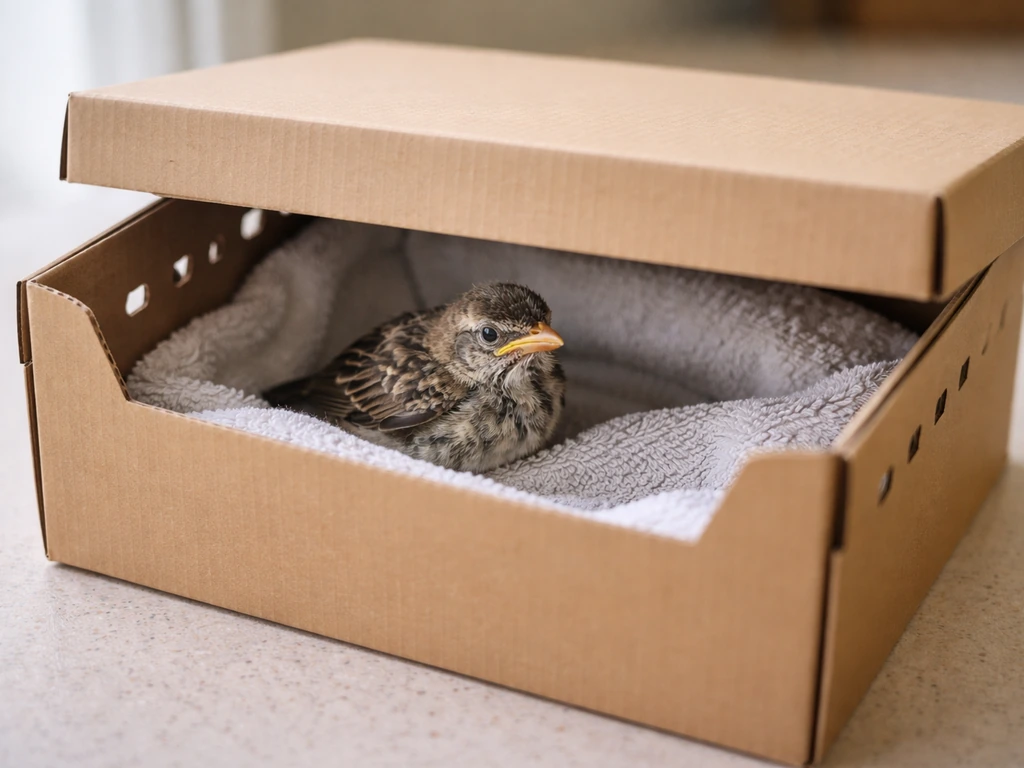
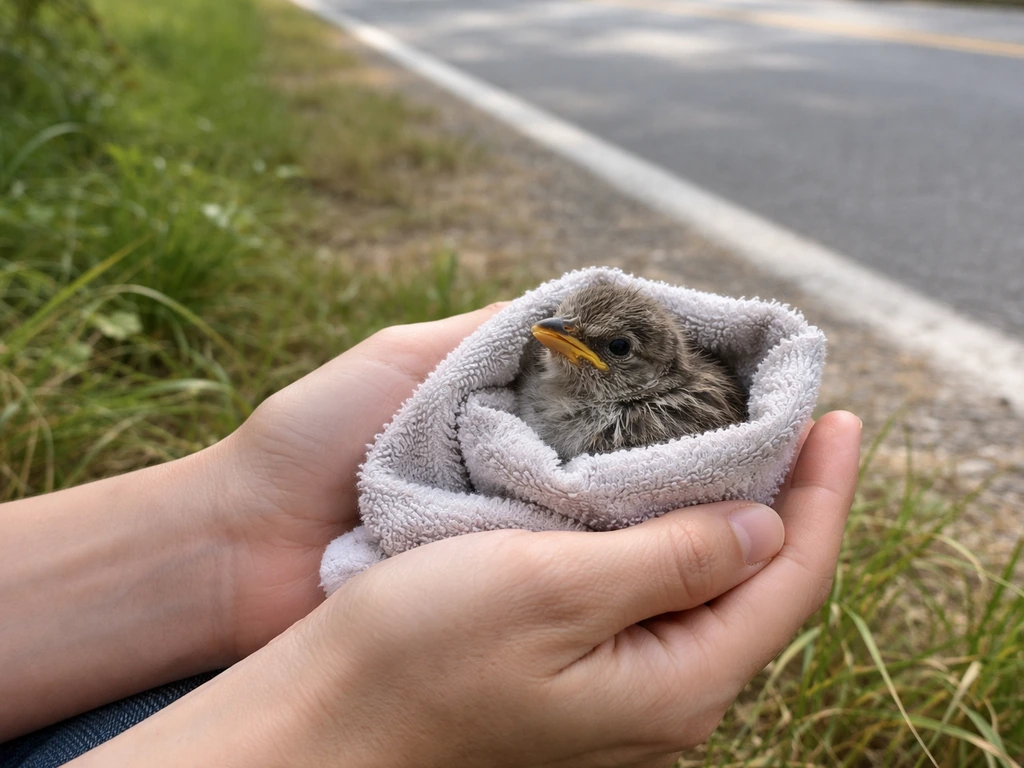
If you've decided the bird needs to come with you, here's how to do it without causing more harm. Use both hands to cup the bird gently but firmly, keeping its wings against its body. Wear thin gloves if you have them, but bare hands are fine. Place it in a container as quickly and calmly as possible.
For temporary housing, a shoebox with a lid works well. Punch several small air holes in the lid. Line the bottom with a folded paper towel or a piece of non-fluffy cloth. Avoid cotton balls, terry cloth, or anything with loops that can tangle around the bird's feet or toes. Tufts Cummings School of Veterinary Medicine recommends this exact setup for most songbirds, and it's a good standard to follow.
If you're dealing with a nestling rather than a fledgling, WDFW suggests a small plastic berry basket or margarine tub lined with shredded paper towels as a temporary nest container. The goal in either case is a snug, dark, quiet space that limits movement without crushing the bird.
Put the box in a quiet room away from noise, children, and other animals. Keep it off the floor where pets can knock it over. Do not keep checking on the bird constantly. Every time you open the lid, you're adding stress. Close it, leave it, and focus on getting professional help.
Injured fledgling triage: what to look for
If you suspect the bird is injured, do a quick visual assessment before you box it. You don't need veterinary training to spot the main warning signs. Look for:
- Active bleeding or open wounds anywhere on the body
- A wing that droops, hangs at an odd angle, or drags on the ground
- A leg that looks broken, twisted, or won't bear weight
- Eyes that are closed, sunken, or not tracking movement
- Labored breathing, open-mouth panting, or clicking sounds when breathing
- Feathers that are matted, missing in patches, or have skin visible underneath
- Extreme lethargy or complete lack of fear response when approached
Any of those signs means the bird needs professional care urgently. Don't delay hoping it will recover on its own. A bird sitting in a box at home is not getting treatment. The only first-aid step you can meaningfully take as a layperson is stabilizing the bird's environment: contain it, keep it warm, keep it calm, and get it to someone qualified as fast as possible.
If there is active bleeding from a wound, you can apply very gentle pressure with a clean cloth or paper towel for a minute or two while you prepare the transport container. Do not apply any ointments, antiseptics, or anything else. Do not try to set or splint a broken bone.
Window strikes are worth mentioning separately because they're common. A bird that has flown into a glass window may be stunned but uninjured. If there's no visible injury, place it in a ventilated box in a quiet, dark spot and give it 30 to 60 minutes. Some birds recover on their own. If it's still not alert after an hour, or if there are visible injuries, treat it as an injured bird and contact a rehabilitator.
Warmth, shock prevention, and keeping stress low
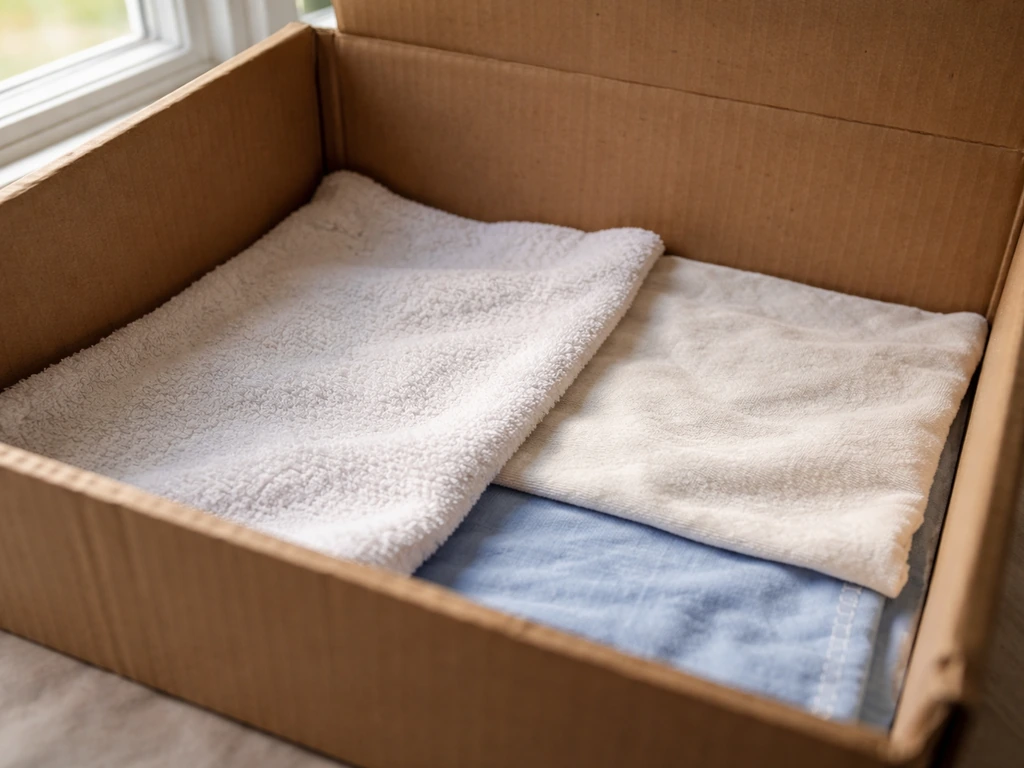
Birds have high metabolic rates and a normal body temperature of roughly 103 to 106 degrees Fahrenheit. When they're stressed or injured, they lose heat fast. Keeping a fledgling warm is one of the most important things you can do while waiting for professional help.
If the bird feels cold or limp, place a heating pad set to LOW under one half of the box, not the whole bottom. This lets the bird move away from the heat if it gets too warm. Alternatively, fill a zip-lock bag with warm (not hot) water, wrap it in a paper towel, and place it on one side of the box. The bird should be able to move away from it. Check every 20 minutes to make sure the temperature stays gentle.
Darkness is your friend here. A covered, dimly lit container dramatically reduces stress in birds. Stress can kill a bird just as surely as a physical injury, and it compounds shock. If a fledgling is in shock, it may be still, eyes half-closed, breathing rapidly or shallowly. These birds need warmth and quiet above everything else.
Do not try to stimulate the bird, handle it repeatedly, or show it to curious family members. Put it in the box, close the lid, and don't open it again until you're at the rehabilitator's location or have been specifically instructed to by a professional on the phone.
What to do and what not to do
This is where a lot of well-meaning people accidentally cause harm. The instinct to feed and water a baby bird is completely understandable, but it's one of the most dangerous things you can do. Every major wildlife rehabilitation authority is unanimous on this: do not give food or water to a fledgling bird unless you are a licensed rehabilitator who has assessed the bird's specific needs.
Birds can aspirate liquid directly into their lungs, which can be fatal. Squirting water into a bird's beak is specifically called out as a serious hazard by multiple rehabilitation organizations. Even soft foods like bread or cat food can cause serious harm because baby birds have highly species-specific nutritional requirements. What's nutritious for one species can be toxic for another.
| Do this | Don't do this |
|---|---|
| Keep pets and people away from the bird | Feed the bird bread, seeds, worms, or cat food |
| Place in a ventilated, covered box lined with paper towel | Squirt or drip water into the bird's mouth |
| Provide gentle warmth on one side of the container only | Apply antiseptics, ointments, or medication to wounds |
| Watch from a distance before deciding to intervene | Try to splint or set a broken bone yourself |
| Contact a licensed wildlife rehabilitator as soon as possible | Attempt to raise the bird at home long-term |
| Transport in a secure, quiet, dark container | Put water or a water dish inside the transport box |
| Keep the bird in a quiet, dark room while you arrange transport | Open the box repeatedly to check on the bird |
One more thing worth saying directly: do not attempt to raise the fledgling yourself. It's tempting, especially with younger birds, but it almost always ends badly for the bird. Fledglings and juvenile birds that are hand-raised by untrained people often imprint on humans, become unable to live in the wild, and have serious nutritional deficiencies from improper feeding. In most states, it's also illegal to keep wild birds without a permit. NH Audubon is clear: never try to raise a baby bird yourself.
When and who to contact, and how to transport safely
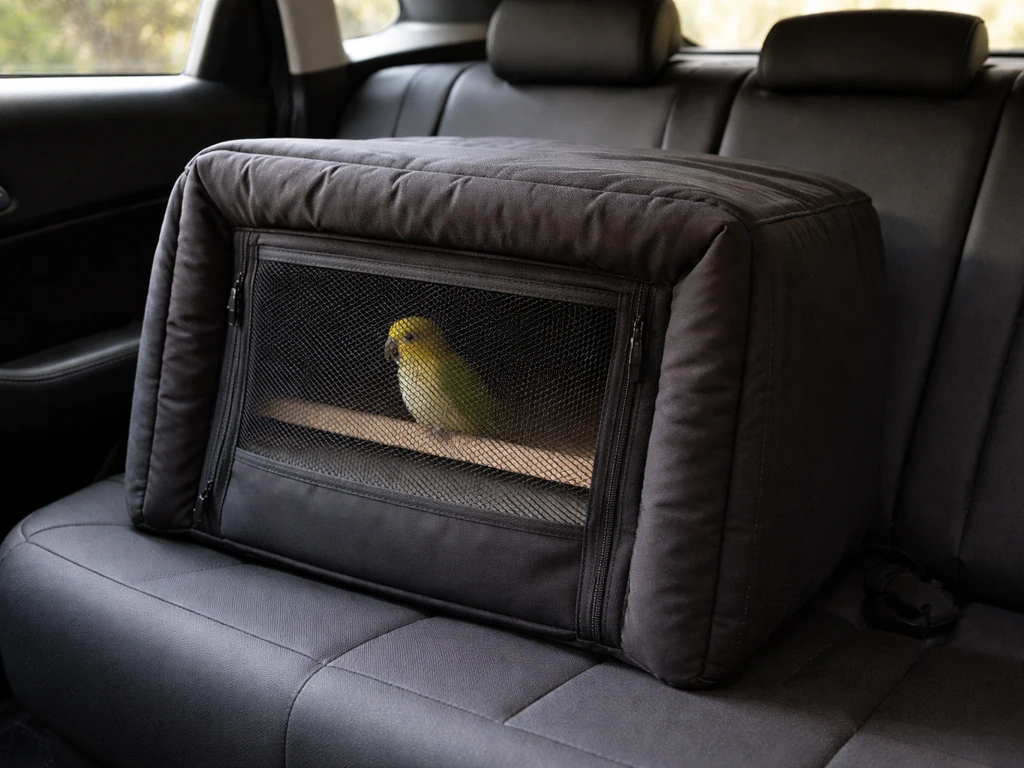
Contact a licensed wildlife rehabilitator as soon as you decide the bird needs help. OWRA’s “Find a Rehabilitator” page also directs people to blank" rel="noopener noreferrer">follow professional instruction on how to contain and transport wildlife to a licensed rehabilitator. Don't wait until later in the day or until the bird looks worse. The sooner you make the call, the better the outcome. Finding out where to take a fledgling bird near you is easier than most people expect.
In the United States, you can search for licensed rehabilitators through the National Wildlife Rehabilitators Association (NWRA) at nwrawildlife.org, or through your state's fish and wildlife agency website. Many areas also have local Audubon chapters or bird rescue organizations with hotlines. Your local veterinarian may also know who to call, even if they can't treat wild birds themselves.
When you call, have this information ready:
- The species if you know it, or a description of the bird's size, coloring, and any markings
- Where exactly you found it (backyard, park, road edge, near a window, etc.)
- How long you've had it or observed it
- A description of any injuries or abnormal behavior you noticed
- Whether you've given it any food or water
For transport, use the same shoebox setup described earlier. Do not put a water dish inside the box. Wildlife Care of Ventura specifically warns that birds can fall into even small amounts of water during transport and drown. Keep the box level, ventilated, and covered. Don't play music in the car or have conversations near the box. Drive calmly.
If you can't reach a rehabilitator and it's after hours, many wildlife hospitals have emergency lines. Some areas have 24-hour wildlife rescue services. If you truly can't get help until the next morning, keep the bird warm and dark in its box overnight, resist the urge to check on it or feed it, and call first thing in the morning. Knowing exactly what to do if you find a fledgling bird matters most in those first critical hours.
A quick note on what comes next
Once the bird is with a licensed rehabilitator, your job is essentially done. Rehabilitators are trained to assess injuries, provide species-appropriate nutrition, and prepare birds for eventual release. The timeline varies widely: a stunned bird might be released within a day, while one with a broken wing could need weeks of care. Understanding how to raise a bird that fell from a nest in a professional context involves specialized feeding schedules, temperature-controlled environments, and gradual conditioning for the wild. That's not something you can replicate at home, and that's okay.
If the bird was a healthy fledgling you weren't sure about, the right move was leaving it alone. If it was genuinely injured or orphaned, getting it to a rehabilitator quickly gave it the best possible chance. Either way, you did the right thing by stopping to figure it out.
Your immediate next-steps checklist
- Observe the bird from a distance first. Does it have feathers? Is it moving? Are parents nearby?
- Remove any immediate threats: get pets inside, keep people back.
- If the bird is in danger but appears uninjured, gently move it to a safe spot nearby.
- If it's injured or clearly needs help, place it in a ventilated shoebox lined with paper towel.
- Provide gentle warmth on one side of the container only.
- Do not feed it, water it, or apply anything to wounds.
- Call a licensed wildlife rehabilitator or your state wildlife agency right away.
- Transport in a quiet, covered, level box. No water dish inside.
- Hand off the bird and let the professionals take it from there.
One last thing: the panic you feel when you find a bird like this is normal, and it means you care. Just remember that your role here is stabilizer and transporter, not rescuer or parent. The goal is to get the bird to someone trained as quickly and calmly as possible. You don't need to do more than that. If you're still unsure whether the bird actually fell from a nest or is simply a fledgling in its normal learning phase, that distinction is worth a few more minutes of observation before you act.
FAQ
How long should I watch a fledgling before deciding it needs help?
Give it 30 to 60 minutes from a distance, after keeping pets and people away. If the parents do not return and the bird looks weak, is getting attacked by other animals, or is in ongoing danger, then contact a licensed rehabilitator.
What if I can’t see the parents and the bird is still on the ground?
Parents may feed quickly and stay out of sight. If the fledgling is feathered, moving/hopping, and not injured, do not assume it is abandoned. Focus on distance and safety, then reassess after the observation window.
Should I feed the fledgling if I think it’s hungry?
No. Do not offer food or water. Even small mistakes can cause aspiration, choking, or nutritional problems because young birds need species-specific diets.
Is it okay to move a fledgling if it’s not injured, but it’s in a risky spot (like near a yard walkway)?
Yes, if it is in an active hazard area. Gently relocate it within about 30 feet to cover under nearby shrubs or other protective cover, so parents can still find it.
How do I know whether it’s a nestling instead of a fledgling?
A fledgling usually has most of its feathers and can hop or flutter. A nestling is typically featherless or sparsely feathered, may have closed eyes, and cannot support itself upright.
What should I do if a cat or dog already got to the bird?
Treat it as urgent. Move pets away immediately, then contact a rehabilitator or emergency wildlife line right away. Bites and scratches can lead to rapid infection even if the bird looks only mildly injured.
Can I pick up the bird to take it back to the nest?
Generally no, unless a professional tells you otherwise. The article recommends boxing and contacting a rehabilitator when help is needed, because nest locations, timing, and species behavior vary.
What’s the correct container setup for transporting a fledgling?
Use a shoebox with a lid, add several small air holes, line the bottom with folded paper towel or non-fluffy cloth, and keep the bird dark and quiet. Avoid a water dish in the box to prevent drowning during transport.
If the bird has no visible injuries after a window strike, do I still need to call someone?
Not immediately if it can be placed safely and starts to recover. Put it in a ventilated, dark box in a quiet place for 30 to 60 minutes. If it is still not alert after an hour or shows any injury, contact a rehabilitator.
How can I keep the bird warm without overheating it?
If using a heating pad, set it to LOW and place it under only half the box so the bird can move away. Check the bird frequently enough to ensure warmth stays gentle, and never use hot water or a hot pad.
What if I find a bird at night or during bad weather and can’t reach a rehabilitator immediately?
Keep it warm and dark in its box, minimize handling and checking, and call the next morning. If there is an emergency line in your area, contact it rather than holding out until morning.
Are gloves required when handling the bird?
Gloves are optional. Thin gloves can help, but bare hands are fine if you are calm and move smoothly. The bigger priority is avoiding repeated grabbing and keeping the bird secure and contained.
What should I tell the rehabilitator when I call?
Be ready to describe whether it looks like a fledgling or nestling, what hazards it was exposed to (pets, road, window), whether you saw bleeding or abnormal breathing, and your location so they can advise the fastest drop-off plan.
Why is it harmful to keep checking on the bird after it’s in a box?
Constant opening increases stress and can worsen shock. Keep the box closed, quiet, and dim, and only check as needed for warmth and safety until you reach professional care.
Next Article
What to Do With a Bird Fallen Out of the Nest
Immediate steps to help a baby bird fallen out of a nest, check injury, warm safely, and when to call a rehabber.