If you just found a bird on the ground under a tree or near a bush, take a breath. The most important thing you can do in the first few minutes is assess before you act. Picking the bird up immediately and rushing inside is usually the wrong move, even when it feels like the right one. Here is exactly what to do, step by step.
Bird Fell Out of Nest: What to Do Right Now
Marcus Holloway
16 Apr 2026
First, figure out what you're actually dealing with
Not every bird on the ground is in trouble. Your first job is to work out whether this bird is injured, genuinely orphaned, or simply a normal fledgling doing exactly what fledglings do. Getting this right changes everything about how you respond.
Look at the bird closely without touching it. There are two very different stages of baby bird development you might be looking at:
- Nestling: Mostly or completely featherless, pink or patchy skin visible, eyes may still be closed. These birds are genuinely too young to be out of the nest and need help getting back in.
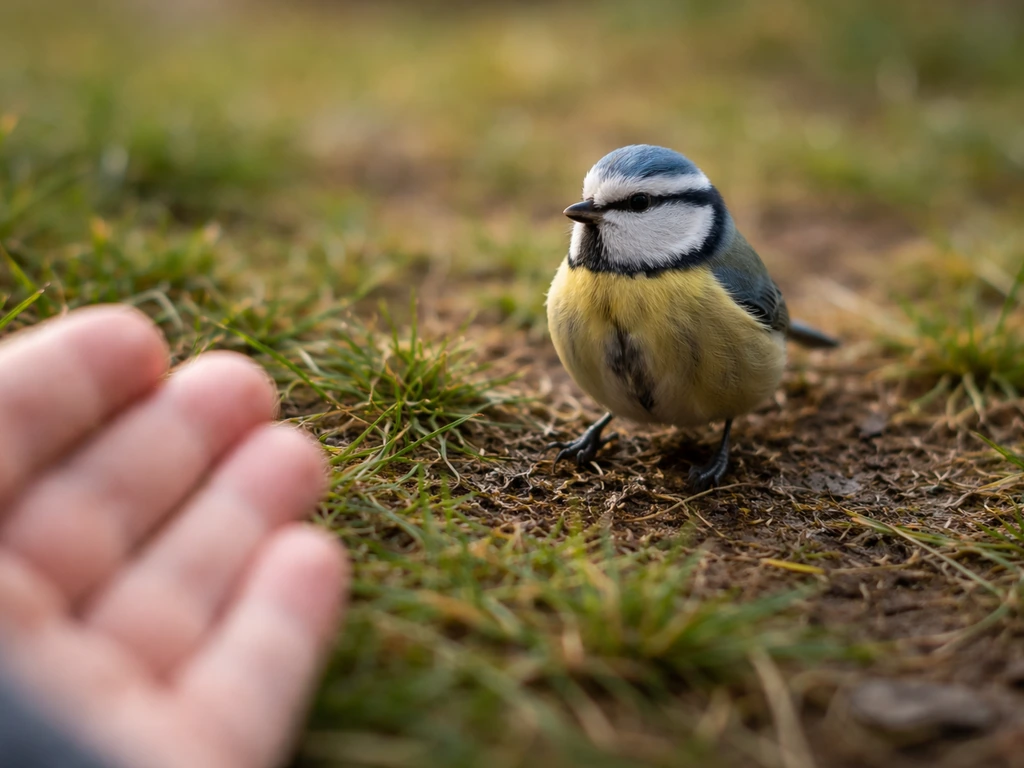
- Fledgling: Mostly covered in feathers, though maybe a bit scruffy or with a short tail. Can hop or stand. May even flutter a few feet. This is a normal developmental stage where young birds spend time on the ground while learning to fly.
Audubon describes nestlings as typically naked or with just a few fluffs, while fledglings are larger and covered almost completely in down and feathers. A fledgling that can hop, stand, and move around on its own is not in trouble just because it's on the ground. But if it can't stand or hop normally, that's a sign it may be injured.
Now check specifically for signs that the bird needs urgent help. According to the U.S. Fish & Wildlife Service, the clearest warning signs are a visible broken limb, active bleeding, shivering, or a dead parent bird nearby. Any one of those means you need to act, not just observe. If you see none of those signs and the bird is a fledgling, there's a good chance it just needs to be left alone with its parents nearby.
One more critical situation: if the bird has been caught by a cat or dog, even briefly, treat it as a medical emergency regardless of how it looks. Cat bites in particular cause a very high fatality rate in small birds due to bacteria, even when there are no visible wounds.
How to handle the bird safely right now
If you've determined the bird does need handling, keep it brief and calm. Stress alone can seriously harm a small bird. Here's how to do it without making things worse.
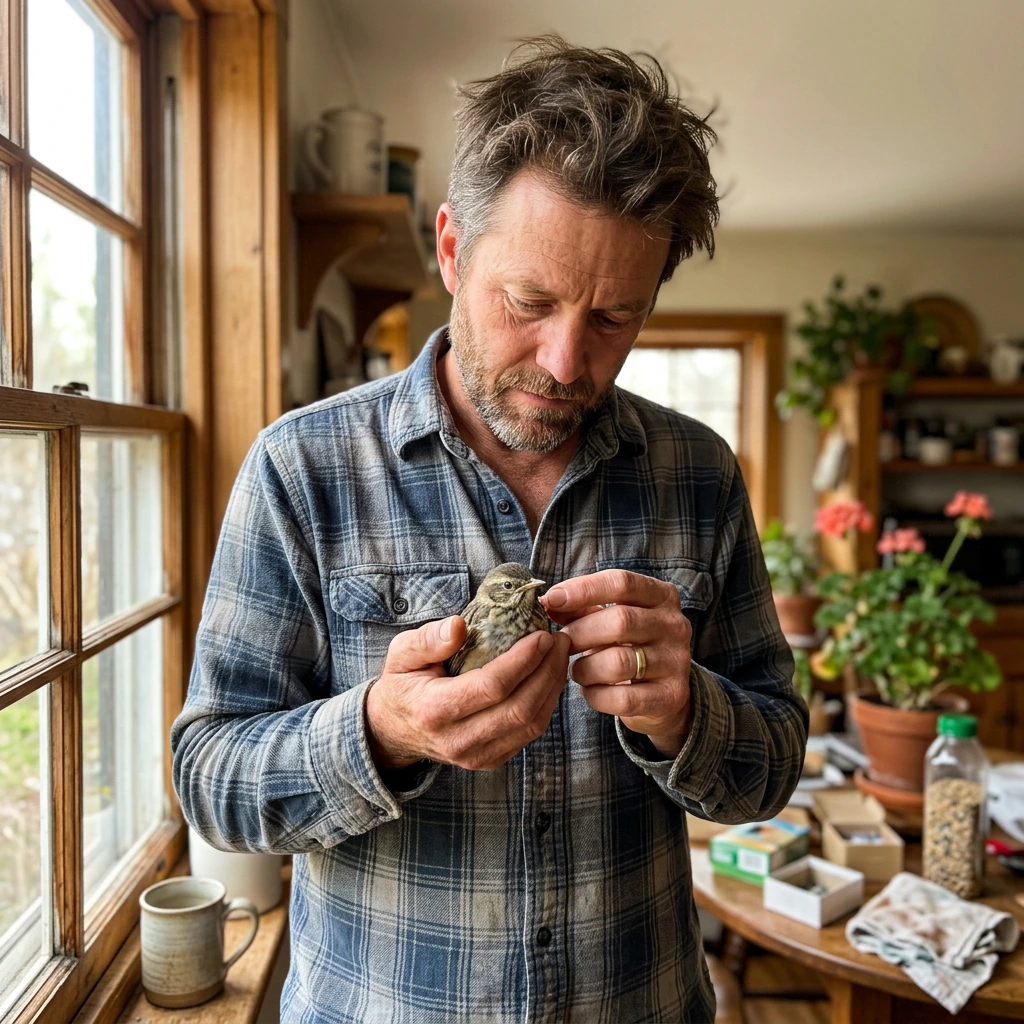
- Wash your hands before and after. This protects both you and the bird.
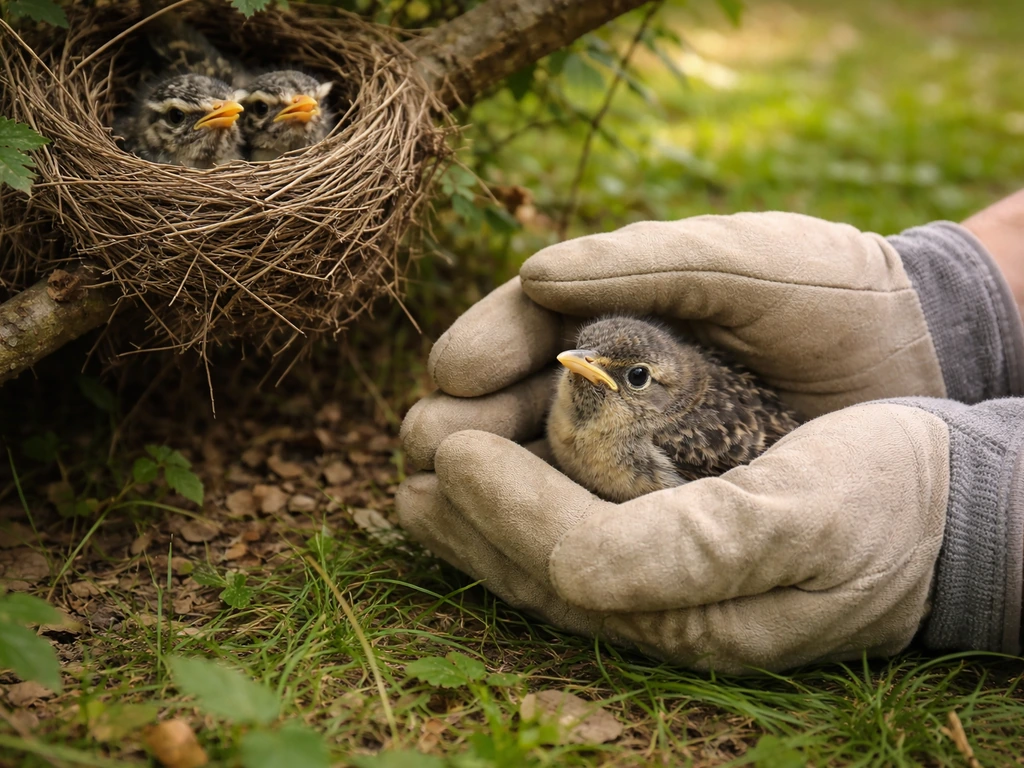
- Cup the bird gently in both hands with its feet down, not on its back. Hold loosely enough that it can breathe.
- Minimize handling time. Get it into a secure container as quickly as you can and then leave it alone.
- Keep children and pets away from the bird immediately. Stress from being handled repeatedly or chased by a pet can be fatal.
One thing worth knowing: the old idea that a mother bird will abandon her chick if you touch it is a myth. Birds have a limited sense of smell and will not reject a chick just because a human handled it. So don't let that stop you from helping when help is actually needed.
Setting up a safe temporary space
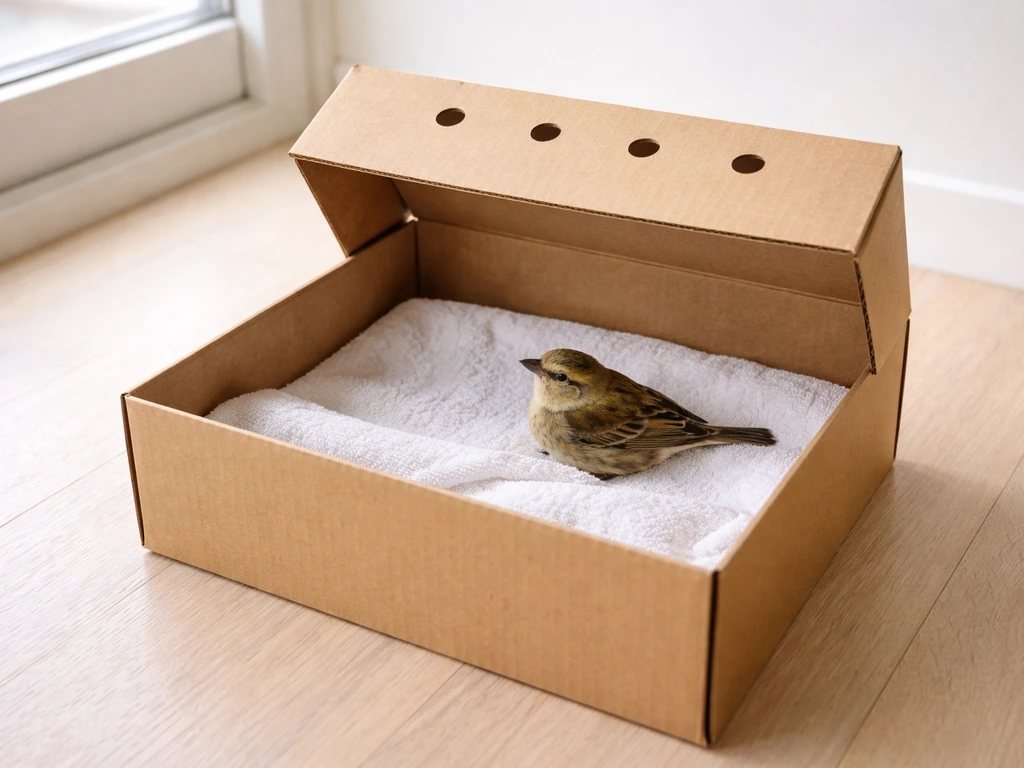
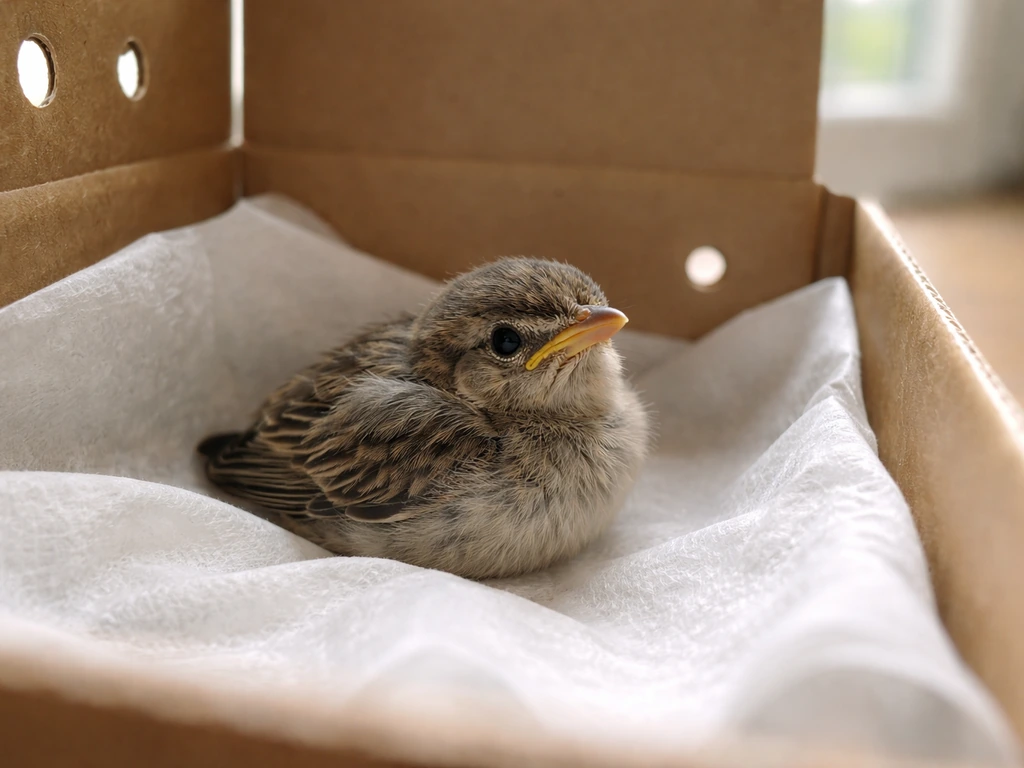
If you need to contain the bird while you figure out next steps, keep things simple. A cardboard box with ventilation holes punched in the lid works well. Line the bottom with a soft cloth like an old t-shirt or paper towels. Do not use anything loose or fluffy that could tangle the bird's feet, like cotton balls or thick fleece.
Do not put water or a water dish inside the box. It sounds counterintuitive, but a small bird can fall into even a shallow dish and drown, and improperly given water can cause choking or pneumonia. Leave the water out entirely.
Warmth matters a lot for nestlings especially. If the bird is very young and feels cold, you can place a heating pad on its lowest setting under half of the box (not under the whole thing, so the bird can move away if it gets too warm). Another option is a sock filled with rice, microwaved until warm but not hot, placed next to the bird. The goal is gentle warmth, not heat.
Put the box somewhere quiet, dark, and away from noise, pets, and foot traffic. Think Wild recommends keeping the bird in this setup for about one hour while you assess whether it will recover on its own and figure out your next move. Dark and quiet reduces stress significantly.
What not to do (this list matters)
This section might be the most important one. A lot of well-meaning people accidentally hurt baby birds by doing things that feel helpful but aren't.
- Do not give any food or water. Even if the bird is opening its mouth and begging, hold off. Baby birds don't drink water the way adult birds do, and the wrong food (bread, milk, worms from the yard, crackers) can cause serious digestive harm or choking. A wildlife rehabilitator will know exactly what to feed it.
- Do not try to force anything into the bird's mouth. Attempting to feed a baby bird without training can cause it to aspirate food into its lungs, which can be fatal.
- Do not keep the bird in a glass tank or sealed container. It needs airflow.
- Do not place the bird outside in direct sun or somewhere cold.
- Do not try to raise it yourself long-term. Hand-raising a wild bird is genuinely difficult, requires specialized knowledge, and in many places requires a federal permit. Most well-intentioned attempts end badly for the bird.
- Do not move the bird far from where you found it if you're planning to reunite it with parents. If parents can't find it, they can't feed it.
If you're seriously considering attempting to raise the bird yourself, it's worth reading up on how to raise a bird that fell from a nest before you decide, because the reality of what that involves changes most people's minds quickly.
If the bird looks uninjured: try to reunite it first
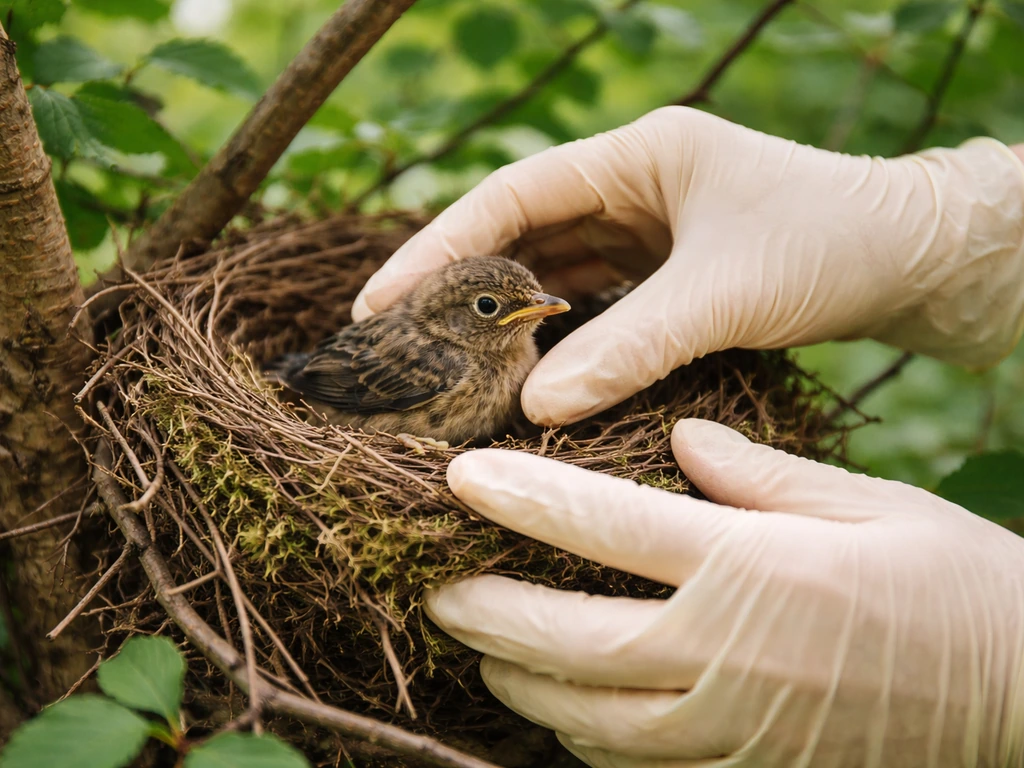
If you're looking at a nestling (featherless or nearly so) and there are no signs of injury, your best first action is to find the nest and put the bird back. Look up in nearby trees and shrubs. Nests are often closer than you think and easier to spot once you're actively looking. If you find it, simply place the bird back inside gently. That's really all there is to it.
If the nest has fallen or is damaged, you can make a makeshift nest using a small container like a strawberry basket or a plastic cup with drainage holes, lined with dry grass or leaves. Secure it to the tree as close to the original nest location as possible, put the bird in it, and then step back.
If you're looking at a fledgling (feathered, can hop), the right move is usually not to put it back in the nest at all. The parents know where it is. Michigan DNR points out clearly that parents continue feeding and watching over their young even when the birds are on the ground.
Massachusetts Audubon similarly recommends that if you find a hatchling or nestling on the ground and can see its nest, you should try to safely return it, and that fledglings may naturally be on the ground with parents nearby parents continue feeding and watching over their young even when the birds are on the ground.
Tufts Wildlife Clinic similarly advises that when appropriate you can return a nestling to its nest or a substitute nest so parents can keep raising it, rather than keeping the bird in captivity parents continue feeding and watching over their young even when the birds are on the ground. Moving the bird can actually make things worse if the parents lose track of it.
Keep pets and people away and let the family unit do its thing.
After you've attempted a reunite, watch from a distance for one to two hours. You don't need to stand right there. Go inside and check back. If you see a parent bird returning to feed the chick, everything is working as it should. If no parent returns after a couple of hours, or if you truly cannot locate the nest, it's time to call for help. For more detail on handling this specific situation, the guidance on what to do with a bird fallen out of nest goes deeper on the reunite process.
When to call a wildlife rehabilitator or vet, and how to find one fast
Call a wildlife rehabilitator or vet the same day if any of the following are true:
- The bird is bleeding, has a visible broken limb, or is shivering
- A dead parent bird is nearby
- The bird was caught by a cat or dog
- It's a nestling and you cannot find or reach the nest
- Parents have not returned within one to two hours of you stepping back
- The bird is unresponsive, limp, or breathing with its mouth open
To find a licensed rehabilitator near you quickly, the National Wildlife Rehabilitators Association has an online search directory you can use by location. The IWRC also maintains a database for people outside the United States. Many states have their own wildlife agency hotlines too, so a quick search for your state's fish and wildlife department will usually turn up a number you can call within minutes.
When you call, be ready to describe the bird's approximate size and appearance, where you found it, what condition it's in, and what happened (fell from nest, caught by cat, etc.). The more specific you are, the better advice you'll get over the phone, and the faster they can triage the situation.
Note that in the U.S., many wild birds are protected under the Migratory Bird Treaty Act, which means a licensed rehabilitator needs a federal permit to care for them. This is another reason why attempting long-term care at home isn't just hard, it can also be legally complicated.
How this changes depending on the bird's age
The right response really does vary a lot based on where the bird is developmentally. The table below breaks it down cleanly.
| Bird Type | What It Looks Like | Found on Ground? | Best Action |
|---|---|---|---|
| Nestling | Featherless or nearly so, eyes closed or just opening, helpless | Needs help — too young to be out | Return to nest if possible; call rehabber if you can't |
| Fledgling | Mostly feathered, can hop and flutter, alert | Normal — parents nearby | Leave it alone, keep pets away, observe from distance |
| Injured (any age) | Bleeding, broken limb, shivering, caught by cat | Needs immediate help | Contain safely, call rehabber or vet today |
| Juvenile | Looks almost like adult but smaller, may be clumsy | Often normal | Observe; intervene only if injured or parents absent |
If you're not certain which stage you're looking at, the detailed breakdown on what to do with a juvenile bird can help you figure out where your bird falls on the developmental scale.
More guidance for fledglings specifically
Fledglings cause more unnecessary rescues than any other type of bird encounter. They look helpless and vulnerable when they're actually doing exactly what they're supposed to do. If you've confirmed the bird is feathered and can move on its own, it almost certainly has parents nearby watching and feeding it. The most useful thing you can do is protect it from threats (cats, dogs, curious kids) and give it space.
For a fuller picture of what normal fledgling behavior looks like and how to handle the situations that come up, check out the guide on what to do with a fledgling bird. And if your specific situation involves a fledgling you found on the ground and you're not sure whether to intervene, the detailed walkthrough on what to do with a fledgling bird on the ground covers that scenario directly.
There's also a helpful breakdown for people who are working through the decision of whether to step in at all: what to do if you find a fledgling bird walks through the common decision points clearly.
If the bird is clearly very young (newborn)
If the bird is completely featherless, eyes closed, and clearly just hatched, it needs to be back in a nest or with a rehabber fast. These birds cannot regulate their own body temperature at all and deteriorate quickly. If you're in this situation, the step-by-step guide on what to do when you find a newborn bird will walk you through what to do in those first critical minutes.
Finding a wildlife rehabilitator near you
If you're ready to hand the bird off to a professional but aren't sure where to go, the guide on where to take a fledgling bird lists your options clearly, including national directories, state wildlife agencies, and what to do if you're in a rural area with limited options nearby.
The short version if you're in a hurry
- Look but don't touch first. Assess whether it's a nestling or fledgling, and check for visible injuries.
- If it's a fledgling with no injuries, keep pets and people away and let the parents handle it.
- If it's a nestling, look for the nest and return it. Make a replacement nest if the original is gone.
- If there are signs of injury (bleeding, broken limb, shivering) or it was caught by a cat, contain it in a ventilated box with soft lining and gentle warmth.
- Do not feed it, water it, or try to raise it yourself.
- Observe from a distance for one to two hours after attempting to reunite. If parents don't return, call a wildlife rehabilitator today.
You finding this bird and taking a few minutes to figure out the right response genuinely makes a difference. Most birds on the ground near nests are fine with minimal intervention. The ones that do need help have a much better chance when they get to a professional quickly rather than spending days in a box at home. Trust your assessment, act calmly, and get expert help on the phone sooner rather than later if you're unsure.
FAQ
What if the bird is completely featherless, and I cannot find the nest?
If it is fully featherless (or mostly bare), eyes closed, or you can see the yellow skin and it is very floppy, treat it as a newborn that must be rewarmed and returned to a nest only if you can find the exact nest immediately. If you cannot locate the nest within minutes, call a wildlife rehabilitator right away instead of keeping it in a box for long periods.
How long should I wait before calling for help if the parents do not return?
If a parent bird is not actively returning within the first couple of hours, that is a key reason to call for help. Do not wait longer just because the weather seems “okay.” Also check again after a brief distance watch, because some species take longer to resume feeding.
Can I move the bird to keep it safe from my pets or lawn traffic?
Yes. Move hazards first, then step back. If the bird is a fledgling, keep cats and dogs indoors and block access (for example close the door, bring the pet inside, keep kids away). Then observe from a distance so you do not accidentally create a new threat that prevents the parents from approaching.
Should I give the bird food or water while I wait to contact a rehabber?
No to regular feeding attempts. Many people give the wrong food consistency or too much water, which can cause choking or aspiration. Until a rehabber advises, focus on containment (ventilated box), warmth if needed, and minimizing handling and noise.
The bird looks okay after my dog may have touched it, do I still need to treat it as an emergency?
If you suspect a cat or dog was involved, treat it as urgent even if you see no bleeding. Small puncture wounds can be hidden and infection can start quickly. The safest next step is to contact a wildlife rehabilitator or an emergency vet the same day.
What should I do if I look for the nest but cannot locate it?
If you cannot find the nest, do not keep re-hiding the bird. In that situation, especially for nestlings, the bird may not survive without proper care. Place it in a ventilated box, keep it warm and quiet, and call a wildlife rehabilitator for instructions.
How do I use a heating pad safely without overheating the bird?
A heating pad is useful only for gentle, partial warmth. Place it under half the box on low so the bird can move away if it gets too warm, and avoid direct contact between the bird and the pad or rice sock. If the bird is panting, very hot to the touch, or seems lethargic from heat, stop warming and contact help.
Should I try to clean the bird’s wounds or remove debris?
It depends on injuries, but generally you should avoid cleaning unless there is visible heavy bleeding and you are trained. For suspected injury, do not pull off debris stuck to the skin or feathers. Instead, contain, keep calm, and let a rehabber handle sanitation and wound care.
What if the bird fell because of a window strike or it seems stunned instead of dropped from a nest?
If you have a window strike or the bird seems stunned, keep it in a dark, quiet place and reduce movement. Still avoid feeding. If it has not regained normal behavior after a short recovery period, or if you see bleeding or broken limbs, contact a wildlife rehabilitator.
Is it always best to put a bird back in the nest if I find where it came from?
Some people think putting the bird back guarantees survival, but it can backfire if you cannot identify the nest location correctly or if the nest is unsafe or clearly destroyed. If the nest is clearly damaged, make a simple nest only close to the original spot, then step back and watch. If you are unsure, call a rehabber before repeated attempts.
I think it is a fledgling, but it seems very still. Should I pick it up?
If the bird is a fledgling and it is feathered and can move (hop or stand), the most helpful action is protection and distance. Handling it repeatedly often delays the parents’ ability to locate it and increases stress. Give it space and keep people and pets away, then reassess after one to two hours.
What kind of container is safest if I need to contain the bird temporarily?
If you use a box, skip anything that can snag feet or toes (no cotton balls, no loose fluffy bedding). Use a simple cloth lining like a thin t-shirt or paper towel, and ensure ventilation holes are covered so the bird cannot escape or get stuck.
Next Article
What to Do With a Fledgling Bird on the Ground
Steps to rescue a fledgling bird on the ground: assess, warm, contain, feed safely, and know when to call rehab.