If a baby bird has fallen from its nest, your first move is to stop, breathe, and assess before touching anything. Many birds on the ground don't need rescuing at all. If the bird has some feathers, is hopping around, and looks alert, it's almost certainly a fledgling doing exactly what fledglings do. If the bird looks like a fledgling doing exactly what fledglings do, follow these tips on what to do if you find a fledgling bird before you try any rescue. But if it's featherless or has closed eyes, is bleeding, feels cold to the touch, or is clearly injured, it needs your help right now. Here's exactly what to do. If you still have questions about i found a newborn bird what do i do, follow the steps in this guide based on whether the bird is feathered or injured.
How to Raise a Bird That Fell From a Nest
First, assess safety and urgency
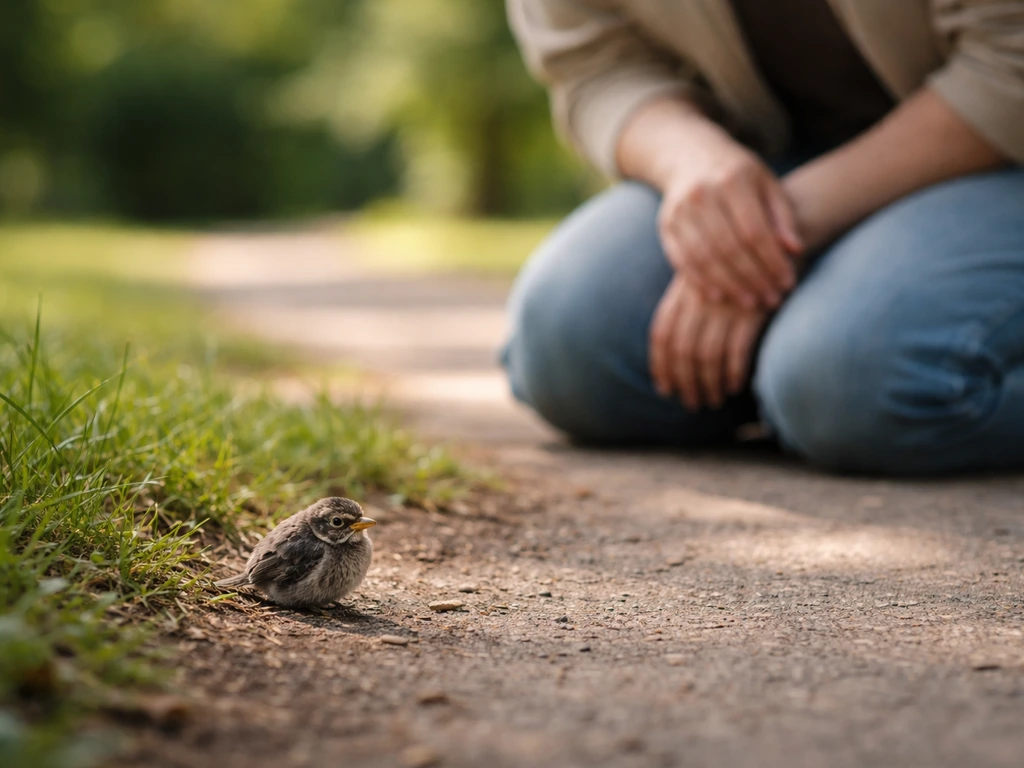
Before you pick the bird up, give it a 30-second look from where you stand. You're checking for four things: injury, cold, bleeding, and immediate danger. These determine how fast you need to act.
- Bleeding or visible wounds: Any active bleeding, dangling wing, twisted leg, or puncture wound (especially from a cat) is a medical emergency. Cat bites in particular introduce bacteria that can kill a bird within hours even if the wound looks minor.
- Cold or limp: A bird that feels cold and is unresponsive, or that is lying on its side, is in shock or hypothermic. This needs immediate warming.
- Featherless with closed eyes (nestling): This bird cannot survive on the ground. It has fallen too early and cannot regulate its body temperature.
- Fully or mostly feathered, alert, hopping (fledgling): This bird is likely fine. Its parents are probably nearby, watching. Intervening may do more harm than good.
- Immediate physical danger: A cat, dog, or heavy foot traffic nearby changes the calculation. Move the bird to a safe spot first, then assess.
The U.S. Fish & Wildlife Service is clear on this: only intervene if the bird is featherless or has closed eyes, is visibly injured, or is in immediate danger. A feathered bird sitting calmly on the ground with adult birds calling nearby is almost certainly being cared for. Resist the urge to 'rescue' it.
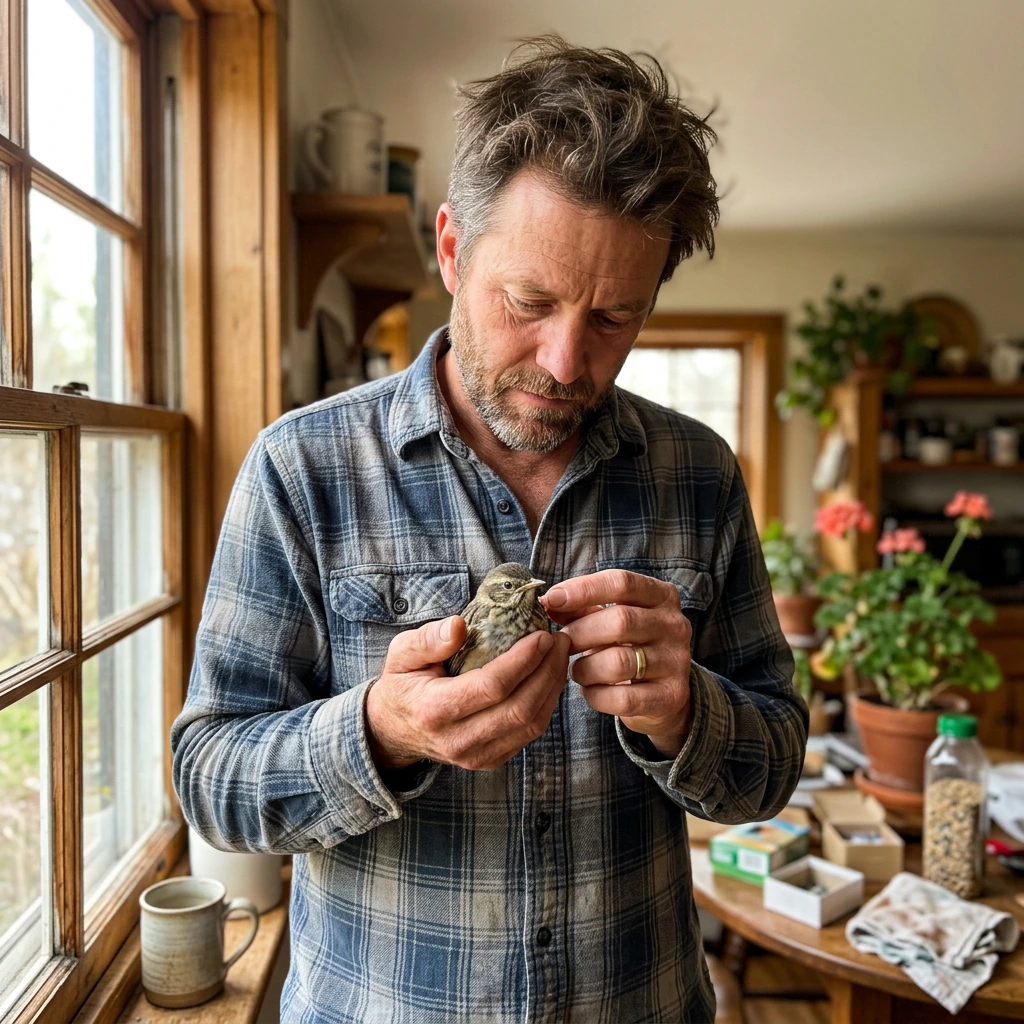
If after this assessment you're confident the bird needs help, pick it up gently using both hands cupped around its body. Don't squeeze. Keep your movements slow and quiet. Minimize handling time from this point forward.
Set up a temporary emergency nest
Your goal here is to create a calm, warm, contained space that mimics a nest as closely as possible. You are not setting up a permanent home. You're buying time until the bird can be returned to its parents or transferred to a licensed wildlife rehabilitator.
Choosing and building the container
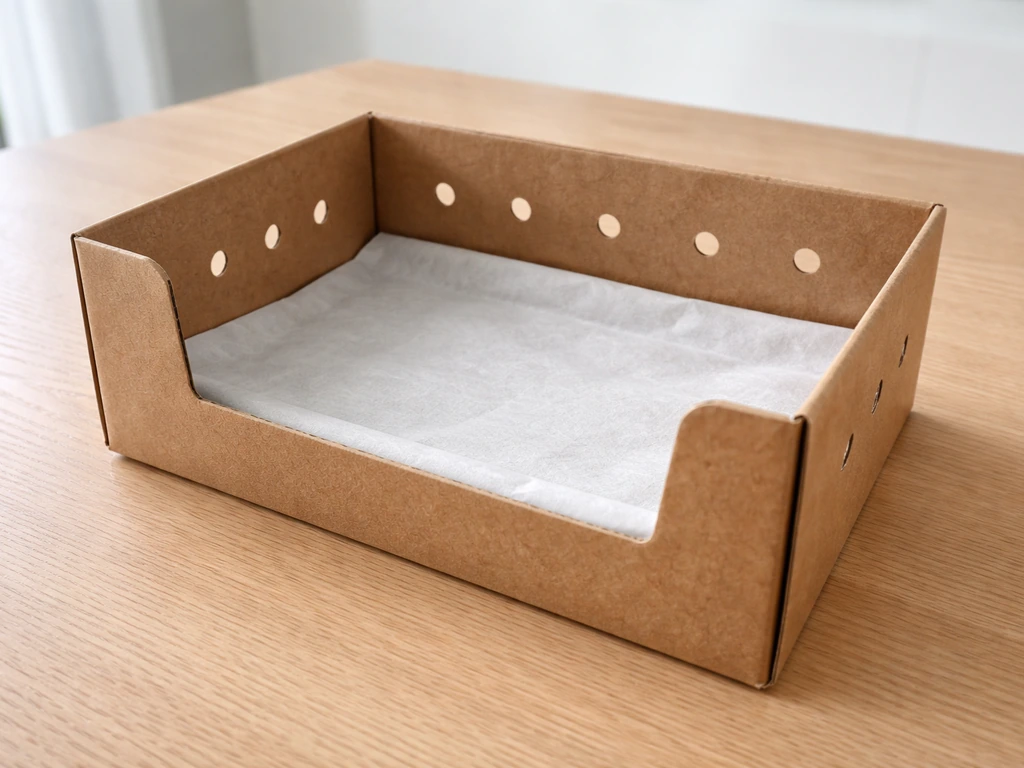
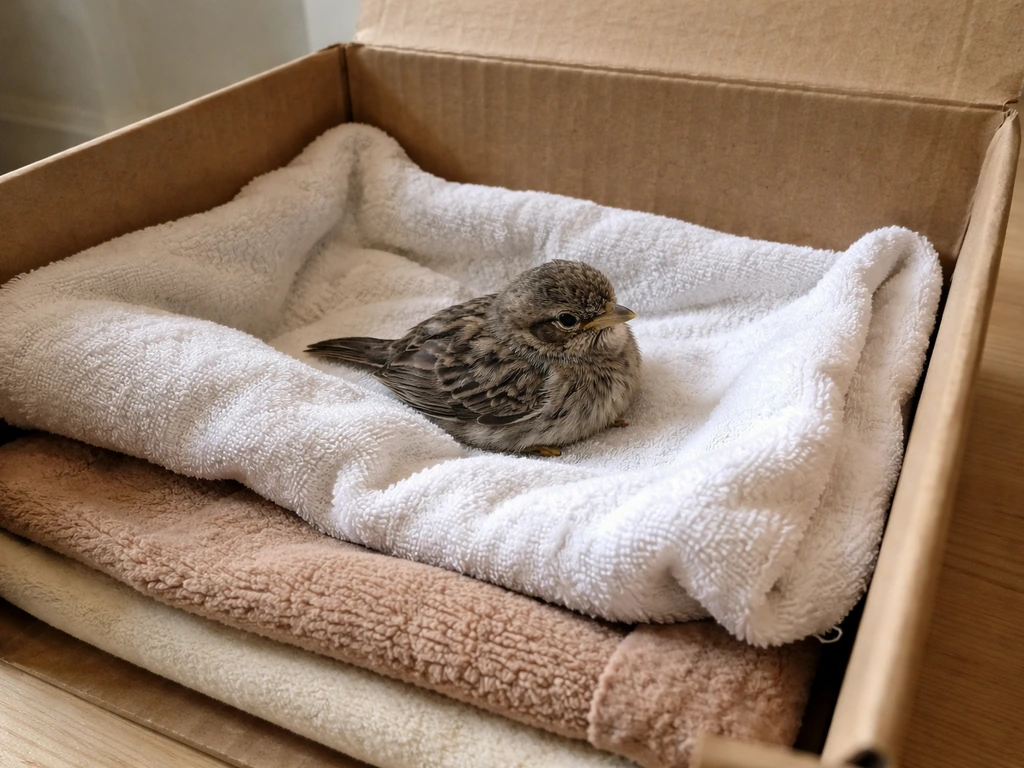
Use a small cardboard box or a clean container with ventilation holes punched in the sides. It should be just big enough for the bird to sit upright without crowding, but small enough that it can't bounce around. Line the bottom with paper towels or a soft cloth (avoid anything with loose fibers or loops the bird's toes could catch in). Shape the lining into a shallow bowl shape in the center to mimic the curve of a nest.
Do not use a wire cage, a clear container, or anything with open slats at the bottom. The bird needs to feel enclosed and hidden, not exposed. Cover the top of the box loosely with a cloth or place the lid ajar so airflow is maintained while light and stimulation are reduced.
Warmth is critical, especially for nestlings
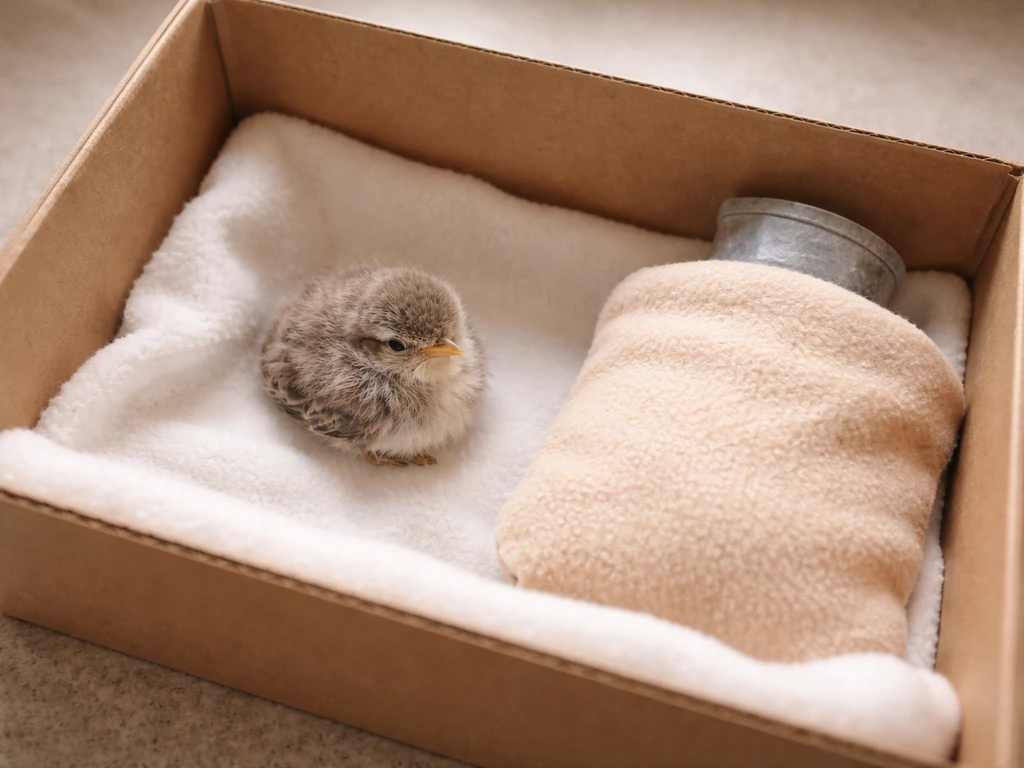
Baby birds cannot regulate their own body temperature, especially nestlings. A bird that is cold needs to be warmed before it can even eat properly. Place a heating pad set on its lowest setting under one half of the box only, never under the whole base. This lets the bird move away from the heat if it gets too warm. Aim for roughly 85 to 90 degrees Fahrenheit for a featherless nestling. For a feathered fledgling, 75 to 80 degrees is enough.
If you don't have a heating pad, fill a zip-lock bag or a clean sock with uncooked rice, microwave it for 30 to 45 seconds, and wrap it in a thin cloth before placing it in the box. Check it every 20 minutes and reheat as needed. Do not place the bird directly against the heat source.
Keep it quiet and dark
Place the box in a warm, quiet room away from pets, children, loud TVs, and direct sunlight. Darkness reduces stress significantly. Every time you open the box to check on the bird, you're causing it stress. Limit checks to feeding times and necessary assessments. The goal is to keep the bird as calm and unstimulated as possible.
Feeding nestlings vs. fledglings: what to offer and what to avoid
This is where most well-meaning people accidentally cause harm. What a bird needs to eat depends entirely on how old it is and what species it is. Getting this wrong can injure or kill the bird.
How to tell a nestling from a fledgling
| Feature | Nestling | Fledgling |
|---|---|---|
| Feathers | None or pin feathers only | Mostly or fully feathered |
| Eyes | Closed or just opening | Open and alert |
| Movement | Minimal, weak | Hopping, fluttering, attempting to fly |
| Age (approximate) | 0 to 10 days | 10 days and older |
| Can regulate body temp? | No | Partially to yes |
Feeding a nestling
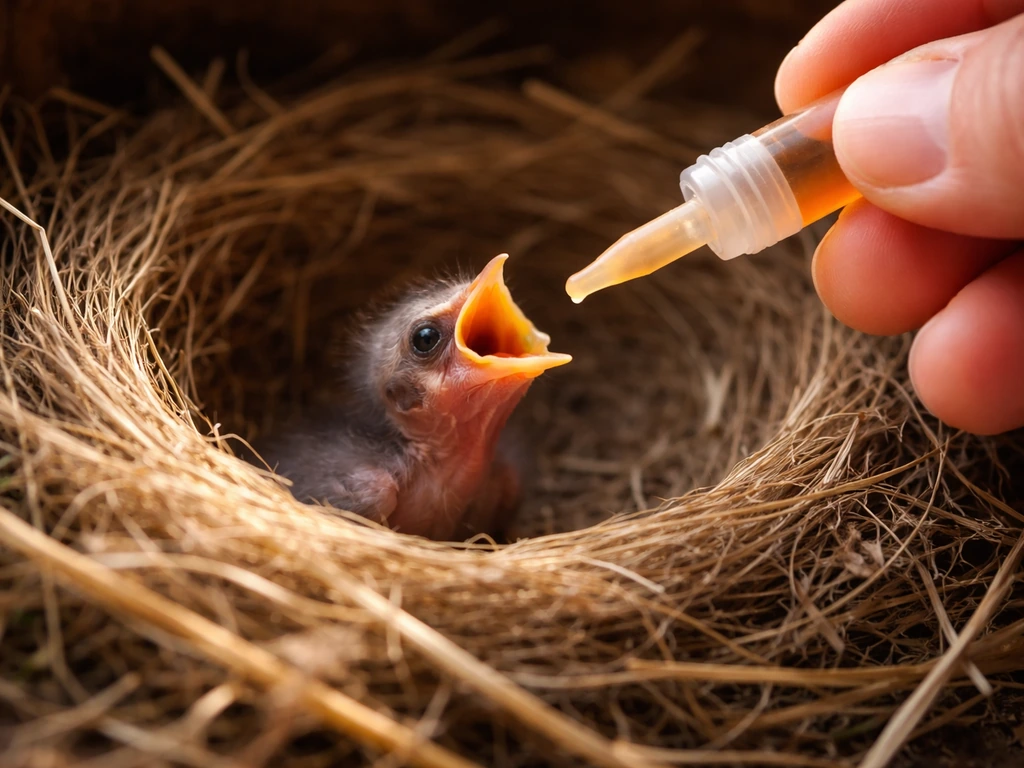
Nestlings need to be fed every 20 to 30 minutes during daylight hours. This is not a small commitment. If you are wondering what to do with a juvenile bird specifically, focus on whether it is feathered and able to move normally before you decide to interfere. The safest emergency food while you arrange professional care is moistened dog or cat kibble (soaked in water until soft), or small pieces of mealworms. Use tweezers or a toothpick to offer tiny pieces directly into the open mouth. Feed only when the beak opens naturally. Never force food into a closed beak.
Do not offer water directly into the mouth of a nestling. They can aspirate and drown. Hydration comes through the food. If the food is moist, that's enough for now.
Feeding a fledgling
Fledglings eat less frequently than nestlings, roughly every 45 to 60 minutes. They may be able to pick up food themselves. Offer mealworms, small pieces of fruit, or moistened kibble in a shallow dish and see if the bird takes it independently. Many fledglings will gape (open their mouth wide) if they're hungry and you bring food near them.
What never to feed a baby bird
- Bread, crackers, or any baked goods (no nutritional value, can cause crop impaction)
- Cow's milk or dairy of any kind
- Water squirted directly into the mouth
- Worms dug from the garden (can carry pesticides or parasites)
- Anything with salt, sugar, or seasoning
- Dog or cat food that is not fully softened with water
Hour-by-hour care while you stabilize the bird
Think of this phase as bridge care. You're keeping the bird alive and stable until it can either go back to its parents or reach a wildlife rehabilitator. Here's a rough schedule to work from.
- First 15 minutes: Set up the container, get it warm, place the bird inside. Do not feed yet. Let it warm up and calm down first.
- 30 minutes in: Gently check if the bird is warming up. If it's still cold and limp, focus on temperature before anything else.
- First hour: If the bird is warm and alert, offer a small amount of moistened food. Observe whether it gapes (mouth opens) or tries to eat independently.
- Every 20 to 30 minutes (nestlings) or 45 to 60 minutes (fledglings): Offer another small feeding. Record what and how much you offered and whether the bird ate.
- Every 2 hours: Check the heat source and replace or adjust as needed. Remove any uneaten food to prevent spoilage.
- At dusk: Stop feeding. Birds do not eat at night. Reduce light and keep the environment completely quiet until dawn.
- Next morning: Resume feedings at first light. This is also when you should be contacting a wildlife rehabilitator if you haven't already.
Keep a simple written log of feeding times, what you offered, and the bird's behavior. This information is genuinely useful to a rehabilitator when you hand the bird off.
Common problems and how to handle them
The bird won't eat
This is one of the most common concerns and often not immediately alarming. A bird that is cold, stressed, or in shock will not eat. Prioritize warmth and quiet first, then try feeding again 20 to 30 minutes later. If the bird has been warm and calm for over an hour and still won't eat at all, contact a wildlife rehabilitator. Do not force-feed.
Signs of dehydration
A dehydrated baby bird will have skin that looks wrinkled or dry, sunken eyes, and sticky membranes in its mouth. Gently pinch the skin on the back of the neck. If it stays tented rather than snapping back, dehydration is likely. Keep feedings moist and get the bird to a professional as soon as possible. Do not attempt to give water orally to a nestling.
Wing or leg injuries
If a wing is drooping, a leg is swollen or twisted, or the bird is unable to grip with its feet, there may be a fracture or dislocation. Do not try to splint or straighten anything yourself. Keep the bird contained and calm, limit movement, and get it to a vet or wildlife clinic as quickly as possible. Injuries like these require professional diagnosis.
Cat or dog attack
Even a light peck or bite from a cat or dog is a veterinary emergency for a bird. Cats' mouths carry bacteria like Pasteurella that can cause fatal sepsis within 24 to 48 hours, even when external wounds look trivial. If there was any contact with a cat, treat it as urgent and get to a wildlife vet or rehabilitator that day, not tomorrow.
The bird is very lethargic or unresponsive
A bird that cannot hold its head up, won't respond to movement near it, or is lying on its side needs emergency care. Get it warm immediately and contact a wildlife rehabilitator or emergency vet while you do so. Lethargy is often a sign of shock, hypothermia, or internal injury.
When and where to get professional help
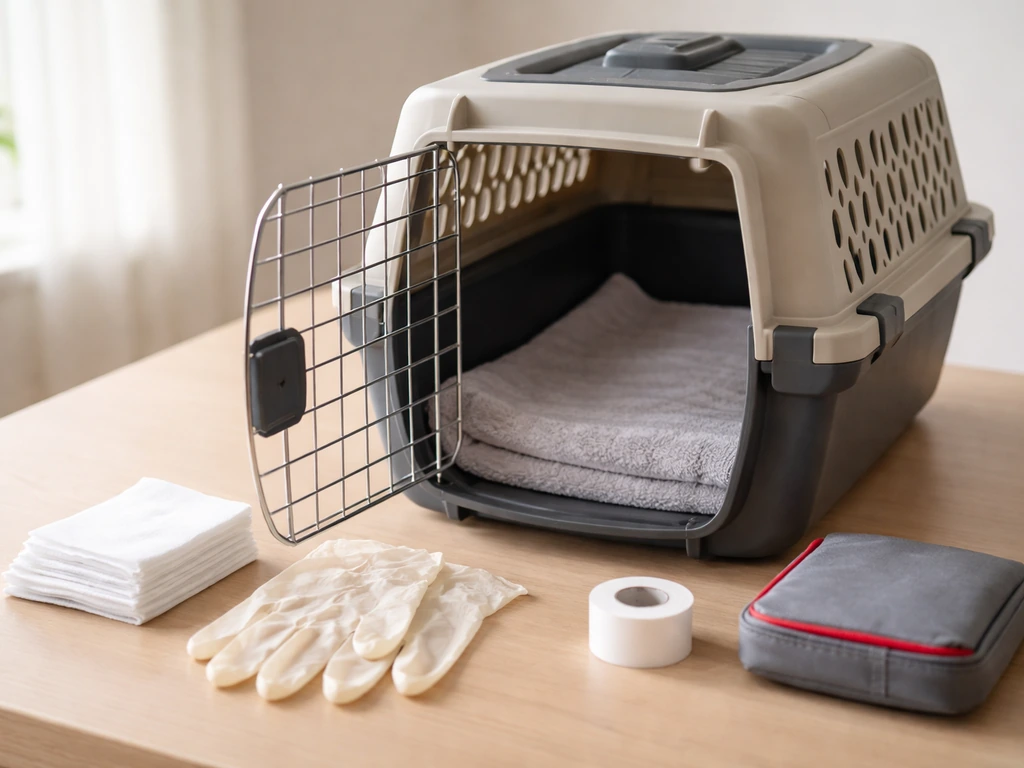
Temporary care at home should be just that: temporary. Your goal is to stabilize the bird, not raise it to adulthood. Wildlife rehabilitators are licensed professionals with the training, equipment, and legal authority to care for wild birds long-term. Even if you're doing everything right, a baby bird raised entirely by humans often loses the instincts and behaviors it needs to survive in the wild.
Get professional help if any of these apply
- The bird has any wound, injury, or was touched by a cat or dog
- The bird is featherless and you cannot locate or reach the nest
- The bird refuses to eat after being warm for more than an hour
- The bird shows signs of dehydration, lethargy, or shock
- You cannot commit to feeding every 20 to 30 minutes throughout the day
- More than 24 hours have passed and the bird is still in your care
How to find a wildlife rehabilitator
In the United States, the National Wildlife Rehabilitators Association (nwrawildlife.org) and the Wildlife Rehabilitator Directory at the Humane Society website both have searchable databases. Your local animal shelter, Humane Society chapter, or veterinary office can usually point you to a licensed rehabilitator in your area. State wildlife agencies also maintain lists. Call first. Many rehabilitators have limited capacity and can help you triage over the phone before you make the trip.
Transporting the bird safely
Use the same box you've been keeping it in, or a clean cardboard box with ventilation holes and a soft, non-slip liner. Keep the car quiet (radio off), warm, and the box stable. Do not take the bird out to look at it during transport. Minimize stops. If the trip is more than 30 minutes, place a fresh heat source under one side of the box before you leave.
Re-nesting, preventing stress, and what release readiness looks like
Try to return the bird to its nest first
If the bird is a nestling and you can see and reach the nest, returning it is always the best outcome. The myth that parent birds will reject a chick you've touched is just that: a myth. Most birds have a very limited sense of smell and will not abandon a chick simply because a human handled it. Pick the bird up, place it gently back in the nest, and step away and watch quietly from a distance for 30 to 60 minutes to confirm the parents return.
If the nest is destroyed or inaccessible, you can create a substitute nest from a small wicker basket or a plastic container (with drainage holes) lined with dry leaves or grass. Attach it to the tree as close to the original nest location as possible and monitor from a distance for parental return.
Leave fledglings alone when possible
If the bird you found is a fledgling (feathered, hopping, alert), the best thing you can do in most cases is leave it where it is or move it only a few feet to a safer spot, like a nearby shrub or low branch. Fledglings are supposed to be on the ground. This is a normal developmental stage. Mass Audubon notes that a fledgling is often in a natural stage and, when it is not injured, is best left alone so its parents can continue feeding it a fledgling is often in a natural stage and best left alone when not injured. Their parents are usually nearby and will continue feeding them. Removing a healthy fledgling from this environment often does more harm than the 'rescue' does good.
If you're concerned about cats or dogs in the area, keep your own pets indoors for a day or two and ask neighbors to do the same. That's usually enough to let a fledgling get through this vulnerable stage safely.
What release readiness actually looks like
If a bird has gone through rehabilitation (whether at home or at a wildlife clinic), it is ready for release only when it can fly well and maneuver in the air, forage or seek food independently, show fear responses to humans and potential predators, and maintain its body weight without supplemental feeding. A bird that is simply 'better' from an injury but has become accustomed to human presence and hand-feeding is not ready to survive outside. This is why professional rehabilitation is so important: they have the space, outdoor aviaries, and protocols to properly prepare a bird for the wild.
If you've been caring for a bird for more than a day or two and it's still dependent on you for food and warmth, the kindest thing you can do is transfer it to a licensed rehabilitator who can take it the rest of the way. For specific guidance, see our tips on where to take a fledgling bird.
FAQ
How can I tell if the bird is a nestling vs a fledgling when I’m not sure?
If you are unsure, treat it as a nestling for triage: keep it warm, limit handling, and wait before feeding until you can confirm whether it has feather coverage and normal movement. A safe sign for “nestling-like” care is closed eyes or very scant feathers, plus inability to sit upright or steady itself. If it is truly cold or injured, seek help immediately rather than trying to identify age on the spot.
What should I feed if I don’t know the species or exact age?
No. Even if the bird seems responsive, don’t offer mealworms, kibble, bread, or water “just to see.” The safest emergency approach is the specific foods the bird would plausibly take for that stage (moistened kibble or small mealworm pieces for nestlings, or offer food in reach for fledglings). If you cannot match the correct food type and timing, stop and contact a wildlife rehabilitator for instructions.
My bird won’t open its mouth or take food, is it too cold?
If it feels cold or appears chilled, warm the bird first using a heat source under only part of the container, then reassess before feeding. Birds that are hypothermic often won’t swallow properly and may refuse food even if hungry. Once the bird is warm and calmer for at least 20 to 30 minutes, try feeding again.
What if the bird has a visible wound or bleeding?
If the bird is bleeding, covered in fluid, or has an open wound, focus on warmth and minimizing handling, then get professional help. Do not apply ointments, powders, or “home remedies,” because tiny particles and substances can be harmful if the bird cleans its feathers or if a wound is deeper than it looks.
Do I need to build a substitute nest every time I can’t reach the original?
If you can see the nest and it is safe to reach, return the bird promptly and then leave it alone for 30 to 60 minutes to confirm parental return. If the nest is inaccessible, you can use a substitute container attached near the original location, but don’t bring the bird repeatedly back and forth to check on it.
Can I take the bird out of the box for a quick photo or to show someone?
Yes, but only to triage. If you must transport, keep the bird in the same type of warm, ventilated box and avoid taking it out for photos or inspection. Bring only the box, tissue/paper for the liner, and a warm heat source if needed, and keep the car quiet with minimal stops.
How do I know the temperature is right when warming a cold bird?
Use a thermometer if you have one, but you can also monitor by watching behavior and movement. The container should be warm enough that the bird is not shivering or lethargic, and it should be able to move away from heat because the heat pad goes under only one half. If the bird appears overheated (very restless, spreading out, or too hot to comfortably touch near it), reduce warmth immediately and contact a rehabilitator.
What kind of box liner is safest, and what should I avoid?
Wraps, cages, or uneven heat sources can trap toes or cause overheating. Avoid loose fibers, looped material, and wire or slatted floors. A paper towel or soft cloth liner that is snug, non-slip, and bowl-shaped is safer, and the bird should have enough room to sit upright without bouncing.
My cat licked or mouthed the bird, but I don’t see punctures. Is it still an emergency?
If a cat or dog has mouth contact, treat it as urgent even if there are no obvious external injuries. Keep the bird warm and contained, then contact a wildlife rehabilitator or emergency vet the same day. Time matters because internal infection can develop after seemingly minor contact.
How long should I wait before I give up on feeding at home?
If the bird will not eat after it has been warmed and kept calm for about an hour, contact a wildlife rehabilitator for guidance rather than repeating feeding attempts. Do not force-feed, and do not increase frequency beyond what the bird’s stage requires, because stress and improper handling can worsen outcomes.
What symptoms mean I should skip home care and call emergency help?
If it is lying on its side, can’t hold its head up, or is very unresponsive, that points to shock or hypothermia and needs emergency triage. Warm it immediately as directed, keep it dark and quiet, and call a wildlife rehabilitator or emergency vet right away while it stays in the container.
How do I know when a bird is ready to be released?
Release-readiness is not based on “being better” or no longer looking injured. A wild bird should be able to fly and maneuver, forage or seek food independently, show appropriate fear responses to humans, and maintain weight without supplemental feeding. If it’s relying on you after one or two days, transfer to a licensed rehabilitator.
I can care for it, but is it okay to keep a fallen bird at home longer than a day?
Do not try to keep the bird “as a pet.” If you still have a dependent bird after a day or two, or if it is still dependent for warmth and feeding, the safest plan is transfer to a licensed rehabilitator. Long-term at-home care often reduces survival skills even when care seems gentle.
What to Do With a Juvenile Bird: Right Steps Now
Humane steps for a found juvenile bird: check if it needs help, warm safely, temporary housing, feeding do’s, and when t