Tube feeding a bird (also called gavage feeding) means passing a small flexible or ball-tipped tube directly into the crop so formula bypasses the mouth entirely. It's a legitimate supportive care technique used by wildlife rehabilitators and avian vets, but it carries real risks, especially aspiration pneumonia, if done incorrectly.
How to Tube Feed a Bird Safely: Step-by-Step Guide
Marcus Holloway
20 May 2026
If you have a bird in front of you right now that absolutely cannot eat on its own and you cannot reach a rehabilitator or vet today, this guide will walk you through the safest possible way to do it. If you’re looking for details on how to force feed a bird safely, the sections below cover the right setup, feeding technique, and what to watch for after each feeding.
But first, you need to honestly assess whether tube feeding is actually what this bird needs.
When tube feeding is (and isn't) the right move
Tube feeding makes sense when a bird is too weak, injured, or debilitated to eat on its own and genuinely needs nutritional or fluid support to survive the next several hours. It's appropriate for nestlings that haven't yet developed a swallowing reflex strong enough to take food from a syringe tip, for birds recovering from illness or injury that refuse to eat voluntarily, and in acute emergency situations where getting calories and hydration in quickly is the difference between life and death.
It is not the right move if the bird has crop stasis (the crop is full, slow, or impacted from a previous feeding), if it's showing signs of gastrointestinal impaction, if it's actively vomiting or regurgitating before you even start, or if it's so severely compromised that handling alone could kill it. A bird that's seizing, collapsed, or unresponsive needs emergency veterinary care, not a feeding tube. Similarly, if you've found a fledgling that looks grounded but healthy, it almost certainly doesn't need tube feeding. Fledglings spend days on the ground while their parents continue to feed them, and well-meaning intervention is often unnecessary and stressful for the bird.
If you're not sure whether the bird is a nestling, fledgling, or juvenile, look at the feathering. A nestling is naked or has only pin feathers and cannot hold its head up reliably. A fledgling has most of its feathers and can hop and grip. Nestlings are the birds most likely to need tube feeding; fledglings can often be syringe fed more easily, which is a gentler first option to consider.
Supplies, formula, and getting the right feeding setup
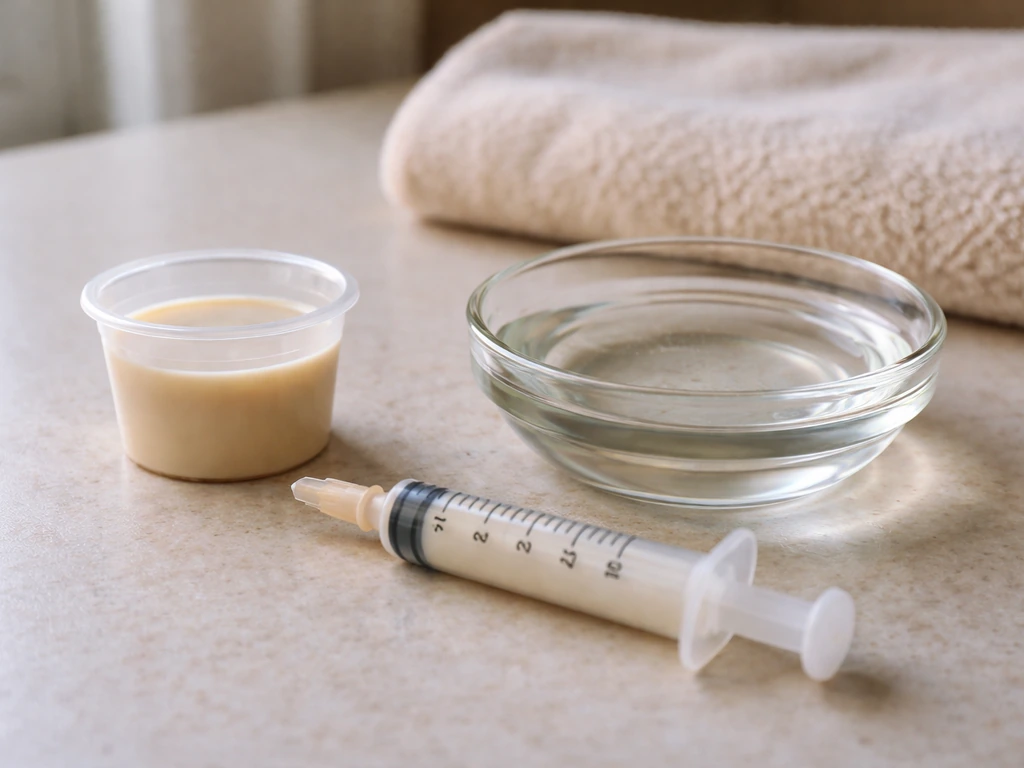
Using the wrong supplies or the wrong formula is where most home tube-feeding attempts go badly. Do not improvise with human food, cow's milk, bread soaked in water, or juice. Wild birds have specific dietary needs, and the wrong food can kill them faster than not eating at all.
The right formula
For most wild bird emergencies, you want a commercially prepared avian hand-feeding or critical care formula. Widely available options include Kaytee Exact Hand-Feeding Formula, ZuPreem Embrace, LaFeber Critical Care Bird Formula, and Harrison's Juvenile Hand Feeding Formula. If the bird is a carnivore (raptor, kingfisher, heron), species-specific formula matters a lot more, and you should be on the phone with a rehabilitator before you proceed. For insectivores and songbirds, a general hand-feeding formula diluted to the right consistency is a reasonable emergency measure.
Mix the formula to a slightly thin consistency (thinner than normal hand-feeding directions suggest) so it flows through the tube without plugging it. The target temperature is 100 to 105°F (38 to 41°C). Use a thermometer. Formula that's too cool slows digestion and can cause crop stasis; formula that's too hot burns the crop lining. If the formula cools before you finish feeding, discard it and mix a fresh batch. Don't reheat and reuse.
Tubes and syringes
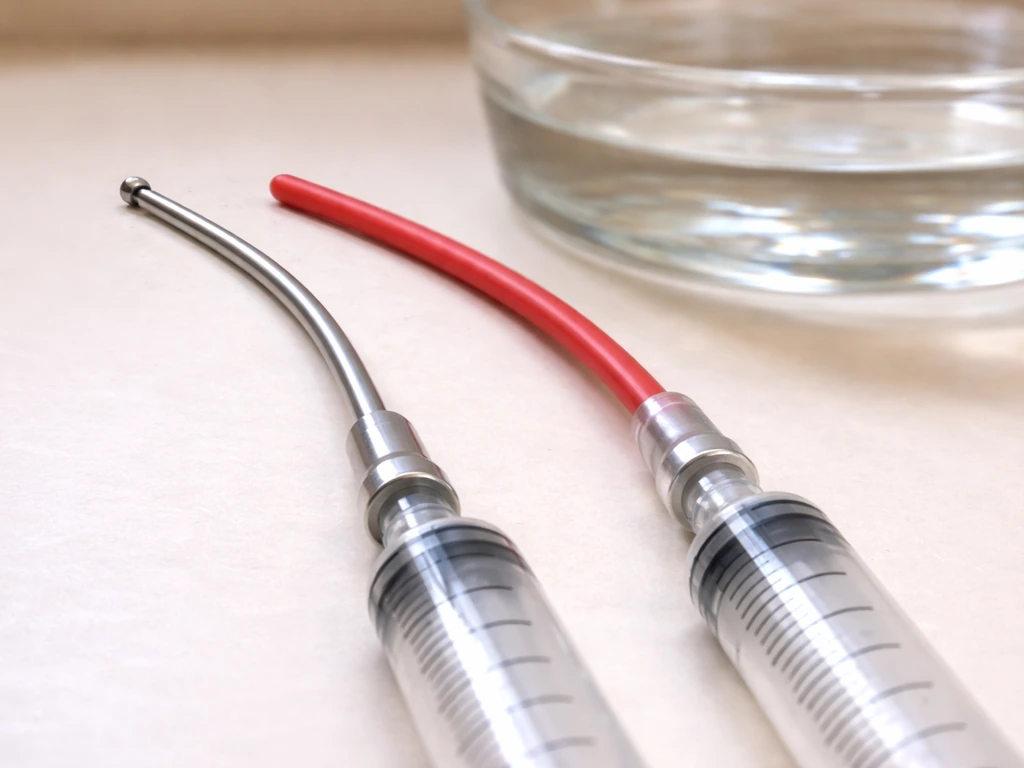
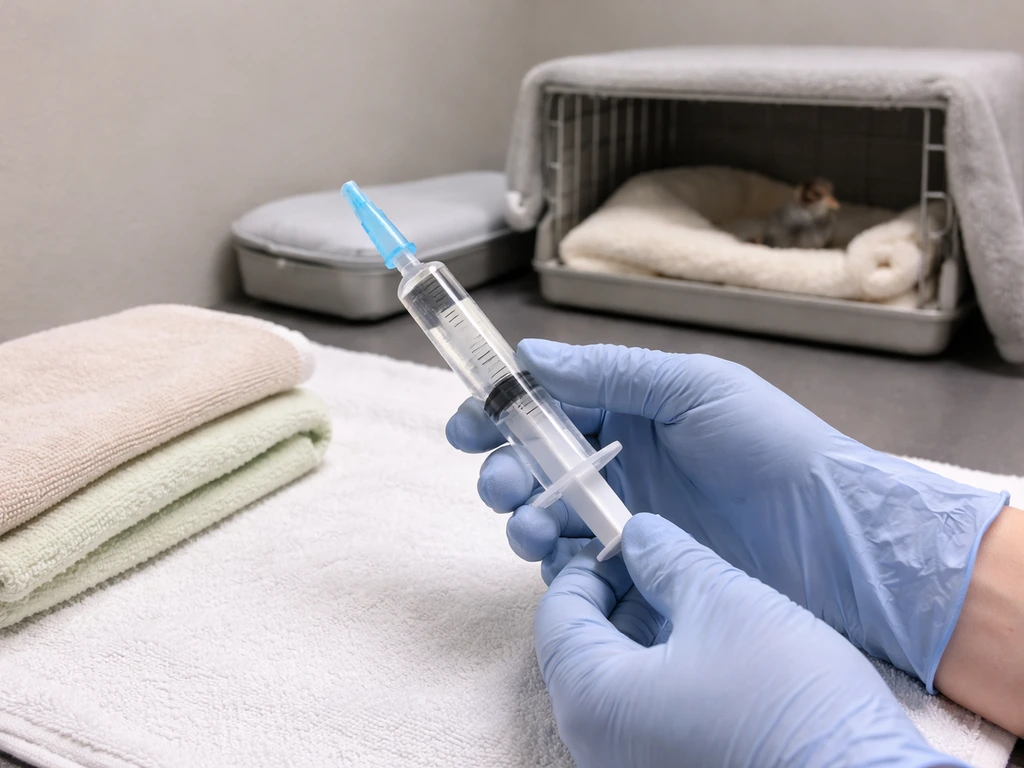
The two standard tube types used for avian gavage are curved stainless steel ball-tipped feeding tubes and soft red rubber feeding tubes. Ball-tipped metal tubes are easier to guide into the crop correctly and reduce the risk of tracheal entry. Red rubber tubes are softer and more flexible. For a red rubber tube, you'll need a catheter-tip syringe. For a stainless steel ball-tip tube, you need a luer-tip syringe. Tube size depends on the bird's size: a tiny songbird needs a much smaller tube than a crow or a duck. If you don't have proper avian gavage tubes, this is a strong signal to pause and contact a rehabilitator rather than improvise with random tubing.
Keep the loaded syringe and tube in very warm water (around 103 to 105°F) until the moment you're ready to feed. Don't load the tube until immediately before you start, as formula sitting in the tube cools quickly and can also plug the tube.
Step-by-step tube feeding technique and safe handling
Stress kills birds. Before you start, minimize everything: dim the lights, keep the room quiet, limit the number of people handling the bird, and work quickly and calmly. Wear thin gloves if you have them. Every second of handling is a physiological stressor for a wild bird, so being prepared before you pick it up matters.
Restraint
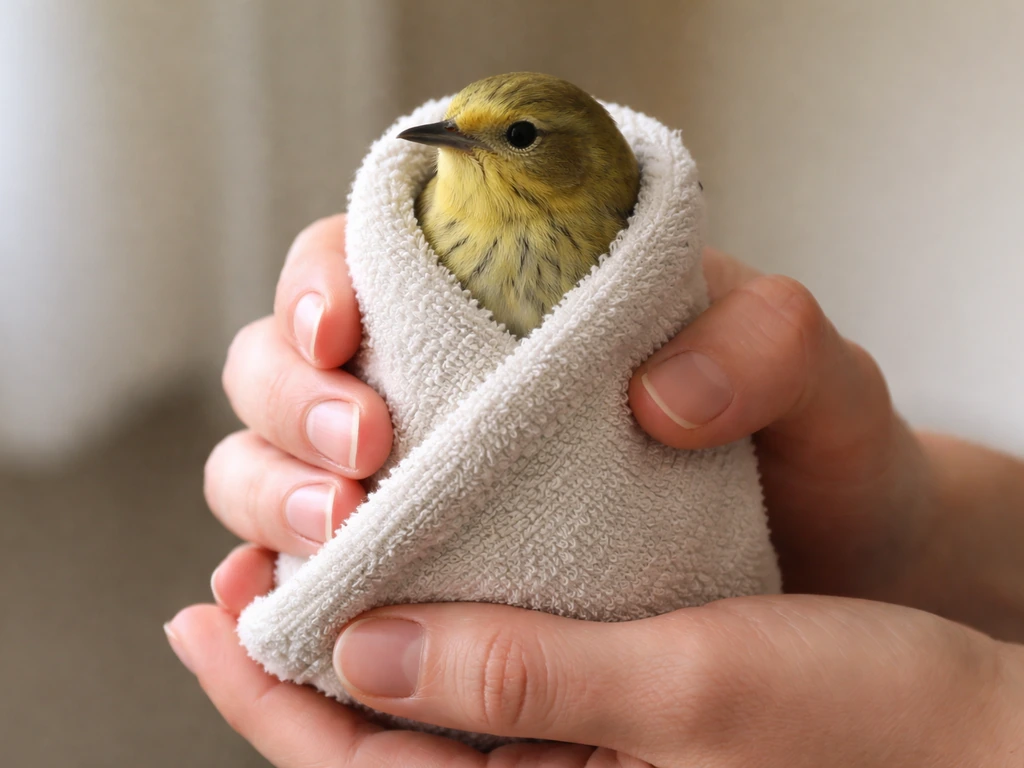
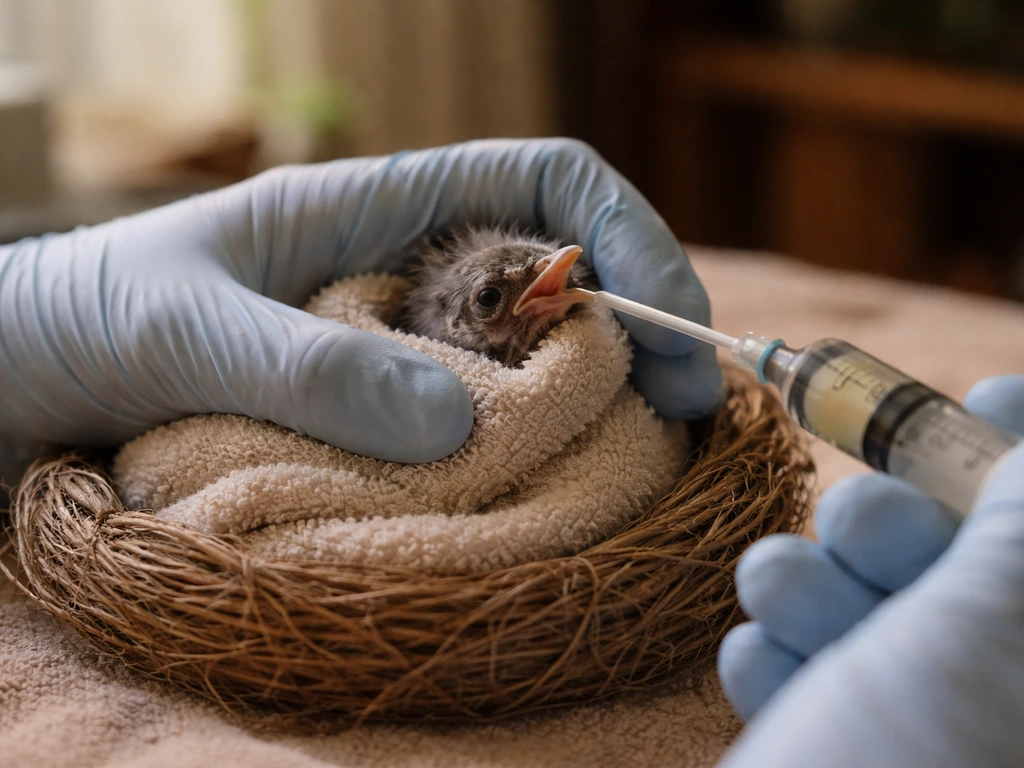
Hold the bird in an upright, natural position, never on its back. Wrap the body gently in a small towel to control the wings, with the bird's head and neck free. Use one hand to hold the body and support the feet, and use your thumb and forefinger to gently hold the head still with the beak pointing slightly upward. You need the bird's neck in a natural, slightly extended position, not bent sharply forward or backward. A second person to hold the bird while you manage the tube is extremely helpful.
Passing the tube
- Open the beak gently. For a small bird, gentle pressure at the base of the beak is usually enough. Don't force it.
- Introduce the tube at the left corner of the mouth (the bird's left, your right as you face it). The esophagus and crop are on the bird's right side of the neck, which is your left as you're facing the bird. Guide the tube toward that side.
- Pass the tube gently along the roof of the mouth and down into the esophagus, not the trachea. The trachea is visible at the base of the tongue as a small opening (the glottis). You are aiming to pass the tube to the side of and past this opening.
- Advance the tube slowly. You should feel minimal resistance as it enters the esophagus and slides toward the crop. If you feel significant resistance, stop. Do not force the tube.
- For small birds, a rough guide is to pre-measure the tube length from the beak to just past the base of the neck before you start, so you know roughly how far to advance.
- Once the tube is in place, deliver the formula slowly and steadily. Don't push the plunger fast. Slow and controlled is the goal.
- Watch the bird's throat constantly. If you see any swallowing, gagging, or regurgitation, stop immediately.
- After delivering the formula, withdraw the tube gently and smoothly, then return the bird to a warm, quiet enclosure.
One critical safety note: if at any point the bird starts to regurgitate while the tube is still in, pinch the tube closed immediately and remove it. Regurgitation with a tube in place dramatically increases the risk of aspiration. Because tube feeding can increase aspiration risk, watch for regurgitation or breathing changes and get veterinary help immediately if they occur. The tube going in should feel smooth and easy. If it doesn't, don't push harder.
How much and how often to feed
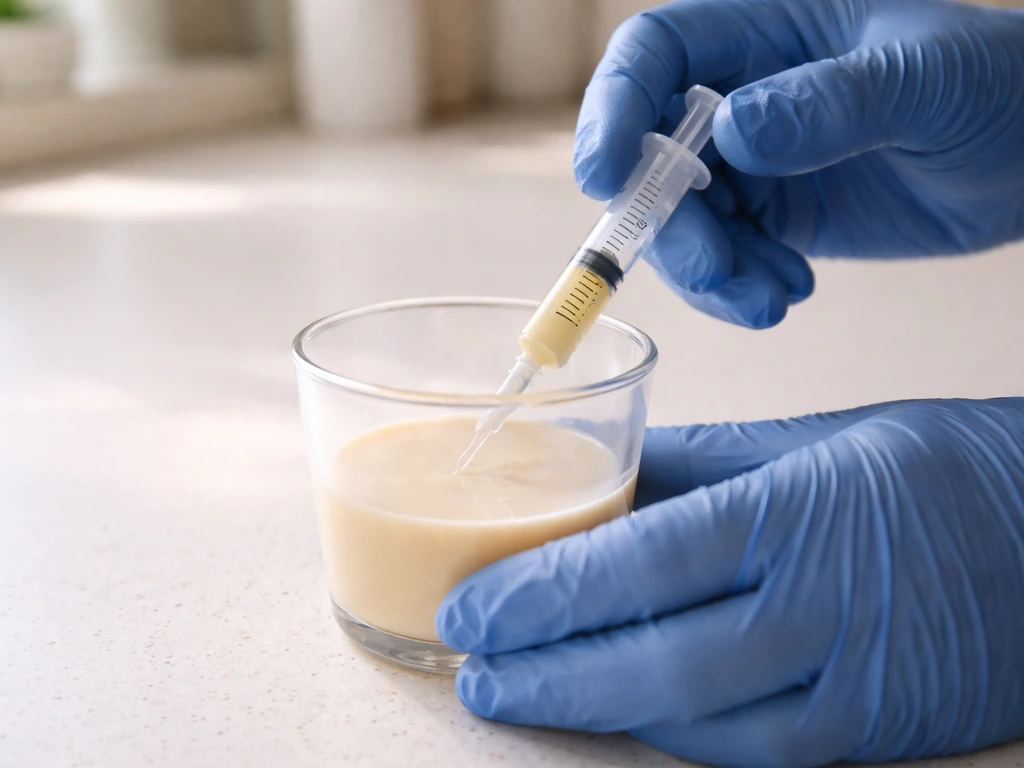
Volume is one of the most important variables to get right. Overfilling causes crop distension and regurgitation, which risks aspiration. Underfeeding fails to help the bird recover. A widely used safe starting point is 3 to 5% of the bird's body weight per feeding.
So if you have a 100g bird, that's 3 to 5 mL per feeding. Another commonly cited guideline for hand-feeding baby birds is approximately 10% of body weight per feeding, so that same 100g bird would receive about 10 mL.
For birds that are severely debilitated and haven't been eating, start at the lower end (around 20 to 30 mL per kg of body weight per day, divided across feedings) and increase slowly based on how the bird tolerates each feeding.
Feeding frequency depends on the bird's age and condition. Nestlings that are growing rapidly may need feeding every 20 to 30 minutes during daylight hours. Juvenile and adult birds in emergency care are typically fed every 4 to 6 hours. Don't feed overnight unless you're working with a very young nestling under specific guidance. Nighttime feeding breaks allow the crop to empty, which is important for preventing stasis.
Before each feeding, gently feel the crop at the base of the neck. If it still feels full or firm from the last feeding, wait. Tube feeding into a full crop is a serious mistake. The crop should feel mostly empty before you feed again.
Formula temperature matters every single time. Subcutaneous fluids are a different supportive-care step, so use them only when a vet or rehabilitator has confirmed they're appropriate for your bird Formula temperature. Check it before each feeding: 100 to 105°F (38 to 41°C). If the formula has cooled, make a fresh batch.
Aftercare, monitoring, and preventing aspiration
After each feeding, return the bird immediately to a warm, quiet enclosure. Warmth is critical: a debilitated bird should be kept at around 85 to 90°F for very young nestlings, or around 80 to 85°F for older birds, until they're stable. A heating pad on low under half of the enclosure (so the bird can move off the heat if needed) works well. Never put a sick or weak bird in a cold environment right after feeding, as stress and cold together dramatically increase mortality.
Monitor the bird closely for the first 15 to 20 minutes after each feeding. Watch for any of the following: labored breathing, open-mouth breathing, a gurgling or clicking sound when breathing, loss of balance, or sudden lethargy. These are signs of aspiration, and they require emergency veterinary attention. Aspiration pneumonia can develop quickly and is often fatal without treatment.
Check the crop before each subsequent feeding to confirm it's emptying normally. A crop that's still full hours later, or one that feels hard, is a sign of crop stasis. Stop tube feeding and contact a vet or rehabilitator immediately if this happens.
Keep a simple log: time of feeding, volume given, how the crop felt before feeding, and any observations about the bird's behavior or breathing. This is genuinely useful information when you hand the bird off to a professional.
Common mistakes and when to stop immediately
These are the mistakes that cause the most harm, and the warning signs that mean you should stop what you're doing and get professional help.
| Mistake / Warning Sign | What It Means / What to Do |
|---|---|
| Using the wrong formula (human food, milk, juice) | Can cause fatal nutritional deficiencies, aspiration, or poisoning. Use only appropriate avian formula. |
| Formula too hot or too cold | Crop burns or stasis. Always check temperature: 100–105°F every time. |
| Feeding into a full crop | Causes distension, regurgitation, aspiration. Always check the crop is empty first. |
| Forcing the tube against resistance | Likely means the tube is in the wrong place. Stop, withdraw, and reposition. |
| Delivering formula too fast | Overwhelms the crop and triggers regurgitation. Go slow and steady. |
| Bird regurgitates during feeding | Pinch and remove tube immediately. Risk of aspiration is high. Stop the session. |
| Gurgling or clicking breathing sounds after feeding | Probable aspiration. This is an emergency. Contact an avian vet immediately. |
| Crop still full or hard before next feeding | Crop stasis. Do not feed again. Contact a vet or rehabilitator. |
| Bird is lethargic, unresponsive, or not improving after 2–3 feedings | Condition is beyond what home tube feeding can address. Escalate to professional care. |
| Restraint after feeding causes immediate regurgitation | Minimize post-feeding handling. Place bird directly into enclosure after withdrawing tube. |
Overfeeding is one of the most common mistakes made by well-meaning people. More formula is not better. Sticking to the correct volume per feeding is more important than trying to "make up" for the bird not eating earlier.
Finding help: vets and wildlife rehabilitators
Tube feeding at home is a temporary bridge, not a long-term plan. The goal is to stabilize the bird until you can get it to someone with proper training and equipment. Wildlife rehabilitators are licensed to care for wild birds and have species-specific knowledge, appropriate diets, and the ability to monitor for complications like aspiration pneumonia. They are almost always the right call for any wild bird that needs ongoing supportive care.
To find a licensed wildlife rehabilitator near you, contact your state's wildlife agency or fish and wildlife service, call a local wildlife hotline, or search the National Wildlife Rehabilitators Association (NWRA) or the International Wildlife Rehabilitation Council (IWRC) directories online. Many rehabilitators can advise you by phone even before you bring the bird in, which is exactly the kind of guidance you want before attempting tube feeding on your own.
If the bird is a pet (parrot, finch, dove, or similar), an avian vet is the right resource. An avian vet can assess whether tube feeding is truly needed, check for underlying illness causing the bird to stop eating, and either tube feed in-office or send you home with the correct supplies and technique guidance specific to your bird. Don't assume what works for a wild songbird applies to a pet bird, as species differences in crop anatomy, dietary needs, and stress tolerance are significant.
If you're in a situation where you need to syringe feed rather than tube feed (for a bird that will accept formula from a syringe tip), that's a gentler option worth trying first for birds that are alert enough to show a feeding response. If the bird will accept food from a syringe tip, consider learning how to feed a blind bird with a gentler hand-feeding approach as an alternative to tube feeding. For birds that are already in your care and beginning to eat on their own, the next goal is weaning them off assisted feeding entirely, which is its own process requiring patience and a gradual transition.
The bottom line: tube feeding is a skill with a real learning curve, and every extra feeding you do at home is one more opportunity for something to go wrong. If you are already hand-feeding, focus on the same safety basics and a clear feeding plan so you do not end up in a cycle of hand feeding hand feeding a bird.
If the bird can accept formula from a syringe tip, you may be able to feed it with a syringe instead of using a feeding tube how to feed a bird with a syringe. Get the bird to a professional as quickly as you possibly can. Subcutaneous fluids are another supportive option sometimes needed when a bird cannot take in enough water, but they require species-appropriate guidance and careful technique.
What you're doing right now is buying it time, and that matters, but the bird's best chance is with someone who does this every day.
FAQ
Can I reuse formula or warm it back up after it cools during tube feeding?
No. Once the batch cools, discard it and mix fresh. Reheating and using cooled or previously warmed formula increases the chance of incorrect temperature and can contribute to crop problems or contamination during a high-risk procedure.
What should I do if the tube doesn’t pass easily or feels like it’s resisting?
Stop and do not push. Resistance can mean you are not in the crop or that the tube is not the right size or type for the bird. Forceful insertion increases injury and aspiration risk, so pause and contact a rehabilitator or avian vet for immediate guidance.
How can I tell if the bird’s crop is emptying on schedule between feedings?
Use two checkpoints: the crop texture before feeding (it should be mostly empty and not firm) and the bird’s behavior after feeding (normal posture, no new breathing sounds, no sudden lethargy). If the crop remains full hours later or stays hard, stop tube feeding and get professional help for crop stasis.
If the bird regurgitates once, is it safe to continue feeding after removing the tube?
No. Regurgitation while the tube is in place is a stop signal. Pinch the tube closed, remove it immediately, and treat the situation as an aspiration risk. Continue only with professional direction, because complications can worsen quickly.
How do I choose the right tube size for an unknown bird weight or species?
Do not guess based on broad species. Tube size should match the bird’s anatomy and size, and using an oversized tube increases trauma and aspiration risk. If you cannot select a proper avian gavage tube, treat that as a reason to pause and seek rehabilitator or vet instructions rather than improvising.
Is it ever appropriate to tube feed a bird that is awake and responsive but just “won’t eat”?
Sometimes, but not automatically. Tube feeding is for birds that truly cannot eat on their own and need nutritional or fluid support, while birds that refuse food may have an underlying cause that needs diagnosis. If the bird is alert but refusing, call a wildlife rehabilitator or avian vet to confirm whether assisted feeding is the right next step.
What if the bird seems cold or becomes quiet right after feeding?
Warmth after feeding is part of the safety plan. If the bird is chilled or you notice increased quietness with any abnormal breathing, increase environmental warmth promptly (using a safe heat source and allowing the bird to move away) and monitor breathing closely. If breathing changes appear, seek emergency care.
Should I feed at night if the nestling is hungry or actively begging?
Avoid night feedings unless you are specifically directed for a very young nestling. For most cases, nighttime breaks help the crop empty. If you are unsure about the bird’s age or the correct schedule, use phone guidance from a rehabilitator before continuing round-the-clock feeding.
Do I need to keep the bird upright the entire time, and how strict is that?
Yes, keep an upright, natural head and neck position. Feeding with the bird on its back or with the neck sharply bent increases the chance of incorrect entry and regurgitation. The bird should be handled calmly, with the head free but gently stabilized.
What’s the safest alternative if I have no proper tube equipment?
If you lack proper avian gavage tubes and syringes, do not substitute random tubing. The safest “bridge” approach is to seek immediate professional instruction, and if the bird will accept formula from a syringe tip, syringe feeding can be a gentler first option. If neither is feasible, focus on warmth and urgent transfer to a professional.
Next Article
How to Give Subcutaneous Fluids to a Bird Safely
Step-by-step guide to safely give subcutaneous fluids to a bird, including supplies, dosing, monitoring, and when to see