If you have a blind bird in front of you right now, here is the short answer: do not feed it yet. Warm it up first, confirm it actually needs your help, and then follow the steps below. Rushing to feed a cold, stressed, or injured bird is one of the most common mistakes people make, and it can cause aspiration pneumonia, which is life-threatening. If you ever need airway support or intubation, only a licensed wildlife rehabilitator or avian veterinarian should attempt it, because improper technique can quickly worsen breathing problems aspiration pneumonia. This guide walks you through the right order of operations so you can help the bird without making things worse.
How to Feed a Blind Bird: Step-by-Step Safe Care Today
Marcus Holloway
19 Apr 2026
First: confirm what you're dealing with
Not every bird that seems blind actually is. A bird can look blind for several reasons: it may be stunned from a window strike, it may be a nestling that never had full use of its eyes yet, it could be dehydrated or sick, or it may have a head injury. Before you do anything else, take 60 seconds to observe.
Start by figuring out the bird's life stage, because that changes everything about how you care for it. There are three stages to know:
- Hatchling or nestling: featherless or with only pin feathers, eyes closed or barely open, completely helpless. These birds cannot survive without frequent feeding and warmth.
- Fledgling: fully or mostly feathered, able to hop and flap, often found on the ground. Parents are usually still feeding them nearby. A fledgling that appears "blind" may just be disoriented or stunned.
- Adult bird: fully feathered, independent. An adult bird that cannot see is more likely injured, ill, or recovering from a strike.
If the bird is a fledgling on the ground with no obvious injury, watch from a distance for 30 to 60 minutes. Parents often continue feeding fledglings on the ground, and excessive human intervention can permanently drive parents away. If parents do not return within a few hours, or if the bird is clearly injured, then it does need your help.
For a nestling or an adult that cannot see, look for these injury signs: bleeding or wounds on or around the eyes, swelling of the head, a tilted or twisted neck, labored breathing, inability to hold the head up, or a body that feels cold to the touch. Any of these are red flags that the bird needs a wildlife rehabilitator, not just a feeding.
Warmth before anything else
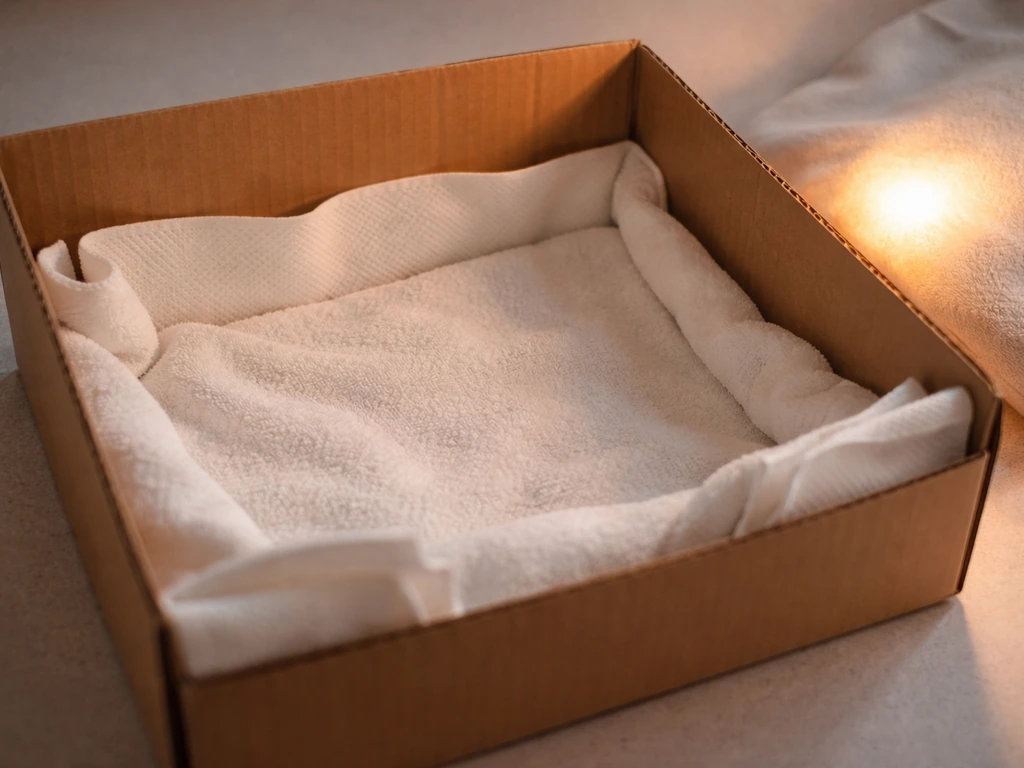
A cold bird cannot digest food properly and is at serious risk of going into shock if you feed it before warming it up. This is the rule that most well-meaning people skip, and it is the one that matters most.
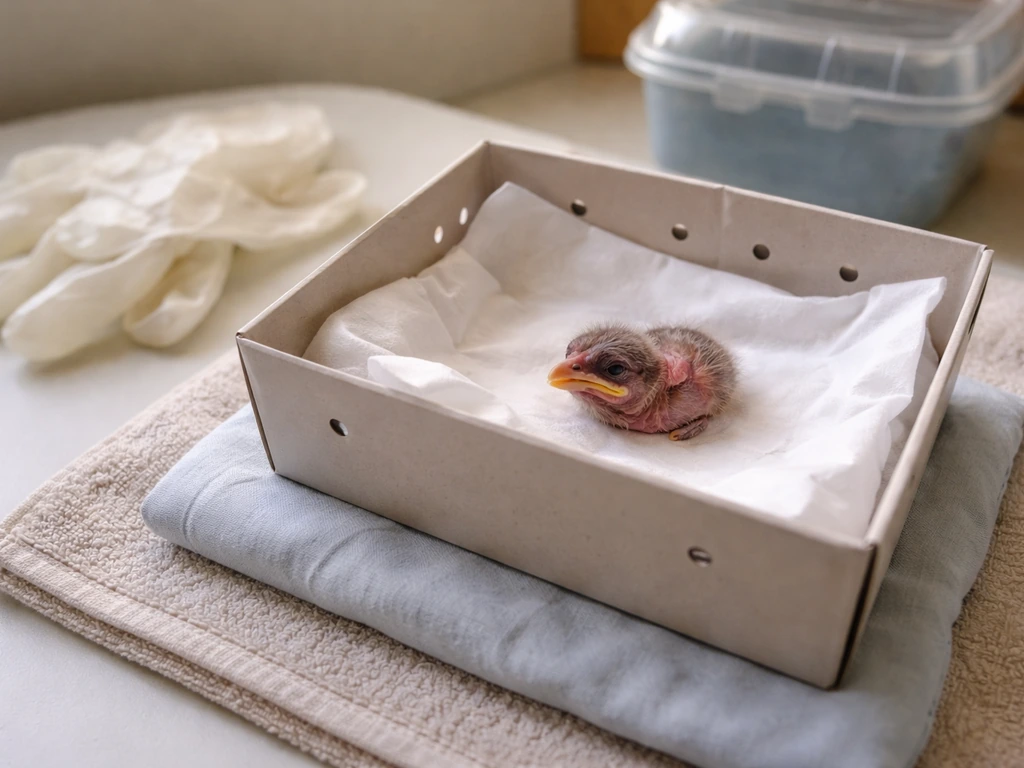
Place the bird in a small cardboard box lined with paper towels or a soft cloth. Put a heat source under one half of the box only, so the bird can move toward or away from the warmth as it needs. A heating pad set to low works well. If you do not have one, fill a zip-lock bag or a plastic bottle with warm (not hot) water and wrap it in a cloth, then place it under one side of the box.
Target temperatures depend on the bird's stage. For featherless hatchlings and nestlings, aim for around 85 to 90 degrees Fahrenheit (29 to 32 degrees Celsius) in the ambient air of the box. Fledglings and adults need less heat, but they still should not be cold. Keep the box in a quiet, dim location away from pets, children, and loud noises. Stress kills birds quickly, and a blind bird is already highly stressed.
Keep the box covered with a light cloth or a lid with ventilation holes. Darkness reduces panic. Do not keep checking on the bird every five minutes. Set it up and leave it alone except for scheduled checks.
What to feed a blind bird
The right food depends heavily on the bird's species and age. That said, if you are in an emergency situation and cannot reach a rehabilitator immediately, here are the general safe options by life stage.
Hatchlings and nestlings
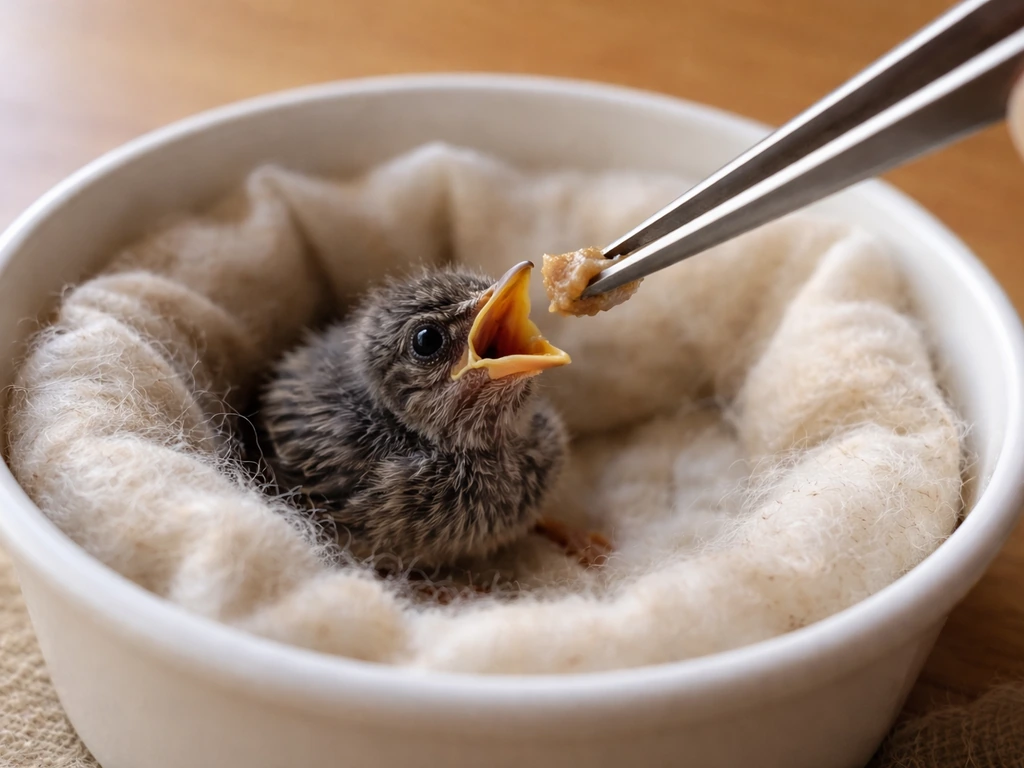
These birds need a protein-based diet. A commercial hand-rearing formula designed for wild birds (such as products from Kaytee or Harrison's) is the most reliably safe option. If you cannot get formula quickly, very small pieces of moist, protein-rich food can work as a very short-term emergency measure: tiny bits of earthworm, moistened cat or dog kibble (high-protein, no additives), or mealworms are commonly used. These are stop-gap options only while you are arranging a handoff to a rehabilitator.
Fledglings
Fledglings are closer to eating independently, but they still need appropriate food. Mealworms, small pieces of earthworm, and moistened high-protein kibble are reasonable short-term choices for insect-eating species. If the bird is a seed-eater species (sparrow, finch), small seeds softened in water can work. Do not give them dry hard seeds if they are weak or disoriented.
Adult birds
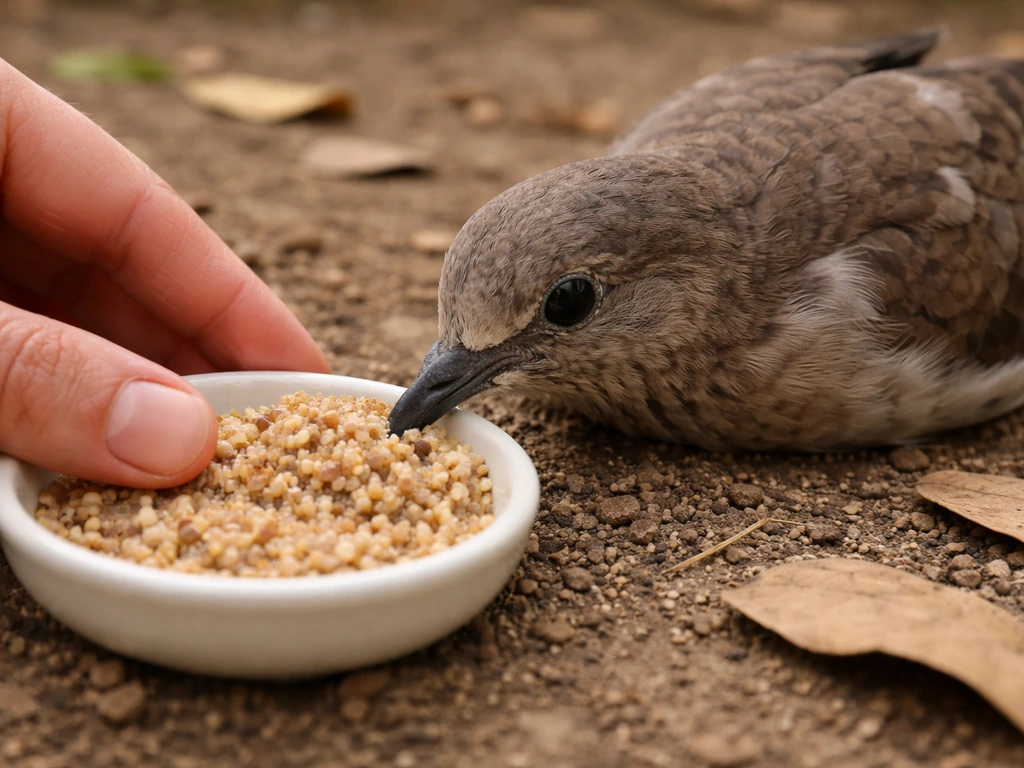
An adult bird that is blind and cannot self-feed likely has a serious underlying condition. Species-appropriate food placed close to the bird's beak (so it can find it by feel) is preferred over hand-feeding wherever possible. For insectivores, mealworms or earthworms work. For seed-eaters, softened seeds or a commercial songbird mix placed in a shallow dish near the bird is a good starting point.
What to absolutely avoid
- Bread: dry chunks are a choking hazard and provide almost no nutrition; they can also cause serious digestive problems.
- Cow's milk or any dairy: birds cannot digest lactose and it causes diarrhea and dehydration.
- Processed human food: crackers, chips, cereal, anything with salt, sugar, or additives.
- Raw meat from the grocery store as a primary diet: it lacks the nutrients birds get from whole prey.
- Water offered by syringe directly into the mouth: the aspiration risk is high, especially in a weak or blind bird.
How to actually feed the bird without causing harm
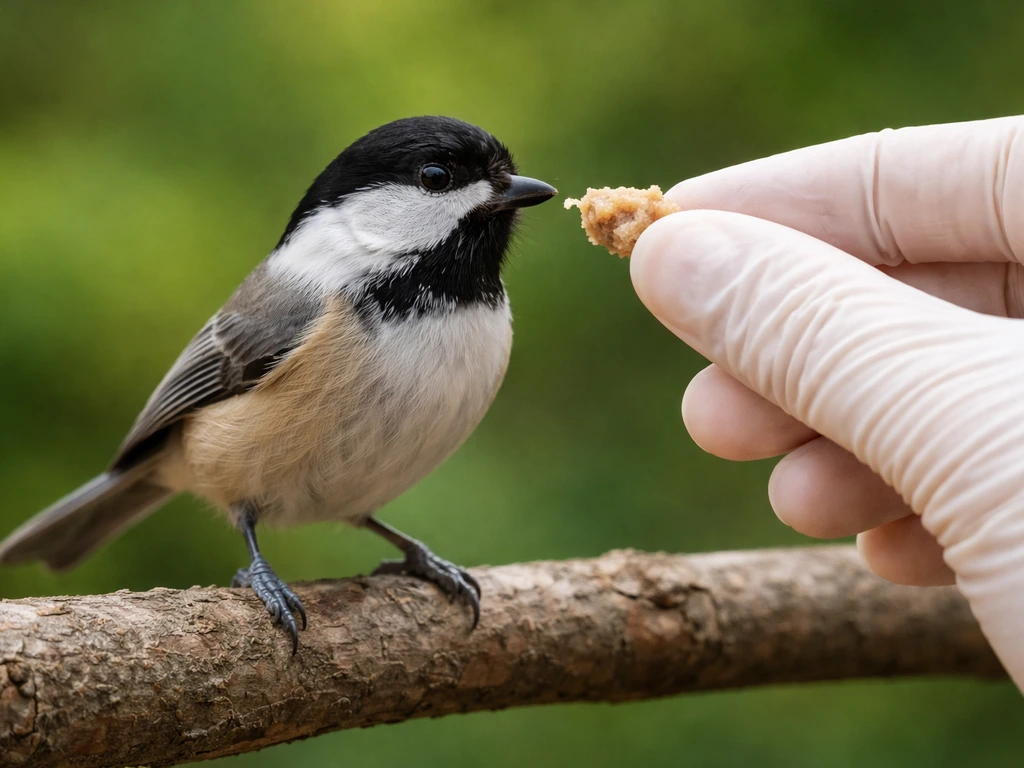
Technique matters as much as food choice when it comes to preventing aspiration, which is when food or liquid enters the airway instead of the digestive tract. Aspiration pneumonia can develop quickly and is often fatal in small birds.
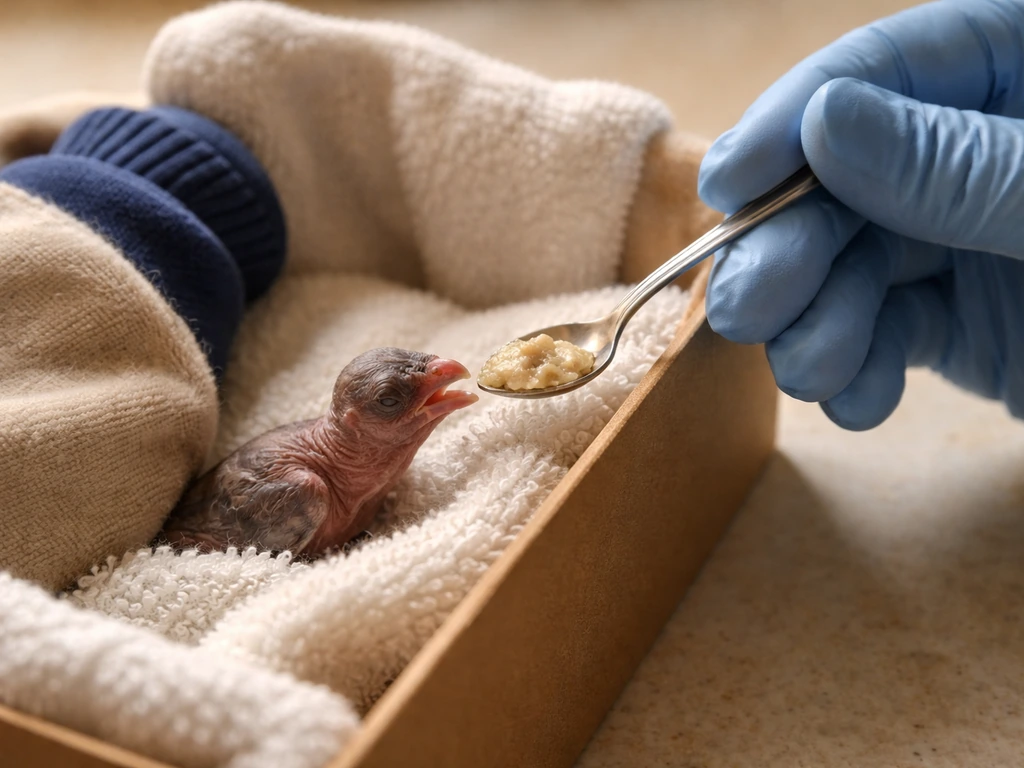
The first thing to check before offering any food is whether the bird has a feeding response. A bird with a strong feeding response will gape (open its beak wide and bob its head) when you tap near the beak or hold food close. If the bird does not show this response, do not attempt to feed it.
If you are feeding an infant wild bird, VCA advises not to attempt to force food or water into its mouth because it could choke and lead to fatal complications Forcing food into it significantly raises the risk of aspiration. . A bird that is not actively trying to eat is not ready to eat, and forcing food into it significantly raises the risk of aspiration.
For a bird that is gaping and ready, here is the safest approach. Hold the bird gently but securely with its body upright, not on its back. Use tweezers, a small spoon, or your fingertips to offer small pieces of food at the corner of the beak (the commissure), and let the food roll onto the tongue. The bird's natural swallowing reflex will help close off the trachea as it swallows, which is exactly what you want. Do not push food to the back of the throat.
If you are using a liquid formula or a syringe, the same principle applies. A syringe is best used to deliver small drops at the commissure, not squirted down the throat. If you need more detail on syringe technique, the process is covered in dedicated guidance on how to feed a bird with a syringe. For step-by-step syringe technique, including how to position the tip and deliver drops safely, see how to feed a bird with a syringe.
Never force the beak open. If you are tempted to force feed a bird with a syringe, double-check the commissure delivery steps and stop if the bird shows no feeding response Never force the beak open. . Never tilt the bird backward while feeding.
Formula temperature matters too. Avian Welfare’s supportive care guidance for captive birds notes that birds’ body temperature is typically about 103 to 106°F and that heated enclosures around at least 85°F can be used for ill or injured birds blank" rel="noopener noreferrer">Formula temperature matters too.. If using a hand-rearing formula, it should be warm but not hot, ideally around 103 degrees Fahrenheit. Do not exceed 105 degrees Fahrenheit as that risks crop burns. Do not go below 100 degrees Fahrenheit as cold formula can cause crop stasis. Test a drop on your inner wrist the way you would test a baby bottle.
After each feeding, watch the bird for a minute or two. Clicking, gurgling sounds from the chest, labored breathing after eating, or food coming back up are all signs something went wrong. Stop feeding and contact a rehabilitator immediately if you see any of these.
How often to feed and how much
Feeding frequency depends on the bird's age and condition. The general guidance for nestlings is every 30 minutes to one hour from sunrise to sunset. That is a demanding schedule, and it is one of the main reasons these birds belong with an experienced wildlife rehabilitator as quickly as possible.
| Life Stage | Feeding Frequency | Amount Per Feeding |
|---|---|---|
| Hatchling / Nestling | Every 30 to 60 minutes (daylight hours) | Small: about 10% of body weight per feeding |
| Fledgling | Every 1 to 2 hours (daylight hours) | Small portions; stop when bird turns away |
| Adult (weak or blind) | Every 2 to 4 hours | Offer small amounts; let the bird's response guide you |
The 10% of body weight per feeding guideline is a useful reference. A nestling that weighs 10 grams should receive about 1 gram (roughly 1 milliliter) of food per feeding. When in doubt, feed less rather than more. Overfeeding causes regurgitation and aspiration pneumonia or diarrhea, all of which make the bird's situation much worse.
Do not feed at night. Wild birds do not eat at night, and their systems are not equipped to process food during those hours. Stop at sunset and resume at sunrise.
Watch for hunger cues: an actively gaping bird is telling you it is ready to eat. A bird that keeps its beak closed, turns its head away, or stops responding is telling you it has had enough. Respect those signals.
Mistakes that can hurt the bird
Most of the harm people accidentally cause comes from good intentions paired with missing information. Here are the most common mistakes to avoid.
- Feeding before warming: a cold bird cannot digest food. Always stabilize body temperature first.
- Force-feeding: if the bird is not gaping or showing a feeding response, do not open its beak and push food in. This is one of the leading causes of aspiration pneumonia.
- Giving water by syringe directly into the mouth: oral hydration for weak birds requires careful technique; done incorrectly it floods the airway. Leave this to a rehabilitator unless you have clear guidance.
- Using bread, milk, or processed food: these are genuinely harmful, not just less-than-ideal.
- Handling the bird constantly: stress is a killer. Minimize contact to feeding times only.
- Keeping the bird in full light or near noise: a blind bird needs quiet and dim conditions to reduce panic.
- Waiting too long to call a rehabilitator: the first few hours matter. People often try to manage things themselves for a day or two before calling, and by then the bird is in much worse shape.
When to stop and call a professional immediately
Hand-feeding a blind bird at home is a short-term stabilization measure, not a long-term plan. If you are trying to figure out how to feed the bird in Granny, treat home feeding as a short-term stabilization step and contact a wildlife rehabilitator as soon as possible. There are situations where you should stop what you are doing and get professional help right now, not after another feeding cycle.
- The bird is bleeding from the eyes, head, or beak.
- It has a twisted or tilted neck (a sign of neurological injury).
- It is breathing with its mouth open, clicking, or wheezing.
- It has been cold and unresponsive for more than a few minutes after warming.
- Food is coming back up after feeding.
- It shows no feeding response at all and has not eaten in several hours.
- It is losing weight visibly, or its keel bone (the ridge down the center of the chest) feels sharp and prominent.
- You are not sure what species it is, and it may be a protected migratory species (most wild birds in the U.S. are protected under federal law, and only licensed rehabilitators can legally hold them).
To find a licensed wildlife rehabilitator near you, contact your state's fish and wildlife agency, call a local humane society or animal control office, or search the National Wildlife Rehabilitators Association (NWRA) or Wildlife Rehabilitators Association directory online. Many rehabilitators will also give you phone guidance immediately while you arrange transport.
If the bird is a pet rather than a wild bird, contact an avian veterinarian directly. Avian vets are equipped to diagnose the underlying cause of blindness and can provide care that goes well beyond emergency stabilization.
Setting up a safe short-term recovery space
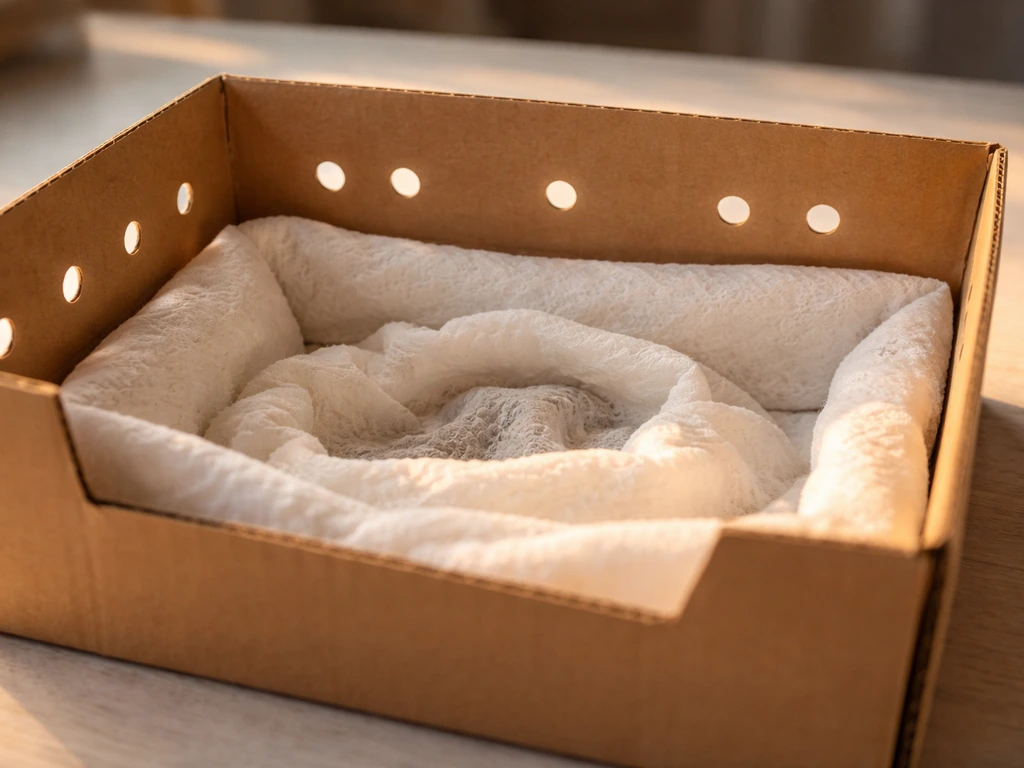
Once the bird is warm and has had its first feeding, your job is to keep it stable until you can hand it off. A small cardboard box with ventilation holes, paper towel lining, and a partial heat source is the right setup. Keep it in a quiet interior room, away from household pets, children, televisions, and direct sunlight.
Do not put a water dish in the box with a blind bird. It cannot see to find it, and there is a real risk of it falling in and becoming wet and chilled, or drowning if it is a small nestling. Hydration should come from food moisture or, if truly needed, from a rehabilitator who can assess the safest delivery method.
Resist the urge to keep looking at the bird or showing it to others. Every time you open the box, you add stress. Check in at feeding time, make your observations, feed if appropriate, and close the box again.
If you are caring for a bird that is being weaned toward independent feeding, the process of transitioning from hand feeding to self-feeding is a gradual one that follows specific steps. That process is covered in detail in guidance on how to wean a bird from hand feeding, which is worth reading if you end up in a longer-term care situation before a rehabilitator becomes available.
For birds that need more advanced nutritional support, such as tube feeding or subcutaneous fluids for severe dehydration, those are procedures that carry real risk when done incorrectly and should only be performed by, or under the direct supervision of, a wildlife rehabilitator or avian vet. If you end up needing tube feeding, follow step-by-step tube-feeding guidance from a wildlife rehabilitator or avian veterinarian. Your role right now is stabilization and safe short-term feeding, not full medical care.
FAQ
My bird looks blind but also seems “alert.” When is it actually safe to try feeding?
Use body temperature and breathing as your deciding checks, not how “hungry” the bird looks. If the bird feels cold, has labored breathing, or cannot hold its head up, warm it first and contact a rehabilitator before attempting any feeding.
I do not know what species the blind bird is. What should I feed in the meantime?
If you cannot confirm what species it is, do not improvise with unfamiliar foods like bread, milk, or fruit. Instead, use a species-appropriate emergency protein option while arranging handoff, and prioritize warming and stabilization over perfect diet.
What should I do if the bird keeps swallowing poorly or I am not sure it is ready to feed?
Do not feed if you cannot keep the bird warm and still. If the bird is panting, wheezing, gaping weakly, or you keep losing the feeding response, stop and get professional guidance before trying again.
Can I give water or formula to a blind bird with a syringe or dropper?
Yes, but only if you deliver tiny drops at the beak corner and the bird shows a feeding response. Any forceful squirting down the throat, or feeding while it resists, raises aspiration risk.
If I find a different hand-rearing formula at home, can I swap to it right away?
Do not switch formulas on your own mid-emergency. If you start with one, continue with it and keep it correctly warmed, because sudden changes in texture and nutrient mix can worsen stomach upset and regurgitation.
Is it safer to underfeed than to overfeed, and how do I avoid overdoing it?
No. A “little” extra is still extra, especially for nestlings. Overfeeding increases regurgitation risk, which can quickly lead to aspiration pneumonia.
What are the signs I should stop feeding right away, even if the bird seems hungry?
If there is any food coming back up, chest gurgling/clicking, or breathing becomes labored after feeding, stop feeding immediately and contact a rehabilitator or avian vet. Warmth and quiet placement are still appropriate while you arrange help.
When a fledgling is on the ground and “blind-looking,” when should I intervene versus waiting?
If parents are actively feeding, you should not take over feeding. For a fledgling on the ground, observe from a distance and only step in if adults do not return within a few hours or there are clear injury signs.
How do I keep formula at the right temperature, and what if it cools while I am preparing it?
Warm placement matters because cold formula can stall digestion. Keep the formula around body-safe warmth, test on your wrist, and discard formula that has cooled significantly during handling.
Should I put a small water dish in the box to keep the bird hydrated?
Do not rely on a water dish. If hydration is needed, it should come from appropriately moistened food or from a rehabilitator who can choose the safest method for that bird’s age and condition.
How often can I check on the bird while it is warming up or between feedings?
No. Limit handling to scheduled checks and feeding only. Each time the bird is exposed, it can panic or cool down, and panic plus cold is a fast pathway to shock.
What if the bird cannot stay upright or seems too weak to gape properly?
If the bird is weak, disoriented, or cannot maintain an upright position, avoid frequent repositioning and do not force open the beak. Focus on warmth, gentle upright support, and seeking urgent professional help.
Does the advice change if the bird might be a pet rather than wildlife?
If the bird is a pet species (for example a parrot) or you suspect it is someone’s companion bird, contact an avian veterinarian first. Pet birds may have different dietary needs and a different likelihood of underlying illness causing blindness.
Next Article
How to Feed the Bird in Granny: Rescue Steps Today
Humane step-by-step care for injured baby birds in Granny: assess, warm, feed safely, and know when to call a rehab.