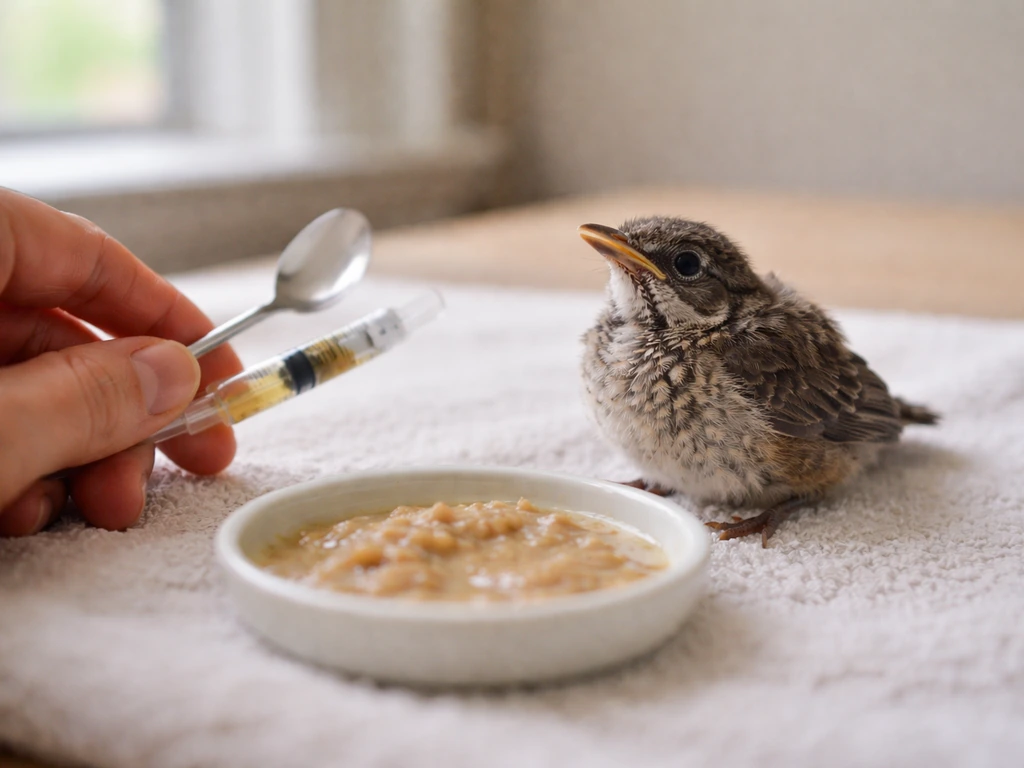
Giving subcutaneous (SQ) fluids to a bird means injecting a warmed isotonic fluid just under the skin, usually in the loose skin of the inner thigh area, so the body can slowly absorb it and recover from dehydration. It's a legitimate technique used by avian vets and trained wildlife rehabilitators, and in a genuine emergency where professional help isn't immediately available, a careful layperson can do it. But it carries real risks if done incorrectly, and it's never a substitute for getting the bird to a vet or licensed wildlife rehabilitator as soon as possible.
How to Give Subcutaneous Fluids to a Bird Safely
Marcus Holloway
19 May 2026
When subcutaneous fluids actually help (and when they don't)
SQ fluids make sense when a bird is mildly to moderately dehydrated but still conscious, responsive, and not in active shock. The clearest signs of dehydration you can check yourself: tacky or dry mucous membranes around the mouth, skin that tents or wrinkles when gently lifted and takes more than a second to fall back flat, and eyes that look slightly sunken. At around 5% dehydration the bird may still seem fairly alert but the gums feel tacky. At 8-10% dehydration the eyes look noticeably sunken and the skin looks dry and almost scaly. Those moderate cases are where SQ fluids have the most value as a bridging measure.
SQ fluids are not appropriate if the bird is in shock (collapsed, cold, unresponsive, or breathing with obvious distress), if it's bleeding actively, if it has obvious trauma like a broken wing or open wounds, or if it's a very young nestling. Sick birds often stop drinking on their own, which is how dehydration sets in, but dehydration itself is a symptom, not always the whole problem. If the bird is in critical condition, fluids given subcutaneously won't absorb fast enough to matter, and pushing fluids on an animal that's shutting down can make things worse. In those cases, the only right move is to get the bird to an avian vet or wildlife rehabilitator immediately.
One more situation where SQ fluids are not the right call: baby birds. Unless you've received explicit instructions from a rehabilitator or vet, don't attempt to administer fluids to a nestling or fledgling. Their anatomy is tiny and fragile, and the margin for error is extremely small. Keep them warm and get professional help instead.
Safety first: handling the bird humanely and keeping things clean
Stress alone can kill a bird. Before you do anything else, minimize the bird's exposure to noise, bright light, pets, and people. Work in a quiet room, keep your movements slow and deliberate, and cover the bird with a light cloth between handling steps. The less stimulation the bird experiences, the better its chances.
For handling, you ideally want a second person to act as an assistant, one person holding the bird securely but gently while the other administers the fluid. Wrap small birds loosely in a soft cloth or towel to restrain them without compressing the chest (birds breathe using chest expansion, so squeezing the body can suffocate them quickly). Keep the whole procedure as short as possible.
Infection control matters too. Wash your hands thoroughly before and after. Use a new, sterile needle every time. Never reuse a needle or syringe between birds. Wipe the injection site with a small amount of isopropyl alcohol on a cotton ball or gauze pad before inserting the needle. If you don't have sterile gloves, clean hands and a careful no-touch technique for the needle itself are the minimum standard.
Supplies and fluids: what to get and how to prepare them
The fluid most commonly used for SQ administration in birds is Lactated Ringer's Solution (LRS). It's an isotonic crystalloid that matches the bird's body chemistry reasonably well, and in shock-adjacent situations it has the added benefit of being metabolized into bicarbonate, which helps with acidosis. Normosol-R is another good option used widely in avian practice. Plain 0.9% saline works in a pinch but has a lower pH and can cause discomfort at the injection site, so it's a last resort if LRS or Normosol-R isn't available. Do not use tap water, sports drinks, or anything that isn't a sterile isotonic fluid.
| Fluid | Common Use | Notes |
|---|---|---|
| Lactated Ringer's Solution (LRS) | First choice for most avian SQ fluid therapy | Isotonic, well tolerated, helps with mild acidosis |
| Normosol-R | Good alternative to LRS | Isotonic, widely used in avian practice |
| 0.9% Normal Saline | Last resort only | Low pH, may cause injection site discomfort; use only if LRS/Normosol-R unavailable |
| Tap water / sports drinks | Never | Not sterile, wrong osmolarity, dangerous |
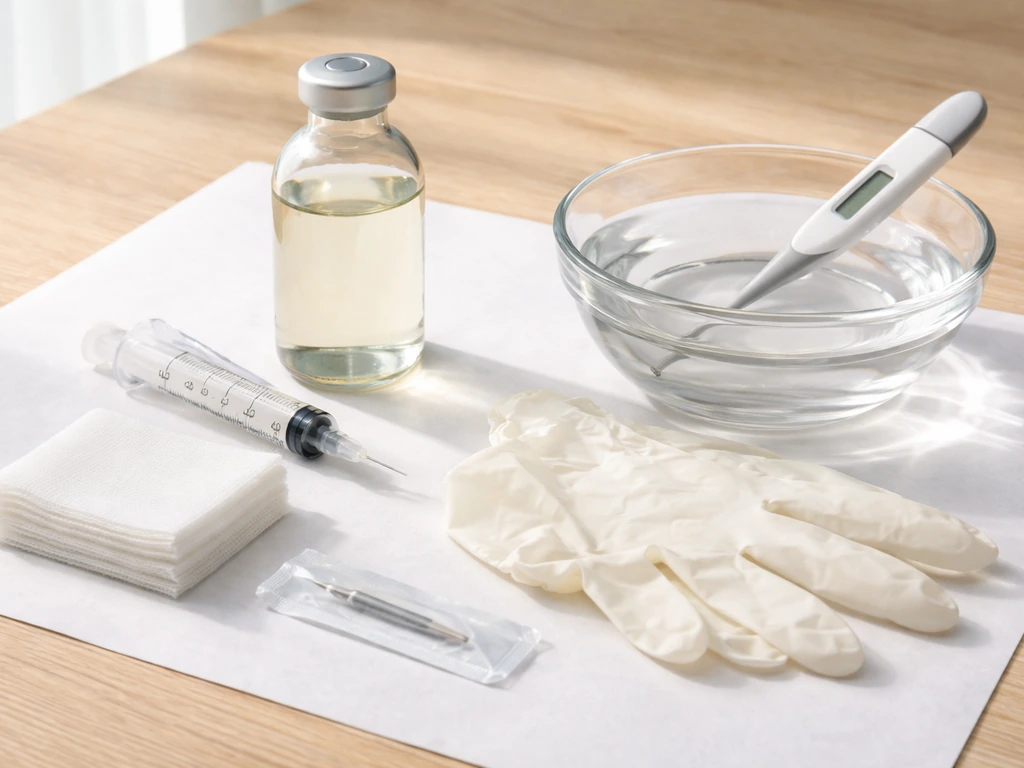
Temperature matters a lot. Cold fluids can send a bird into hypothermia, and overheated fluids can cause burns under the skin. The target is body temperature for a bird, roughly 40-42°C (104-107°F). The practical way to warm a fluid-filled syringe is to place it in a warm (not hot) water bath for about 5 minutes, then test a drop on your inner wrist. It should feel comfortably warm, not hot. Don't microwave the fluid or leave it in boiling water.
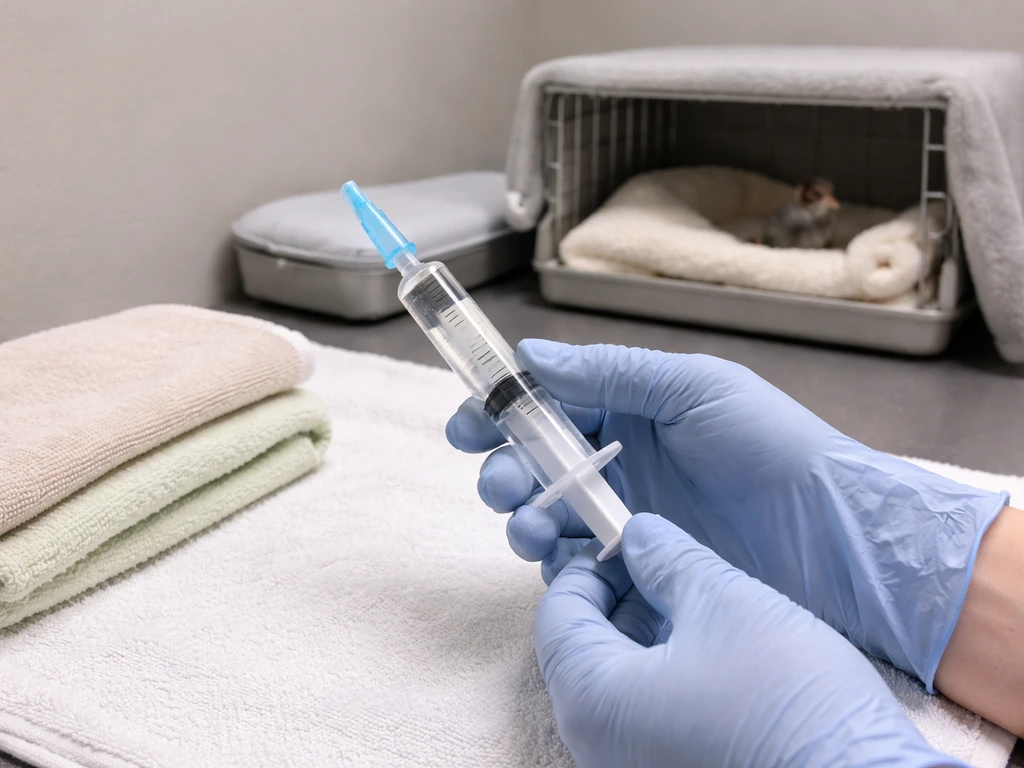
For equipment, you need a sterile syringe sized appropriately for the dose you're giving (a 1 mL or 3 mL syringe works for most small birds) and a 25-gauge or 26-gauge needle. A finer gauge needle causes less tissue damage and is standard for avian SQ fluid replacement. Have a cotton ball or gauze pad with isopropyl alcohol ready, a clean towel for restraint, and a warm, dark box or container to put the bird in before and after the procedure.
Step-by-step: how to give subcutaneous fluids to a bird
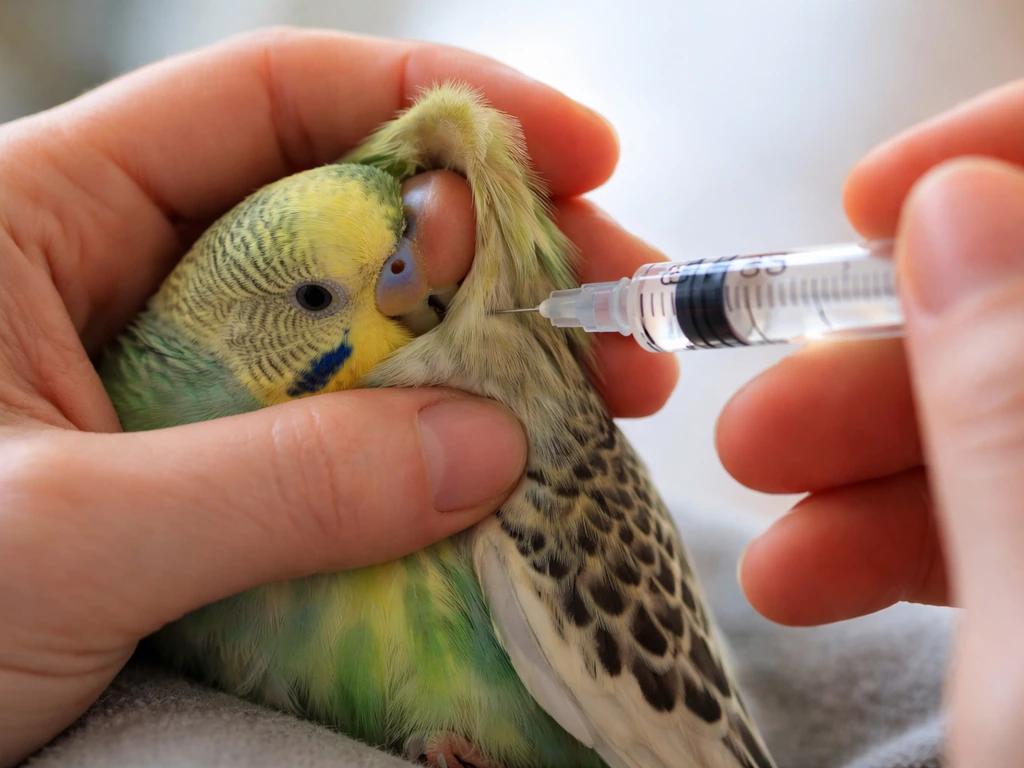
- Warm your prepared syringe of fluid in a warm water bath for about 5 minutes. Test the temperature on your wrist before proceeding.
- Have your assistant hold the bird securely in a soft towel, keeping the chest uncompressed. The bird should be on its back or held so one leg can be gently extended outward.
- Extend one leg out to the side to expose the inner thigh area. This is where you'll find loose, thin skin suitable for SQ injection.
- Part the feathers with a finger or a slightly moistened cotton swab to get a clear view of the skin. Wetting the feathers with a tiny amount of alcohol on a cotton ball helps you see the skin surface clearly.
- Wipe the injection site gently with the alcohol-dampened cotton ball and let it air-dry for a few seconds.
- With your free hand, gently tent (lift) the loose skin of the inner thigh between your thumb and forefinger to create a small pocket.
- Hold the syringe with the needle bevel (the angled tip) facing up. Insert the needle at a shallow angle into the tent of lifted skin. You're aiming to place the tip in the space just beneath the skin, not into the muscle below.
- Before injecting, visually confirm the needle tip is under the skin and not too deep. You should be able to see or feel the needle sitting just below the skin surface.
- Slowly depress the plunger. You should see a small bleb or bubble form under the skin as the fluid goes in. If you feel resistance or the fluid seems to go in too easily with no visible bleb, stop and reassess the needle position.
- Once the dose is complete, withdraw the needle smoothly and apply gentle pressure with a clean cotton ball for a few seconds.
- Return the bird to its warm, dark recovery container immediately and minimize further handling.
The key visual check throughout this process is seeing the needle under the skin and watching the bleb form. If you can't see either of those things clearly, you may have gone intramuscular or into a deeper tissue plane. Stop, withdraw, and try again at a slightly different angle. The inner thigh is the recommended site precisely because the skin there is loose and easy to visualize, which makes accurate placement much more achievable than on the back or neck.
How much fluid to give and how often
Dosing for SQ fluids in birds is typically calculated as 20-30 mL per kilogram of body weight per session, given once or twice a day. For a bird in moderate dehydration, the total replacement target across all routes (oral and SQ combined) is roughly 50-75 mL/kg over the course of treatment, adjusted based on severity and the bird's response. These are guidelines from veterinary practice, not exact numbers you can apply without any clinical assessment, so treat them as upper limits rather than targets you're trying to hit precisely.
For a small songbird weighing around 20-30 grams, that means you're working with very small volumes: roughly 0.5-1 mL per session at most. For a medium bird like a pigeon (300-400 grams), a single SQ dose might be 6-12 mL. Don't try to give all of a bird's estimated fluid deficit in one session. The SQ space can only absorb so much at once, and overfilling a site causes a large, uncomfortable fluid pocket that may not absorb properly.
After the first dose, wait and monitor. Fluids given subcutaneously absorb gradually over the following hours. A positive response looks like: the bird becomes more alert and responsive, the skin tent test normalizes (skin bounces back in under 1 second), mucous membranes feel less tacky, and the bird shows interest in food or water. If you see no improvement or the bird worsens after 1-2 doses, that's a clear signal to escalate to professional care immediately rather than keep giving more fluid at home.
Common complications and what to do when something goes wrong
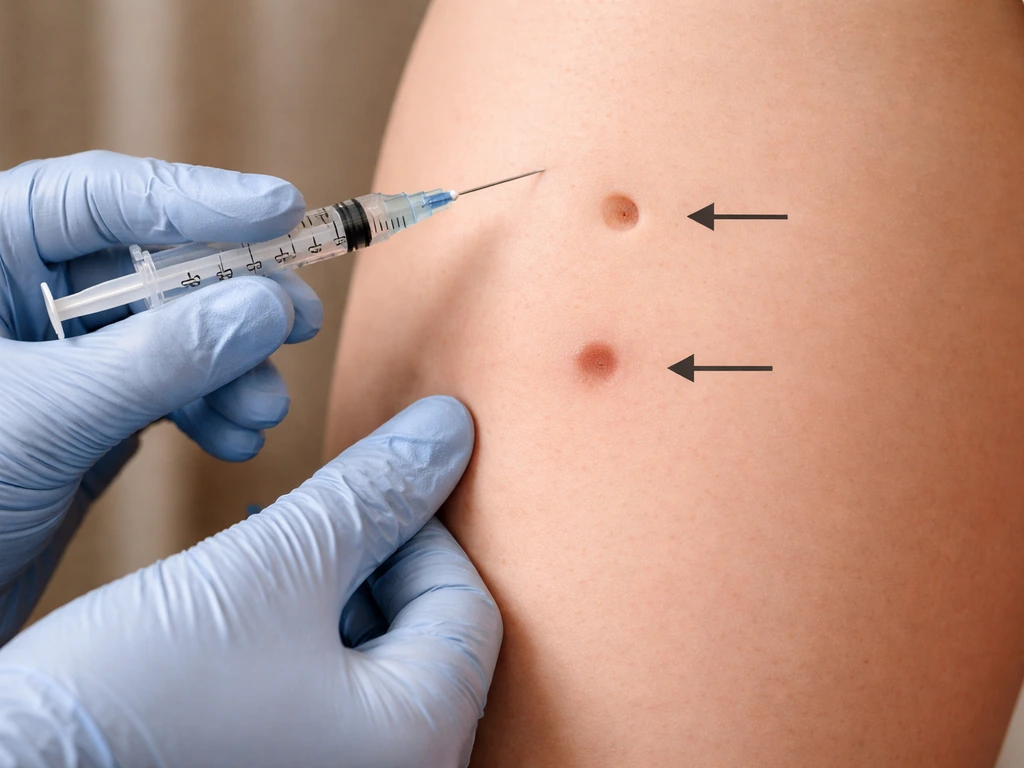
The most common problem is incorrect needle placement. If the fluid goes intramuscular instead of subcutaneous, you'll feel more resistance on the plunger and won't see a visible bleb forming under the skin. Intramuscular fluid placement is painful and absorbs differently. If this happens, withdraw the needle and start over with a fresh needle at the correct location.
The most serious placement error is putting the needle into an air sac or into the coelom (body cavity). Birds have a complex system of air sacs that extend into many areas of the body, and an accidentally placed needle in the wrong tissue plane can introduce fluid directly into these spaces or into the chest, which can be fatal. This is why visualizing the needle beneath the skin at the start of injection is so important. If the needle seems to have gone in much deeper than expected, or if the bird suddenly shows respiratory distress, withdraw immediately and get the bird to a vet.
Fluid leaking back out around the needle after withdrawal is common and not usually dangerous. Apply light pressure with a clean cotton ball for a few seconds. A small amount of leakage doesn't mean the procedure failed.
A large, persistent swelling or lump at the injection site that doesn't start to shrink within a few hours may indicate the fluid isn't absorbing well. This can happen if the bird is too cold (absorption slows when the body is hypothermic) or if the volume given was too large for the site. Keep the bird warm and don't inject more fluid into the same spot.
If the bird deteriorates at any point: becomes limp, stops responding to touch, breathes with an open beak, or shows any sign of rapid worsening, stop all home treatment and contact an avian vet or wildlife rehabilitator immediately. Critically ill birds need more than SQ fluids, and continuing home treatment when a bird is declining wastes the time window where professional intervention might still help.
Aftercare: warming, feeding, monitoring, and knowing when to call for help
Warmth is as important as hydration. A dehydrated or sick bird is often also hypothermic, and hypothermia slows fluid absorption and overall recovery. Keep the bird in a quiet, dark box at roughly 85-90°F (29-32°C). You can achieve this with a heating pad on the lowest setting under half the box (so the bird can move away from heat if needed), or by placing the box near a warm lamp. Check regularly to make sure the bird isn't overheating.
On the feeding front, don't try to force food on a bird that's just received SQ fluids. If you need to understand the safe options for force-feeding, get veterinary guidance, because tube or syringe feeding has its own risks and technique requirements force food. If you are struggling with how to stop hand feeding a bird, focus on letting it stabilize first and only offer species-appropriate food when it is alert and willing to eat or drink. Let it stabilize first. If the bird is alert and showing interest in food after an hour or two, you can offer species-appropriate food, but keep it simple and don't stress the bird by handling it more than necessary. Oral rehydration with an electrolyte solution can complement SQ fluids in mildly dehydrated birds that are willing to drink on their own. If you also need help with getting the bird to eat or drink after supportive fluids, see guidance on how to feed a blind bird Oral rehydration with an electrolyte solution can complement SQ fluids in mildly dehydrated birds that are willing to drink on their own.. For guidance on more involved feeding techniques, the approaches used for tube feeding or syringe feeding are relevant next steps if the bird needs nutritional support. If you end up needing to tube feed a bird, use only vet or rehabilitator-approved technique and products, and stop if you see distress or choking tube feeding or syringe feeding. Syringe feeding is a different technique than giving subcutaneous fluids, but it may be relevant if the bird also needs nutritional support. If your goal is to wean a bird from hand feeding, the same gradual, stress-minimized approach to tube or syringe feeding can help you transition safely tube feeding or syringe feeding. Feeding a bird in the days after stabilization can be tricky, so it helps to review a clear plan for how to feed the bird in Granny based on species and swallowing ability.
Monitor these things every 30-60 minutes while the bird is in your care: breathing rate and pattern (should be quiet and regular, not labored or open-mouthed), posture (a recovering bird sits more upright rather than hunched), eye brightness and responsiveness, and the condition of the injection site. Keep a simple log if you can: time of each SQ dose, volume given, fluid temperature, and any changes in the bird's behavior or condition.
Call an avian vet or licensed wildlife rehabilitator right away if any of the following are true:
- The bird shows no improvement after one or two SQ doses given several hours apart
- The bird's condition worsens at any point during or after fluid administration
- You see signs of respiratory distress: open-mouth breathing, tail bobbing, gasping
- The bird is a baby or nestling
- You suspect trauma, bleeding, or injury beyond dehydration
- The bird is completely unresponsive or limp
- You're unsure whether you placed the fluids correctly
- You don't have access to sterile LRS or Normosol-R and appropriate needles
SQ fluids are a bridging tool, not a treatment plan. If you need step-by-step help with the process, see our guide on how to intubate a bird. The goal is to keep the bird stable long enough to get it into the hands of someone with the training and equipment to do a full assessment. Find your nearest wildlife rehabilitator through your state or local wildlife agency, or call an avian vet for guidance over the phone while you're preparing to transport the bird. Acting quickly while keeping the bird calm and warm gives it the best possible chance.
FAQ
How often can I repeat subcutaneous fluids if the bird is still dehydrated after the first dose?
It depends on your goal. If the bird is still able to drink, focus on letting it rehydrate orally first, SQ is mainly a bridge when the bird is too weak, unwilling, or unable to drink. If the bird stays lethargic, has worsening dehydration signs, or develops breathing difficulty, stop timing doses and contact a vet or rehabilitator. Also remember SQ absorption can take hours, so repeating doses too soon can lead to uncomfortable fluid pockets rather than faster recovery.
What if the dehydration signs look the same after a dose, should I keep going?
You should not give SQ fluids on a “blanket” schedule without reassessing. After each dose, recheck hydration signs (gum moisture, skin tenting time, eye position) and breathing every 30 to 60 minutes. If there is no improvement after 1 to 2 doses, or if the bird worsens, further home dosing is riskier than escalating to professional care.
What should I do if a large swelling forms where I injected the fluids?
Yes. A new swelling or lump that does not start shrinking within a few few hours often means the bird is cold or the volume was too large for that SQ area. Keep the bird warm, avoid injecting more into the same spot, and get professional guidance, because persistent lumps can indicate poor absorption or incorrect placement.
Can I reuse a needle or syringe if I have only limited supplies?
Discard the needle and syringe after each use. Even if a needle “seems fine,” reuse raises infection risk and increases the chance of tissue damage because needles become dull. If you need additional volume, use a fresh sterile syringe and needle each time rather than topping up with reused equipment.
What if the injection feels resistant or I cannot see the bleb under the skin?
If you accidentally inject intramuscularly, you may notice more resistance, pain response, and no visible bleb under the skin. The safest move is to withdraw, do not keep advancing, and then restart with a fresh sterile needle at the correct subcutaneous location. If there is any sudden respiratory change or the needle went much deeper than expected, stop and seek urgent veterinary help.
What fluids are safe to use if I do not have Lactated Ringer’s or Normosol-R?
No. You should only use sterile, isotonic fluids that are warmed to near body temperature. Room temperature fluids can delay recovery and increase discomfort, tap water and non-sterile liquids can introduce pathogens and fluid imbalances. If you are unsure what you have, pause and wait for vet or rehabilitator direction rather than improvising.
How do I know if something went seriously wrong during the injection?
Stop and treat it as an emergency. New or worsening open-mouth breathing, rapid decline, or the sense that the needle may have entered deeper tissue planes can signal life-threatening misplacement. Withdraw if you can do so safely, keep the bird warm and calm, and contact an avian vet or wildlife rehabilitator immediately.
When exactly should I NOT give SQ fluids, even if the bird looks dehydrated?
Give subcutaneous fluids only when the bird is conscious, responsive, and not showing shock or major respiratory distress. If the bird is bleeding actively, has severe trauma, is collapsed or unresponsive, or is a nestling without explicit professional instructions, SQ fluids are not the right step. For those situations, warmth and rapid transport to an expert are the priority.
Is it dangerous if fluid leaks back out after I withdraw the needle?
Do not give more fluid into the same site. Lightly press briefly if there is minor leakage, then monitor the area. If leakage is extensive, the bird seems worse, or the site keeps expanding, stop home treatment and get professional advice, because repeated reinjection into a leaking site increases the risk of improper absorption.
What signs should make me call for help immediately, and how do I decide based on progress?
Use your monitoring log to decide whether to escalate. Track dose time, approximate volume, fluid temperature, hydration signs, and breathing pattern. If breathing becomes labored, posture worsens, eye responsiveness declines, or hydration signs do not improve after 1 to 2 doses, escalate rather than continuing at home.
Citations
LafeberVet describes that birds commonly receive subcutaneous fluids, and recommends visualizing loose skin (e.g., inner thigh/leg area) by having an assistant secure the bird and wet down/inspect the skin for proper placement.
https://lafeber.com/vet/subcutaneous-fluids-in-birds/
Merck Veterinary Manual notes that to ensure subcutaneous deposition, the skin must be clearly visualized during injection of subcutaneous medications/fluids and recommends using alcohol to wet the skin/feathers to aid visualization.
https://www.merckvetmanual.com/exotic-and-laboratory-animals/pet-birds/management-of-pet-birds
LafeberVet (avian fluid therapy proceedings content via dvm360) states commonly used isotonic crystalloids in avian species for fluid therapy include lactated Ringer’s (LRS), Normosol-R, and 0.9% saline.
https://www.dvm360.com/view/avian-fluid-therapy-proceedings/1000
dvm360’s avian fluid therapy proceedings content reports that subcutaneous fluid replacement in birds can use a warmed crystalloid (or colloid) and that a 26 or 25 gauge needle attached to a syringe is used for SQ fluid replacement.
https://www.dvm360.com/view/avian-fluid-therapy-proceedings/1000
A veterinary triage resource from the University of Pennsylvania (Avian triage PDF) lists lactated Ringer’s and Normosol-R as commonly used fluids and states that fluid dosages can range from 50–75 mL/kg based on level of dehydration/severity (with patient-dependent dosing).
https://www.vet.upenn.edu/docs/default-source/penn-annual-conference/pac-2019-proceedings/companion-animal-track-2019/nursing-track-tue-2020/liz-vetrano---the-avian-triage.pdf?sfvrsn=9af6f2ba_2
Merck Veterinary Manual includes a “Supportive care of sick birds” table indicating that sick birds can become dehydrated because they may not drink as much as normal.
https://www.merckvetmanual.com/multimedia/table/supportive-care-of-sick-birds
A wildlife rehabilitator guide appendix (vic.gov.au) provides a dehydration assessment framework including “gums tacky” and “skin tenting takes less than 1 second to fall” for ~5% dehydration; it also notes that such cases may require subcutaneous fluids as well as oral electrolytes.
https://www.vic.gov.au/wildlife-rehabilitator-authorisation-guide/appendix-2-further-information
A different wildlife first-aid/rehab education PDF (AWRC approach to first aid) defines dehydration levels by percent and gives clinical appearance examples: at ~8% dehydration it lists skin turgor (seconds) and signs including dry/tacky mucous membranes and eyes slightly depressed; at ~10% dehydration it lists sunken eyes/cere and “dry, tented, scaly skin.”
https://www.awrc.org.au/uploads/5/8/6/6/5866843/dr_jodie_low_choy-approach-to-first_aid.pdf
A wildlife triage/lab style training document (Wildlife Rehabilitators of NC; subcutaneous fluid therapy lab) states assessment indicators including “Dry/tacky mucous membranes” and “skin tents/wrinkles,” and notes that normal skin tenting returns to normal in less than 1 second (training context).
https://studylib.net/doc/8322438/subcutaneous-fluid-therapy-lab---wildlife-rehabilitators-...
The same vic.gov.au dehydration appendix ties dehydration severity to treatment triage, stating that at 5% dehydration the animal may be lively/active but gums are tacky and may require subcutaneous fluids as well as oral electrolytes.
https://www.vic.gov.au/wildlife-rehabilitator-authorisation-guide/appendix-2-further-information
A specific at-home/lay guidance article for injured baby birds (iere.org) explicitly warns: “Never administer fluids without explicit instructions” and focuses first aid on keeping the bird warm/quiet while awaiting help.
https://iere.org/should-you-give-an-injured-baby-bird-water/
A clinical avian emergency source (IVIS: Emergency and Critical Care chapter) warns that subcutaneous fluid therapy is used but must be “judicious” in very critical patients, and emphasizes monitoring and concurrent treatment in critically ill birds.
https://www.ivis.org/library/clinical-avian-medicine/emergency-and-critical-care
dvm360’s avian fluid therapy proceedings content notes that LRS is the fluid of choice in shock contexts (because many shock patients are metabolically acidotic with lactate being metabolized to bicarbonate), implying that shock is not a simple at-home scenario without veterinary direction.
https://www.dvm360.com/view/avian-fluid-therapy-proceedings/1000
dvm360’s avian fluid therapy proceedings content states that LRS can be supplemented with potassium chloride in certain cases (e.g., due to vomiting/diarrhea), with dosing described and potassium contraindications such as hyperkalemia/renal dysfunction noted—highlighting that electrolyte-containing fluids/adjustments are not safely DIY.
https://www.dvm360.com/view/avian-fluid-therapy-proceedings/1000
Fluid therapy guidance (UPenn avian triage PDF) states fluid dosages (50–75 mL/kg) are based on severity and implies frequent clinical reassessment rather than a fixed one-time at-home volume.
https://www.vet.upenn.edu/docs/default-source/penn-annual-conference/pac-2019-proceedings/companion-animal-track-2019/nursing-track-tue-2020/liz-vetrano---the-avian-triage.pdf?sfvrsn=9af6f2ba_2
IVIS emergency critical care chapter describes that critically ill birds may need parenteral fluid administration plus other supportive care such as gavage-feeding with appropriate formulas—reinforcing that at-home SQ fluids alone may be insufficient when gut motility issues exist.
https://www.ivis.org/library/clinical-avian-medicine/emergency-and-critical-care
dvm360’s avian fluid therapy proceedings content states 0.9% saline is used, and also notes potential issues such as low pH and discomfort/pain risks are relevant in some fluid solutions (mentioned in related fluid therapy guideline table context).
https://24051120.fs1.hubspotusercontent-na1.net/hubfs/24051120/Guidelines%20PDFs/2024%20Fluid%20Therapy/FluidTherapyGL_TablesFigures-1.pdf
A fluid therapy dosing guideline table (2024 Fluid Therapy GL tables figure) lists “Subcutaneous Fluid Dose 20–30 mL/kg,” frequency “once or twice a day,” and recommends fluids including Lactated Ringer’s, Plasma-Lyte, or Normosol-R; it also notes 0.9% NaCl has low pH and may be painful.
https://24051120.fs1.hubspotusercontent-na1.net/hubfs/24051120/Guidelines%20PDFs/2024%20Fluid%20Therapy/FluidTherapyGL_TablesFigures-1.pdf
LafeberVet’s “Subcutaneous Fluids in Birds” gives procedural setup for SQ fluid administration in birds: secure the bird, extend one leg out, and visually inspect the inner thigh area/loose skin so the needle is placed where SQ deposition is intended.
https://lafeber.com/vet/subcutaneous-fluids-in-birds/
Merck Veterinary Manual (pet bird management) provides injection technique safety principles for subcutaneous administration: visualize skin clearly; use alcohol-wetting for visualization to help ensure accurate subcutaneous placement.
https://www.merckvetmanual.com/exotic-and-laboratory-animals/pet-birds/management-of-pet-birds
LafeberVet webinar abstract content warns practitioners to ensure the needle is subcutaneous and not intramuscular or placed into an airsac/lung/intracoelomic space, and notes the importance of visualizing the needle beneath the skin at the start of administration.
https://lafeber.com/vet/wp-content/uploads/2019/10/Barron-abstract-1019.pdf
A wildlife/rehabilitation first-aid training or lab guide emphasizes that dehydration assessment uses observable indicators like tacky mucous membranes and skin tenting behavior, supporting a layperson’s initial triage concept (but not replacing veterinary prescription for SQ fluids).
https://studylib.net/doc/8322438/subcutaneous-fluid-therapy-lab---wildlife-rehabilitators-...
vic.gov.au wildlife rehabilitator guide states that the fluid itself should be warmed to the animal’s normal body temperature before being given (for the dehydration/SQ fluids context).
https://www.vic.gov.au/wildlife-rehabilitator-authorisation-guide/appendix-2-further-information
A wildlife rehabilitator or conservation document (FWS Midway Seabird BA 2018 PDF) cautions to be careful not to overheat fluids and to insert needles appropriately under the skin (e.g., bevel up just under the skin) while practicing careful technique; it specifically mentions warming the syringe/needle in a warm water bath (~5 minutes) and avoiding overheating.
https://www.fws.gov/sites/default/files/documents/2%20-%20FINAL%20Midway%20Seabird%20BA%202018-11-09%20-%20With%20Appendices.pdf
Merck Veterinary Manual emphasizes technique for subcutaneous injections/fluids by visualizing skin and selecting appropriate needle approaches; it also notes that a standard hypodermic needle is usually 25-gauge for initial entry, followed by a second 22-gauge needle sutured in place (in their described technique context).
https://www.merckvetmanual.com/exotic-and-laboratory-animals/pet-birds/management-of-pet-birds
dvm360’s avian fluid therapy proceedings describes using a 26 or 25 gauge needle for SQ fluid replacement with warmed crystalloid/colloidal agents.
https://www.dvm360.com/view/avian-fluid-therapy-proceedings/1000
A rehab/wildlife training document (FWS Midway Seabird BA 2018 PDF) provides a procedural warning to avoid overheating and notes a warming step for syringe/needle in a warm water bath (~5 minutes).
https://www.fws.gov/sites/default/files/documents/2%20-%20FINAL%20Midway%20Seabird%20BA%202018-11-09%20-%20With%20Appendices.pdf
LafeberVet’s “Subcutaneous Fluids in Birds” describes practical positioning: bird secured by an assistant, extend a leg to one side, and wet down/visualize the skin before injection to improve accuracy.
https://lafeber.com/vet/subcutaneous-fluids-in-birds/
A veterinary/clinic instruction page for SQ fluids (Mar Vista Animal Medical Center) demonstrates SQ fluid administration at home using the scruff/loose skin tent concept and indicates lifting up the scruff and inserting under the tent region (technique framework; species-agnostic).
https://www.marvistavet.com/subcutaneous-fluid-administration-at-home.pml
A clinic instruction on subcutaneous injection technique (Laytonsville Veterinary Practice) describes general SQ needle entry principles: insert into the entrance of the skin tent and avoid inserting too deeply toward the spine; this supports technique pitfalls for correct subcutaneous placement.
https://www.laytonsvillevet.com/patient-resources/subcutaneous-injections
LafeberVet’s webinar abstract warns that improper placement can include intramuscular or placement into airsac/lung/intracoelomic spaces; it also says to visualize the needle beneath the skin immediately as administration begins.
https://lafeber.com/vet/wp-content/uploads/2019/10/Barron-abstract-1019.pdf
A dvm360 source states that only 25% of administered fluids remain in the vascular compartment 30 minutes after they enter the blood stream, which is one mechanistic reason fluid replacement is volume-managed and reassessed rather than simply “push and done.”
https://www.dvm360.com/view/avian-fluid-therapy-proceedings/1000
UPenn avian triage PDF provides practical fluid dosing ranges (50–75 mL/kg) and frames fluid therapy as part of triage/monitoring rather than a single intervention.
https://www.vet.upenn.edu/docs/default-source/penn-annual-conference/pac-2019-proceedings/companion-animal-track-2019/nursing-track-tue-2020/liz-vetrano---the-avian-triage.pdf?sfvrsn=9af6f2ba_2
A clinical avian emergency text (IVIS) emphasizes that subcutaneous fluid therapy is probably the most common method but must be used judiciously in very critical patients, with emphasis on monitoring and addressing concurrent issues.
https://www.ivis.org/library/clinical-avian-medicine/emergency-and-critical-care
For at-home lay first-aid on baby birds, iere.org explicitly advises first waiting for professional guidance and staying focused on warmth/quiet; it contains a direct caution against administering fluids without explicit instructions.
https://iere.org/should-you-give-an-injured-baby-bird-water/
A pet bird critical care guidance table (Merck supportive care of sick birds) supports a monitoring/triage framework by emphasizing that dehydration can develop due to reduced drinking and that supportive care should be part of a broader clinical response (not only fluids).
https://www.merckvetmanual.com/multimedia/table/supportive-care-of-sick-birds
A wildlife rehabilitator authorization guide (vic.gov.au) provides dehydration appearance thresholds and treatment implications (including when SQ fluids may be needed) and includes the warming-to-body-temperature requirement for the fluid.
https://www.vic.gov.au/wildlife-rehabilitator-authorisation-guide/appendix-2-further-information
Next Article
How to Wean a Bird From Hand Feeding: Step by Step
Step-by-step wean guide to end hand-feeding safely, with readiness checks, schedule, independent eating help, and when t