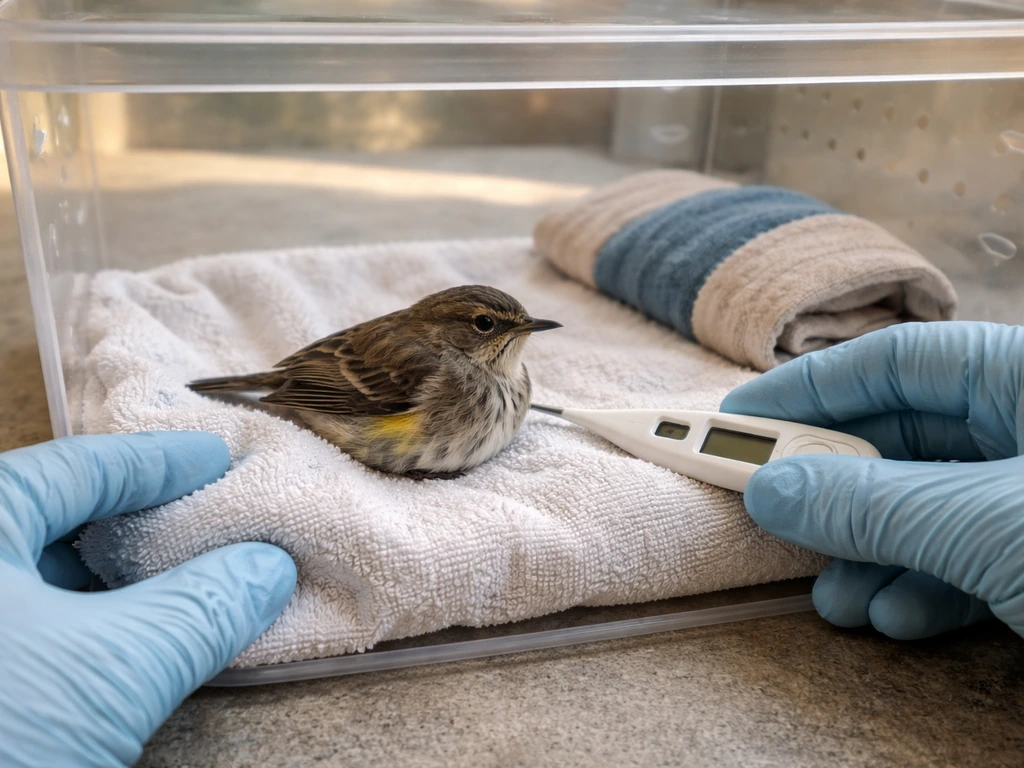
You can safely wean a hand-fed bird by gradually reducing the number and size of formula feedings over one to three weeks while introducing species-appropriate solid foods alongside them, letting the bird's crop-emptying pattern, weight, feathering, and self-feeding behavior tell you when it is ready to move forward. The key is never rushing the timeline, always checking that the crop empties fully before the next feed, and knowing which signs mean you need to stop and call an avian vet or wildlife rehabilitator instead of pushing ahead.
How to Wean a Bird From Hand Feeding: Step by Step
Marcus Holloway
15 May 2026
Why hand-feeding happens and when weaning is safe
Hand-feeding becomes necessary when a bird is orphaned, injured, ill, or rejected by its parents and cannot source nutrition on its own. Nestlings need formula or a parent-substitute from the moment they hatch; fledglings that have been grounded by injury may still need supplemental feeding even if they look nearly mature. Pet parrots are sometimes pulled early and hand-raised by breeders or owners. In every case, the goal from day one should be a safe exit from human feeding.
Before you even think about weaning, consider reunification. For wild birds, Tufts Wildlife Clinic recommends watching from a distance to see whether parents are visiting every few minutes before assuming a bird is truly abandoned. If parents are present and the bird is not in immediate danger, human hand-feeding should not start at all. If it has already started, reunification may still be the faster and safer path than a full weaning protocol. If you are wondering how to feed a blind bird while transitioning it toward self-feeding, focus first on safety, correct formula, and readiness cues rather than a fixed schedule. To get more specific instructions, see our guide on how to feed the bird in Granny.
Weaning is safe to attempt only when the bird is developmentally ready, medically stable, gaining weight consistently, and showing interest in its environment. If the bird is still recovering from an infection, injury, or crop stasis, weaning should wait. Pushing a sick or stressed bird to self-feed before it is ready creates more problems than it solves.
Assessing readiness to wean
There is no single magic age at which weaning is appropriate because it varies so much by species. A better approach is to use a set of readiness markers across several categories at the same time.
Age and feathering
The bird should have most of its contour feathers in, with pin feathers largely opened and no large bare patches on the body. Naked or down-covered nestlings are nowhere near ready for solid foods. For wild passerines this typically corresponds to the fledgling stage; for hand-raised parrots it aligns with the species-specific fledging window, which ranges from a few weeks in small species to several months in large macaws.
Weight and growth trend
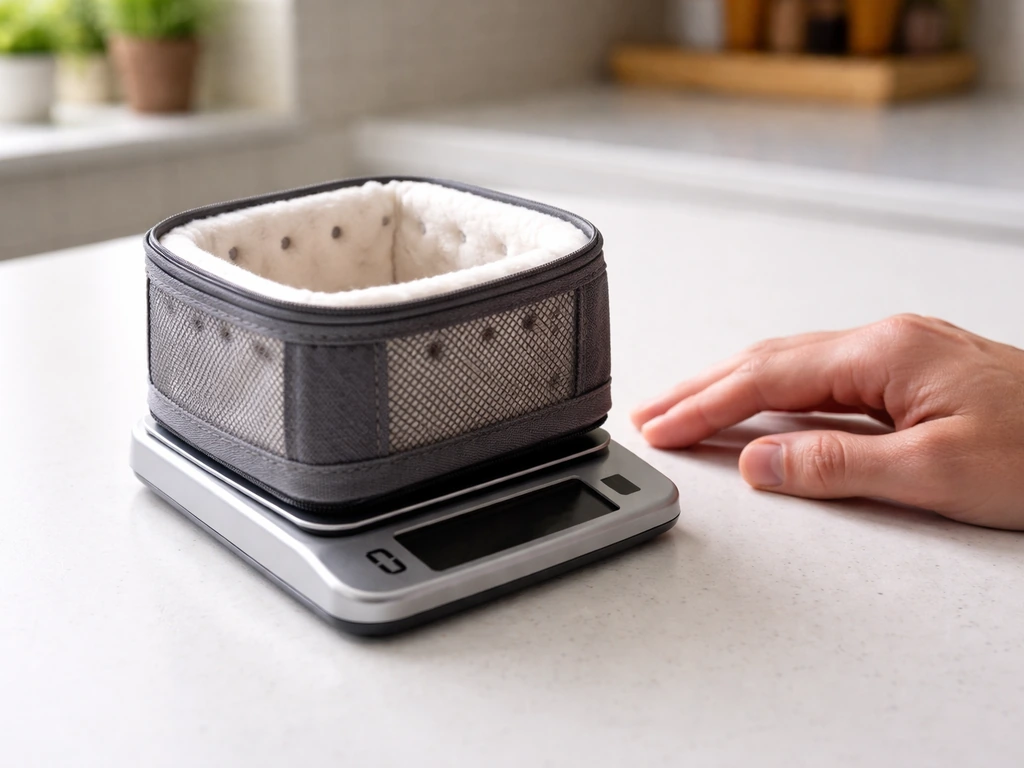
Weigh the bird at the same time each day, ideally before the first feeding of the morning. You want to see a stable or gradually increasing weight, not a declining one. A bird that is losing weight during weaning is telling you the transition is going too fast or something else is wrong.
Crop emptying
Palpate the crop gently before every feeding. It should feel empty or nearly empty. If the crop still has food in it from the previous feed, do not add more. Clinically, a crop that has not emptied within six hours is considered stasis and needs veterinary attention, not another feeding. A normally emptying crop is one of the clearest signs the digestive system is ready for the demands of self-feeding.
Behavior and alertness
A wean-ready bird is alert, responsive, and starting to show curiosity about its surroundings. It may be pecking at the floor of its enclosure, exploring with its beak, or watching you eat. A bird that is lethargic, fluffed up, or huddled is not ready regardless of its age or feathering.
Feeding response strength
The bird should still have a strong, active feeding response when offered formula, meaning it is pumping its head and swallowing with coordination. A weak or absent feeding response is actually a red flag, not a sign to reduce feeds. It can indicate illness, cold body temperature, or aspiration risk, all of which need addressing before weaning moves forward.
Step-by-step weaning plan: reduce hand-feed frequency and portions
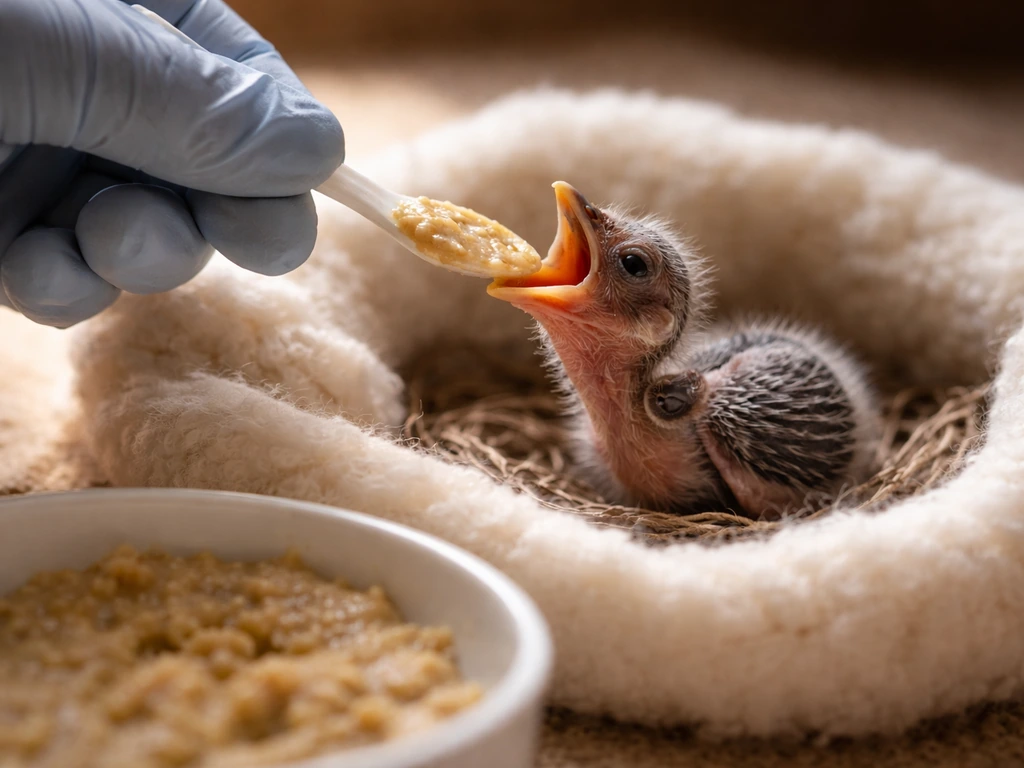
The guiding principle here mirrors how parent birds wean their own chicks in nature: gradually mix in more solid food while reducing formula, rather than making an abrupt switch. Do not cut formula cold turkey. The bird needs time to adjust to texture, caloric density, and the physical act of finding and processing food on its own.
During weaning, solid foods should be available at all times in the enclosure. You are not replacing formula meals with solid meals on a rigid schedule. Instead, you are letting the bird self-feed as much or as little as it chooses, while formula fills the nutritional gap. Over time, as solid intake increases, formula feedings decrease naturally.
- Week 1: Continue your current formula feeding schedule but offer solid foods in a shallow dish at every feeding time. Do not reduce formula volume yet. Let the bird explore the solids without pressure.
- Week 2: Once the bird is pecking at or consuming some solid food consistently, drop one formula feeding per day, starting with a midday feed. Watch weight daily and check crop emptying before every remaining formula feed.
- Week 3: If weight is stable and solid food consumption is visible, drop a second formula feeding. Most birds at this stage need one early morning and one late evening formula feed at most.
- Week 4 onward: Reduce formula feedings to once daily, then every other day, then stop. At each step, wait at least two to three days before dropping further. If weight drops more than five to ten percent or the bird regresses to begging only, go back one step and hold there for another few days.
- Always check the crop is empty before any remaining formula feed. Never add formula on top of a crop that has not fully emptied.
Note that not all birds have crops. Owls, insectivores, and fish-eating birds do not have the same crop-based digestion as parrots or pigeons. For those species, the emptying-rate logic does not apply directly, and species-specific rehab guidance from a licensed rehabilitator is especially important.
Switching to self-feeding: foods, textures, and setup
What you offer during weaning matters as much as the schedule. The bird needs foods it can recognize and manage physically. Abruptly placing a bowl of dry pellets in front of a chick that has only ever had warm formula is unlikely to result in eating.
Texture and temperature progression
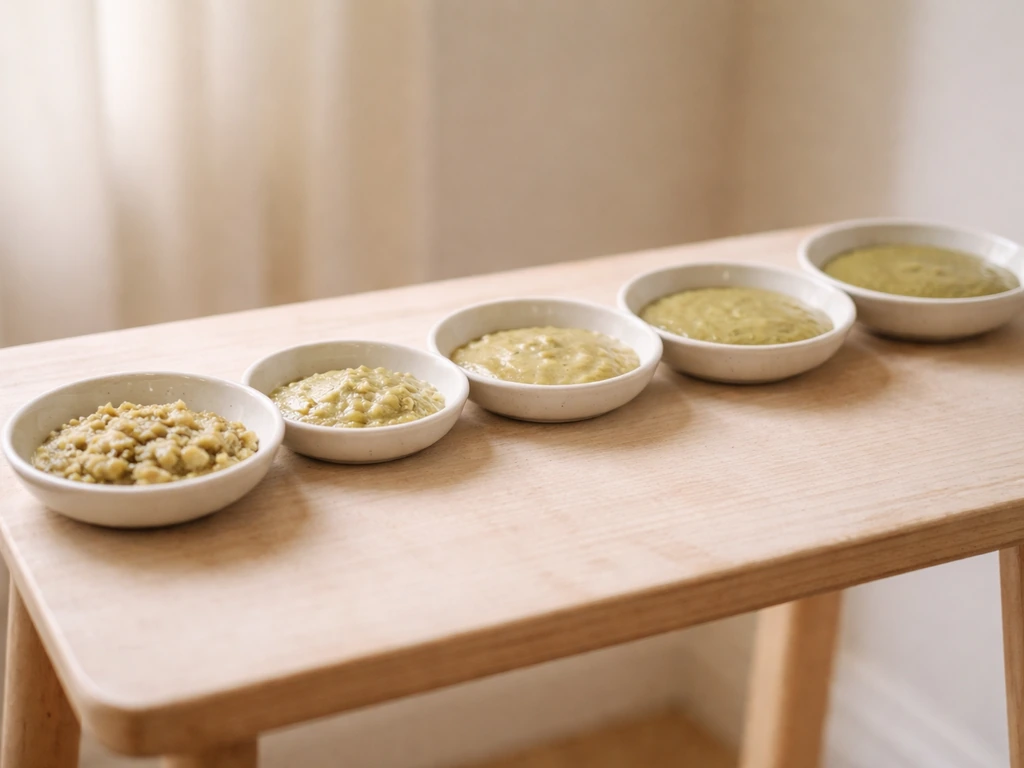
Start with foods that are moist and soft, close in texture to what the bird has been receiving. For parrots and passerines, this might mean softened pellets, mashed fruit, or soaked seeds. Gradually introduce drier and firmer textures over days to weeks as the bird's interest grows. Offer foods at room temperature initially, as very cold food can be harder to manage and less appealing. Over time, transition to unheated foods and then dry formulations as solid intake becomes reliable.
Species-appropriate food choices
Match the food to what the bird would naturally eat. Insectivorous birds need live or freshly killed insects, mealworms, or appropriate insect-based diets, not seed or fruit. Seed-eating birds need small seeds offered in a shallow dish with easily accessible edges. Raptors need whole prey items cut to appropriate size. Offering the wrong diet during weaning not only causes nutritional problems but can also slow the bird's recognition of the food as edible.
Feeding setup
Use shallow dishes so the bird does not have to reach down awkwardly. Place food at a height and location the bird can reach from its resting position. For wild birds in a rehab enclosure, scatter some food on the floor or on low branches to encourage natural foraging behavior. For pet birds, placing food near a perch where the bird already spends time makes it more likely to investigate. Offering variety is useful because birds, especially parrots, are more likely to sample novel textures when multiple options are present.
Troubleshooting common weaning problems
The bird refuses solid foods entirely
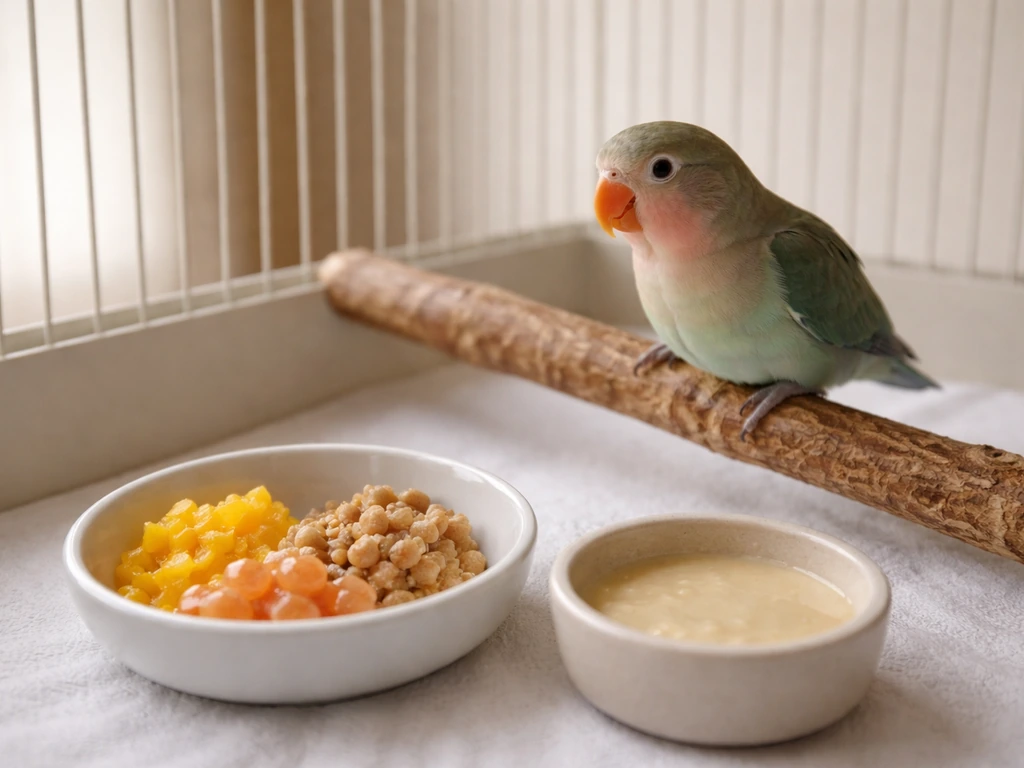
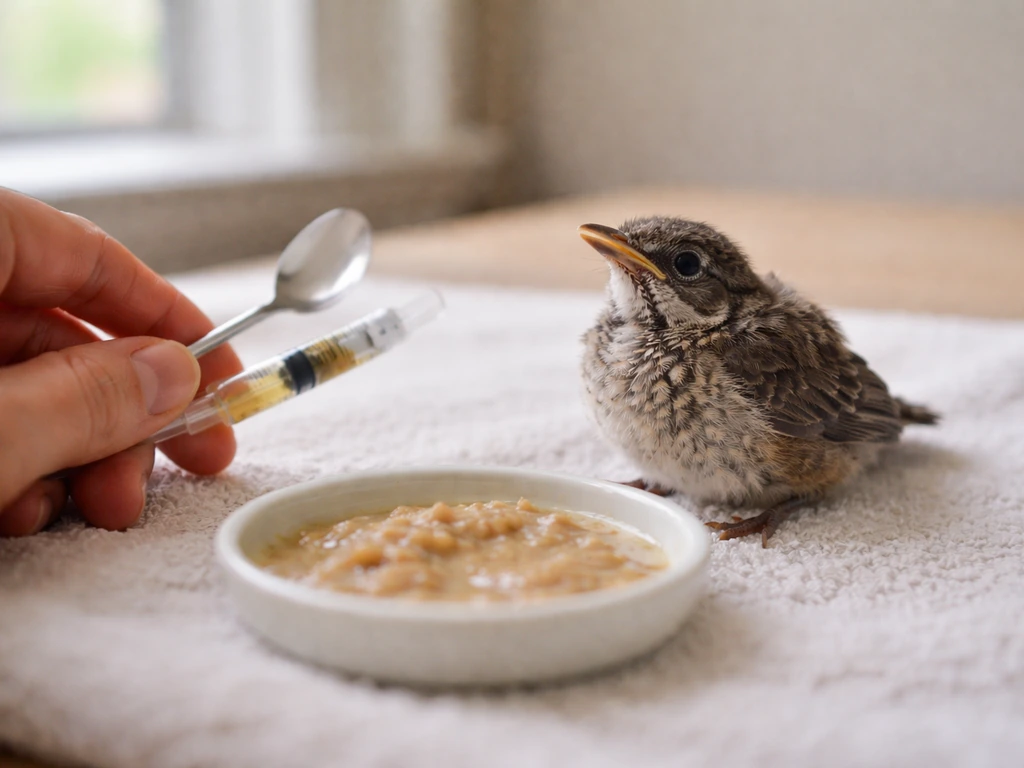
This is normal early in weaning, especially if solid foods are new. Keep offering a variety of textures and species-appropriate options daily. Do not withhold formula to force hunger-driven eating; that approach is stressful and risky for a growing bird. Instead, try placing small amounts of soft food at the tip of the spoon or syringe alongside the formula so the bird tastes it in a context it already trusts. If you need to syringe-feed formula during the transition, keep the process gentle and follow best practices for how to feed a bird with a syringe.
The bird only begs and will not self-feed
Persistent begging without any self-feeding attempts can be a sign the bird is not developmentally ready, or that it has learned that begging always produces a result. If you are trying to stop hand-feeding, watch for signs of readiness and progression, and adjust the plan instead of continuing to feed by hand indefinitely. Try reducing your presence during self-feeding periods so the bird explores the food without waiting for you. If the bird is housed alone, adding a mirror or placing a second (calm) bird nearby can sometimes stimulate feeding behavior. For wild birds, this is another reason to connect with a wildlife rehabilitator who has the resources to socialize birds appropriately before release.
Regression after apparent progress
If a bird that seemed to be weaning well suddenly stops self-feeding, loses weight, or resumes strong begging, go back to the previous step. Resume warm, moist transition foods at a higher frequency until the bird is stable and eating comfortably again before moving forward. Regression is not failure; it is information that the pace was too fast or that something else is affecting the bird's comfort or health.
Regurgitation or coughing after feeding
If the bird regurgitates, coughs, or you hear clicking sounds after a feeding, stop the feeding immediately. These are signs of aspiration risk or crop problems, not normal weaning behavior. Aspiration occurs when formula enters the airway rather than the esophagus, and it can quickly become life-threatening. HVMSA (Wildlife Care Basics for Veterinary Hospitals) notes aspiration risk as a safety concern related to handling that involves direct connection to the lung Aspiration occurs when formula enters the airway rather than the esophagus. Other warning signs include bubbles or formula at the nostrils, tail bobbing, open-mouth breathing, or sudden weakness. Any of these require urgent veterinary attention.
Slow or non-emptying crop
If you palpate the crop before a scheduled feeding and it still feels full, or if you notice a sour smell, a hard lump, or swelling, do not feed. Crop stasis has many causes including poor feeding technique, dehydration, infection, impaction, or an underlying illness. Do not massage a full crop or try home remedies without direct veterinary guidance. If the crop has not emptied within six hours of the last feeding, treat it as a medical issue and contact an avian vet.
Safety and welfare essentials
Hygiene
Every feeding tool, dish, and surface that contacts food or the bird's beak needs to be cleaned thoroughly between uses. Formula left in syringes or spoons at room temperature grows bacteria quickly, and a bird's immune system during weaning is not fully robust. Use fresh formula at every feeding, discard leftovers, and wash all equipment with hot water and a bird-safe disinfectant.
Aspiration precautions
Never force formula into a bird that is not actively pumping and swallowing. If you are dealing with a specific situation where feeding is necessary, you should not improvise and instead follow an avian-professional approach to how to force feed a bird safely Never force formula into a bird that is not actively pumping and swallowing. .
Because bird intubation is an emergency procedure, it should only be done by a trained avian veterinarian or wildlife professional how to intubate a bird. The bird controls the pace. Spoon feeding carries a lower aspiration risk than syringe feeding during the weaning transition because the bird can stop when it chooses. If you are still syringe-feeding during weaning, angle the syringe toward the back of the throat and deliver formula slowly, pausing to let the bird swallow.
If you are still syringe-feeding during weaning, tube feeding can be another technique to discuss with an avian professional for safe delivery; use proper guidance before attempting either approach. Never feed a cold bird: cold body temperature weakens the swallowing reflex and sharply increases aspiration risk. Warm the bird first.
Stress reduction
Stress slows digestion, suppresses appetite, and can cause crop stasis on its own. Keep handling to what is necessary for feeding and health checks. Maintain a consistent daily routine. For wild birds in rehab, limit human contact as much as possible to preserve the bird's natural wariness. Excess habituation to humans can compromise a wild bird's survival after release.
When to pause weaning and seek professional help
There are clear situations where the right move is to stop the weaning process and get veterinary or rehabilitator support rather than continuing at home. If a bird becomes dehydrated during this process, ask an avian vet whether subcutaneous fluids are needed and how to administer them safely.
| Sign or situation | What it likely means | What to do |
|---|---|---|
| Crop not emptied within 6 hours | Crop stasis, possible infection or impaction | Stop feeding, contact avian vet immediately |
| Coughing, clicking, or open-mouth breathing after feeding | Possible aspiration or respiratory distress | Stop feeding, seek urgent veterinary exam |
| Bubbles or formula at nostrils | Likely aspiration event | Stop feeding, urgent veterinary care needed |
| Consistent weight loss during weaning | Nutritional deficit, illness, or pace too fast | Increase formula, contact avian vet or rehabilitator |
| Lethargy, fluffed feathers, or loss of feeding response | Illness or systemic problem | Do not feed, seek veterinary assessment |
| Sour odor, hard mass, or swelling in crop | Crop infection, impaction, or fermentation | Do not feed, contact avian vet |
| No self-feeding after weeks of appropriate offering | Developmental delay or underlying issue | Consult a wildlife rehabilitator or avian vet |
| Wild bird showing no wariness of humans after weeks of care | Imprinting risk affecting release suitability | Contact licensed wildlife rehabilitator |
For wild birds especially, Tufts Wildlife Clinic and Audubon both strongly advise contacting a licensed wildlife rehabilitator rather than attempting extended improvised care at home. Rehabilitators have species-specific protocols, appropriate housing, and experience with weaning that is very difficult to replicate without training. If you are unsure whether to continue, that uncertainty is itself a good reason to make the call.
Ongoing care after weaning
Weight and growth monitoring
Continue weighing the bird daily for at least one to two weeks after the last formula feeding. A bird that maintains or gains weight after weaning is self-feeding adequately. If weight drops consistently over three or more days, resume moist supplemental foods and reassess whether weaning was completed too quickly.
Environment after weaning
A newly weaned bird needs an enclosure large enough to encourage movement, flight practice, and foraging behavior. Perches at varying heights, foraging opportunities like scattered food or puzzle feeders, and access to water for drinking and bathing all support healthy development. For pet birds, this is the period to establish the long-term diet and enrichment routine. For wild birds in rehab, the post-weaning period should be spent in a larger flight enclosure where the bird can practice flying, landing, and finding food independently.
Preparing wild birds for release
Release is not simply opening a door. A wild bird needs to be fully feathered, flying well, maintaining weight on its own, and demonstrating appropriate wariness of humans and predators. The timing should align with suitable weather and with the season when the species would naturally be in that area. Release should happen at or near the site where the bird was found when possible, and ideally with a soft-release approach where the bird has access to supplemental food for a few days as it transitions to full independence. If you are managing a wild bird and reach this point, working with a licensed rehabilitator for the release step is strongly recommended.
Continued care for pet birds
For pet birds that were hand-raised due to illness or owner circumstance rather than for eventual release, the post-weaning period is also about establishing a healthy bond and routine. Annual avian vet checkups, a balanced species-appropriate diet, social interaction, and appropriate mental enrichment are the foundations of long-term welfare. If the bird had a medical issue that led to hand-feeding in the first place, a follow-up vet visit after weaning is complete is a good idea to confirm full recovery.
FAQ
Can I stop hand-feeding immediately once my bird seems interested in solids?
Yes, but only if the crop is consistently emptying on schedule and the bird is actively swallowing and showing interest in solids. If the bird is not yet self-feeding, a brief pause can worsen dehydration and stress, so keep moist species-appropriate foods available and offer small formula-linked tastes rather than stopping completely.
How do I tell the difference between a bird that is “trying” solids and one that is truly self-feeding?
Look for swallowing, not just pecking. A bird may mouth or tap food without actually processing it, while a ready bird shows coordinated swallowing and increasing time spent feeding on its own. If you see pecking but weight drops or the crop fails to empty, slow the transition and return to softer foods more often.
What should I do if my bird keeps begging but won’t eat the solid foods?
If the bird is consistently begging but refusing solids, you can temporarily increase formula frequency and keep solids in the enclosure, then offer very small amounts of softened foods alongside formula (for example on the spoon). Do not withhold formula to force hunger, because stress can trigger crop stasis and lower appetite.
Can I reuse formula or keep leftover formula in the syringe between feedings?
If formula is used during weaning, keep the formula temperature warm and avoid mixing warm formula with room-temperature leftovers. Discard any formula that has sat, and wash feeding tools immediately after each use, since bacteria multiply quickly on utensils and in partially used syringes or spoons.
My bird is eating softened foods, when is it safe to move to dry pellets?
Yes, but do it gradually and only after the bird is reliably taking solids on its own. Sudden switching to dry or unsoftened foods can reduce intake and increase the time needed for digestion, raising the risk of crop issues. Progress texture one step at a time, with weight and crop-emptying as your guide.
Why does my bird’s age or feathering level not match the weaning progress?
A major mistake is relying on one marker, like feathering or age. For most birds, you need a combination of stable or rising weight, full or near-full crop emptying before the next feed, appropriate alertness, and consistent self-feeding behavior. If any of these are off, continue the moist transition longer rather than speeding up.
What are the most common aspiration mistakes during weaning?
Some young birds are prone to aspiration, especially if they are cold, sleepy, or handled roughly during feeding. If the bird coughs, clicks, has tail bobbing, open-mouth breathing, or formula at the nostrils, stop immediately and contact an avian vet urgently rather than trying another feeding method at home.
My bird seems to “regress” after a cold day or a stressful event, what should I check first?
It can, especially if the enclosure is too stressful or cold. Watch for lethargy, fluffed posture, and reduced feeding response, and correct husbandry first (warm, stable environment, minimal handling, consistent routine). If the crop does not empty or the bird loses weight, do not continue weaning at home and seek avian guidance.
What should I do if I palpate a full crop right before the next feeding?
If the bird has a crop that feels full at the next scheduled feeding, do not feed and do not massage it unless a vet has instructed you. A full crop with delayed emptying is a medical concern, possible stasis or infection, so contact an avian vet promptly for next steps.
How does weaning work for species that don’t have the same crop digestion as parrots?
For birds without a typical crop, the readiness signs you rely on should shift away from crop-emptying. Use species-appropriate indicators like weight trends, alertness, and consistent ingestion and droppings appropriate to the species. If you are unsure of the bird’s digestive anatomy, ask a licensed rehabilitator before proceeding.
After weaning a pet parrot, how do I prevent relapse into begging for hand-feeding?
In the pet-bird setting, yes, you can temporarily reduce the feed you deliver by hand and increase access to familiar foods, but the long-term goal should be an established diet plan and enrichment. Schedule enrichment and foraging daily, and plan a follow-up avian vet check after weaning completion, especially if the bird started hand-feeding due to illness.
What if my bird’s weight drops after I stop formula completely?
If weight keeps dropping for several consecutive days after the last formula feeding, resume moist supplemental foods immediately and reassess the pace. Also check whether you are offering the right food type for the bird’s natural diet, because incorrect diet choices can look like “refusal” even when the bird is otherwise healthy.
Next Article
How to Force Feed a Bird Safely and When Not To
Humane guidance on when not to force feed birds, safe first aid, and rescue steps with red flags