If you want to stop hand-feeding a bird, the most important thing to know is this: in most cases, you should stop immediately and hand the bird off to a licensed wildlife rehabilitator rather than continuing on your own. Ongoing hand-feeding by untrained people is one of the biggest causes of imprinting and habituation in wild birds, and it can be genuinely harmful even when done with the best intentions. That said, there are situations where a brief, careful period of supportive care is unavoidable before you can reach professional help, and there are also situations where the bird just needs to be redirected away from human feeding without any medical concern at all. This guide walks you through all three scenarios so you know exactly what to do next.
How to Stop Hand Feeding a Bird Safely and Humanely
First, figure out why you're hand-feeding the bird
Before you do anything else, you need to understand the situation you're actually dealing with. The right approach is completely different depending on whether the bird is injured, orphaned, or simply habituated to humans.
Injured or clearly unwell
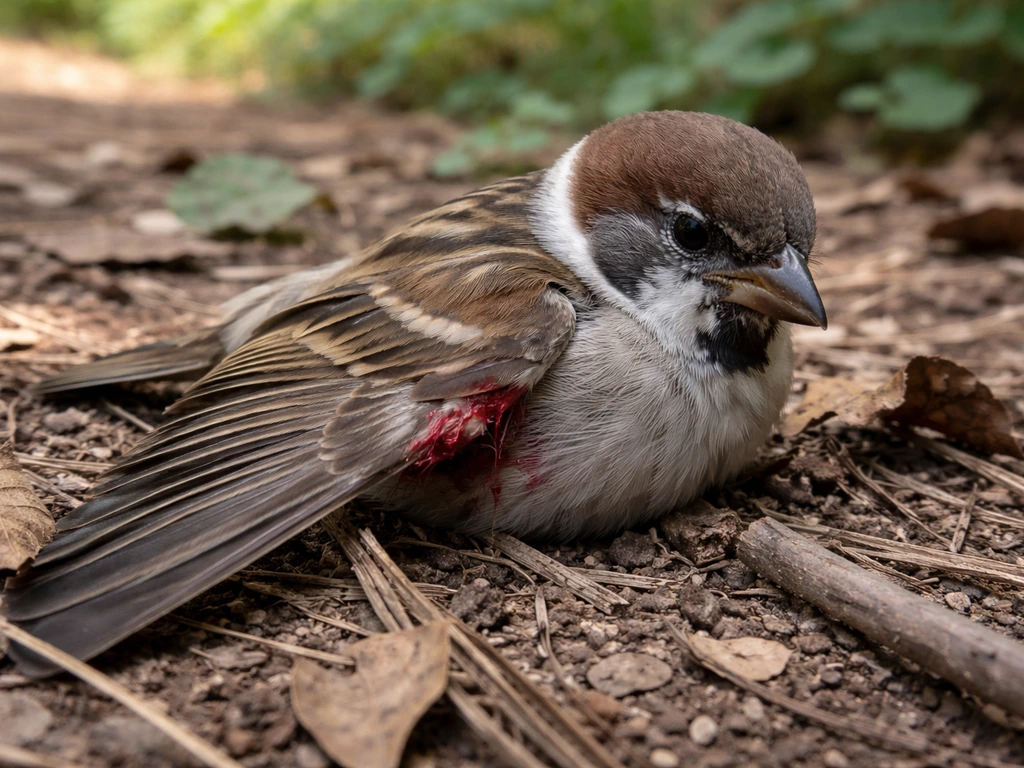
A bird that needs urgent help will show obvious physical signs: bleeding, a visibly broken or drooping wing, lacerations, an inability to stand, or head trauma signs like circling or falling over. These birds need a vet or wildlife rehabilitator, not home feeding. If you’re looking for how to force feed a bird, the safest step is to contact a licensed wildlife rehabilitator right away. Feeding the wrong diet to a sick or injured bird can cause additional harm, which is why organizations like Tufts Wildlife Clinic, Audubon, and the Wisconsin Humane Society all say the same thing plainly: do not give food or water to an injured wild bird. Audubon instructs that if you find an injured or orphaned bird, you should not offer food or water and you should not attempt to feed or give water to young birds blank" rel="noopener noreferrer">do not give food or water to an injured wild bird. If the bird is so dehydrated that you are wondering about how to give subcutaneous fluids to a bird, that is a medical procedure, so use a vet or wildlife rehabilitator rather than trying it at home do not give food or water to an injured wild bird. Stabilize it, keep it warm and quiet, and get it to a professional. If you believe a bird truly needs intubation, this is a procedure that should only be done by a trained veterinary professional intubation a bird.
Orphaned baby bird
A truly orphaned baby bird is one that is featherless or has its eyes closed and has no nest to return to, or whose parents are confirmed dead. The U.S. Fish and Wildlife Service points out that many baby birds people think are orphaned actually aren't: fledglings (young birds with feathers, hopping on the ground) are often just learning to fly and are still being fed by their parents nearby. If the bird is a true nestling with no nest and no parents, contact a rehabilitator before you feed it anything. Short-term warmth is appropriate; food and water are not unless a professional tells you otherwise.
Habituated or dependent bird
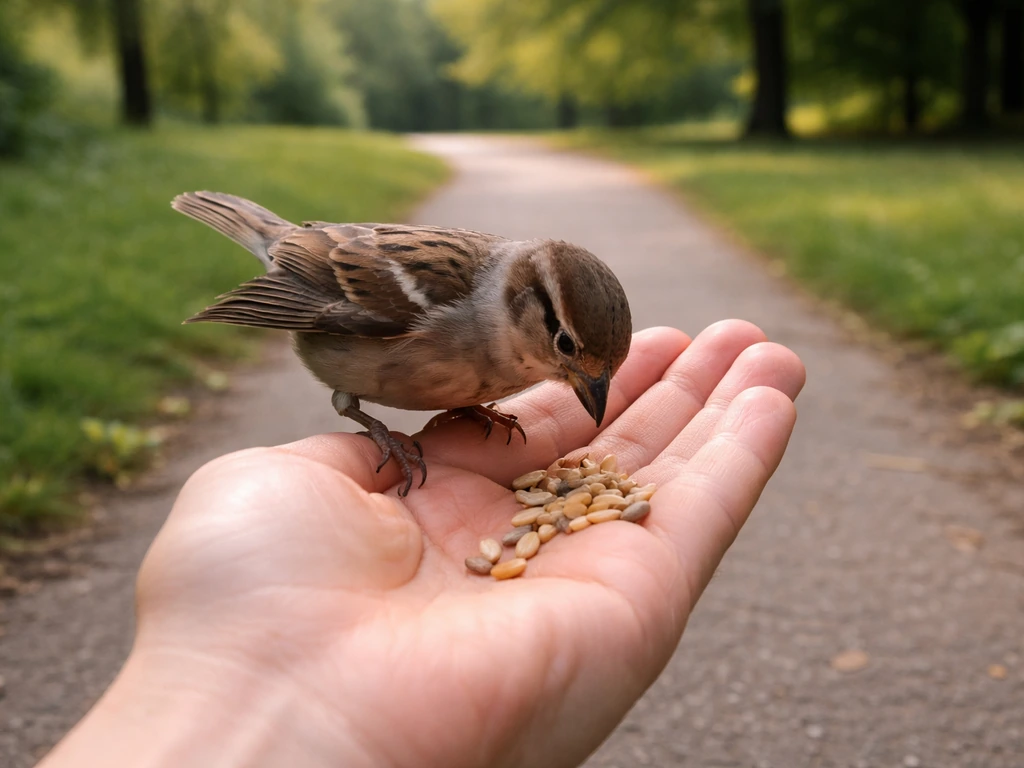
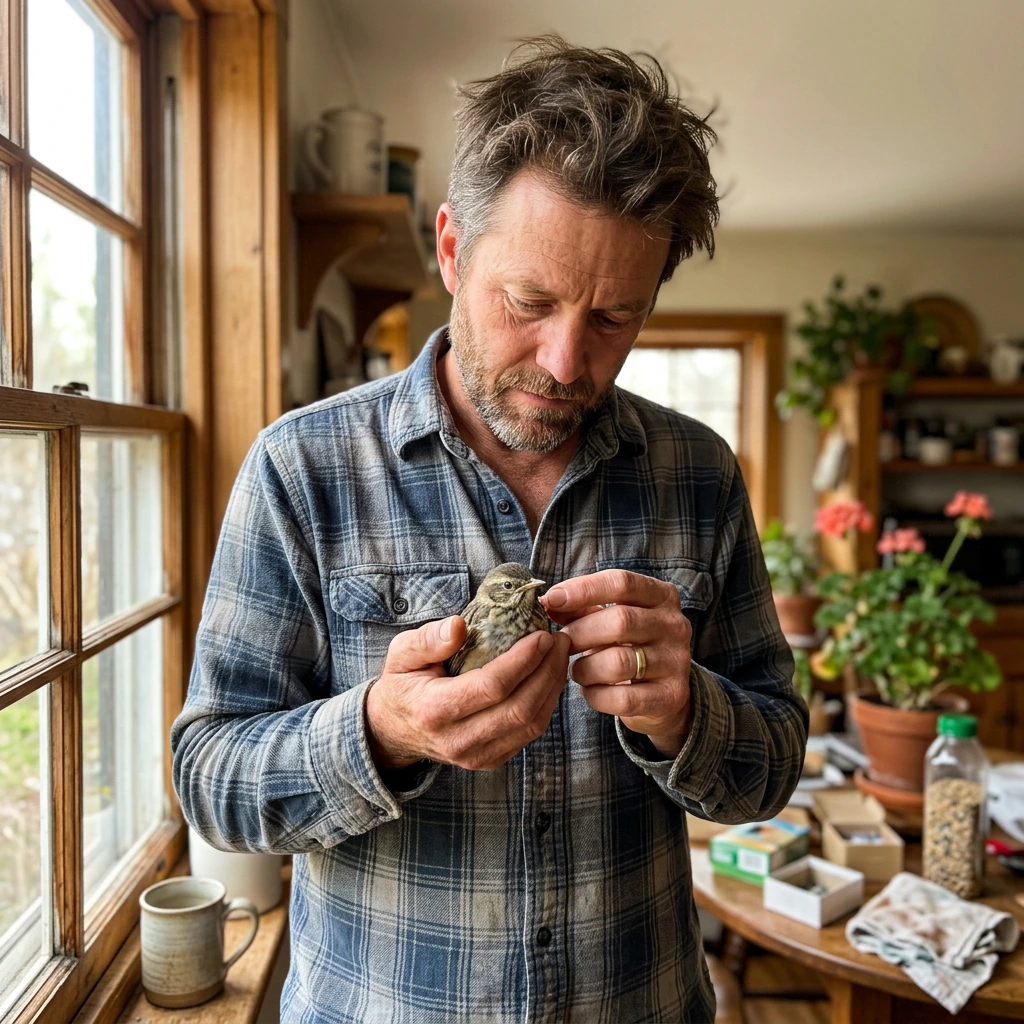
This is a bird that is healthy and able to fend for itself but has gotten used to being hand-fed by people over days or weeks. It may be approaching humans, begging, or refusing to forage on its own. This is the situation where weaning and boundary-setting is the right move, and the steps below are mainly aimed at this scenario.
How to safely wean a bird off hand-feeding
If the bird is healthy and you've been feeding it out of habit or routine, stopping hand-feeding needs to be done gradually but deliberately. If the bird is blind, the safest approach is still to get professional help and follow guidance tailored to how to feed a blind bird without causing harm. Going cold turkey rarely works and can cause unnecessary stress, but dragging the process out too long increases the risk of imprinting, where the bird loses its natural wariness of humans and can no longer survive safely in the wild.
- Reduce feeding frequency first. If you've been feeding multiple times a day, cut back to once daily for a few days, then every other day, then stop. Each reduction gives the bird a window to begin foraging on its own.
- Move feeding away from direct human contact. Instead of hand-feeding, place food in a spot the bird can access without interacting with you directly. Step back and let the bird approach the food alone.
- Gradually increase the distance between you and the food. Over the course of a week or two, move the food farther from your home or regular position so the bird associates food with the environment, not with you.
- Stop responding to begging. If the bird approaches you asking for food, do not engage. Walk away, go inside, or turn your back. Responding to begging even once resets the process.
- Introduce natural food sources. Scatter seed, appropriate fruit, or insects in a location where the bird can find them independently. The goal is to shift the bird's foraging behavior back to self-sufficient patterns.
- Minimize all interaction. Don't talk to it, make eye contact, or let it perch on you. Every positive human interaction reinforces the dependency.
The Wildlife Center of Virginia uses a strict hands-off policy during bird rehabilitation precisely because even well-meaning interaction accelerates habituation. You can follow the same principle at home: the less the bird associates you with food, safety, or comfort, the better its chances of returning to wild behavior.
When temporary hand-feeding can't be avoided: a safe short-term schedule
There are situations where you genuinely cannot reach a rehabilitator within the next few hours and the bird needs some interim support, particularly a very young nestling in cold weather. If you still need to provide temporary support, follow a short schedule and focus on warmth first how to feed the bird in Granny. In that case, the priority is warmth first, food second, and the feeding window should be as short as possible.
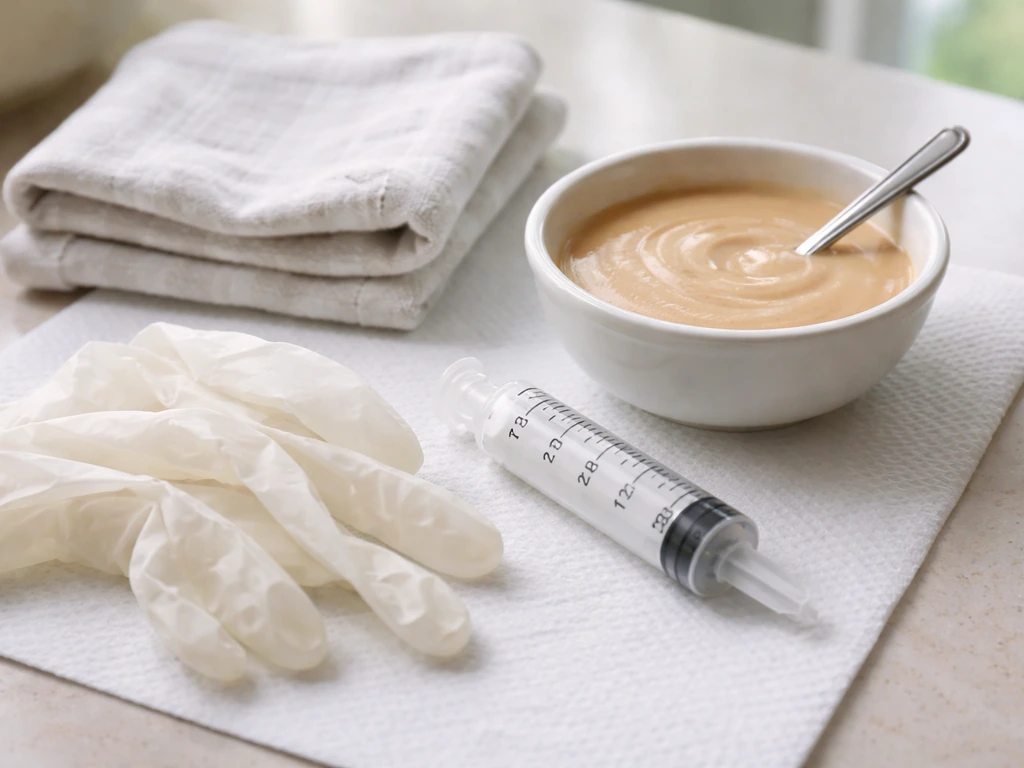
Do not offer water to baby birds, and do not offer bread, milk, or human food. If you must use a syringe to feed a baby bird temporarily, do it only in a very careful, species-appropriate way and get professional care as soon as possible. If you have no choice but to offer something briefly, small pieces of moistened, high-protein food like mealworms or a commercial insectivore diet (if you happen to have it) are better than nothing. Keep portions tiny. The goal is not to fully feed the bird, it is to prevent starvation for a few hours while you arrange professional care. Most orphaned baby birds need feeding every 20 to 30 minutes during daylight hours, which is exactly why professional rehabilitation exists: it's an around-the-clock commitment that is very difficult to sustain correctly at home. If you ever need a temporary tube-feeding plan for a baby bird, follow instructions from a wildlife rehabilitator rather than guessing tube feed a bird.
If you're dealing with a slightly older bird that can eat on its own and just needs support during recovery, place appropriate food nearby and let it feed itself. Hands-on feeding should be the last resort, not the default.
Setting up a low-stress temporary space
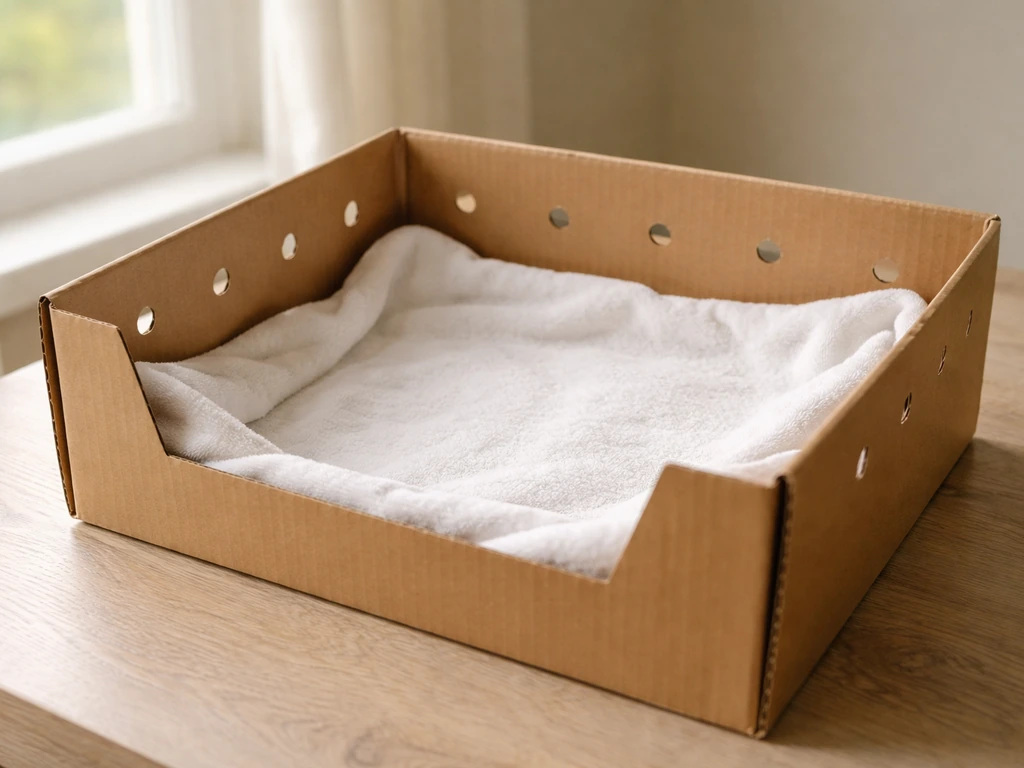
Whether the bird is injured, orphaned, or being weaned, the environment you keep it in matters a great deal. Wild birds experience extreme stress in captivity, and a poorly set-up space can cause as much harm as incorrect feeding.
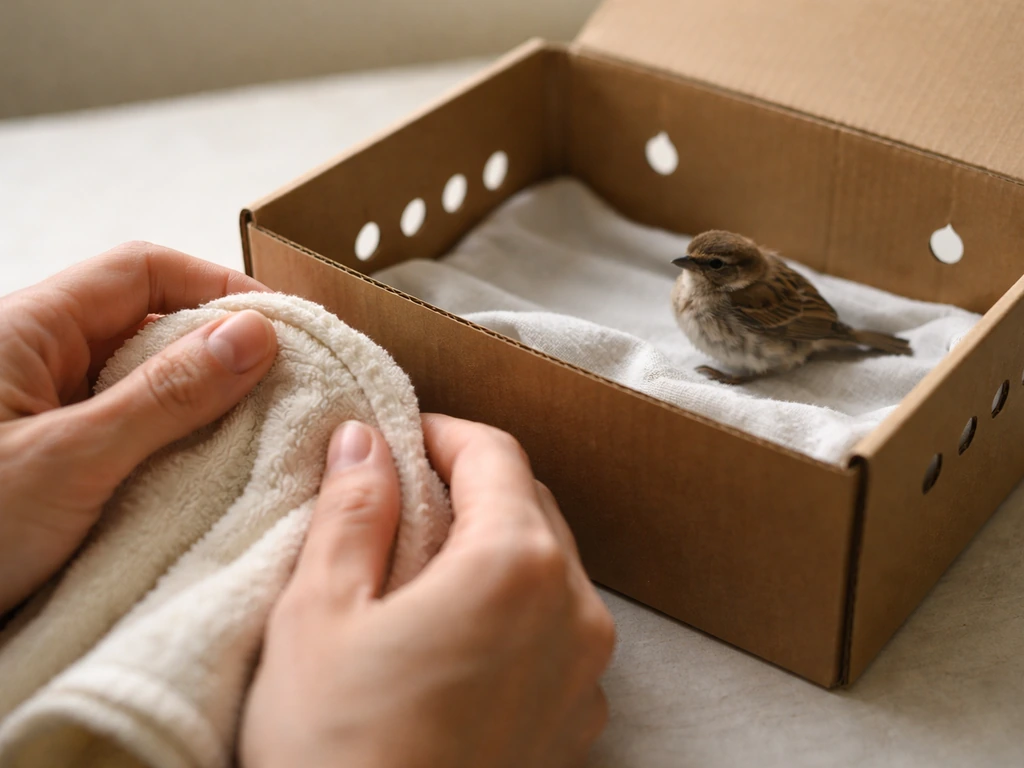
- Use a cardboard box or small crate with ventilation holes. Line the bottom with a soft cloth or paper towels. Avoid anything with loose threads that can catch on feet or beaks.
- Keep it warm. Place the box half on and half off a low-setting heating pad so the bird can move away from the heat if it gets too warm. For very young nestlings, aim for around 85 to 90 degrees Fahrenheit in the warm zone.
- Keep it dark and quiet. Cover the box with a lightweight cloth. Place it away from TVs, foot traffic, children, and pets. Darkness reduces stress and keeps the bird calmer.
- Minimize handling. Only pick up the bird when absolutely necessary, and handle it with a cloth or towel rather than bare hands. Limit exposure to your face and voice.
- Do not put multiple birds together unless they are from the same nest and species. Mixing species or birds at different stages can cause injury and stress.
- Do not keep the bird in a glass tank or sealed container. Adequate airflow is essential.
This setup is strictly temporary, meant to bridge the hours until you can reach a wildlife rehabilitator or avian vet. It is not a long-term solution. The NWRA's minimum standards for wildlife rehabilitation are explicit that prolonged captivity without proper facilities habituates birds to humans and compromises their ability to return to the wild.
Signs that mean you need to stop DIY right now
There are specific red flags that tell you this situation is beyond home care. If you see any of the following, stop what you're doing and contact a professional immediately.
- Visible bleeding that hasn't stopped, or open wounds
- A wing or leg that is drooping, deformed, or hanging at an odd angle
- The bird is circling, falling over, or unable to hold its head up (signs of head trauma or neurological injury)
- Labored, open-mouth breathing or wheezing
- The bird has been in your care for more than 24 hours and isn't improving
- The bird is losing weight, becoming lethargic, or refusing any food
- Discharge from the eyes, nostrils, or mouth
- The bird shows signs of deep imprinting: approaching humans confidently, showing no fear of people or pets, or refusing to engage with its natural environment
Virginia DWR notes that internal injuries, eye injuries, and head trauma are commonly missed by non-professionals and require veterinary assessment. A bird that looks okay on the outside may have injuries that are not visible. When in doubt, make the call.
Preventing re-habituation once the bird is released or redirected
Once you've weaned a bird off hand-feeding or had it treated and released, there are concrete steps you can take to make sure the cycle doesn't start again.
- Stop all supplemental feeding immediately after release or redirection. A single return to hand-feeding can undo weeks of weaning progress.
- Do not allow other household members to feed the bird. Everyone in the home needs to be on the same page, including children.
- If you use bird feeders, make sure they are designed for birds to feed from without human interaction. Feeders should not require or encourage birds to take food from your hand.
- If the bird returns to your property seeking food, ignore it consistently. Engagement of any kind, even shooing it away with repeated attention, can reinforce the behavior.
- For birds released by a rehabilitator, follow their specific post-release instructions. Some species need a soft-release period (gradual exposure to the outdoor environment before full independence), and the rehabilitator will advise on this.
- Report any signs of re-habituation to the rehabilitator who treated the bird. They may need to intervene again before the behavior becomes permanent.
The CDC also recommends not leaving food outside for wildlife generally, since it attracts animals into close human contact and creates dependency patterns that affect more than just one bird. Keeping your outdoor space from being a consistent food source is the simplest long-term prevention.
How to find and contact a wildlife rehabilitator or avian vet
Getting to the right professional quickly is the single most important step in almost every scenario described in this article. Wildlife Center of Virginia describes wildlife rehabilitation as treating sick, injured, and orphaned animals and then returning them to the wild, with guidance for contacting the center when you find such animals Getting to the right professional quickly is the single most important step in almost every scenario described in this article.. Here's how to do it fast.
In the United States
- Call your state wildlife agency directly. Virginia DWR, for example, runs a toll-free wildlife conflict helpline at 1-855-571-9003 during set hours. Most states have a similar number.
- Search the NWRA (National Wildlife Rehabilitators Association) or IWRC (International Wildlife Rehabilitation Council) websites for licensed rehabilitators in your area.
- Contact a local wildlife center directly. The Wildlife Center of Virginia is one example of a regional center that also provides public advice online.
- Call a local avian vet. If you can't reach a rehabilitator quickly, an avian-specialist vet can provide emergency assessment and often has contacts to get the bird into proper rehabilitation.
In the United Kingdom
- Use the HelpWildlife.co.uk directory to search for a wildlife rescue near you. If no local option appears, their helpdesk can connect you to individual rescuers and wildlife-friendly vets.
- Check the British Wildlife Rehabilitation Council (BWRC) rehabilitator list for trained members in your region.
- Leave a clear message with the animal's species (if known), your location, and a callback number when contacting rescues, since many are run by volunteers who may not answer immediately.
General tips for any location
- Call multiple places simultaneously if possible. Rehabilitators are often at capacity, and reaching the right one quickly matters.
- While you wait for a callback, keep the bird in its warm, dark, quiet box. Do not feed it unless specifically instructed to by a professional on the phone.
- Take note of where you found the bird, what condition it was in, and how long you've had it. Rehabilitators will ask these questions and the information speeds up assessment.
- If the bird is a migratory or protected species, be aware that keeping wild birds without a permit is illegal in most countries. The sooner you hand it off, the better for both you and the bird.
The bottom line is that professional rehabilitators exist precisely for this situation. They have the permits, the species-specific knowledge, the equipment, and the experience to handle what you're dealing with, including the weaning and release process covered in this guide. Getting the bird into their hands is almost always the best outcome you can work toward.
FAQ
Can I stop hand feeding immediately, or should I taper off?
Yes, but you should base timing on the bird’s behavior, not the calendar. For a healthy hand-fed bird, shorten the “feeding relationship” first (reduce contact, stop presenting food by hand), then introduce food in a fixed location so the bird must forage. If the bird becomes lethargic, cannot perch, or loses interest in the food station within a day, stop weaning at home and contact a wildlife rehabilitator or avian vet.
What if the bird keeps begging or following me after I stop hand feeding?
For a healthy habituated bird, the goal is to remove the cue that you are the food source. Put food in the open at the same spot, keep your distance, and avoid reaching toward the bird to “reward” it. If it keeps approaching for handouts, use a barrier (for example, a closed screen door or a non-contact perch farther away) rather than hand-feeding to keep the bird practicing natural approach and foraging.
Should I still put food outside while I’m trying to break the habit?
Once you stop hand feeding, you should also stop leaving tempting food where the bird expects you to show up. If you need to provide food during the transition, use a feeder that is out of human reach and only offer it for a short, controlled period while you end the dependence. Long-term, rely on regular outdoor bird feeding practices that do not encourage close human interaction.
Is it okay to offer water by hand to help the bird during weaning?
Do not offer water by hand to a wild bird, even during weaning. Instead, use a safe water source that does not involve contact with you. Hand water can increase habituation and can also lead to spills and aspiration risk if the bird dips and splashes near your fingers.
What should I do if the bird looks young but I’m not sure whether it is truly orphaned?
If the bird’s eyes are closed, it feathers are absent, or it cannot manage on its own, treat it as a true nestling only and switch to professional care as soon as possible. In that situation, use warmth first and avoid trying to “wean” with normal feeding schedules. If you can’t reach help immediately, follow a species-appropriate temporary plan only from a rehabilitator, because feeding frequency and diet vary by species and age.
Can I syringe-feed the bird briefly if I’m worried it will starve?
The safest approach is not to use a syringe or force-feeding unless a licensed wildlife rehabilitator or veterinarian specifically instructs you. Incorrect volume, diet, temperature, and technique can cause aspiration and digestive injury. If you’re considering any kind of tube or syringe feeding, treat it as temporary triage only and contact a professional before you continue.
How do I tell the difference between a friendly bird and one that is becoming habituated?
If a bird is touching you, landing on you repeatedly, or acting unafraid of close human handling, that’s a strong sign of habituation. Keep interactions minimal, stop responding to begging with food, and limit your presence near the bird. If the bird becomes more dependent, shows poor foraging, or cannot transition to self-feeding, get professional guidance because improper weaning can reduce its survival odds.
What food should I use during weaning if I don’t know the bird’s exact species?
Avoid bread, milk, and random kitchen foods, and do not offer seeds or pellets that don’t match the species. Even “natural” foods can be wrong for a bird’s age and digestive needs. During transition, offer the same type of food a rehabilitator would recommend for that species, or use a reputable commercial diet that matches the bird type until you can hand off.
What practical steps prevent the cycle from restarting with the same bird or another one?
After you stop hand feeding, do a quick safety check to reduce ongoing risk: remove other human-attracting food sources, secure pets, close access points (open windows, garages), and consider using deterrents so the bird does not keep returning for handouts. The aim is to break the routine, not punish the bird.
When is it unsafe to try weaning at home and I should seek professional help right away?
If the bird has any signs of injury, head trauma, abnormal posture (for example, falling over), bleeding, or inability to perch/stand, do not attempt home feeding as a “comfort.” Stabilize warmth and quiet, keep it in a secure container, and contact a wildlife rehabilitator immediately. Non-obvious internal or eye injuries are common and require assessment.
How to Feed a Bird With a Syringe: Emergency Guide
Humane emergency steps to syringe-feed an injured or orphaned bird safely, with food prep, technique, aftercare