The first thing to figure out is what kind of bird you're dealing with, specifically whether it's a nestling (a baby that shouldn't be out of the nest yet) or a fledgling (a juvenile that's left the nest intentionally and is learning to survive). This matters a lot before any feeding decision.
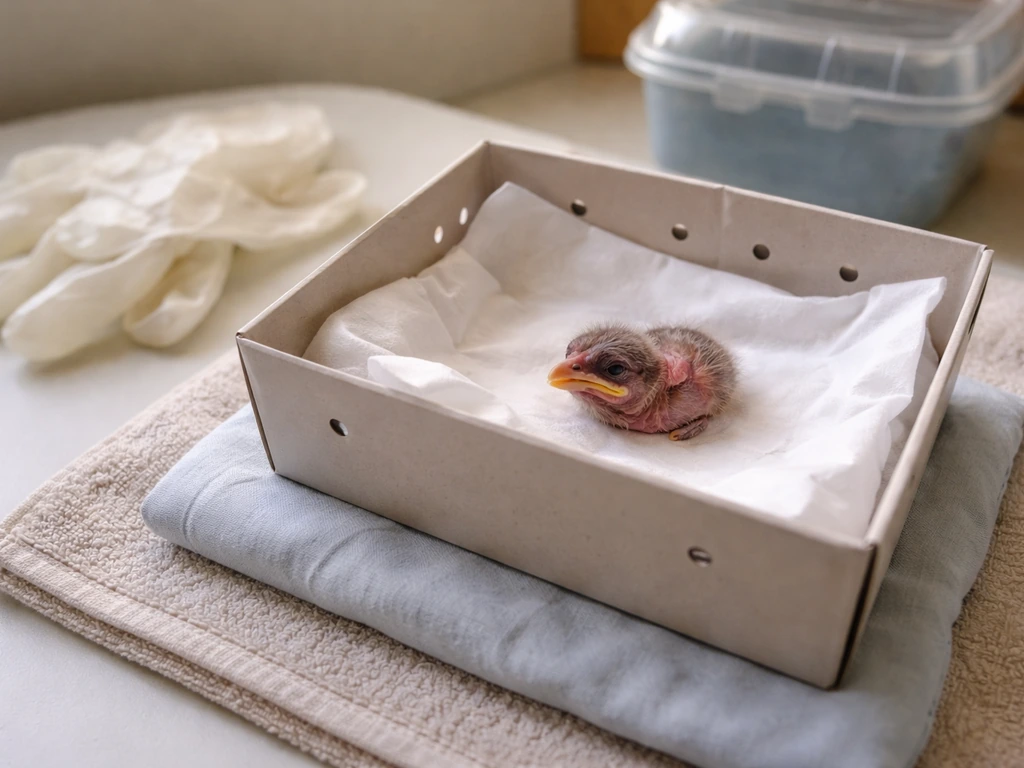
- Nestling: mostly featherless or with only pin feathers starting to emerge, eyes closed or half-open in a slit, helpless and unable to move much on its own. These birds have fallen or been pushed from a nest and genuinely need intervention.
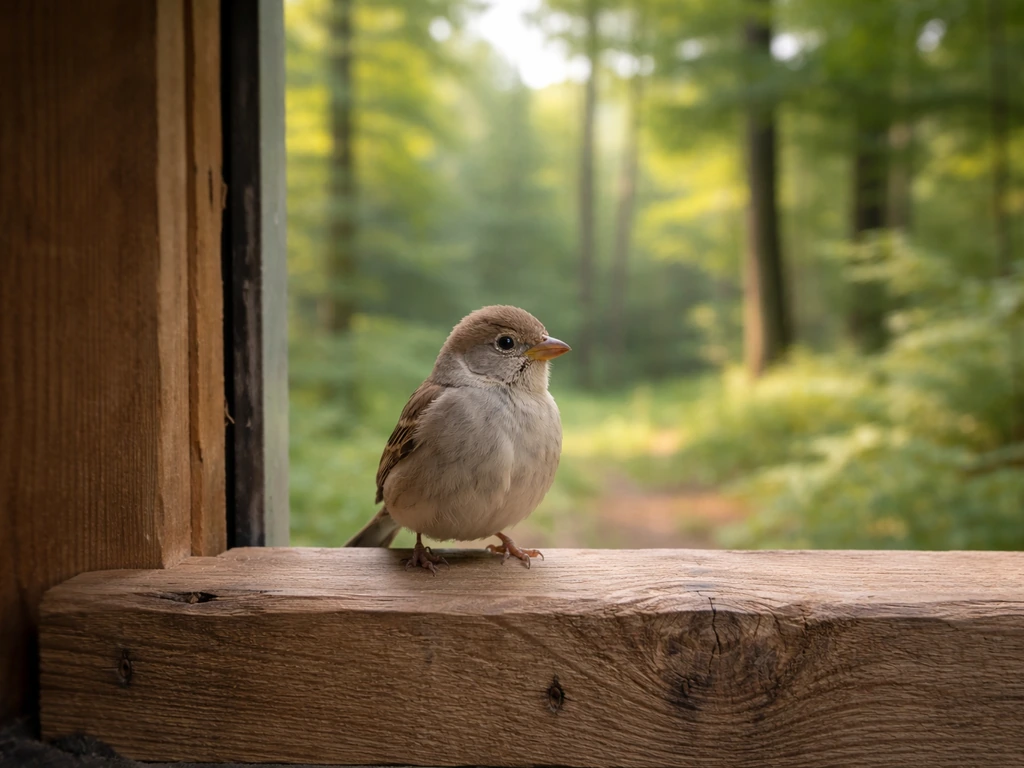
- Fledgling: fully feathered or nearly so, eyes fully open, actively trying to hop or flutter away from you. Most fledglings are supposed to be on the ground and are being watched by their parents from nearby.
- Injured adult: fully feathered, full-sized, but visibly hurt, grounded, or not moving normally. These birds need professional help above all else.
If the bird is a fledgling hopping around and trying to escape you, the best thing you can do is leave it alone (or move it to a nearby shrub if it's in danger from traffic or cats). Its parents are almost certainly nearby. If it's a nestling or an injured adult, keep reading.
What to do right now: safe handling and basic assessment
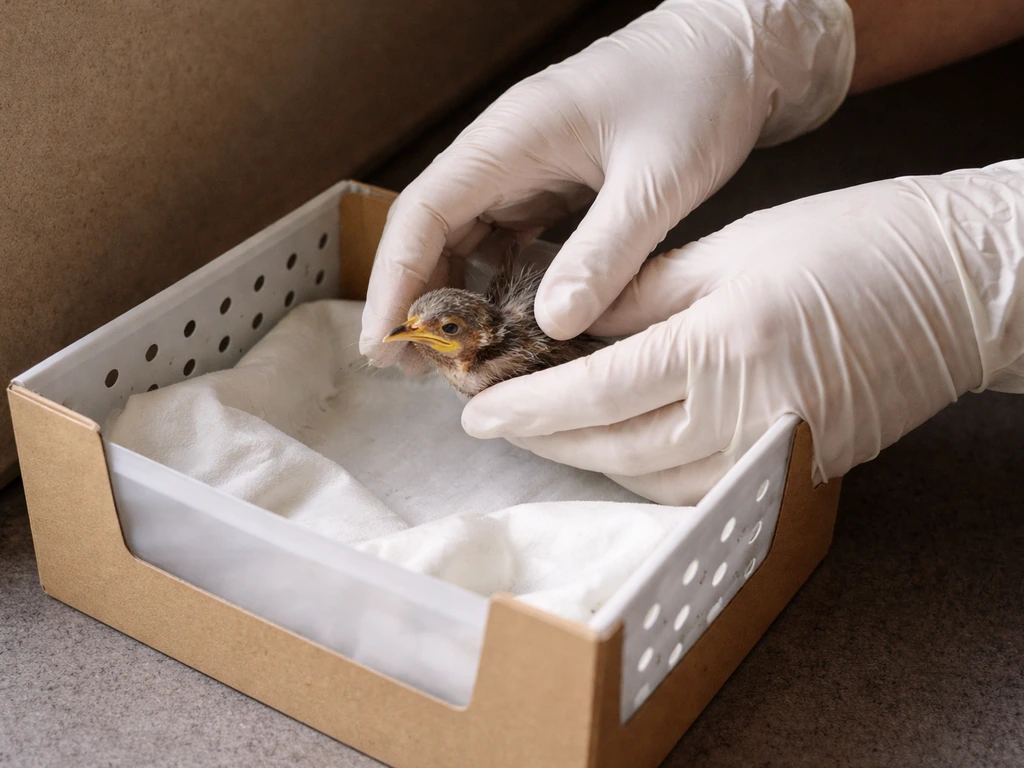
Before you think about food, focus on containment and calm. Stress alone can kill a small bird, and unnecessary handling makes everything worse. Pick the bird up gently using both hands cupped around its body, or scoop it into a small cardboard box lined with a soft cloth (not terry cloth, which can catch tiny toes). Punch a few small air holes in the lid.
Keep the box in a warm, dark, quiet place, away from pets, children, loud noise, and temperature extremes. This isn't just a holding measure; warmth and darkness actively reduce the bird's stress response and help stabilize it while you figure out next steps.
While you have a brief, careful look at the bird, run through this quick visual check:
- Is it breathing? Watch the chest or look for any movement. Normal breathing is quiet and regular.
- Is its beak open? Open-mouth breathing or gasping is a serious warning sign.
- Any visible bleeding, broken limbs, or wounds?
- Is it alert and reactive, or completely limp and unresponsive?
- Does it hold its head upright, or does it tilt, droop, or circle? (Neurological signs)
- Is it a nestling (featherless/helpless) or a fledgling (feathered/active)?
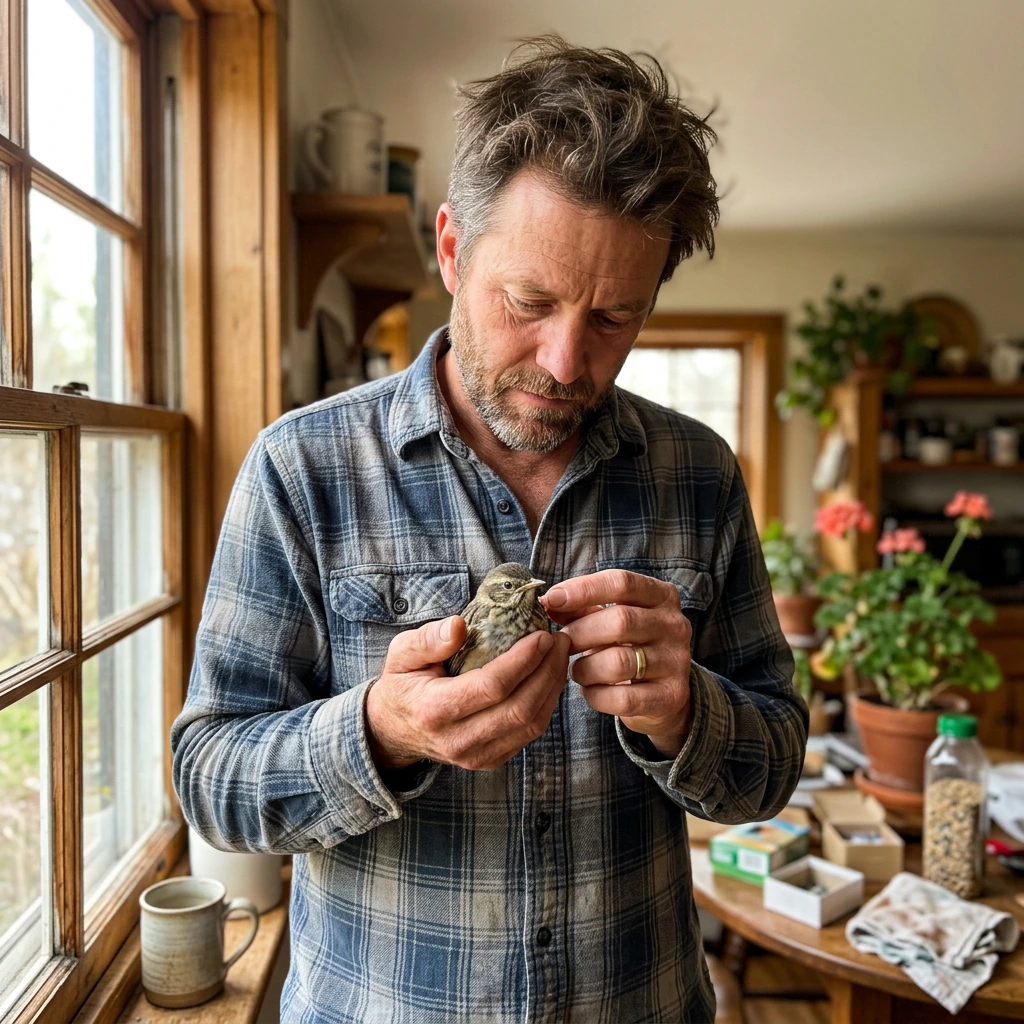
Write down what you observe. You'll need these details when you call a wildlife rehabilitator or avian vet. Once the bird is contained and you've done your quick assessment, your priority is making that call, not reaching for food.
How to feed a wild bird safely (age-appropriate guidance)
Here's the honest, direct answer most rescue sites are hesitant to give: the safest default is to not feed a wild bird until a wildlife rehabilitator tells you to. Multiple authoritative sources, including wildlife rehab organizations and veterinary references, agree that offering food or water before you've spoken to a professional is a leading cause of accidental harm.
If you are wondering how to force feed a bird, start by contacting a wildlife rehabilitator or avian vet first offering food or water before you've spoken to a professional. That said, if you genuinely cannot reach anyone for hours and you have a nestling that is clearly hungry and healthy enough to swallow, here is how to do it as safely as possible.
If the bird is a nestling and a rehabber tells you tube-feeding is needed, follow the age-appropriate steps for tube feeding a bird.
For nestlings (featherless or pin-feathered baby songbirds)
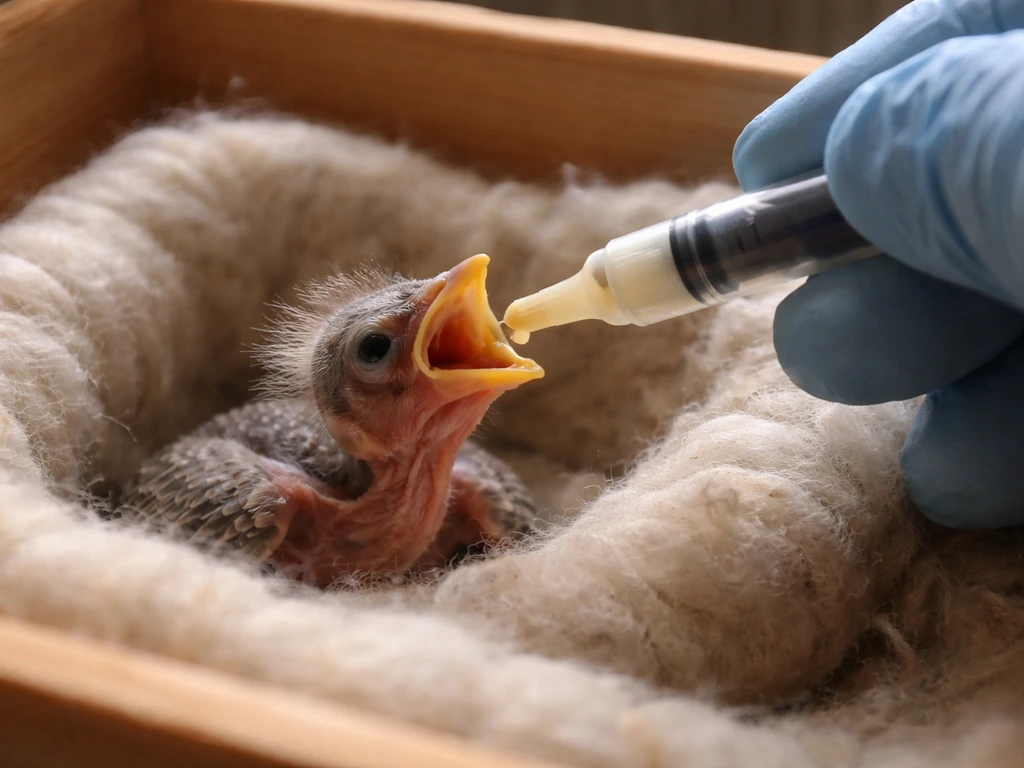
Nestlings need to be fed frequently. The Merck Veterinary Manual notes that hatchlings and nestlings should generally receive around 50 mL per kilogram every 20 to 45 minutes, across 12 to 14 hours a day (up to 16 hours for insectivore species). That's a demanding schedule, and it's one reason these birds really do belong with a trained rehabber.
If a commercial hand-feeding formula is available, products like Kaytee Exact Hand Feeding or Mazuri Songbird Hand Feeding Formula are the right tools. Both should be mixed with hot water and cooled to between 100 and 105°F (38 to 40.5°C) before offering. Kaytee's guidance specifically calls for a "thick creamy pudding" consistency. Test a small drop on your inner wrist before every feeding to make sure it's not too hot, because overheated formula can burn the crop and cause serious internal injury.
For the delivery method, feeding a bird with a syringe (without a needle, and without squirting) is one approach used by trained caregivers. The idea is to offer tiny drops at the tip of the beak and let the bird swallow on its own before offering more. Never squeeze food into the bird's mouth or push anything past the tongue.
In a true pinch, a small piece of moist, protein-rich food like a tiny bit of moistened dry dog food (not soaked until soggy, and definitely not flavored or salted) or a small piece of mealworm can be offered using blunt-tipped tweezers. Place it at the very tip of the gape (the wide-open mouth), not pushed back into the throat. Wait for the bird to swallow completely before offering more.
For fledglings
Fledglings are much closer to self-sufficient, and most of them don't need your help feeding at all. If a fledgling is alert, active, and not injured, feeding it actually does more harm than good by encouraging it to associate humans with food. If a fledgling is clearly injured or unable to move and you're waiting for rehab help, keep it warm and contained. Do not attempt to feed it unless specifically directed to by a rehabber.
For injured adult birds
Do not feed an injured adult bird. Adults that are grounded and unable to fly are almost always in a medical crisis, such as a concussion from a window strike, a cat puncture wound, or a broken bone. Their body is under extreme stress and their swallowing reflex may be compromised. Food at this point is a choking or aspiration hazard, not a comfort. Get them contained, warm, and to professional care as fast as possible.
Feeding dos and don'ts
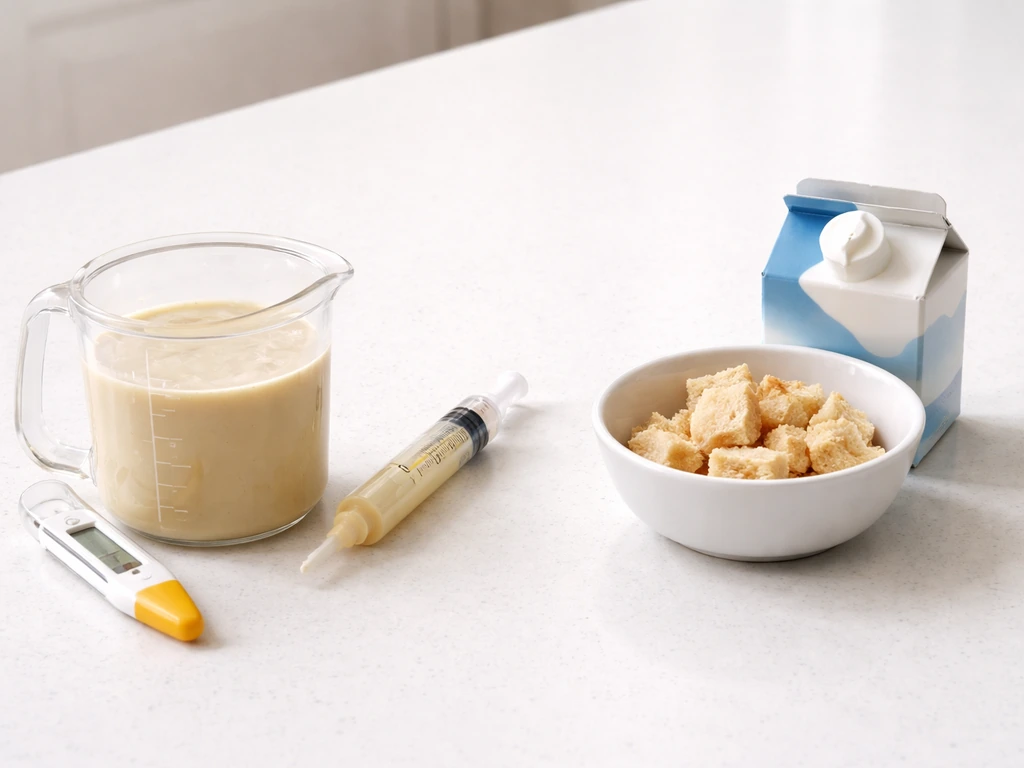
Even well-meaning rescuers cause harm by offering the wrong things. Here's a clear breakdown:
| Do | Don't |
|---|
| Use commercial hand-feeding formula (Kaytee Exact, Mazuri) at 100–105°F | Give bread, milk, condensed milk, or dairy products of any kind |
| Offer food at the tip of the beak and let the bird swallow on its own | Squirt or force food or water into the bird's mouth |
| Use blunt tweezers or a soft implement for small pieces of food | Use a dropper or syringe to drip water directly into the mouth |
| Check formula temperature on your wrist before every feeding | Feed formula that is too hot (burns crop) or too cold (causes digestive issues) |
| Feed a "thick creamy pudding" consistency, not watery | Offer soaked dog food, hamburger, uncooked rice, or monkey biscuits |
| Wait for full swallow before next bite or drop | Rush feeding or give too much at once |
The aspiration risk is real and serious. Baby birds have an airway opening (the glottis) at the base of their tongue, and it doesn't close automatically the way a mammal's does. Dripping water or thin liquids into a bird's mouth can send fluid straight into the lungs. Never drip water into a bird's mouth, and never use a dropper or syringe to squirt anything in.
If you're unsure about syringe technique, reading up on how to tube feed a bird can give you a better picture of why even trained rehabbers treat this process carefully. If you are specifically dealing with a situation that calls for tube feeding, see also how to intubate a bird as a related technique to understand the risks and prerequisites.
Also watch for signs the bird isn't ready to eat: if it's not opening its mouth (gaping), not reacting to food near its beak, or seems to be struggling to swallow, stop immediately. A bird that won't eat isn't just being picky. It's telling you something is wrong medically, and feeding it anyway can cause fatal aspiration.
When not to feed: signs the bird needs urgent help
Some birds should not be fed under any circumstances at home. If you see any of the following, skip the food entirely and focus on getting the bird to professional care as fast as possible:
- Open-mouth breathing or gasping: this is a respiratory emergency and one of the clearest signs a bird is in serious distress.
- Labored or visibly increased breathing effort, even with a closed beak.
- Uncontrolled bleeding from any wound.
- Head tilting, circling, seizure-like tremors, or any sign of neurological damage.
- Complete limpness or inability to hold the head up.
- Obvious broken bones, especially if a wing or leg is hanging at a wrong angle.
- The bird's crop (the small pouch at the base of the throat) already looks full or distended.
- Any injury to the beak, throat, or face that makes swallowing impossible or painful.
If the bird is gasping, has visible injuries, or shows neurological symptoms, it is in a medical crisis. Feeding it will not help and could easily make things worse by causing aspiration. At that point, your job is containment, warmth, and speed in reaching a vet or wildlife rehabilitator. In some situations, advanced care like subcutaneous fluids for a bird may be part of what a rehabber uses to stabilize a dehydrated animal, but that's always done under professional guidance, never at home without training.
There's also a harder reality to acknowledge: some birds are too severely injured to survive even with the best care. If the bird is completely unresponsive, cold to the touch despite warming attempts, and not reacting to any stimulation, it may already be beyond help. A wildlife rehabber or avian vet can make that assessment with authority, and you shouldn't have to carry that decision alone.
The single most useful thing you can do for a bird in your care is contact a licensed wildlife rehabilitator or avian vet quickly. When the animal is badly injured or looks very sick, the CDC advises contacting a wildlife rehabilitator or your state wildlife office so they can connect you with a rehabilitator contact a licensed wildlife rehabilitator or avian vet quickly. Most countries and U.S. states have free wildlife hotlines you can call or text, and many rehab organizations can walk you through interim care instructions over the phone.
Before you call, gather this information:
- Your location (city, state, and the exact address or nearest cross street where the bird was found).
- A brief description of the bird: approximate size, color, feather coverage, and any visible injuries.
- Photos if you can take them safely without stressing the bird further. Many rehab centers ask for photos to identify species and assess condition before intake.
- How long you've had the bird and what (if anything) you've offered it.
- A description of any symptoms: breathing issues, bleeding, posture, alertness level.
To find help fast, search "wildlife rehabilitator near me" or "avian vet near me," or call your local animal control office, humane society, or nature center. The National Wildlife Rehabilitators Association (NWRA) and the Wildlife Center of Virginia both maintain online locators. Many vet clinics that don't specialize in birds will still take an injured wild bird on an emergency basis and can at least stabilize it.
While you wait for help or transport, keep the bird in its warm, dark, quiet box. Don't check on it constantly, don't let children or pets near it, and don't offer food or water unless the rehabber specifically tells you to on the phone. This is genuinely the kindest thing you can do.
If the bird is a baby that someone has been hand-feeding for several days, there are additional considerations once it's recovering. Weaning a bird from hand feeding is a gradual process that needs to happen before any release, and it's another reason professional rehabbers are so valuable. They manage that transition in a way that gives the bird the best chance of surviving on its own.
Similarly, if the bird you're helping is visually impaired or has eye injuries, the feeding approach changes significantly. Feeding a blind bird requires extra patience and specific technique adjustments to avoid stress and accidental harm.
One last note: if you've been hand-feeding a bird for a few days and it's now eating well and gaining strength, resist the instinct to keep going indefinitely. Stopping hand feeding at the right time is part of the process, and doing it too late can make a bird unable to fend for itself after release. Always coordinate that transition with your rehabber.
The bottom line: you found the bird, you're asking the right questions, and that already puts the bird in a better position. Contain it, keep it calm and warm, make the call to a professional, and follow their lead from there. That's the most effective thing anyone, including Granny, can do.