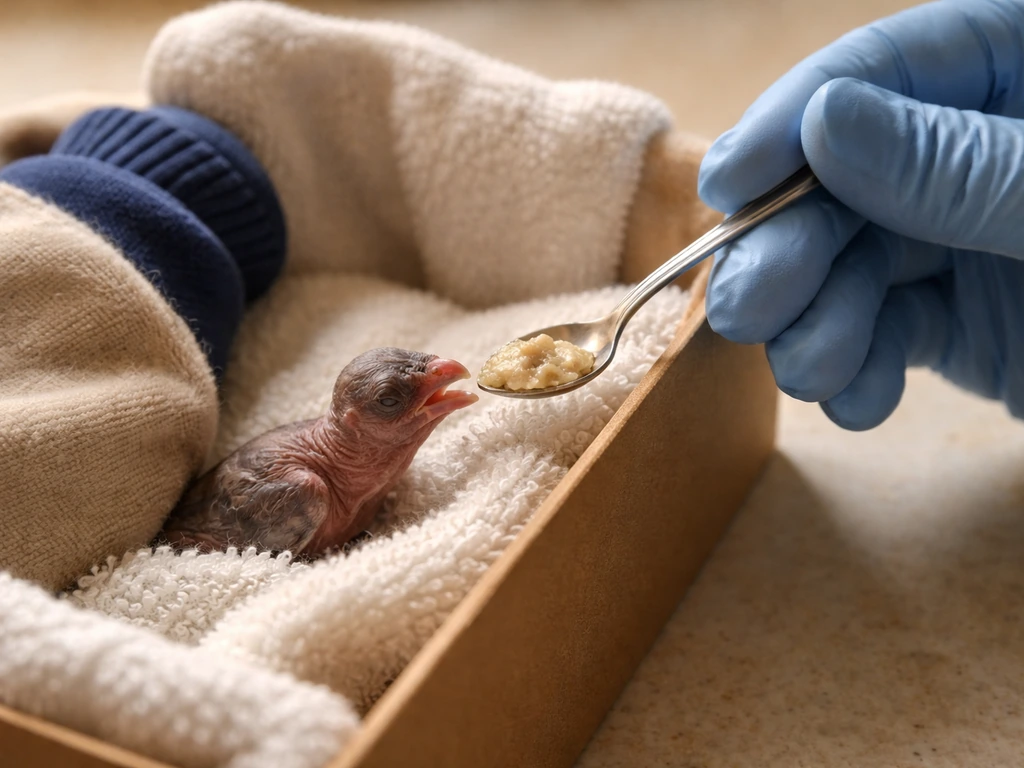
If you have a wild bird in front of you right now that genuinely cannot survive without immediate feeding, use a small needleless syringe (1 ml for tiny birds, up to 3 ml for larger songbirds), prepare a warm, thin slurry of a hand-rearing formula like Exact mixed with strained meat baby food, and deliver it drop by drop into the corner of the beak, never squirting directly down the throat. Feed only when the bird shows a begging response, stop the moment it stops gaping, and call a licensed wildlife rehabilitator as soon as possible. That is the short version. Everything below explains exactly how to do each part safely.
How to Feed a Bird With a Syringe: Emergency Guide

Marcus Holloway
1 May 2026
When syringe-feeding is (and isn't) the right move
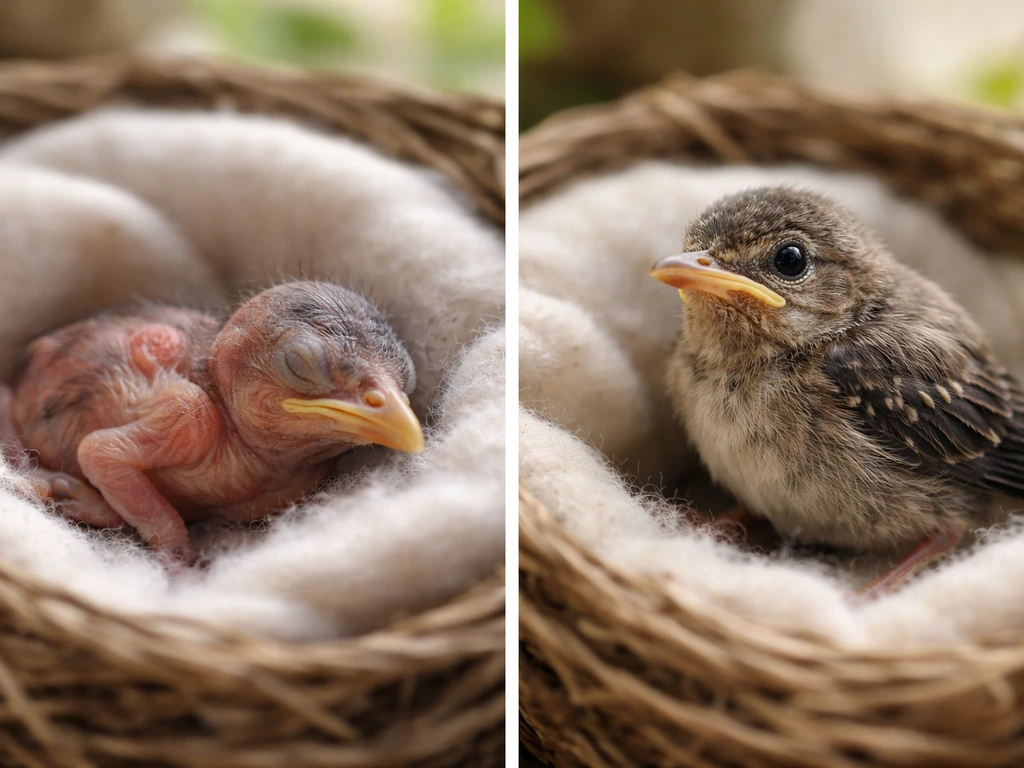
Syringe-feeding is a last resort for a bird that will not survive the next few hours without nutrition or hydration and where professional help is not immediately available. It is not something you do just because a bird looks hungry or stressed. Before you reach for a syringe, ask yourself a few quick questions.
Is the bird featherless or are its eyes still closed? A truly helpless nestling that has fallen and cannot be returned to the nest is one of the few situations where emergency syringe-feeding may be warranted. A fledgling that is hopping around on the ground but looks young almost certainly does not need your help, its parents are almost always nearby.
Does the bird have visible injuries like puncture wounds (especially from a cat), bleeding, a drooping wing, visible maggots, or large bubbles under the skin? If yes, do not attempt to feed it. Get it to a wildlife vet or rehabilitator immediately. Feeding an injured bird in shock can kill it faster than hunger would.
Is it a raptor (hawk, owl, falcon)? Do not attempt to feed raptors at all. They can aspirate easily and require specialist handling. Same rule applies to waterbirds, shorebirds, and any bird you cannot identify confidently.
Syringe-feeding is most defensible for a confirmed orphaned nestling songbird or passerine that is warm, alert, and showing a feeding response (gaping beak, head bobbing), when you are still more than a couple of hours away from getting it to professional care. If help is coming soon, keeping the bird warm in a quiet box is often safer than attempting to feed it at all.
What to use: food type, temperature, and syringe setup
Choosing the right food
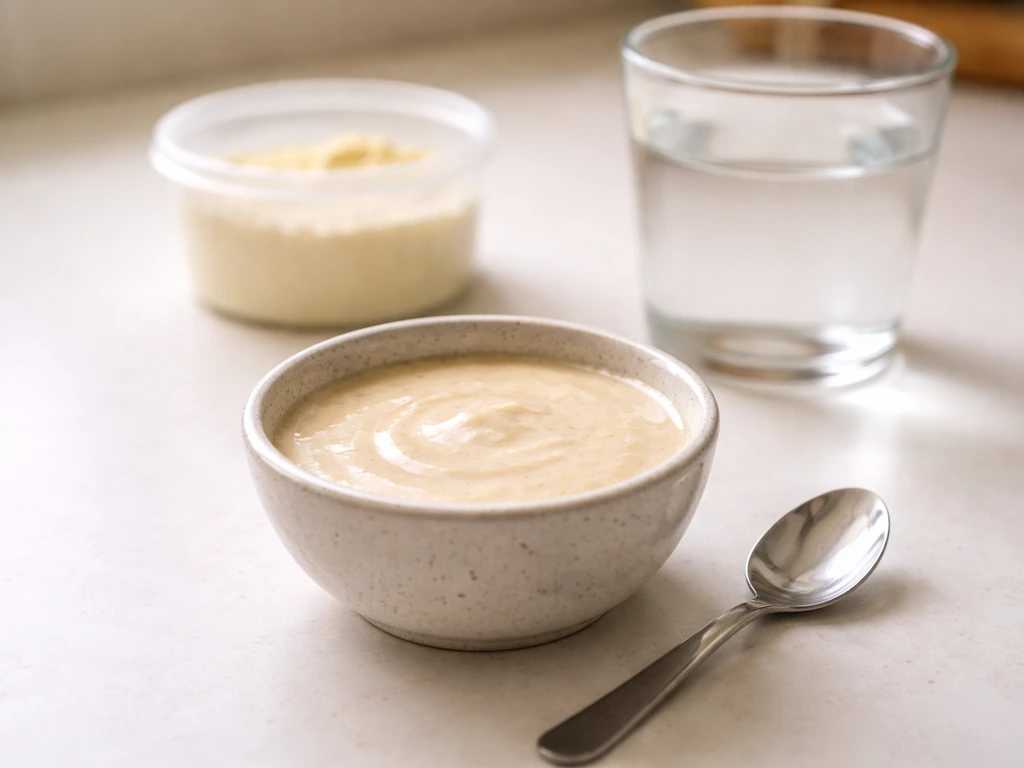
For most small songbirds and passerines, the best emergency option is a commercial hand-rearing formula like Exact (also sold as Kaytee Exact), mixed with a small amount of strained meat-based baby food (beef or chicken). If you do not have Exact, a small amount of raw egg yolk mixed with strained baby food beef is a widely used emergency substitute. Both provide protein and fat in a form a baby bird's gut can process.
Never feed a bird bread, milk or any dairy product, dry seed, hamburger meat, or plain water forced into the beak. These can cause serious harm: milk causes digestive upset, bread has almost no nutritional value for a nestling, and water forced into a bird's beak is one of the fastest routes to aspiration.
The consistency matters as much as the ingredients. The mixture should be thin enough to flow off a spoon slowly but not watery. If it is too thick it can cause crop stasis; too thin and it increases aspiration risk. Aim for something like a thin yogurt texture.
Getting the temperature right
Food temperature is critical. The target range is 104 to 108 degrees Fahrenheit (40 to 42 degrees Celsius). Food that is too cold slows digestion and can contribute to crop stasis; food that is too hot will burn the crop lining. Warm the mixture in a small jar placed in a bowl of hot water, then test a drop on your inner wrist before feeding, it should feel warm but not hot.
Setting up the syringe
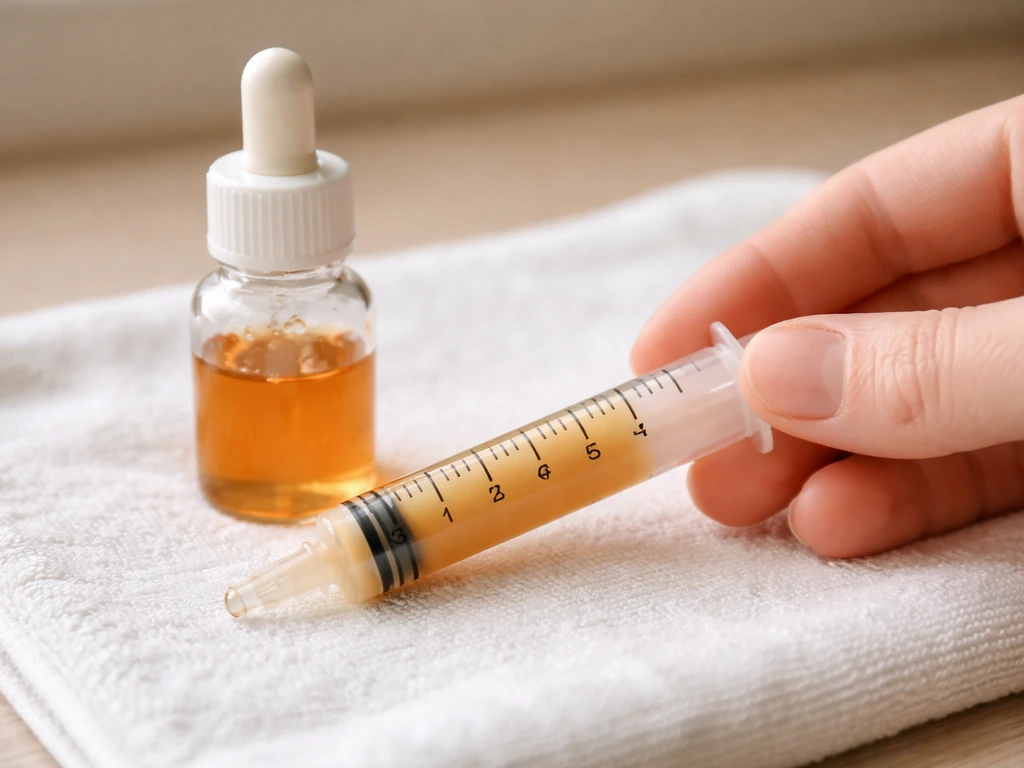
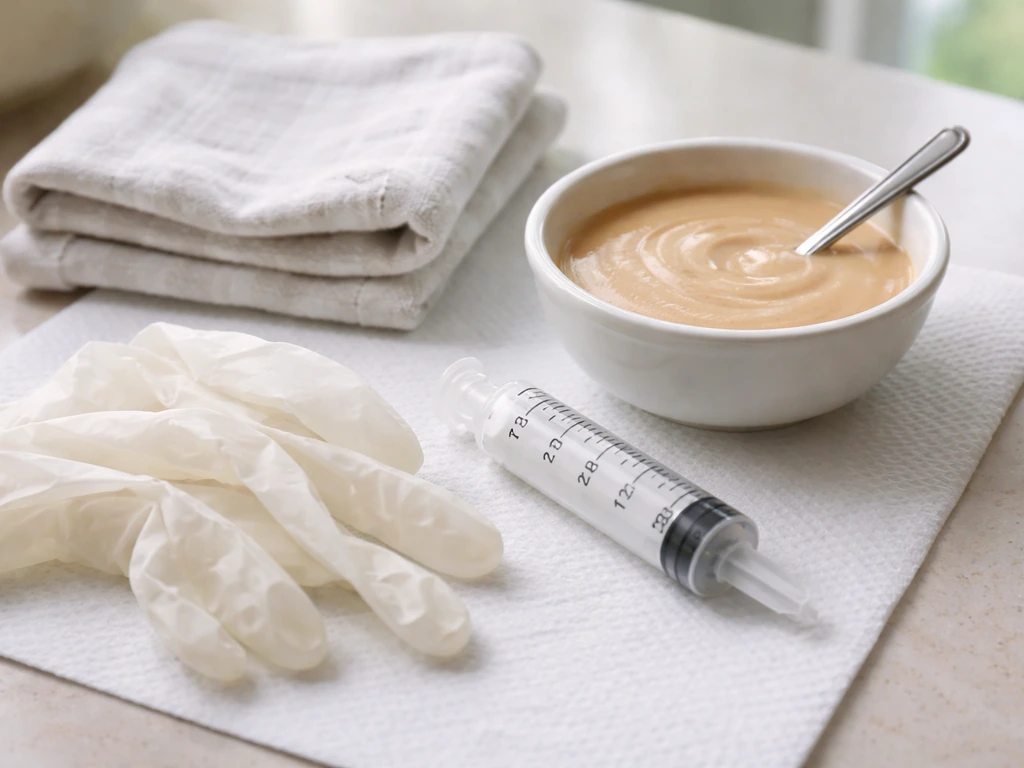
Use a small plastic syringe with no needle attached. A 1 ml syringe works for very small birds (finches, warblers); a 3 ml syringe suits most mid-sized songbirds. For slightly larger birds, a soft tomcat catheter (with the tip cut and smoothed) can be attached to the syringe to allow drop-by-drop delivery with more control. Draw the formula into the syringe, then push out any air bubbles. Before each feeding session, wash the syringe with hot soapy water, rinse thoroughly, and air dry. Between feedings, soak syringes for at least 10 minutes, rinse, and air dry.
How to position and restrain the bird safely
Stress kills birds as reliably as injury does, so your handling needs to be firm, calm, and brief. Work in a quiet room with minimal noise and no other pets present. Dim the lights slightly if the bird is very agitated.
Cradle the bird gently in one hand with its body resting in your palm and your fingers loosely encircling its sides. You are not gripping it tightly, you are preventing it from flapping and injuring itself. The bird's head should be upright and slightly forward. Never tilt the head back; that position makes aspiration much more likely.
If the bird is actively resisting and thrashing, pause. Set it back in its container, cover the top loosely, give it two to three minutes to settle, and try again. Forcing food into a panicked bird is when accidents happen.
Step-by-step syringe-feeding technique
- Warm the formula to 104–108°F and confirm temperature on your wrist. Draw it into a clean, needle-free syringe and expel air bubbles.
- Hold the bird upright in your palm, body stable, head level and facing forward. Do not tilt the head back.
- Wait for the bird to gape (open its beak wide and bob its head). This begging response tells you it is ready and willing to swallow. If you need to encourage it, try gently tapping the side of the beak or mimicking soft chirping sounds — some birds will start gaping in response.
- When the beak opens, place the tip of the syringe at the corner (commissure) of the mouth — not pointing straight down the throat. Let the formula roll onto the tongue and the back of the mouth rather than squirting it in.
- Deliver only one or two small drops at a time. For a very small nestling this might be 0.05–0.1 ml per drop. Pause after each drop and watch the bird swallow before offering another.
- Stop as soon as the bird closes its beak and stops gaping. That is the bird telling you it is full or needs a break. Never push food into a closed beak.
- After feeding, gently wipe any formula off the beak and face feathers with a slightly damp cloth. Formula left on feathers can mat and cause skin irritation.
- Return the bird to its warm, quiet container immediately. Do not keep it out for handling or observation after the feeding is done.
- For nestlings, feeding every 20–30 minutes during daylight hours is typical. Do not feed at night.
- Clean the syringe immediately after every session.
Volume per feeding session depends on bird size, but as a rough guide: tiny songbird nestlings need roughly 0.5–1 ml per feeding, mid-sized birds (like a young robin) may take 1–2 ml. If you are unsure, err on the side of less, underfeeding in the short term is far safer than overfeeding, which can cause regurgitation and aspiration pneumonia.
Swallowing, aspiration risks, and what to do if things go wrong
Aspiration, formula entering the airway instead of the esophagus, is the main danger of syringe-feeding. It happens most often when you feed too fast, deliver too much at once, feed at the wrong angle, or feed a bird that is not actively gaping and swallowing. A bird that moves suddenly while you are delivering formula is also at high risk.
Signs that a bird may be aspirating include: sudden clicking or wheezing sounds, formula coming back out the nostrils, labored or open-mouth breathing, or the bird going limp. If you are wondering how to intubate a bird, keep in mind aspiration can become life-threatening and should be handled by an avian professional aspiration pneumonia. If you see any of these, stop immediately.
If aspiration occurs, tip the bird so the beak is pointing downward and gently hold that position for a few seconds to allow any formula to drain away from the airway. Do not try to keep feeding. Place the bird back in its warm container and contact a wildlife rehabilitator or avian vet right away. Aspiration pneumonia can develop within hours and is fatal without veterinary treatment.
If the bird regurgitates (formula coming back up), that is almost always a sign of overfeeding. Stop the feeding session entirely, let the bird rest for at least 30 minutes, and use a smaller amount next time. Repeated regurgitation is a red flag that something else may be wrong and professional help is needed.
Aftercare: warming, monitoring, and keeping the bird comfortable
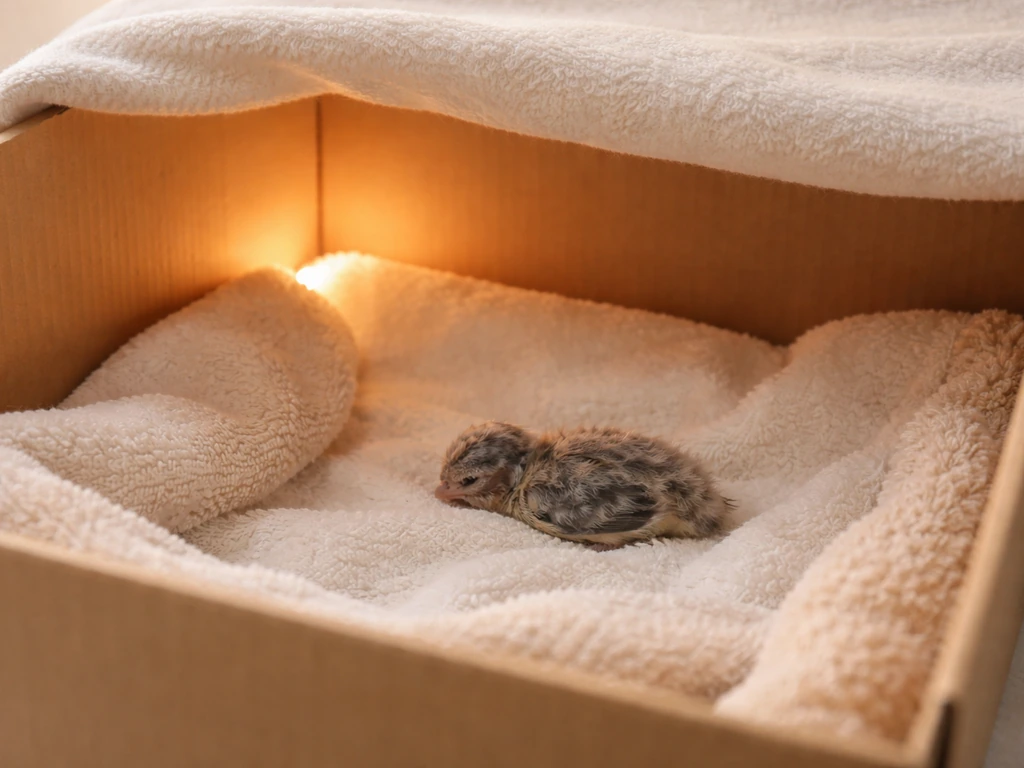
Between feedings, the bird needs warmth above almost everything else. A nestling or injured bird that is cold cannot digest food, cannot fight infection, and will deteriorate fast. Place the bird in a small cardboard box lined with paper towels (not terrycloth, tiny claws catch in loops). Set one half of the box over a heating pad on the lowest setting, or hang a 40-watt bulb nearby so the air temperature in the box reaches about 85–90°F for nestlings. Always give the bird a cooler side of the box so it can self-regulate.
Cover the top of the box loosely (ventilation matters) and keep it in a quiet room. No music, no children peering in every five minutes, no other animals nearby. Stress elevates cortisol and actively suppresses the immune system in birds.
Watch the droppings. Healthy nestling droppings are small, firm, and usually wrapped in a white membrane. Watery, very dark, green, or absent droppings are warning signs. Also watch for a crop that is not emptying, if the small bulge at the base of the neck (the crop) is still full 3–4 hours after a feeding, that is crop stasis and it requires veterinary attention.
Do not offer plain water by syringe. A bird that needs hydration should receive it through a properly prepared electrolyte solution or via appropriately diluted formula, and that decision is best made with guidance from a rehabber. If you are considering subcutaneous fluids for a bird, it is important to get species-appropriate dosing and technique from a licensed wildlife rehabilitator how to give subcutaneous fluids to a bird. Forcing plain water into a beak is a quick route to aspiration.
Common mistakes to avoid
- Feeding a bird that is not gaping or showing a feeding response
- Tilting the bird's head back during feeding (this opens the airway to formula)
- Squirting formula directly down the throat rather than placing it at the corner of the beak
- Using food that is too cold, too hot, too thick, or too thin
- Feeding bread, milk, water, dry seed, or unprocessed meat
- Overfeeding — if in doubt, give less
- Handling the bird too frequently outside of feeding times
- Forgetting to keep the bird warm between feedings
- Using a dirty syringe
- Trying to feed a raptor, waterbird, or severely injured bird at all
When to stop DIY and contact a wildlife rehabber or vet
Syringe-feeding at home is a bridge, not a solution. The goal is always to hand the bird off to a licensed wildlife rehabilitator or avian/exotics vet as quickly as possible. In the US, most native wild birds are protected under federal law, and long-term care without a permit is not legal, but more importantly, these birds have much better survival odds in trained hands.
In the US, the “Good Samaritan provision” allows someone who finds a sick, injured, or orphaned migratory bird to take possession in order to immediately transport it to a permitted rehabilitator (50 CFR 21. 31(a)) [U. S. Fish & Wildlife Service](https://www.
fws. gov/service/3-200-10b-migratory-bird-rehabilitation). In the US, taking possession of migratory birds and transporting them to a rehabilitator is governed by federal requirements described in the USFWS Migratory Bird Rehabilitation Permit FAQ [federal migratory-bird rehabilitation permit](https://www. fws.
gov/sites/default/files/documents/2025-01/3-200-10b-rehabilitation-frequently-asked-questions. pdf).
Contact a wildlife rehabilitator immediately if: the bird has any visible injury (wounds, bleeding, deformity), you suspect aspiration or crop stasis has occurred, the bird is not responding or is deteriorating, you cannot identify the species and are unsure what to feed, or more than a few hours have passed and professional help has not arrived. If you are trying to figure out how to tube feed a bird, contact a wildlife rehabilitator right away instead of continuing on your own when any warning signs show up.
To find a licensed rehabilitator in the US, contact your state wildlife agency, call a local animal shelter or wildlife rescue, or search the National Wildlife Rehabilitators Association directory. Your nearest avian or exotics vet is also a good first call, many will see wildlife in emergencies or can point you to someone who will.
Once the bird is with a professional, ask for guidance on whether continued home care is appropriate at all. Some birds that initially seem like emergency cases are better off with a few days of professional stabilization before any hand-feeding begins. If you do end up involved in longer-term care, topics like how to wean a bird from hand feeding and how to tube feed a bird are worth understanding, but those are next-stage concerns.
If you are trying to figure out how to feed the bird in Granny-style emergency situations, make sure you are giving the right food, at the right temperature, and seeking professional help as soon as possible. Right now, the priority is getting this bird safe and warm, and getting professional eyes on it as fast as you can.
FAQ
When should I NOT use a syringe even if the bird looks hungry?
If the bird is fully feathered (or its eyes are open and it is hopping around), do not syringe-feed. In most cases a parent is nearby and the safest action is to keep the bird warm in a ventilated box, minimize handling, and contact a wildlife rehabilitator for confirmation.
What if the formula is the right temperature, but the bird is not begging?
Yes, warming to the 104 to 108°F (40 to 42°C) range is important, but the other timing detail matters too. If the bird is not begging and swallowing, stop and wait rather than continuing to offer warm food, since feeding a non-gaping bird increases aspiration risk.
Can I reuse leftover warmed formula from earlier?
Do not use “thawed from frozen and re-warmed” formula repeatedly. Mix fresh, warm only the amount you will feed within a short window, and discard leftovers to reduce spoilage and bacterial growth in such a small, sensitive gut.
The bird stops gaping in the middle of feeding, what should I do next?
If a few drops go in and the bird stops gaping, you should pause immediately, let it settle, and do not try to “force the session.” Forcing continuation after the begging response stops is a common cause of regurgitation and aspiration.
How do I tell the difference between normal swallowing and aspiration starting?
Stop feeding and contact a wildlife rehabilitator if you notice any clicking or wheezing, open-mouth breathing, formula coming from the nostrils, or the bird going limp. Do not attempt to “switch methods” or continue at a slower pace, aspiration can worsen quickly.
What if my bird regurgitates once or repeatedly?
If regurgitation happens, do not resume feeding for at least 30 minutes, then offer a smaller amount next time. If repeated regurgitation occurs, assume there is an underlying problem (wrong volume, incorrect consistency, or illness) and escalate to a professional right away.
If the bird seems dehydrated, can I give water by syringe?
Avoid any water delivery by syringe. If hydration is needed, professionals will advise electrolyte or formula dilution based on the bird’s age and condition. Plain water can be aspirated and can also disrupt gut function.
Can I syringe-feed if the bird has an injury but still looks like it needs food?
If you suspect an injury like a cat puncture, bleeding, maggots, a drooping wing, or large bumps under the skin, do not feed. Shock and trauma can make feeding dangerous, and antibiotics or supportive care may be required urgently.
What species are too risky to attempt syringe-feeding?
Raptors, waterbirds, shorebirds, and any species you cannot identify confidently should not be syringe-fed. Even if you have the right formula, their anatomy and feeding response differ, and the aspiration risk is higher when you are guessing.
What should I do if the bird keeps thrashing during feeding?
If the bird is actively thrashing, pause and give it time to settle in the warm box, try again only when it is calmer. Forcing feeding during panic is one of the fastest ways to cause accidental aspiration or head position errors.
How do I judge the correct thickness if I don’t have experience?
Don’t choose the food strength by feel alone. The consistency needs to flow like thin yogurt, and if it is too thick you risk crop stasis, if too thin you increase aspiration risk. When unsure, aim for thinner and smaller volumes rather than thicker.
How long should the crop take to empty, and what if it stays full?
After feeding, focus on warmth and observation. A crop that remains full 3 to 4 hours later is not normal and needs veterinary or rehabilitator attention, even if the bird seems otherwise alert.
I think the bird can’t swallow normally, can I tube-feed at home?
Do not try to “fix” a suspected tube-feeding need at home. If you are considering intubation or you suspect the bird can’t swallow properly, stop and get a wildlife rehabilitator or avian vet immediately, aspiration pneumonia can become life-threatening.
If I can only get help later today, should I keep trying multiple feedings at home?
If you are forced into a quick bridge, the safer next step is to contact a wildlife rehabilitator and keep the bird warm while you wait rather than continuing repeated attempts without professional guidance. Some birds benefit from stabilization first, before any hand-feeding.
Next Article
How to Feed a Blind Bird: Step-by-Step Safe Care Today
Humane step by step guide on how to feed a blind bird safely, what to offer, and when to get urgent help.