If a bird has an eye that looks swollen, cloudy, matted shut, bleeding, or bulging, the most important first step is to contain the bird safely in a warm, dark, quiet box and call an avian vet or wildlife rehabber as soon as possible. While you wait, a gentle rinse with sterile saline is the one hands-on thing you can safely do at home. Almost everything else, including ointments, antibiotics, and forcing the eye open, can make things significantly worse.
How to Treat a Bird Eye Injury: First Aid Steps
Marcus Holloway
17 May 2026
How to tell what kind of eye injury you're dealing with
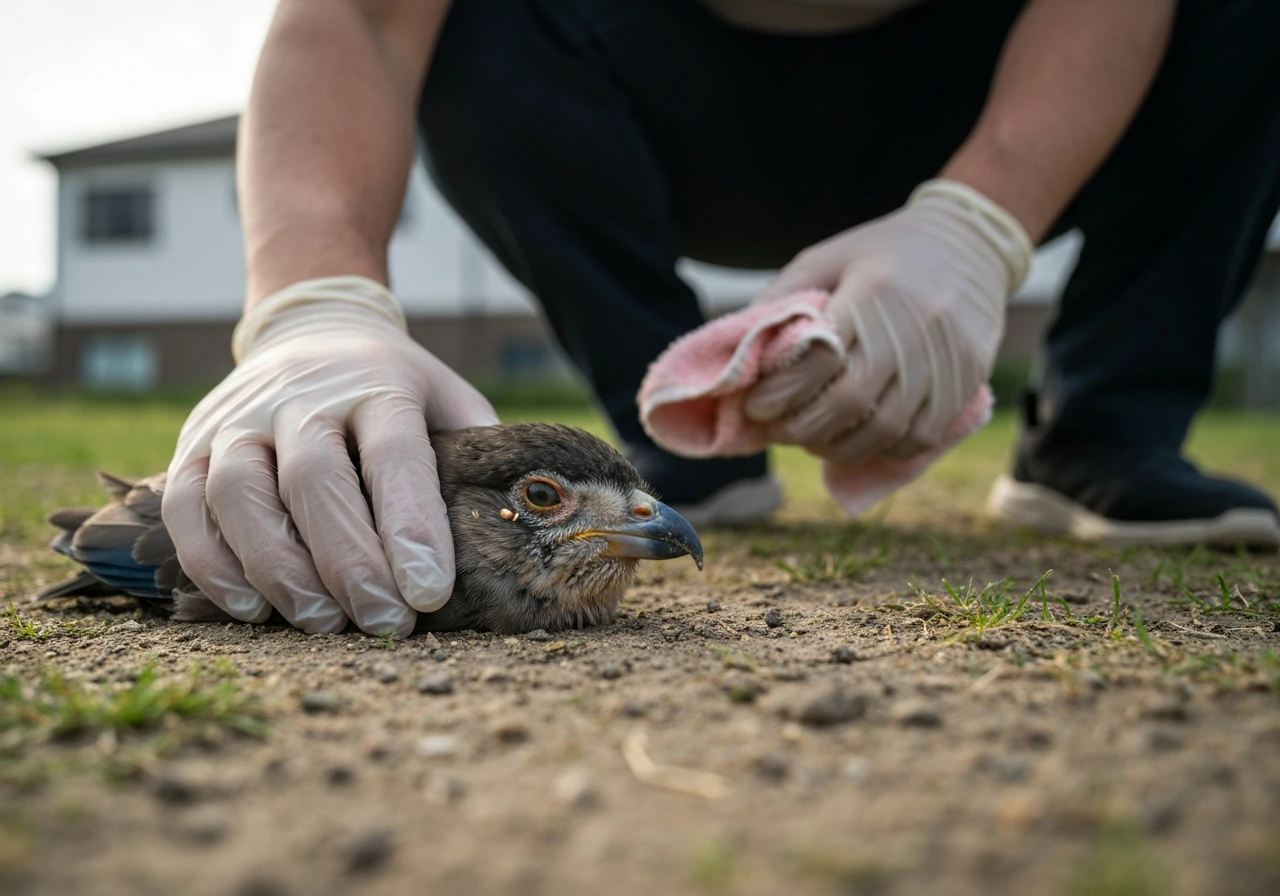
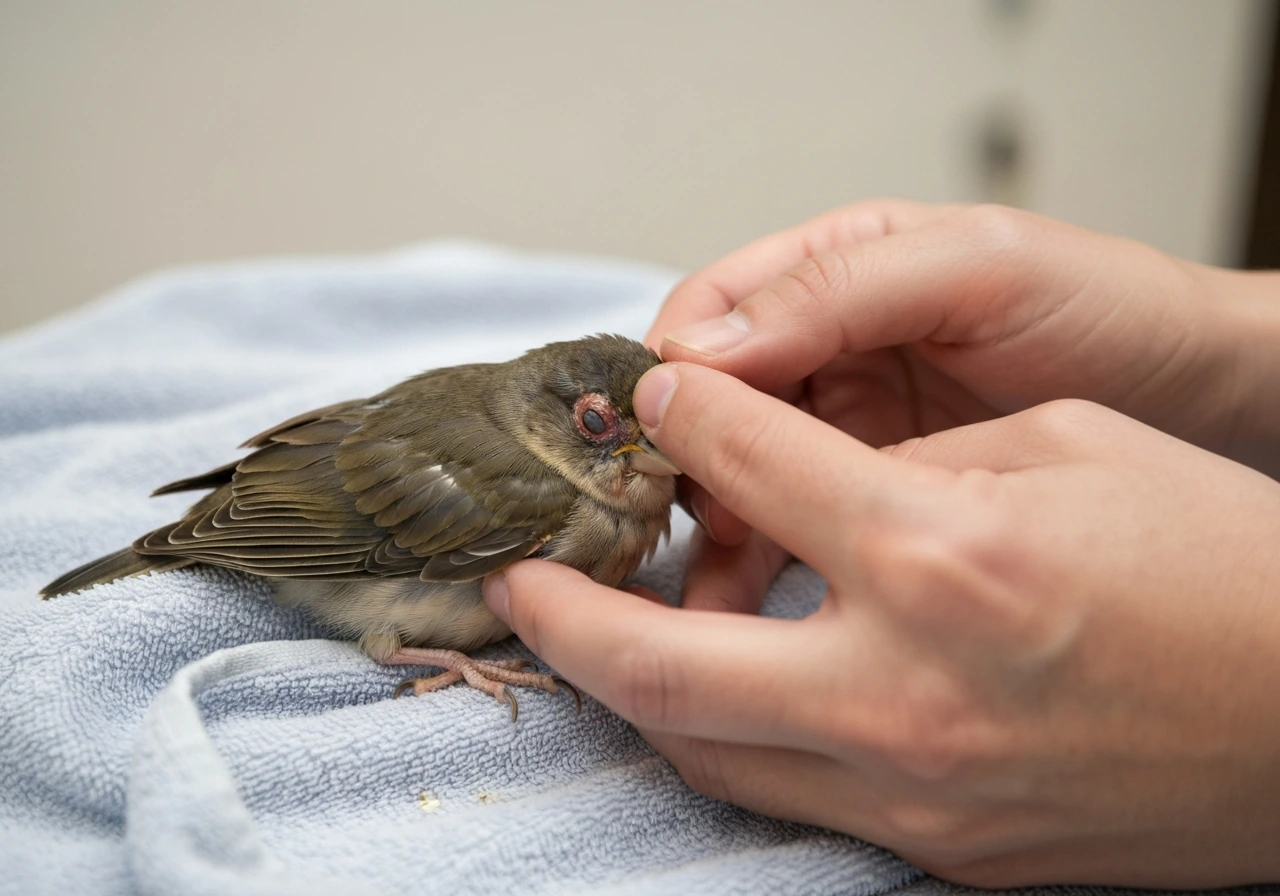
Before you do anything, take 30 seconds to really look at the eye from a safe distance. What you see will tell you a lot about how urgent the situation is and whether you're looking at trauma, infection, a foreign object, or a chemical irritant.
Common causes and what they look like
| Cause | What it typically looks like | Urgency level |
|---|---|---|
| Debris or foreign object | Squinting, excessive blinking, tearing, pawing at eye, visible speck or crust | Moderate — rinse with saline, then seek care |
| Blunt trauma (window strike, predator attack) | Swelling, bruising around the eye, cloudiness, possible bleeding inside or outside the eye | High — vet same day |
| Scratches or corneal abrasion | Squinting, watery eye, surface looks hazy or dull, may not open fully | High — untreated ulcers can scar or perforate |
| Eye infection or conjunctivitis | Discharge (clear, yellow, or crusty), swelling, redness, holding eye shut | High — worsens quickly without medication |
| Chemical irritation or burn | Sudden onset, watery or foamy discharge, redness, pawing at face | Urgent — flush immediately and call vet now |
| Traumatic proptosis (eye bulging from socket) | Eye visibly out of normal position, enlarged, very red | Emergency — do not touch, get to vet immediately |
Window strikes are one of the most common causes of eye injuries in wild birds. The impact can cause corneal abrasions, internal bleeding in the eye, or even proptosis (where the eye is pushed partially out of the socket). Cat or dog attacks can cause puncture wounds and deep scratches. Pet birds can injure themselves on cage hardware, toys, or through fights with cage-mates. Any of these scenarios warrants professional evaluation, not just home management.
Immediate first aid: what to do right now
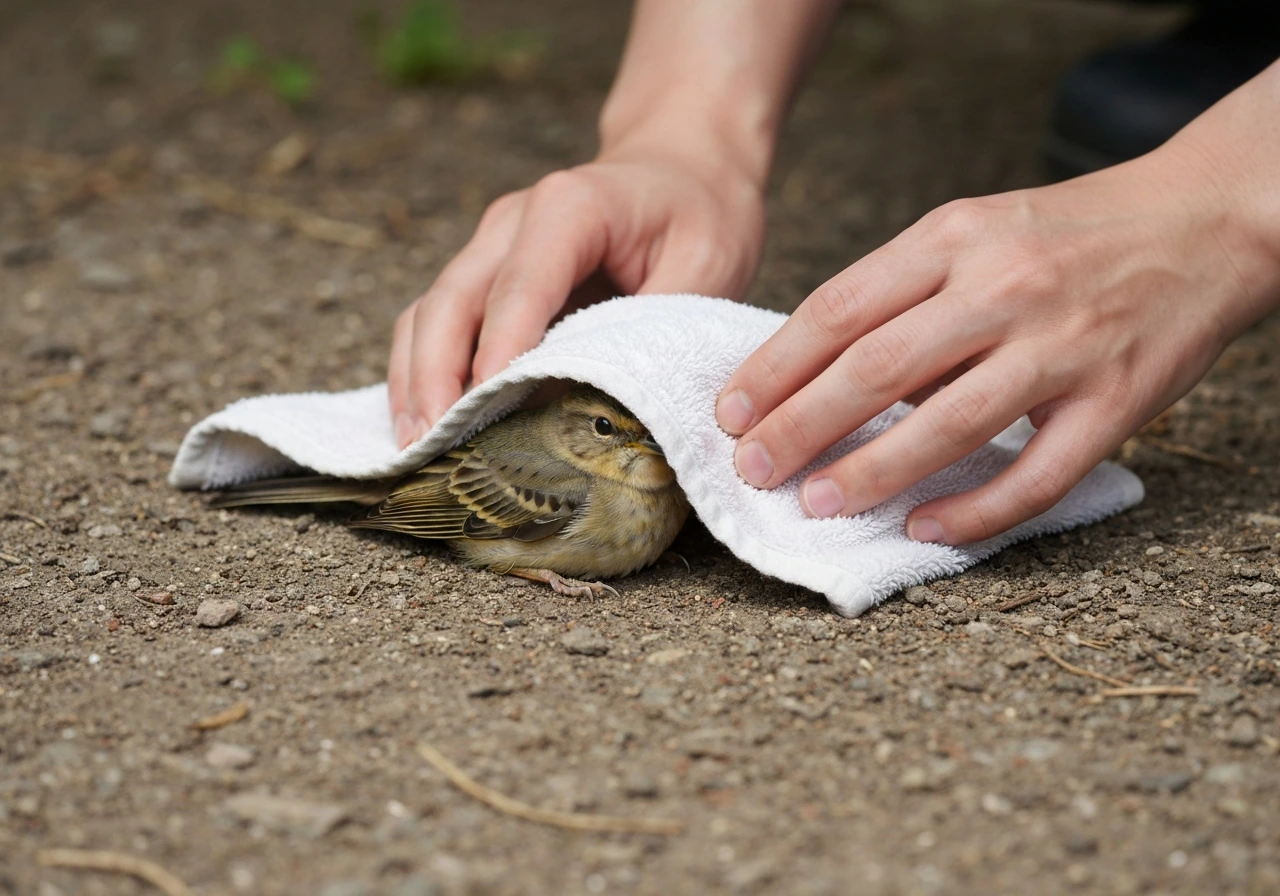
Step 1: Handle the bird safely
Approach calmly and cover the bird with a light towel or cloth before picking it up. This reduces panic and protects you from being scratched or pecked. Hold the body gently but firmly so the bird can't thrash and injure itself further. Wear gloves if you have them, especially with wild birds.
Step 2: Contain the bird in a dark, quiet box
A cardboard box or pet carrier lined with a paper towel or cloth works perfectly. Poke a few small air holes if using a box, and put the lid on or drape a cloth over the carrier. Darkness reduces stress dramatically, and a calm bird heals better and is much safer to handle. Keep the box away from loud noises, pets, and children.
Step 3: Provide gentle warmth
Injured birds lose body heat quickly, and warmth is genuinely supportive care. Set a heating pad on its lowest setting and place it under only one half of the box, so the bird can move away from the heat if it gets too warm. A target temperature inside the enclosure is at least 85°F (29°C). Never use a heat lamp directly over the bird, as it can burn skin and dry out delicate eye tissues. A hot water bottle wrapped in a cloth and placed beside the box also works.
Step 4: Rinse the eye with sterile saline if appropriate
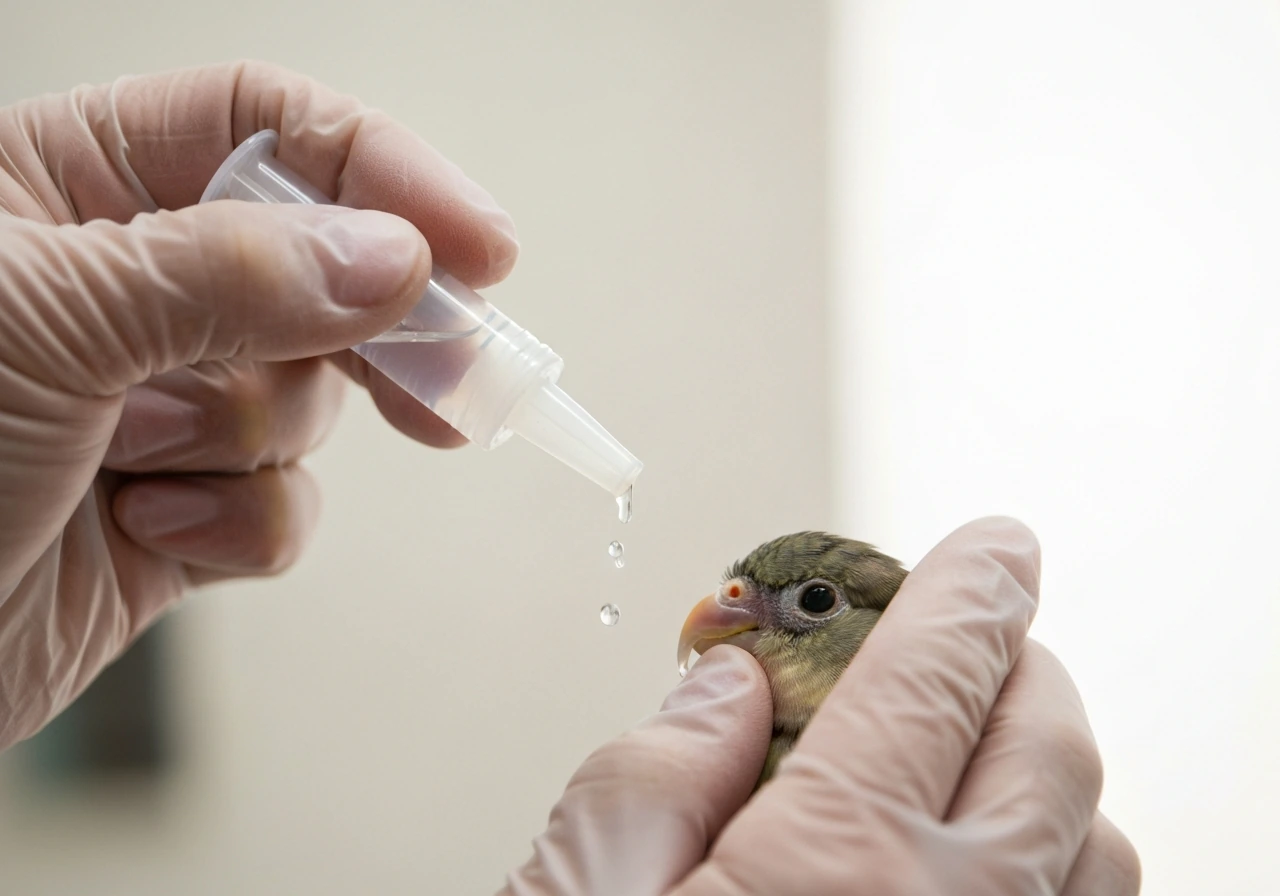
If you suspect debris, a chemical irritant, or visible foreign material, a gentle flush with sterile saline solution (the same kind used for contact lenses) is the one safe home treatment. Hold the bird securely, tilt the affected eye slightly upward, and let the saline drip from a dropper or small syringe across the surface of the eye. Don't force it or blast it in. One or two gentle passes is enough. Do not attempt this if the eye is bulging, visibly bleeding heavily, or if you suspect the eyeball itself is perforated.
What not to do: the important don'ts
This is where a lot of well-meaning people accidentally cause harm. The list below is short but really matters.
- Do not use human eye drops, Visine, or over-the-counter antibiotic ointments. Bird eye tissue responds very differently to these products, and many ingredients are toxic to birds.
- Do not apply any antibiotic ointment or cream unless an avian vet has specifically prescribed it for this bird. Even a vet-prescribed ointment from a previous visit is not appropriate to reuse without guidance.
- Do not force the eyelid open if it's swollen shut. Forcing it can tear delicate tissue and cause additional injury.
- Do not use cotton balls or cotton swabs directly on the eye. The fibers can get caught in the tissue and worsen irritation.
- Do not let the bird rub its eye on perches or cage surfaces. If it keeps doing this, gentle padding inside the enclosure can help.
- Do not withhold all heat thinking the bird is 'fine' because it's alert. Even alert injured birds benefit from a warm environment.
- Do not assume the bird has recovered just because it's sitting quietly. Quiet and still in an injured bird often means shock or pain, not comfort.
Keeping the bird calm, fed, and comfortable while you wait
Pain and stress management
You can't give a bird human pain medication, and you shouldn't try. What you can do is minimize stress, which is a real form of pain relief for birds. Keep the box dark, the environment quiet, and handling to an absolute minimum. Every time you pick up a stressed bird, it costs the bird energy and elevates its heart rate. Check on it every 30 to 60 minutes by gently lifting the lid, not by opening it fully or poking around.
Food and water
For a pet bird that is alert and able to use its beak normally, you can offer its usual food and fresh water in shallow dishes placed at the bottom of the carrier. For a wild bird or a bird that is very lethargic or in shock, do not attempt to force-feed it or give water by dropper. Aspiration (fluid going into the airway) is a real risk, and an injured bird in shock often can't swallow properly. Just keep it warm and dark until professional help is reached.
Preventing the bird from rubbing or scratching the eye
If the bird is actively pawing at its eye, padding the inside of the box with soft cloth can reduce how much damage it does to itself. If your bird is itching or scratching and the eye seems irritated, focus on keeping it from rubbing while you arrange prompt avian guidance for how to tame itchy bird behavior in the ark how to tame itchy bird ark. Don't try to bandage the eye at home. A poorly applied bandage can restrict breathing, cause more stress, or make the injury worse. If the bird is in a cage, remove any rough perches or objects it's using to rub against and replace them with smooth, soft alternatives temporarily.
Red flags: when to treat this as an emergency
Some eye injuries in birds are genuinely time-sensitive. Waiting even a few hours can mean the difference between full recovery and permanent vision loss. Call an avian vet or wildlife rehabber right away, not tomorrow morning, if you see any of the following. Common avian eye-disorder signs that warrant immediate veterinary consultation include swelling, redness, discharge from the eye, excessive blinking, or holding one/both eyes closed.
- The eye is visibly bulging or appears to be out of the socket (proptosis). This is a true emergency.
- There is active bleeding from inside the eye or from the eye socket.
- The bird cannot open the eye at all and the area around it is severely swollen.
- The eye looks completely cloudy or white rather than clear, which can indicate corneal damage.
- There is thick yellow, green, or foul-smelling discharge, suggesting a serious infection.
- The bird is very lethargic, unable to hold itself upright, or breathing with visible effort.
- You suspect chemical exposure, including pesticides, cleaning products, or smoke.
- Symptoms are visibly worsening over the course of an hour or two.
Corneal ulcers and abrasions, which are common after window strikes and predator attacks, can progress to perforation and permanent vision loss if not treated quickly with proper medicated eye drops and pain management. This isn't something sterile saline and a dark box can fix on their own. Professional care with prescription drops is usually necessary, similar to what's needed when treating a bird eye infection. If you suspect an infection and want step-by-step guidance, see how to treat bird eye infection for what professionals typically look for and how to support care at home treating a bird eye infection.
Ongoing care until you reach professional help
Once the bird is contained, warm, and quiet, your main job is to not make things worse while you work on getting professional help. When professionals recommend a healing bird ampoule treatment, follow their dosing and schedule closely rather than trying to improvise at home healing bird ampoule treatment how to use. Here's a simple routine for the waiting period.
- Check the bird every 30 to 60 minutes without fully removing it from the box. Just a quick look to confirm it's upright and breathing.
- Maintain warmth. Check that the heating pad is still on and that only half the box floor is heated.
- If the eye area looks like it's accumulating dried discharge, you can very gently wipe the area around (not on) the eye with a warm damp cloth. Don't touch the eyeball itself.
- Keep a written note of what the eye looked like when you first found the bird, and photograph it if you can do so without causing significant stress. This information helps the vet.
- Call your nearest avian vet or wildlife rehabilitation center and describe what you're seeing. Many can give you specific phone guidance while you're on the way.
- If it's after hours, search for your state's wildlife rehabilitation hotline or the National Wildlife Rehabilitators Association directory to find emergency contacts.
The goal during this period isn't to treat the injury yourself. It's to keep the bird stable and as stress-free as possible so it arrives at professional care in the best possible condition. For more detailed guidance on how to treat a bird with an eye injury, see the avian eye-first-aid section. Think of yourself as the emergency transport team, not the surgeon.
Finding the right help
For pet birds, an avian-certified veterinarian (look for the letters ABVP after their name, with avian specialty) is your best bet. General practice vets often have limited experience with bird eye conditions, which respond very differently than mammal eyes. For wild birds, a licensed wildlife rehabilitator is the appropriate contact, and in most places, it is actually required by law to hand wild birds over to licensed care rather than treating them at home beyond basic stabilization.
Eye injuries rarely exist in isolation, especially in birds that have struck windows or survived predator attacks. The bird may also have internal injuries, head trauma, or broken bones that aren't obvious at first. A full assessment by a professional covers all of this, not just the eye you can see. If the bird is also showing signs of illness beyond the eye, such as unusual droppings or lethargy, that context matters too and is worth mentioning when you call. If the droppings look dry, small, or you suspect constipation, get guidance on how to treat a constipated bird as soon as possible unusual droppings. If you’re noticing bird diarrhea along with those symptoms, follow the guidance for how to treat bird diarrhea and prioritize professional avian care unusual droppings.
FAQ
Can I rinse the eye again if it still looks irritated after the first saline flush?
If the eye is bulging, there is heavy bleeding, the bird cannot open the eye at all after rinsing, or the eye looks perforated or very cloudy with visible blood, do not attempt more flushing. Stop home treatment and focus on stabilization (warm, dark, minimal handling) while you contact an avian vet or wildlife rehabber immediately.
What eye drops or ointments are safe to use while waiting for a vet?
Do not use leftover drops, antibiotic ointments, steroid eye meds, red-eye human products, or contact-lens solutions other than sterile saline used for flushing. Many products can slow healing, increase pressure inside the eye, or irritate exposed tissue, even if they seem “gentle.”
Is tap water or “DIY saline” okay if I don’t have sterile saline on hand?
Use sterile saline and keep rinsing brief (one or two gentle passes). Avoid high-pressure spraying because it can drive debris deeper or worsen corneal damage. If you have no saline, it is better to do nothing beyond containment and warmth than to improvise with water or home solutions.
How should I wrap or restrain a bird safely before transporting it?
A towel wrap is for calming and protection, but do not bind the bird tightly, restrict breathing, or cover the nostrils. Use a light, secure covering, and keep the head and neck free so the bird can breathe comfortably while still being unable to thrash.
Should I feed or water my bird with an eye injury, and when is it unsafe?
Feeding and water depend on alertness and swallowing. Offer normal food and shallow water only if the bird is alert and can handle it normally. If the bird is lethargic, in shock, or struggling to swallow, skip food and water to prevent aspiration, and keep the bird warm and quiet until professional care.
What if my bird keeps rubbing the injured eye, can I tape or patch it?
Do not bandage the eye at home. If the bird is actively pawing or rubbing, reduce contact by padding the carrier interior with soft material and removing or replacing rough cage items once you get professional guidance. If you must prevent rubbing, prioritize environmental control over anything that covers the eye.
How warm is too warm, and what heating method is safest for eye injuries?
Heat should be indirect and optional, with the heat source under only one side so the bird can move away. A heating pad on the lowest setting, or a wrapped hot water bottle placed beside the enclosure, is safer than direct heat lamps that can burn and dry ocular tissues.
How do I decide whether my bird needs emergency care versus next-day care?
Track urgency by what you see at a glance: bulging or heavy bleeding, visible foreign material embedded in the eye, inability to open the eye, marked swelling, or cloudiness can be time-critical. If you suspect a chemical exposure, internal trauma, or a foreign object, treat it as urgent even if the bird seems otherwise okay.
What other injuries might be present with a bird eye injury, and what should I tell the vet?
Yes, birds can have underlying problems beyond the eye, especially after window strikes or fights, such as head trauma, internal bleeding, concussion, or fractures. When you call, mention the mechanism (window strike, puncture, chemical, cage injury) and any other signs you notice, like abnormal droppings, lethargy, or breathing changes.
Should I wear gloves, and what handling mistakes most often hurt the bird?
Gloves are recommended, especially with wild birds, but the bigger safety factor is preventing thrashing. Minimize handling time, keep the bird calm in a dark box, and avoid squeezing the chest or applying pressure around the head. Wash hands afterward even if you wore gloves.
Next Article
How to Treat Bird Diarrhea: First Aid Steps and When to Get Help
Humane first-aid for bird diarrhea: assess dehydration, warmth, safe hydration, feeding tips, sanitation, and when to ge