Bird diarrhea is a symptom, not a diagnosis, and the first thing you need to do is figure out how serious it looks right now. If the bird is alert, upright, and responsive, you likely have a little time to stabilize it at home while you contact a wildlife rehabber or avian vet. If it's collapsed, can't stand, has blood in its droppings, or is severely weak, treat it as an emergency and get professional help today.
How to Treat Bird Diarrhea: First Aid Steps and When to Get Help
Marcus Holloway
6 May 2026
Quick triage: is this an emergency or can it wait?
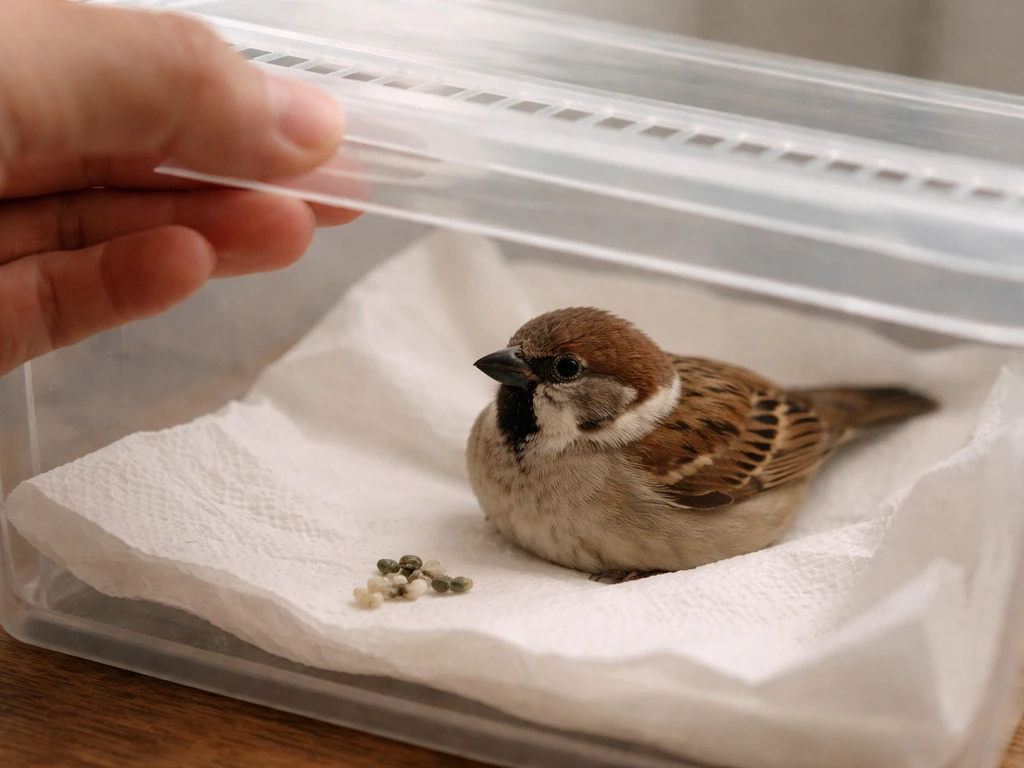
Before anything else, take 60 seconds to assess the bird. You're looking for red flags that mean this can't wait a few hours.
- Blood in the droppings (bright red or very dark/tarry stool)
- Complete collapse or inability to stand
- Unresponsive or barely reacting to your presence
- Severe dehydration signs: sunken eyes, skin that stays tented when gently pinched, extreme lethargy
- Seizures or tremors
- It's a nestling or very young orphan with no parent in sight
- The bird has been in this condition for more than 24 hours
Any one of those is a reason to call a wildlife rehabber or avian vet right now, not after you read the rest of this guide. If none of those apply and the bird is alert and upright, you have a window to stabilize it carefully while you arrange professional care. Either way, professional care is the end goal here. What follows is supportive first aid to get the bird through the next few hours.
Common causes you can rule in or out today
Knowing the likely cause helps you stop making things worse right now, even if you can't fix it yourself. Here are the most common reasons a bird ends up with diarrhea.
Diet and sudden food changes

This is one of the most common and fixable causes, especially in pet birds. A sudden switch in diet, too much fruit, spoiled food, or being fed something completely wrong for the species (like bread, milk, or processed human food) can trigger watery droppings fast. If you recently changed what the bird is eating or someone gave it something new, that's your most likely culprit.
Stress and transport
Stress diarrhea in birds is real. Being chased, handled, transported, or housed near a predator can cause loose droppings within minutes to hours. If the bird was recently caught, moved, or is in an unfamiliar environment, stress alone may be what you're dealing with. This usually resolves once the bird is calm and in a quiet, warm space.
Bacterial or viral infection
Salmonella, E. coli, and various viral illnesses are common in wild birds and can cause persistent watery or discolored droppings. These are serious and need veterinary treatment. If the diarrhea isn't resolving, the droppings are green, yellow, or bloody, or the bird is getting weaker rather than stabilizing, infection is likely. You cannot treat this at home. If you suspect an eye infection, the best next step is to contact an avian vet for specific treatment instructions rather than trying home remedies.
Parasites
Internal parasites including Giardia, Coccidia, and worms can cause chronic or intermittent diarrhea in both wild and pet birds. You won't be able to confirm this without a fecal test from a vet, but it's worth noting when you describe the situation to a professional. Parasite-related diarrhea often comes with weight loss, fluffed feathers, and a bird that looks generally unwell over time.
Environmental contamination
Wild birds can ingest pesticides, lead, or contaminated water. If you found the bird near a treated lawn, a construction site, or near standing water, mention this to the rehabber or vet immediately. Toxin ingestion can look similar to infection but may need completely different treatment.
Immediate supportive care: warmth, quiet, and stress reduction
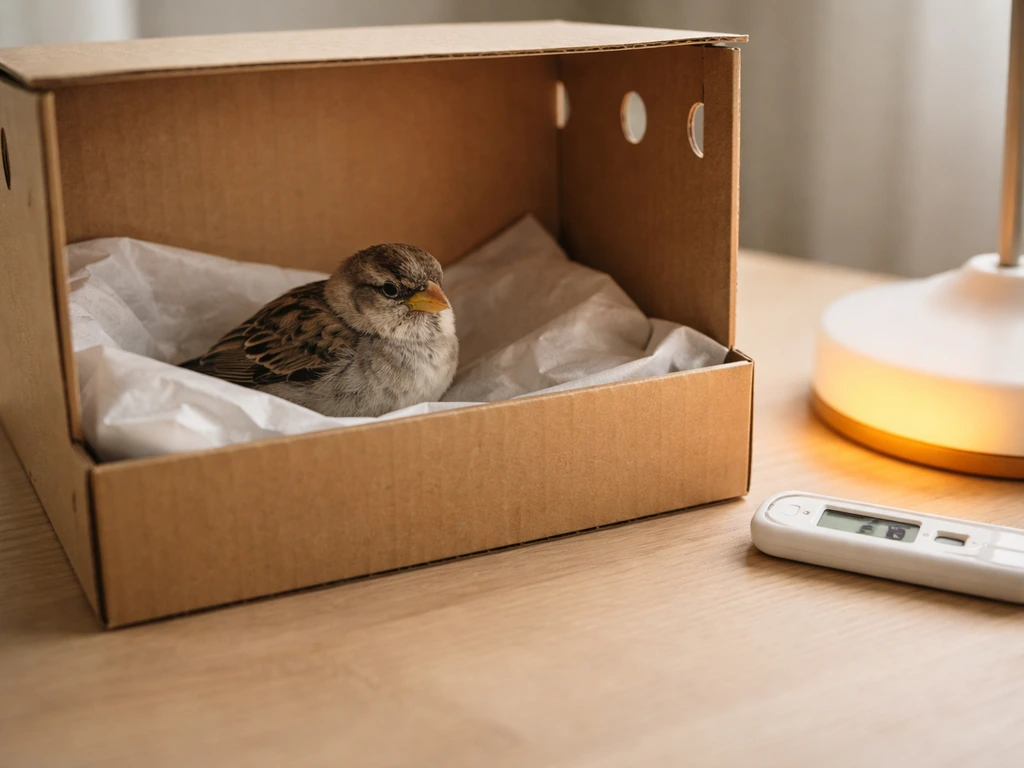
The single most important thing you can do right now is reduce stress and keep the bird warm. Washington Department of Fish and Wildlife’s Wildlife Rehabilitation Manual also lays out triage-first principles for what to do before longer care, including prioritizing warmth and fluids in certain severe cases reduce stress and keep the bird warm. A sick bird burns through its energy reserves trying to regulate its body temperature, and stress makes everything worse. This applies whether you're dealing with a wild bird or a pet bird that's suddenly ill.
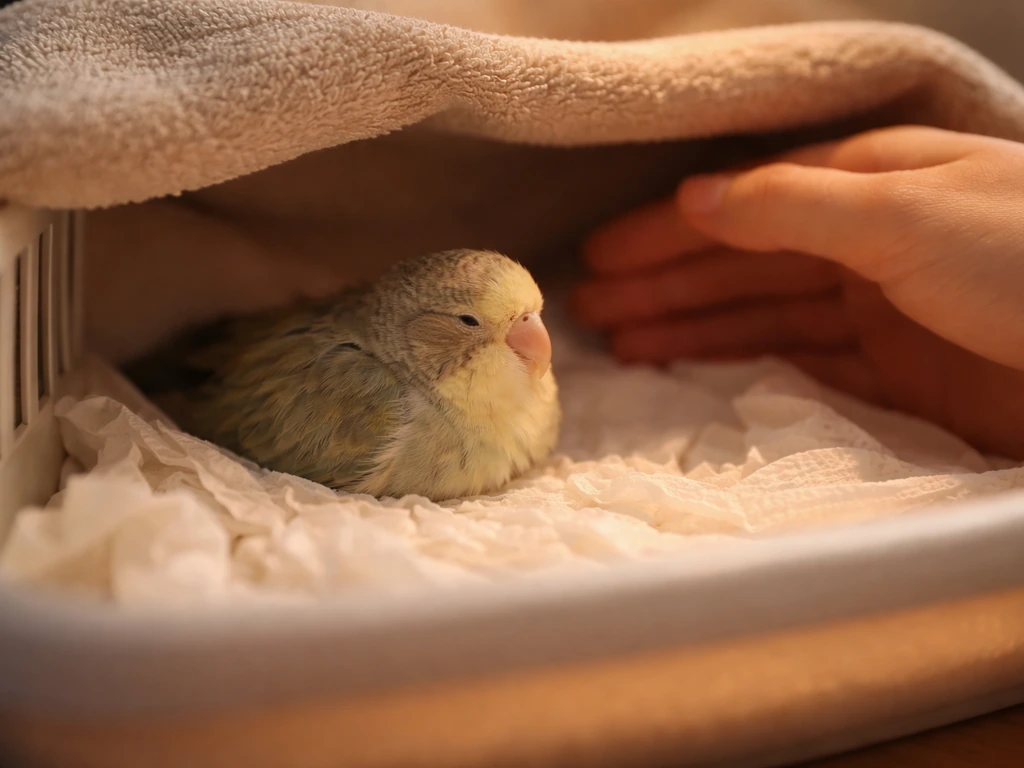
- Place the bird in a small, ventilated box (a shoebox with a few air holes works well). Line it with a clean cloth or paper towel, not loose material the bird can get tangled in.
- Put the box somewhere warm and dark. A warm room is fine. If the bird seems cold or is fluffed up, you can place a heating pad on the lowest setting under half the box so the bird can move away from the heat if needed. Aim for around 85-90°F for most small birds.
- Cover the box with a towel to keep it dark. Darkness reduces stress significantly.
- Keep the environment quiet. No TV, no loud voices, no other pets nearby. If you're transporting, turn the car radio off.
- Handle the bird as little as possible. Every time you pick it up, you're adding stress.
Do not put the bird in a cage where it can see out and feel exposed. The goal is a calm, dark, warm hiding spot, not a viewing box.
Safe hydration: what to do and what to skip
Dehydration is a real risk with diarrhea, but the way you handle hydration depends on the situation. For wild birds that are weak or stressed, Tufts Wildlife Clinic and most rehabbers advise against offering food or water while the bird is in your care before transfer. Forcing water on a bird that can't swallow properly, or getting water in its feathers, can cause aspiration or hypothermia, which makes things worse. If the bird is alert and a vet or rehabber advises you to offer water, use a very shallow dish (just a few millimeters deep) so the bird can choose to drink without risk of drowning or soaking itself.
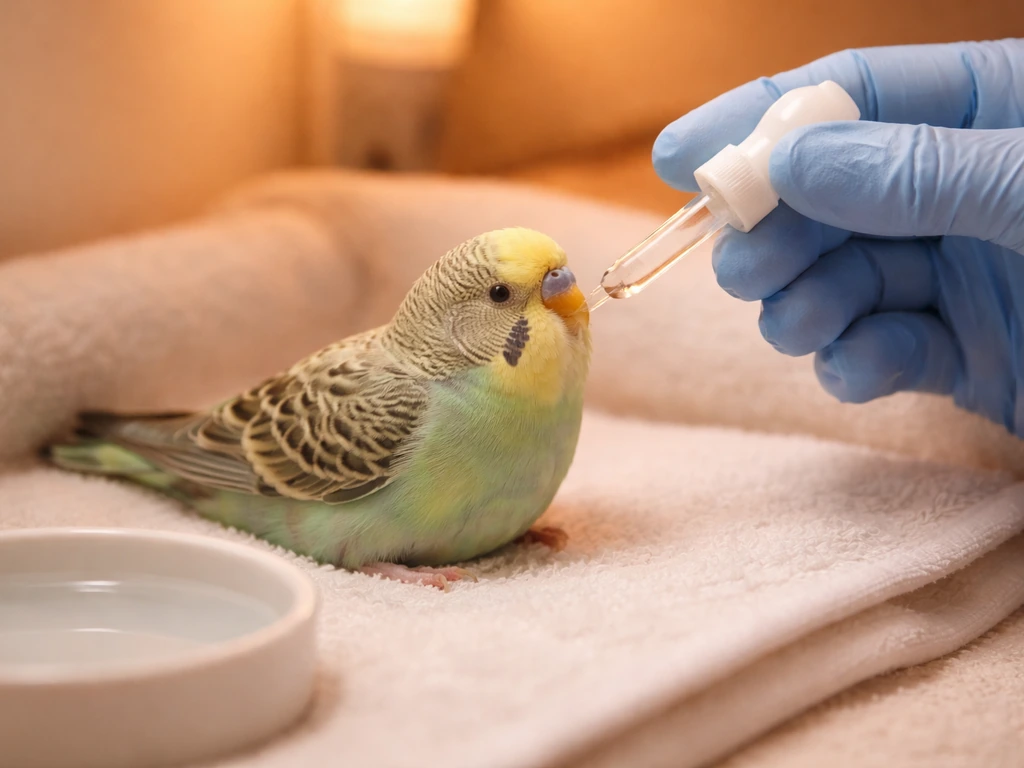
Never use a dropper or syringe to force water into a bird's beak unless a professional has specifically instructed you to do so and walked you through the technique. It is very easy to get fluid into the airway, and that can be fatal.
Feeding guidance: adults vs. orphaned chicks
Adult birds
For an adult wild bird with diarrhea, the general guidance from wildlife clinics is to hold off on feeding until you can speak with a rehabber. Incorrect food can worsen the situation or cause harm. If you have a pet bird that's ill, stick to its usual diet (if it's still eating) or a bland, appropriate food for the species, and call your avian vet for specific guidance. Do not introduce any new foods while the bird is sick.
Orphaned nestlings and chicks
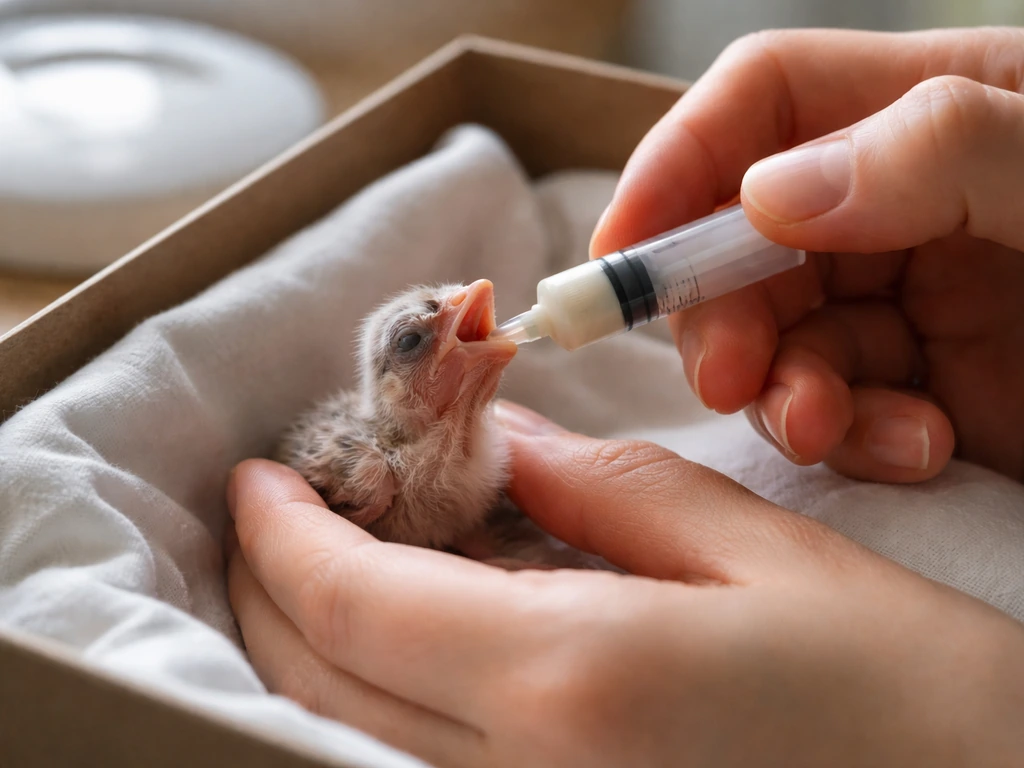
Orphaned chicks are a different situation entirely. Very young birds need to be fed frequently or they will decline quickly, but feeding them incorrectly is dangerous. Do not feed baby birds bread, milk, worms picked up from the ground, or cat/dog food. These can cause serious harm. If you're dealing with a sick orphan, contact a wildlife rehabber immediately because they will guide you on species-appropriate formula and feeding intervals. This is one situation where waiting too long to call is riskier than calling right away.
If a rehabber isn't reachable for an hour or two and the chick is very young and clearly hungry (gaping, crying), a small amount of plain water offered very carefully with a fingertip, not a dropper or syringe, is the safest interim step. But get professional guidance as fast as possible.
Hygiene and infection control while you help
Bird droppings can carry Salmonella and other pathogens. Protect yourself and prevent spreading illness to other birds in your home.
- Wear disposable gloves every time you handle the bird or its container.
- Wash your hands thoroughly with soap and water after any contact, even if you wore gloves.
- Keep the bird isolated from any other birds you own. This is non-negotiable.
- Clean and disinfect any surfaces the bird or its droppings have touched using a dilute bleach solution (1 part bleach to 32 parts water).
- Dispose of soiled bedding in a sealed bag in the outdoor trash, not the indoor bin.
- Change the lining of the box if droppings build up, but minimize disturbance to the bird when doing so.
- Keep children away from the bird and its container.
While you're cleaning, take note of what the droppings look like. The color, consistency, and whether there's any blood or unusual color in the urate (the white part) is information a vet will want. If you can take a photo without stressing the bird, do it.
What not to treat yourself with
This section matters as much as anything else in this guide. There are several common instincts that can seriously harm or kill a sick bird.
- Never give human anti-diarrheal medications (like Imodium/loperamide). These are toxic to birds.
- Never give human antibiotics or antibiotics prescribed for a different animal or a previous illness. The wrong antibiotic at the wrong dose can disrupt gut bacteria and worsen the situation.
- Do not add sugar, salt, or electrolyte powders to water unless specifically directed by a vet. The concentrations in human or pet products are often wrong for birds.
- Avoid yogurt or probiotic foods as home remedies. While probiotics have their place, the species and strains matter, and giving the wrong thing can cause harm.
- Do not try to give the bird herbal remedies, essential oils, or anything applied to the feathers. Many common plants and oils are toxic to birds.
- Do not force the bird to eat or drink. A bird that won't eat or drink on its own is telling you something important, and forcing it risks aspiration.
- Do not put the bird outside if it's sick, thinking fresh air will help. A weak bird outside becomes prey very quickly.
When to contact a wildlife rehabber or avian vet
If you haven't already made the call, now is the time. For wild birds, your first contact should be a licensed wildlife rehabilitator in your area. In the US, you can find one through the National Wildlife Rehabilitators Association (NWRA) or your state's fish and wildlife agency. For pet birds, call an avian-certified vet, not just any general practice vet, because avian medicine is specialized.
When you call, be ready to describe the following clearly:
- What species the bird is (or your best guess if it's a wild bird)
- How long you've observed the diarrhea and what the droppings look like (color, consistency, any blood)
- Whether the bird is alert, standing, and responsive or showing any of the emergency red flags listed above
- Where you found the bird and any possible exposure to chemicals, pesticides, or contaminated areas
- What, if anything, the bird has eaten or been given since you found it
- Whether it's a nestling, juvenile, or adult
- Any other symptoms: labored breathing, eye discharge, nasal discharge, weight loss, fluffed feathers
The more detail you can give, the faster the rehabber or vet can advise you. If you have photos or video of the bird and its droppings, those are genuinely useful to share.
Monitoring progress and next steps until help arrives
Once the bird is in its warm, dark box and you've made contact with a professional, your job is to monitor, not intervene. Check on the bird every 30 to 60 minutes, but keep the checks brief and low-stress. You're looking for changes in its condition, not providing comfort by handling it.
Keep a simple log of what you observe at each check: is the bird more or less alert, is it upright or leaning, what do the droppings look like now compared to an hour ago. This information is genuinely helpful to the vet or rehabber and helps you spot if the bird is declining and needs emergency transport sooner than planned.
If the bird is a pet bird with ongoing digestive issues, this situation connects to broader questions about illness and care at home. If your main question is how to tame itchy bird ark, the same approach applies: avoid guessing, watch symptoms, and get species-specific guidance from an avian professional. If the bird is sick at home and you are wondering how to treat a sick bird at home, start with warmth, quiet, and careful monitoring while you arrange professional help. But diarrhea that doesn't resolve in 24 hours, or that comes with weight loss, fluffed feathers, or behavior changes, is always a reason for a vet visit, not a reason to keep trying home remedies. The Merck Veterinary Manual emphasizes that antidiarrheal drug use is a medical treatment that should be directed by a veterinarian, rather than attempted as safe at-home first aid blank" rel="noopener noreferrer">Drugs Used to Treat Diarrhea in Monogastric Animals. If you are considering a healing bird ampoule treatment, do not use it as a substitute for proper veterinary guidance healing bird ampoule treatment how to use. If you suspect constipation instead of diarrhea, the safest approach is to contact an avian vet for specific guidance on how to treat a constipated bird diarrhea that doesn't resolve in 24 hours.
The clear path forward is this: observe and note what you see, stabilize with warmth and quiet, avoid doing harm with the wrong foods or treatments, and get the bird to a professional as quickly as you can. If you suspect a bird eye injury, focus on safe first aid and get professional guidance on how to treat it as soon as possible avoid doing harm with the wrong foods or treatments. You've already done something important by looking this up. Now follow through and make the call.
FAQ
How long can I wait before I should get help for bird diarrhea?
If the droppings are only slightly loose but the bird is still upright, alert, and eating normally, you can observe and keep it warm while you arrange professional care. If the diarrhea is continuing for more than 24 hours, comes with weight loss or a rapid change in attitude, or you see green, yellow, or bloody droppings, treat it as not improving and escalate to an avian vet or wildlife rehabber promptly.
Can I give my bird an over-the-counter anti-diarrhea medicine or electrolytes?
Do not use electrolyte solutions, human anti-diarrhea medicines, probiotics, or antibiotics unless an avian vet tells you to. Birds can react differently to medications, and some treatments can worsen dehydration or mask a serious infection until it becomes harder to treat.
What should I feed a bird with diarrhea right now?
For pet birds, do not switch diets while sick. Offer only the bird’s usual food or a bland, species-appropriate option if your avian vet previously recommended one. For wild birds, the safest approach is to hold off on feeding until you speak with a rehabber, because incorrect food can worsen the situation.
How do I clean up safely without spreading infection to other birds?
If the bird has diarrhea, you should remove and replace anything soiled immediately (paper liner, cage bottom coverings, and any food or water it contaminated). Wash hands thoroughly after cleanup and isolate the bird if you have other birds, so you reduce the risk of spreading Salmonella or other pathogens.
What’s the safest way to hold and monitor the bird at home while I arrange care?
A good interim setup is a warm, dark, quiet container where the bird cannot see out and cannot perch awkwardly. Keep handling minimal, check only briefly every 30 to 60 minutes, and watch for a pattern of improvement versus decline.
Is green or yellow bird diarrhea ever “normal,” or always a red flag?
Yes, but be careful about interpreting color. Normal feces can vary, however green or yellow droppings, bloody droppings, or increasingly watery output are stronger signals of a problem that needs veterinary or rehab treatment rather than simple “diet upset.” Take a photo of the droppings if you can do so without stressing the bird.
What should I do if the diarrhea is in a baby or orphaned chick?
If a chick is very young, feeding errors are more dangerous than waiting. If it is actively hungry (gaping, calling, visibly weak), contact a wildlife rehabber immediately, and only consider the carefully described fingertip-only plain water interim step when you cannot reach help for a short period. Do not use dropper or syringe methods unless a professional instructs you.
At what point is bird diarrhea an emergency?
Yes. If you see a bird that is unusually weak, can’t stay upright, has blood in droppings, or is collapsed, treat it as an emergency and get professional help immediately. If it remains alert and responsive, focus on warmth and low stress while arranging the right care, because even then diarrhea can dehydrate quickly.
How can I tell if the bird is dehydrated, and how should I offer water?
Diarrhea can lead to dehydration, so you should prioritize keeping the bird warm and minimizing stress first. Only offer water if a rehabber or avian vet advises it, and if advised use a shallow dish so the bird can drink without soaking or drowning risk. Avoid forced fluids and avoid getting water into the feathers.
Next Article
How to Treat a Constipated Bird: Safe Step-by-Step Care
Humane step-by-step care for a constipated bird: assess droppings, warm hydrate safely, correct diet, and know red flags