If you're holding a finch right now and wondering what to do, here's the short answer: keep it warm, keep it quiet, keep it dark, and don't try to feed or water it until you know exactly what you're dealing with. That single set of steps buys you time and keeps the bird alive while you figure out the next move. Everything else in this guide builds from there.
How to Care for a Finch Bird: Rescue and Pet Guide
Marcus Holloway
8 Apr 2026
Quick triage: figure out what situation you're actually in
Before you do anything else, spend 60 seconds sizing up the finch's situation. The care approach changes depending on whether the bird is injured, orphaned, sick, or simply a pet that needs everyday husbandry. Getting this wrong early can make things worse.
| Situation | What you'll likely see | What it means for you |
|---|---|---|
| Injured (wild) | Visible wound, broken wing droop, can't fly or hop away, hit a window | Needs a licensed wildlife rehabilitator. Your job is supportive containment only. |
| Orphaned (wild) | Featherless or barely feathered, no parent in sight for 2+ hours, fell from nest | Needs a wildlife rehabilitator urgently. Do not attempt to feed. |
| Sick (wild or pet) | Fluffed feathers, eyes closed or half-open, sitting on the cage floor, labored breathing | Needs an avian vet today. Supportive warmth is your first move. |
| Pet finch care | Healthy but newly acquired, or routine daily care questions | Standard husbandry applies. See the cage and diet sections below. |
Wild finches are protected in most countries, which means rehabilitating them yourself isn't just difficult, it's usually illegal without a permit. If you've found a wild bird, your goal is stabilization and handoff, not long-term care. If it's a pet finch (zebra finch, society finch, Gouldian finch, and similar domesticated species), you have more options and more responsibility.
Immediate humane setup: warmth, quiet, and no more stress
Stress kills small birds faster than most injuries. A finch that's already compromised can die from handling alone if you're not careful. The moment you've assessed the situation, your priority is creating a calm, warm, dark environment and then leaving the bird alone.
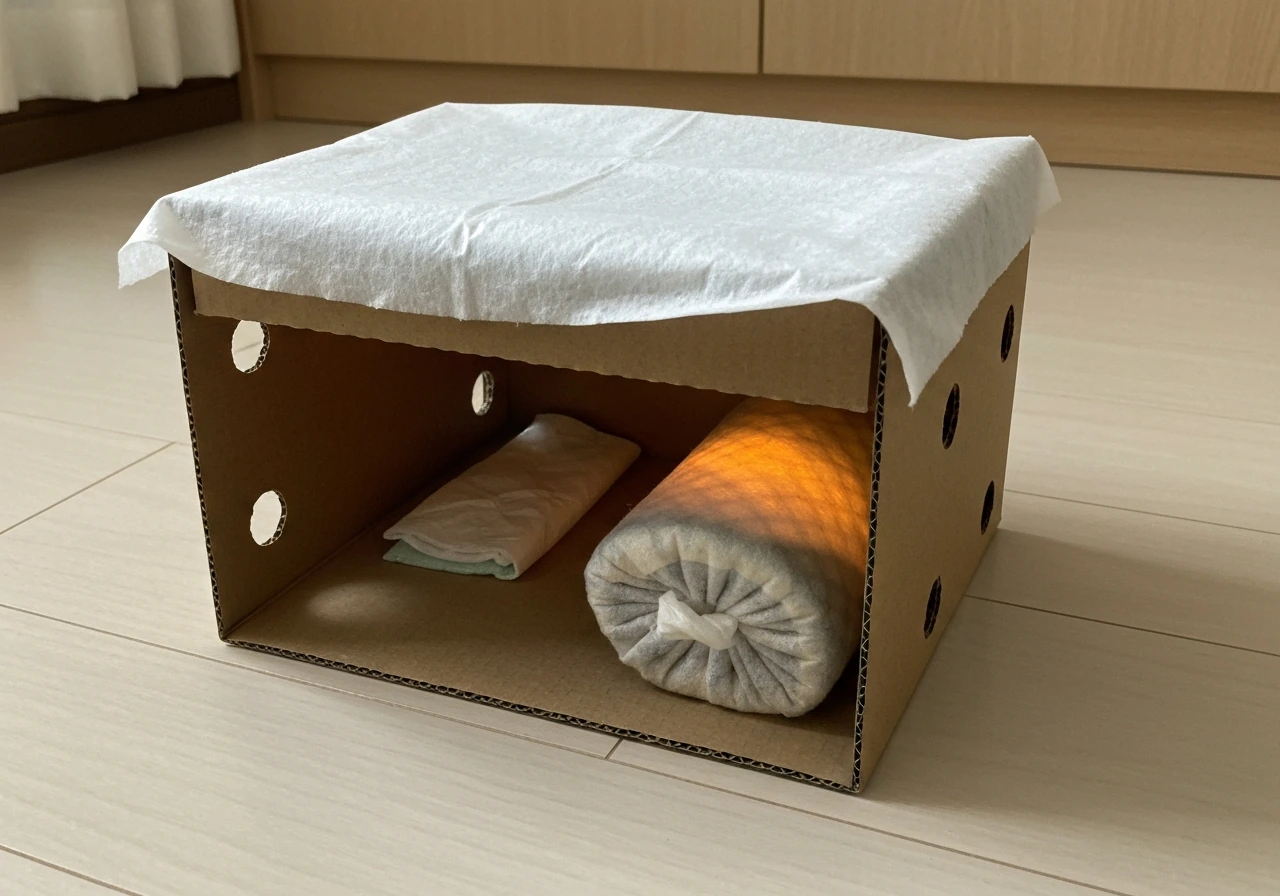
Grab a shoebox or similarly sized cardboard box. Punch a few small air holes in the lid. Line the bottom with a small folded towel or several layers of paper towels so the bird has something to grip. Place the bird gently inside and close the lid. Keep the box somewhere quiet, away from pets, children, loud TVs, and direct sunlight.
Warmth is critical, especially for a bird that's in shock. A good method: fill a clean sock with uncooked rice, microwave it for about 60 to 90 seconds until it's warm (not hot), and place it in the box alongside the bird. The key word is alongside. The heat should radiate toward the bird, not press against it. If the bird can't move away from a heat source on its own, it can overheat, which is just as dangerous as being cold. Aim for a box temperature around 85 to 90°F (29 to 32°C) for a very weak bird. A slightly cooler temperature (80°F or so) is fine for a bird that's alert and moving.
Once the bird is in the box, resist the urge to keep checking on it. Peeking in every five minutes causes repeated stress spikes. Set a timer for 30 minutes, check once quickly, then focus your energy on finding professional help.
Safe handling and containment for small finches
Finches are tiny, often weighing between 10 and 25 grams depending on species. They're fragile and they panic easily. Less handling is always better. When you do need to pick one up, cup both hands gently around the bird's body, keeping its wings folded naturally against its sides. Don't squeeze. Your hold should feel like a loose, warm glove, firm enough that the bird can't flap and injure itself further, loose enough that its chest can expand to breathe.
Avoid grabbing by the legs or wings. If the bird is on the ground and injured, try to coax it into a container rather than grabbing it at all. A towel placed lightly over the bird first can calm it down and prevent it from flying into walls or injuring itself further.
Once the bird is contained, leave it alone. For a sick or injured wild finch, human interaction is not comfort. It's a threat from the bird's perspective, and prolonged exposure to that perceived threat is exhausting and damaging. The box is not a viewing area. It's a recovery space.
Feeding and hydration: what to offer, what to skip, and why it matters
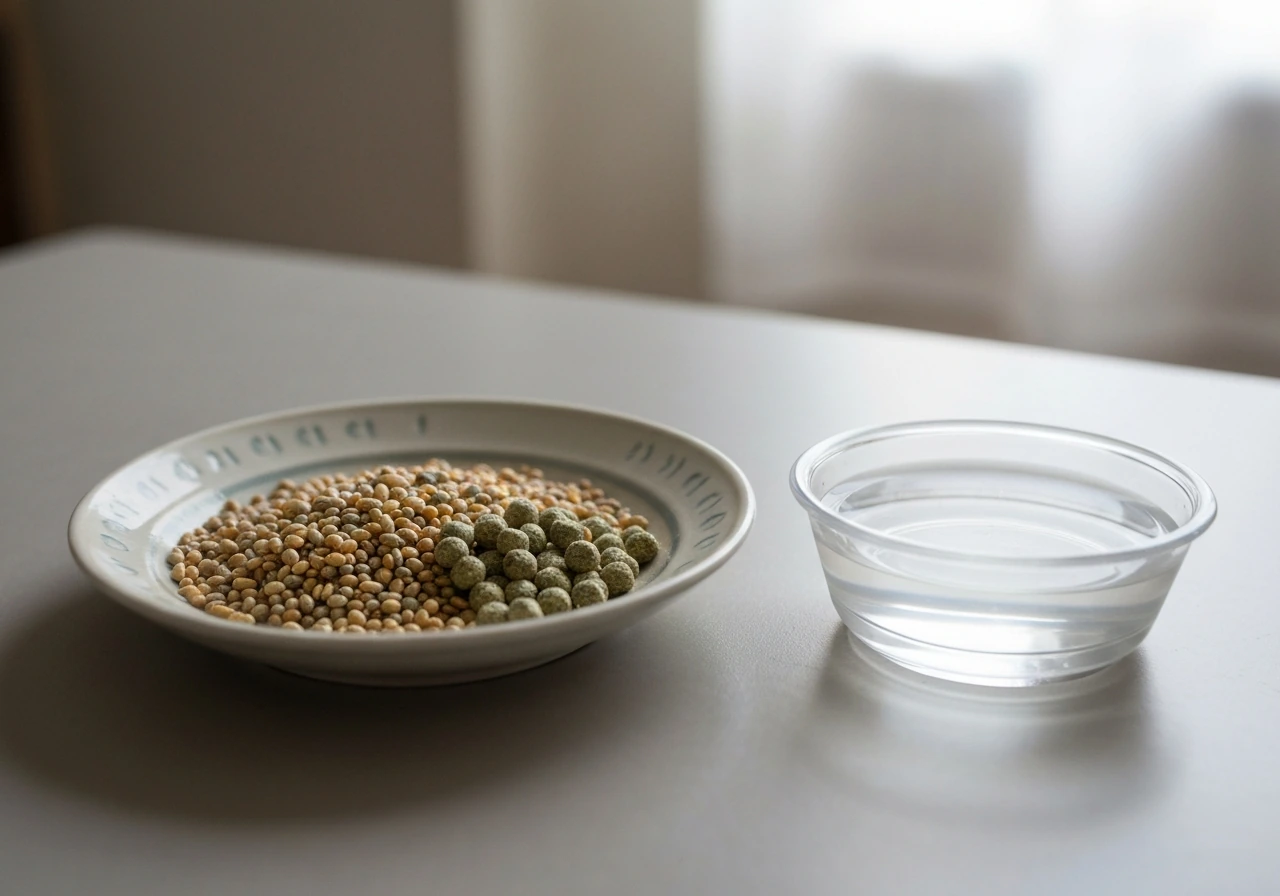
Here's where a lot of well-meaning people accidentally make things worse. If you have a sick, injured, or orphaned wild finch, do not try to feed it or give it water until you've spoken to a professional. This isn't overly cautious advice. It's based on real risk. Small birds can aspirate liquid directly into their lungs if it's given incorrectly, and squirting water into a bird's beak is one of the fastest ways to cause that. A bird that's weak or in shock also can't coordinate swallowing safely. The same goes for food. An unstable bird shouldn't be put near a water dish either, since it may fall in.
For a pet finch in normal health, nutrition is straightforward. Finches are primarily seed eaters, but a seed-only diet leads to nutritional deficiencies over time. A good baseline diet includes a quality finch seed mix as the staple, plus daily fresh foods like leafy greens (spinach, kale, romaine), small amounts of egg food or hard-boiled egg for protein, and occasional fresh fruit like apple slices or berries. Grit (small mineral particles) is traditionally offered to finches in small amounts to aid digestion, though opinions vary. blank" rel="noopener noreferrer">A cuttlebone hung in the cage provides calcium and is especially important for breeding hens.
Fresh water must be available at all times and changed daily. Finches drink frequently. Use a small, shallow dish or a sipper tube style drinker to keep the water clean. Dirty water is a fast track to bacterial illness.
- Never offer avocado, onion, garlic, chocolate, caffeine, or alcohol, all are toxic to birds
- Don't give dairy products or processed human foods
- Skip wild-caught insects unless you're certain they're pesticide-free
- Don't force-feed a sick or injured bird under any circumstances
Setting up the right space: temporary rescue versus long-term home
For short-term rescue or recovery
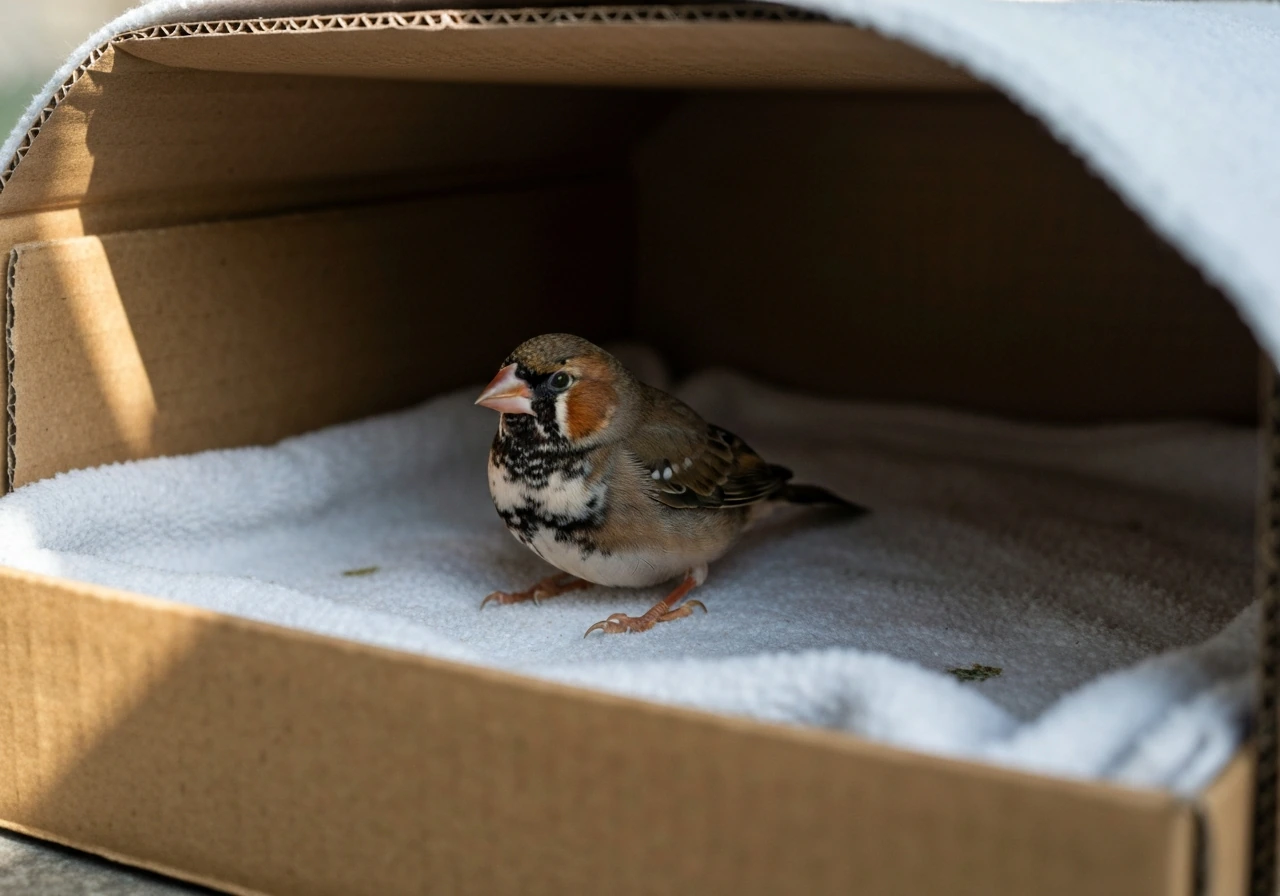
A cardboard box is genuinely the best temporary enclosure for an injured or sick finch. It's dark, which reduces stress. It's contained, which prevents further injury. It's easy to clean. Don't use a wire cage for a bird in distress, because the bars become a hazard when the bird panics and flaps. Line the bottom with paper towels (not fabric with loose loops that can snag toenails). Keep the box at a consistent warm temperature, away from drafts, and away from other animals.
For long-term pet finch keeping
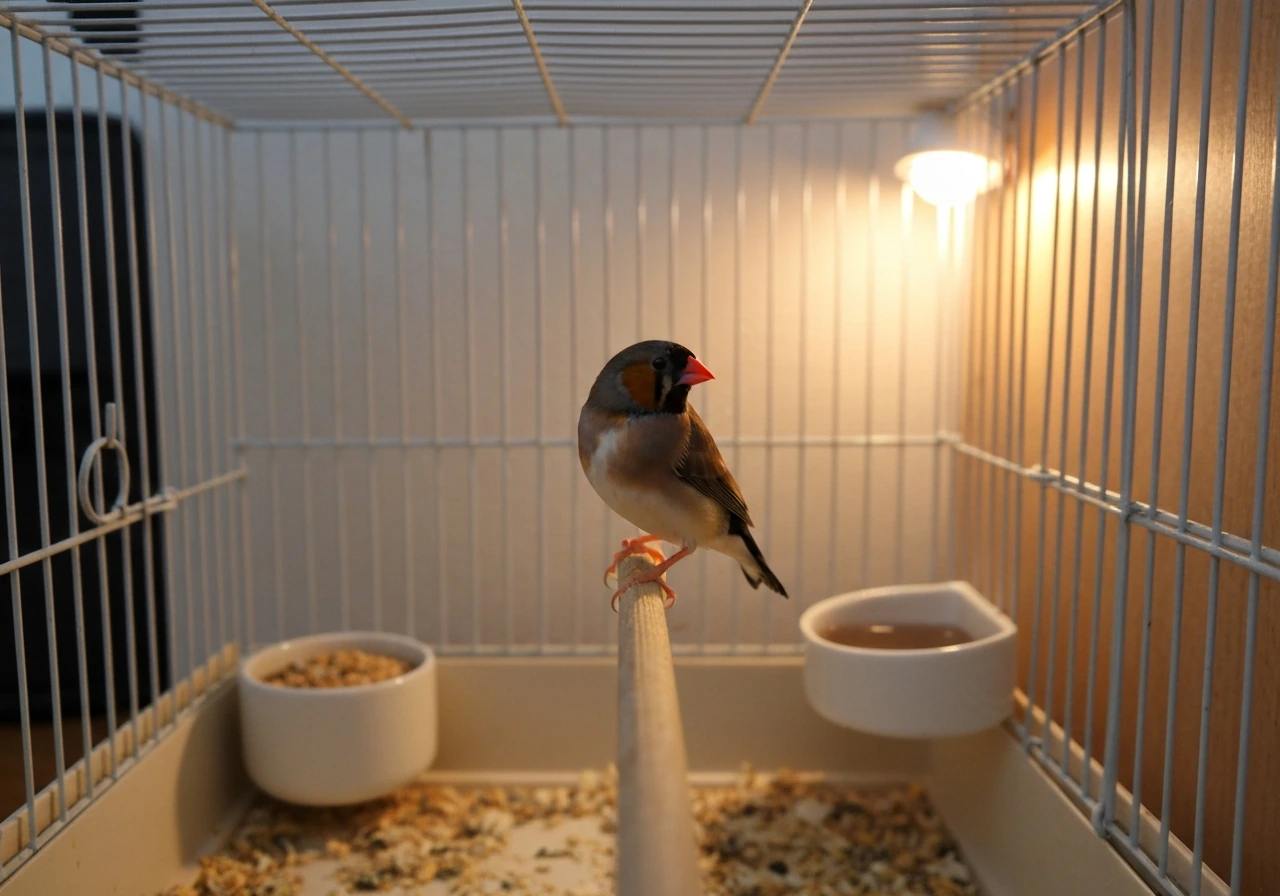
Finches need more horizontal space than vertical, because they fly in short bursts across a cage rather than climbing like parrots. A minimum cage size for a pair of finches is around 24 inches wide by 16 inches deep by 16 inches tall, but bigger is always better. Bar spacing should be no wider than half an inch (about 12mm) to prevent escape or head entrapment.
Provide at least two perches at different heights, ideally natural wood perches of varying diameters rather than uniform dowels. Varied diameters exercise the feet and reduce pressure sores. Place perches so the bird doesn't have to stand in food or water dishes. Add a small nest basket or wicker nest cup if you're keeping a pair, as finches feel more secure with a covered resting spot.
Keep the cage out of direct sunlight, away from kitchen fumes (non-stick cookware fumes are lethal to birds), and away from cold drafts near windows or AC vents. Cover the cage at night to give the bird a defined sleep period. Clean the cage tray daily, and do a full cage wipe-down weekly.
If you're also caring for other small birds alongside your finch, general pet bird care tips around hygiene, enrichment, and environment apply across species and are worth reviewing for the overlap.
Health problems and warning signs you shouldn't ignore
Finches are prey animals, which means they hide illness until they can't anymore. By the time a finch looks obviously sick, it's usually been unwell for a while. This is why checking on your bird daily with a real eye for behavior matters.
- Sitting on the cage floor or bottom of the box (a healthy finch perches)
- Fluffed feathers held for extended periods, not just a brief post-bath fluff
- Eyes partially or fully closed during daylight hours
- Tail bobbing up and down with each breath (a sign of respiratory effort)
- Wheezing, clicking, or labored breathing sounds
- Discharge from the nostrils or eyes
- Droppings that are consistently watery, discolored, or absent
- Weight loss visible as a prominent keel bone (the ridge down the center of the chest)
- Bleeding, visible wounds, or a wing held at an asymmetrical angle
- Seizures, falling off the perch, or loss of coordination
If you see any of the above, warm supportive care buys time but is not a treatment. A bird showing respiratory signs may benefit from slightly increased humidity in its environment (a humidifier nearby, or placing the box near a steam source briefly) to ease breathing and keep air passages moist. But this is a bridge measure, not a fix. Get to an avian vet.
Finches share some health vulnerabilities with other small pet birds. If you're familiar with caring for parakeets, the warning signs look similar to what you'd watch for when you care for a budgie bird. The same urgency applies: small birds decline fast, and waiting 24 hours to see if they improve is often waiting too long.
Common finch health problems
| Condition | What you might notice | What to do |
|---|---|---|
| Air sac mite | Clicking or wheezing breath, open-mouth breathing | Avian vet only. Requires prescription treatment. |
| Scaly face/leg mite | Crusty buildup around beak, eyes, or legs | Avian vet for correct antiparasitic treatment. |
| Egg binding (hens) | Straining, fluffed, sitting low, abdomen swollen | Emergency vet visit. Life-threatening within hours. |
| Overgrown beak or nails | Difficulty eating, nails curling or catching on perches | Avian vet trim. Don't DIY with clippers. |
| Bacterial/fungal infection | Weight loss, abnormal droppings, lethargy | Avian vet diagnosis and medication. |
| Window strike / trauma | Stunned, on the ground, disoriented | Warm dark box, call wildlife rehab or vet immediately. |
Next steps: finding help and knowing what to say
If you have a wild finch that's injured or orphaned, your next call is to a licensed wildlife rehabilitator. In the US, you can find one through the National Wildlife Rehabilitators Association (NWRA) directory or your state's fish and wildlife agency website. In the UK, the RSPCA or local wildlife rescue centers handle this. When you call, tell them the species if you know it, where you found the bird, what it's doing (or not doing), and what you've done so far. They'll guide you from there.
If you have a sick or injured pet finch, you want an avian vet, not a general small animal clinic. Avian vets have specific training in bird physiology that most dog-and-cat vets don't. Search for a vet certified by the Association of Avian Veterinarians (AAV) or ask for a referral from your local bird society or pet store that specializes in birds.
While you wait for your appointment or callback, keep the bird warm, quiet, and contained. Don't try new foods or treatments you've read about online. Don't let other pets near it. If the bird is a wild finch and you're transporting it to a rehabilitator, keep it in the box, not loose in the car, and keep the car quiet and at a comfortable temperature.
When you talk to the vet or rehabilitator, be ready to describe what you observed, when symptoms started, what the droppings look like, what (if anything) the bird has eaten or drunk, and where you found it if it's wild. The more specific you are, the faster they can help.
It's also worth knowing that the care principles for other small softbill birds overlap with finch care in meaningful ways. If you later find yourself looking after a bulbul bird or a mynah bird, the same triage logic applies: assess first, warm and contain, then get professional help for anything beyond basic supportive care.
If you end up keeping a pet finch long-term and want to expand your knowledge to other parrot-family birds, the approach to care for a conure bird shares some fundamentals around diet diversity, mental stimulation, and vet relationships that apply broadly to pet bird keeping. And if hygiene ever comes up as a question, knowing how to bathe a budgie bird gives you a practical model for how gentle misting or shallow bath dishes work for small birds, including finches, without causing stress.
The most important thing you can do right now is act quickly and stay calm. Finches are small and resilient in the right conditions, and fragile in the wrong ones. Warmth, quiet, and a fast call to the right professional cover most situations. The RSPCA also emphasizes keeping wild birds safe in cold weather by focusing on appropriate shelter and warmth as part of its wild-bird welfare advice Warmth, quiet, and a fast call to the right professional. You don't need to have all the answers. You just need to not make things worse while the right help gets involved.
FAQ
When I find a finch, should I feed it right away if it looks hungry?
For a pet finch, it depends on health and life stage. If the bird is alert, eating, and has normal droppings, you can offer the normal daily fresh foods. If you found the bird on the floor, it's fluffed, weak, breathing oddly, or refuses food, stick to warmth, quiet, and containment only until an avian vet advises feeding.
How can I give water to a finch safely if it is not drinking?
Not for weak or injured birds. Because small finches can aspirate liquid and may not swallow well when stressed, you should not give water by syringe, dropper, or splashing. For healthy pet finches, provide continuous access to clean water in a shallow dish or sipper tube, changing it daily.
What’s the safest way to tell if a finch needs medical care versus normal care?
If it is a wild finch, minimize handling and do not use force-feeding or improvised diets. If it is a pet and you see weight loss, a run-down look, or persistent fluffed posture, contact an avian vet promptly, since finches often mask illness until it is advanced. Weight checks are more reliable than “looks hungry” cues.
How do I prevent overheating when using a warm rice sock for a finch?
Because heat sources can overheat a bird, check that the bird can move away from the warmth. The rice sock should be alongside the finch, not touching it, and the bird should remain able to choose a cooler spot. If the bird is panting with open beak breathing, it may be too warm and you should remove the heat source and call a vet.
Is it okay to use a humidifier or steam to help a finch breathe better?
Yes, condensation can be a problem. If you increase humidity to help with breathing, do it gently and briefly, and never place the box near direct steam so the bird is not soaked. You should still prioritize getting veterinary help, since humidity is only a short-term comfort measure.
Can I treat a finch at home with supplements or hand-feeding if I suspect illness?
Do not switch to hand-feeding or specialty supplements (like honey, vitamins, or “force” foods) unless an avian professional tells you to. If the finch is a pet and your goal is long-term nutrition, use a quality finch seed mix plus daily fresh foods, egg food in small amounts, and calcium support like cuttlebone.
What should I use for emergency transport if I’m taking a finch to a vet or rehabilitator?
If you must transport an injured or sick finch, secure it in the same dark, ventilated box setup and keep the temperature stable. Avoid letting it slide around, avoid loose towels that can snag toes, and keep the car calm (low noise, no exposure to hot or cold extremes).
Which household fumes or cleaners are most dangerous to finches?
Yes, odor and residue matter. Non-stick cookware fumes can be lethal, but so can strong aerosol scents and heavy cleaning chemicals. Keep the bird room away from sprays (air fresheners, disinfectant mists) and avoid perfumed products near the cage or transport area.
Should I cover the cage, and does darkness help even when the finch is sick?
For a pet finch, cover the cage at night to create a consistent sleep period, but avoid fully blocking airflow or overheating the room under the cover. For sick or injured birds in a recovery box, keep them warm and quiet, and do not keep turning lights on and off to “check” repeatedly.
What information should I note before calling a vet or wildlife rehabilitator?
Common mistake: treating droppings or posture as “normal” when the bird is prey-like and may not show symptoms clearly early. Record what changed (activity level, breathing, tail bobbing, fluffed feathers, appetite) and bring that timeline to the vet or rehabilitator.
Next Article
How to Care for a Budgie Bird: Daily Guide and First Aid
Step-by-step daily budgie care, diet, housing, handling, enrichment, plus home first aid and urgent vet warning signs.