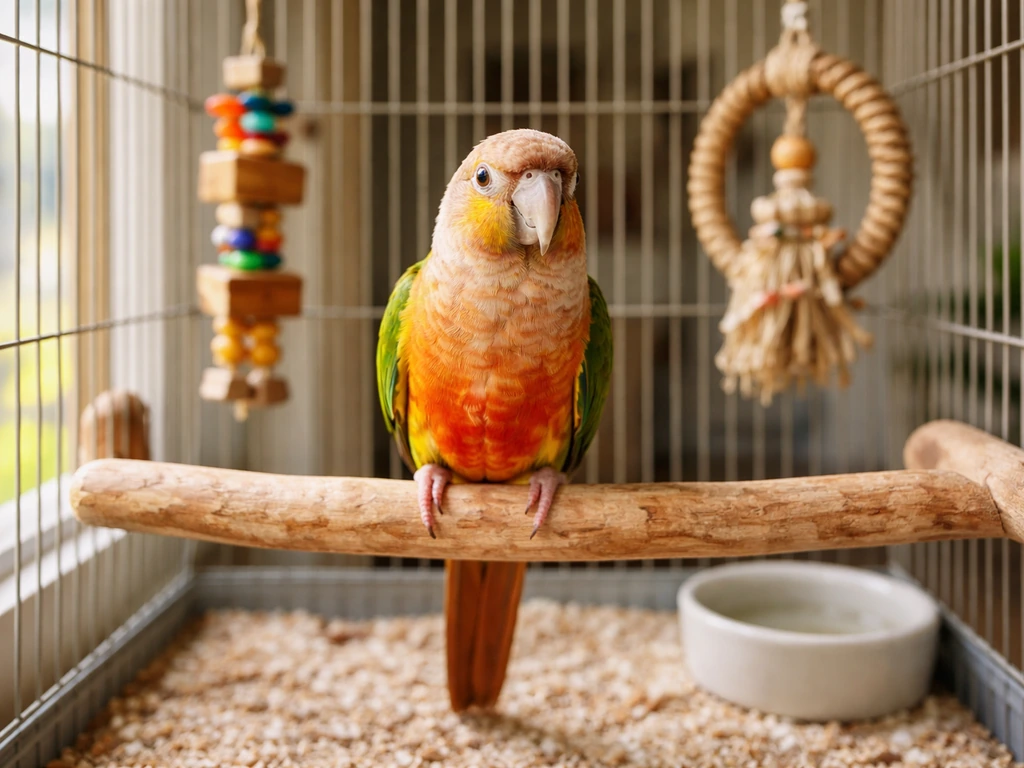
Most healthy budgies can be bathed at home using a shallow dish of lukewarm water or a gentle misting spray. You offer the water, keep the room warm and draft-free, and let the bird do most of the work on its own terms. The whole process is simple once you know the right setup, but there are a few situations, especially if your budgie is sick or injured, where bathing should be skipped entirely and a vet contacted instead. If you are learning how to care for a budgie bird in general, use these same temperature, cleanliness, and safety principles when planning bathing.
How to Bathe a Budgie Bird Safely Step by Step
Marcus Holloway
20 May 2026
When a budgie needs a bath (and when not to)
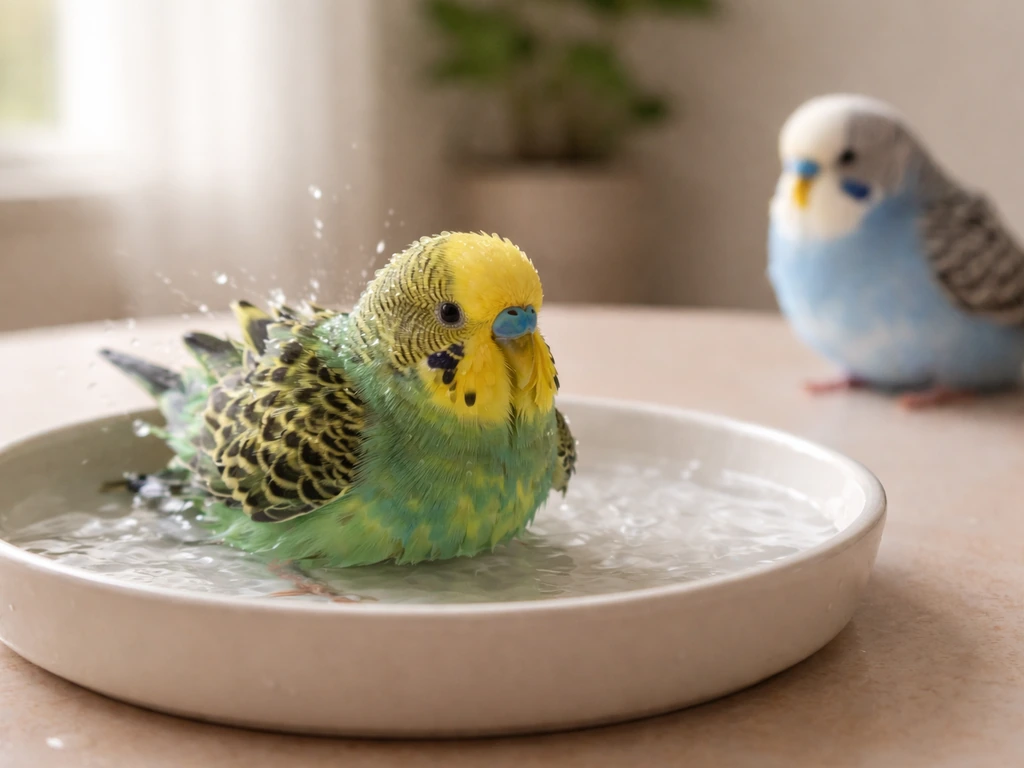
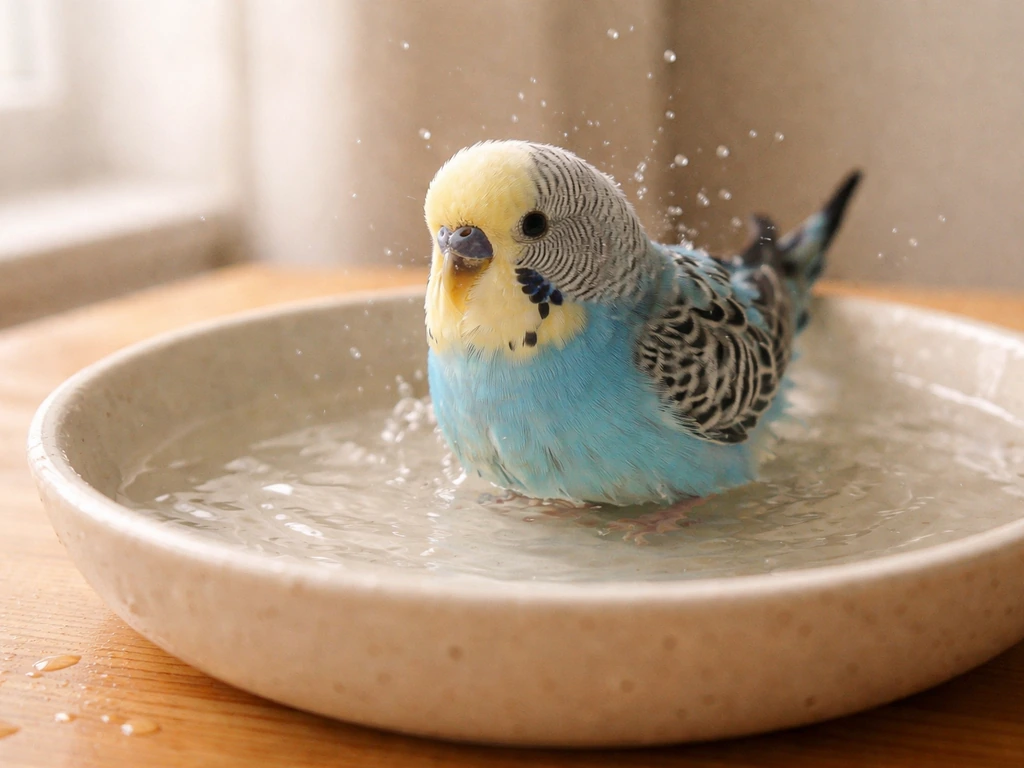
Healthy budgies are naturally drawn to bathing and will often tell you when they want one. Signs your bird is ready for (and would enjoy) a bath include ruffling feathers when they see water, dunking their head in the water bowl, or looking dusty and a little dull in color. Budgies that have gotten into something sticky, oily, or dirty on their feathers genuinely need a wash, because soiled feathers affect their ability to regulate temperature and fly properly.
That said, there are times when bathing is the wrong move. Do not bathe a budgie that is lethargic, fluffed up and sitting low on the perch, breathing with its tail bobbing, or that has been injured. A wet bird loses body heat fast, and a sick or injured bird is already struggling to maintain its temperature. Merck Veterinary Manual notes that birds can become vulnerable to chilling because they have limited ability to conserve heat when ill. Bathing in that state can make things much worse. If you are unsure whether your bird is unwell, skip the bath and read the red flags section at the bottom of this guide first.
Preparing a safe, stress-free bathing setup
Getting the environment right before you start makes the whole experience calmer for your bird and safer overall. The room temperature matters a lot. Aim for a room that is around 68 to 72°F (20 to 22°C) and completely free of cold drafts from air conditioning vents, open windows, or fans. Mickaboo recommends keeping the budgie environment around 68, 72°F and keeping it draft-free as part of its bathing and temperature guidance. A wet budgie chills quickly, so close doors and windows before you begin.
Use clean, fresh, lukewarm water every time. Water that is too cold will startle and stress the bird; water that is too warm can scald or overheat it. Lukewarm, roughly body-temperature water is the target. If it feels comfortable on your wrist, it is about right. Never use soaps, shampoos, or any cleaning products in the bath water. A budgie's feathers have a natural oil coating, and detergents strip that away. Following these pet bird care tips can help keep bathing safe and comfortable for your budgie.
Prepare your drying area at the same time. Have a clean, dry towel on hand and know where your bird will dry off afterward, ideally a warm, draft-free spot where it can perch and preen in peace.
Best bathing methods: shallow dish vs misting
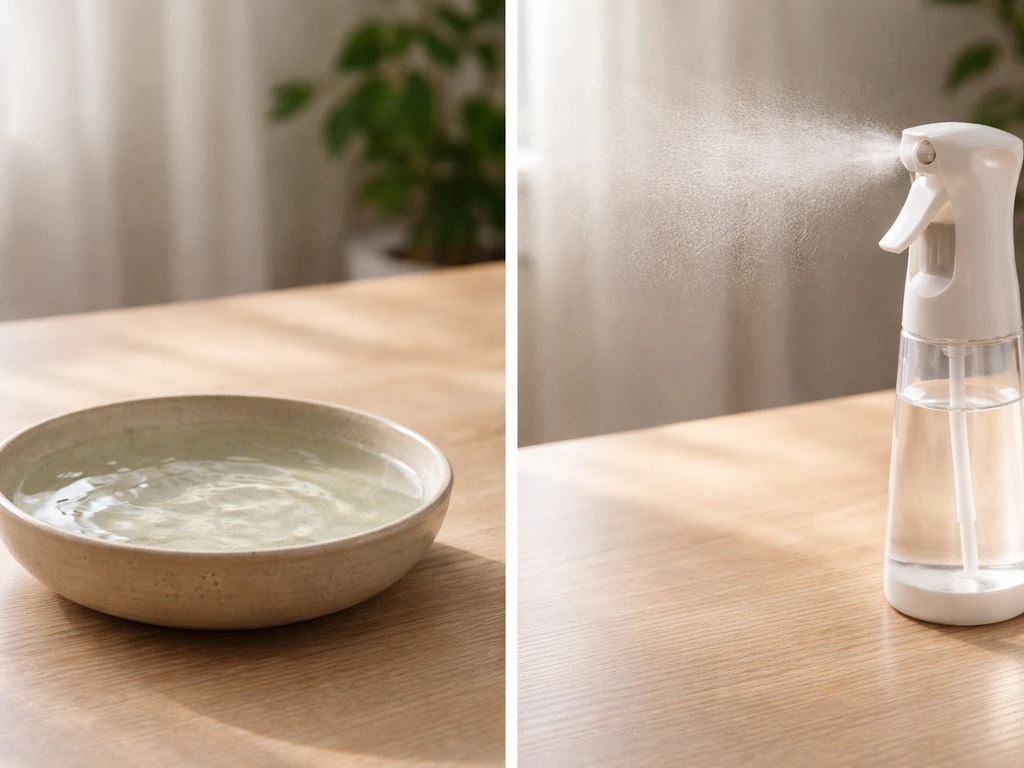
There is no single right method. Different budgies have strong preferences, and figuring out which one your bird likes makes the whole routine much easier.
| Method | How it works | Best for | Watch out for |
|---|---|---|---|
| Shallow dish | Place a small dish (1 to 2 inches deep) of lukewarm water in or near the cage and let the bird hop in voluntarily | Birds that like to splash and soak at their own pace | Water getting too deep; make sure the bird can always touch the bottom |
| Misting/spray bottle | Use a clean spray bottle set to a fine mist; spray above the bird so water falls like light rain | Nervous birds or those who dislike standing in water | Spraying directly in the face or eyes; always aim above the bird |
| Wet leafy greens | Tuck damp lettuce or spinach leaves near the perch; birds often rub against the wet leaves | Very shy birds being introduced to water for the first time | Leaves wilting and sitting too long; remove after bathing time |
If your budgie is brand new to bathing, the wet greens or misting method tends to be less intimidating than a full dish. Once the bird gets comfortable, most budgies eventually prefer the dish and will splash enthusiastically on their own. The shallow dish method is generally the easiest to set up and the most natural for the bird.
How to bathe your budgie step by step
- Close windows, doors, and any vents that could create a draft. Make sure the room is at a comfortable temperature (68 to 72°F).
- Fill a shallow dish with about one inch of clean, lukewarm water, or fill a clean spray bottle with lukewarm water and set it to a fine mist setting.
- Place the dish inside or just outside the open cage door where the bird can approach it voluntarily, or hold the spray bottle about 12 inches above and slightly behind the bird.
- If using a dish, step back and let the bird investigate on its own. Do not push or force it toward the water. If misting, gently spray above the bird so the mist falls down onto its back and wings.
- Allow the bird to bathe for as long as it wants, usually 5 to 15 minutes. Watch for signs it is done: stepping out of the dish, shaking off, and beginning to preen.
- Remove the dish promptly once bathing is done so the bird is not sitting in cooling or dirty water.
- Move the bird to its warm, draft-free drying spot and allow it to preen and air dry naturally.
Drying and keeping your budgie warm
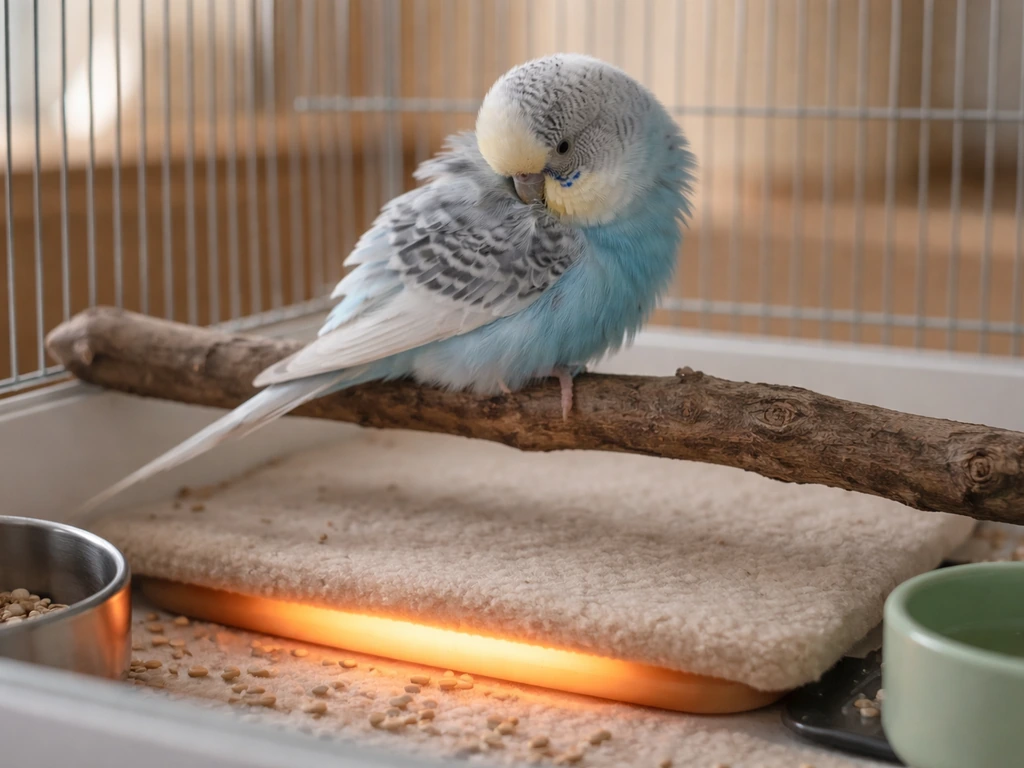
After a bath, a budgie will shake off excess water and start preening right away. This is normal and healthy. Your main job at this point is to make sure the environment stays warm and still. Keep the bird in a room that stays at least 68 to 72°F, away from any drafts or air conditioning, until its feathers are fully dry. Do not put a wet bird near an open window or outside.
If the room is on the cooler side, a heat pad set on low placed under one side of the cage (so the bird can move on or off it as needed) can help the bird warm up and dry more comfortably. This approach is especially useful in winter or in air-conditioned homes.
A hair dryer can be used, but only with real caution. If you go this route, use the lowest heat setting, keep the dryer at least 18 inches away from the bird, and keep it moving constantly. Never point it directly at the bird's face, and stop immediately if the bird seems stressed or starts panting. Many budgies find the noise frightening, and overheating is a genuine risk. Honestly, for most healthy budgies in a warm room, air drying with good preening is the safest and least stressful option.
Troubleshooting: fear, splashing, refusal, and water problems
My budgie refuses to go near the water
This is very common, especially with younger birds or those new to your home. Do not force it. Try placing the dish near the cage for a few days without any pressure, so the bird gets used to seeing it. Switching to the wet greens method or a very gentle mist from a distance often works well with reluctant birds. Some budgies just take a few weeks to decide bathing is safe.
My budgie is splashing water everywhere
That is a great sign, actually. An enthusiastically splashing budgie is a happy, comfortable budgie. Put a towel under the cage or bathing area to catch the mess, and just let the bird enjoy it. You can also use a deeper-sided dish to contain some of the spray.
Water got into my budgie's nostrils or eyes
A small splash on the face during normal bathing is usually fine and the bird will shake it off. If you are misting, always aim above and behind the bird to avoid the face. If your bird seems to be having trouble breathing, is sneezing repeatedly, or is rubbing its eyes and face after bathing, move it somewhere warm, watch it closely, and call your avian vet if the behavior continues.
My budgie looks cold or is shivering after the bath
Move the bird immediately to a warmer spot and place a low-setting heat pad under one side of the cage. Make sure there are no drafts. If the bird is fluffed up, shivering, and not improving within 15 to 20 minutes in a warm environment, treat it as a possible health concern and contact your avian vet.
Red flags: when bathing should stop and a vet should be called
Bathing is for healthy birds. If your budgie is showing any of the following signs, do not attempt a bath. Focus on keeping the bird warm (sick birds need to be kept at around 80 to 90°F according to veterinary guidance) and contact an avian veterinarian or a wildlife rehabilitator as soon as possible.
- Fluffed feathers and sitting low or at the bottom of the cage for more than a few minutes
- Tail bobbing with each breath, or any labored or open-mouth breathing
- Discharge from the nostrils or eyes
- Injury such as a bleeding wound, broken feather shaft, or obvious wing or leg damage
- Not eating or drinking for more than 24 hours
- Sudden loss of balance or falling off the perch
- Droppings that are consistently watery, discolored, or bloody
- Any seizure-like activity or collapse
If your budgie was found injured or orphaned rather than being a pet you know well, skip bathing entirely. An injured or compromised bird needs warmth, quiet, and professional help, not a bath. Place it in a small, ventilated box lined with a soft cloth, keep it warm, and reach out to a licensed wildlife rehabilitator or avian vet right away.
For context, the same principle applies whether you are dealing with a budgie, a finch, a conure, or any other small bird: a sick or injured bird's first need is stabilization and heat, not hygiene. Conures also need careful daily care, so learning a proper conure bird care routine can help you avoid common bathing and health mistakes.
If you are wondering how to care for a finch bird, focus on species-appropriate diet, safe housing, and regular health checks.
For general budgie ownership and ongoing care beyond bath time, it helps to understand the broader routines that keep these birds healthy day to day, including diet, cage setup, and regular health checks. For a mynah bird, you can apply similar everyday care routines, including a proper diet, suitable cage setup, and regular health checks how to take care of mynah bird.
Bulbuls are different from budgies, so their daily care needs, habitat, diet, and health routines also deserve separate attention. If you want more pet bird care tips beyond bathing, review the rest of your daily routine, diet, and health checks. For day-to-day routines, see our full guide on how to care for a budgie bird, including diet, housing, and health checks.
Bathing is just one piece of that picture, and a bird that is thriving in all areas will generally be a more enthusiastic bather too.
FAQ
How often should I bathe my budgie?
For most healthy budgies, bathing can be offered a few times per week, then adjusted based on how quickly they dry and how dusty or oily their feathers look. If your bird seems stressed by baths, reduce frequency and try misting or “wet greens” instead of a dish.
What if my budgie does not show any interest in water?
Some birds take weeks to accept bathing. Place the shallow dish near the cage for a few days without forcing interaction, keep the room warm, and offer a gentler option like misting from a distance or misted greens so the bird can investigate on its own.
Can I bathe a budgie if it just ate or pooped recently?
It is usually fine to bathe after eating, but avoid doing it immediately if your bird seems sluggish or has just had a stressful event. Watch for normal behavior like active preening afterward, and prioritize warmth and low stress over timing.
Is it okay to use warm water from the tap, or should I measure it?
You can use tap water as long as it is lukewarm and feels comfortable on your wrist. If you cannot reliably judge temperature, use a thermometer, and aim for roughly body-temperature so the bird does not feel chilled or overheated.
How should I dry my budgie if it will not preen right away?
First, make sure the room stays draft-free and warm (around 68 to 72°F or warmer if needed). Offer a perch where it can settle, then monitor. If the bird is fluffed and not improving within 15 to 20 minutes, treat it as a possible health issue and contact an avian vet.
Should I cover the cage or keep the room totally quiet during drying?
A calm, still environment helps. You do not need to cover the cage, but avoid drafts from fans, keep other pets away, and minimize loud noise so your budgie can preen and dry without additional stress.
What if my budgie’s feathers look dirty, but it is not acting like it wants a bath?
If the feathers are genuinely sticky or oily, a bath can be necessary, but do not bathe a bird that shows illness red flags. If your budgie is hesitant yet otherwise healthy, try wet greens or gentle misting first to reduce stress, then reassess whether a dish bath is needed.
Can I spot-clean just one dirty spot instead of bathing the whole bird?
Yes, for small localized messes you can use a damp, lukewarm cloth to gently wipe the affected area, but avoid soaking the bird or wetting the chest and body too broadly. If the bird is overall soiled, full bathing is usually safer than repeated partial wetting.
Is it safe to use a hair dryer on a budgie?
Only with real caution. Use the lowest heat setting, keep it at least 18 inches away, move it constantly, and never aim at the face. Stop immediately if the bird pants, looks panicked, or seems too hot, but air drying with good warmth is typically the least stressful option.
My budgie seems to sneeze or rub its face after bathing, what should I do?
Move it to a warmer, draft-free area, and watch closely. If sneezing or eye rubbing continues rather than settling, contact an avian vet, since persistent respiratory or irritation signs are not something to ignore.
Can I bathe my budgie outside or near an open window?
No. Never put a wet budgie near an open window or outdoors. Wet birds lose heat quickly, and drafts and uneven temperatures can make them chilled or stressed.
What are the most common bathing mistakes to avoid?
Using cold or soapy water, bathing a sick or injured bird, leaving the room drafty or cool, and overusing heat (high dryer settings, holding the dryer too close) are the biggest pitfalls. Another common issue is not having a warm, safe drying place ready before you start.
What should I do if my budgie is injured or I find an unfamiliar bird?
Do not bathe. Stabilize warmth and quiet first using a small ventilated box lined with soft cloth, then contact an avian vet or licensed wildlife rehabilitator right away. Hygiene comes later after the bird is medically stable.
Next Article
How to Take Care of a Conure Bird: Daily and Emergency Steps
Daily conure care plus urgent first-aid steps for sick or injured birds, with what to do and avoid right away.