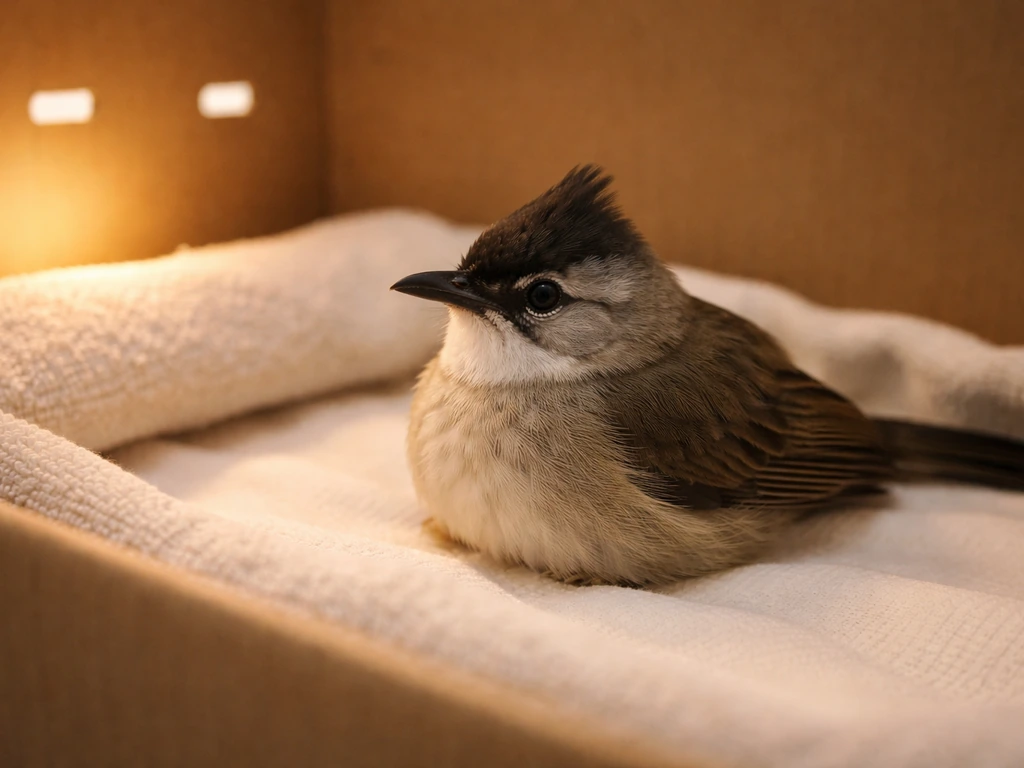
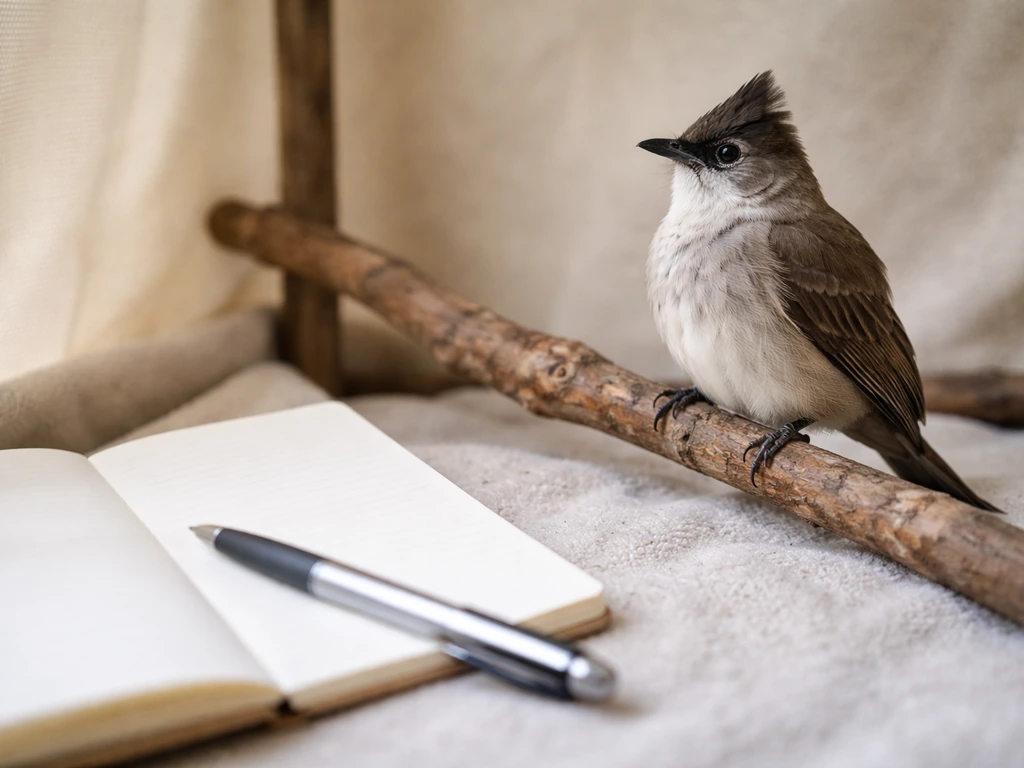
If you've just found a bulbul and aren't sure what to do, start here: put the bird in a small cardboard box with air holes, line the bottom with a soft cloth, place the box somewhere warm, dark, and quiet, and do not offer food or water yet. That single step keeps the bird safe while you figure out what's actually going on. The next hour matters, and the rest of this guide walks you through it.
How to Take Care of a Bulbul Bird: Rescue to Recovery
Marcus Holloway
7 May 2026
Quick assessment: injured, orphaned, or sick?
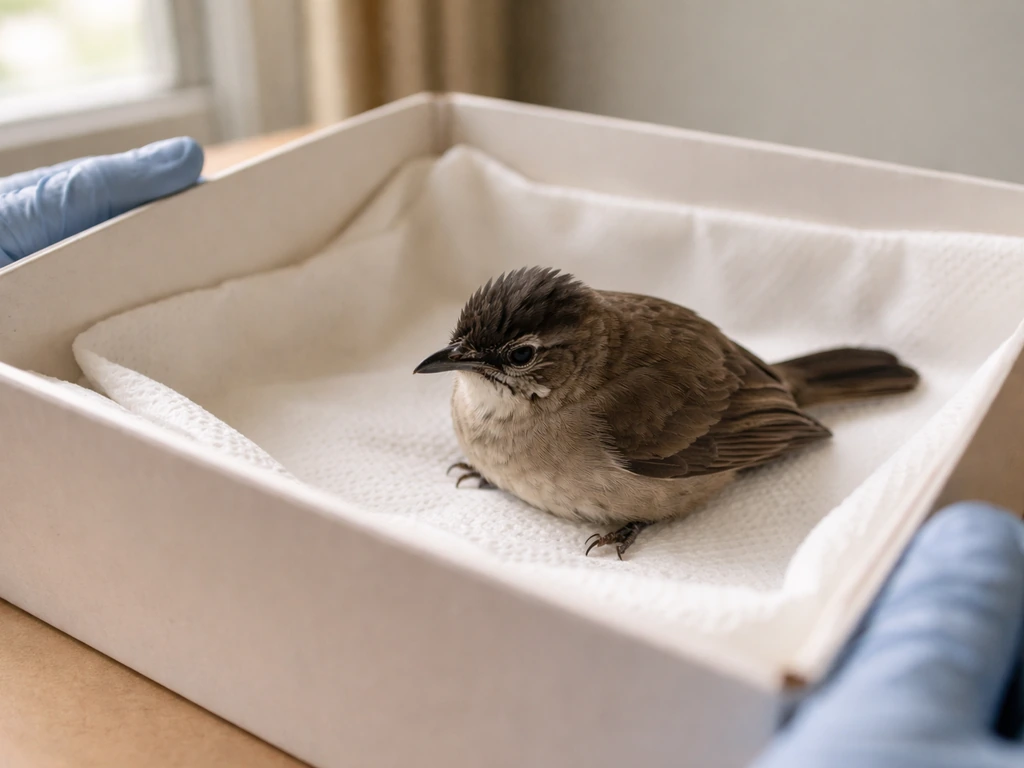
Before you do anything else, try to figure out what you're dealing with. Cornell Lab education materials note that many so-called “baby birds” people find are actually normal fledglings, so the first question is whether the bird is in a “still being cared for” stage and to intervene only when injury or orphaning is clear Before you do anything else, try to figure out what you're dealing with.. The care you provide, and how urgently you need outside help, depends on which category the bird falls into. Take a slow look at the bird without picking it up first if you can manage it.
Signs the bird is injured
- Visible bleeding or an open wound
- Cannot stand or keep itself upright
- Cannot fly and doesn't appear to be a young fledgling just learning
- One wing hanging lower than the other
- Tilting its head repeatedly or circling
- Panting or breathing rapidly for more than two hours
- Bubbles or swelling under the skin
Signs the bird is sick
- Discharge from the eyes or nostrils
- Diarrhea or very abnormal droppings
- Fluffed feathers combined with unusual stillness
- Labored, open-mouthed breathing or tail bobbing with each breath
- Completely non-responsive to your presence
Signs it may be an orphan
A nestling (eyes closed, little to no feathers, completely helpless) that is on the ground has almost certainly fallen from the nest. A fledgling (short fluffy feathers, eyes open, able to hop) found on the ground is often totally normal. Fledglings leave the nest before they can fly well, and their parents usually stay nearby and continue feeding them. Watch from a distance for 30–60 minutes. If no parent visits within half a day, or if the bird is in an obviously dangerous spot, contact a wildlife rehabilitator for guidance. Do not chase or repeatedly handle the bird while you wait.
If you're unsure which category applies, photograph or video the bird and call a local wildlife rehabilitator or avian vet before doing anything else. Getting it wrong at this stage costs the bird time it may not have.
Humane handling and immediate first aid
Birds go into shock easily, and handling is stressful even when done gently. Keep it brief and calm. Wrap your hands lightly around the bird's body to keep the wings folded against its sides, being careful not to compress the chest (birds breathe through chest movement, so squeezing can suffocate them). Move slowly and avoid loud talking near the bird.
Place the bird in a small cardboard box with several pencil-sized air holes punched in the lid and sides. Line the bottom with a paper towel or a thin soft cloth. Do not use terrycloth towels with loops because the bird's toes can get tangled. Put the lid on. The darkness alone will calm the bird significantly.
If the bird is cold to the touch or visibly shaking, it needs warmth urgently. Fill a water bottle with warm (not hot) water, wrap it tightly in a small towel, and place it under one half of the box so the bird can move away from the heat source if it gets too warm. Alternatively, put a heating pad set to its lowest setting under half the box. Never place the heat source directly against the bird as scalding can happen quickly with a small animal. Once the bird feels warm and stable, keep the box in a quiet room, minimize opening it, and contact a rehabilitator.
Do not give food or water during this first-aid phase. This is one of the most important rules. A bird that is in shock, cold, or injured cannot safely swallow, and liquid in the lungs (aspiration) is a fast way to kill a bird you were trying to help. Warmth and quiet are the real first aid here.
Feeding the right way
Feeding only becomes relevant once the bird is warm, alert, and a rehabilitator or avian vet has confirmed it is safe to feed. Once the bird is safe and stable, you can also switch your focus to pet bird care tips that match its species and needs. If you're still in the first hour or two, skip feeding entirely and focus on containment and warmth. Once your conure is warm and stable, you can move on to safe feeding, housing, and cleanliness as you continue care containment and warmth.
What bulbuls actually eat
Adult bulbuls are primarily fruit eaters, and they also probe flowers for nectar and glean insects and spiders from foliage. However, nestlings are fed almost exclusively insects for their first week of life before fruit is gradually added. This matters because if you're hand-rearing a very young bird, fruit alone will not give it the protein it needs.
For a fledgling or adult that is alert, eating on its own, and has been cleared to eat by a professional, small pieces of soft ripe fruit (papaya, banana, berries) are appropriate. Small live or dried insects such as mealworms can also be offered. Once a bird is stable, a wildlife rehabilitator will usually guide you toward a proper insectivore or softbill formula appropriate for the bird's age and species.
Feeding schedules by age
| Life Stage | Feeding Frequency | Food Type |
|---|---|---|
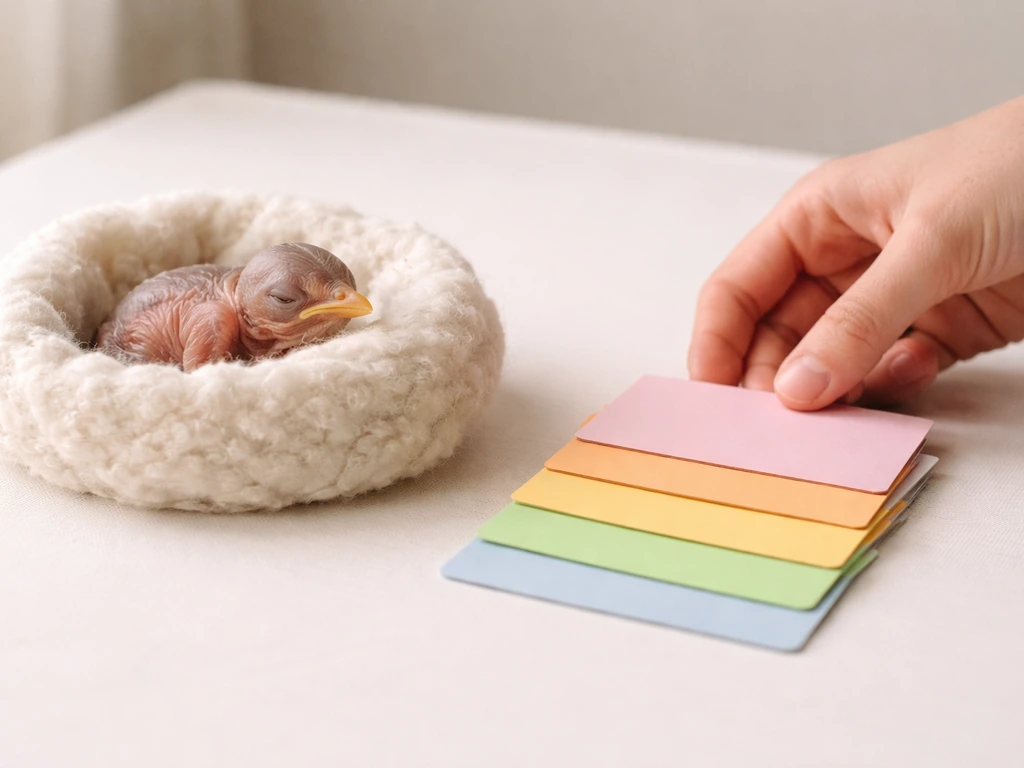
| Hatchling / Nestling (eyes closed, no feathers) | Every 20–45 minutes, 12–14 hrs/day | Rehabilitator-directed formula or soft insects only |
| Older Nestling (eyes open, pin feathers) | Every 30 minutes while active | Insects first, then soft fruit added gradually |
| Fledgling (short feathers, able to hop) | Every 30–60 minutes | Soft insects, small fruit pieces, formula under rehab guidance |
| Adult (fully feathered, found injured/sick) | 2–3 times daily once stable and cleared to eat | Soft fruit, insects, nectar-substitute under vet guidance |
These are rough guidelines. Actual schedules should be confirmed with a permitted rehabilitator, especially for nestlings, because getting frequency or food type wrong at this stage can cause irreversible digestive or respiratory harm.
How to feed safely
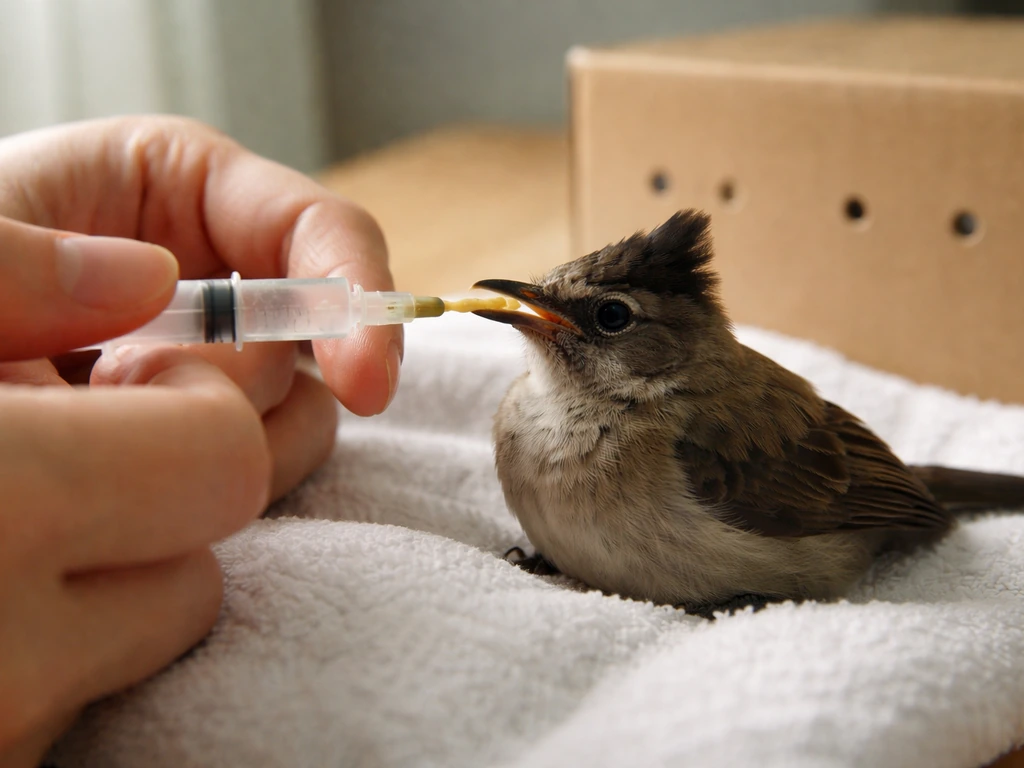
If a rehabilitator has walked you through an emergency interim feeding, use a small plastic syringe or soft-tipped implement to place tiny amounts of food at the side of the beak, not down the throat. Let the bird swallow before offering more. Never force the beak open. Never force food or water into a bird that is not actively gaping and alert. The aspiration risk is real and fast.
Foods to avoid completely
- Bread (empty carbohydrates, no nutritional value for birds)
- Chocolate (methylxanthines are toxic to birds)
- Avocado (persin is toxic to birds)
- Onion and garlic
- Cow's milk or dairy
- Anything salty, sugary, or heavily processed
- Water or any liquid given forcibly or before the bird is alert and stable
Housing, warmth, and keeping things clean
The cardboard box setup described in the first-aid section works for the first few hours. If you're going to be caring for the bird for longer while waiting to reach a rehabilitator, here is how to manage the environment properly.
Temperature and warmth
Nestlings and hatchlings lose heat fast and need an ambient temperature around 85–90°F (29–32°C). Fledglings and adults that are injured or ill still need warmth but are less extreme in their needs. Use the warm water bottle or low heating pad under half the box as described earlier. Feel the bird gently every 30 minutes: it should feel warm but not hot, and it should not be panting (which signals overheating). Remove or reposition the heat source if the bird seems too warm.
Setting up a longer-term space
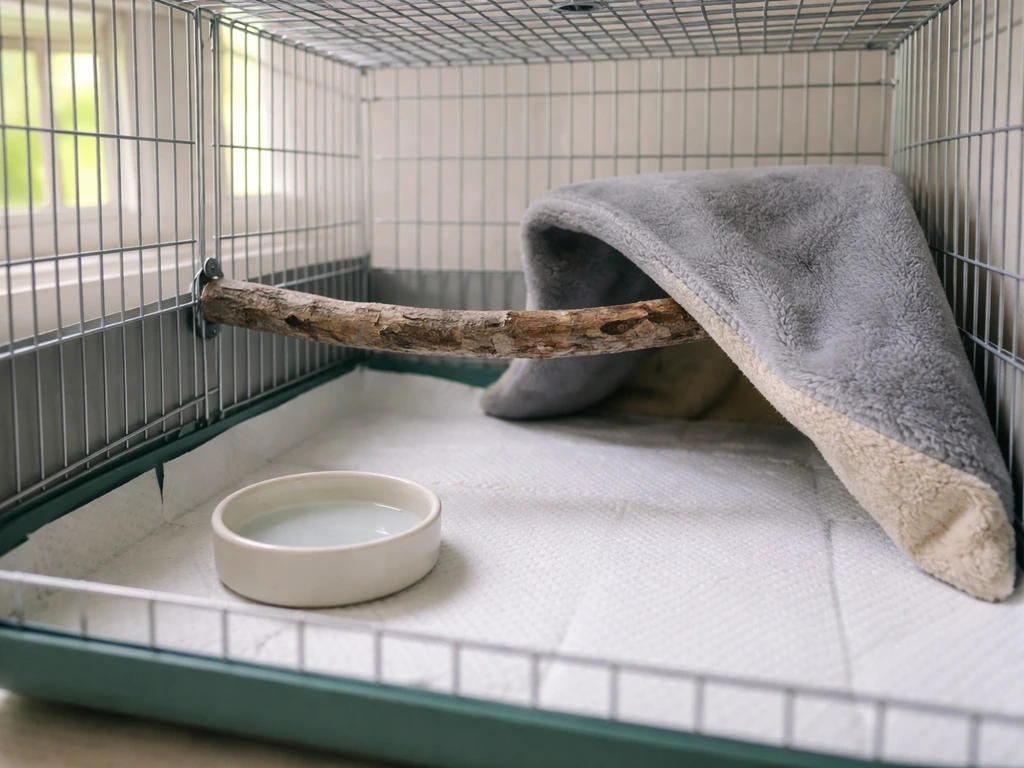
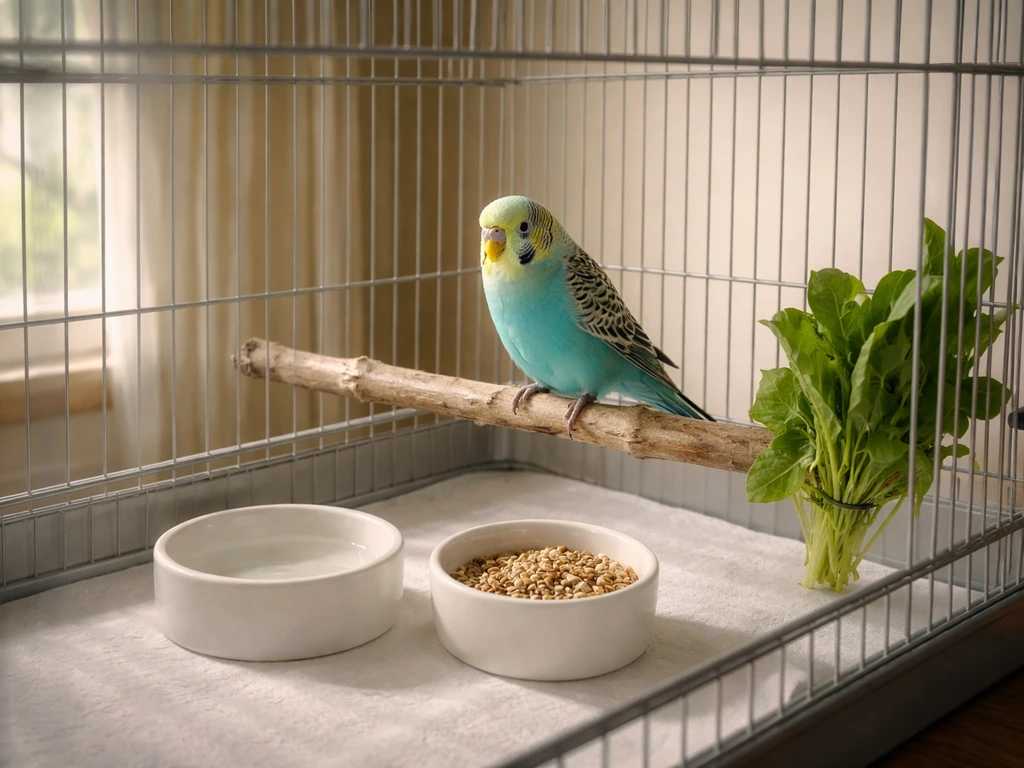
If you are holding the bird for more than a few hours under rehabilitator guidance, move it into a small wire cage or pet carrier once it is stable. Line the bottom with paper towels that you can change easily. Keep the cage covered on three sides with a cloth to reduce visual stress. Place it in a quiet room away from pets, children, loud televisions, and direct sunlight. Bulbuls are active, social birds in the wild, so even a recovering bird will be stressed by a chaotic environment.
Hygiene
Change the cage lining at least once or twice a day. Damp or soiled bedding breeds bacteria quickly and can infect open wounds or a compromised bird. Wash your hands before and after handling the bird. Do not use chemical disinfectant sprays near the bird because birds have extremely sensitive respiratory systems. Plain hot water and mild soap on surfaces, rinsed well, is enough. If you ever need to bathe your budgie, use lukewarm water and avoid stressing the bird, because improper bathing can worsen health issues bathe a budgie.
Monitoring recovery and common problems
Once the bird is contained and warm, you move into observation mode. Mynah birds have different dietary and housing needs, so get species-specific guidance as soon as you can how to take care of mynah bird. The goal is to notice changes quickly so you can report them accurately when you speak to a vet or rehabilitator.
What to watch for
- Breathing: should be calm and steady with the beak closed; open-mouthed breathing, tail bobbing, or wheezing are warning signs
- Alertness: a recovering bird should become more responsive over time, not less
- Hydration: gently pinch the skin on the back if advised by a vet — dehydrated skin stays tented rather than snapping back
- Droppings: healthy droppings have a white urate portion and a small dark fecal portion; runny, very dark, or blood-tinged droppings need professional attention
- Weight: if you have a kitchen scale, weigh the bird daily and note whether it is gaining or maintaining weight; a bird that keeps losing weight despite eating needs immediate expert input
- Posture and movement: the bird should be able to right itself, grip a perch loosely, and hold its head upright as it recovers
Common problems in found bulbuls
Window strikes are one of the most common reasons people find stunned or injured bulbuls. The bird may be dazed but recover within an hour if kept warm and quiet. Cat attacks are more dangerous than they look: puncture wounds can be tiny on the surface but cause deep tissue damage, and bacteria from cat saliva can cause fatal infection within 24–48 hours even if the wound looks minor. Any bird that has been in a cat's mouth needs a vet, period. Maggots or fly eggs on the bird signal a wound that has been exposed for some time and need immediate professional attention.
When to seek help: red flags and who to call
There is a short list of situations where you skip the observation phase entirely and go straight to calling a wildlife rehabilitator or avian vet. If the bird is showing any of the following, it is an emergency.
- Actively bleeding or has an open wound
- Cannot stand or stay upright
- Is completely non-responsive or limp
- Is lying on its side
- Has visible broken bones or a dragging wing
- Is breathing with its beak open or has labored, audible breathing
- Has been in contact with a cat (regardless of visible wounds)
- Has maggots, fly eggs, or unusual swelling under the skin
- Is tilting its head repeatedly or moving in circles
To find a permitted wildlife rehabilitator, search your country or region's wildlife authority website. In the US, the Wildlife Center of Virginia, local Audubon chapters, and state wildlife agency hotlines are good starting points. In Virginia specifically, the Department of Wildlife Resources maintains a wildlife conflict helpline at 1-855-571-9003, available Monday through Friday during business hours. Your local exotic or avian vet can also treat a found bird as an emergency even if they don't specialize in wildlife. When you call, describe the bird's condition calmly using the signs you observed and have the box ready to transport the bird immediately if directed.
If you're not certain whether the bird needs help, photograph or video it and send that to a rehabilitator for remote assessment. Most will respond quickly and give you clear next steps without requiring you to travel immediately.
Planning for release and preventing future injuries
Release is the goal, but only when the bird is genuinely ready. A bulbul that can fly strongly, forage on its own, maintain its own body weight, and behaves like a wild bird (alert, reactive, not approaching humans for food) is a candidate for release. A bird that is tame, weak, or still dependent on hand-feeding is not ready and releasing it early is often a death sentence.
Release should happen at or very near the location where the bird was found, during the morning of a mild dry day, so it has the best chance of finding food and shelter before dark. Make sure there are no cats or known predator threats nearby. Do not release a bird that was reared from a nestling without guidance from a wildlife rehabilitator. Hand-reared birds may imprint on humans and need specific conditioning before they can survive independently.
Reducing future injuries
- Apply window film, decals, or external screens on large glass panels to prevent window strikes — bulbuls are common victims because they follow fruit and often fly near buildings
- Keep cats indoors, especially during dawn and dusk when birds are most active on the ground
- Remove or net fruit trees near high-traffic roads or buildings if birds are repeatedly attracted to the same hazardous spots
- If you find a nest in a vulnerable location, avoid disturbing it but note its position so you can monitor it and act quickly if a bird falls
Caring for a found bulbul through even a short recovery is a meaningful thing to do. The most important moves are the simplest ones: keep it warm, keep it quiet, keep it contained, and get professional help as fast as you can. If you've cared for other small birds before, the core approach is similar to what works for finches, mynah birds, and other softbills, though each species has feeding and habitat differences worth knowing. The bulbul's best chance is always a combination of your calm, immediate action and the expertise of someone who works with wild birds regularly.
FAQ
Can I give a found bulbul a bath or mist it with water to calm it down?
Yes, but only for warmth management. If the bird seems cold, use a warm water bottle or low heating pad under half the box, never directly against the bird, and check frequently so it stays warm but not hot (panting means overheating). Once stable, keep the bird in a quiet dark room and reassess every 30 minutes.
Is it okay to offer water or fruit immediately if the bulbul is chirping or looks hungry?
Avoid it. Even “safe” liquids are risky in an emergency because a cold, shocked, or stressed bird may not swallow correctly, which can cause aspiration into the lungs. Wait until it is warm, alert, and a rehabilitator confirms it is appropriate.
How long can I keep a bulbul in the cardboard box, and what then?
Do not use the first aid box as a long-term setup. Once the bird is stable and you are still waiting for a professional, move it to a small wire cage or pet carrier with easy-to-change lining, cover three sides with cloth to reduce visual stress, keep it in a quiet room away from pets and TV, and change damp or soiled bedding at least once or twice daily.
What should I feed a bulbul if I do not know whether it is a nestling, fledgling, or adult?
Use only small, soft, species-appropriate items, and only after the bird is warm and cleared. For an already eating fledgling or adult, tiny pieces of soft ripe fruit can be offered, and soft live or dried insects (like mealworms) may be used if recommended. For nestlings, insects are critical early, and schedules must be confirmed because the wrong protein or feeding frequency can cause severe harm.
What is the safest way to hand-feed a bulbul if I’m instructed to do so?
Do not. For any interim hand-feeding that a professional has instructed, offer tiny amounts and place food at the side of the beak so the bird can swallow, only when it is actively gaping and alert. Never force the beak open, and never push food down the throat because aspiration can happen quickly.
How can I tell whether the bulbul is getting better versus just staying stressed?
Expect some recovery signs, but track trends. Improvement looks like warmer body temperature, less shaking, calmer breathing, and the ability to sit more steadily. Red flags include panting, repeated open-mouth breathing when not begging, uncontrolled flopping, worsening weakness, or any cat-related injury or maggots, which all require professional care immediately.
If I find a fledgling on the ground, should I pick it up or wait?
Yes, but only as an observation step, not prolonged handling. Watch from a distance for 30 to 60 minutes for a fledgling and wait up to half a day for a parent visit if the spot is not dangerous. If the bird keeps being threatened, is in traffic or predators, or no parent visits within that timeframe, contact a rehabilitator for next steps.
My cat grabbed the bulbul and it seems okay. Do I still need help?
If it was in a cat’s mouth, treat it as an emergency even when wounds look small. Punctures can be tiny at the surface but infections can develop within 24 to 48 hours from bacteria in cat saliva, so you should get veterinary or wildlife rehabilitator care right away.
What should I do if I see maggots or fly eggs on the bulbul?
Contact help immediately if you see fly eggs, maggots, or an exposed wound you suspect has been open for some time. These indicate active tissue involvement and a high risk of rapid deterioration, so do not wait for the bird to “seem better” after warmth alone.
What’s the best way to transport a bulbul to a wildlife rehabilitator or avian vet?
Bring the bird to the professional, but keep transport gentle. Use the ventilated box setup, keep it warm if needed, and minimize opening the box. Try to avoid bright light and loud talking during the trip, and have basic observations ready (behavior, location found, possible threats like cats or window strike, whether parents were present).
When is it appropriate to release a recovering bulbul, and where should it be released?
Generally, avoid keeping it outdoors long-term while waiting for release. Temporary exposure is okay only after it is stable and guided by a professional, and release should be planned for near the exact capture location, during the morning of a mild dry day, so it can find food and shelter before dark. Do not release a nestling you reared without rehabilitator guidance due to imprinting risk.
Next Article
Pet Bird Care Tips: Daily Checklist and First Aid Guide
Pet bird care tips with daily checklist, safe feeding, enrichment, health monitoring, and first aid steps for emergencie