The honest answer is: in most cases, you should not feed an injured wild bird right now. I know that feels counterintuitive when you're staring at a bird that looks weak and hungry, but feeding at the wrong moment can actually cause serious harm or even kill a bird that might otherwise have survived. That said, there are situations where a small amount of the right food, offered in the right way, can help bridge the gap until you reach a professional. This guide walks you through exactly when each applies.
What to Feed an Injured Bird: Safe Steps Right Now (UK)
Marcus Holloway
2 Apr 2026
Should you feed it at all? Make this decision first
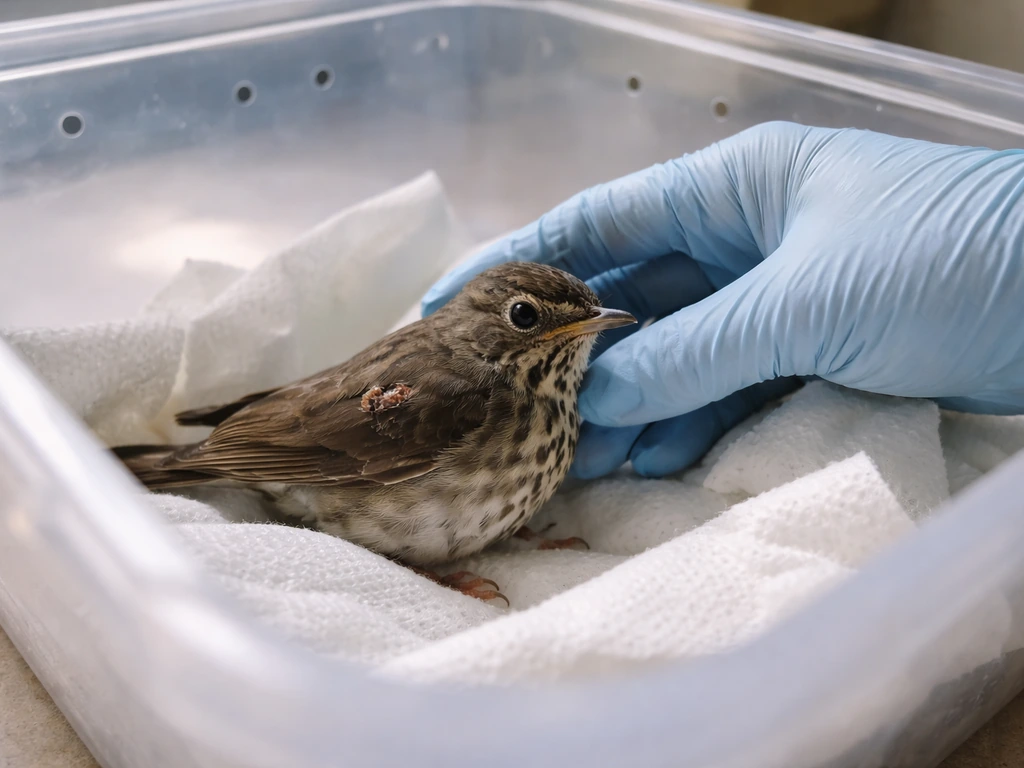
Before you think about food, the first question is whether feeding is even appropriate. The Wildlife Trusts, the RSPCA, Mousehole Bird Hospital, and the Raptor Trust all give the same clear advice: do not offer food or water to an injured, ill, or orphaned wild bird unless you have been told to do so by a professional. That might sound overly cautious, but there are real reasons behind it.
A bird in shock or with internal injuries can aspirate liquid into its lungs if you try to give it fluids. A bird with a broken beak or jaw can't swallow safely. A cold, hypothermic bird can't digest food properly and needs to be warmed first. Feeding before those conditions are assessed can turn a survivable situation into a fatal one.
So the first step is always: contain the bird, keep it warm and quiet, and call for expert advice before you do anything else. If you're also figuring out the basics of how to care for an injured bird beyond just feeding, starting with warmth and containment is the right order of operations.
Signs that mean you should not feed and should call for help immediately
- The bird is panting or breathing fast for more than two hours (the RSPCA lists this as a sign requiring urgent help, not home care)
- It has visible wounds, broken bones, or is bleeding
- It cannot hold its head up or is lying on its side
- It has been caught by a cat (cat saliva carries bacteria that cause fatal infections within hours, even if the bird looks fine)
- It's a nestling (very young, no feathers or only pinfeathers) with no nest visible
- You have no idea how long it has been injured or without food
In any of these situations, skip the food question entirely and go straight to calling a wildlife rehabilitator or vet.
Foods that are safe vs foods that can kill
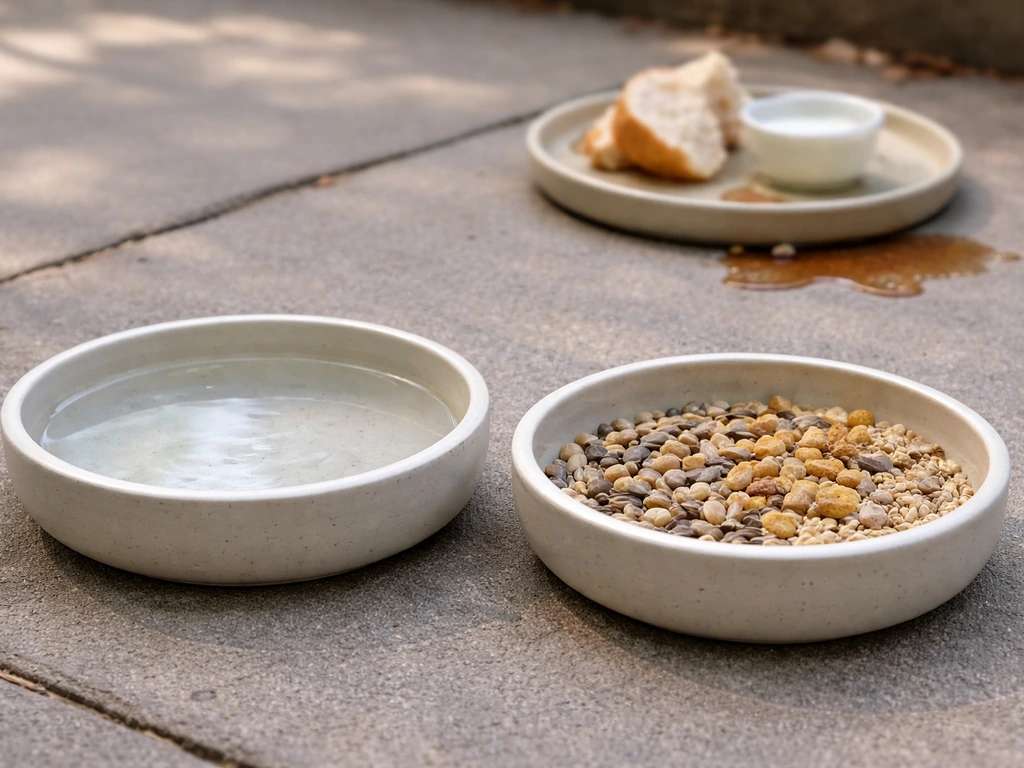
If you've called for help, been advised that a short wait is unavoidable, and the bird is alert and upright, you may be told it's okay to offer a small amount of food. Here's what's safe and what is absolutely not.
| Food or drink | Safe? | Notes |
|---|---|---|
| Plain water (shallow dish) | Use with caution | Never syringe or drip into the beak; place a very shallow dish nearby so the bird can drink if it wants |
| Plain cooked rice or pasta (no salt) | Generally safe short-term | Suitable for grain-eating birds; tiny amounts only |
| Plain soaked dry dog or cat kibble | Safe for omnivores | Rehydrates well; small pieces only |
| Chopped earthworms or mealworms | Safe for insect-eating birds | Good for robins, thrushes, starlings; do not over-feed |
| Ripe berries (e.g. apple pieces, grapes halved) | Safe for fruit-eating birds | Remove pips and seeds; small portions |
| Plain sunflower seeds or mixed wild bird seed | Safe for seed-eating birds | Finches, sparrows, pigeons; small amount only |
| Cow's milk | Never | Causes severe digestive harm in birds |
| Alcohol | Never | Toxic to all birds |
| Bread (white or brown) | Avoid | No nutritional value, can cause 'angel wing' in waterfowl |
| Avocado, onion, chocolate, caffeine | Never | Toxic to birds |
| Salty, spiced, or processed foods | Never | Can cause kidney failure and dehydration |
| Force-fed liquids via syringe | Never | Aspiration risk; can drown the bird |
The most dangerous things people try are force-feeding water and offering cow's milk. HelpWildlife.co.uk is explicit on both: never force-feed or syringe fluids into a bird's beak, and never give cow's milk or alcohol to wildlife. These aren't just bad ideas; they can kill a bird quickly.
What to actually give, based on the bird in front of you
Different birds eat very different things in the wild, so the 'right' emergency food depends on what species you're dealing with. You don't need to be a bird expert to make a reasonable judgment here.
Small garden birds (sparrows, wrens, tits, robins, finches)
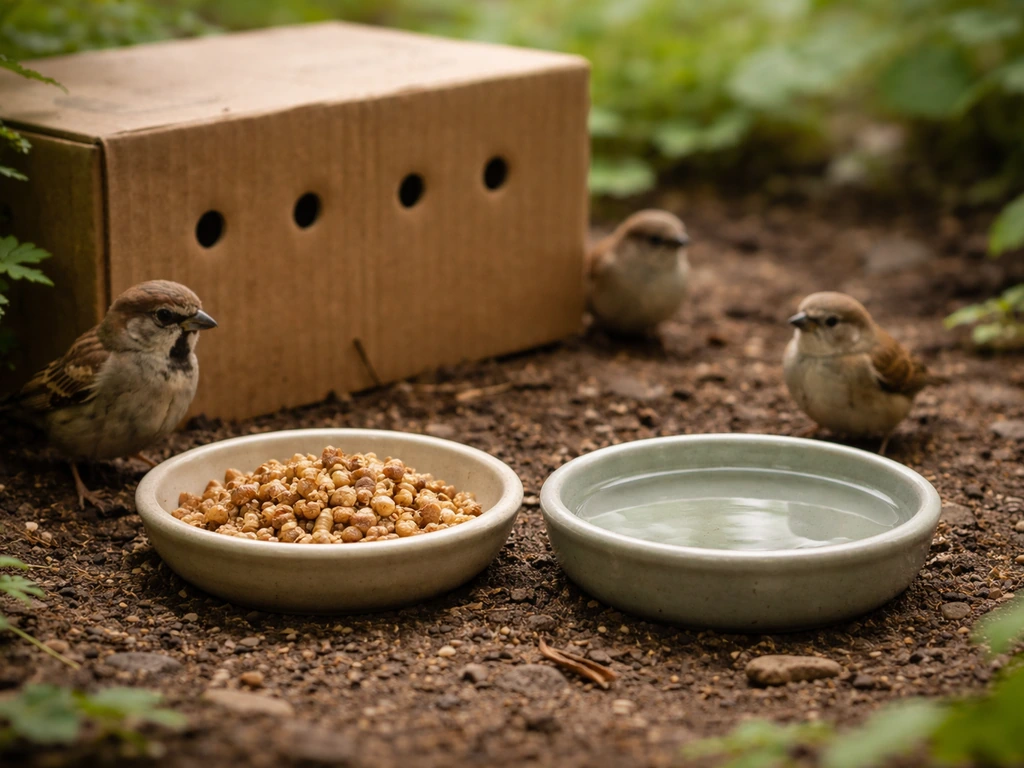
These are the birds most people find in their gardens. Robins and wrens are insectivores, so small mealworms (dried or live) or finely chopped earthworms are your best bet. Sparrows and finches are seed-eaters, so a small pinch of wild bird seed or sunflower hearts works well. Tits eat both insects and seeds. For any of these, keep portions tiny. You're not trying to fill the bird up; you're just keeping it from declining further while you arrange proper care.
Larger birds (pigeons, doves, corvids like crows and magpies)
Pigeons and doves are grain-eaters, so a few seeds, plain cooked rice, or dry dog kibble softened in water will do. Corvids (crows, rooks, jays) are highly omnivorous and will eat almost anything safe: mealworms, small pieces of hard-boiled egg, soaked kibble, or chopped fruit. Keep pieces small enough that there's no choking risk.
Nestlings and very young birds
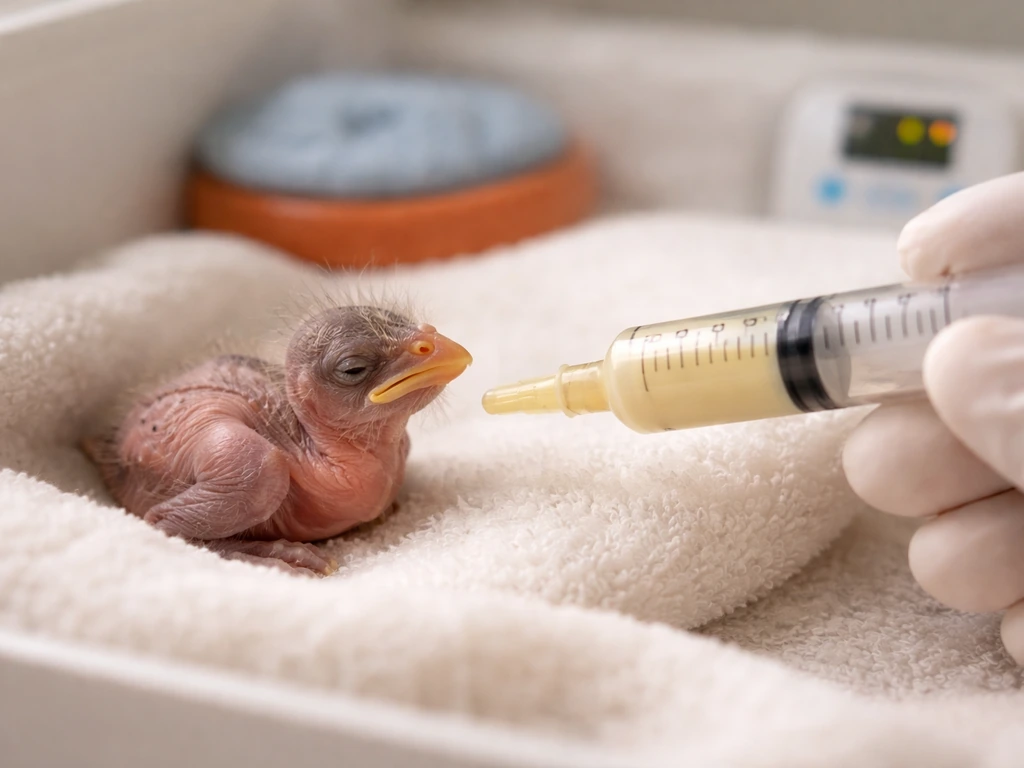
This is where most people get into trouble. Nestlings (birds with no feathers or only pinfeathers) need to be fed very frequently, need exactly the right food consistency, and are incredibly easy to aspirate. Nursing a bird back to health when it's this young is genuinely a specialist job. Unless a rehabilitator has specifically instructed you on technique, do not attempt to feed a nestling. Audubon advises that you should not attempt to feed or give water to young birds and instead contact a wildlife rehabilitator blank" rel="noopener noreferrer">do not attempt to feed a nestling. Keep it warm, keep it in a quiet box, and get it to a professional as fast as possible.
Birds of prey (hawks, owls, kestrels)
Do not attempt to feed raptors at home under any circumstances. They require whole prey (mice, day-old chicks) to get the nutrition and gut content they need, and they are also legally protected in ways that add extra layers of responsibility. Call a specialist raptor rehabilitator immediately.
How to feed safely without causing more harm
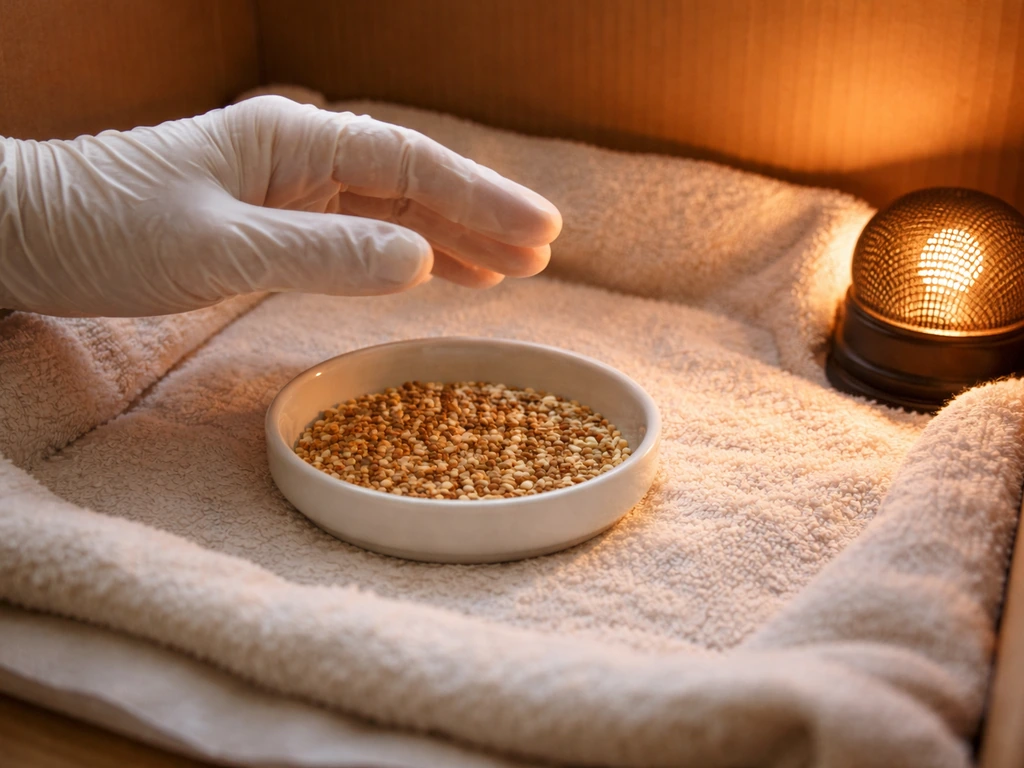
Even if you've confirmed the bird can and should have food, how you offer it matters as much as what you offer. The goal is to reduce stress and aspiration risk as much as possible.
Warm the bird before anything else
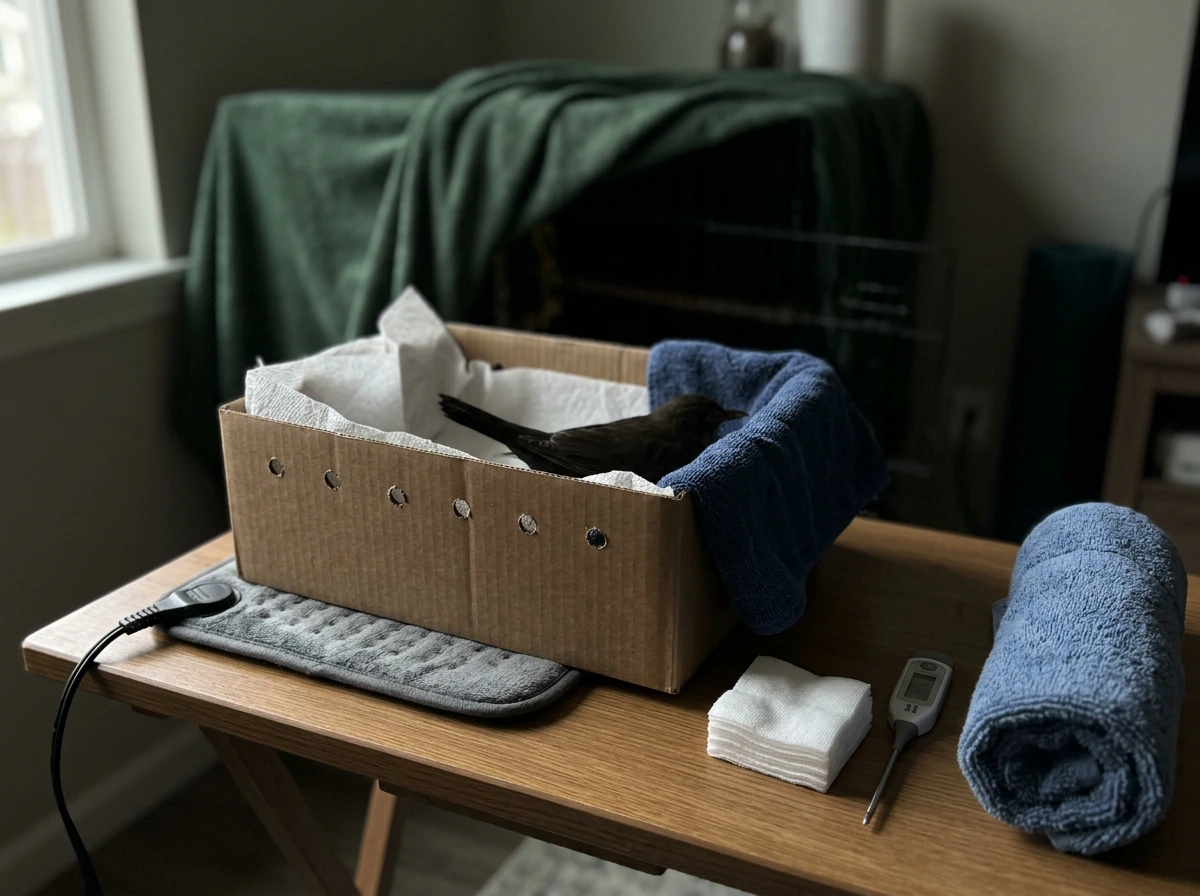
A cold or hypothermic bird cannot digest food. HelpWildlife.co.uk recommends making a warm (not hot) water bottle, wrapping it in a towel, and placing it at one end of the box so the bird can move toward or away from the heat as needed. Remove the heat source if the bird starts to pant. Get the bird to a comfortable temperature before you even consider offering food.
Minimize handling and keep things calm
Stress is a genuine killer for injured birds. Knowing how to calm an injured bird before and during feeding is not optional. Keep the room dark and quiet, cover the box with a breathable cloth, and limit the number of people hovering around it. When you do approach, move slowly and speak quietly. Don't invite the dog or the kids to have a look.
Offering food without force
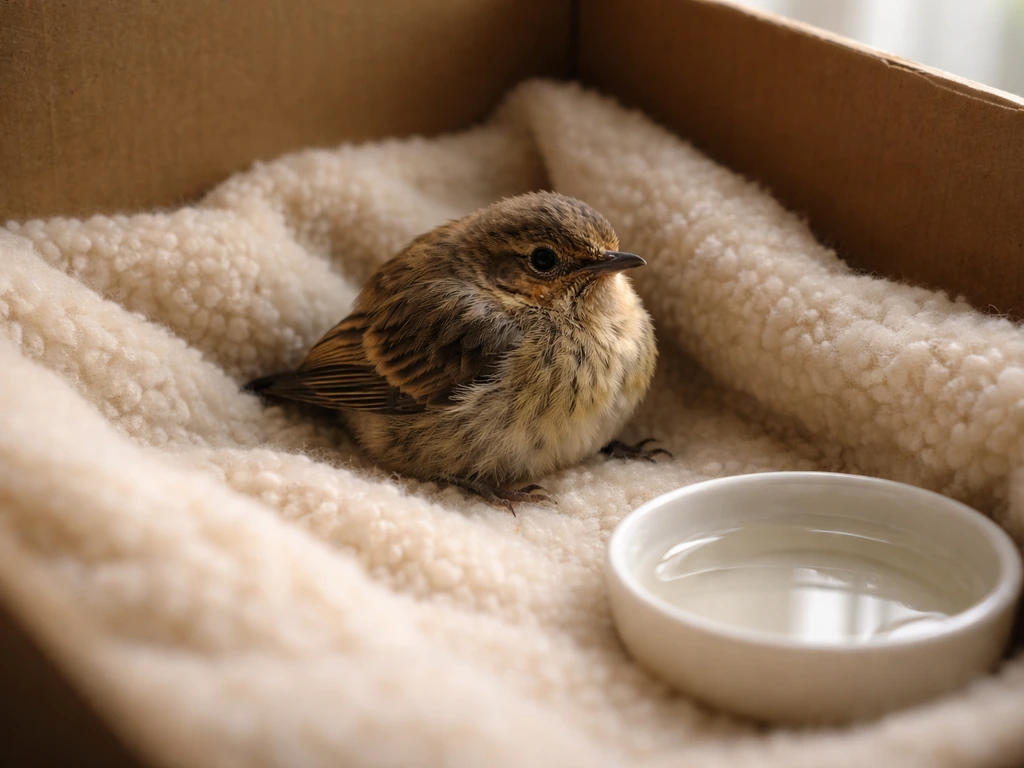
Place food in a shallow dish inside or just in front of the bird's box. Let the bird come to it on its own terms. If it's alert and mobile, it will eat when it's ready. Never pry the beak open. Never use a syringe to push liquid or food into the bird's mouth. If the bird is not eating voluntarily, that's actually a useful sign to relay to the rehabilitator when you call.
Hydration: what to do and what not to do
Place a very shallow dish of plain, room-temperature water near the bird if it is alert and upright. A bottle cap or jar lid works well because a deeper dish can become a drowning risk for a weakened bird. Do not drip water onto the beak. Do not tilt the bird's head back and pour water in. If the bird is unresponsive, do not offer water at all. And if you're preparing to transport it to a rehabilitator or vet, remove the food and water dish first so it doesn't spill during the journey.
Making the bird physically comfortable in a quiet, warm, dark space is often more valuable than any food you can offer. Making an injured bird comfortable covers this in more detail, and it's worth reading before you do anything else.
When to stop DIY care and call a professional
There's a limit to what home care can do, and being honest about that limit is the most compassionate thing you can do for the bird. The RSPB, the Kent Wildlife Trust, and the RSPCA all give the same clear steer: if you're unsure, call a wildlife rescue rather than attempting treatment yourself.
You should stop DIY care and call for help immediately if the bird is not improving after 30 to 60 minutes in a warm, quiet space; if it is deteriorating (breathing harder, becoming more lethargic, or tilting sideways); if it has injuries you can see (wounds, bent or dragging wing, blood); or if you simply can't identify what kind of bird it is or what it should eat. The Wildlife Trusts recommend that if you cannot get the bird to specialist care within an hour or two, you should at minimum be on the phone with the RSPCA or another welfare organisation for live guidance.
For an overnight situation where no rehabilitator is immediately reachable, the priority shifts from feeding to safe containment. What to do with an injured bird overnight goes into the specifics of keeping it safe until morning, which is often more useful than trying to source the right food at 11pm.
UK-specific guidance: who to call and what to know
If you're in the UK, you have good options for getting expert advice quickly, often without even leaving the house. Here's where to start.
Who to contact in the UK
- RSPCA (England and Wales): 0300 1234 999. Their helpline can advise on injured wild birds around the clock and can dispatch an officer in serious cases.
- SSPCA (Scotland): 03000 999 999. Covers injured wildlife across Scotland.
- USPCA (Northern Ireland): 028 3025 1000.
- HelpWildlife.co.uk: An excellent online directory that helps you find your nearest wildlife rescue centre by postcode. Use it to locate a local specialist fast.
- The RSPB: Offers guidance online but will typically direct you to a local rescue for hands-on help.
- Local wildlife rescue centres: Search 'wildlife rescue near me' plus your town; many operate 24-hour emergency lines.
- Local vets: Most vets in the UK are legally obligated to provide free first aid to injured wildlife, even if they don't treat wild birds routinely.
Legal considerations in the UK
Under the Wildlife and Countryside Act 1981, it is illegal to keep a wild bird in captivity without a licence, even with good intentions. This means the goal of home care is always to stabilise and transfer, not to rehabilitate fully yourself. You are allowed to take in an injured wild bird temporarily to care for it before handing it to a licensed rehabilitator, but keeping it long-term is not legal or practical without specialist training. If you're unsure about the rules, calling the RSPCA will give you clarity specific to your situation.
A note on bird flu (avian influenza)
The RSPCA's current guidance includes disease precautions around handling wild birds, particularly given ongoing avian influenza concerns in the UK. Always wear disposable gloves when handling any wild bird. Wash your hands thoroughly afterwards. Do not handle dead birds with bare hands, and if you find multiple dead birds in the same area, report it to the Animal and Plant Health Agency (APHA) on 03000 200 301 rather than picking them up.
The bigger picture: feeding is rarely the most urgent thing
If there's one thing to take from all of this, it's that feeding an injured bird is usually not the first or most important thing you can do for it. Warmth, quiet, and getting professional advice on the phone within the first 30 minutes will do far more good than any food you can offer. Knowing how to nurse an injured bird properly means understanding that the instinct to feed is very human, but birds in shock often need rest and warmth far more than calories.
Once the bird is stable and you're working with a rehabilitator's guidance, feeding becomes part of a longer recovery plan. Learning how to nurse a bird through recovery properly, including appropriate feeding schedules, is something the rehabilitator will walk you through if you're going to be involved in the bird's ongoing care. But that comes later. Right now, the priority is the phone call.
FAQ
Can I offer water instead of food to an injured bird?
Only if a professional has told you to. Even alert birds can aspirate water if they are chilled, stressed, or injured internally. If the bird is alert and upright and you are following advice, use a very shallow container and place it nearby, do not drip or pour onto the beak.
What if the bird is a fledgling and still has pinfeathers, can I feed it then?
Do not assume it is safe to feed just because it has some feathers. Fledglings vary, but if you have not been given instructions by a rehabilitator, treat it like a potential nestling risk (wrong consistency and aspiration danger). Warmth and quiet containment, then call for guidance, is safer than trying to hand-feed.
Is it okay to leave food out for the bird so it can eat when it wants?
You can offer small amounts only after expert advice and only when the bird is alert and mobile. Do not leave a shallow dish of water or food unattended for long periods in case another animal gets to it or the bird overheats or tips the container. Remove dishes before transport.
How much food should I give in an emergency?
Use tiny portions, just enough to prevent immediate decline while you arrange care. Overfeeding is a common mistake, and large meals can worsen aspiration risk and digestive stress, especially if the bird is chilled or stressed. If the bird does not eat voluntarily, stop and report that to the rehabilitator.
What should I do if the bird keeps trying to swallow but cannot manage food?
Do not force anything. Inability to swallow safely can point to beak, jaw, or internal injury. Keep the bird warm and quiet, and call the vet or wildlife rehabilitator immediately, mentioning that swallowing is difficult.
Can I give worms, seeds, or fruit to any injured bird I find?
No, species matters. In the UK, feeding the wrong diet can cause digestive problems during an already critical period. Use species-appropriate options only if advised and only in small amounts, otherwise focus on warmth and expert instruction.
Can I feed an injured bird bread or milk because that is what people commonly do?
Avoid both. Cow’s milk is unsafe for wildlife, and bread is not a suitable emergency food. People also sometimes force water or use syringes, which increases aspiration risk and can kill a bird quickly. If you are unsure, do not offer food at all until you have live guidance.
My bird has a visible wound, should I clean it before feeding it?
Prioritize containment and professional advice first. Cleaning or medicating at home can increase stress and accidentally cause more harm, and feeding can be dangerous if the bird is hypothermic or internally injured. Keep it warm and call, then follow the rehabilitator’s wound and feeding instructions.
Is it safe to put the bird in a pet carrier with blankets and then offer food?
A carrier can work if it is used for warmth, darkness, and reduced movement. Avoid loose material where the bird could tangle or get stuck, and avoid deep water bowls that could become drowning risks. Offer food only if a professional says it is appropriate.
What if I cannot identify the bird species?
Do not guess the diet. If you cannot identify what it is or what it should eat, stop DIY feeding and call wildlife rescue for live guidance. Stopping feeding while you seek help is safer than trying an incorrect food type.
How long can I keep the bird at home before it must go to a professional?
If it is not improving after 30 to 60 minutes in a warm, quiet space, or if it is deteriorating, call immediately. Also seek help right away if you cannot transport within an hour or two, at minimum get someone on the phone for live guidance.
Is there anything I should do differently for an injured bird overnight regarding food?
When a rehabilitator is not reachable, prioritize safe containment over feeding. The priority overnight is warmth and minimizing stress, since a chilled or stressed bird may not digest food safely. If any feeding is suggested by a helpline, follow it exactly, and remember to remove dishes before any morning transport.
What hygiene steps should I take when handling an injured wild bird?
Wear disposable gloves for handling, then wash your hands thoroughly afterwards. Avoid touching your face during handling. If you find multiple dead birds in the same area, do not pick them up, report them to the relevant animal health authority rather than trying to manage things yourself.
Next Article
How to Nurse a Bird Back to Health Step by Step
Step-by-step first aid, warmth, handling, feeding, recovery setup, and when to get help for injured or orphaned birds.