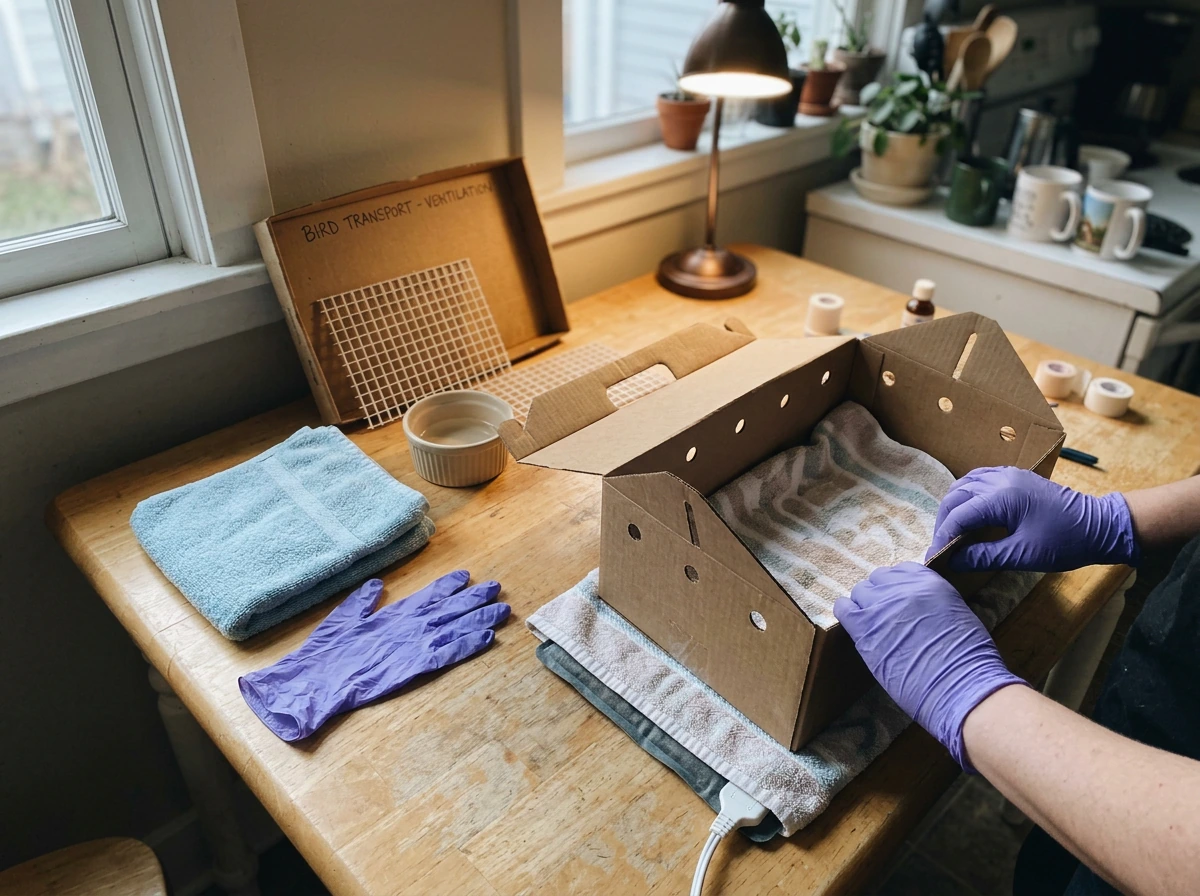
If you've found an injured, sick, or orphaned bird and you're trying to figure out what to do right now, here's the short version: contain it, keep it warm and dark and quiet, don't feed or water it yet, and contact a wildlife rehabilitator or avian vet as soon as possible. how to calm an injured bird Everything else in this guide fills in the details of how to do that safely and humanely, step by step.
How to Nurse a Bird Back to Health Step by Step
Marcus Holloway
23 Mar 2026
Step one: quick triage before you touch anything
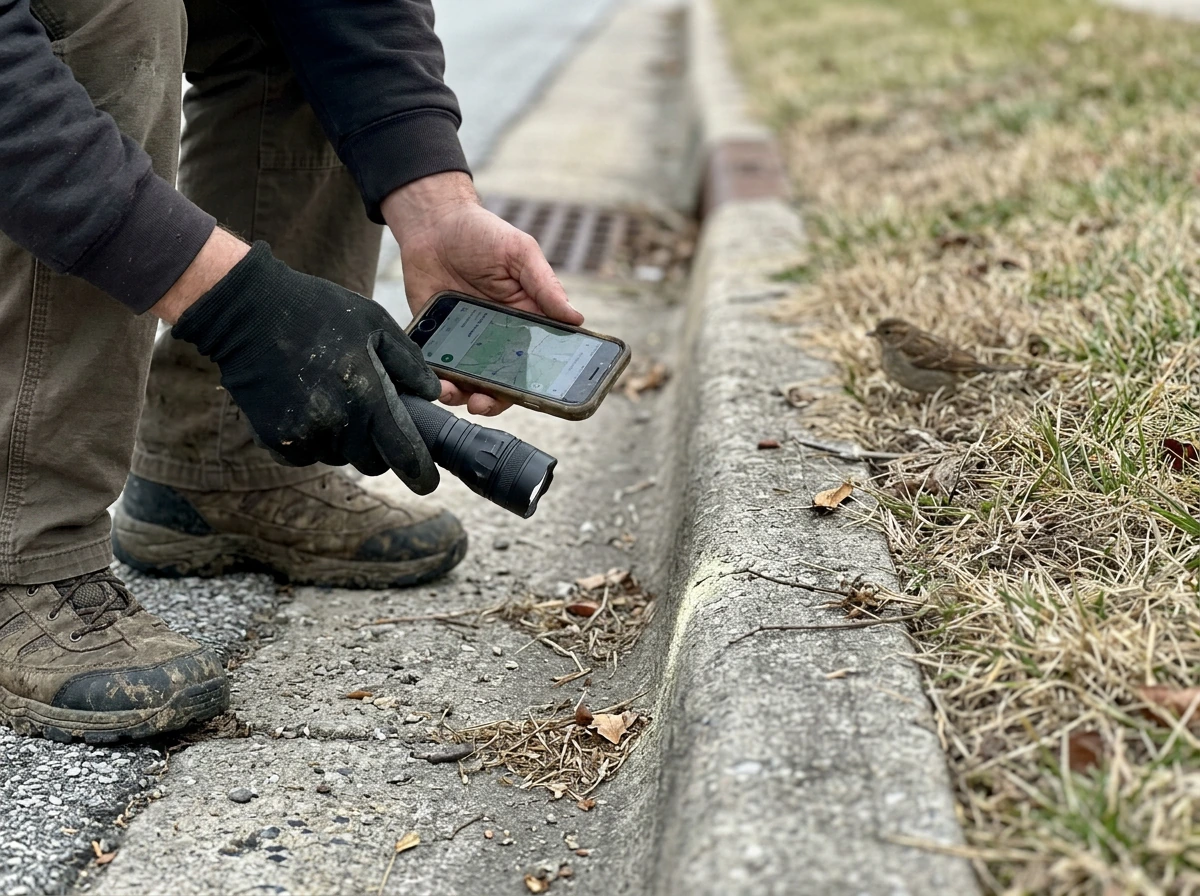
Before you pick the bird up, take thirty seconds to assess the situation. This protects both you and the bird.
First, check your own safety. Is the bird near traffic, a predator, or a hazard like an open drain or pool? If so, removing the immediate danger comes before handling the bird. Wear gloves if you have them. Wild birds can carry parasites and, very rarely, zoonotic illness, and a frightened bird can scratch or bite hard enough to break skin.
Next, look at the bird from a short distance. Ask yourself these questions:
- Is it feathered or unfeathered? A naked or mostly bare bird is a nestling and almost certainly fell from a nest. A bird with feathers but a short tail that hops and flutters is probably a fledgling learning to fly, and may not need rescuing at all.
- Is it bleeding visibly, or is a wing drooping at an unnatural angle? These are signs of acute injury requiring urgent action.
- Is it alert and upright, or is it hunched, panting, or lying flat? A bird that can't hold its head up or is unresponsive is in serious distress.
- Did it hit a window? Window strikes often cause concussion. The bird may recover on its own in 20 to 60 minutes in a safe, quiet spot.
- Is there a cat involved? Cat puncture wounds are a medical emergency even if they look minor, because bacteria from cat saliva are rapidly fatal to birds.
If the bird is alert, feathered, and hopping around, check whether it genuinely needs help before intervening. Fledglings on the ground with nearby adult birds watching over them should generally be left alone or, if in immediate danger, moved a short distance to safety. If the bird is clearly injured, lethargic, bleeding, or is a nestling on the ground with no accessible nest above, it needs your help.
One important legal note: in the United States, most wild birds are protected under the Migratory Bird Treaty Act. Possessing a wild migratory bird without a permit is technically a federal offense. However, there is blank" rel="noopener noreferrer">a Good Samaritan provision that allows you to take temporary possession of a sick, injured, or orphaned migratory bird specifically to transport it directly to a permitted wildlife rehabilitator. The takeaway is: contain and transport, don't keep. If you take temporary possession of a sick, injured, or orphaned migratory bird under the federal Good Samaritan rules, you must immediately transport it to a permitted wildlife rehabilitator or a licensed veterinarian blank" rel="noopener noreferrer">federal “Good Samaritan” rules allow temporary possession of a sick, injured, or orphaned migratory bird.
Immediate first aid: what to actually do in the first few minutes
Your goal right now is not to heal the bird. It's to stabilize it and reduce further harm while you get it to professional care. These are the things that genuinely help.
Warmth
Warmth is usually the single most important thing you can provide. Injured birds lose body heat fast, and hypothermia will kill them before most injuries do. Aim for an ambient temperature of around 85°F (29°C) for most injured songbirds. For unfeathered nestlings, the target is slightly higher: 85 to 90°F (29 to 32°C). Young birds without feathers have essentially no ability to regulate their own temperature.
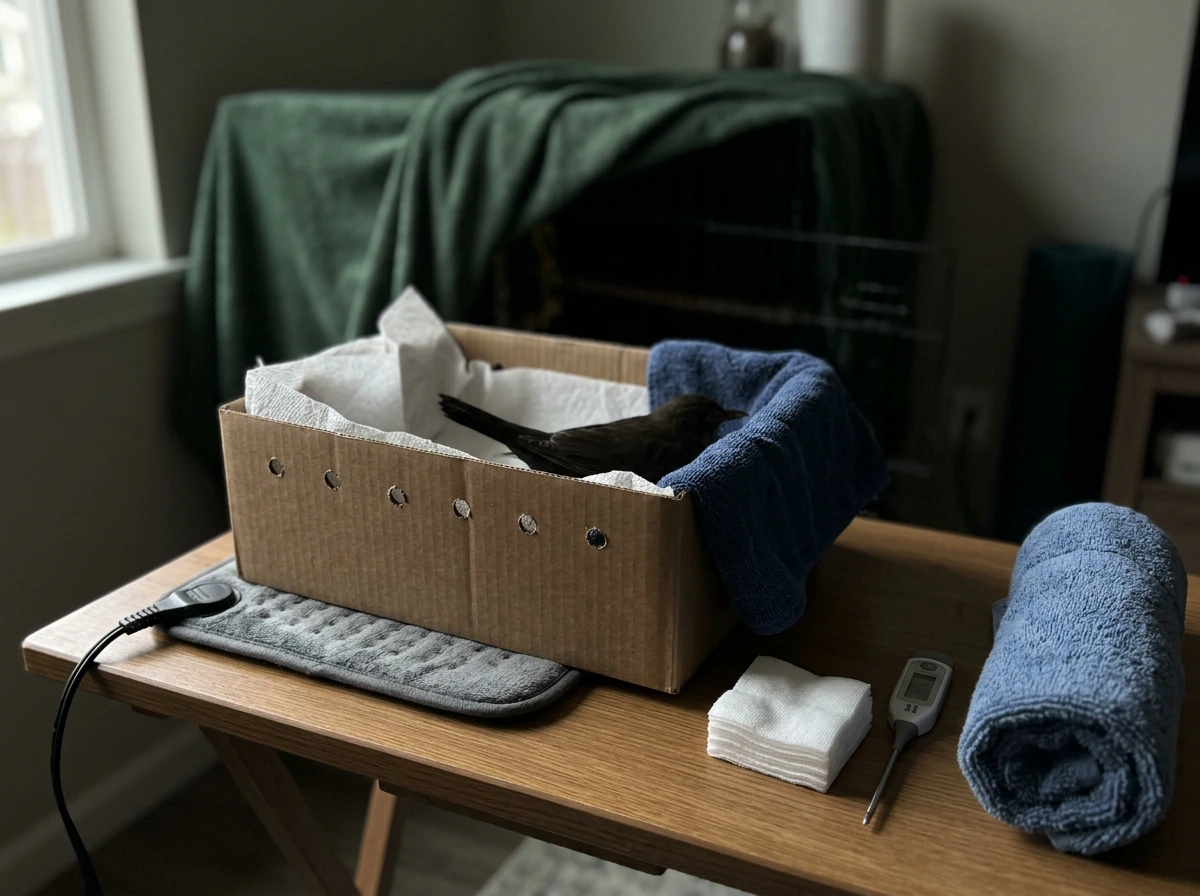
Practical ways to provide warmth: place a heating pad set to low under half of the container (not the whole bottom, so the bird can move away from heat if it gets too warm). A hot water bottle wrapped in a towel placed beside the bird works well too. A rice sock heated in the microwave is another option. The key is that the bird must always be able to move away from the heat source. Overheating is a real risk.
Quiet and darkness
Once the bird is contained, keep it in a dark, quiet place for at least the first hour. Darkness reduces the stress response, which is significant: a bird can go into fatal shock simply from the physical and psychological stress of being handled. Cover the container with a cloth or place it in a dim room. Keep children and pets away. Don't keep checking on it every five minutes.
Bleeding and wounds
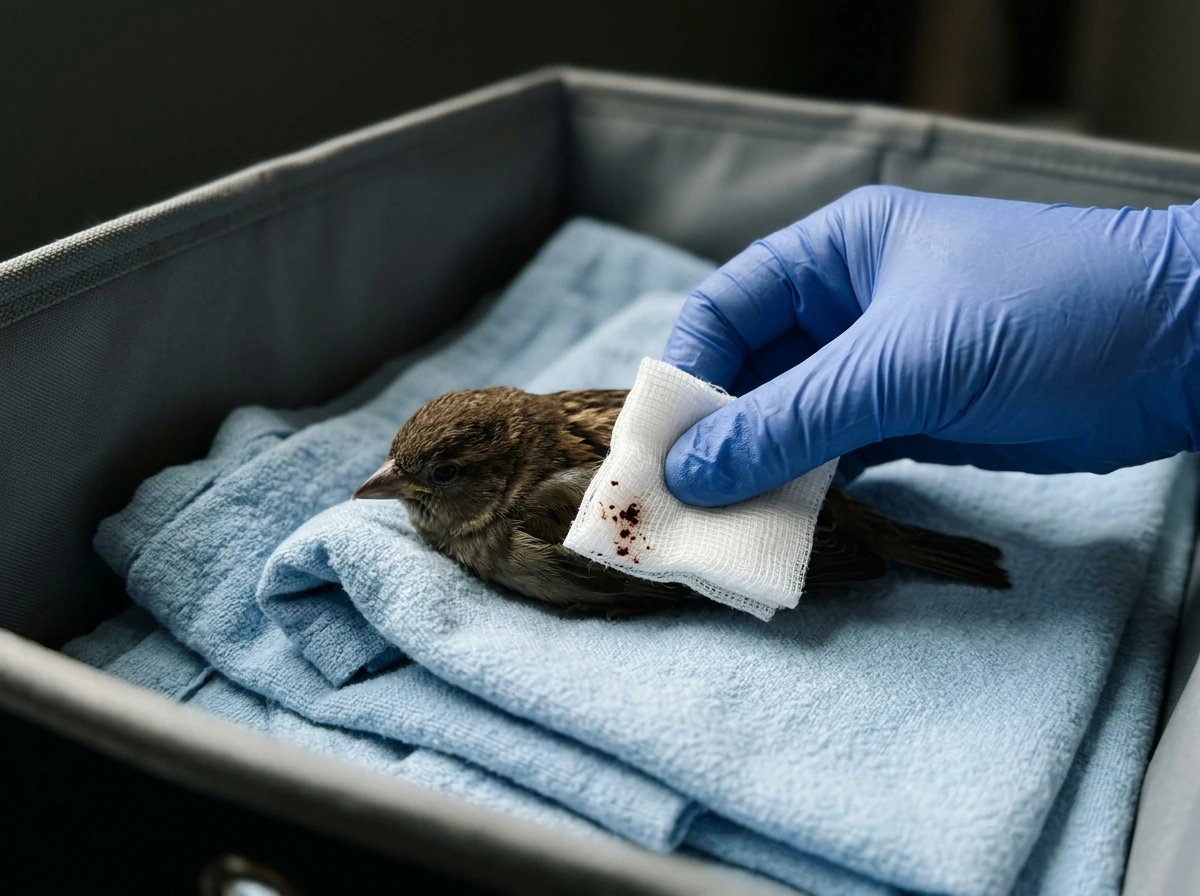
If the bird is actively bleeding, apply gentle, direct pressure to the wound using a clean cloth or gauze. Hold it steady rather than repeatedly lifting to check. For blood feathers (pin feathers that have been broken and are bleeding from the shaft), apply light pressure. Do not pull out a broken blood feather yourself unless you've been specifically instructed to do so by a vet, as this can cause additional trauma. If bleeding is significant and doesn't slow with pressure, that's an urgent veterinary situation.
Breathing
Watch the bird's chest and tail bob. Some movement is normal, birds breathe with their whole body. Open-mouth breathing, wheezing, clicking sounds, or a tail that bobs dramatically with every breath are signs of respiratory distress. If you see any of these, the bird needs veterinary attention immediately, not tomorrow.
Safe handling
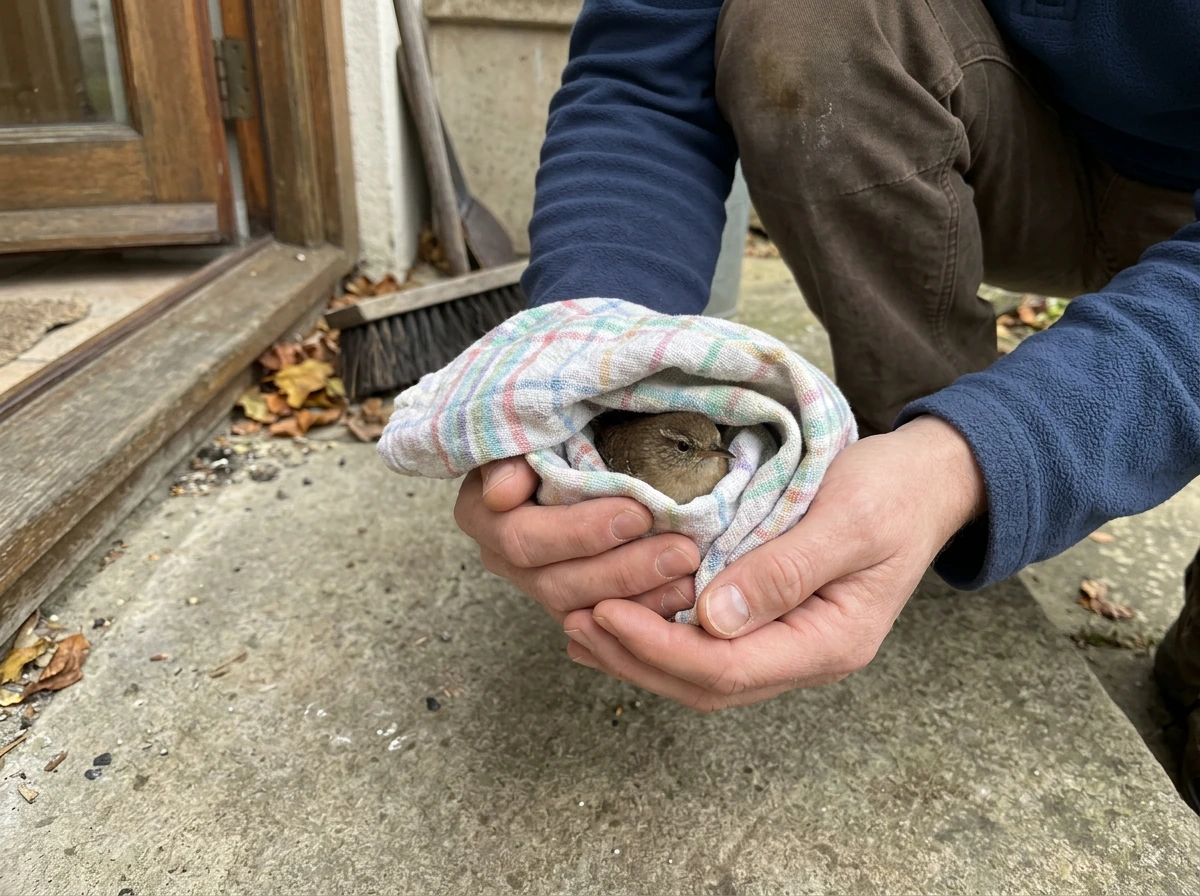
Handle the bird as little as possible. When you do need to pick it up, place a light cloth or small towel over it first, then scoop it up gently with both hands so that its wings are held loosely against its body. Don't grip tightly. Birds can suffocate if their chest is compressed. Keep the bird upright and supported, not dangling.
What not to do: mistakes that can make things much worse
This section matters just as much as the first aid steps. A lot of well-meaning people accidentally hurt birds by doing things that seem helpful but aren't.
- Do not give food or water unless you have been specifically told to by a wildlife rehabilitator or avian vet. Even giving water by syringe can accidentally send liquid into the bird's airway and drown it. This is one of the most common causes of accidental harm.
- Do not give the bird any human medications, including pain relievers like ibuprofen or acetaminophen. These are toxic to birds.
- Do not try to splint a broken wing yourself unless you've been given specific instructions. Improper splinting causes additional injury.
- Do not place the bird in a cage with a mirror, perches, toys, or other birds. An injured bird needs isolation and quiet, not stimulation.
- Do not use a heating pad set to high, or place the bird directly on a heat source with no ability to move away. Hyperthermia is a real danger.
- Do not feed bread, milk, crackers, or anything from your kitchen table. These foods are harmful or nutritionally useless to birds.
- Do not attempt to force-feed a bird. A bird that won't eat is usually in shock, hypothermic, or too ill to eat safely. Force-feeding at that point causes aspiration and additional stress.
- Do not keep the bird in a loud, bright, busy area of your home. Stress alone can be fatal.
Setting up a recovery space: the right container and environment
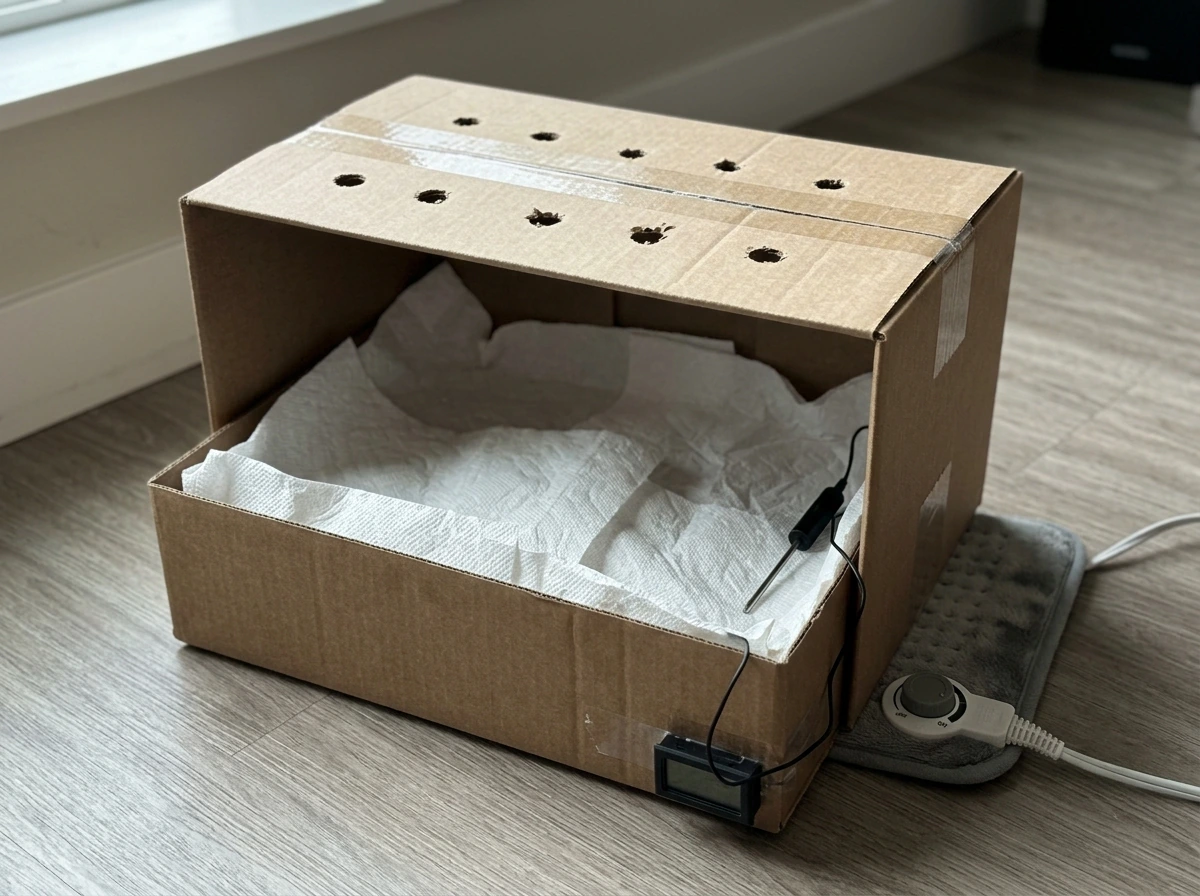
You don't need special equipment. What you need is a container that's the right size, secure, and set up to minimize stress.
A cardboard box with a lid works well for most small to medium birds. Punch several small ventilation holes in the lid (not the sides, where light and visual stimulation can get in). Line the bottom with a clean cloth, paper towels, or unscented tissue. Avoid newspaper, which is slippery and can cause leg injuries. Don't use loose cotton, yarn, or anything the bird's feet can get tangled in.
The box should be just large enough for the bird to sit comfortably without being able to fly around inside and injure itself further. Too large a container allows the bird to flap and crash, which can worsen fractures or cause new ones.
Temperature is critical: keep the ambient environment between 85 and 95°F (29 to 35°C) for nestlings, and around 85°F for injured adult birds. Use a heating pad on low under half the box as described above. If you're in a warm room (around 80°F or higher), you may not need additional heat for an adult feathered bird, but monitor the bird closely.
Place the container in a dark, quiet room away from pets, children, televisions, and foot traffic. If you need to keep the bird overnight, our guide on what to do with an injured bird overnight walks through that situation in more detail. The guiding principle is always the same: the less the bird is disturbed, the better its chances.
Feeding and hydration: what's safe depends on the bird's age
The universal default is: do not feed or give water to a bird you've just found until you've spoken to a rehabilitator or vet. That said, if you're in a remote area, the bird is stable and warm, and professional help is hours away, here's what you need to know by age group.
Nestlings (unfeathered or pin-feathered, eyes possibly still closed)
Nestlings are extremely fragile and should not be fed by an untrained person without direct guidance from a rehabilitator. They have very specific dietary needs depending on species, and the wrong food or the wrong feeding technique can kill them quickly. Warming always comes before any attempt at feeding. A cold nestling cannot digest food and will develop fatal crop stasis. If a nestling is cold, focus entirely on warmth first and call a rehabilitator before doing anything else.
Fledglings (fully or mostly feathered, active, eyes open)
Fledglings are closer to eating independently but still need species-appropriate food. If you've been cleared by a rehabilitator to offer food, small mealworms or moistened dog kibble can work as a very short-term bridge for insectivorous species. Seed-eating birds may accept small seeds. Still, confirm with a professional before offering anything. Never offer bread, milk, fruit juice, or anything sugary.
Juvenile and adult birds
Most injured adult wild birds should not be fed by a non-professional. A bird that is in shock, hypothermic, or severely injured is not in a physiological state to digest food safely. Offering water via dropper or syringe is one of the most common causes of accidental aspiration death in rescued birds. If the bird is stable, alert, and warm, and you're waiting several hours for transport, a shallow dish of clean water in the container (not held to the beak) gives the bird the option to drink on its own terms.
| Bird Type | Feed Without Guidance? | Safe Short-Term Options (if cleared) | Always Avoid |
|---|---|---|---|
| Unfeathered nestling | No | None — call a rehabber first | Bread, milk, water by dropper, any human food |
| Feathered nestling / fledgling | No | Mealworms, moistened dog kibble (species-dependent) | Bread, milk, sugar water, citrus, raw meat |
| Adult wild bird | No | Shallow dish of water if alert and stable | Force-feeding, syringe water, bread, dairy, medication |
| Injured pet bird | No — call avian vet | Whatever the vet advises | Human medications, force-feeding, unprescribed supplements |
For more detail on what's safe and what's harmful by species and age, see our dedicated guide on what to feed an injured bird.
When to call a wildlife rehabber or avian vet right now
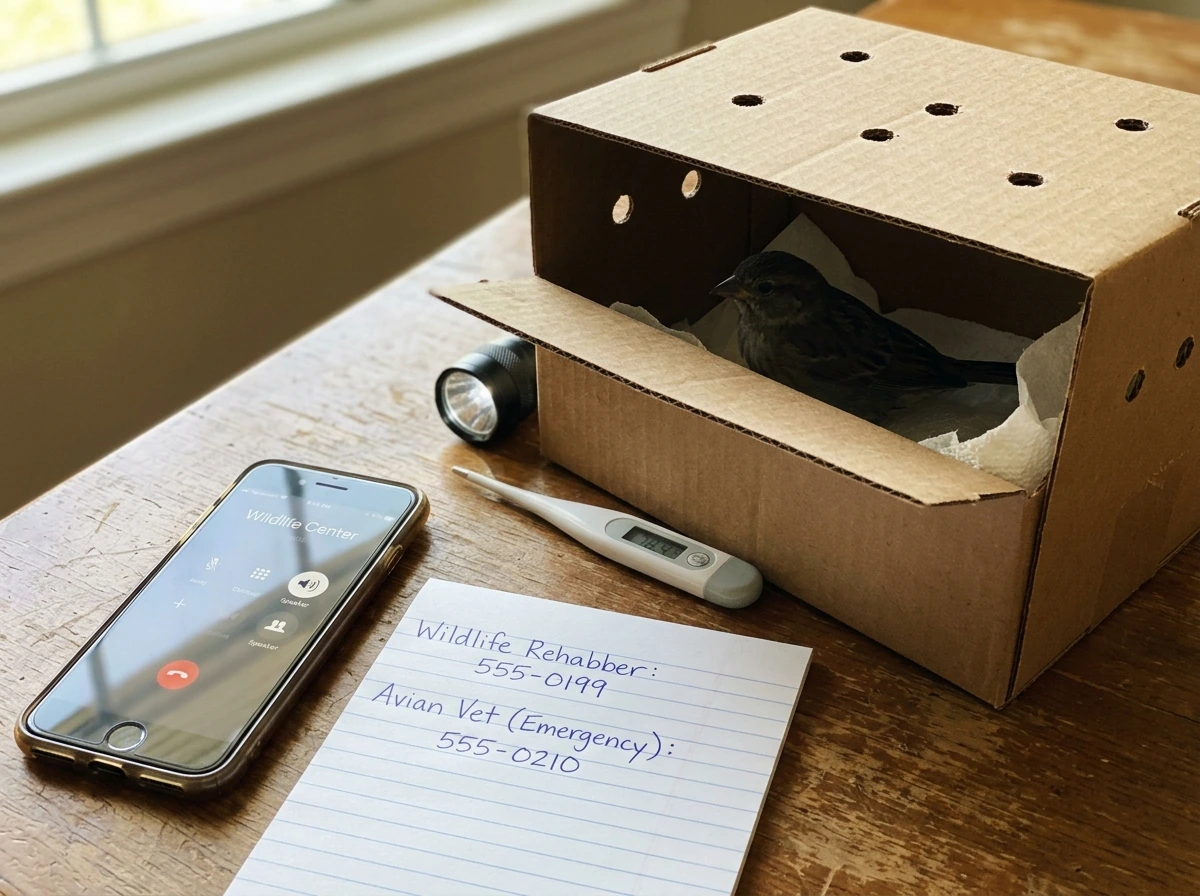
For wild birds, the honest answer is: almost always. A permitted wildlife rehabilitator is trained specifically to nurse birds back to health and release them. You are providing emergency stabilization. The goal is always to hand the bird off to someone qualified as soon as possible.
That said, some situations mean you should not wait at all. Contact a wildlife rehabilitator or avian vet immediately if:
- The bird has an open wound, is bleeding from the mouth or vent, or has a visible broken bone with skin broken.
- A cat or dog has been involved, even if there are no visible wounds. Cat bacteria cause systemic infection within hours.
- The bird is breathing with an open mouth, wheezing, or the tail is pumping hard with every breath.
- The bird is completely unresponsive, limp, or unable to hold its head up.
- The bird is convulsing or showing neurological signs like spinning, falling to one side, or head tilting severely.
- You have a nestling with no accessible nest and no rehabilitator response within a few hours.
- The bird has not shown any improvement after 60 to 90 minutes of warmth and quiet following a window strike.
To find a permitted wildlife rehabilitator in the US, contact your state's fish and wildlife agency, call a local veterinary clinic (many can refer you), or search the National Wildlife Rehabilitators Association directory. The American Bird Conservancy also maintains helpful resources for locating local help quickly for how to care for injured bird.
For pet birds, an avian vet is your first call, not a wildlife rehabilitator. General practice vets often have limited experience with birds. Look specifically for a vet who lists avian medicine as a specialty.
The recovery process: monitoring, timelines, and thinking about release
If you're caring for a bird over more than a few hours (for example, while waiting for transport to a rehabilitator, or following guidance from a vet), here's how to monitor progress without making things worse.
What to watch for
Check on the bird every couple of hours, but keep checks brief and calm. Look for these signs of improvement or decline:
| Sign | Improving | Concerning |
|---|---|---|
| Posture | Upright, head held normally | Hunched, head down, falling to side |
| Breathing | Quiet, regular, beak closed | Open-mouth breathing, wheezing, tail pumping |
| Eyes | Open, alert, tracking movement | Closed or partially closed for extended periods |
| Droppings | Present (green/white is normal) | Absent for hours, or bloody/very watery |
| Response to disturbance | Tries to move away or shows alertness | No response at all |
A window-strike bird that was stunned may recover fully within 30 to 90 minutes and be ready to release when it's alert, upright, and reactive. Don't rush it. A bird that seems recovered but flutters weakly may need another hour.
Timelines for more serious injuries
For anything beyond a brief concussion, realistic recovery timelines depend on the type and severity of injury and should be managed by a rehabilitator. Fractures, for example, typically require 3 to 6 weeks of restricted movement followed by flight conditioning before a bird is ready for release. Internal injuries, infections, or significant blood loss require professional monitoring and often medication. These are not situations you can manage at home long-term without professional guidance.
Release readiness for wild birds
Under US Fish and Wildlife Service guidelines, a recovered migratory bird must be released to appropriate wild habitat as soon as seasonal conditions allow. A bird is generally considered ready for release when it can fly strongly and maneuver well, is eating independently, maintaining body weight, and showing normal fear responses to humans. A bird that approaches humans confidently, can't sustain flight, or is underweight is not ready.
Release should happen in appropriate habitat for the species, ideally where it was found, and at a time of day when the bird has a few hours of daylight to orient and find cover. Early morning is usually best. Don't release a bird in extreme heat, cold, or storm conditions.
If a bird has injuries that cannot fully heal (such as a wing that requires amputation), release to the wild is not a humane option. A permitted rehabilitator can advise on placement as a permanent care bird, or on euthanasia if the quality of life cannot be maintained. These are hard realities, but making that call with a professional is far kinder than releasing a bird that can't survive.
Your next steps right now
Here's a simple action sequence to follow today:
- Assess safety for you and the bird. Don't rush in without looking first.
- Contain the bird in a ventilated cardboard box lined with a cloth or paper towels.
- Add warmth via a heating pad on low under half the box, or a towel-wrapped hot water bottle inside it.
- Place the box in a dark, quiet room. Reduce handling to an absolute minimum.
- Do not feed or water the bird until you've spoken with a professional.
- Call a permitted wildlife rehabilitator or avian vet now. Don't wait to see if it gets better on its own.
- Transport the bird to the rehabilitator or vet as soon as possible, keeping the car warm and the bird in the dark during the drive.
- Monitor, but don't hover. Brief check-ins every two hours are enough.
Nursing a bird back to health is really a two-part job: you provide safe, warm, low-stress emergency holding, and a trained professional handles the actual medical recovery. After immediate first aid, professional care is the next step in how to nurse an injured bird safely how to nurse injured bird. The most important thing you can do right now is those first four steps and that phone call. Everything else follows from there.
FAQ
How long can I keep a bird before it must go to a rehabilitator?
Yes. If it is cold outdoors, keep the holding container indoors and insulated (for example, inside a towel or cooler) so the temperature stays stable during transport. Avoid taking the bird in and out of a heated car repeatedly, because temperature swings can trigger shock even if the bird looks calm.
What should I do if I cannot get help immediately (overnight or long wait)?
If a bird is alert and warm, brief holding for several hours is usually reasonable while you arrange transport, but aim for the quickest permitted care you can get. If you notice any worsening breathing effort, increasing bleeding, weakness, or ongoing inability to stand, treat it as urgent and contact help sooner rather than waiting for a “time window.”
Is a pet carrier or cage okay for holding an injured bird?
Don’t use a cage with a wire floor or perches for an injured bird, even temporarily. Wire can cause pressure sores and the bird may climb and injure itself further. A simple covered, ventilated box with a soft, stable bottom lining is safer for most cases.
How do I transport the bird without stressing it too much?
If you must move the bird, do it in a way that minimizes body compression and wing flapping. Support the body with both hands and keep it upright, then place it immediately back into the dark box. For strong movers, covering the container or partially covering the bird (not the ventilation holes) can reduce startle behavior.
Can I figure out what to feed based on what the bird “seems like”?
You should not try to identify the bird by guessing its species for diet or treatment. Instead, provide warmth and low stress, then tell the rehabilitator what you observed (size, color, location, whether it was found on the ground, and if it could stand or breathe comfortably). Species-level diet decisions should wait for professional guidance.
What if the bird seems hungry and won’t stop opening its beak?
No. In most cases, offering food or water before the bird is warm and stable increases the risk of aspiration and crop or digestive problems. If a bird is not fully alert and warm, focus only on heat, darkness, and a professional call, even if someone suggests feeding “because it’s hungry.”
Are there any homemade foods or substitutes that are always safe?
Avoid blanket rules for “safe” broths or seeds, because diet depends heavily on species, and even correct foods can be fatal if feeding technique or timing is wrong. For any nestling, do not improvise feeding, and for fledglings, only offer anything if a rehabilitator specifically clears you and provides the exact instructions.
Can I treat wounds with antibiotic ointment or give pain medicine?
Don’t use ointments, antiseptics, or pain medicine unless a vet tells you to. Many topical products are irritating or unsafe when birds ingest residues, and medications can mask symptoms and complicate diagnosis. If bleeding won’t stop with gentle direct pressure, that’s the cue to escalate immediately.
How do I know breathing problems require urgent care?
A tail that bobs dramatically with each breath, open-mouth breathing, wheezing, clicking, or a bird that keeps gaping to breathe are red flags. In those cases, do not wait for feeding or “to see if it improves,” seek veterinary help immediately while keeping it warm and quiet.
If a window-strike bird recovers quickly, can I release it the same day?
For a window-strike, you can watch briefly after warming and reducing stress, but do not attempt release based only on “seeming better” if it cannot maintain normal balance and responsive behavior. A bird that remains weak, flutters poorly, or shows persistent confusion needs more professional assessment before release.
What should I do if the bird has a suspected broken wing?
If the bird’s wing is hanging, broken, or the bird cannot perch and is dragging itself, it should be treated as an injury that likely needs immobilization and professional care. At home, you should only provide warmth and minimal handling, because repeated movement or trying to “set” the wing often worsens damage.
Where and when is it safe to release the bird after it recovers?
Do not release an injured bird at dusk or when there is immediate danger like storms, extreme temperatures, or heavy predators nearby. Choose a spot with appropriate habitat and cover for that species and release only when it can fly strongly and maneuver, not just when it can hop or flutter.
Next Article
How to Care for an Injured Bird at Home: First Aid to Help
Step-by-step home first aid for an injured wild bird, safe handling, stabilization, and when to call a pro.