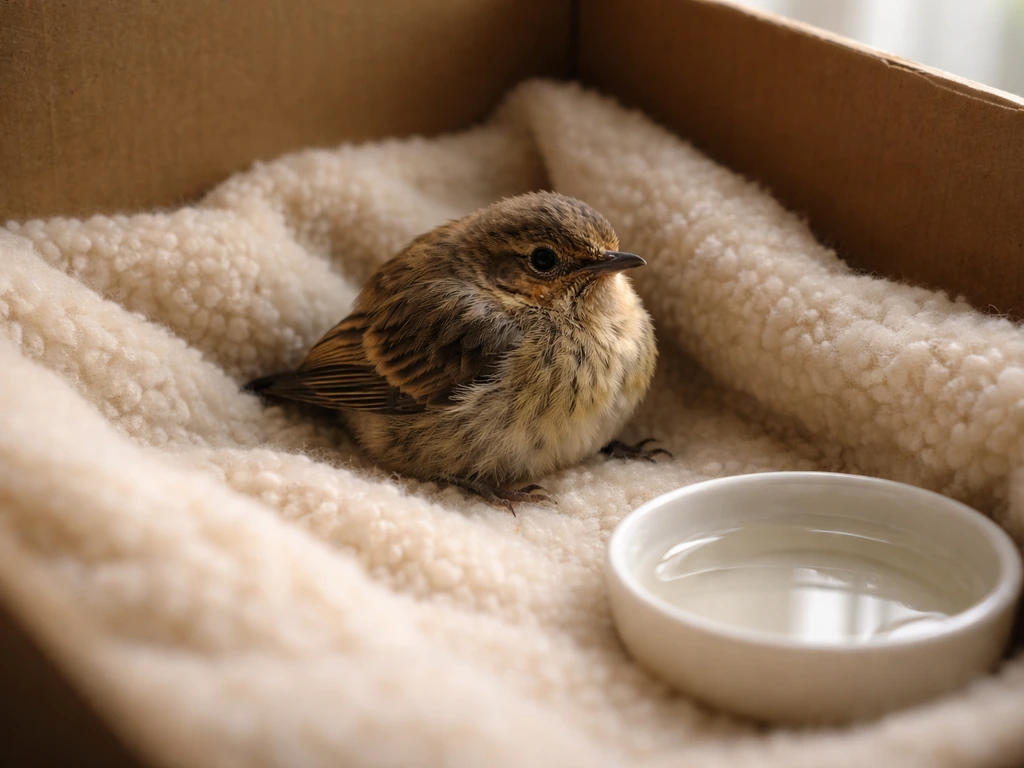
If you've found an injured bird tonight, here's the short answer: put it in a ventilated cardboard box lined with a towel, keep it somewhere warm, dark, and quiet, and don't try to feed it or give it water. That's 90% of what you need to do right now. The rest of this guide fills in the details so you can get through the night without making things worse, and hand the bird off to a professional in the morning.
What to Do With an Injured Bird Overnight
Marcus Holloway
6 Apr 2026
First 5 minutes: stay calm and do a quick triage
Before you touch the bird, take a breath. A panicked rescuer makes things harder for a bird that's already terrified and in shock. Your first job is a fast visual check, not a hands-on examination.
Look for these signs that tell you the bird genuinely needs overnight intervention: it's lying on its side, it can't hold its head up, it's bleeding actively, a wing is hanging at an odd angle, it's tangled in string or fishing line, it's breathing with its beak open and working hard, or it's been sitting in the same spot for more than an hour without moving. Any one of these means the bird needs to be contained safely and seen by a professional as soon as possible.
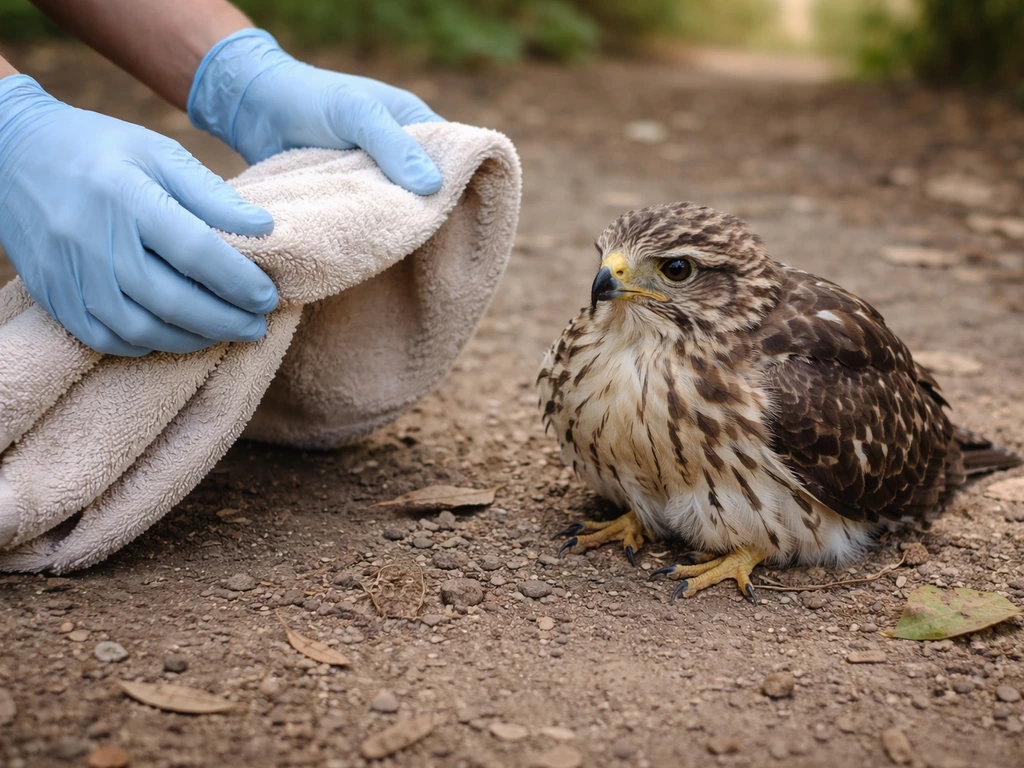
Also protect yourself. Most common songbirds pose little risk, but raptors (hawks, owls) have talons that can puncture skin easily, and herons have long sharp beaks aimed at eyes. Use a thick towel or gardening gloves. Don't put your face near the bird's face.
Signs of shock are common and important to recognize: the bird may be completely still, feel cold, have eyes partially closed, or breathe rapidly and shallowly. Shock alone can kill a bird faster than the original injury, so getting it somewhere warm and quiet is the single most important thing you can do in the next few minutes.
Building a safe overnight shelter
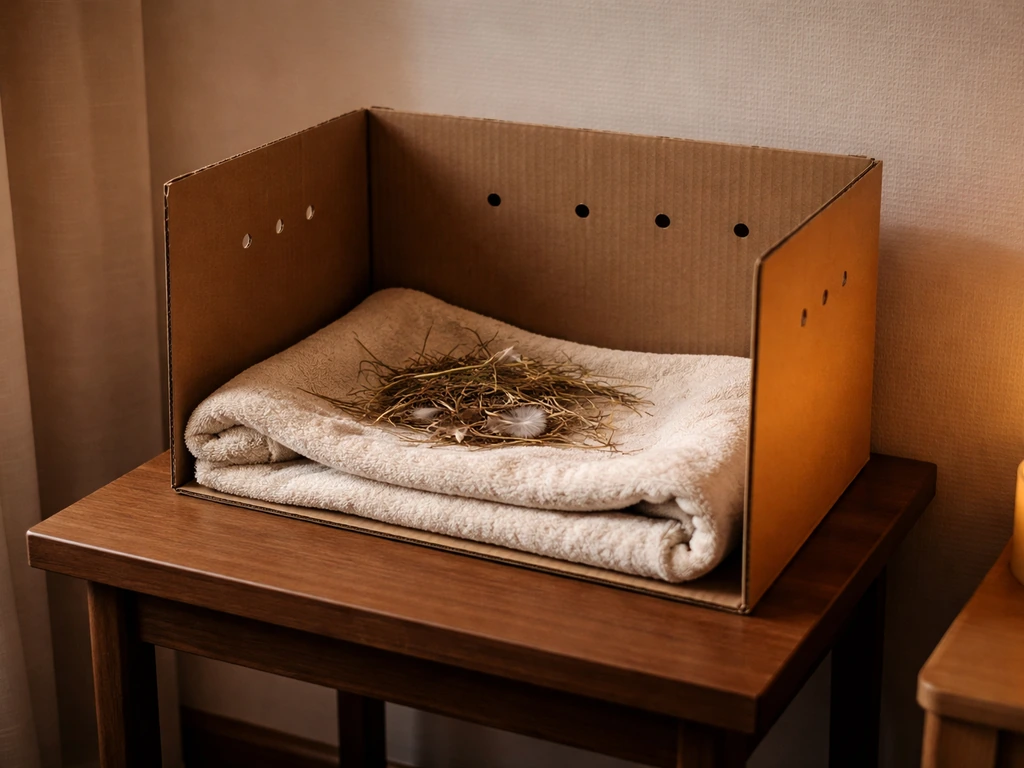
A cardboard box is your best tool here. Choose one big enough that the bird isn't cramped, but not so large that it can flap around and hurt itself further. Punch several small holes in the sides or lid for ventilation, then line the bottom with a plain towel or paper towels. Avoid terrycloth or anything with frayed edges or loops that toes can get caught in.
Darkness matters more than most people realize. Covering the box or using a closed container significantly reduces the bird's stress and keeps it from thrashing against the walls. A bird that can't see threats tends to stay still, which is exactly what an injured bird needs.
For warmth, the safest method is to place the box half on and half off a heating pad set to low. This way the bird can move toward or away from the heat source on its own. Never put a heat source under the entire box, and never use a heat lamp placed close to a small container. Overheating is a real danger and can be just as deadly as cold. A good target ambient temperature inside the box is around 85 to 90 degrees Fahrenheit for most small birds in shock. If you don't have a heating pad, a small hand warmer wrapped in a cloth and placed to one side of the box works in a pinch.
Put the box in the quietest room you have. No TV, no radio, no pets wandering in and out. If you have cats or dogs, close the door. Conversation near the box stresses the bird, so check on it minimally, and keep any checks brief and quiet.
Handling basics and what to do for specific injuries
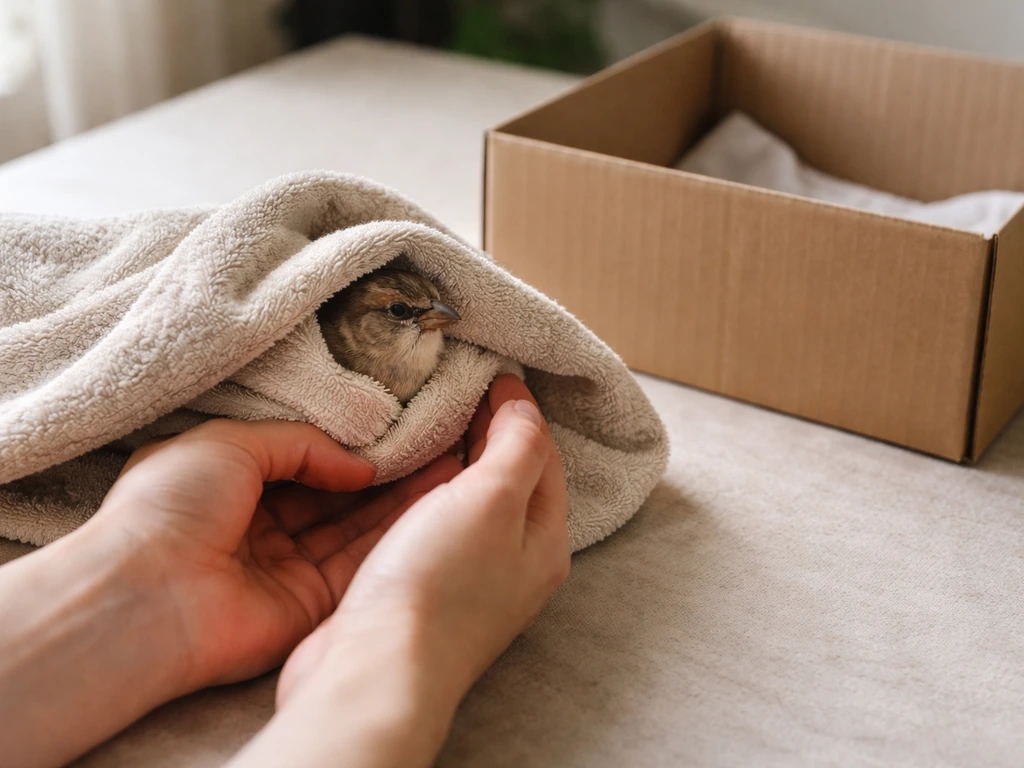
Handle the bird as little as possible. Every time you pick it up, its heart rate spikes. The goal is to get it safely into the box once, then leave it alone until morning.
To pick up a bird, drape a towel over it, then gently scoop both hands underneath. Wrap the towel loosely around the body so the wings are held against the sides, but don't squeeze. Lower it into the box and let it settle before closing the lid.
Active bleeding
If the bird is bleeding from a wound, apply very gentle pressure with a clean dry cloth for two to three minutes. Don't use hydrogen peroxide or antiseptic wipes, which damage fragile tissue. If the bleeding slows or stops, leave it alone. If it won't stop at all after five minutes of gentle pressure, that bird needs emergency care tonight, not in the morning.
Suspected broken wing
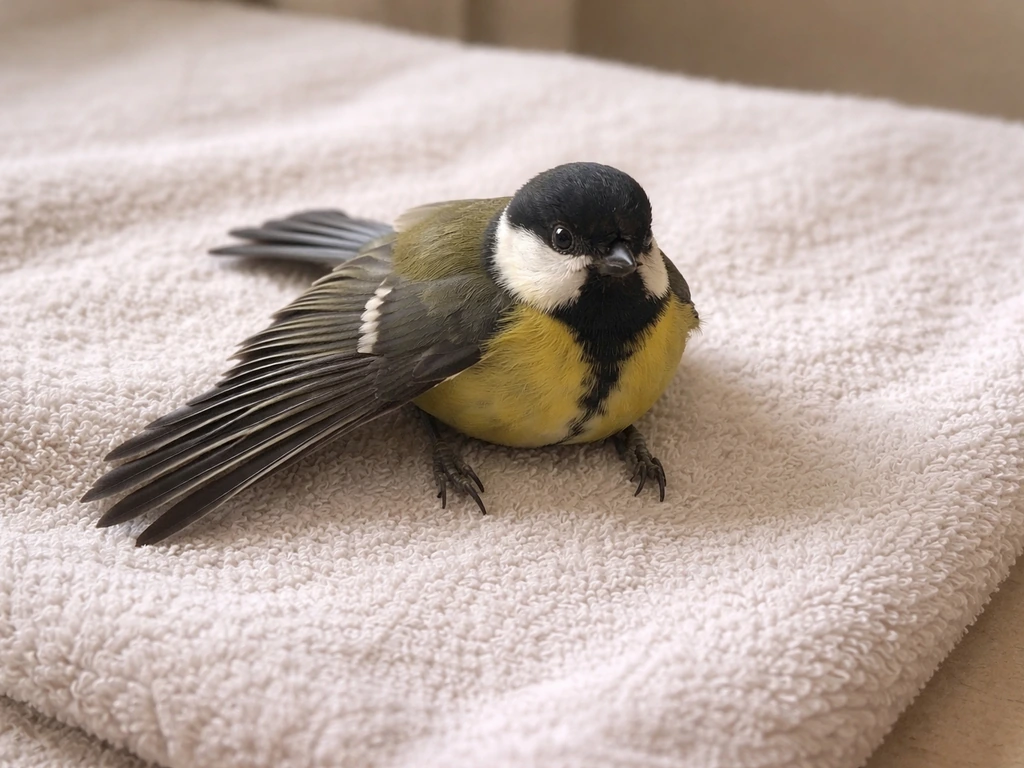
A broken wing usually hangs lower than the other or droops awkwardly. Don't try to splint it yourself. Incorrect splinting causes pain and can cut off circulation. Place the bird in the box so it's upright and supported, and let the professional handle the rest. Knowing how to care for an injured bird through the night really comes down to containment and warmth, not DIY repairs.
Entanglement in string or fishing line
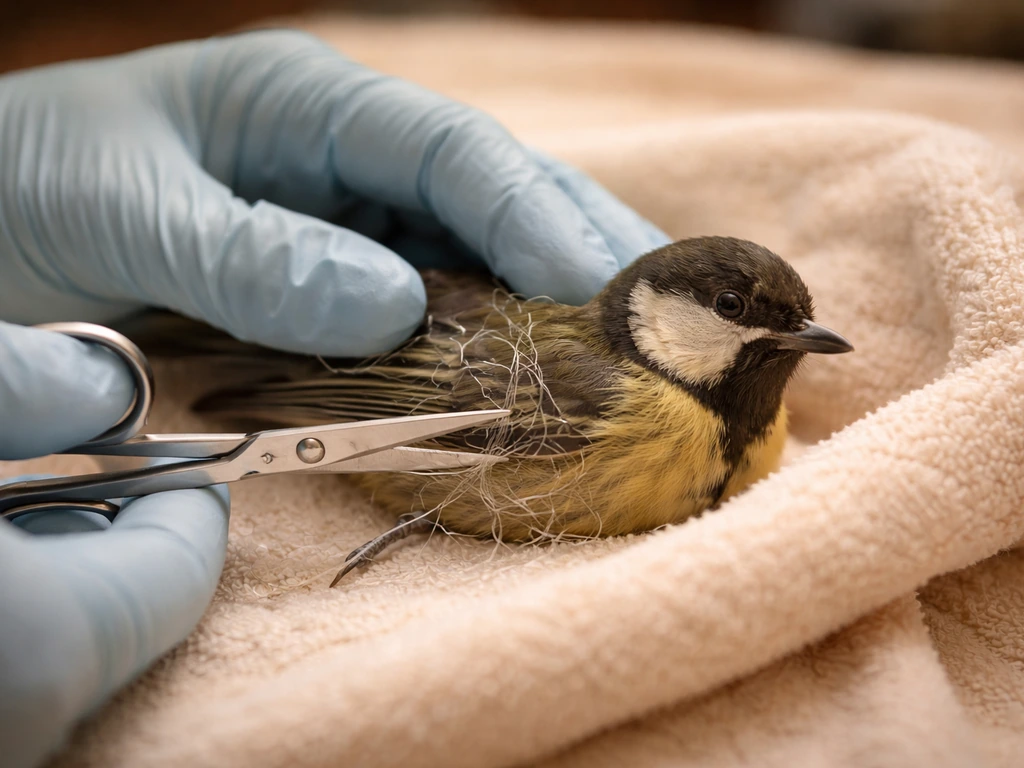
If the bird is tangled, this is one situation where you may need to act before boxing it. Keep the bird still with one hand (towel-wrapped) and use small, sharp scissors to carefully cut the material away. Go slowly. Don't pull or tug. If the line is embedded in skin or wrapped tightly around a limb with swelling, don't cut it. Box the bird as gently as you can with the material still in place and let the vet handle it.
Window strike and head injury
A bird that hit a window may just be stunned and recoverable within an hour. Place it in a box in a quiet, warm spot and check it in 30 to 60 minutes. Greenwood Wildlife Rehabilitation Center advises placing an unrecoverable bird in a paper bag or a ventilated box and checking responsiveness after about an hour. If it's alert, sitting upright, and trying to move around when you check, take it outside and open the box. If it flies away, great. If it's still lethargic, uncoordinated, tilting its head to one side, or showing any seizure-like movement, it has a head injury that needs professional care.
Feeding and water: what to do (and mostly avoid)
This section is short because the general rule is: don't feed or give water overnight. I know that feels counterintuitive, but most injured birds won't eat voluntarily when stressed, and forcing food or water can cause aspiration (liquid in the lungs), which can kill them. The primary overnight triage priorities are warmth, quiet, and containment, not nutrition.
If the bird is a healthy-looking adult that's been with you for many hours and is clearly alert and active, you can place a very shallow dish (a bottle cap works) of clean water inside the box where it won't be knocked over. Don't hold the bird and drip water into its beak.
If you're tempted to offer food, check out the full guidance on what to feed an injured bird before you do anything, because the wrong food causes real harm. Never offer bread, milk, peanut butter, raw meat, or anything from your kitchen fridge without doing that research first.
Nestlings are the exception. Very young, featherless birds have extremely high metabolic rates and can deteriorate fast without food. If you have a confirmed nestling (no feathers, eyes closed, completely helpless), contact a wildlife rehabilitator tonight if possible, even if it's after hours. Many have emergency lines or answering services.
Is it actually orphaned? Nest vs. intervention
Not every bird on the ground is injured or orphaned. Getting this right prevents unnecessary interventions that separate birds from parents who are still caring for them.
A nestling has no feathers or very short pin feathers, can't hop or perch, and has no business being on the ground. If you can find the nest and safely reach it, put it back. Parent birds will not reject a nestling because you touched it. If the nest is destroyed or unreachable, make a substitute nest from a small container (like a margarine tub with drainage holes) lined with dry grass or paper towels, and place it in the nearest tree or shrub. Watch from a distance for 30 to 60 minutes to see if a parent returns.
A fledgling looks very different: it has most of its feathers, hops around confidently, and may flutter short distances. Fledglings spend several days on the ground while their parents continue to feed them. This is normal. If a fledgling is in immediate danger (near a road, near a cat), move it to a nearby shrub or low branch. Don't bring it inside unless it's clearly injured.
Intervene if: the bird is cold and lethargic, you've confirmed both parents are dead, it's been more than two hours with no parent contact, or it's visibly injured. In that case, bring it in, apply the same box protocol, and make contacting a rehabilitator your top priority.
Getting professional help and what to do in the morning
Wildlife rehabilitators are licensed specifically to care for wild birds. Your regular vet may not be trained or equipped for wild bird care, though many emergency animal hospitals can at least stabilize a bird overnight. Avian vets are a better option if you can locate one.
To find a rehabilitator, try these resources tonight even if it's late: the National Wildlife Rehabilitators Association website (nwrawildlife.org), your state's fish and wildlife agency website, or calling a local animal shelter and asking for a referral. Many rehabilitators have after-hours voicemail or text lines. Leave a message tonight so they can call you early in the morning.
When you do reach someone, be ready to share: the species if you know it (or a description), where and when you found it, what condition it's in, what you've done overnight, and your location. A photo or short video of the bird in the box can help them assess remotely.
For transport in the morning, keep the bird in the same box. Don't transfer it to a wire cage or open carrier. Place a non-slip liner underneath and make sure the box is secured so it won't slide on the car seat. Keep the car quiet (no loud music), and keep the temperature moderate. The bird should ride in the back seat or footwell, not in a hot trunk. Minimize stops and talking during the drive. Keeping noise and conversation to a minimum during transport significantly reduces the bird's stress.
When it can't wait until morning
Some situations are genuine emergencies that need care tonight, not at 9am. Go to an emergency animal hospital now if the bird: has bleeding you can't stop, is having seizures or convulsions, is completely unresponsive, is breathing with its mouth wide open and not improving, has a prolapsed organ or severe visible wound, or is a very young nestling that's cold and completely limp.
The overnight do-not list
These are the most common mistakes people make with the best intentions. Avoiding them makes a real difference to whether the bird survives.
- Don't force food or water into the bird's beak. Aspiration is a serious risk.
- Don't offer bread, milk, peanut butter, or processed human food. These cause harm.
- Don't use a wire or open cage for an injured bird. It will injure itself further trying to escape.
- Don't use hydrogen peroxide, alcohol, or antiseptic sprays on wounds.
- Don't keep the bird as a pet or attempt long-term care without a rehabilitator license. In most places this is illegal, and doing it right requires specialized training and equipment.
- Don't handle the bird repeatedly to check on it. Open the box once before bed and once in the morning.
- Don't place the box in a room with cats, dogs, or other pets, even if those pets seem calm.
- Don't put the entire box on a heating pad or use a heat lamp at close range. Overheating is fatal.
- Don't release the bird in the morning without checking it carefully. If it can't fly in a straight line or is still lethargic, it needs professional care first.
Your overnight checklist
Run through this before you go to bed. If you can check every box, you've done your job well. The rest is up to the professionals in the morning.
- Bird is in a ventilated cardboard box with a non-fraying towel lining the bottom.
- Box is in a warm, dark, quiet room away from pets and household noise.
- Heat source (if used) is under half the box only, set to low, so the bird can move away from it.
- No food or water has been forced. A shallow water dish is optional for alert adults only.
- You've done a quick visual check: bleeding is controlled or absent, no emergency symptoms are present.
- You've noted the species, location found, condition, and anything you observed.
- You've contacted or left a message for a local wildlife rehabilitator or avian vet.
- The transport box is ready for the morning: secure, ventilated, quiet.
What good overnight care actually looks like
Here's the honest truth: the best overnight care for an injured wild bird is mostly about doing less, not more. Your job is to keep it contained, warm, and calm until someone with the right training takes over. If you're looking for ways to go further, reading up on how to nurse a bird back to health will give you a clearer picture of what proper rehabilitation actually involves, and why it requires professional support beyond the first night.
Keeping the bird calm is actually one of the most underrated parts of this. A stressed bird burns energy it can't afford to lose. Everything from the dark box to the quiet room to minimizing how often you open the lid is about reducing that stress load. If you want to go deeper on this, there's solid practical advice on how to calm an injured bird that covers the behavioral side of what's happening and how to respond to it.
Making the bird physically comfortable is the other piece. Small details matter: a non-slip surface so it doesn't struggle to stand, a towel roll it can lean against if it can't hold itself upright, the right temperature range. For a detailed walkthrough of all of this, how to make an injured bird comfortable covers the setup in depth.
If you find yourself in this situation again, or if you want to be better prepared, it helps to read through the broader guidance on how to nurse an injured bird and how to care for a bird generally. These go beyond the emergency night and into the fuller picture of what birds need to recover.
You found this bird, you got it safe, and you made it through the night with it. That already puts it in a far better position than it was an hour ago. Now hand it off to someone who can take it the rest of the way.
FAQ
Should I check the bird again during the night, or just leave it alone until morning?
If the bird is active enough to move upright and you are seeing no active bleeding or distress, you can do a brief check after 30 to 60 minutes. If it remains lethargic, uncoordinated, breathing hard, or tilting its head, keep it contained and call an overnight or morning rehabilitator rather than trying to “test” it by taking it out repeatedly.
Can I give the bird pain relief, antibiotics, or vitamins to help it through the night?
Do not give meds, vitamins, or “bird-specific” supplements overnight. Small birds can absorb medication unpredictably when stressed or injured, and incorrect dosing can be as harmful as the original injury. Stick to warmth, darkness, and containment until a licensed wildlife professional takes over.
Is it ever okay to force water or hold the bird to help it drink?
For most injured wild birds, skip water unless the bird is a healthy-looking adult that is already upright and able to swallow. Even then, offer a very shallow container inside the box so the bird can sip without being held or forced. No syringes, no dribbling into the beak, and no feeding tubes overnight.
What should I do if the bird soils the towel or gets wet in the box?
If you need to clean the towel lining, swap it for a fresh, dry towel while keeping the bird in the dark box with minimal handling. Use gentle blotting for small messes; avoid scrubbing, and do not rub feathers or skin. If the bird is wet with urine or droppings and cannot get comfortable, prioritize warmth and dryness and contact a rehabilitator.
How do I handle bleeding that keeps restarting after I apply pressure?
Stop the bleeding by applying gentle pressure with a clean, dry cloth for up to two to three minutes, reassessing as you go. If it will not slow or stop after five minutes total of gentle pressure, treat it as an emergency for tonight. Do not keep changing cloths every minute, and do not use antiseptics.
How can I tell if I should return a baby bird to a nest versus treating it as injured?
A nestling only needs a substitute nest (and not immediate transport) when it fits the criteria of being very young, mostly featherless or with pin feathers, and unable to hop or perch, and you cannot reach the original nest safely. If it is fully feathered or looks like a fledgling, it usually should not be moved inside unless it is injured or in immediate danger.
The bird looks okay except it is breathing strangely, what signs mean it cannot wait until morning?
If the bird’s breathing looks like open-mouth panting or it is working hard to breathe, treat it as an emergency and seek immediate help overnight. Also treat head-injury signs seriously (lethargy, seizures, uncoordinated movement, persistent head tilt) because these often worsen quickly even in a warm box.
If the bird seems calmer outdoors, can I leave it outside overnight?
Avoid “airing it out” by taking it outside to walk or letting it sit in a yard. Even if it seems calmer outside, temperature changes, noise, predators, and bright light can increase stress and bleeding. If it hit a window and is clearly alert and upright later, that is different, and you would open the box so it can fly away on its own.
Why does the guide warn against moving the bird to a wire cage, even temporarily?
Do not switch containers midstream, and do not place it in a wire cage for the night. An open cage increases stress and can cause injury. For morning transport, keep the bird in the same ventilated box with a non-slip liner and secure it so it will not slide.
If fishing line is embedded or wrapped tightly around a leg, should I cut it anyway to free it?
No, do not try to remove embedded line or embedded objects if they are wrapped tightly or you see swelling. Cutting can worsen tissue damage and bleeding, and embedded material can be safest to leave in place until a professional can assess properly under controlled care.
Next Article
What to Feed an Injured Bird: Safe Steps Right Now (UK)
UK guide to what to feed an injured wild bird now, safe foods and hydration, plus what not to give and when to call.