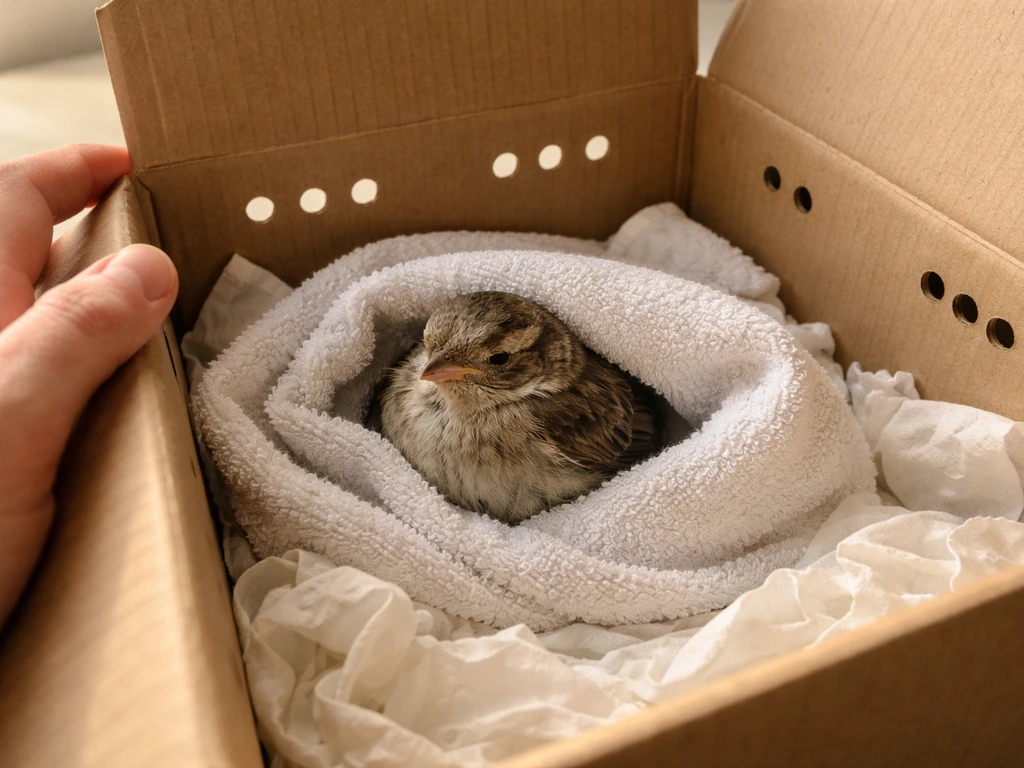
In the first 60 minutes, your job is simple: keep the bird warm, dark, and quiet, and do not feed it or give it water. That single rule prevents most of the well-meaning mistakes that hurt birds further. Get it into a ventilated cardboard box lined with a towel, place the box somewhere warm and silent, and then call a licensed wildlife rehabilitator or avian vet. If you are wondering how to nurse injured bird safely at home, this is the best next step while you arrange expert care call a licensed wildlife rehabilitator or avian vet. Everything else in this guide builds on those basics.
How to Nurse a Bird: First Aid and Recovery Steps
Marcus Holloway
17 May 2026
Before you touch it: safety, legality, and a quick assessment
Most wild birds in the United States are protected under the Migratory Bird Treaty Act. That means keeping one in your home longer than necessary for stabilization and transport is technically illegal without a rehabilitation permit. You are not doing anything wrong by helping an injured bird for a few hours, but the goal is to get it to a licensed rehabilitator or vet as fast as possible, not to keep it as a temporary pet.
Before picking the bird up, take 30 seconds to look at it from a short distance. Ask yourself a few quick questions: Is it bleeding? Is it breathing with its beak open or tail pumping? Can it hold its head up? Is a wing dragging or at an odd angle? Can it stand? These observations tell you how urgent the situation is and what to tell the vet or rehab center when you call.
Also look around for the cause. A bird on the ground near a window probably hit the glass and is stunned, not necessarily badly injured. One that a cat brought in needs a vet visit even if it looks fine, because cat saliva carries bacteria that cause fatal infection within 24 to 48 hours. A bird near a nest with no obvious injury may be a fledgling that is supposed to be on the ground (more on that below).
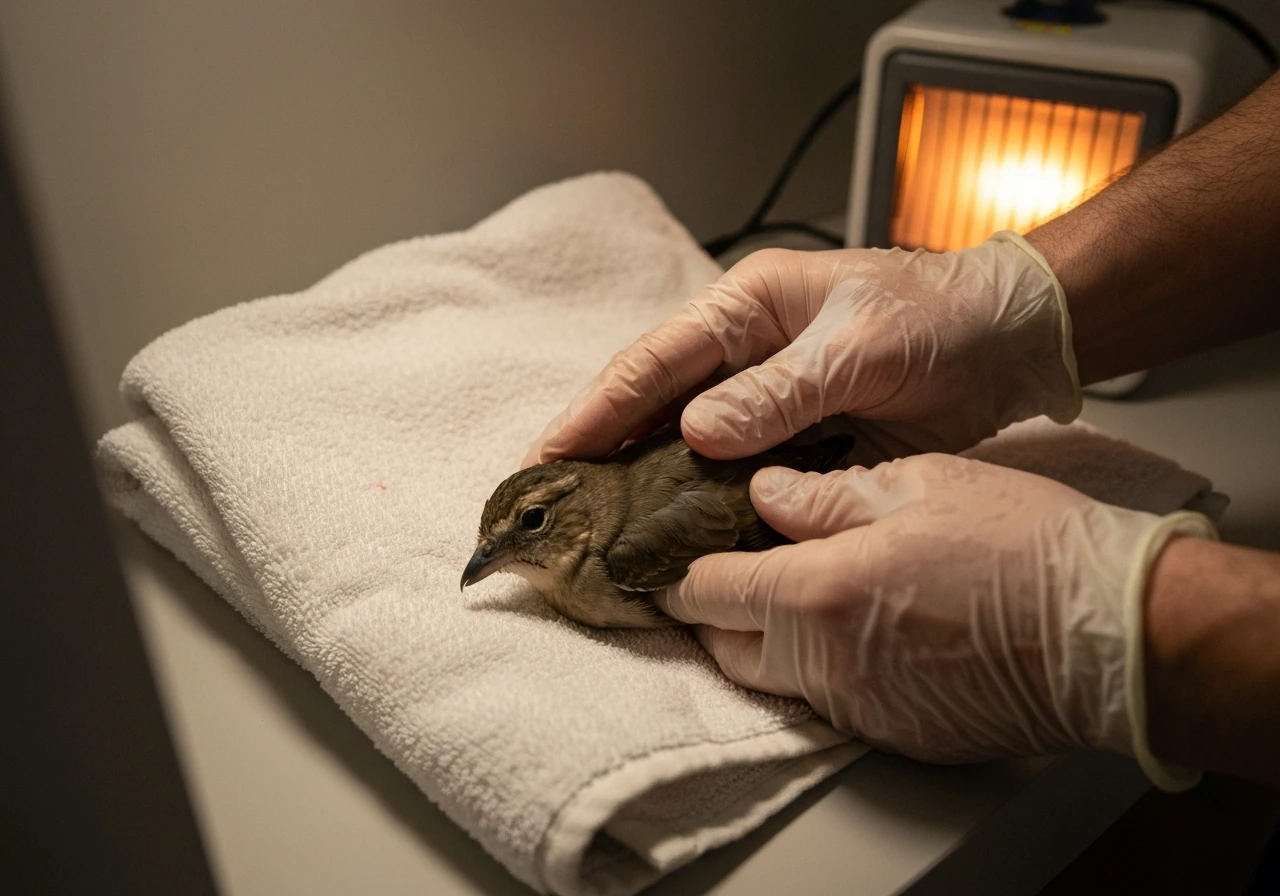
Protect yourself, too. Even small birds can scratch and bite when stressed. Use gloves if you have them, or wrap your hands in a light towel. Avoid touching your face afterward, and wash your hands thoroughly once the bird is contained.
Set up a warm, quiet recovery space
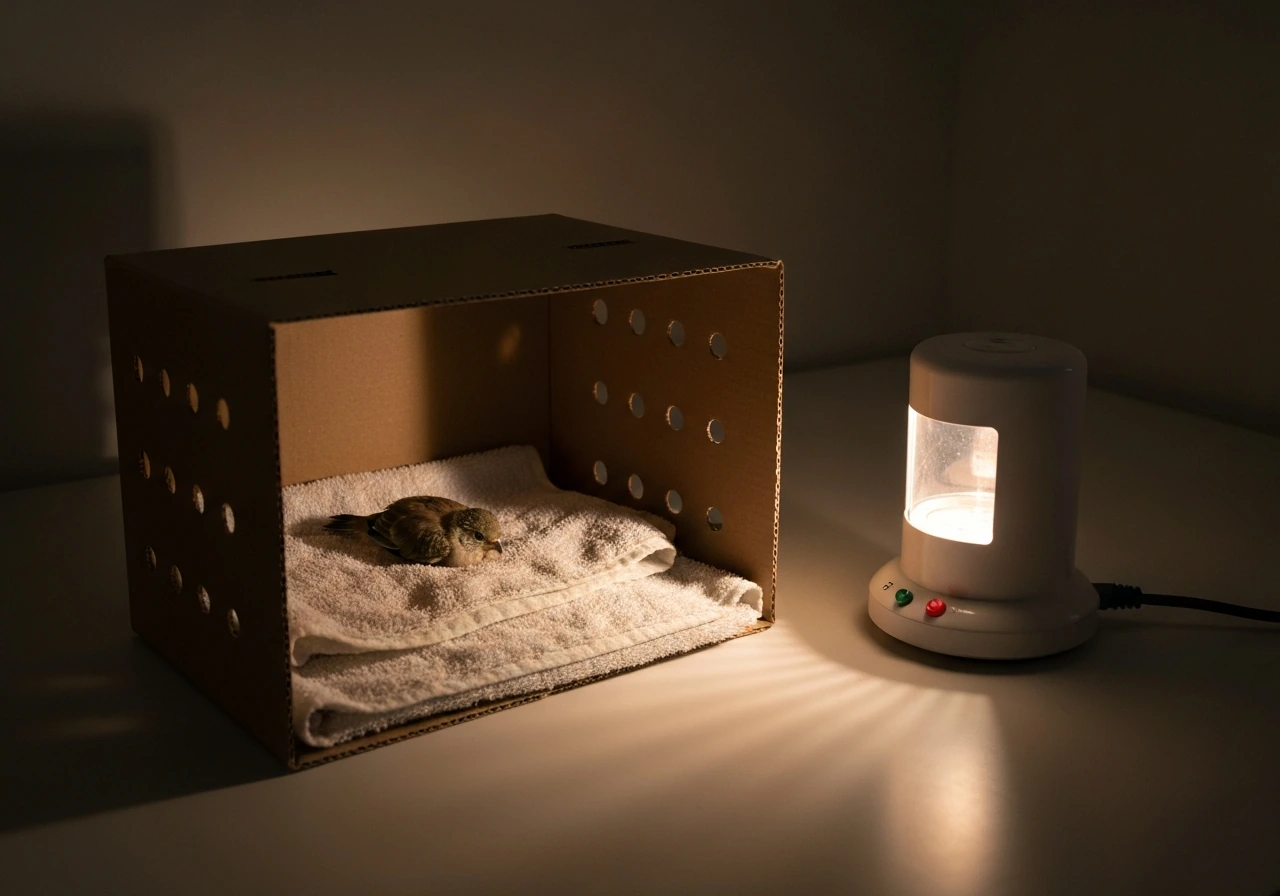
A cardboard box is the right container. It is dark, breathable, and easy to replace. Punch several small holes in the sides for ventilation, line the bottom with a non-frayed towel (no terrycloth loops the bird's toes can get caught in), and put the bird inside. Do not use a wire cage: the bird will thrash against the bars and injure itself further.
Warmth matters enormously. Injured and stressed birds lose body heat fast, and hypothermia kills them even when the underlying injury would have been survivable. If the bird feels cool to the touch, place a heating pad set to low under one half of the box only, so the bird can move away from the heat if it gets too warm. You can also fill a zip-lock bag with warm (not hot) water and wrap it in a small cloth, then tuck it against one side of the box. Aim for a temperature around 85 to 90 degrees Fahrenheit for most adult wild birds.
Put the box somewhere genuinely quiet: a bathroom, a spare bedroom, a closet. Keep other pets, children, and noise away. Darkness reduces stress, so keep the box covered. Every time you peek in or check on the bird, you are re-stressing it. Resist the urge to look unless you need to.
How to handle an injured or sick bird (the minute-by-minute basics)
Pick the bird up by cupping both hands around its body, folding the wings gently against its sides. Hold it firmly but not tightly. Most birds go calm when they feel secure containment. Do not hold the bird upright by its feet or let it hang, and do not squeeze the chest, which would restrict breathing.
Move slowly and speak as little as possible. Birds read stress from your movements, not your words. Get it into the box in one smooth motion, close the lid, and step away. If you need help calming an injured bird, the safest approach is to minimize handling and keep the recovery space warm and quiet. The less handling from this point forward, the better. Handling is the second-biggest source of stress after temperature loss, and stress alone can kill a bird that might otherwise recover.
If the bird is a pet rather than a wild bird, some of this changes. Pet birds like parakeets, cockatiels, or parrots are used to human contact, so gentle reassurance and familiar surroundings help rather than hurt. Keep a sick pet bird warm and calm in its own cage with a light cover, reduce perch height so it does not fall far if it loses its balance, and call an avian vet rather than a wildlife rehabilitator.
Fledglings vs nestlings: what you're actually dealing with matters
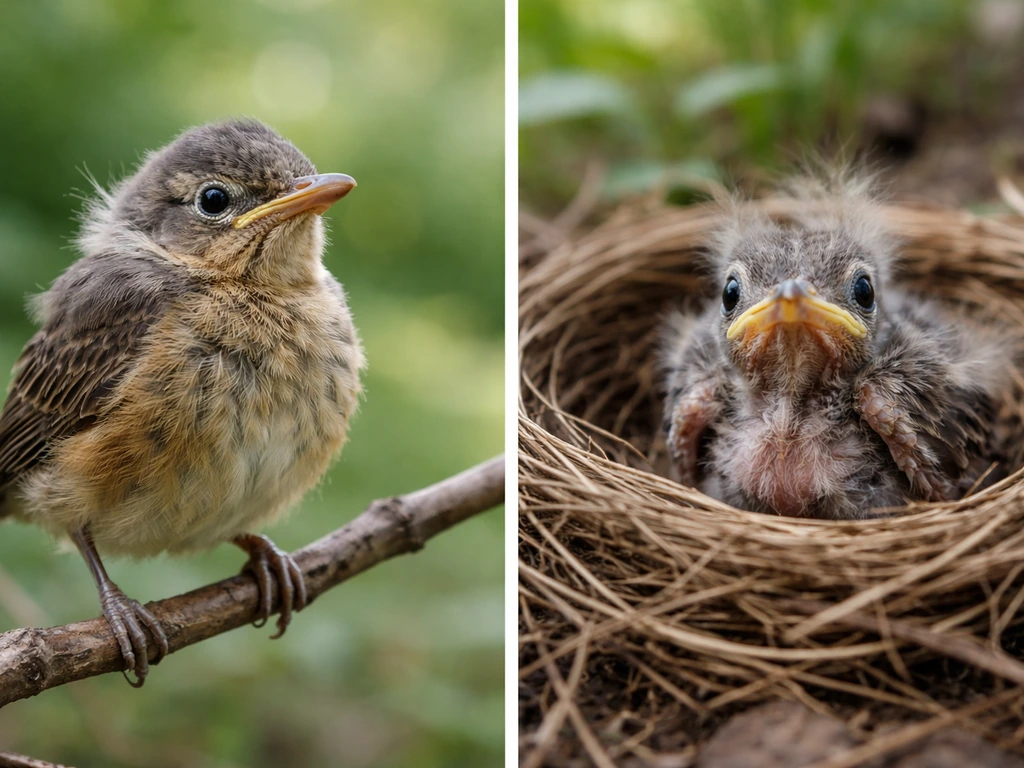
If you have found a young bird, the most important thing you can do is figure out whether it is a nestling or a fledgling, because the right action is completely different.
| Feature | Nestling | Fledgling |
|---|---|---|
| Age | Newly hatched, days old | Older juvenile, 1 to 3 weeks old |
| Feathers | Naked or with sparse pin feathers | Mostly feathered, may have a short tail |
| Movement | Cannot stand or hop | Hops, flutters, may attempt short flights |
| Eyes | Closed or just opening | Open and alert |
| Where found | On the ground, clearly fallen from nest | On the ground near shrubs or low branches |
| What to do | Return to nest or call rehab immediately | Leave it alone if healthy; parents are likely nearby |
Fledglings on the ground are almost never orphaned. This is a normal stage of bird development: the chick has left the nest before it can fully fly, and the parents are still feeding it on the ground. If the bird looks alert, has feathers, and is hopping around, the best thing you can do is leave it exactly where it is and keep cats, dogs, and people away. Watch from a distance for an hour to see if a parent returns.
If you have a nestling (naked, eyes closed, helpless), try to return it to its nest first. The myth that parent birds will reject a baby touched by humans is false. Birds have a very limited sense of smell and will continue to care for their chick. If you cannot find the nest or it has been destroyed, call a wildlife rehabilitator right away. Nestlings need to be fed every 20 to 30 minutes during daylight hours, and doing that incorrectly causes more harm than good.
Feeding and hydration: what's safe and what to skip
The consistent advice from wildlife clinics, including Tufts Wildlife Clinic and most rehabilitation organizations, is: do not feed a wild injured bird and do not give it water. This is not overcautious. An injured bird is in shock, its digestive system is not functioning normally, and forcing food or liquid into it can cause aspiration (inhaling fluid into the lungs), which is fatal. Tufts Wildlife Clinic advises keeping the bird in a warm, dark, quiet place and not giving it food or water, since forcing intake can be dangerous for sick or injured songbirds blank" rel="noopener noreferrer">Do not give it food or water.. A bird can survive 24 hours without food far more safely than it can survive being force-fed.
There are a few narrow exceptions. If a bird is visibly conscious, upright, and alert, not injured or in shock, and you have confirmed with a rehabilitator that it is safe to offer something, you can place a very shallow bottle cap of clean water nearby and let the bird drink on its own. Do not hold water to its beak or tip its head back.
For a sick or injured pet bird, your avian vet may advise specific supportive feeding. Follow their guidance rather than general wild-bird rules, since domestic birds have different needs.
Things to absolutely avoid giving any bird:
- Bread, crackers, or processed human food
- Cow's milk or any dairy product
- Fruit juice or sugary drinks
- Worms or insects unless specifically directed by a rehabilitator
- Over-the-counter medications, vitamins, or supplements not prescribed by a vet
- Alcohol, caffeine, or anything from your kitchen that is not plain water
Red flags that mean you need professional help right now
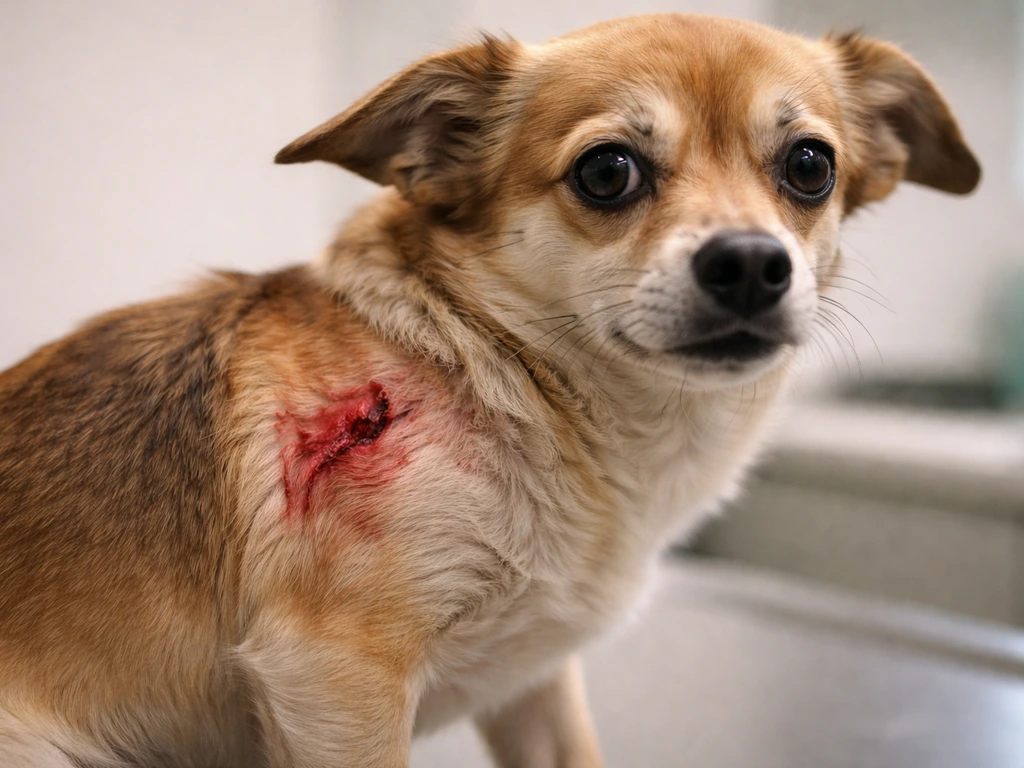
Some situations cannot wait for a convenient phone call. Get a vet or rehabilitator on the phone immediately, or go directly to an emergency animal clinic, if you see any of the following:
- Active bleeding that does not stop within a few minutes
- Open wounds, exposed bone, or a wing hanging at an abnormal angle
- The bird was caught or mouthed by a cat or dog, even with no visible wounds
- Labored breathing: beak held open, tail pumping rhythmically up and down, or gasping
- Seizures, tremors, or the bird spinning in circles
- The bird is unconscious or completely unresponsive
- One or both eyes appear injured, cloudy, or closed
- The bird cannot hold its head up or keeps dropping it to one side
- Oil or chemical contamination on the feathers
A bird that is simply stunned from a window strike and sitting quietly is not usually in this category. Give it up to an hour in a warm, dark box. Many window-strike birds recover fully on their own and can be released once they are alert, upright, and gripping their feet. If it has not improved after an hour, treat it as an injured bird and call for help.
How to transport the bird and what to do until help arrives
When you are ready to transport, keep the bird in the same cardboard box it has been resting in. Put the box on the floor of the car rather than the seat, so it cannot tip over. Keep the car quiet: no loud music, no air conditioning blowing directly at the box. Drive smoothly. The bird does not need to see out or feel the breeze; it needs to stay calm and warm.
Before you go anywhere, call ahead. Wildlife rehabilitators are often volunteers working from home, and they may direct you to a drop-off point, give you specific intake instructions, or let you know if they are full and can refer you elsewhere. To find a licensed rehabilitator near you, contact your state wildlife agency, call a local animal shelter or humane society, or search the National Wildlife Rehabilitators Association directory online. The U.S. Fish & Wildlife Service also recommends contacting a local wildlife rehabilitator or state agency for the right care after you find an injured or orphaned baby bird contact your state wildlife agency, call a local animal shelter or humane society, or search the National Wildlife Rehabilitators Association directory.
When you call, be ready with this information:
- What species you think it is (or a description: size, color, beak shape)
- Where you found it (urban yard, rural field, near a road, near a window)
- What condition it is in (alert, lethargic, bleeding, wing angle, any obvious injuries)
- Whether a cat or other animal was involved
- How long you have had it and what, if anything, you have done so far
Document what you can while you wait. Take a photo of the bird through the open box lid before you close it up. Note the location where you found it, the time, and any details about how you found it. This helps the rehabilitator assess the situation faster and plan appropriate care.
At home while you wait for a callback or appointment, keep doing the same thing: warm, dark, quiet, no food, no water unless advised otherwise, no handling. Check on the bird as infrequently as possible. The most useful thing you can do at this stage is make phone calls, not tend to the bird.
Common mistakes that hurt more than they help
Most people who find an injured bird want desperately to do something. That instinct is good, but the doing often becomes the problem. Nursing a bird well in those first critical hours is mostly about restraint.
- Handling the bird repeatedly to check on it: every pickup resets its stress clock
- Keeping it in a wire cage or aquarium: wire causes injury, glass traps heat and has no ventilation
- Placing it in direct sunlight 'to keep it warm': birds overheat quickly and cannot move away from sunlight
- Giving it food or water without professional guidance
- Showing it to neighbors, children, or posting videos with the bird out of the box
- Letting it near cats or dogs even briefly: the stress alone can be fatal
- Deciding to keep it and 'see how it goes' rather than calling a rehabilitator
- Giving human medications like ibuprofen or antibiotics: these are toxic to birds
Caring for an injured or sick bird is genuinely hard, and it is okay to feel uncertain about what you are doing. The good news is that the basics are simple and you do not need to get everything perfect. Warm, dark, quiet, and a phone call to a professional: that combination gives the bird the best possible shot.
FAQ
How do I know if the bird is getting too hot from the heating pad?
Use the lowest safe temperature range you can maintain without making the bird feel overheated. If the bird is warm to the touch, panting, or looks restless under the heat source, remove the heating pad and rely on ambient warmth in the room. Always warm only part of the box so the bird can move away.
Should I call a rehabber immediately, or can I wait while I search for phone numbers?
Yes, but only if it does not delay getting help. Call first, then provide minimal stabilization. If you must use the phone, keep the bird inside the warmed, covered box and handle as little as possible during the call, since extra handling increases stress.
What should I do if the bird is bleeding when I find it?
If the bird is bleeding, apply gentle, direct pressure with clean gauze or a clean cloth for several minutes. Do not pack wounds with powder, creams, or glue, and do not attempt to “clean” deep injuries with water, since aspiration or infection risk increases.
The bird looks fine, but a cat was involved, do I still need a vet?
If you see a cat interaction, treat it as urgent even when the bird looks intact, because infection can develop quickly. Keep it warm and dark, do not give food or water, and arrange an avian vet evaluation as soon as possible.
Can I give a wild bird bread, seed, or milk to help it recover?
Do not offer grit, bread, seed, milk, or “bird formula.” For wild birds, feeding can cause aspiration and worsen shock. Offer nothing by mouth unless a rehabilitator tells you exactly what and how to feed.
What is the safest choice if I am not sure whether it is okay to give water?
If you are unsure about food versus water, skip both and focus on warmth, darkness, and quiet. For a wild bird, the safest default is no food and no water until you confirm instructions from a licensed rehabilitator or avian vet.
If it flew into a window and just sits there, when should I stop waiting and get help?
For window strikes, monitor for improvement over an hour in the warm, dark box. If it does not look alert, upright, and gripping its feet after an hour, treat it as injured and call for professional help.
The wing looks broken or drooping, should I try to set it or tape it?
If the bird is responsive but the wing appears drooped or dragging, keep it contained and warm, fold wings gently against its sides, and avoid trying to straighten anything. Splints and medications are best left to the rehabilitator or vet.
What should I use to line the box so the bird stays comfortable and safe?
A ventilated cardboard box is preferred, and you should avoid anything that can snag toes or create strong pressure points. If you notice feathers sticking out against a surface, adjust the towel lining so the bird is cushioned and not rubbing on rough material.
Any tips for transporting the bird without making its condition worse?
During transport, choose the shortest, quietest route and avoid turning the bird’s box upside down. Keep the box stable on the floor, reduce vibration, and do not stop for sightseeing, because agitation can quickly worsen shock and breathing stress.
How can I tell if it is just stunned or if it needs emergency help right away?
If the bird is still breathing normally but looks sleepy or stunned, warm it and wait up to an hour while minimizing handling. If you notice open-mouth breathing, severe gasping, or constant tail pumping, treat it as respiratory distress and call an emergency clinic sooner rather than waiting.
If it is a fledgling on the ground, can I move it to safer ground?
If you find a fledgling, leave it where you found it and keep pets away, but you may bring it to safety only if it is in immediate danger, like a roadway or aggressive pet area. If you have to move it, do so briefly and place it back as close as possible to the original location.
What should I do if I find a naked nestling and the nest is gone?
For nestlings, attempt to return it to the nest first if you can do so safely. If the nest is destroyed, you cannot locate it, or it is clearly injured, contact a wildlife rehabilitator promptly, since nestlings require very frequent feeding during daylight.
Is it safe to wash the bird or apply ointments or bug spray?
Avoid washing the bird or applying oils, sprays, or insect products, and do not use human medicines. For external debris, the safe approach is to keep the bird warm and contained and let the rehabilitator handle cleaning and treatment.
How often should I check on the bird while it is in the box?
After you contain the bird, handle it as little as possible and only to relocate the box or place it in a better spot. Checking too often can keep it stressed, so limit peeking to what you need for safety and urgency assessment.
Next Article
How to Calm an Injured Bird: Steps, Triage, and Next Steps
Step by step triage and humane calming for an injured bird, with warm secure containment, safe handling, and vet rescue