The moment you find an injured bird, the most important thing you can do is contain it gently, blank" rel="noopener noreferrer">keep it warm and dark and quiet, and get it to a wildlife rehabilitator or avian vet as fast as you can. Most of what happens in between is about not making things worse. You are a bridge, not a nurse, and that mindset will guide every decision you make.
How to Nurse an Injured Bird: Safe First Aid Steps
Marcus Holloway
2 May 2026
First steps: assess safety and reduce stress
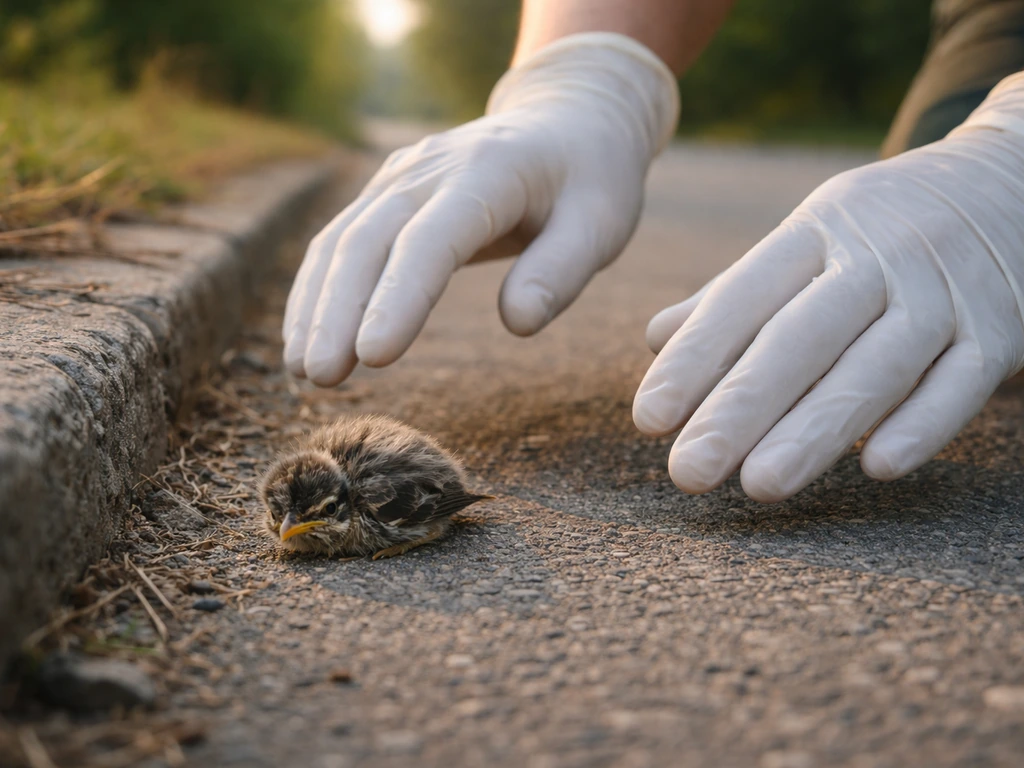
Before you touch the bird, take 30 seconds to look at the situation. Is it on a road, near a cat, or in direct sun? Those are immediate dangers. Is it a baby bird that might simply need to be returned to its nest rather than rescued? Misreading the situation is the most common mistake rescuers make, so a quick assessment saves everyone stress.
Once you decide the bird genuinely needs help, your next goal is to reduce its stress as quickly as possible. Keep the bird’s environment calm, warm, and low-stress to help it recover safely reduce its stress as quickly as possible. Stress alone can kill a bird that is already in shock. Minimize noise, keep bystanders back, avoid sudden movements, and do not stare the bird in the face, direct eye contact reads as predatory to most birds.
To pick it up, drape a light cloth, small towel, or shirt over it first. This immediately calms most birds because darkness feels safer to them. Cup both hands gently around the cloth-covered bird, supporting its body from below, and avoid squeezing the chest, birds breathe by expanding their ribcage and can suffocate if held too tightly. Wear gloves if you have them, especially with larger birds like pigeons, corvids, or raptors that can scratch or peck hard.
Create a safe, warm recovery space
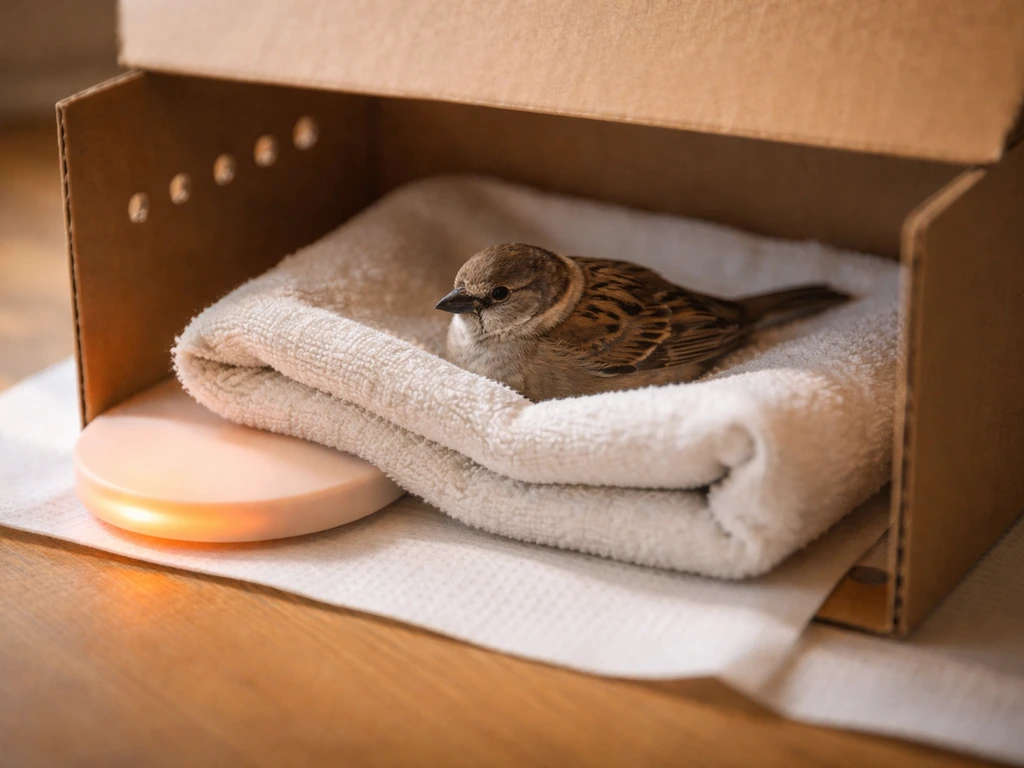
A cardboard box is the best temporary housing you have available. It is dark, insulating, and easy to ventilate. Use a box that gives the bird a little room but is not so large that it can flap around and injure itself further. Punch several small air holes in the sides, near the top, and line the bottom with a non-slip surface, a folded paper towel or a thin cloth works well. Avoid fluffy towels or loose strings because birds can tangle their feet or claws in them.
Temperature matters a lot. An injured or shocked bird loses body heat fast. Aim for a box environment of around 85 to 90 degrees Fahrenheit for small songbirds, slightly cooler for larger birds. You can achieve this by placing a heating pad set to low under half the box (never the whole bottom, so the bird can move away from the heat if needed), or by placing a small bottle of warm water wrapped in a cloth inside the box. Check the warmth regularly, overheating is just as dangerous as cold.
Keep the box in a quiet, dim room away from pets, children, TVs, and air conditioning vents. Resist the urge to check on the bird every few minutes. Opening the box repeatedly causes repeated stress spikes. Check once every hour or two at most, and keep each check brief.
How to handle different injury scenarios
Bleeding and visible wounds
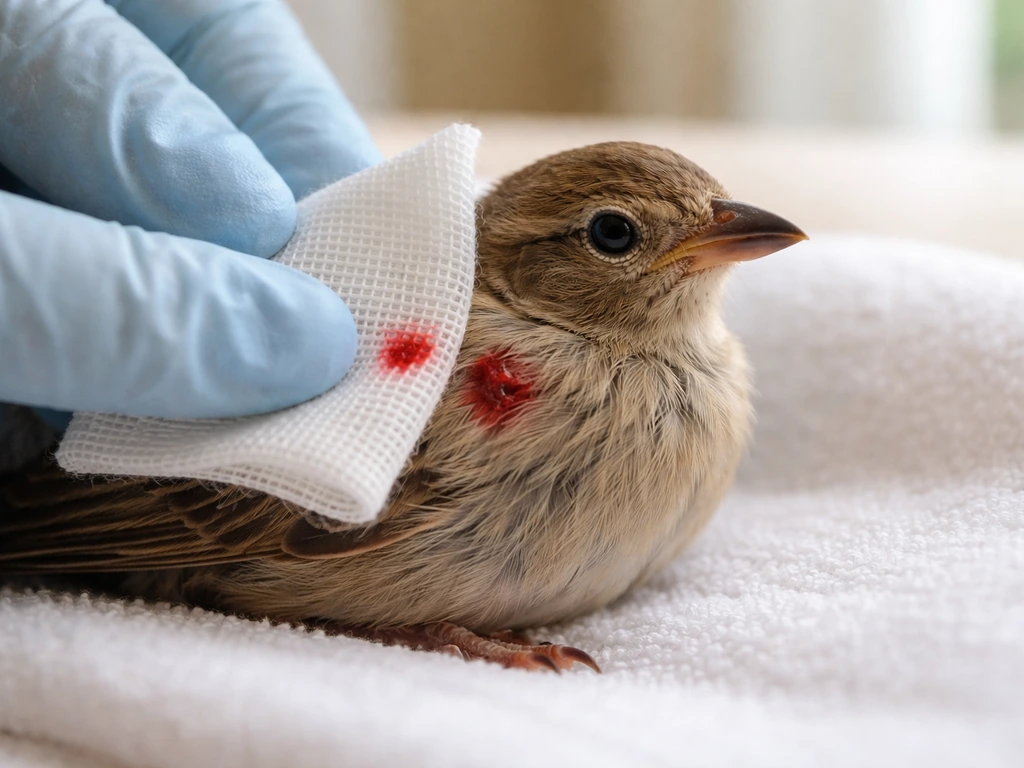
If the bird is actively bleeding, apply very gentle, light pressure with a clean cloth or sterile gauze for a minute or two. Bird skin is extremely thin and fragile, so do not rub or press hard. Minor bleeding often slows on its own. Do not apply hydrogen peroxide, antiseptic sprays, or human wound ointments, most of these are toxic to birds. If bleeding is heavy or will not stop, that is an emergency and the bird needs a vet immediately.
Shock
A bird in shock may look limp, glassy-eyed, or barely responsive. It may be breathing with its mouth open or sitting puffed up and hunched. Warmth and darkness are the two most effective things you can do. Get the bird into a warm, dark box right away and do not handle it more than necessary. blank" rel="noopener noreferrer">Do not try to give water or food to a bird in shock, it cannot swallow safely and you risk aspiration.
Suspected fractures or limpness
If a wing is drooping at an odd angle, a leg is dangling, or the bird cannot hold itself upright, assume a fracture and do not try to splint it yourself. Amateur splinting almost always causes more harm than good. The best thing you can do is minimize movement: place the bird in a small, snug box so it cannot thrash around, and get it to a rehabilitator or vet. The less it moves, the less additional damage it does to soft tissue around the break.
Head and eye injuries
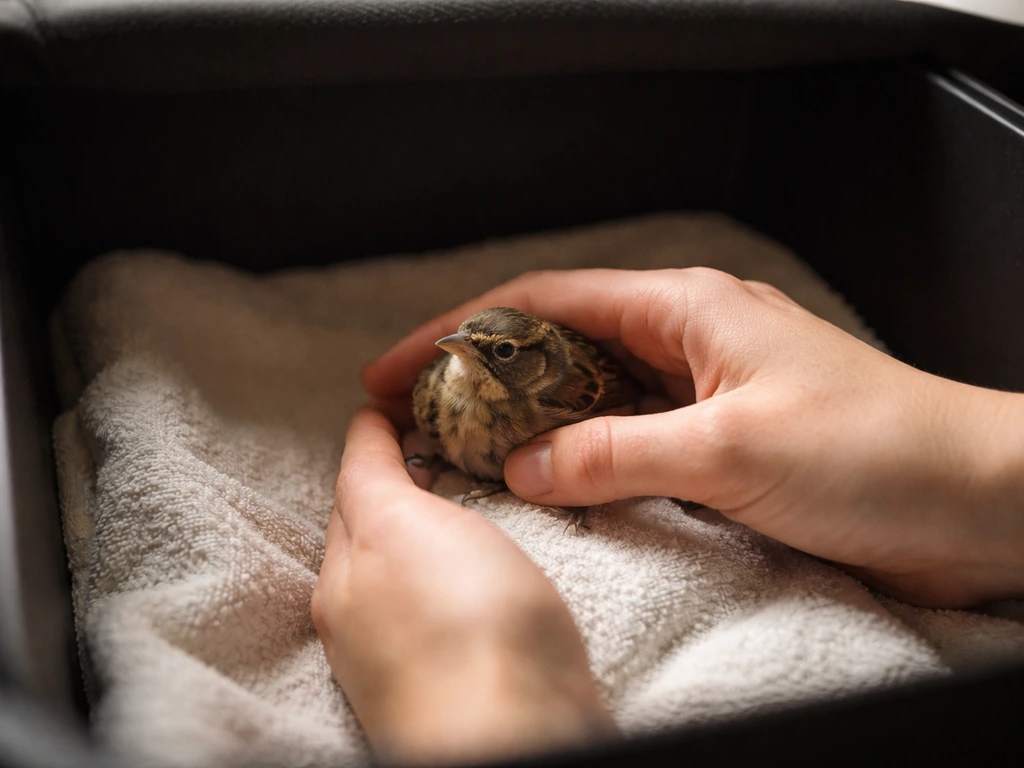
Window strikes are one of the most common causes of head trauma in birds. A bird that hit a window may be stunned and sitting on the ground looking dazed. Give it 15 to 20 minutes in a ventilated box in a quiet spot outside (away from cats and direct sun) and check again.
Flint Creek Wildlife’s handout for birds that hit windows also recommends using a ventilated box for stabilization and recovery Give it 15 to 20 minutes in a ventilated box. Many stunned birds recover and fly off on their own.
If the bird is still unable to fly, has a cloudy or closed eye, is circling or tilting its head persistently, or cannot hold its head up, it needs professional care. Do not try to rinse eyes or apply any drops.
Entanglement
Birds tangled in string, fishing line, netting, or wire need to be freed carefully. Work slowly and use small scissors if needed to cut the material rather than pulling, which can tear tissue or break fragile bones. Check the entire bird after freeing it, line often wraps multiple times and cuts off circulation to feet or wings. Even if the bird looks fine after being freed, have it assessed by a rehabilitator because internal damage and tissue death from constriction can appear hours later.
What to do (and definitely not do) for basic care
The list of things not to do is honestly more important than the list of things to do. Most harm done to rescued birds comes from well-meaning people who did too much.
| Do this | Do not do this |
|---|---|
| Place the bird in a warm, dark, quiet box | Keep checking on it constantly or let kids handle it |
| Use a light cloth to cover and pick it up | Hold it tightly around the chest or squeeze its body |
| Apply gentle pressure to active bleeding with clean gauze | Use hydrogen peroxide, antiseptic spray, or neosporin on wounds |
| Provide a non-slip lining on the box floor | Use fluffy towels or materials with loose threads |
| Warm half the box bottom with a low-heat pad | Overheat the whole box or use a heat lamp directly on the bird |
| Contact a wildlife rehabilitator as soon as possible | Try to splint fractures, tape wings, or perform any home surgery |
| Offer a shallow dish of water to conscious, alert birds only | Force food or water into a bird's beak or a bird in shock |
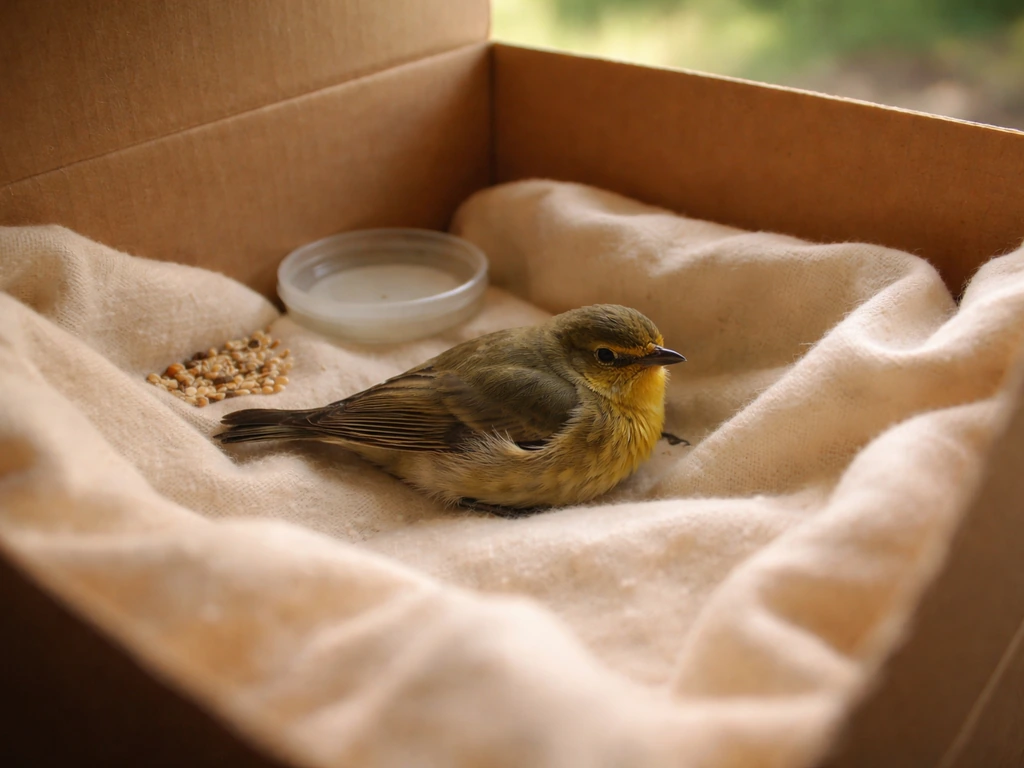
On the question of food and water: if the bird is conscious, alert, and able to hold itself upright, you can place a very small, shallow bottle cap of clean water in the box. Do not try to dropper water into its beak. For food, unless you are dealing with a nestling (covered below), do not feed an injured wild bird at home.
If you are wondering what to feed an injured bird, focus on not guessing and only offer food after a rehabilitator tells you what is safe. Most well-intentioned food choices are wrong for the species or the situation and can cause digestive harm or choking. The exception is if a rehabilitator specifically instructs you over the phone on what to offer while you wait.
Orphan care basics: nestlings vs. fledglings
Many birds that look injured are actually just young birds at a normal, vulnerable life stage. Knowing the difference between a nestling and a fledgling changes everything about what you should do.
Nestlings
A nestling is a very young bird with no feathers or only pin feathers just starting to emerge. It cannot perch, cannot regulate its own temperature, and absolutely cannot survive on the ground. If you find a nestling, the right move is almost always to return it to its nest if you can safely reach it. The mother will not reject it because you touched it, that is a myth. Locate the nest nearby, place the chick back in, and watch from a distance to confirm the parents return within an hour.
If the nest is destroyed or you cannot find it, make a makeshift nest from a small container (a berry basket, a plastic container with drainage holes punched in it) lined with dry grass or the original nest material, and attach it as close as possible to where you found the bird, in a shaded spot. Then step back and watch. If parents do not return within two hours, the bird needs a rehabilitator.
If you must keep a nestling temporarily while waiting for transport, warmth is critical. Keep it in a small, ventilated box with a heat source on low underneath half the container. Do not feed it unless you are waiting more than two to three hours and cannot reach a rehabilitator. If you must, a rehabilitator may guide you to offer very small amounts of moistened cat kibble or plain cooked chicken using tweezers, but follow their specific instruction rather than guessing. Never give water with a dropper to a nestling, they aspirate easily.
Fledglings
A fledgling is a juvenile bird with most of its feathers, often with a short tail, and it may hop around on the ground or make short low flights. This is completely normal. Fledglings spend one to two weeks on the ground while their parents continue to feed them and teach them to fly. The vast majority of fledglings you see on the ground do not need rescuing. If a fledgling is in immediate danger (near a road, a cat is circling), move it a few feet to a safer spot nearby, but do not take it inside. The parents are almost certainly watching from nearby.
The only time a fledgling needs intervention is if it is clearly injured (bleeding, unable to use a limb, being attacked), if you observe it for an hour and no parent ever approaches, or if a cat or other animal had it in its mouth. Cat punctures, even tiny ones, introduce bacteria that cause fatal infections within 24 to 48 hours, so any bird that was caught by a cat needs a vet or rehabilitator that day, even if it looks fine.
When to get professional help, and how to do it
Red flags that mean go now
- Active bleeding that will not stop with gentle pressure
- The bird is unconscious or completely unresponsive
- Breathing is labored, the bird is gasping, or the beak is open constantly
- A limb is clearly broken, dislocated, or hanging at an abnormal angle
- The bird was caught in a cat's or dog's mouth (even briefly)
- An eye is closed, cloudy, swollen, or sunken
- The bird is seizing or losing coordination
- There are signs of oil, chemicals, or toxic substance contact
- The bird has been in your care for more than a few hours without improvement
Finding a wildlife rehabilitator or avian vet
In the US, the National Wildlife Rehabilitators Association (NWRA) and the Wildlife Rehabilitators directory at wildliferehabber.org are good starting points. The Humane Society and your local animal control office can often connect you to a licensed rehabilitator in your county. Many states have a hotline for wildlife emergencies. When you call, have the bird's approximate size, species if you know it, how it was found, and what symptoms it is showing ready, this helps them triage and give you holding instructions while you wait.
If you cannot reach a rehabilitator quickly, look for an avian vet or a general exotic animal vet. Standard dog-and-cat vets often cannot treat wild birds legally or practically, but they may be able to stabilize an emergency while you find the right resource.
Transporting the bird safely
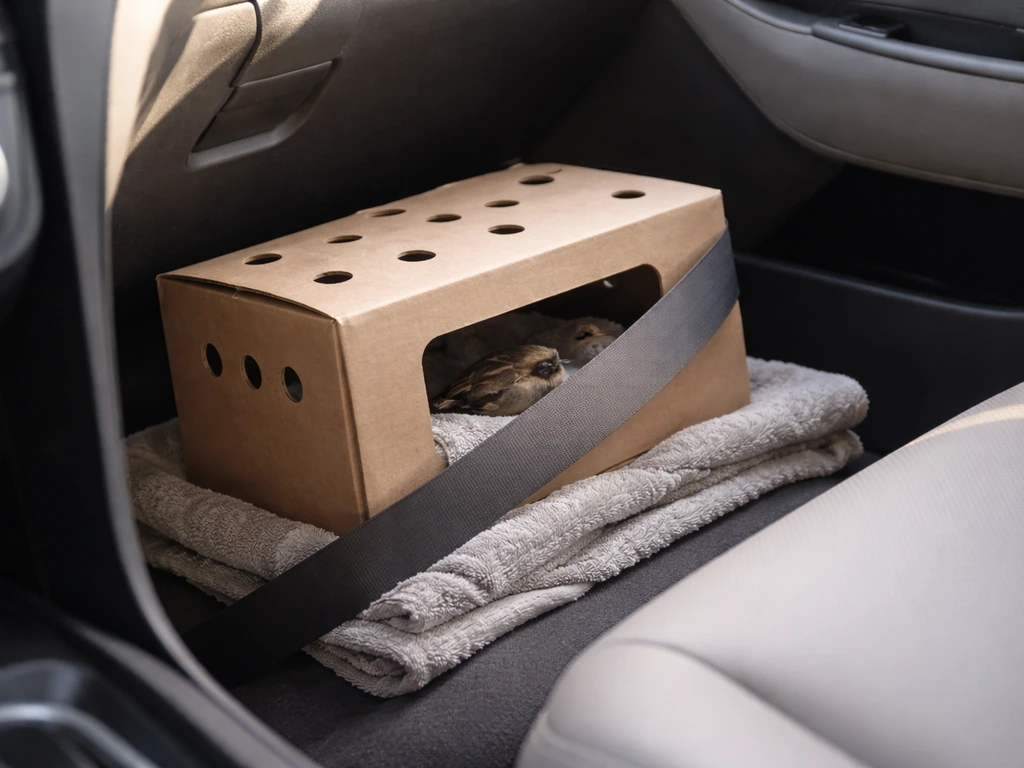
Use the same cardboard box setup you used for temporary housing. Keep the car quiet, no loud music, and keep the heat moderate. Do not leave the bird in a parked car in warm weather, even for a few minutes: cars heat up fast enough to kill a bird. Place the box on a flat, stable surface so it does not slide or tip. If the trip is longer than 30 minutes, check ventilation but resist opening the box to look at the bird. Hand off the box to the rehabilitator or vet without letting the bird be held by multiple people along the way.
Once you have handed the bird off, you have done your job. The goal of home nursing was always to keep the bird alive and calm long enough to reach someone who can actually fix it. In other words, focus on how to nurse a bird safely and humanely only until professional help can take over home nursing. If you are wondering how to nurse a bird back to health, the safest approach is to focus on keeping it alive and calm until a rehabilitator or avian vet can take over home nursing. That is genuinely enough, and it matters.
FAQ
How long can I keep an injured bird at home before I must hand it off?
Yes, but only for short holding while you arrange help. Keep the bird in the same warm, dark, quiet box setup, check warmth on a schedule (about once an hour), and do not give food. Also, plan a transport window, if you cannot reach a rehabilitator same day, seek an avian vet that can advise on holding and triage.
What should I do if the bleeding does not stop after I apply pressure?
If it is bleeding, use gentle pressure with clean gauze or a clean cloth for a minute or two, then reassess. Do not keep digging for the source or repeatedly lifting the cloth. If bleeding is heavy, keeps restarting after a short pause, or the bird is very weak, treat it as urgent and get professional care immediately.
If the bird seems better after warming up, do I still need professional care?
Some birds survive the first hours and then worsen because of internal injury or shock, for example after window strikes or entanglement. For that reason, even if the bird seems more alert, you should still arrange an assessment the same day when there was head trauma, string or wire constriction, or a cat bite.
Can I use a pet carrier instead of a cardboard box to hold the bird?
Do not use ordinary dog or cat carriers. A rigid carrier is often too bright and can be stressful, and it can tip. A ventilated cardboard box is safer, but if you must use a carrier, make it dark by covering it partially with a towel, secure it so it cannot slide, and ensure ventilation.
What is the safest way to move the bird to a vet or rehabilitator?
Handle the box, not the bird. If you must move it, lift it smoothly and keep it closed, avoid shining a flashlight into the bird’s face, and minimize talking and vibration. If you need to transport, secure the box in the car so it cannot tip or become a projectile.
Should I splint a broken wing or leg if it looks easy to fix?
No. Do not attempt to “set” legs or wings, or wrap splints at home. Fractures and soft tissue injuries can worsen quickly, and improper splints can cut circulation. Use a small snug box to prevent thrashing, keep it warm, and get professional help.
Can I feed a nestling or give it water if the parents are not around?
If it is a true nestling, feeding is high risk because it cannot swallow safely and it cannot regulate body temperature. The safer approach is to return it to the nest if possible, if not, keep it warm and wait for a rehabilitator. If you are instructed by a rehabilitator to feed, follow their exact method and timing, and never force-feed.
I found a fledgling on the ground, how do I decide whether it needs rescue?
It depends on the situation. A fledgling is often normal on the ground, move it only if it is in immediate danger, and do not bring it inside. If a parent does not approach after about an hour, or if you confirm it was attacked or caught by a cat, then professional care is appropriate.
The bird has no obvious wounds after a cat encounter, does it still need same-day care?
If a cat, dog, or other animal got the bird, treat it as an urgent infection risk even when wounds look minor. Clean up the environment and keep the bird warm and contained, then arrange a vet or rehabilitator that same day. Cat punctures can become fatal infections within a day or two.
Can I use antiseptic or human ointments on an injured bird?
Avoid giving any medication, including topical human antiseptics or pain relief. Birds absorb some compounds through skin and can be harmed by toxic ingredients. The only first-aid step to manage at home is gentle bleeding control with clean gauze, then contact a rehabilitator or avian vet for specific instructions.
What bedding should I put in the box, and what materials should I avoid?
Use clean, non-fraying bedding, and avoid anything loose, stringy, or fluffy. Loose fibers can snag toes and claws, and long threads can tighten as the bird moves. If you notice any material that could tangle feet or wings, remove it and replace with a thin, flat cloth or paper towel layer.
Next Article
How to Make an Injured Bird Comfortable Right Now
Step-by-step humane first aid to comfort an injured bird: warm, calm, safe handling, and urgent rescue next steps.