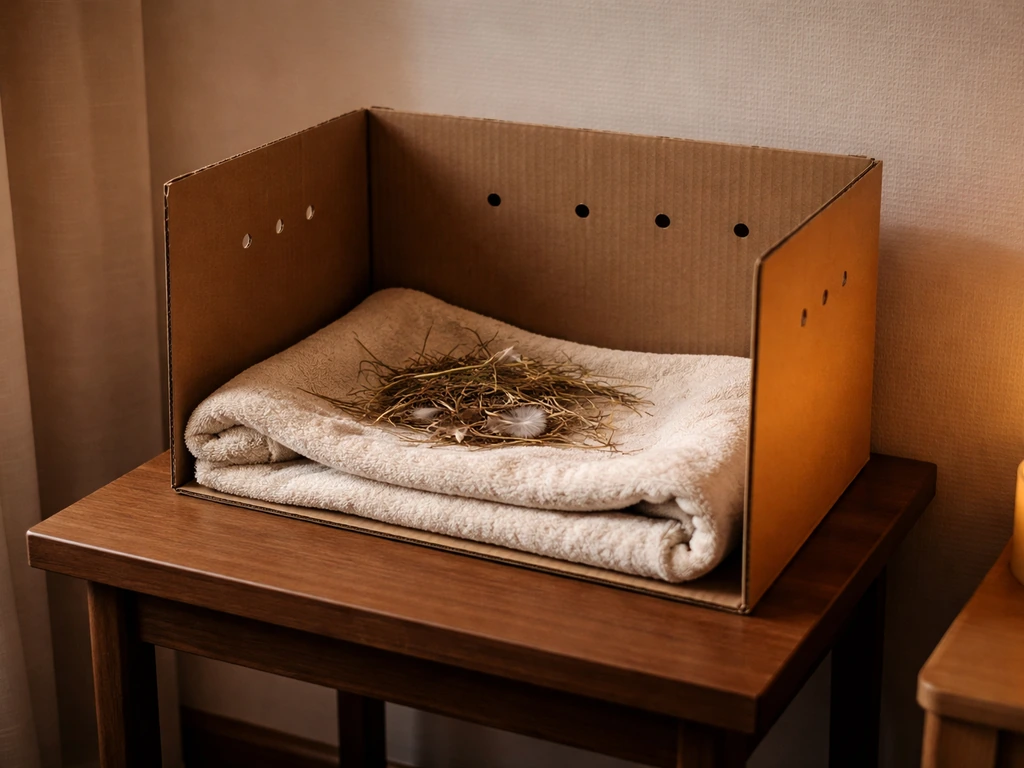
Put the bird in a small, ventilated box lined with a paper towel or cloth, place it somewhere warm, dark, and quiet, and leave it alone. Once you have it contained, blank" rel="noopener noreferrer">SBWR recommends keeping the bird in a secure, warm, dark, and quiet place, such as a ventilated box or pet carrier (not a wire cage), until help is obtained.
How to Make an Injured Bird Comfortable Right Now
Marcus Holloway
1 May 2026
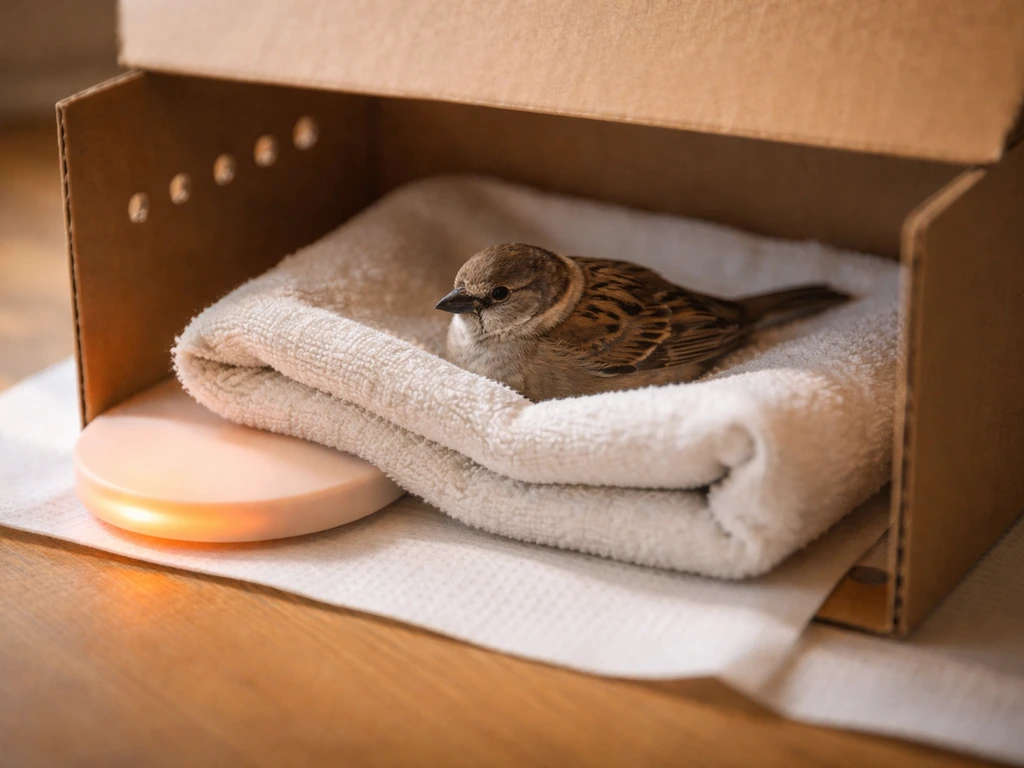
That's the core of it. Everything else, including feeding, watering, and treating injuries, should wait until you've spoken to a wildlife rehabilitator or avian vet. The best thing you can do right now is reduce stress, keep the bird warm, and get professional help on the phone as fast as possible. These same steps for calming an injured bird also help it recover enough for proper treatment by a wildlife rehabilitator reduce stress.
Learn the basics of how to care for injured birds, including what to do and what to avoid, until a licensed rehabilitator can take over.
Handle the bird safely first
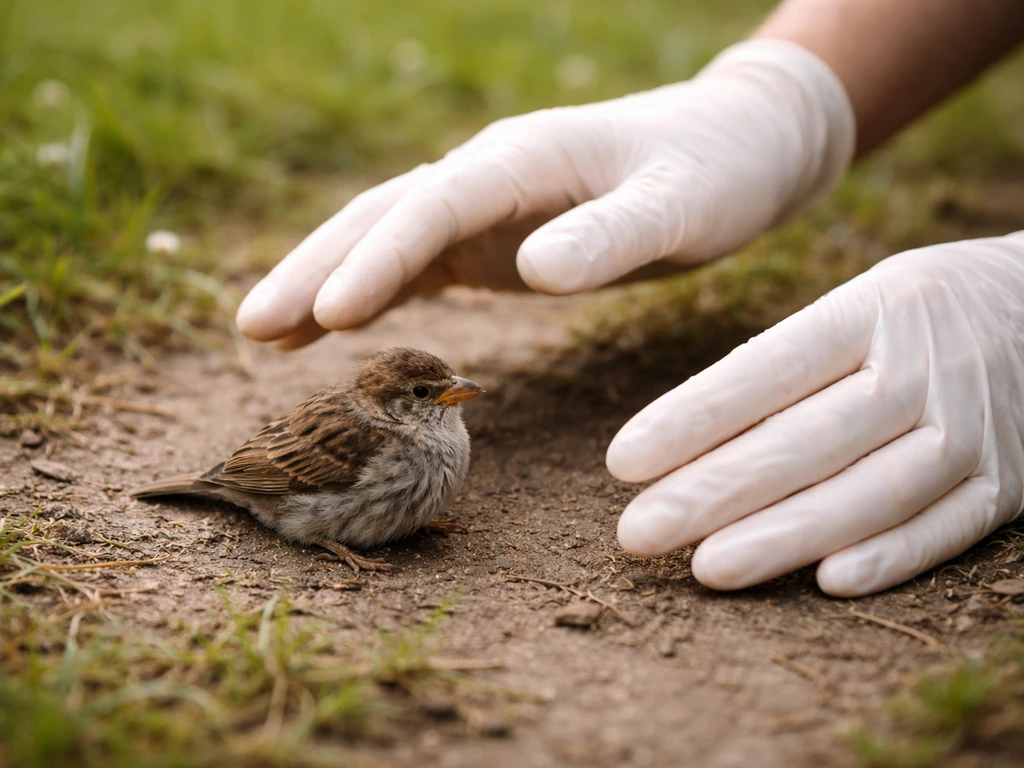
Before you touch the bird, put on rubber or disposable latex gloves if you have them. Wild birds can carry diseases, and their claws and beaks can cause real cuts, especially raptors. If you don't have gloves, use a folded towel or thick cloth as a barrier between your hands and the bird.
Don't chase the bird. If it's injured enough that it can't fly away, it's already stressed to its limit. Move slowly and quietly, and approach from behind if possible. Gently drape the towel over the bird and scoop it up, tucking the wings against its body so it can't thrash and injure itself further. Keep the hold firm but not tight, and minimize the time the bird spends in your hands.
Once it's contained, wash your hands thoroughly with soap and water, even if you wore gloves. This is a non-negotiable hygiene step every time you handle a wild bird.
Set up a safe temporary container
A shoebox or small cardboard box works well for most songbirds. A larger box or pet carrier is better for bigger birds like pigeons, ducks, or raptors. Line the bottom with a paper towel, cloth, or non-slip material so the bird has something to grip. Poke several small ventilation holes in the lid or sides, but keep them small enough that the bird can't stick its head through.
Don't use a wire cage or anything the bird can see through clearly. Transparency increases panic. A closed cardboard box is almost always better than an open or wire enclosure for a stressed, injured bird.
Make sure the box is big enough that the bird can stand and extend its head upright. That's the minimum size requirement, and it matters for breathing and positioning during temporary housing and later transport.
Keep the bird warm without overheating it
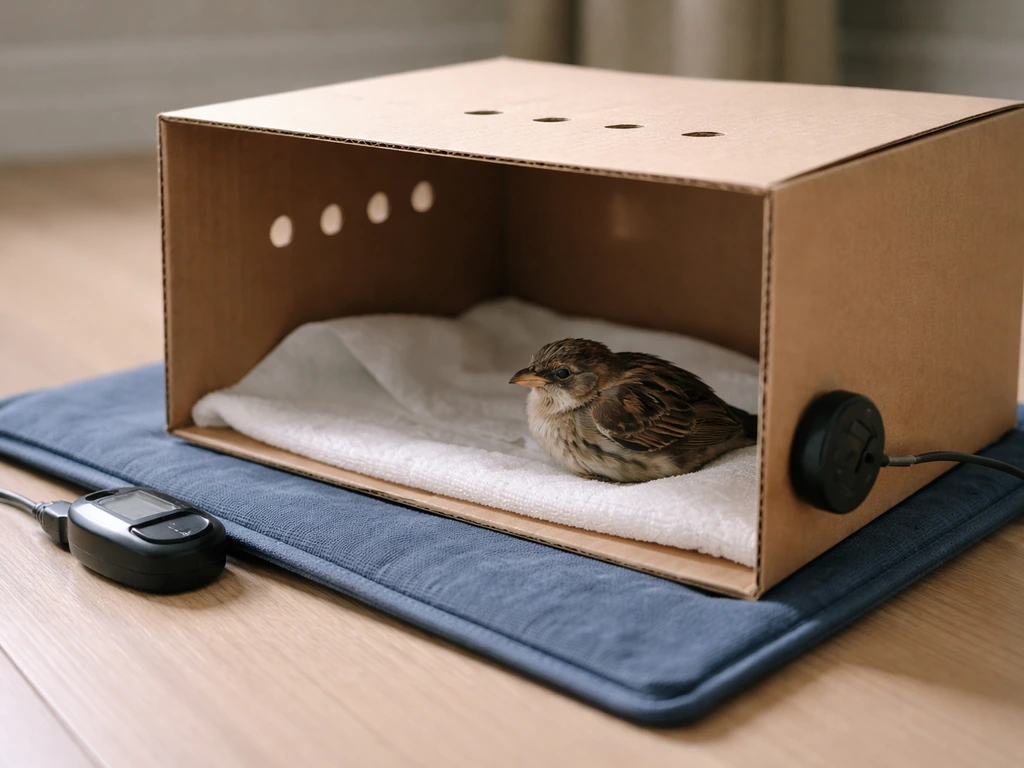
An injured bird is at serious risk of going into shock, and warmth is one of the most important things you can provide. The trick is doing it safely, because overheating is just as dangerous as being too cold.
If you have a heating pad, set it to the lowest setting and place only one end of the box on it. The other end stays off the pad entirely. This gives the bird a warm zone and a cooler zone so it can self-regulate. Never put the box fully on a heating pad.
A hot water bottle wrapped in a towel is another good option. Place it inside or right next to the box, not directly under the bird. Before you use it, check that it's warm but not hot enough to be uncomfortable on your own bare skin. It should never be able to spill onto the bird, so make sure the cap is secure and it's positioned stably.
If you have neither option, a warm room at around 75 to 80 degrees Fahrenheit (24 to 27 degrees Celsius) is a reasonable substitute. Avoid air conditioning vents, drafts, and anything that blows cool air on the box.
Reduce stress with darkness, quiet, and minimal contact
Stress can kill an injured bird just as surely as the original injury. Once the bird is in the box and warming up, put it in the quietest, most undisturbed spot you have. A closet, a quiet bathroom, or a room away from household noise and foot traffic all work well. Owl Ridge emergency guidance advises placing the bird in a dark, warm, quiet box with air holes while waiting for help, and keeping pets and children away Raptor Emergency. Keep children and pets completely away.
Darkness is genuinely calming for birds. A fully closed box in a dim room is ideal. Don't keep peeking inside to check on it. Every time you open the box, you spike the bird's stress hormones and undo the calm you've been building. Unless the bird is clearly in immediate distress or you need to transport it, leave the box closed.
Avoid talking loudly near the box, playing music, running appliances, or doing anything that creates unpredictable noise. Think of the environment you'd want if you were injured and terrified: dark, warm, and completely still.
What not to do (this part really matters)
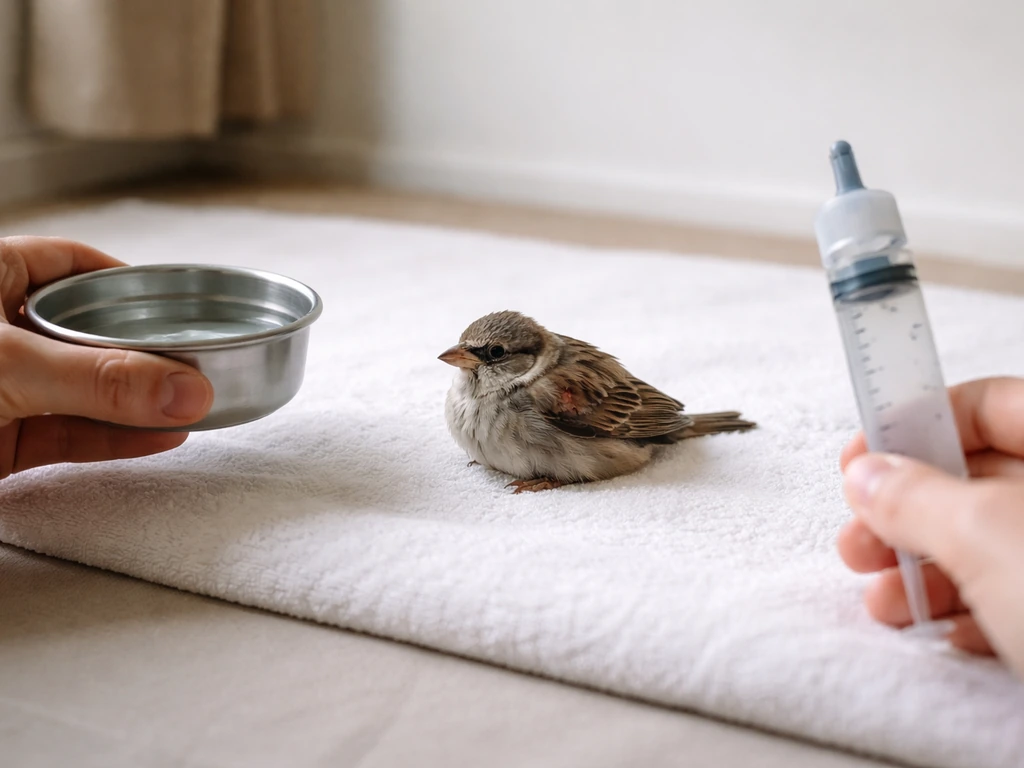
The urge to feed and water an injured bird is almost universal, and it's almost always the wrong move. If you want a safe, step-by-step approach to how to nurse an injured bird, focus on stress reduction, warmth, and getting professional guidance before any feeding or medications how to nurse injured bird. Because feeding rules are species-specific, get guidance from a licensed rehabilitator before offering any food to an injured bird what to feed an injured bird.
Do not give the bird food or water unless a licensed rehabilitator or veterinarian explicitly tells you to. Food and water can interfere with treatment, and attempting to dribble water into a bird's mouth can cause it to aspirate and drown. A bird that is stressed, injured, or in shock also cannot safely process food.
Never put an injured bird in water, even to clean it or cool it down. Never force-feed it anything. Never give it any kind of medication, including anything you'd use for yourself or your pets.
Avoid handling the bird more than absolutely necessary. Every interaction is a stress event. Take a photo or short video of the bird before you box it up if you can do so quickly, as that will help the rehabilitator assess the situation without you having to describe everything from memory.
If you're caring for the bird overnight because no rescue services are reachable, keep it in the dark, warm box and continue leaving it alone. More detail on overnight care connects to what to do with an injured bird overnight, but the basic rule holds: warmth, darkness, quiet, and no food or water. If you need guidance for what to do with an injured bird overnight, these steps are the key basics to follow until help arrives warmth, darkness, quiet, and no food or water.
Common situations and what comfort looks like in each
Bird hit a window and is stunned
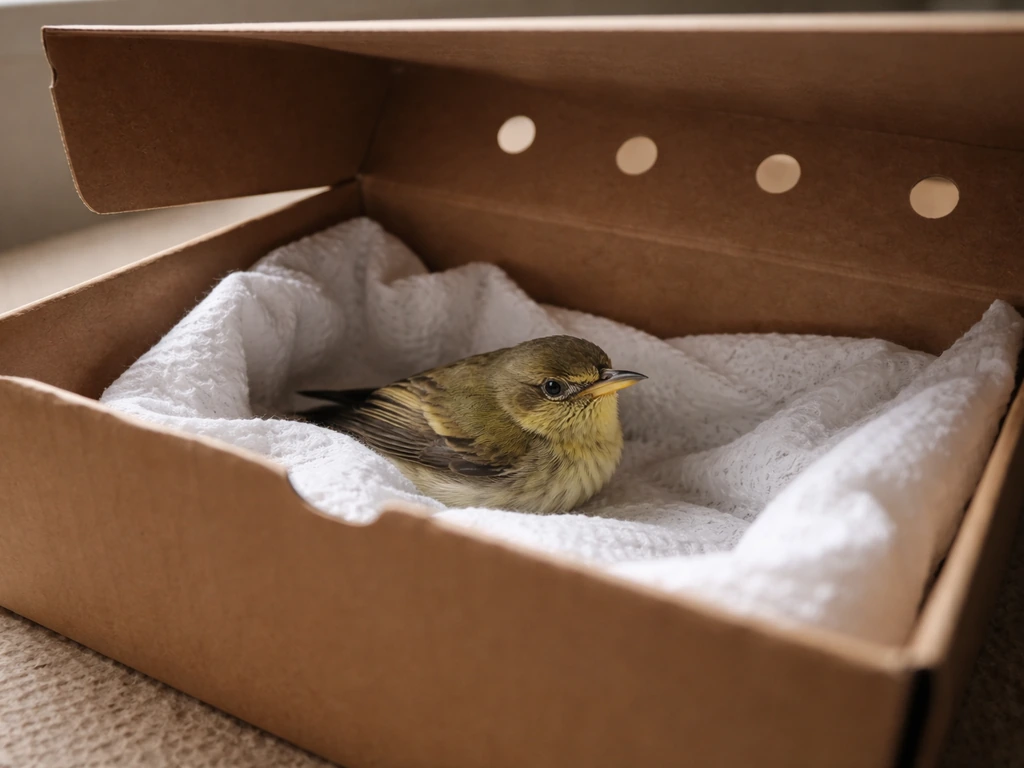
This is one of the most common calls rehabilitators get. The bird looks dead or nearly unconscious, then may recover in minutes or hours. Put it in the box with ventilation and warmth, put it somewhere quiet, and wait at least 30 minutes before checking. Many window-strike birds recover and can be released, but some have internal injuries that aren't visible. If the bird hasn't recovered and become visibly alert within an hour, contact a rehabilitator.
Bird is on the ground and can't fly
A grounded bird that lets you approach it is almost certainly injured or seriously ill. Healthy adult wild birds do not allow humans to walk up to them. Box it, warm it, and call for help. Don't leave it outside thinking it will recover on its own; a grounded bird is extremely vulnerable to cats, dogs, and other predators.
Suspected broken or injured wing
If a wing is drooping or held at an odd angle, assume it's injured. Don't try to splint or bandage it yourself. Wrap the bird gently in a towel when handling it so the wings stay against its body, which prevents further damage and helps keep the bird calm. Get it to a vet or rehabilitator the same day if possible.
Baby bird or possible orphan
Not every grounded young bird is an orphan. A fledgling, which is a mostly feathered bird that hops around on the ground, is often in the normal stage of learning to fly. Its parents are likely nearby. If the bird is fully feathered and alert, try to place it gently on a nearby branch or bush rather than boxing it, then watch from a distance for 30 to 60 minutes to see if a parent returns. A naked or downy chick that's cold and on the ground is a different story and needs immediate help. The distinction between fledgling and orphan matters, and a rehabilitator can help you assess it over the phone.
Signs the bird needs urgent professional care right now
Some injuries and symptoms are emergencies that can't wait for a morning phone call. If you see any of the following, contact a wildlife rehabilitator or avian vet immediately, even if it's outside of normal hours:
- Visible bleeding that isn't stopping
- Open wounds, lacerations, or puncture wounds (especially from a cat bite)
- Labored breathing, open-mouth breathing, or the tail bobbing rhythmically with each breath
- Obvious broken bone with the bone visible or limb at a severely abnormal angle
- The bird is seizing, convulsing, or spinning in circles
- Head tilting that can't be corrected
- Maggots or fly eggs (white clusters) on the bird's body
- Large swellings or bubbles visible under the skin
- The bird is completely unresponsive or limp
Signs like a drooping wing, inability to stand, or obvious lameness also indicate the bird needs urgent attention, even if they look less dramatic than bleeding. Don't wait and see with these.
When to call, who to call, and what to say
In the U.S., your first call should be to a licensed wildlife rehabilitator. You can find one through your state's wildlife agency website, the National Wildlife Rehabilitators Association directory, or the Wildlife Rehabilitator Directory at wildlifehotline.org. In the UK, the RSPCA helpline handles injured wild birds. In Australia, contact WIRES or a state-based wildlife rescue group.
When you call, have this information ready before you dial so the conversation can stay focused on helping the bird:
- Your location (city, neighborhood, or address where you found the bird)
- The species if you know it, or a brief description (size, color, beak shape)
- Where and how you found it (on the ground, hit a window, attacked by a cat, etc.)
- What symptoms or injuries you can see
- How long you've had it and what you've done so far
- Whether you have the ability to transport it
A photo or short video you took before boxing the bird is incredibly useful here. Rehabilitators can often make a much faster triage assessment from a 10-second video than from a verbal description.
How to transport the bird safely
Keep the box closed and secure during transport. Place it on the floor of the back seat or in the footwell where it won't slide around or tip over. Don't put it in the trunk, which can get very hot. Don't carry the box in your lap while driving.
Keep the car quiet: no loud music, no air conditioning blowing directly on the box, and minimal talking near it. The transport environment should be as close to the calm dark box it was resting in as possible. The whole goal is to get the bird from your hands to professional hands with as little additional stress and physical jostling as possible.
Don't open the box to check on the bird during the drive. Resist the impulse. The bird is better off undisturbed than reassured.
A quick decision framework
| Situation | What to do | How urgent |
|---|---|---|
| Window strike, stunned but breathing | Box, warm, quiet. Wait 30-60 min. Call if not recovered. | Moderate: call within the hour if no improvement |
| Grounded adult bird, can't fly | Box, warm, quiet. Call rehabilitator. | High: same-day contact |
| Drooping or injured wing | Box, wrap wings against body, call immediately. | High: same-day transport |
| Bleeding, open wound, or cat bite | Box carefully, call immediately. | Emergency: contact now |
| Open-mouth or labored breathing | Box, call immediately. | Emergency: contact now |
| Fledgling on the ground, fully feathered | Watch from distance first. Call if parents don't return in 1 hour. | Lower: assess before intervening |
| Naked/downy chick on the ground | Box, warm, call immediately. | High: same-day contact |
Making the bird comfortable is genuinely important work. Warmth, darkness, quiet, and keeping your hands off it are the most effective things you can do. The professional steps, calming an injured bird's longer-term stress, understanding what to feed it during recovery, and learning how to nurse it back to health, all come after you've handed it to someone trained to help. Your job right now is to buy it enough time and calm to get there.
FAQ
What should I do if the bird is bleeding and I’m worried it will get blood in the box?
Focus on containment and warmth, line the box with fresh paper towel or cloth, and keep the bird undisturbed. Do not apply antiseptics, powders, or bandages yourself, since medication and restraints can worsen shock or mask symptoms. If bleeding is heavy or the bird is very weak, call a wildlife rehabilitator immediately.
How warm is “warm” without overheating the bird?
Use a warm zone setup (one end on a low heating pad or a towel-wrapped hot water bottle placed next to the box) so the bird can move to a cooler area. If the outside of the box feels hot enough that you cannot rest your hand comfortably on it for several seconds, it is too warm.
Can I use a towel to gently hold the bird while I take it to the vet or rehabilitator?
Yes, but only for the minimum time needed for transport. Keep wings tucked against the body, avoid gripping around the chest, and return the bird to the covered ventilated box as soon as you are ready to move it.
Should I keep the bird in the dark even if it’s responsive or seems alert?
Yes. Darkness and quiet reduce stress responses even when the bird looks awake. Keep the box closed and only open it if the rehabilitator specifically tells you to or if the bird shows rapid worsening.
What if I can’t find a rehabilitator right away, can I keep it overnight and try feeding in the morning?
Keep it warm, dark, and quiet overnight, and do not offer food or water unless a licensed rehabilitator or vet instructs you. In the morning, get professional guidance before any feeding, because the correct diet and timing are species-specific and an unsafe first feeding can be fatal.
How do I tell if a “window strike” bird is actually okay after warming up?
Re-check only after the recommended waiting window, since some recover quickly. If it hasn’t become visibly alert and coordinated within about an hour, it needs professional help anyway, because internal injuries may not be obvious from the outside.
Is it ever safe to give water if the bird looks dehydrated?
No, not unless a licensed rehabilitator or avian vet explicitly directs you. Incorrect fluids or delivery can lead to aspiration, and an injured, stressed bird may not swallow or breathe safely.
Can I put the bird on a perch or in a cage so it can rest comfortably?
For temporary comfort, a small ventilated closed box is safer than a perch or open enclosure. Prevent thrashing and panic by limiting visibility (avoid clear wire cages), provide grip on the bottom with non-slip lining, and keep the head upright space available.
Should I give pain medicine I have at home, like ibuprofen or something for pets?
No. Never give any medication unless a veterinarian or rehabilitator tells you exactly what and how much. Dosing errors are common, and some human or pet meds can be dangerous for birds even in small amounts.
What are signs the bird is in worse condition than it first appears?
Watch for inability to stand, drooping or oddly held wings, repeated collapse, wheezing, labored breathing, or extreme weakness. If you see urgent signs, treat it as an emergency and contact a rehabilitator or avian vet immediately, even outside normal hours.
Where exactly should the box go inside my house?
Choose the quietest, least trafficked spot you can, away from kids, pets, and household activity. A closet or room with minimal noise works well, and avoid direct exposure to drafts or air conditioning vents.
Is it okay to check on the bird often for reassurance?
Limit checks. Frequent box openings undo the calming effect and can spike stress hormones. If you must assess, do it briefly and only when needed, or wait the advised period for the most realistic recovery signal.
How should I handle a fully feathered bird on the ground that looks like it won’t fly?
Do not assume it is an orphan. If it is fully feathered and alert, you may place it gently on a nearby branch or bush and watch from a distance for 30 to 60 minutes for a parent return. If it is cold, limp, downy, or unable to move normally, box and contact help instead.
What should I do with the bird if my gloves are missing and I only have a thin cloth?
Use the thickest barrier you have available, like a folded towel or substantial cloth. The goal is to reduce direct hand contact and protect against cuts, but avoid prolonged handling. If you cannot safely contain the bird without frequent contact, focus on minimizing time and get professional help fast.
How can I prepare for the phone call to make it easier for the rehabilitator to triage?
Have a short video and clear photo ready, capture the bird’s posture (wing angle, ability to stand, breathing effort), and note exactly when and where you found it (for example, window strike, hit by car, outdoors after a storm). Keep the bird in the box and do not start feeding or treatment while you wait to speak.
Next Article
What to Do With an Injured Bird Overnight
Step-by-step humane overnight care for injured or possibly orphaned birds, with triage, shelter, feeding do and donts