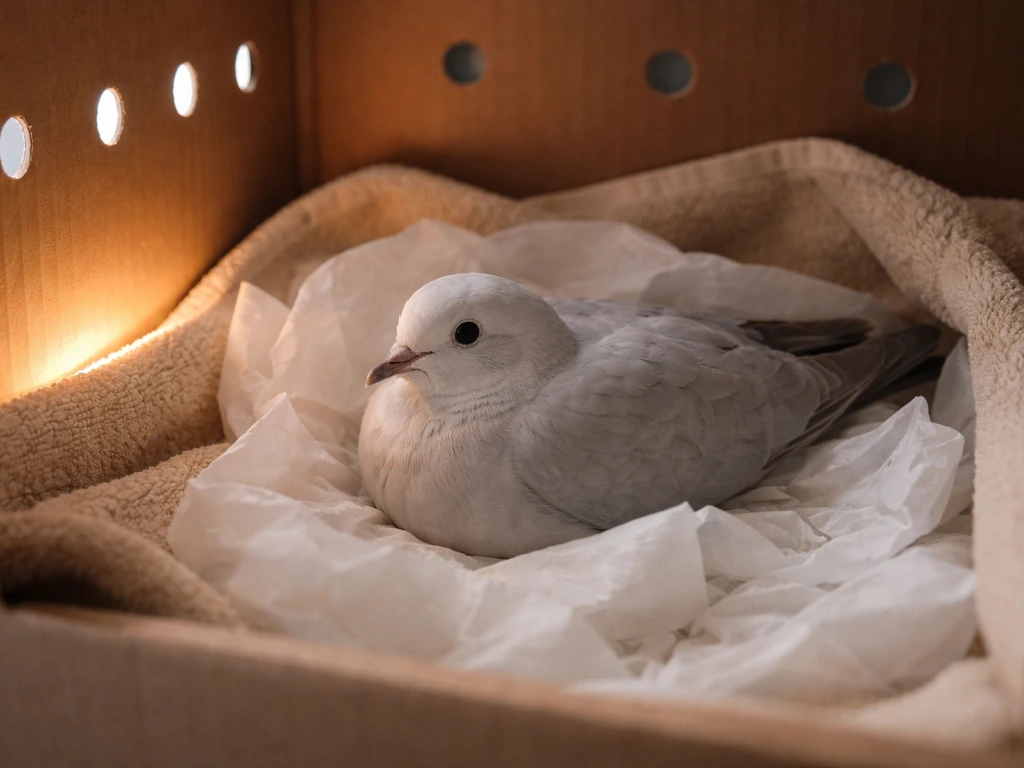
If you've just found a wild bird that looks injured, sick, or abandoned, here's the short answer: contain it safely, keep it warm and quiet, don't feed or water it, and get it to a licensed wildlife rehabilitator as fast as you can. Everything else in this guide fills in the details around those four steps so you don't accidentally make things worse while you're trying to help.
How to Take Care of a Wild Bird: Orphaned Baby Guide
Marcus Holloway
10 Apr 2026
First things first: assess before you act
Before you touch anything, watch the bird from a few feet away for a minute or two. A lot of birds that look like they need rescuing actually don't. A fledgling hopping around on the ground is often completely normal. A bird that just hit a window may be stunned and recover on its own in under two hours. The goal at this stage is to figure out whether you actually need to intervene.
Ask yourself three things: Is the bird visibly injured (bleeding, a drooping wing, an obvious wound)? Is it in immediate danger from traffic, cats, or dogs? Is it a very young baby with no feathers or closed eyes? If the answer to any of those is yes, you need to act. If the answer is no, keep watching before stepping in.
If a cat or dog has had the bird in its mouth, that's an automatic intervention even if the bird looks fine. Cat saliva carries bacteria that can be fatal to birds within 24 to 48 hours, so any bird that has been in or near an animal's mouth needs to go to a rehabilitator immediately, no exceptions.
For window-strike cases with no visible injury, Wildlife Care of SoCal recommends keeping the bird in a warm, dark, quiet place for up to two hours and then attempting a release. If it doesn't fly off on its own, that's your cue to get professional help.
How to handle a wild bird safely
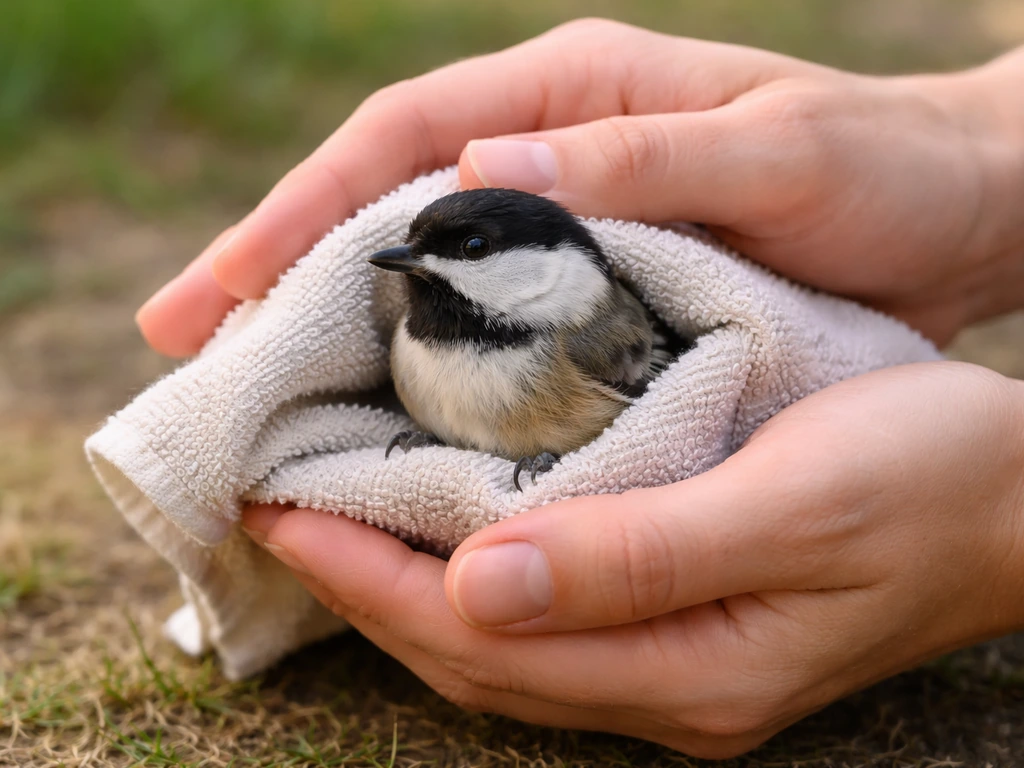
Keep handling to an absolute minimum. Stress alone can kill a wild bird, so every second you're holding it is a cost. When you do need to pick it up, use a light towel or a pair of gloves. Drape the towel gently over the bird, then scoop it up with both hands, keeping the wings held lightly against the body. Don't squeeze. You want firm enough contact that the bird can't thrash and hurt itself, but no pressure on the chest.
Avoid grabbing birds by the legs or wings. Don't hold them on their backs. And once the bird is in its container, stop picking it up to check on it. Every time you open the box and peer in, you're adding stress.
- Do use a towel or gloves to pick up the bird
- Do cup both hands gently around the body with wings folded
- Do work quickly and then leave the bird alone
- Don't grab by wings, legs, or tail
- Don't hold the bird on its back
- Don't let children or pets near the bird
- Don't attempt to nurse it back to health yourself at home
Setting up temporary shelter: warm, dark, and quiet
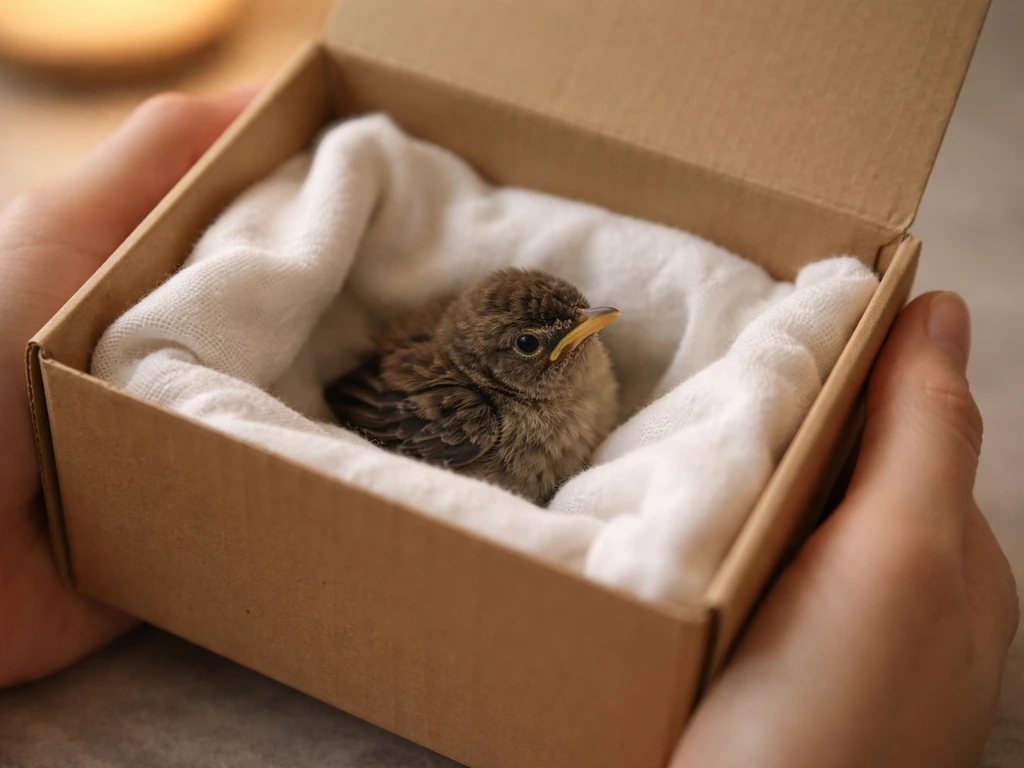
A cardboard box works perfectly for temporary housing. Punch several small holes in the lid for ventilation, line the bottom with a soft cloth or paper towels so the bird has traction, and close it up. Do not use a wire cage. Wire cages allow birds to thrash against the sides and cause serious feather and beak damage. A plain, lidded cardboard box is genuinely the best option here.
Temperature matters a lot. An injured songbird does best around 85°F (about 29°C). If the bird seems cold or is a baby with little feathering, you need to add gentle warmth. Place a heating pad on its lowest setting under one half of the box only, so the bird can move away from the heat if it gets too warm. Alternatively, microwave a clean sock filled with dry rice for about a minute and tuck it next to the bird inside the box. Check it regularly so it doesn't cool down completely or overheat.
Put the box somewhere genuinely quiet. That means away from the TV, away from kids, away from other pets, and away from direct sunlight. A dark, calm room or a closet shelf works well. Quiet and darkness reduce the bird's stress and help prevent a condition called capture myopathy, where extreme stress causes muscle breakdown. The bird should feel as little human presence as possible while it's in your care.
Feeding and water: what to give (and mostly what not to)
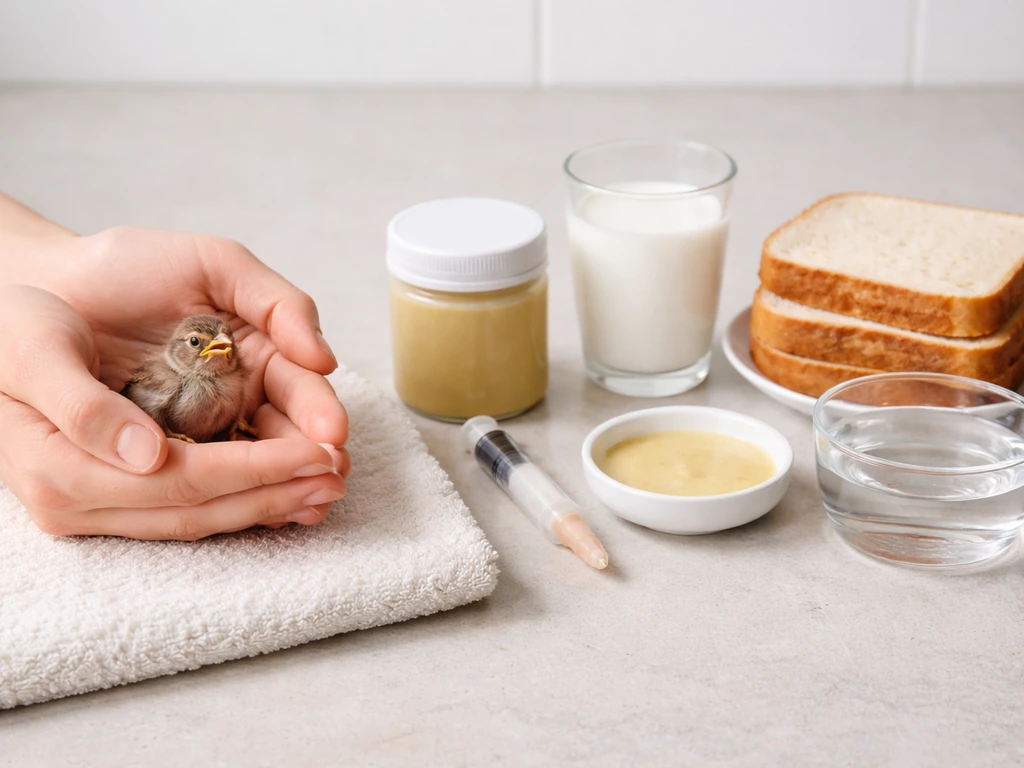
This is the part where most well-meaning people accidentally cause harm. The guidance from virtually every wildlife rehabilitation organization is the same: do not feed or water a wild bird unless a licensed rehabilitator has specifically told you to. That applies to adult birds and baby birds alike.
Force-feeding a baby bird is one of the most common mistakes rescuers make. Food or water introduced the wrong way can go straight into the lungs, which can be fatal. Baby birds also do not drink water the way adult birds do, so offering water to a nestling is genuinely dangerous. Bread, milk, and similar human foods can cause severe diarrhea and malnutrition in young birds.
For adult birds that are alert and upright, you can offer a very shallow dish of clean water nearby in the box, but do not try to drip water into the bird's mouth or hold it up to the dish. If the bird wants water, it will drink on its own. The moment you have a rehabilitator on the phone, ask them specifically what, if anything, you should offer.
The goal here is short-term stabilization, not recovery. You're not trying to rehabilitate this bird yourself. You're just keeping it stable for the next few hours until a professional takes over. Species-specific care varies a lot, and how to take care of a dove bird differs meaningfully from caring for a sparrow or a starling, which is exactly why trained rehabilitators exist.
Is it a nestling or a fledgling? It matters
If the bird you found is young, the very first thing to figure out is what developmental stage it's in. This determines whether it actually needs your help at all.
| Stage | Age (approx.) | Appearance | What to do |
|---|---|---|---|
| Nestling | 0–13 days old | Featherless or nearly so, eyes closed or just opening, helpless | Return to nest if possible; if not, contact a rehabilitator immediately |
| Fledgling | 14+ days old | Fully or mostly feathered, eyes open, can hop or flutter | Usually leave alone; parents are likely nearby and still feeding it |
| Injured at any stage | Any age | Visible wound, blood, drooping wing, or lethargic | Contain and transport to a rehabilitator regardless of stage |
A nestling is tiny, mostly naked, and completely unable to care for itself. If you find one on the ground, look for the nest nearby. If you can reach it, place the bird back in gently. The myth that a mother bird will reject a baby that has been touched by humans is just that, a myth. Parent birds do not abandon babies because of human scent. If the nest is destroyed or you can't find it, the bird needs a rehabilitator.
A fledgling looks much more like a "real" bird. It has feathers, open eyes, and it can usually hop around. Finding one on the ground is almost always normal. The parents are usually watching nearby and continuing to feed it. Unless it's in immediate danger from a predator or busy road, the right move is usually to leave it alone or move it to a safer nearby spot (a low branch, a bush) without taking it indoors.
If you're unsure what you're looking at, how to care for an abandoned bird goes deeper into identifying whether a bird has truly been left behind or is just doing what young birds naturally do.
One important practical note: a featherless nestling needs feeding every 15 to 20 minutes from sunrise until about 10 p.m. That's not a schedule any ordinary person can maintain while also holding down a regular day. It's one more reason why getting a baby bird to a professional quickly is genuinely in the bird's best interest, not just a bureaucratic formality.
When and how to get professional help
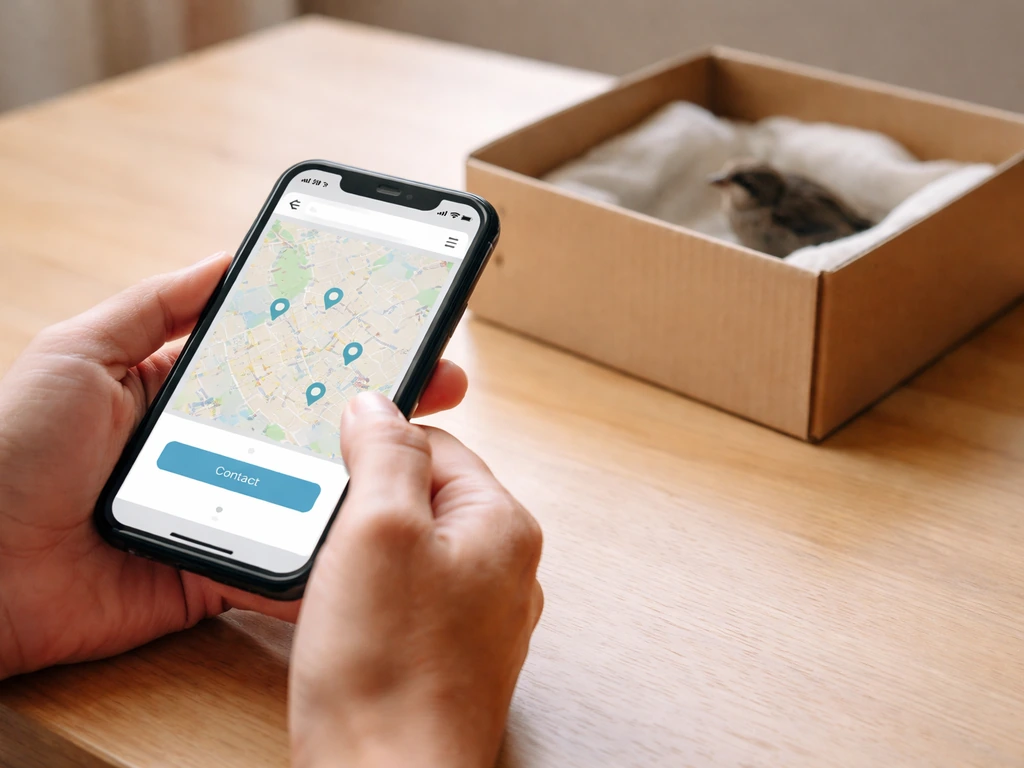
The best outcome is getting the bird to a licensed wildlife rehabilitator within an hour of finding it. In most U.S. states, keeping a wild bird without a permit is actually illegal, so long-term DIY care isn't just inadvisable, it's against the law. Licensed rehabilitators have the training, permits, and proper food sources (like live insects and species-appropriate diets) that you simply can't replicate at home.
To find help, try these in order:
- Search 'wildlife rehabilitator near me' or visit the National Wildlife Rehabilitators Association directory online
- Call your local animal control office, they often have direct contacts for wildlife rehab
- Contact your nearest veterinary clinic, many will accept or refer wild birds even if they don't specialize in them
- Reach out to a local Audubon chapter or bird sanctuary
When you call, have this information ready: the species if you know it, where you found the bird, what condition it's in (injury type, behavior), and whether a cat or dog was involved. The rehabilitator may be able to give you specific guidance over the phone before you even leave the house.
For transport, use the same cardboard box setup described above. Keep the box out of direct sunlight and away from air conditioning vents in the car. Don't put the box in a hot trunk. Keep noise in the car to a minimum, meaning no loud music and minimal conversation near the box. The less stimulation the bird experiences during the drive, the better.
Never use a wire cage for transport. A solid-sided plastic pet carrier is acceptable if that's all you have, but a closed cardboard box is actually preferable because the darkness keeps the bird calmer.
Monitoring the bird while you wait
Once the bird is in its box in a quiet place, your job is mostly to leave it alone. Check on it every 30 minutes or so by listening rather than opening the box. If you hear it moving around or making noise, that's generally a good sign. If you open the box to check on it, do it quickly, don't linger, and close it back up.
Watch for signs that things are getting worse: labored breathing, open-mouth breathing, seizure-like trembling, or the bird going completely still and unresponsive. If any of those appear, call the rehabilitator back immediately and let them know.
Keep the box away from household chemicals, strong smells, and fumes. Avian respiratory systems are extremely sensitive. Don't spray anything nearby and don't let anyone smoke near the room.
If you're caring for a specific species, the management details can shift. For example, how to take care of a starling bird covers some of the quirks of that species that a general guide can't fully address. Similarly, how to take care of a sparrow bird walks through care considerations for one of the most commonly found backyard birds.
For birds that have fallen from a height, there are additional assessment steps worth knowing. How to take care of a fallen bird covers those specifics, including how to check for spinal or wing injuries without causing further harm.
One thing that catches people off guard: wildlife that seems stable can deteriorate quickly. The stress of captivity, even gentle captivity, is a real physiological burden for wild birds. Every hour matters. Don't wait until tomorrow to call a rehabilitator. Make the call now, even if the bird looks okay, and get it into professional hands as soon as possible.
Finally, wash your hands thoroughly after handling any wild bird. Wild birds can carry salmonella and other bacteria. This is standard hygiene and not a reason to fear the bird, just a sensible precaution once you've done what you can to help.
And a small note for the curious: if your search somehow led you here while looking for information on an exotic pet rather than a wild bird rescue, how to take care of a goliath bird eating spider is a completely different topic and a completely different kind of guide.
FAQ
What should I do if the wild bird looks “okay” but I’m worried it might be injured?
Yes. If the bird is bleeding, has a drooping wing, is panting or breathing with effort, or has been in a cat or dog mouth, you should get a rehabilitator right away. While waiting, keep the bird warm and quiet in the cardboard box, avoid food and water, and minimize handling.
Can I treat a wild bird with first-aid items I have at home?
Do not use homemade remedies, oils, antibiotics, or liquids. If you suspect an injury, the safest immediate action is warm, dark housing and contacting a licensed rehabilitator, because many home treatments can worsen breathing or cause toxic exposure.
I found the bird in a dangerous spot. Is it okay to move it around before calling for help?
If you must move it to reduce danger, do so quickly and with minimal contact. Use a towel to pick it up only once, place it in the box, and then stop checking by opening the container. Do not carry it around the house or allow others to handle it.
My bird is chirping and seems hungry. Can I offer seeds, worms, or water to help it?
Generally, no. Birds typically need their normal diet and feeding method, and forcing food can cause aspiration (food entering the lungs). If a rehabilitator has not told you to offer something, the correct default is to provide warmth and no food or water.
What if there are no visible wounds after a cat or dog was involved?
If the bird is a cat or dog attack victim, treat it as urgent. Even if there is no obvious wound, bacteria in saliva can make the bird sick within 1 to 2 days, so call the rehabilitator immediately and keep the bird warm and quiet until transport.
I found a naked baby bird on the ground. How do I decide whether to put it back in a nest?
If you find a nestling where the nest is unreachable, place it back outside only if you can safely return it to the nest or locate a safe substitute nest. If you cannot find the nest, or the bird is truly featherless and stranded, contact a rehabilitator and keep it warm in the box.
What should I do with a fledgling that looks healthy but is sitting on the ground?
If it is a fledgling with feathers and open eyes, leaving it outside is often the best choice. Move it only if it is in immediate danger (road, predators) and set it on a nearby low branch or safe spot. Do not bring it indoors for “just a little while.”
How do I protect myself and my family from germs after rescuing a wild bird?
Yes, through contact avoidance. Use a dedicated towel or gloves, handle the bird for the shortest time needed, and wash hands thoroughly afterward. Avoid touching your face and keep the bird area away from food prep surfaces.
I think my bird hit a window. How long should I wait before getting professional help?
If the bird is in the middle of a window strike or you have found it stunned, do not feed or water it and do not attempt a full “recovery session.” Keep it warm, dark, and quiet, and if it does not recover and fly off within about two hours, contact the rehabilitator.
What symptoms mean the bird is getting worse during the rescue wait?
Yes. If you see labored breathing, repeated open-mouth breathing, or a sudden loss of responsiveness, call the rehabilitator again right away. Those can indicate internal injury or severe stress, and advice can change based on symptoms.
I don’t have a cardboard box. What can I use instead for transport?
If a cardboard box is all you have, use it. If you only have a solid-sided plastic pet carrier, it can be acceptable for transport, but keep it dim and quiet. Avoid wire cages because thrashing can lead to feather or beak damage.
What’s the safest way to provide warmth if I’m using a heating pad?
Do not place the heat source directly under the bird. Use low heat under only half the box so the bird can move away, and check frequently so the bird does not overheat or become too warm.
Is it ever okay to offer water to a wild adult bird?
If the bird is alert enough to swallow safely, it should still not be fed unless the rehabilitator instructs you to. For adults that appear upright, placing a shallow dish nearby may be allowed, but do not force water into the beak and stop once the expert advises otherwise.
Where should I keep the bird while I wait for the rehabilitator call back?
Put the box somewhere cool enough to avoid overheating, but not drafty, and keep it out of direct sunlight and away from vents, fumes, and strong household smells. Also reduce noise, lights, and foot traffic so the bird stays calm.
Next Article
How to Take Care of a Dove Bird: Rescue to Recovery
Step by step rescue care for injured, orphaned, or sick doves: triage, feeding, warmth, handling, and when to call a vet