If you find a bird on the ground today, here is what to do: stay calm, keep pets and kids away, and figure out whether it's a nestling (too young to be out of the nest) or a fledgling (old enough to be learning to fly) before you touch it. That one assessment changes everything. A healthy fledgling usually doesn't need your help at all. A nestling, or any bird that's clearly injured, does. Once you know which you're dealing with, the steps below will walk you through the next 10 to 60 minutes clearly and quickly.
How to Take Care of a Fallen Bird: First Aid Steps
Marcus Holloway
28 Apr 2026
What to do in the first 60 seconds
The moment you spot the bird, resist the urge to scoop it up immediately. First, move any pets and children well away from the area. A dog or cat nearby is one of the biggest threats to a grounded bird, even if they seem calm. Then take 30 seconds to just observe. Is the bird hopping around? Fluttering? Calling out? Or is it lying still, cold, and unresponsive? What you see next determines your entire plan.
If the bird is cold, hunched, or unresponsive, that's a sign it needs warmth fast. If it's alert and moving around on its own, it may be a fledgling doing exactly what fledglings are supposed to do. Either way, don't offer food or water yet, and don't panic. You have time to make a good decision.
Nestling, fledgling, or injured: the key assessment
This is the most important step. Getting it right means the difference between reuniting a baby with its parents in five minutes versus accidentally separating a perfectly healthy fledgling from a family that was already watching it from the trees.
Signs you're looking at a nestling
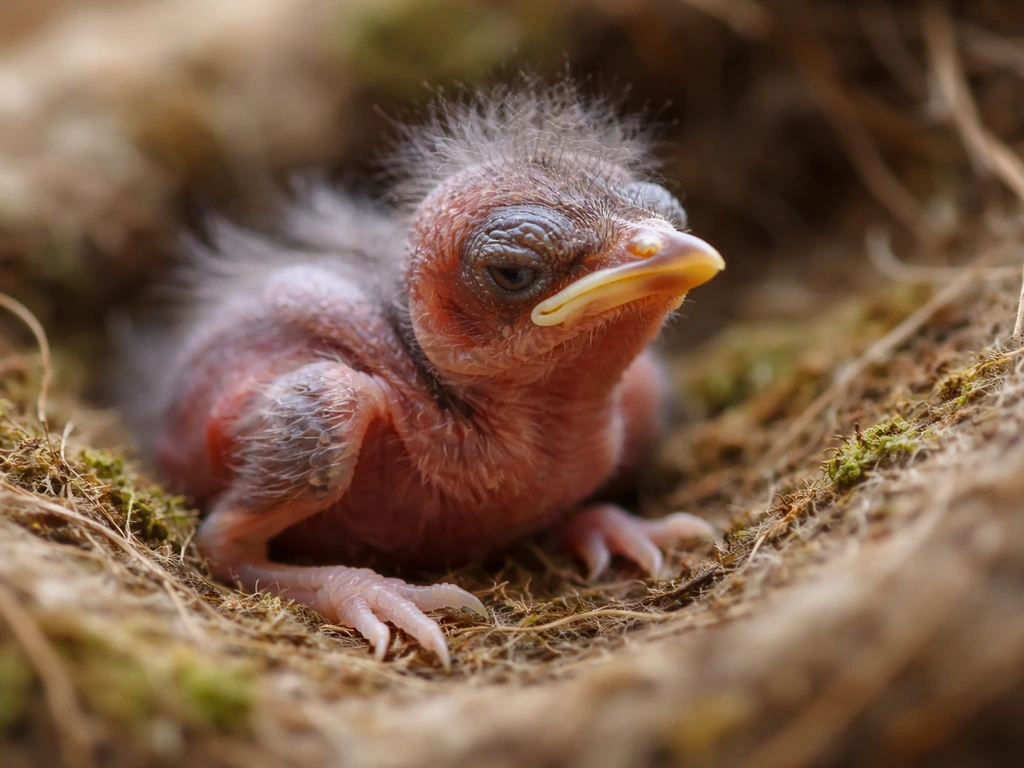
- Sparse feathers or no feathers at all (mostly bare pink skin)
- Eyes closed or just beginning to open
- Unable to hop, walk, or grip your finger firmly
- Clearly too young to survive outside a nest on its own
A nestling like this fell or was pushed from a nest nearby. It did not leave on its own and cannot survive outside without help. This bird needs your intervention.
Signs you're looking at a fledgling
- Mostly feathered, even if still a little fluffy
- Alert eyes, responsive to movement
- Can hop, flutter its wings, or grip a branch or finger
- Short tail feathers that look like they're just growing in
Fledglings are supposed to be on the ground. This is a normal, brief stage of development where young birds leave the nest and spend a few days learning to fly while their parents continue to feed and supervise them from nearby. If this is what you're looking at and the bird is not injured, the right move is to walk away and leave it alone. The parents are almost certainly watching from close by and will resume care once you leave.
Signs the bird is injured regardless of age
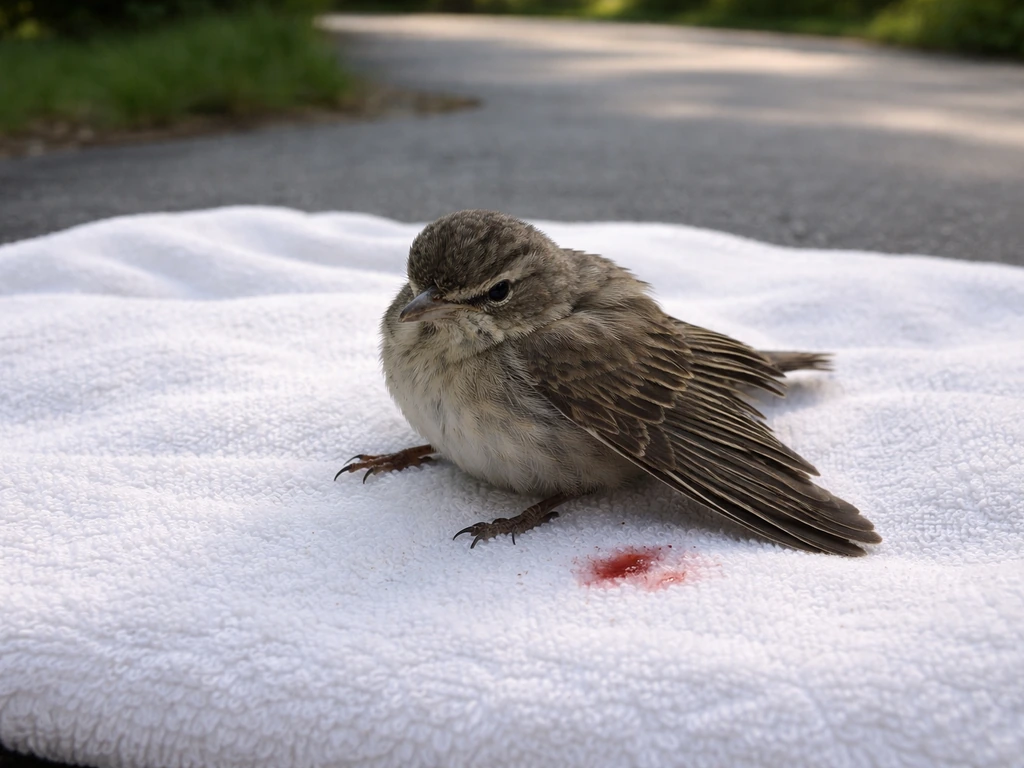
- Bleeding, a drooping or twisted wing, or obvious deformity
- Hit by a car or caught by a cat (even with no visible wounds, cat saliva is dangerous)
- Lying completely still and unresponsive when you approach
- Seizures, tremors, or inability to hold its head up
Any of these signs mean you skip the reunification step and go straight to containing the bird and contacting a wildlife rehabilitator or vet. Do not wait to see if it improves on its own.
How to safely warm and handle the bird
If you've determined the bird needs help, the next priority is warmth. Young birds lose body heat fast, and a cold bird is a bird in serious trouble. Room temperature alone is not warm enough for a nestling or a chilled bird.
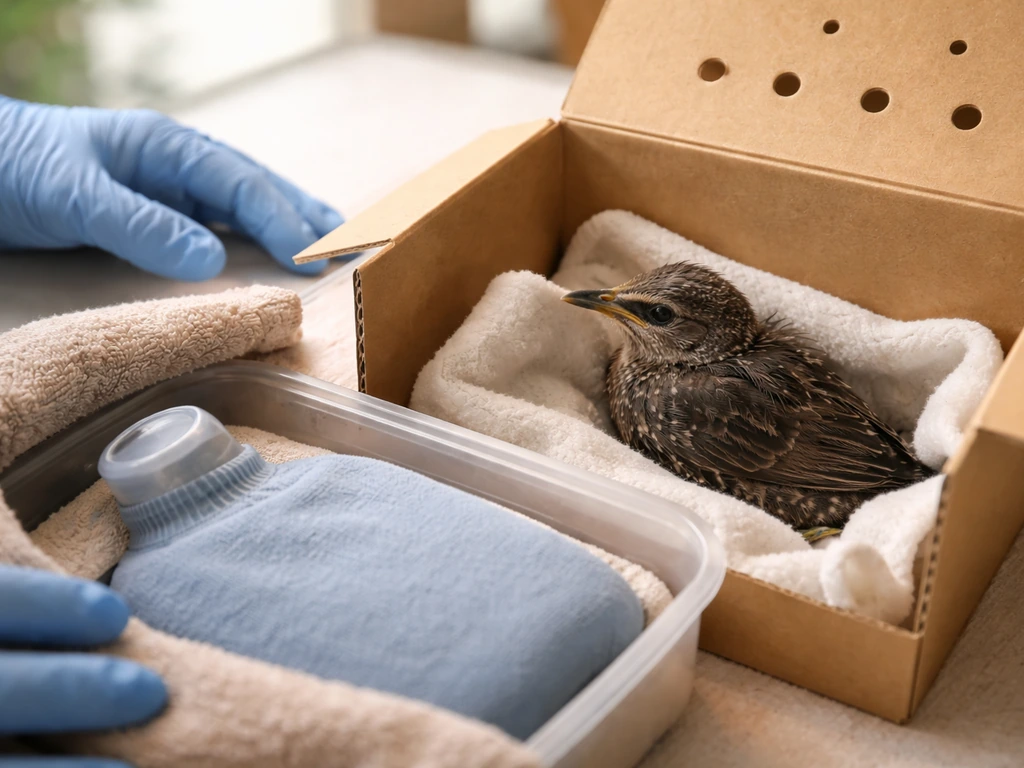
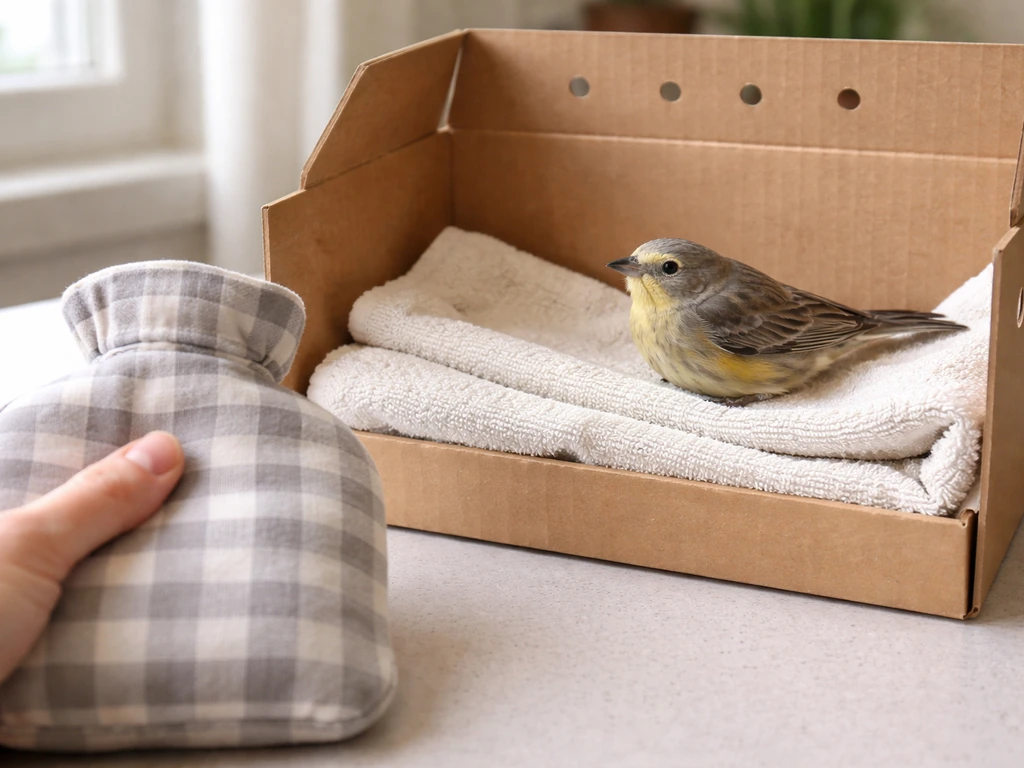
The safest warming setup: take a shoebox and place one end of it on a folded towel that's draped over a heating pad set on its lowest setting. The bird can move toward or away from the heat depending on what it needs. You can also use a hand warmer or a sock filled with dry rice and microwaved for about 30 seconds, wrapped in a thin towel and placed beside the bird. Never put the bird directly on a heating pad or hot surface, and never warm it too quickly. Gradual, gentle heat is the goal.
To pick the bird up, cup it gently but firmly in both hands. Most birds will struggle briefly. Keep a secure but gentle grip so it doesn't thrash and injure itself. Transfer it into your prepared container, close the lid, and move it to a quiet, dark interior space. Darkness helps keep the bird calm and reduces the stress that can kill a small bird almost as fast as cold can.
What to feed a fallen bird (and what not to do)
I know this feels counterintuitive, but the most important feeding rule is this: do not give food or water unless a licensed wildlife rehabilitator specifically tells you to. It is very easy to accidentally drown a bird by offering water the wrong way. Hand-feeding the wrong food can cause serious harm, and even the right food given incorrectly can aspirate into the lungs. Multiple wildlife organizations make this point clearly, and it applies whether the bird is a nestling or a fledgling.
The bird's job right now is to stay warm and calm until it gets into professional hands. Your job is to make that happen as fast as possible, not to feed it. Even if the bird appears hungry or is gaping (opening its beak), hold off. A few hours without food will not harm a bird the way an incorrect feeding will.
| Action | Safe? | Why |
|---|---|---|
| Giving water from a dropper | No | Easily causes aspiration and drowning |
| Offering bread, milk, or worms | No | Wrong nutrition, potential harm |
| Placing food in the container | No | Can contaminate the space and cause stress |
| Keeping the bird warm and quiet | Yes | Supports survival until professional help |
| Feeding only if a rehabber instructs | Yes | With correct species-specific guidance |
Reuniting the bird with its nest
If you have a nestling and you can see or locate the nest, putting the bird back is always the best first option. The parents are far better equipped to care for it than any human. And here's something worth knowing: it's a myth that touching a baby bird will cause its parents to abandon it. Birds have a poor sense of smell and will not reject a chick because a human handled it.
- Look for the nest in nearby trees, shrubs, or ledges, usually directly above where you found the bird.
- Cup the nestling gently and carry it up to the nest, or use a small container to lift it.
- Place the bird in the nest with its siblings if present.
- Step well back, ideally out of sight, and watch quietly for 15 to 30 minutes.
- If the parents return and resume feeding, you're done. Leave the area.
- If no parent appears after 30 minutes, or if the bird keeps falling out, move to the next step.
If you can find the nest but can't safely reach it, or if the nest is destroyed, you can create a substitute nest using a small container like a berry basket lined with dry leaves or grass. Hang it as close as possible to where the original nest was and place the bird inside. The parents may find it. Keep watching from a distance.
If you genuinely cannot locate the nest, do not spend a long time searching in the heat or cold with the bird exposed. Contain it, keep it warm, and contact a rehabilitator promptly.
Setting up a safe temporary space
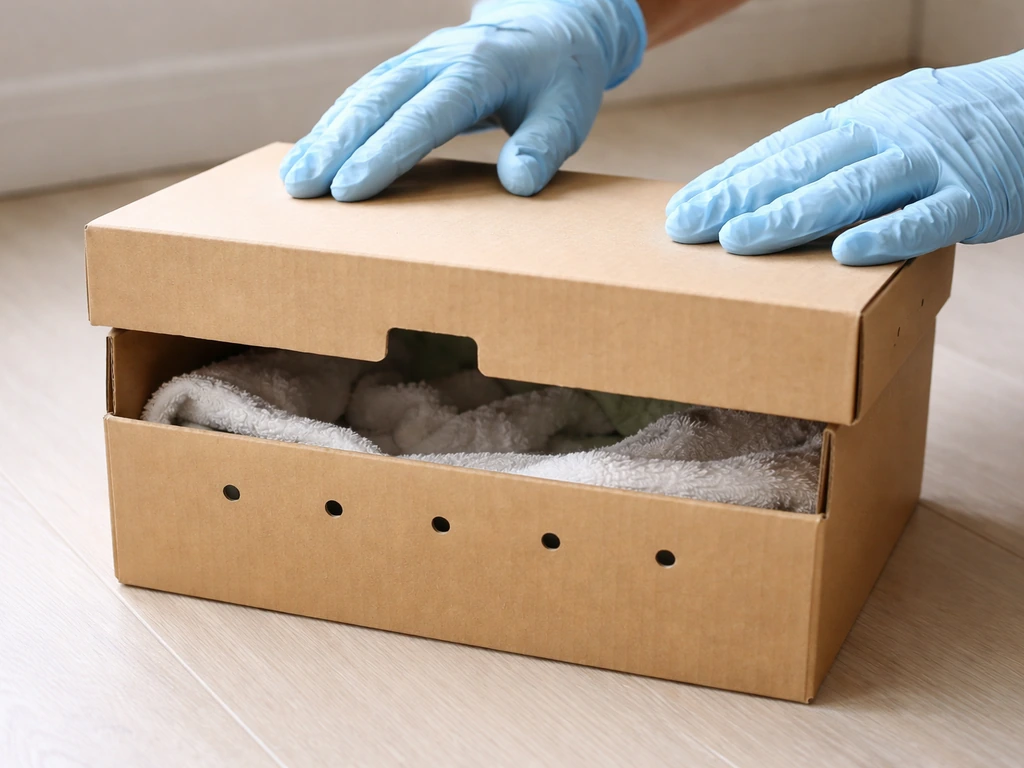
While you arrange help, the bird needs a secure, calm environment. A cardboard box with a lid works perfectly. Punch a few small air holes in the sides, but keep them small enough that the bird can't get through or get a wing caught. Line the bottom with a paper towel or a thin cloth, not loose cotton or yarn that can tangle small feet or toes.
Do not put a water dish inside the container. It can tip over during transport, soaking the bird and causing dangerous chilling. Keep the box in a quiet room, away from TVs, loud voices, other pets, and curious children. Check on the bird no more than once every 15 to 20 minutes, and keep those checks brief. Every time you open the box, you're stressing the animal. Resist the urge to hold or cuddle it. I understand the impulse entirely, but stress is a real threat to small wild birds.
Monitor for these warning signs while you wait for professional help:
- Labored or open-mouthed breathing
- Seizures or muscle tremors
- The bird becoming colder despite your warming setup
- Visible bleeding that isn't slowing
- Complete unresponsiveness
If any of these appear, escalate your call for help immediately. These are signs the bird needs a professional right now, not in a few hours.
When and how to contact a wildlife rehabilitator or vet
The sooner a sick or injured bird reaches a licensed wildlife rehabilitator, the better its chances. This is not something to put off until tomorrow to see how it goes. Contact someone today, ideally within the first hour.
You should call a wildlife rehabilitator or vet immediately if any of the following apply:
- The bird is clearly injured (bleeding, broken wing, impact trauma)
- It was caught by a cat, even with no visible wounds
- Both parents are confirmed dead
- You cannot locate the nest after a genuine search
- The bird is featherless, eyes closed, and you have no way to reunite it
- It's been more than an hour and no parent has returned to check on a grounded fledgling
- You're not sure what you're dealing with and don't want to guess
To find help fast, search the National Wildlife Rehabilitators Association directory or call your nearest wildlife agency, local Humane Society, or animal control office. Many areas also have dedicated bird rescue lines. When you call, describe the bird's approximate size, feather coverage, any visible injuries, and how long it's been on the ground. That information helps the rehabilitator give you the right interim guidance for your specific situation.
Do not attempt to keep a wild bird long-term or raise it yourself. Beyond being illegal in most places without a permit, it rarely works out well for the bird. For legal context on the migratory bird protections in Title 16, Chapter 7, Subchapter II, Cornell Law School's Legal Information Institute (LII) provides the U.S. Code text through its MBTA reference material. Wildlife rehabilitators have the species-specific knowledge, equipment, and legal authority to give the bird its best shot at survival and eventual release. The goal is always to get the bird back into the wild.
If your situation involves a specific species, the care approach can vary. For a goliath bird eating spider, use species-specific interim guidance so you do the right care steps without risking harm. If you are dealing with a sparrow bird specifically, use species-specific interim guidance so the bird gets the right care. Doves, sparrows, starlings, and other species each have slightly different needs, and a rehabilitator will factor that in.
For starlings specifically, you can use this guide on how to take care of a starling bird for species-specific interim care. If you are wondering how to take care of a dove bird, follow the rehabilitator's species-specific guidance and avoid feeding unless they direct you. If you are learning how to take care of a wild bird, contact a licensed wildlife rehabilitator for species-specific interim guidance before feeding or watering how to take care of a dove bird.
For abandoned birds or wild birds you're caring for in a garden setting, the guidance also shifts in important ways, but for a fallen bird in crisis, the steps above are your foundation. If you are dealing with an abandoned bird, the main goal is still to keep it warm, reduce stress, and get it to a licensed wildlife rehabilitator as soon as possible abandoned birds.
FAQ
Should I feed a fallen bird right away because it looks hungry or keeps opening its beak?
No. If the bird is a fledgling, the parents are usually nearby and watching, so offering food or “helping” can separate it from them or cause aspiration. For nestlings, waiting to feed is still safer until a licensed rehabilitator gives instructions, because the wrong food or delivery method can injure or drown the bird.
Is it okay to pick up a grounded bird to move it out of the street or away from danger?
You can if you need to protect the bird from danger, but limit handling time and use gentle, brief containment. If you must move it, do so quickly into a secure box, keep it warm and dark, and avoid repeatedly carrying it around the yard or outdoors.
What if the bird looks thirsty or has dry mouth, can I give it water?
Yes, but only as an emergency to prevent chilling, not as a “rehydration” routine. Do not provide water in a dish or by offering it to the beak. If you are waiting on professional guidance and the bird is cold, focus on gradual warmth in a covered, quiet container.
How do I decide whether to leave a grounded fledgling alone or get help immediately?
If the bird is clearly injured, cold, unresponsive, tangled, or you suspect it came from a nest, treat it as needing help right away. If it is a fledgling that is alert and moving, the best option is usually to leave it alone while keeping pets and people away, but if it is in a high-risk spot (road, aggressive pets), you still may need to relocate it briefly and then contact a rehabilitator.
What should I use for bedding, and is it safe to use cotton balls or paper towels?
Do not. Loose cotton, yarn, or fluffy bedding can wrap around toes or wings and cause circulation problems. Use plain paper towel or thin cloth lining only, and keep the container dry and stable.
Can I put a small water bowl in the box to keep it hydrated?
No water dish. Even small cups can tip during transport or struggle-handling, soaking the bird and triggering dangerous chilling. Keep the bird warm and dry, and only add moisture if a rehabilitator specifically instructs you to.
How warm should I make the warming setup, and can I use a heat lamp?
Turn off or reduce heat sources that could overheat the bird, and aim for gentle warming. Never put the bird directly on a hot pad or place it under a lamp. A warm box with controlled heat at the lowest setting, plus the bird’s ability to move toward or away, is safer.
Once I warm it, what changes should I look for before deciding whether it can be left alone?
If it is not fully warmed, it may be too weak to open its beak or move normally. Warmth comes first, then reassess briefly. Also watch for worsening signs like sudden weakness, inability to stay upright, or heavy breathing, which are reasons to escalate professional help rather than trying to feed.
What details should I have ready when I call a wildlife rehabilitator or vet?
Make the call faster than you think, especially within the first hour if you can. When you contact help, include location, whether the bird seems cold or injured, visible injuries, and how long it has been on the ground, plus whether cats or dogs were nearby.
Does the right interim care change depending on the bird species I think it is?
Yes. If you have strong suspects about species (for example, a sparrow or dove) it helps the rehabilitator, but species-specific care does not replace the core interim rules here: keep it warm, reduce stress, and do not feed or water unless directed. If the bird is one you cannot confidently identify, still treat it as a wild bird needing professional assessment.
What should I do if the bird is lying still and seems unresponsive?
If the bird is alive but not moving, cold, or unresponsive, containment and immediate warmth take priority. Still contact a rehabilitator right away. Do not wait for it to “come back,” because a delay can lead to rapid deterioration from hypothermia or shock.
Next Article
How to Take Care of a Starling Bird: Rescue Steps
Humane rescue guide for injured or orphaned starlings: triage, warmth, safe first aid, feeding, and when to call a rehab