If you've found a starling that looks hurt, grounded, or abandoned, the most important thing you can do right now is contain it safely, keep it warm and quiet, and contact a licensed wildlife rehabilitator as soon as possible. Most well-meaning rescuers accidentally cause more harm by feeding the bird too early, handling it too much, or offering the wrong food.
How to Take Care of a Starling Bird: Rescue Steps
Marcus Holloway
26 Apr 2026
This guide walks you through what to do step by step, from the moment you spot the bird to the point where it's ready to go back outside. If the bird really seems abandoned, follow the same safe steps and get help from a wildlife professional as soon as you can how to care for an abandoned bird.
Follow these guidelines for how to take care of wild bird so the bird stays safe until a professional can take over.
Quick triage: is it injured, orphaned, or just stressed?
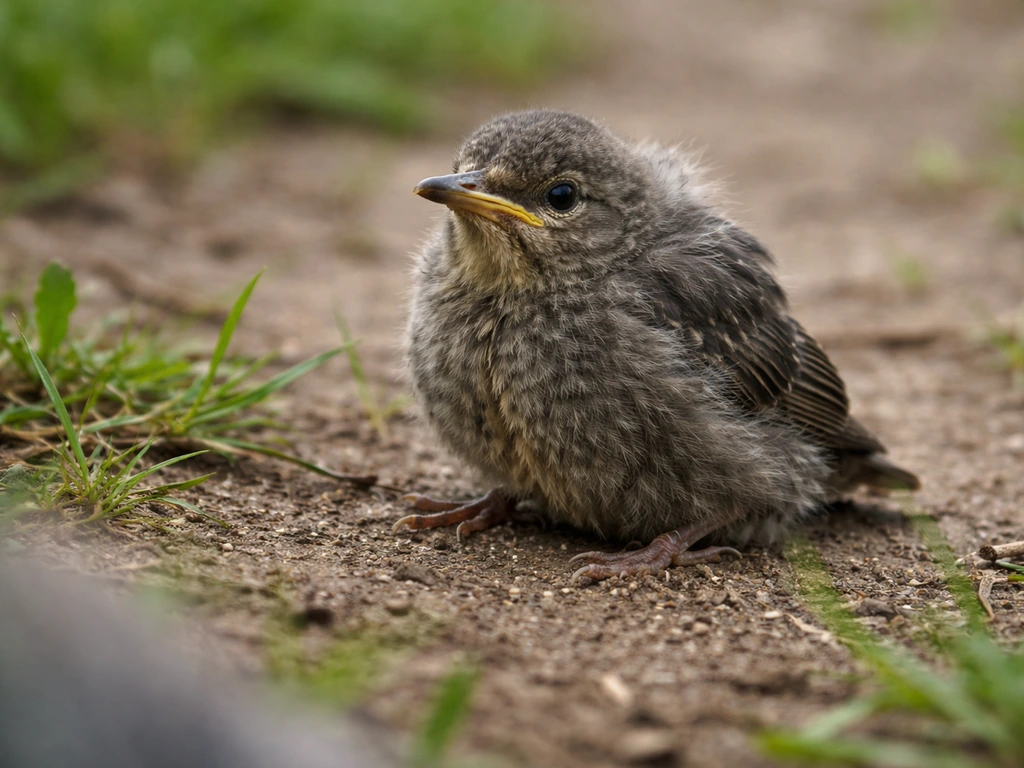
Before you touch the bird, spend 60 seconds watching it from a few feet away. Your goal is to figure out what you're actually dealing with, because a fledgling hopping on the ground is a very different situation from an adult with a drooping wing.
A fledgling starling (short tail, some fluffy down still showing, alert eyes) on the ground is often completely normal. Parent birds are almost always nearby and will continue feeding it even on the ground. If the bird is hopping, holding its head up, and reacting to you, leave it alone and move any pets or children away from the area. Watch from a distance for 30 to 60 minutes to see if a parent returns.
A nestling is a different matter. If the bird is tiny, mostly naked or covered in pin feathers, has its eyes closed, and clearly can't hold itself upright, it has fallen from a nest too early. Use those same steps for how to take care of a fallen bird until you can hand it off to a rehabilitator. Look for the nest nearby and gently return the bird if you can reach it safely. Contrary to popular belief, parent birds will not reject a nestling because a human touched it.
An adult or fledgling that needs your help will usually show one or more of these signs:
- Visible injury (blood, drooping or dangling wing, obvious leg deformity)
- Not moving when approached or allowing you to pick it up without fleeing
- Eyes half-closed, head drooping, or body tilted to one side
- Found near a window (likely a collision) and not recovering after 30 minutes
- Attacked by a cat or dog (even with no visible wounds, internal injury is common)
- Fluffed up and immobile in an unusual location with no parent activity after an hour
If the bird checks any of those boxes, it needs help. Move on to the next steps.
Safe handling and getting the bird contained
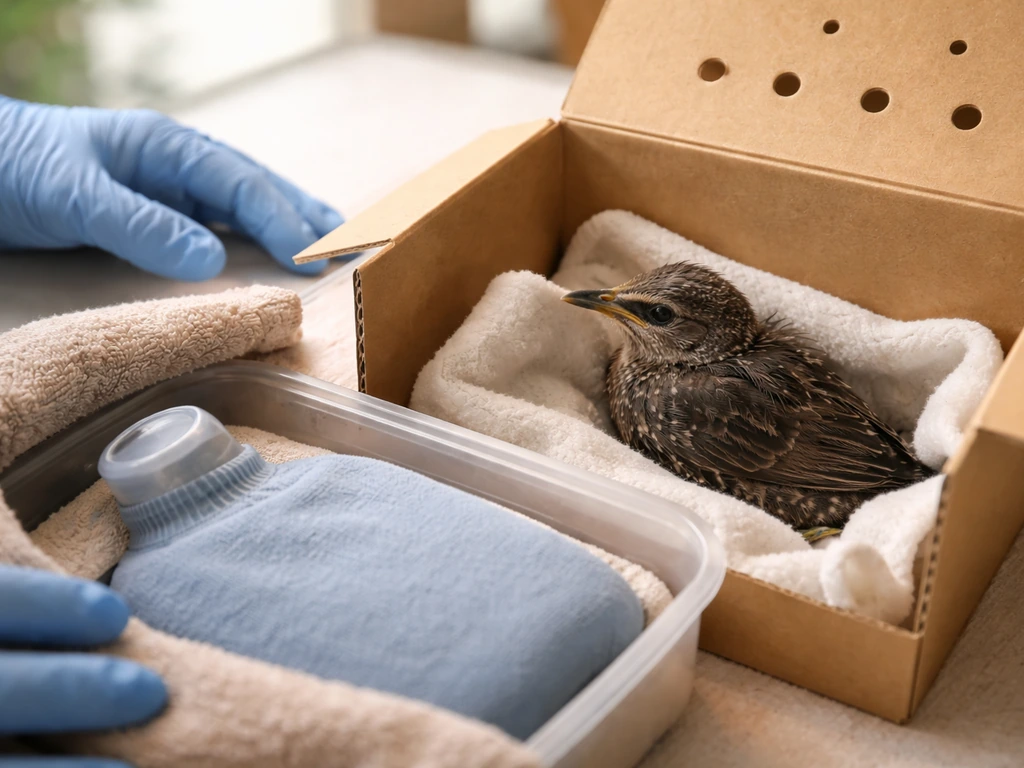
The handling phase should be as brief and calm as possible. Starlings are small and stressed birds can go into shock quickly, so the less stimulation the better. Put on gloves if you have them, though clean bare hands are fine for a brief pickup. Drape a light towel or cloth over the bird, scoop it up gently, and transfer it into a secure container.
A cardboard box with ventilation holes punched in the lid and sides works well. Line the bottom with a folded paper towel or a small cloth, which gives the bird something to grip. Keep the box closed and dark. Darkness reduces stress significantly and keeps the bird calmer while you figure out your next steps.
Put the box somewhere away from noise, pets, children, and bright light. Keep your own talking and movement near it minimal. The goal right now is not to comfort the bird with your presence but to reduce every source of stimulation so its body can focus on stabilizing.
Warmth: the first real priority
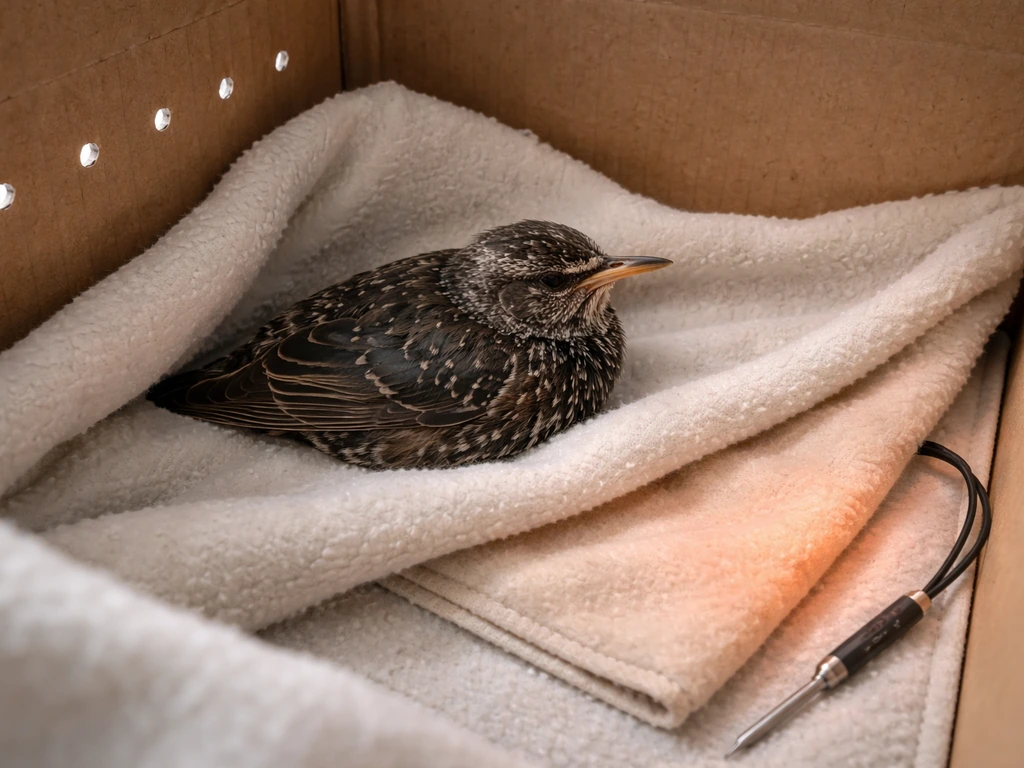
Injured and orphaned birds lose body heat fast. Getting the bird to a safe temperature is one of the most useful things you can do before a rehabilitator takes over. Aim for roughly 80 to 90°F for a small bird in emergency care. The easiest way to do this at home is to place the box so that one end sits on a heating pad set to LOW, leaving the other end off the pad.
This creates a temperature gradient so the bird can move to a cooler spot if it gets too warm. A hot water bottle wrapped in a towel tucked against the outside of the box works too. Never put a heat source directly inside the box or set it to high.
The feeding rules every starling rescuer needs to know
This is where most rescuers go wrong. The instinct to feed a bird that looks weak is completely understandable, but feeding too early or feeding the wrong thing can kill a starling faster than the original injury. Read this section carefully before offering anything.
Do not feed or water the bird right away
A bird's digestive system needs to be functioning before food or water goes in. A bird in shock or with internal injuries cannot process food, and attempting to squirt water into a bird's mouth is one of the most common causes of aspiration (water entering the lungs), which can be fatal. The standard guidance from wildlife organizations is clear: do not give food or water until you have spoken with a rehabilitator or vet. Do not give food or water to injured wild birds, and raising wild birds without permits may be illegal. If transport to a professional is less than a few hours away, warmth and quiet are enough.
If you genuinely cannot reach help and the bird is stable
If the bird is alert, upright, and actively begging (a nestling) or moving around, and you cannot reach a rehabilitator for 12 or more hours, you may need to offer minimal supportive feeding. Starlings are omnivores that eat heavily on insects and berries in the wild. In a rehabilitation context, insectivorous passerines like starlings are commonly fed live or dried mealworms, waxworms, and thawed frozen crickets. Gut-loaded mealworms (ones that have been fed nutritious food before you offer them) are better than plain ones.
Age-specific feeding guidance
Nestlings require food delivered directly into the gape (the open mouth) using soft-tipped tweezers or your fingers, every 20 to 30 minutes during daylight hours. This is exhausting and easy to do incorrectly, which is another reason a rehabilitator is a much better option. Fledglings can often be offered food in a shallow dish. Adults in recovery should have food available in the enclosure once they are stable and alert.
What not to feed
- Bread, crackers, or any baked goods (no nutritional value and can cause digestive blockage)
- Milk or any dairy products (birds cannot digest lactose)
- Dog or cat food (not appropriate as a primary diet, though some rehabilitators use it as a short-term supplement in specific situations)
- Fruit juice, cow's milk, or any liquid squirted directly into the mouth
- Raw meat from the grocery store as a primary diet without guidance
- Anything you are not sure about
You also need to correctly identify the bird before feeding it anything. Offering an insect-based diet to a seed-eating species (which starlings are not, but the principle matters) can cause serious problems.
Setting up a recovery space at home
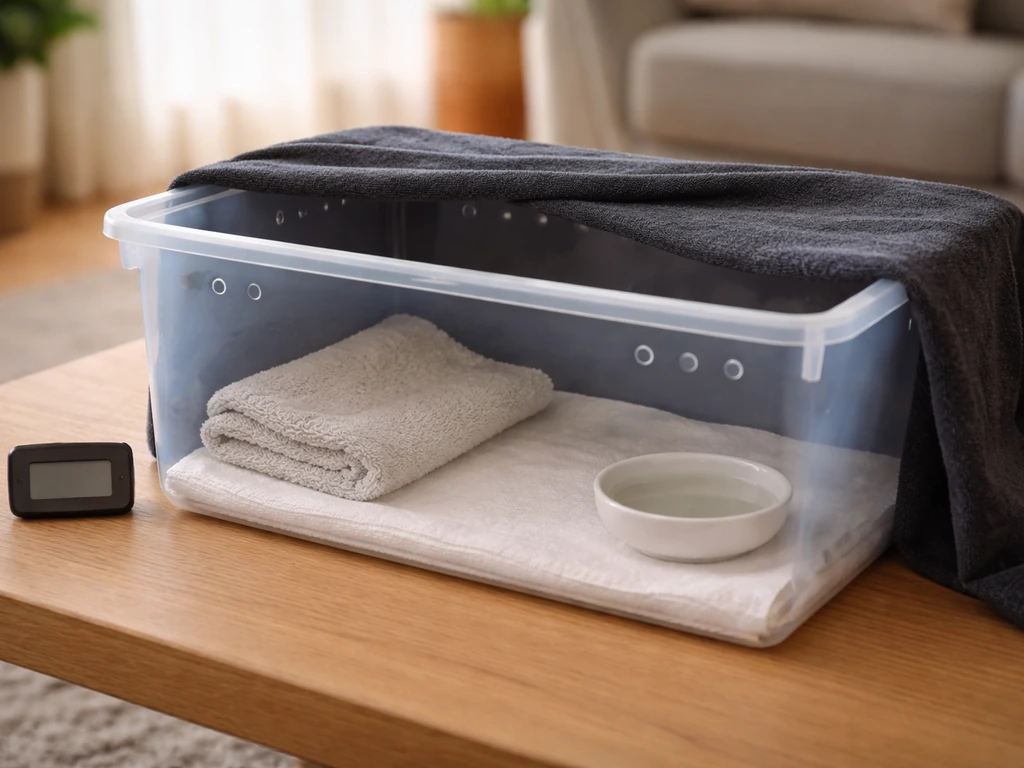
If you end up caring for a starling temporarily while waiting for a rehabilitator, or if you are working with a rehabilitator who has authorized you to provide overnight care, the setup matters. The container needs to be escape-proof but well-ventilated. A cardboard box with punched holes is fine for the first 12 to 24 hours. For anything longer, a small animal carrier or a bird cage covered with a cloth to reduce visual stimulation works better.
Line the bottom with paper towels, which are easy to change and help you monitor droppings (a good sign of digestive function). Avoid materials like loose fabric that can catch a bird's nails. Do not use cedar shavings or anything with strong chemical scents.
Keep the room temperature between 75 and 85°F for an adult starling in recovery. If you are using a heating pad, remember the thermal gradient rule: heat only one side of the enclosure. Keep the space dim, not completely dark once the bird is stable, but out of direct sunlight and away from windows where it can see outside and try to fly toward them. Noise from TVs, radios, or other pets is stressful, so choose a quiet interior room.
Common problems and what you can safely do
Shock
A bird sitting very still with eyes half-closed, fluffed feathers, and little reaction to stimuli is likely in shock. This is extremely common after window strikes, cat attacks, or falls. The response is the same as for any injured bird: warmth, darkness, quiet, and no food or water until the bird shows signs of recovery. Many birds that appear to be dying are simply in shock and will improve significantly within an hour or two of warm, dark rest.
Dehydration
Signs include sunken eyes, skin that stays tented when you gently pinch it, and lethargy. Rehydration in wildlife rehabilitation involves techniques and fluid types that require professional guidance. Do not try to squirt water or electrolyte solution into the bird's mouth. If you suspect dehydration and cannot reach a rehabilitator quickly, keep the bird warm, which reduces fluid loss, and focus on getting professional help as fast as you can.
Wing and leg injuries
A drooping wing or a leg that the bird cannot bear weight on needs veterinary attention. Do not attempt to splint a bird's wing or leg at home. Improper splinting causes more damage, and starlings are small enough that even gentle restraint can fracture bones. Your job is containment and warmth. Keep the bird as still as possible in a small container so it cannot flap around and worsen the injury.
Parasites
Starlings commonly carry feather lice and mites. If you notice other pests like spider mites or a goliath bird-eating spider on the bird’s body, don’t try to treat it yourself and contact a rehabilitator right away feather lice and mites. You might see small moving specks on feathers or notice the bird scratching. This is not a crisis in the short term and should be treated by a rehabilitator with appropriate products. Do not use flea powders, sprays, or any over-the-counter parasite treatments on a wild bird, as these can be toxic at small doses.
Feather loss or damage
Bald patches, broken pin feathers, or significant feather damage can result from malnutrition, cat attacks, or stress. Broken blood feathers (pin feathers still growing, with a blood supply inside) can bleed and need to be removed by someone who knows how. Do not pull feathers yourself. Note the areas of concern and share that information with a rehabilitator.
When to stop home care and call a professional
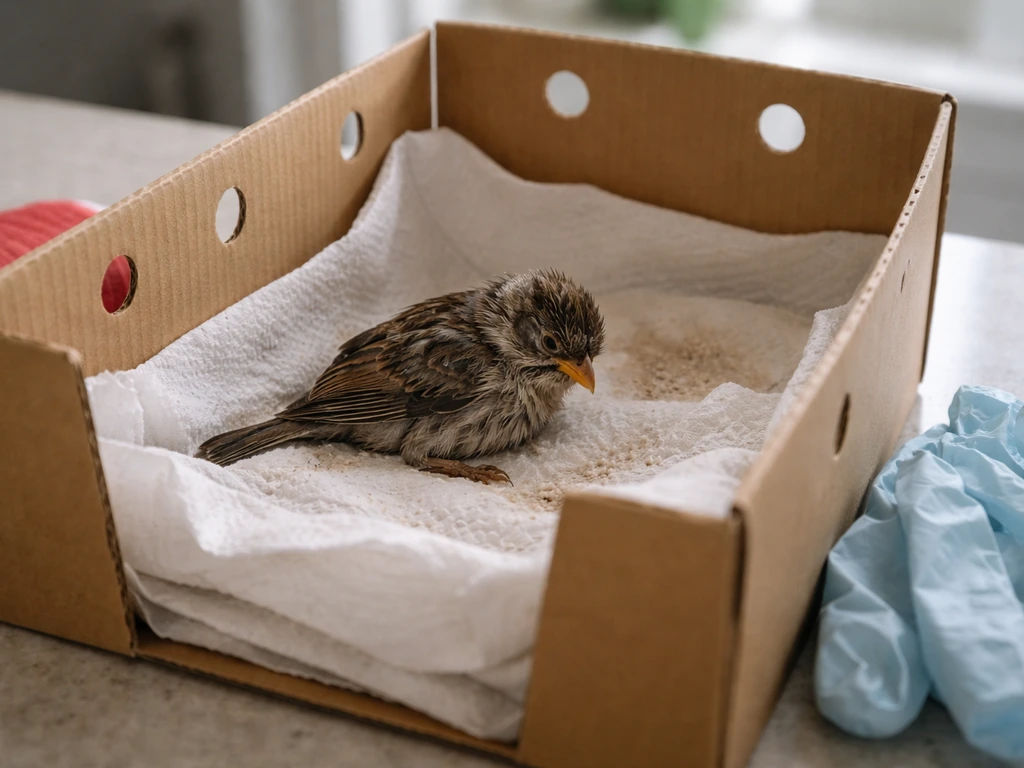
The honest answer is: you should be calling a licensed wildlife rehabilitator or avian vet at the same time you are setting up the bird's temporary space, not after you have spent a few days trying to manage things at home. In the U.S., keeping a wild starling without the proper permits may be illegal depending on your state, and the bird's best chance at full recovery comes from trained hands with the right equipment and diet protocols.
Contact a rehabilitator immediately if you see any of these:
- Active bleeding that does not slow down
- A visibly broken bone or a wing or leg hanging at an abnormal angle
- A cat or dog attack (even without visible wounds, internal injury and infection are almost certain without treatment)
- Seizures or loss of coordination
- The bird has been in your care for more than 24 hours without clear improvement
- A nestling that is not yet feathered and needs feeding every 20 to 30 minutes
- Any signs of breathing difficulty (open-mouth breathing, tail bobbing with each breath)
To find a rehabilitator, search the National Wildlife Rehabilitators Association directory, the Wildlife Rehabilitator directory at the NWRA or IWRC websites, or simply call your nearest wildlife agency, animal control office, or exotic/avian veterinary clinic. Many will take the bird directly or direct you to someone who can.
Transporting the bird safely
Use the smallest secure container that is comfortable for the bird. A box that gives it too much room means it can injure itself flapping. Keep the container dark during transport. Drive calmly, keep the radio off, and do not open the container to check on the bird while moving. The ride itself is stressful enough.
Release and what comes after
A starling is ready for release when it can fly strongly and in a controlled direction, land without stumbling, eat and drink independently, and react normally to humans and potential threats by fleeing. A rehabilitator will assess this, but if you have been authorized to manage a bird through recovery, watch for all of those markers before opening the door.
Release should happen in appropriate habitat, ideally close to where the bird was found, and at a time of day when there is enough light for it to orient and find food. Early morning is usually best. Avoid releasing during bad weather.
One thing worth understanding: starlings that have been in human care for too long can become habituated to people. A bird that approaches humans for food, does not flee when it should, or shows no wariness around pets is not ready for release. Human imprinting is a real risk, especially with nestlings, and it is one more reason to minimize your direct interaction and move the bird to professional care as quickly as possible.
After release, you can leave a shallow dish of mealworms near the release site for the first day or two, but resist the urge to interact with the bird if it returns to you. Successful rehabilitation means the bird treats you like the threat you are to a wild animal, which is exactly what you want to see.
How this compares to caring for other wild birds
The triage and containment steps described here apply to most wild birds you might find in distress, whether that is a dove, a sparrow, or a fallen nestling of any species. This also covers the basics of how to take care of a sparrow bird while you arrange help. If you are caring for a dove instead of a starling, the same principles apply: keep it warm, reduce stress, and get advice from a wildlife rehabilitator.
The key difference with starlings specifically is their insect-heavy diet, which makes them unsuitable candidates for the seed-based emergency feeding that might be fine for other birds. If you are working through similar situations with other species, the same core principles of warmth, quiet, minimal handling, and fast contact with a rehabilitator hold across the board.
FAQ
Can I feed a found starling right away if it seems hungry?
Yes, but only under strict conditions. If the starling is fully alert, upright, and calling for food, and a rehabilitator confirms you can provide short-term feeding, you can use live or dried mealworms, waxworms, or thawed crickets and offer it in small amounts. If the bird is not actively begging or you cannot reach professional guidance, skip feeding and focus on warmth and quiet instead.
Is it safer to give water first, even if I’m not sure what’s wrong?
Avoid plain water. Tiny wild birds can aspirate liquids, especially if they are chilled, weak, or in shock. Until a rehabilitator or vet has advised feeding or hydration, the safest approach is warmth in a ventilated container plus immediate contact with a professional.
What if I only have bird seed or bread at home?
Not usually. Starlings and other wild insectivorous birds can be harmed by incorrect diets, especially if fed seed mixes or bread. If you must feed because a rehabilitator authorizes overnight care, use insect-based foods (mealworms, waxworms, or thawed crickets) and offer only what you are specifically instructed to use.
Can I put food in a dish instead of using tweezers for a nestling?
A shallow dish can help for fledglings that are moving around and actively taking food, but meal-in-a-dish is not appropriate for nestlings that need food delivered into the gape. If you cannot confidently tell fledgling from nestling, do not improvise with a dish, keep the bird warm, and get a professional to identify the stage.
How often should I check the bird while it’s in the box?
Handle it only long enough to move it into the container. Do not keep taking the bird out to check, since repeated handling raises stress and can worsen conditions like shock or internal injury. If you need to monitor, use the container setup (ventilation, lining, and a brief visual check) from the outside instead.
When is it okay to wait and watch, and when is it urgent?
It depends on the bird’s condition and your access to help. If the bird is grounded, keep pets and kids away, and observe from a distance for 30 to 60 minutes. But if it shows signs like drooping wing, inability to bear weight, open-mouth breathing, or a seriously unsteady posture, contact a rehabilitator immediately rather than waiting.
Can I warm the bird by putting it directly on a heating pad or hot water bottle?
Not directly. If the bird is hypothermic or in shock, warming is priority, but you should use a gentle heat setup that creates a gradient by heating only one side, at low settings. Never put a heating source in direct contact with the bird or set it high, since overheating can be dangerous.
What should I do if I think the starling is dehydrated?
If there is a temperature-related emergency, keep it warm and covered in the container, then call for guidance. Do not attempt to rehydrate with electrolyte solutions or syringes, and do not force fluids into the mouth. Professional rehabilitation uses specific fluids and methods depending on the bird’s condition.
How much and how often should I feed during emergency overnight care?
Yes, if a rehabilitator authorizes it. The article’s guidance assumes the bird is fed insects for starlings, and spacing out feedings depends on age and condition. A common mistake is feeding too frequently, too much, or to the wrong developmental stage, so follow the rehabilitator’s instructions if overnight feeding becomes necessary.
How can I tell whether a starling is ready to be released or if it’s become too tame?
Yes. If the bird is trying to keep its balance, upright, and can escape quickly, it may be ready for release consideration after a professional confirms recovery criteria. If it is habituated to people, approaches for food, or does not show normal wariness, it is not ready. Habituation is a key factor in release decisions.
After release, what should I do if the bird comes back to me?
If it returns to you after release, resist interaction. Leaving a shallow dish of mealworms near the site for the first day or two can support independent feeding, but repeated handling or reassurance can increase imprinting and reduce wild behavior. Observe from a distance instead.
Next Article
How to Take Care of a Goliath Bird Eating Spider
Humane, step-by-step care for a goliath bird eating tarantula: triage, safe handling, housing, feeding, hydration, and v