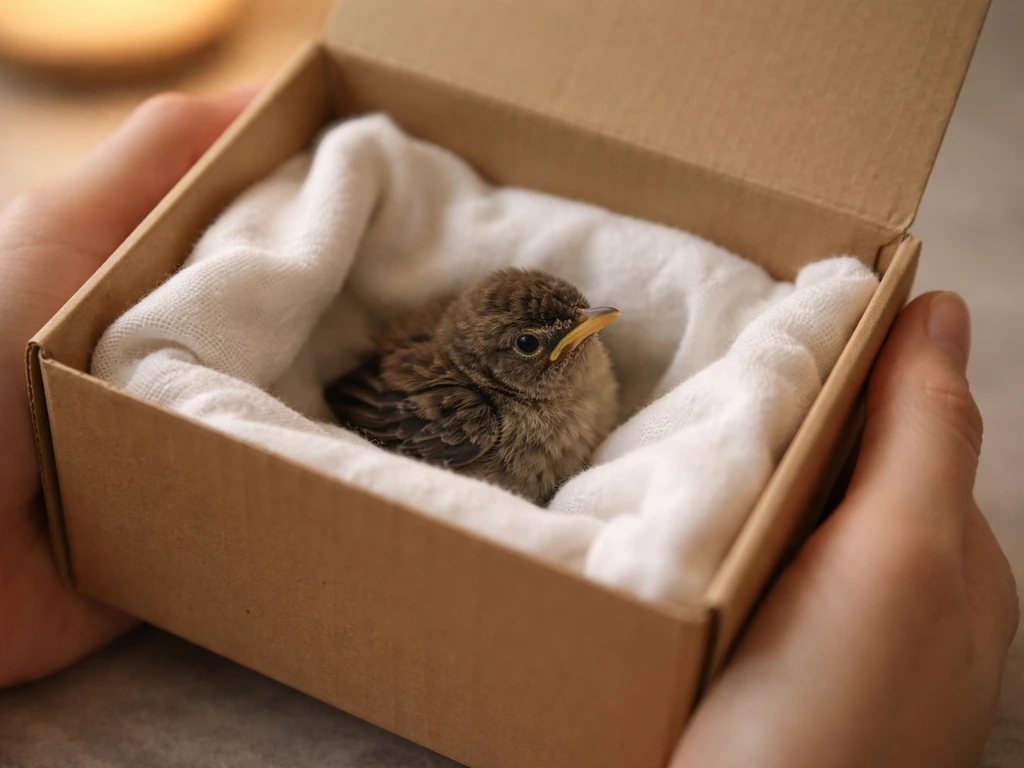
If you've just found a sparrow on the ground and you're not sure what to do, here's the short answer: keep it warm, keep it quiet, don't try to feed it yet, and contact a licensed wildlife rehabilitator or avian vet as soon as possible. For injured or orphaned baby birds, the U.S. Fish & Wildlife Service recommends finding a wildlife rehabilitator for assistance contact a licensed wildlife rehabilitator or avian vet. Everything else in this guide fills in the details so you can act quickly and correctly without accidentally making things worse.
How to Take Care of a Sparrow Bird: Emergency Steps
Marcus Holloway
14 Apr 2026
Quick check: is it injured, sick, or a baby that needs reuniting?
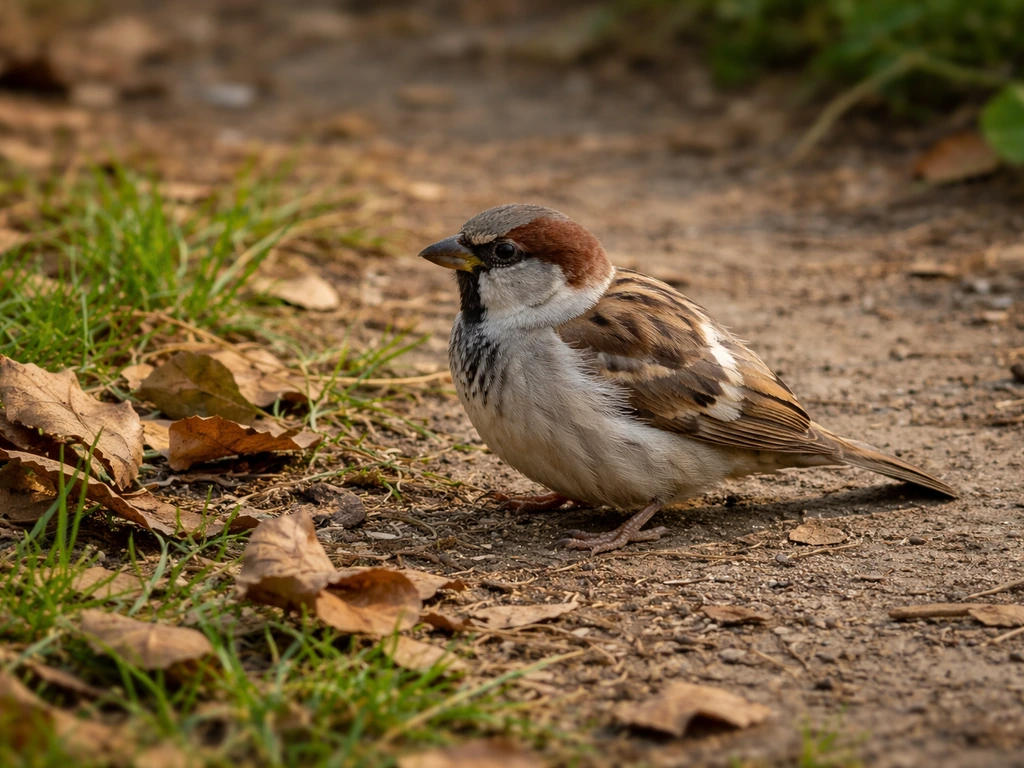
Before you do anything else, take thirty seconds to look at the bird without touching it. Your response depends almost entirely on what you're actually dealing with, and the three scenarios are very different.
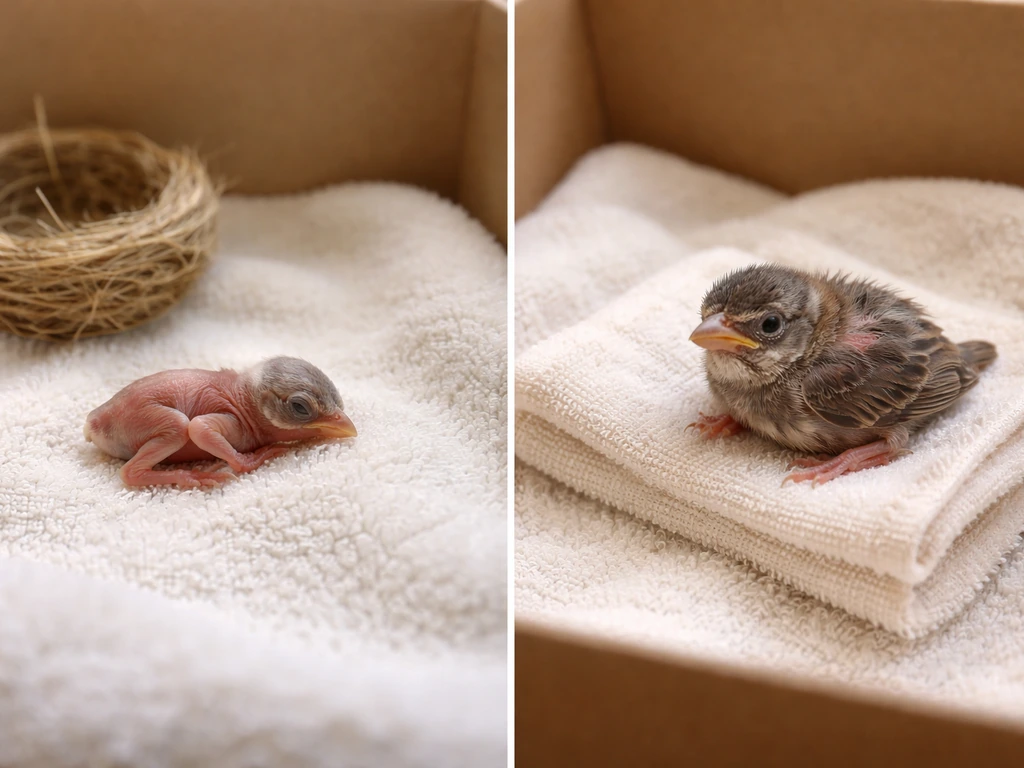
A nestling is a very young bird with few or no feathers, closed or barely open eyes, and a big wobbly head. If you see one on the ground, it has almost certainly fallen from a nest. It cannot survive on its own and needs to go back to the nest or to a rehabilitator fast. A fledgling looks more like a real bird but still has some fluffy downy patches, a short tail, and may hop instead of fly.
This is where people panic unnecessarily: fledgling sparrows are supposed to be on the ground. The parents are usually nearby and still feeding them. Leaving a healthy fledgling alone is often the right call. An adult sparrow that is sitting still, letting you approach, has visible wounds, a drooping wing, or is breathing with its beak open is either injured or sick.
That bird genuinely needs help.
- Nestling (barely any feathers, eyes closed or partly open): fallen from nest, needs immediate help
- Fledgling (mostly feathered, short tail, hops): likely normal development, watch for 30 minutes before intervening
- Adult sitting still, not flying, visibly wounded or labored breathing: injured or sick, needs care
For fledglings specifically, the best first step is to watch from a distance for 20 to 30 minutes. If adult sparrows are coming and going and the bird looks alert, leave it alone. If you have outdoor cats in the area, you can place the fledgling on a low branch or shrub to get it off the ground while the parents can still reach it. That one move saves a lot of unnecessary interventions.
If you find a nestling that fell, check for the nest nearby. If you can reach it safely, place the baby back in. American Bird Conservancy advises returning a baby bird to the nest if possible and getting most injured birds to a wildlife rehabilitation center for medical treatment place the baby back in. Parent birds will not abandon a nestling because a human touched it. That is a myth. If the nest is destroyed or unreachable, that's when you call a rehabilitator immediately.
Immediate rescue steps and safe handling
If the bird genuinely needs to be picked up, protect both yourself and the sparrow. Wear thin gloves if you have them. If not, use a light cloth or paper towel as a barrier. Sparrows can carry parasites, and more importantly, your bare hands can transfer oils and scents that stress the bird further.
- Approach slowly and quietly from the side, not from above (overhead movement triggers a fear response)
- Cup both hands gently around the bird's body, with its wings folded against its sides
- Do not squeeze — you only need enough pressure that it can't wriggle free and injure itself
- Support its feet so it has something to grip against
- Move calmly and immediately to a prepared container — do not hold it longer than necessary
Keep your face, voice, and movements quiet. Sparrows are prey animals and prolonged handling feels like being caught by a predator. Every second you hold it adds stress. Get it into a box quickly and step back.
One important legal note before going further: in the United States, keeping a wild sparrow (specifically native species like the Song Sparrow) without a permit is illegal under federal and state wildlife laws. You are permitted to provide emergency stabilization for a brief period while you arrange transfer to a licensed rehabilitator, but keeping it long-term is not a legal option. The goal of everything in this guide is to stabilize the bird and hand it off to the right people, not to set up a home care situation.
Emergency setup: warmth, shelter, ventilation, and stress reduction
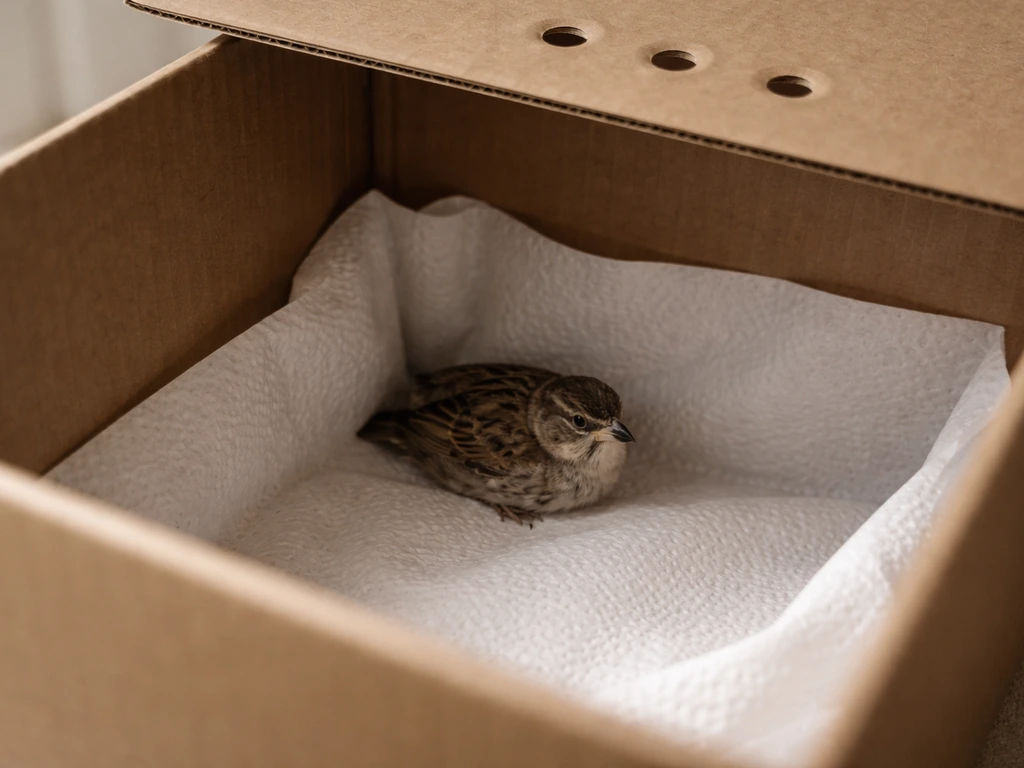
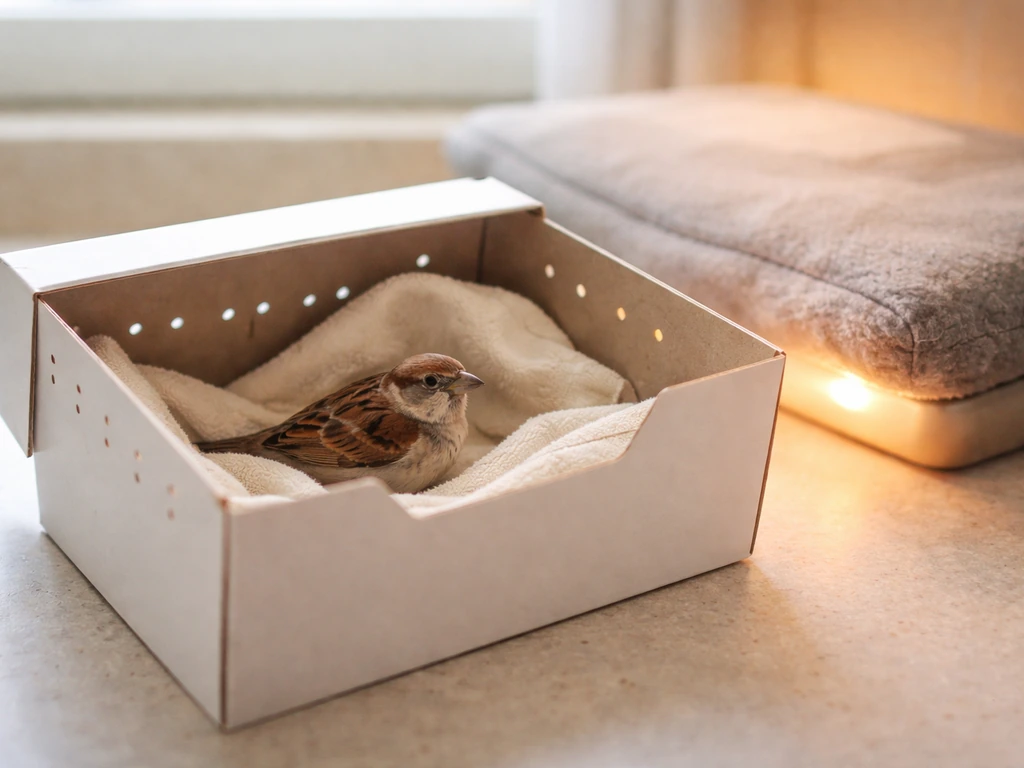
The container you use matters more than most people realize. A cardboard box with a secure lid is ideal for most situations. It's dark (which calms the bird), lightweight, and disposable. Punch small holes in the sides for ventilation, but not so many that the box becomes bright or allows drafts. A shoe box works well for a single sparrow.
Line the bottom with a paper towel or a small piece of non-looped cloth (avoid terry cloth towels since the bird's nails can get caught in the loops). Do not use newspaper directly under the bird as it's too slippery and can cause injury. The lining gives the bird grip and something to feel stable on.
Warmth is critical, especially for nestlings and any bird in shock. A sick or injured sparrow cannot regulate its own body temperature well. Place a hand warmer, a warm water bottle wrapped in a cloth, or a heating pad set to its lowest setting under half the box. Critically, only cover half the floor with heat so the bird can move away if it gets too warm. The target temperature is around 85 to 90 degrees Fahrenheit for very young nestlings, and around 80 to 85 for injured adults. Room temperature alone is almost never enough.
Once the bird is in the box, put the lid on and place it somewhere quiet. A dark, quiet room is ideal. Keep the box away from pets, children, loud noises, direct sunlight, and air conditioning or heating vents. Do not keep checking on the bird every few minutes. Every time you open the lid, you restart the stress cycle. Limit checks to once every 30 to 60 minutes unless you hear distress sounds.
Temporary feeding and hydration: what to do and what to skip
This is where well-meaning people cause serious harm. The instinct to feed a bird in distress is strong, but in most emergency situations, feeding is not what saves the bird. Incorrect food or improper feeding technique can kill it faster than hunger would.
Hydration first, food second
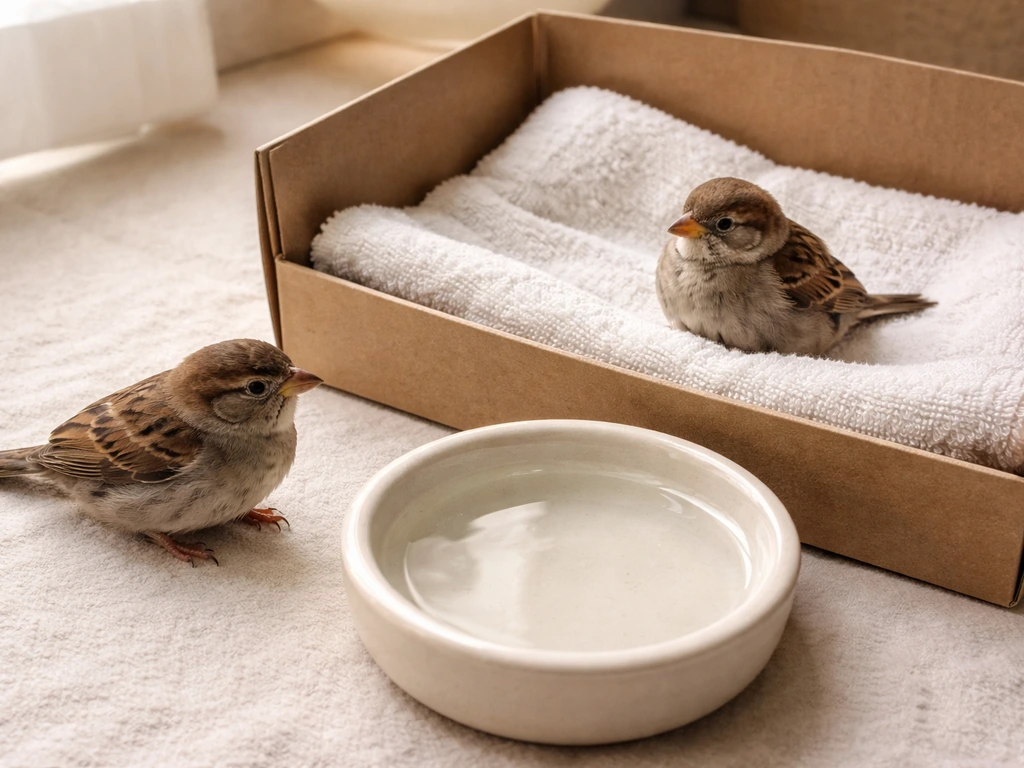
Never try to give a bird water by tilting liquid into its beak. Sparrows cannot swallow passively the way mammals do. Pouring water into a bird's mouth almost always causes aspiration, where the fluid goes into the lungs, and the bird can drown. If you want to offer moisture to an alert, responsive adult, place a very shallow dish of water (no deeper than half an inch) in the box and let the bird drink on its own if it chooses to.
Feeding by age and condition
For injured or sick adult sparrows, do not attempt to feed them unless you are waiting more than 24 hours to reach a rehabilitator, which should not happen. Stress and shock suppress the appetite, and a bird in crisis needs stabilization more than calories. If you are somehow in a prolonged situation, plain millet, small sunflower chips, or crumbled dry mealworms placed in the box (not force-fed) are safer options than bread, dairy, or cooked foods.
For nestlings, the feeding situation is more urgent since very young birds need food every 20 to 30 minutes during daylight hours. But getting this wrong is dangerous. Do not attempt to feed nestlings cow's milk, bread soaked in water, or cat and dog food as a first instinct.
If you genuinely cannot reach a rehabilitator for several hours, a very small amount of moistened, plain cat food (the kind with a high protein, no garlic or onion content) can be placed at the edge of the beak using a toothpick or coffee stirrer, not forced in. The nestling should gape (open wide on its own) to receive food. If it's not gaping, do not try to open its beak and insert food.
Wait and try again in 15 minutes.
The approach for sparrows shares a lot of overlap with how to care for an abandoned bird more generally, so if you're unsure whether you're dealing with true abandonment, that guide can help you think through the decision.
Common mistakes that harm sparrows
Most of the damage done to rescued sparrows happens in the first hour, by people trying to help. Here are the most frequent and serious errors:
- Giving water by dropper or pouring it into the beak: this causes aspiration and can be fatal within minutes
- Feeding bread, crackers, milk, or processed human food: these cause digestive failure, especially in nestlings
- Keeping the bird in a wire cage or open container: sparrows will injure themselves thrashing against bars or sides
- Placing the bird in a fully sealed container with no ventilation: suffocation risk
- Handling the bird repeatedly to check on it: every handling event triggers a stress response that can cause fatal capture myopathy
- Leaving it at room temperature without a heat source: birds in shock lose body heat rapidly and hypothermia kills quickly
- Trying to splint a wing or leg at home without training: improper immobilization causes additional injury
- Using over-the-counter human or pet medications: never give ibuprofen, acetaminophen, or any antibiotic without direct veterinary instruction
- Assuming a fledgling is abandoned after only a few minutes: premature rescue removes birds from functioning parent care
If you've already made one of these mistakes, don't panic. Get the bird stabilized in a warm, dark, quiet box right now, stop any feeding attempts, and call a rehabilitator immediately. Be honest with them about what happened so they can assess and treat accordingly.
When to seek a wildlife rehab or avian vet urgently
Some situations require you to skip the observation period and get the bird to a professional today, not tomorrow. Treat any of the following as urgent:
- Visible blood, open wounds, or exposed bone
- A wing or leg held at an unnatural angle or dragging
- Breathing with the beak open, wheezing, or clicking sounds while breathing
- The bird is cold to the touch, unresponsive, or has its eyes closed with no reaction to movement
- It was caught by a cat (even with no visible wounds, cat saliva contains bacteria that cause fatal infection within hours without antibiotics)
- A nestling with no feathers has been on the ground for more than an hour and the nest cannot be located or replaced
- The bird has vomited, has discharge from eyes or nostrils, or appears to have seizures
Even if none of these apply, if you're uncertain, calling a rehabilitator for phone guidance costs you nothing and gives you information specific to your bird's situation. Most rehabilitators can assess a lot over the phone if you describe what you're seeing accurately. If you’re dealing with a goliath bird eating spider, get help from a reputable care specialist rather than improvising feeding or habitat at home how to take care of a goliath bird eating spider.
The care principles that apply to sparrows are broadly similar across small wild birds. If you're also dealing with a dove or another species, the guide on how to take care of a dove bird covers comparable emergency steps, and it's useful to see how the same core framework applies across species.
Transport and what to tell the professionals
When you've found a rehabilitator or avian vet and it's time to bring the bird in, the transport itself needs to be done right. Keep the bird in its dark, warm box during the entire journey. Do not open the lid to check on it while driving. Do not place the box on a car seat where it can slide around. Put it on the floor of the passenger side or wedge it between firm objects in the back seat so it stays stable and level.
Keep the car quiet. Turn off loud music. Avoid sudden braking. The vibration and noise of a car ride are already stressful; you don't need to add more. If it's a hot day, keep the car cool but do not point air conditioning directly at the box.
When you arrive or call ahead, give the professionals as much accurate information as possible. The more detail you provide, the better they can prioritize and prepare.
- Where and when you found the bird (location type, date, and time)
- What condition it was in when you found it (posture, movement, visible injuries, behavior)
- Whether it was found near a window, road, cat, or other hazard
- Exactly what you have given it to eat or drink, and how
- How long it has been in your care
- Approximate age if you can tell (nestling, fledgling, or adult)
Do not feel embarrassed about mistakes you made before knowing better. Rehabilitators hear everything and their job is to help the bird, not judge you. Accurate information genuinely helps them treat the animal faster.
Finding a licensed rehabilitator near you
In the United States, the National Wildlife Rehabilitators Association (NWRA) and the Wildlife Rehabilitators directory on the USFWS website are the two fastest ways to find a licensed professional near you. Many states also have their own wildlife agency hotlines. Your local Humane Society, animal control office, or avian veterinarian can also connect you with the right person if a direct search comes up empty.
Remember that legally, a licensed rehabilitator is the appropriate person to care for a wild sparrow beyond the brief emergency stabilization period. This is not just a legal technicality: native wild sparrows have complex nutritional, behavioral, and environmental needs that home care simply cannot meet safely. Handing the bird off is genuinely in its best interest.
If you find yourself regularly encountering wild birds in distress in your area, the broader guide on how to take care of wild bird emergencies walks through the same principles across a wider range of species and situations, which is worth reading as a companion reference.
What happens after handoff
Once the bird is with a licensed rehabilitator, they will assess it for injuries, disease, and developmental status. Injured adults may require weeks of care before they can be released. Nestlings and fledglings that are healthy enough will often be placed with other young sparrows of the same age, which is important because birds raised without conspecifics can fail to learn the behaviors they need to survive in the wild.
Most rehabilitators do not provide updates on individual animals, partly for legal reasons and partly because the volume of cases makes it impossible. That can feel unsatisfying, but it's the reality. What you can do is ask at drop-off what the likely outcome is based on what they see, and they'll usually give you an honest assessment.
For anyone who finds a fledgling starling or another species alongside a sparrow, the guidance on how to take care of a starling bird covers that species in the same emergency framework, since starlings are another bird commonly found grounded during fledgling season.
Injured vs. baby sparrow: a quick comparison
| Situation | Immediate action | Feed? | Urgency |
|---|---|---|---|
| Nestling (no feathers, eyes closed) | Return to nest if possible; if not, warm box and call rehab immediately | Only if rehab is hours away and bird is gaping | Very high |
| Fledgling (mostly feathered, on ground) | Observe 30 min from distance; move to low shrub if cats present | No — parents likely still feeding | Low unless visibly injured |
| Adult, injured wing or leg | Warm dark box, no food, contact rehab or avian vet today | No | High |
| Adult, cat-caught (no visible wounds) | Warm dark box, contact rehab immediately | No | Very high — infection risk within hours |
| Adult, lethargic or labored breathing | Warm dark box, contact rehab or vet urgently | No | Very high |
The path forward for almost every scenario is the same: minimize handling, provide warmth, skip the food unless the nestling is gaping and rehab is hours away, and get the bird to a licensed professional as quickly as you can. That's what gives it the best real chance.
If you come across a bird that has fallen from a considerable height or been knocked down by a window or vehicle, the steps for how to take care of a fallen bird go into additional detail on trauma-specific care while you arrange transport, and it's worth a quick read alongside this guide.
FAQ
Can I keep a sparrow overnight if the rehabilitator cannot take it right away?
Yes for a short emergency stabilization period, but only in a warm, dark, quiet container with minimal handling, and then hand it off the same day or the soonest possible. Long-term holding without the proper wildlife permit can be illegal, even if you mean well.
What should I do if the sparrow starts bleeding or has a drooping wing?
Place it in the warm, dark box immediately, keep it undisturbed, and do not apply ointments or try to splint wings. Bleeding and drooping wing are red flags that make feeding and extended handling especially risky, so contact a rehabilitator right away.
How can I tell whether a fledgling is truly abandoned or just parents nearby?
Watch from a distance for 20 to 30 minutes for adult sparrows to approach and feed. If the bird is alert and you see adults returning, the best action is usually leaving it in place or gently relocating it off the ground to a low branch or shrub so parents can still reach it.
Is it ever okay to give a sparrow bread or seed mix?
Avoid bread, dairy, and cooked foods. For prolonged delays to get professional help (more than 24 hours), use safer small options like plain millet or crumbled dry mealworms, without forcing feeding. In most urgent cases, skip food entirely and prioritize warmth and transfer.
My sparrow is breathing with its beak open, is that normal stress?
Open-mouth breathing while the bird is otherwise still or approachable usually indicates injury, illness, or shock rather than normal stress. Treat it as urgent: warm it in the box and contact an avian rehabber immediately.
What if the nestling is too cold and not gaping to be fed?
First focus on warming it properly in the box, then reassess. If it is not gaping, do not open the beak or insert food, wait about 15 minutes, and try again only if it becomes responsive.
How warm should the heating source be, and what signs mean it is too hot?
Use low heat and warm only half the box floor so the bird can move away. If the bird seems overheated, unusually weak, or is trying to move away from the heat, remove or reduce the heat source immediately and continue quiet, minimal handling.
Can I use a heating pad directly under the box or in contact with the bird?
No, do not place heat where it can create hot spots or overheat one side. Instead, keep the heating pad or warm water bottle wrapped and only under half the container so the bird can choose a cooler area.
How long can I keep checking the bird after I put it in the box?
Limit checks to about once every 30 to 60 minutes. Frequent lid opening restarts stress and can make warming harder, so use the interval to listen for distress rather than repeatedly inspect.
What is the safest way to transport the sparrow to a rehabilitator?
Keep it in the dark, warm box with the lid closed the entire trip. Wedge the box so it cannot slide, place it on the floor or between firm objects, and avoid sudden braking and direct airflow onto the box.
Should I offer water to a sparrow in the box?
For an alert, responsive adult, you may offer a very shallow dish (no deeper than about half an inch) so it can drink on its own. Do not pour water into the beak, because aspiration risk is high.
What if I accidentally fed the bird the wrong food or tried force-feeding?
Don’t panic. Stop feeding, place it in the warm, dark box, and contact a rehabilitator immediately. Tell them exactly what you gave and how long ago, since that detail helps them decide whether to treat for aspiration, digestive issues, or dehydration.
Are there any household items I should avoid lining the box with?
Avoid terry cloth towels because claws can snag in loops. Also avoid placing newspaper directly under the bird, since it can be slippery and increase injury risk.
Can I release the sparrow after it seems better at home?
You should not release it yourself unless a licensed rehabilitator confirms it is fully ready for wild conditions. Birds that look improved can still have injuries, impaired swallowing, or behavioral gaps that reduce survival after release.
Who should I call if I am outside the United States or not sure about legality?
Contact a local wildlife agency, wildlife rehabilitator, or avian vet for jurisdiction-specific guidance. If you tell them your location and what you found, they can advise whether emergency stabilization is allowed and how to transfer the bird legally.
Next Article
How to Take Care of a Wild Bird: Orphaned Baby Guide
Humane step-by-step rescue guide for injured or orphaned baby wild birds: safe handling, warmth, feeding, and when to ca