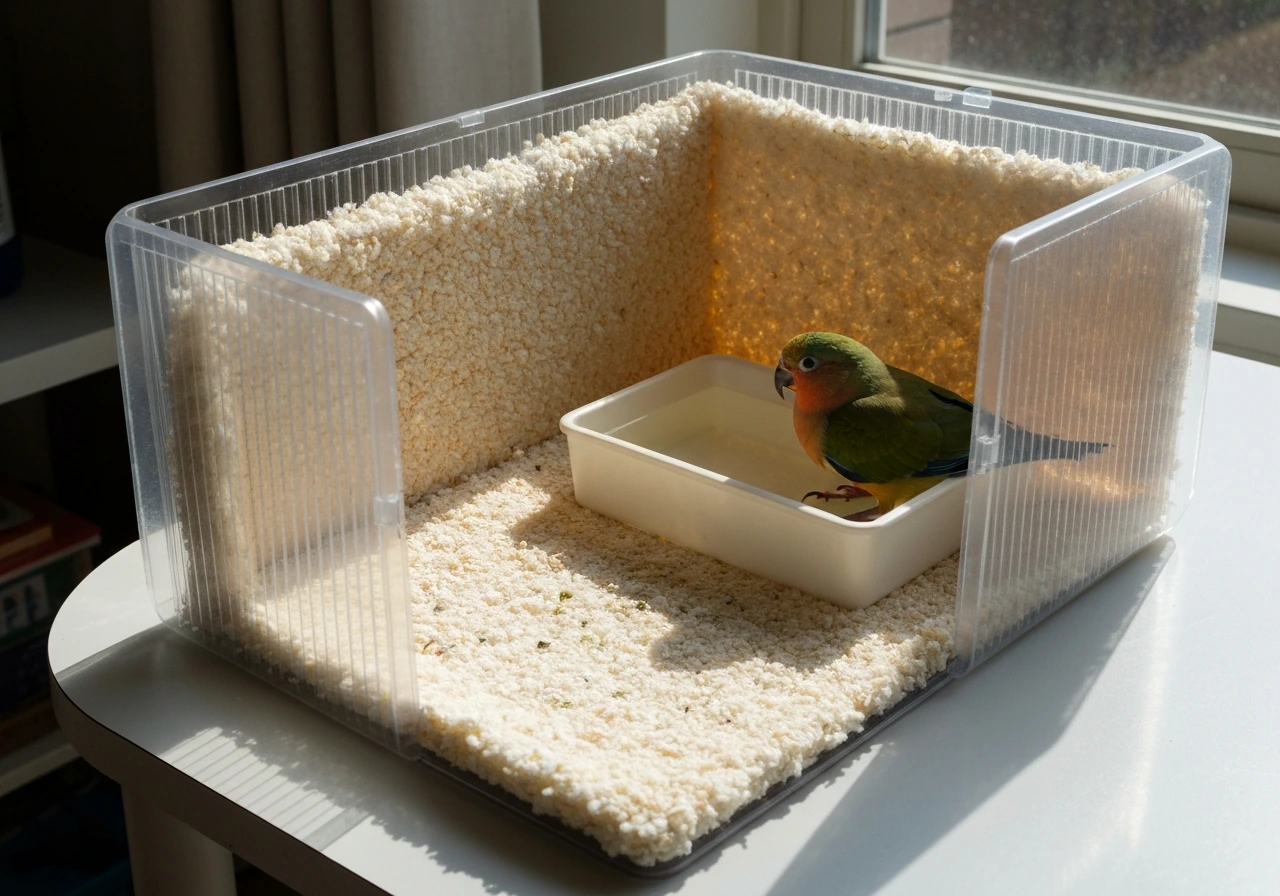
Keeping bird water from freezing comes down to a combination of quick daily fixes, smart equipment, and good placement. You do not need anything fancy to get started, but if you want a reliable solution through a long winter, a heated bird bath or submersible de-icer will do the job better than any workaround. Here is everything you need to know, from what to do right now to what to set up for the rest of the season.
How to Keep Bird Water From Freezing: Step-by-Step
Marcus Holloway
10 Apr 2026
Why bird water freezes (and what that actually means for birds)
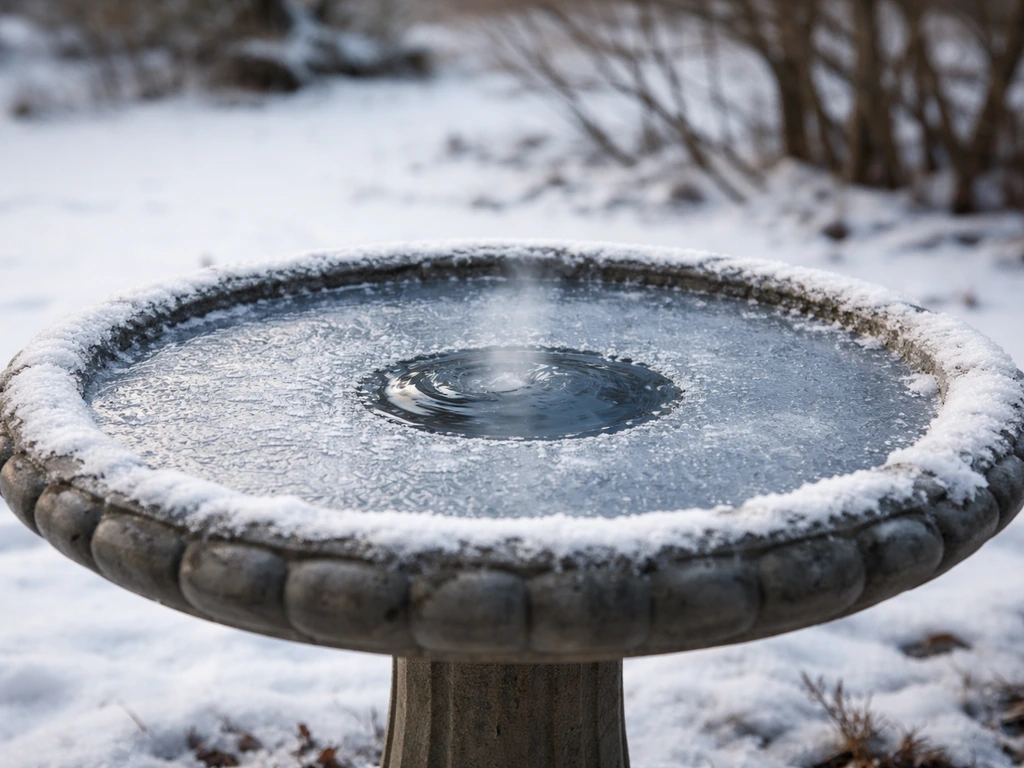
Water freezes because ambient air temperatures drop below 32°F (0°C), and shallow dishes like bird baths freeze faster than deeper containers because they have more surface area relative to their volume. Wind accelerates the process significantly, so a birdbath in an exposed spot can ice over in under an hour on a windy day.
For birds, a frozen water source is not just an inconvenience. The National Wildlife Federation points out that when birds are forced to eat snow or peck at ice to hydrate, they burn extra calories and lose body heat doing it, which is a serious problem in winter when food is already scarce. A bird that cannot find liquid water in freezing conditions can become dehydrated and weakened surprisingly fast.
The signs that a bird is already struggling look a lot like illness: fluffed feathers, lethargy, sitting on the ground, or not moving away when approached. If you notice a bird behaving this way near a frozen water source, the animal may need more than just fresh water. Keep that in mind as you read through the guidance below.
Quick fixes for today: de-ice and keep water moving
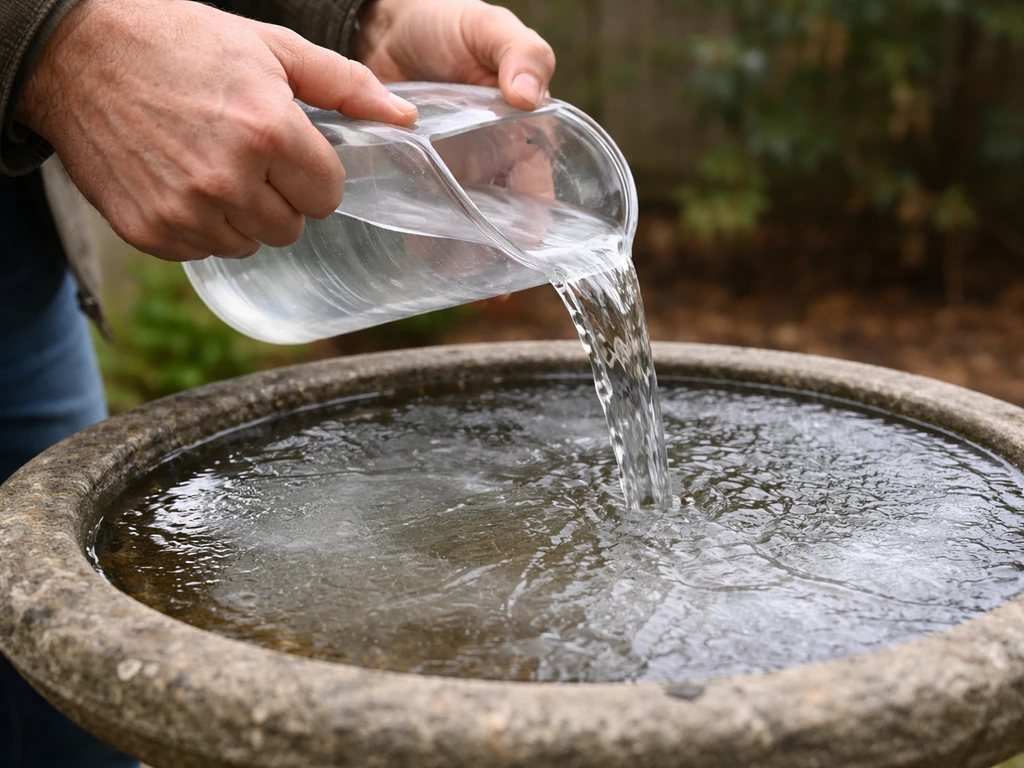
If your bird bath or water dish is frozen right now, here is what to do immediately. Pour warm (not boiling) water directly onto the ice. It melts the surface fast, and birds can access it within minutes. Do not use boiling water because it can crack ceramic or concrete baths and can also startle birds with steam.
Breaking the ice with a stick or a rock is another fast option, but it leaves sharp edges that can cut birds' feet, so finish by pouring warm water over the broken pieces to smooth them out or remove the chunks entirely.
The simplest system that costs nothing is rotating two containers. Keep one outside for birds and one inside warming up, then swap them every hour or two when temperatures drop. It is repetitive, but it works reliably on days when you are home.
Adding motion to water slows freezing because moving water requires more energy to crystallize. A simple drip system made from a punctured plastic bottle hung above the bath will keep water trickling and delay surface ice by a useful amount, though it will not stop freezing entirely when temperatures drop well below 32°F.
Safe water-warming methods that still protect birds
Warming the water is effective, but the temperature has to stay in a safe range. Water between 50°F and 70°F (10°C to 21°C) is ideal for birds. Anything hotter can stress or burn them, especially small species that wade in to drink. Never use open-flame heat sources, candles, or propane heaters near bird water.
Submersible electric de-icers designed for bird baths are the gold standard for safe warming. They contain a built-in thermostat that activates only when the water is close to freezing, so the water stays liquid without getting warm. Most units draw between 50 and 150 watts and are rated for outdoor use. Always use a model specifically labeled for bird baths or wildlife water features, and run it through a GFCI-protected outdoor outlet.
A low-wattage seedling heat mat placed under a plastic water dish is a less common but practical option for small setups. Keep it on the lowest setting and check the water temperature with a thermometer the first time you use it to make sure you are staying under 75°F (24°C).
What to absolutely avoid: salt and antifreeze. Salt lowers the freezing point of water, but it is toxic to birds at concentrations that would actually affect ice formation. Antifreeze (ethylene glycol) is lethal to birds and wildlife even in tiny amounts. There is no safe chemical shortcut here.
Insulation and anti-freeze strategies for bird feeders and baths
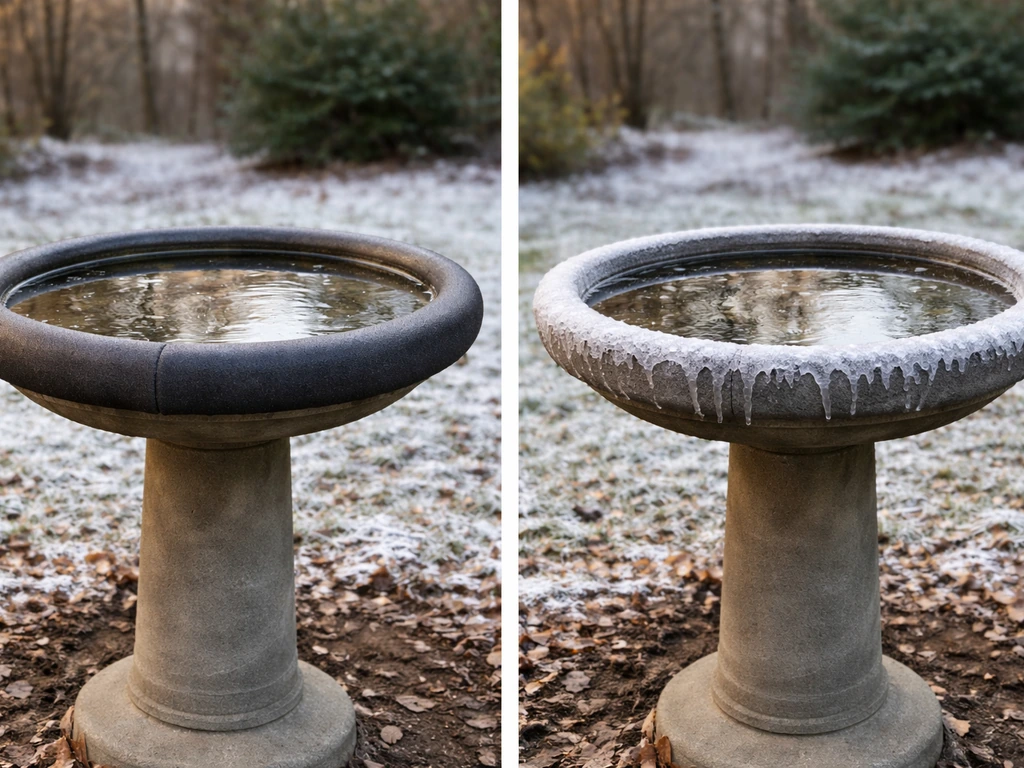
Insulation slows the rate of heat loss, which buys you extra time between interventions. Wrapping the outside of a bird bath basin with foam pipe insulation or a neoprene koozie-style sleeve keeps the water warmer for longer without any electricity. This works best as a supplement to other methods, not as a standalone fix in hard freezes.
Deeper containers freeze more slowly than shallow ones. If you are using a standard shallow dish, swapping it for a deeper rubber or heavy-duty plastic container (at least 2 to 3 inches deep) gives you noticeably more time before the surface ices over. Rubber containers have another advantage: if they do freeze solid, you can flex the sides to pop the ice block out easily.
Windbreaks make a real difference. Placing a water source next to a fence, a dense shrub, or a building wall cuts wind exposure dramatically. Wind chill accelerates freezing just as it does for human skin, so reducing wind speed around the water is one of the most effective passive strategies available.
Dark-colored containers absorb more solar heat than light ones. A black or dark navy rubber tub placed in a sunny spot can stay ice-free for hours longer than an identical white container in the same location, purely from passive solar gain.
Choosing equipment: heated bird baths, de-icers, and where to put them
If you want a hands-off solution, these are your main equipment options. Here is how they compare:
| Option | How It Works | Best For | Approximate Cost | Limitations |
|---|---|---|---|---|
| Submersible de-icer / immersion heater | Sits in existing bath; thermostat prevents freezing | Any standard bird bath | $20–$50 | Needs outdoor GFCI outlet; cord management required |
| Heated bird bath (all-in-one) | Built-in heating element with thermostat | New setups or replacing existing bath | $60–$150 | Higher upfront cost; must be placed near outlet |
| Heated deck-mounted bowl | Plugged bowl with thermostat, attaches to deck railing | Smaller yards, decks, balconies | $30–$70 | Limited water capacity |
| Drip or fountain attachment | Keeps water moving to slow freezing | Above-freezing but near-freezing temps | $15–$40 | Does not prevent freezing in hard cold; needs pump |
For most people, a submersible de-icer dropped into an existing bath is the best starting point. It is affordable, does not require replacing any equipment you already have, and works reliably. If you are starting from scratch, an all-in-one heated bird bath is worth the extra investment.
Placement matters as much as the equipment itself. Position the water source in a spot that gets morning sun (south or east facing), is sheltered from prevailing winds, and is within reach of an outdoor outlet. Keep it within view of a window so you can check it easily without disturbing the birds. Place it near shrubs or low branches so birds have a quick escape route from predators while they drink. If you are caring for a bird indoors and need guidance on how to give bird water safely in a controlled environment, the principles of temperature and container depth still apply.
When to get help or change your approach
If a wild bird seems sick or unable to drink
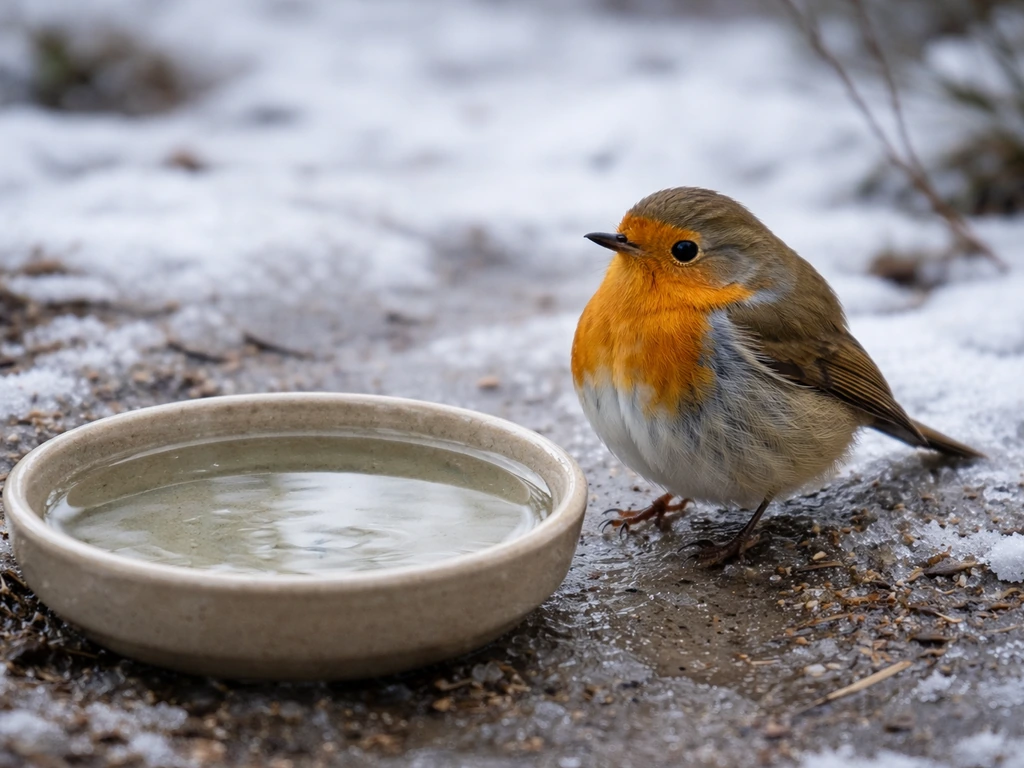
Fresh water helps healthy birds survive winter. But if a bird is already sitting on the ground, unresponsive to movement, or visibly struggling, access to water alone will not fix the problem. A bird that is chilled or debilitated needs to be warmed gently first. The HSVMA wildlife care guidance is clear: blank" rel="noopener noreferrer">warm a cold or chilled animal and keep it safe before doing anything else, and reach out to a licensed wildlife rehabilitator as quickly as you can.
If you find a bird that appears to be in distress and need to offer fluids carefully, read up on how to give an injured bird water before attempting it, because the method matters. Giving water incorrectly to a debilitated bird can cause aspiration. And if the bird is a fledgling, there are specific considerations covered in guidance on how to give a fledgling bird water that are worth reviewing before you intervene.
Wild birds that seem sick on top of being cold may need medication as part of their recovery. That is territory best handled by a rehabilitator, but if you are already working with one and need to understand what is involved, the process of how to give bird medicine safely is something worth familiarizing yourself with.
Drying a bird that got too wet at a water source
Bird baths with water that is just barely above freezing can leave small birds soaked and dangerously cold if they bathe in them. A wet bird in cold weather loses heat rapidly. If you find a wet, shivering bird, knowing how to dry a bird correctly can make a real difference while you wait for professional guidance.
Providing water to wild birds safely in general
If you are new to supporting wild birds through winter and want a broader framework for hydration, the guidance on how to give a wild bird water covers the key principles that apply across seasons, not just in freezing conditions.
Safety in extreme conditions
In genuine extreme cold, below 10°F (-12°C), even heated bird baths may struggle to keep up if they are underpowered or in an exposed location. Check your equipment wattage against the expected low temperature for your area. A 50-watt de-icer may not be enough in a hard northern winter; look for 150-watt units for those conditions.
Also make sure any electrical cords are rated for outdoor use and are not running under ice, snow, or water. Inspect them before each winter season. A GFCI outlet is not optional here, it is the safety net that protects both you and the birds.
The Virginia Department of Wildlife Resources puts it simply: snow and ice do not help thirsty birds. Providing liquid water in winter is one of the most meaningful things you can do for local wildlife, and with the right setup, it does not take much effort to keep it flowing all season.
FAQ
Why is my bird bath still freezing over with a de-icer or heater installed?
If your water keeps icing over even with a de-icer or heat mat, the usual causes are insufficient wattage for your temperature and exposure, poor placement (full wind), or an outlet that is not actually feeding power (tripped GFCI). Check the device’s watt rating against your coldest overnight temperature, reposition to morning sun with wind shielding, and confirm the unit’s thermostat is turning on by feeling for warmth at the bath surface after the first cold nights.
What should I do if the bath becomes slushy or partly refreezes after melting?
Avoid making the solution “slushy” with added water from thawing ice, because refreezing can trap birds’ feet in a slick surface. Instead, remove ice chunks first (breaking is fine, but smooth the edges with warm water), then refill to your normal depth so the thermostat or heat system can stabilize.
How should I handle cords and outlets in snowy weather to keep things safe?
If you have a birdbath with a ground stake or base, do not bury cords or run them where they can become trapped under snow or form an ice dam. Route cords above the snow line where possible, use outdoor-rated cord covers, and keep any plug connections elevated so meltwater cannot wick into the outlet area.
Can dark-colored containers cause overheating, and should I adjust anything?
Dark tubs can gain heat from sun, but they can also overheat in sudden warm spells, especially if the sun hits directly for hours. Even with a de-icer, check water level and temperature by monitoring the bath in the afternoon, and ensure your setup can dissipate heat rather than trapping it against reflective surfaces.
If the bird seems weak, will keeping water liquid solve it?
A thermostat de-icer prevents boiling, but it will not fix dehydration if a bird is unable to reach the water. If you see lethargy, fluffed feathers, or the bird repeatedly unable to stand, focus on getting it safe and warm, then contact a licensed wildlife rehabilitator rather than assuming liquid water alone is sufficient.
Are there any safe additives I can use to keep bird water from freezing?
Don’t use a DIY “chemical” trick to lower freezing or stop ice. Salt, antifreeze, and other additives are dangerous even at low amounts. If you want an alternative to electricity, use passive options together (windbreak plus deeper container plus morning sun), and consider a second container swap schedule when you are home.
How fast should a drip system run so it delays freezing but doesn’t make a mess?
For drip systems, use a slow, continuous flow and confirm the drip does not freeze at the outlet or clog. Test in daytime first, then adjust to keep the water moving without creating a stream that spills and wastes water onto the ground where it can refreeze into hazards.
What should I do if a bird’s feet are stuck to ice on the rim or surface?
If you find a bird stuck on ice or unable to lift its feet, do not force it off abruptly. Warm the surrounding ice with small amounts of warm water to loosen footing, then gently help only after the ice gives way, because rough handling can damage feet or cause the bird to panic and worsen aspiration risk.
Next Article
How to Give a Bird Water Safely: Step by Step
Learn how to give a bird water safely step by step, when to act, what not to do, and red flags needing help.