If you've found an injured, sick, or orphaned bird and your first instinct is to give it water, that impulse comes from a good place. But the honest answer is: in most cases, you should not try to give a wild bird water on your own. The risk of fluid going into the bird's airway is very real, and aspiration can kill a bird faster than dehydration will. That said, there are specific situations where offering water is appropriate and safe. This guide walks you through when hydration helps, when it harms, and exactly what to do based on the bird's condition.
How to Give a Bird Water Safely: Step by Step
Marcus Holloway
8 Apr 2026
When and why a wild bird actually needs water
Dehydration in birds is a real emergency, but it develops over hours and days, not minutes. When you first find a grounded or injured bird, dehydration is rarely the most urgent problem. Shock, temperature, trauma, and blood loss take priority. A bird in shock needs warmth and quiet first, not a drink of water.
That said, you do need to know what dehydration looks like so you can describe the bird accurately when you call a wildlife rehabilitator. Clinical signs of dehydration in birds include dry or tacky mucous membranes inside the mouth, sunken or dry-looking eyes, and cold extremities. One test wildlife rehabilitators use is the "skin tent" test: gently pinch a small fold of skin and let go. In a well-hydrated bird, the skin snaps back immediately.
If it stays tented (persists for more than about 5 seconds), that's a sign of significant dehydration. Skin that appears to stick to the breast muscle, no urine visible in the droppings, and a bird that is prostrate with eyes closed are all signs of severe dehydration bordering on shock. Those signs mean you need professional help now, not a bowl of water at home.
The birds most likely to genuinely need supplemental hydration are those that have been confined in a warm place for several hours without drinking, birds that were found in extreme heat, or birds that are recovering from an illness or injury under a rehabilitator's care. If you are reading this because you just found a bird in your yard, the priority is to stabilize it and call a wildlife rehabilitator, not to start a hydration protocol.
Safe ways to offer water (and when they actually apply)
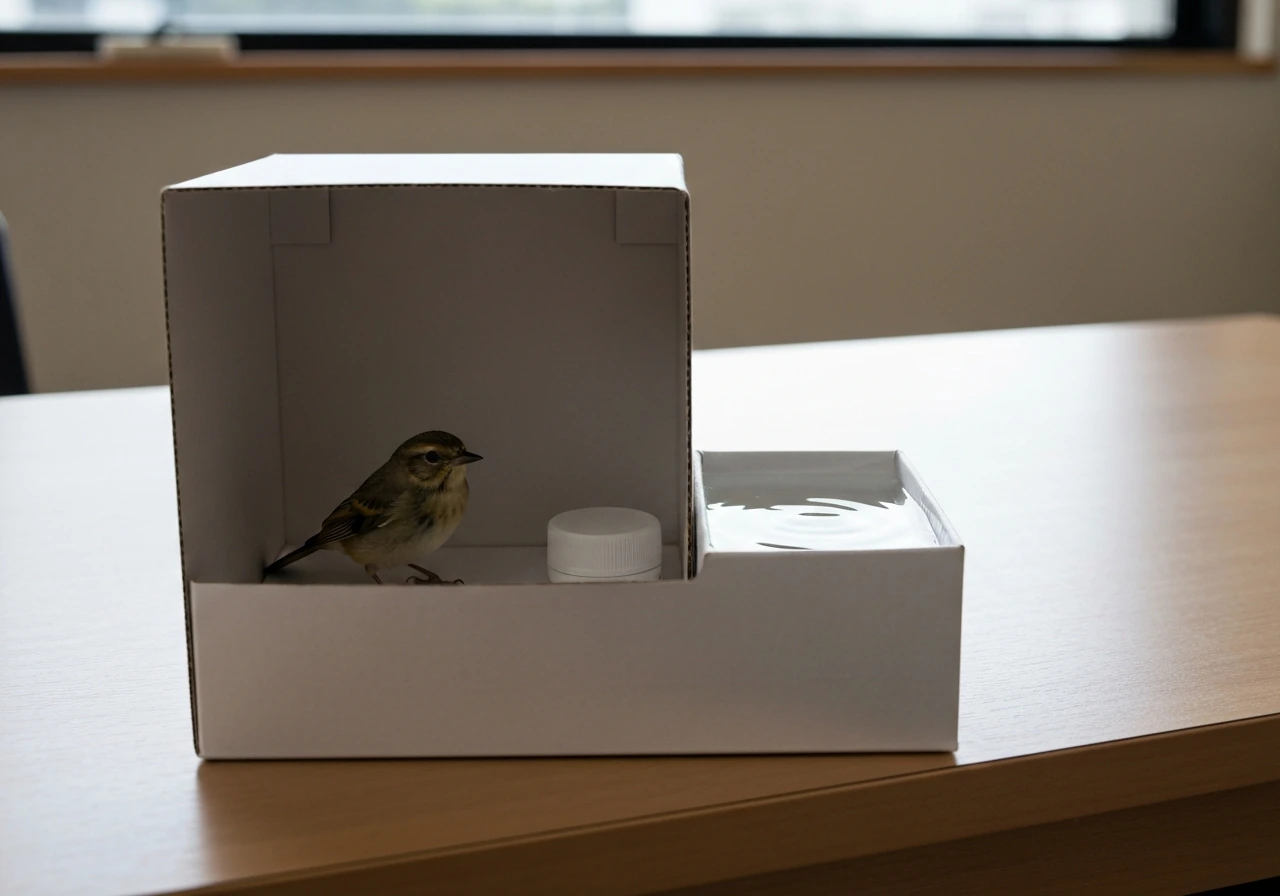
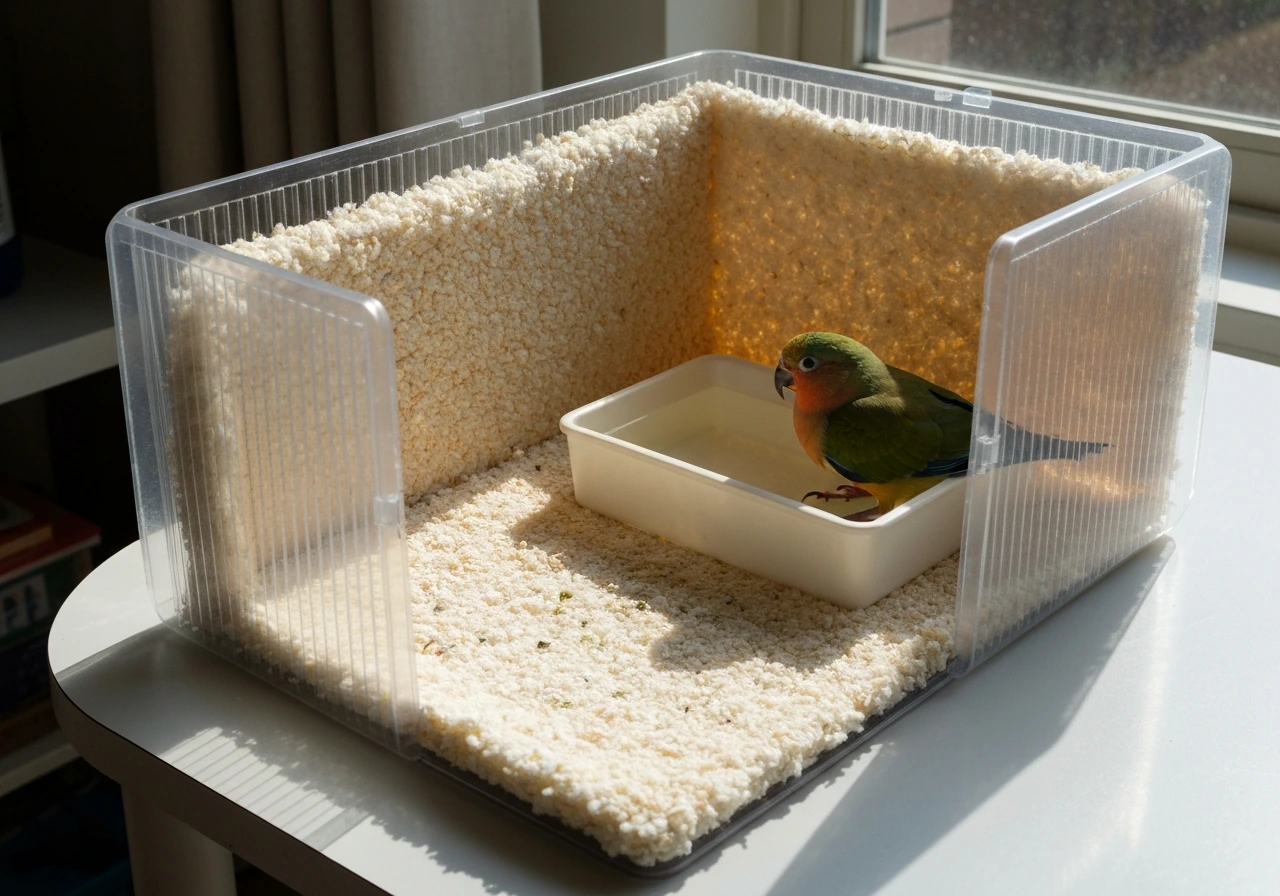
There is really only one low-risk method for offering water to a bird you've found: a very shallow dish placed inside the box with it. If the bird is an adult, is alert and upright, can hold its own head up steadily, and shows no signs of respiratory distress, you can place a shallow lid, like a bottle cap or a baby food jar lid, with a small amount of clean, room-temperature water in the corner of the box. The bird can drink on its own terms if it wants to. That's it. That is the safest version of at-home bird hydration.
Do not try to hold water to the bird's beak and force it to drink. Do not use an eyedropper, syringe, or spoon to drip water into its mouth. Multiple wildlife rehabilitation organizations are unanimous on this point: never squirt water into a bird's mouth. The anatomy of a bird's airway makes aspiration very easy. The opening to the trachea (the glottis) sits right at the base of the tongue, in the floor of the mouth. Water dropped or squirted in can go straight into the lungs.
If a wildlife rehabilitator has specifically instructed you to offer oral fluids while you are transporting the bird, the technique they describe typically involves placing a tiny amount of water at the side of the beak, then waiting and watching for the bird to swallow voluntarily before offering any more. This is a controlled, trained approach, not something to improvise. Giving water to an injured bird in this way should only happen under direct guidance from a professional.
What not to do: the risks that can make things worse
Forcing water is the biggest danger, but it's not the only one. Here are the specific things to avoid when a bird is in your care, even temporarily.
- Never squirt, drip, or pour water into a bird's mouth using a dropper, syringe, spoon, or your fingers. Aspiration into the airway is a serious and often fatal risk.
- Never give milk. Birds cannot digest it and it causes digestive harm.
- Never give sugary drinks, juice, Gatorade, or sports electrolyte drinks. These are not formulated for birds and can cause harm, especially to kidneys.
- Never give honey-water solutions unless specifically directed by a vet. Honey can harbor harmful bacteria.
- Never use hot water. Room temperature or slightly warm water only. Cold water is a stress on an already compromised bird.
- Do not overfill a water dish. A bird that is weak can drown in even a shallow container. A bottle cap depth of water is plenty.
- Do not leave a water dish with a bird that cannot hold its head up or that is unconscious.
If the bird is wet for any reason, whether from rain, being found near water, or from accidental spills during handling, address that before worrying about hydration. Drying a bird safely is its own process, and a wet bird loses body heat fast, which creates a whole separate emergency.
Temperature matters a lot here. A cold or hypothermic bird cannot safely swallow or process fluids. Warmth comes first. Wrap a hot water bottle in a towel and place it against one side of the box so the bird can move toward or away from the heat source. Get the bird stable before you think about water.
How to handle hydration based on the bird's age and condition
Adult birds that are alert and able to stand
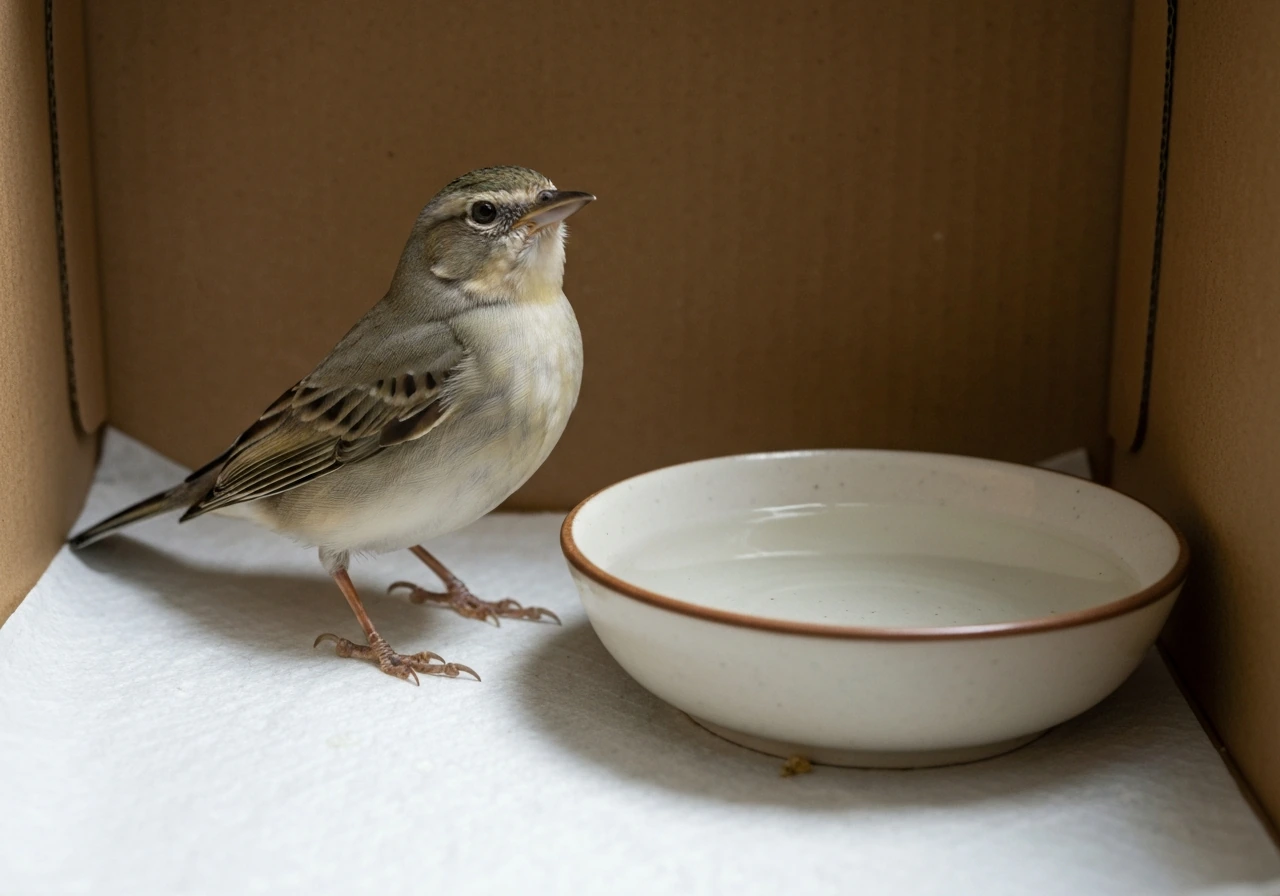
This is the scenario where offering a shallow dish of water is reasonable. Place it inside the holding box, keep it very shallow, and let the bird decide. If it drinks on its own, that's a good sign. Don't force anything. Giving water to a wild bird in temporary care works best when the bird retains enough coordination and instinct to self-regulate. Check periodically that the bird isn't sitting in the water dish or that it hasn't tipped it over.
Injured or weak adult birds
A bird that cannot hold itself upright, has a drooping head, or seems disoriented should not have a water dish in the box at all. The drowning risk is real, and the swallowing reflex may be compromised. Focus on warmth, minimal handling, darkness to reduce stress, and getting the bird to a rehabilitator quickly. Do not attempt oral hydration.
Fledglings (feathered young birds)
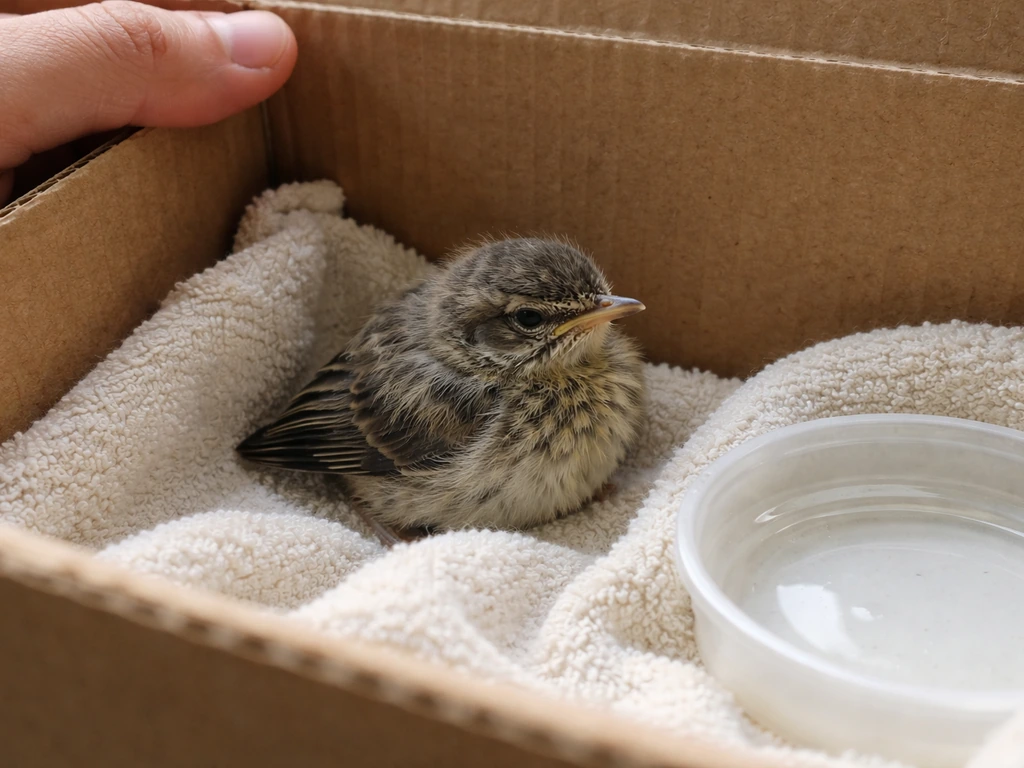
Fledglings are young birds that have most of their feathers but may not fly well yet. In the wild, they get most of their hydration through the food their parents bring. If a fledgling appears healthy enough and is just temporarily in your care before being returned to the area where it was found, do not attempt to give it water. If it's injured or being held longer term while awaiting a rehabilitator, read up on how to give a fledgling bird water before attempting anything, and ideally do so only with guidance from a professional.
Nestlings and unfeathered chicks
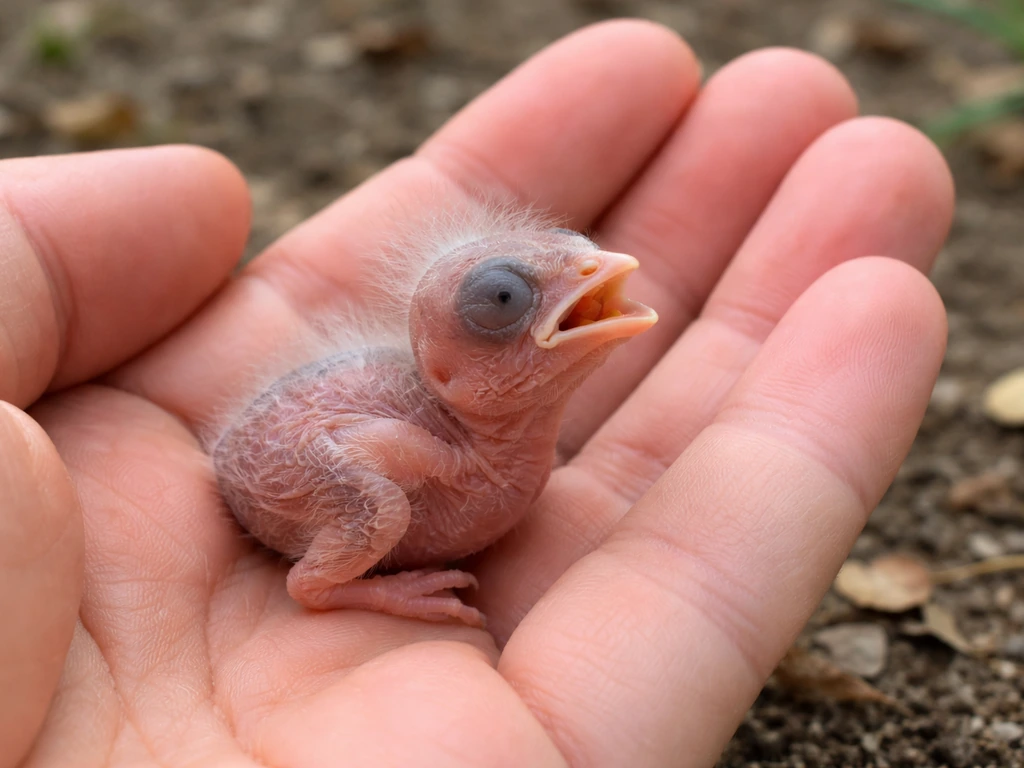
Do not give nestlings or unfeathered chicks any liquid. This is the clearest rule in wildlife rehabilitation and it is repeated by every major organization. The airway anatomy of baby birds makes aspiration of fluids extremely easy. Even a single drop of water from an eyedropper can enter the trachea and cause aspiration pneumonia.
PetMD similarly warns that for baby birds, improper feeding can cause aspiration or choking, respiratory infections, and often death, advising not to feed baby birds Even a single drop of water from an eyedropper can enter the trachea and cause aspiration pneumonia. .
The Humane Society Veterinary Medical Association explicitly cautions against giving young birds liquid into their mouths unless a trained handler is present. Do not give water. Call a rehabilitator instead.
Hummingbirds (a special case)
Hummingbirds are the one exception you'll see mentioned by California wildlife guidance. Because they feed on nectar and have very high metabolic rates, a grounded hummingbird may be offered plain white sugar water (1 part sugar to 4 parts water, no dye, no honey) via a feeder placed near it. Even then, do not try to drip it into the bird's mouth. Offer it via a feeder and let the bird approach on its own if it is able.
Watching the bird after you've offered water
If you placed a shallow dish in the box with an alert adult bird, here's what to observe over the next 30 to 60 minutes.
- Did the bird drink voluntarily? Self-directed drinking is a positive sign of coordination and instinct.
- Is the bird breathing normally (smooth, quiet, not labored or open-mouthed)? Open-mouth breathing after contact with water can signal aspiration.
- Is the bird staying upright, or does it seem to slump or list to one side?
- Are the eyes alert and reactive, or glassy and sunken?
- Is there any urine component in the droppings? Absence of urine (the white or clear liquid part of a bird dropping) alongside other dehydration signs is a red flag.
- Is the bird's skin bouncing back when gently pinched, or does it stay tented?
You are not expected to do a full clinical assessment. But these are the observations that will help you give a rehabilitator an accurate picture over the phone. Write down what you see. It matters.
One thing to watch for that is easy to miss: rapid or labored breathing after any water contact can mean the bird inhaled some fluid. That is an emergency. Call a wildlife rehabilitator or avian vet immediately if you see this.
When you need to call a wildlife rehabilitator or avian vet right now
Some situations are beyond what temporary home care can address. If you see any of the following, stop what you are doing, keep the bird warm and quiet, and make the call immediately. Do not wait to see if things improve.
- The bird is unconscious, limp, or completely unresponsive.
- The bird is breathing with its beak open, tail bobbing, or making clicking or wheezing sounds.
- You see blood, a visibly broken bone, a drooping wing held at an unnatural angle, or a wound.
- There are signs of cat or dog attack (even if there's no visible wound, puncture from a cat's claws is an emergency due to bacteria).
- The bird has maggots, fly eggs, or parasites visible on or around it.
- The skin tent test shows the fold persisting more than 5 seconds, indicating severe dehydration.
- Eyes are sunken, dry, or the bird cannot keep them open.
- The bird has been in your care for more than 1 to 2 hours and shows no improvement.
- The bird is tilting its head in an unusual way or moving in circles.
- The bird appears to have aspirated water (labored or open-mouth breathing after contact with fluids).
Virginia DWR, Cornell Wildlife Hospital, and Audubon all give the same guidance: do not give food or water, and contact a permitted wildlife rehabilitator. That is the right call in almost every scenario involving an injured or sick bird.
To find a licensed wildlife rehabilitator near you, search your state wildlife agency's website or call a local humane society. The Alabama Wildlife Center, for example, runs a wildlife helpline for exactly these situations. Many rehabilitation centers can walk you through next steps on the phone before you even leave the house.
A quick comparison: when to offer water vs. when to wait for a professional
| Situation | Offer water at home? | What to do instead if not |
|---|---|---|
| Alert adult bird, upright, coordinating well | Yes, shallow dish only (bottle cap depth) | N/A |
| Adult bird that is weak, listless, or can't stand | No | Warmth, quiet, call rehabilitator |
| Fledgling in short-term temporary hold | No, unless directed by a professional | Call rehabilitator for guidance |
| Unfeathered nestling or chick | Never | Call rehabilitator immediately |
| Bird showing signs of shock or severe dehydration | No | Warmth, minimal handling, urgent call to rehabilitator or avian vet |
| Hummingbird, grounded but responsive | Offer sugar-water feeder nearby only | Call rehabilitator if no improvement in 15 min |
| Any bird after a cat or dog attack | No | Urgent call to rehabilitator or avian vet |
A few more situations worth knowing about
If you are caring for a bird longer term while waiting for transport to a rehabilitation center, there are a couple of adjacent concerns worth being prepared for. If you live somewhere cold, knowing how to keep bird water from freezing is useful for any outdoor water sources you maintain for wild birds, though for an injured bird in your care, room-temperature water indoors is always the right call. And if a rehabilitator instructs you to administer medication, the technique for that is specific too: giving a bird medicine correctly requires the same patience and care as any oral delivery, and should only be done under direct instruction.
The bottom line: your job when you find an injured or sick bird is to provide warmth, a dark quiet space, minimal handling, and a fast call to a professional. Water can wait. In most cases, the safest thing you can do for the bird is get it to someone who knows exactly how to help it.
FAQ
How long can I wait after finding a bird before worrying about water at all?
In most cases you should treat dehydration as secondary to shock, temperature, and injury. Focus on warmth and quiet immediately, then call a wildlife rehabilitator right away. If the bird is alert and upright, you can offer a shallow dish inside the box, but you should not delay getting professional guidance while you wait for it to drink.
What if the bird looks thirsty but is breathing with its mouth open or seems to be struggling to breathe?
Do not offer a water dish if the bird shows any respiratory distress. Mouth open breathing, gurgling, wheezing, repeated stretching of the neck, or rapid labored breathing after any water contact are signs to stop and call an avian wildlife professional immediately, since aspiration can be fatal.
Can I use a deeper bowl so the water is easier for the bird to reach?
No, keep it very shallow. A shallow lid in the corner reduces the chance the bird tips in or sits in the dish. If the bird cannot hold position safely, remove the water entirely and concentrate on warmth and a fast handoff to a rehabilitator.
Is it safe to mix anything into the water, like electrolytes or vitamins?
Avoid adding anything unless a rehabilitator specifically instructs you. Plain clean room-temperature water is all that should be offered to an adult bird that meets the criteria, and additives can change fluid balance or increase aspiration risk.
Should I offer water if the bird is cold to the touch?
If the bird is hypothermic or not able to coordinate swallowing, do not introduce water yet. Warm the bird first using a hot water bottle wrapped in a towel placed beside one side of the box so it can move toward or away, then reassess before offering any water.
What’s the safest way to offer water if the bird is a little shaky but still upright?
Offer a tiny amount of plain room-temperature water in the corner using a shallow lid, and let the bird approach and drink voluntarily. If the bird tips repeatedly, sits in the dish, droops its head, or cannot self-right, remove the water and do not attempt oral hydration.
Can I let the bird drink from a bottle cap or dropper outside the box?
Keep control and reduce handling. If you offer water, do it only via a shallow dish inside the holding box so the bird can choose without being forced. Handling the bird to position its beak or to present a dropper increases stress and aspiration risk.
What should I do if the bird does not drink within 30 to 60 minutes?
Do not keep trying to force drinking or keep re-offering water. If the bird is not taking water and it is injured, lethargic, or disoriented, that increases the urgency for professional help. Keep it warm, dark, and quiet, and follow the rehabilitator’s guidance.
Are there any situations where I should completely skip offering water and call immediately?
Yes. Skip any at-home water if the bird is unresponsive, cannot hold itself upright, appears disoriented, has severe dehydration signs like persistent skin tenting, or shows rapid/labored breathing after water contact. In these cases, keep it warm and quiet and contact a licensed wildlife rehabilitator right away.
What if I found a hummingbird on the ground, can I give it plain water like other birds?
For hummingbirds, the typical guidance is sugar water (1 part sugar to 4 parts water, no dye, no honey) offered via a feeder. Do not drip into the mouth. If it is weak or cannot approach a feeder, call for help instead of attempting oral fluids.
I think I have a fledgling, can I offer water in a dish like an adult?
Generally do not provide water to fledglings in temporary care unless it is under professional guidance or the specific situation calls for it. Fledglings typically hydrate through food from their parents, and inappropriate liquid can worsen risks. If it is injured or held longer term, contact a rehabilitator before attempting hydration.
What should I do if I accidentally spilled water on a baby bird or it got wet?
Drying and warming take priority over any hydration attempt. Keep the bird warm and monitor closely, and do not give liquid to nestlings or unfeathered chicks under any circumstances.
How should I describe the water situation to a rehabilitator?
Note whether you offered a shallow dish, how much time passed, whether the bird drank, and whether you observed any breathing changes after water contact (such as rapid or labored breathing). These details help the rehabilitator judge aspiration risk and dehydration severity quickly.
Next Article
How to Release a Hand-Reared Bird Safely and Humanely
Step-by-step humane release for hand-reared wild birds: species checks, anti-imprinting care, soft vs hard release, afte