For most fledgling birds, the safest thing you can do right now is not give water at all. Nearly every major wildlife organization, from the RSPCA to the U.S. Fish & Wildlife Service, blank" rel="noopener noreferrer">advises against offering food or water to fledglings unless a licensed wildlife rehabilitator has specifically told you to. The aspiration risk is real: a bird that gets even a small amount of water into its airway instead of its throat can develop aspiration pneumonia, which is often fatal. Your job right now is to stabilize the bird, keep it warm and quiet, and get it to a professional as fast as possible.
How to Give a Fledgling Bird Water Safely: First Aid Guide
Marcus Holloway
26 Apr 2026
First, make sure it's actually a fledgling
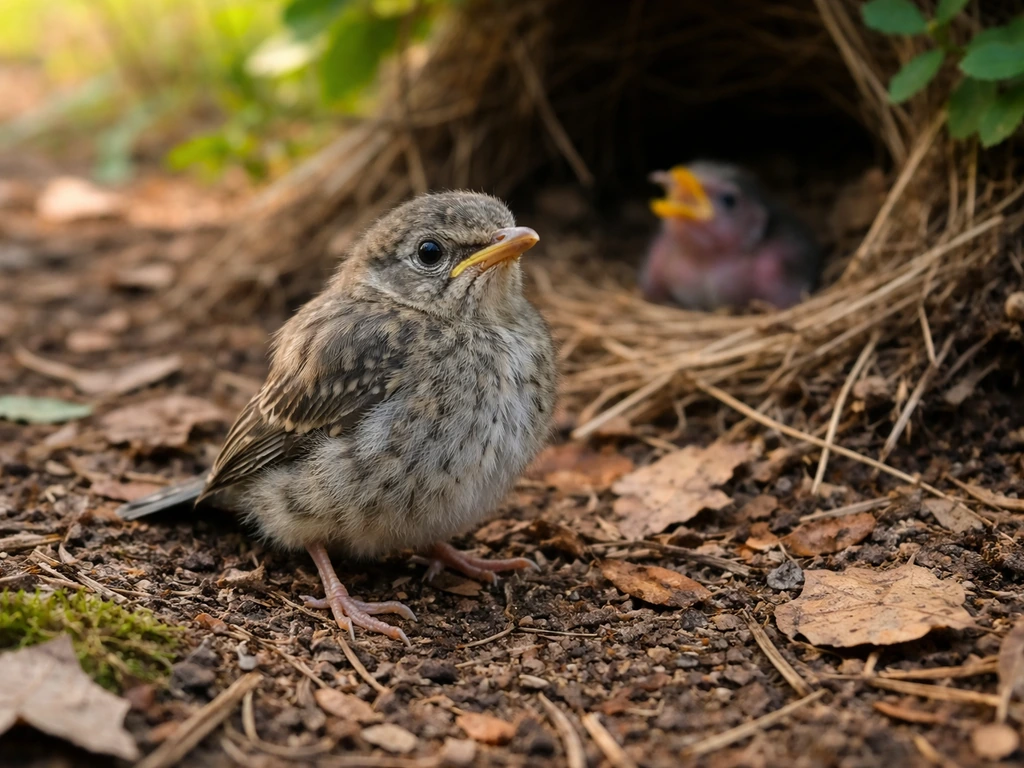
The word "fledgling" gets used loosely, but the stage of development matters a lot for how you handle the bird. A true fledgling is mostly or fully feathered, can hold itself upright, and can hop around on the ground. It has left the nest on its own, or very close to it, and is in a normal transitional phase where it learns to fly while its parents still feed it from nearby. Many people see a fledgling on the ground and assume it's injured or orphaned, when it's actually fine.
A nestling is a different story. Nestlings are not fully feathered, often have closed or barely open eyes, and cannot stand upright. They should be in a nest, not on the ground. If the bird you found is mostly bare skin, patchy down, or can't hold its head up, it's a nestling, not a fledgling, and it needs a rehabilitator even more urgently. Do not attempt to give a nestling water under any circumstances.
| Characteristic | Nestling | Fledgling |
|---|---|---|
| Feathers | Bare or downy, sparse or patchy | Mostly or fully feathered |
| Eyes | Closed or just opening | Open |
| Movement | Cannot stand; may drag with wings | Can hop and stand upright |
| Normal to find on ground? | No, needs help | Often yes, parents may be nearby |
| Water from humans? | No | Still generally no, see guidance below |
When to offer water vs. when to get help immediately
Here is the honest answer: in almost every case, you should skip the water and go straight to getting professional help. The Wildlife Trusts, the Washington Department of Fish and Wildlife, Toronto Wildlife Centre, and dozens of other rehab organizations all say the same thing: blank" rel="noopener noreferrer">do not give food or water unless a rehabilitator instructs you to. Dehydration is a real concern for sick or injured birds, but the cure for dehydration in a bird is not tap water from a dropper. If you are instructed to care for the bird before a professional takes over, make sure you follow proper guidance on how to dry a bird safely. Dehydration is a real concern for sick or injured birds, but the cure for dehydration in a bird is not tap water from a dropper, so for safe, age-appropriate guidance use the destination topic: how to give an injured bird water. It requires the right electrolyte solutions, the right technique, and hands that know what they're doing. Do not try to give bird medicine yourself; only a licensed wildlife rehabilitator should advise what medication is appropriate and how to administer it safely.
If the fledgling is simply on the ground but appears alert, has no visible wounds, and is hopping around, leave it alone and watch from a distance for an hour or two. Its parents are almost certainly nearby and still feeding it. Moving it or attempting to water it causes unnecessary stress and can do real harm.
Get help immediately, without attempting to give water first, if the bird: If you do end up offering water later, learn how to keep bird water from freezing so the bird stays safe and healthy.
- Has a visible injury such as a broken wing, bleeding, or wounds from a cat or dog
- Is found near a cat or dog, even if it looks unharmed (cat saliva is toxic to birds)
- Is cold, limp, or unresponsive
- Has been on the ground for several hours with no sign of parents returning
- Cannot hold itself upright or is tilting to one side
- Is in the path of traffic, predators, or other immediate danger
The one situation where a small amount of water may be appropriate
FAQ
What if the fledgling is panting or seems very thirsty, should I give water sooner?
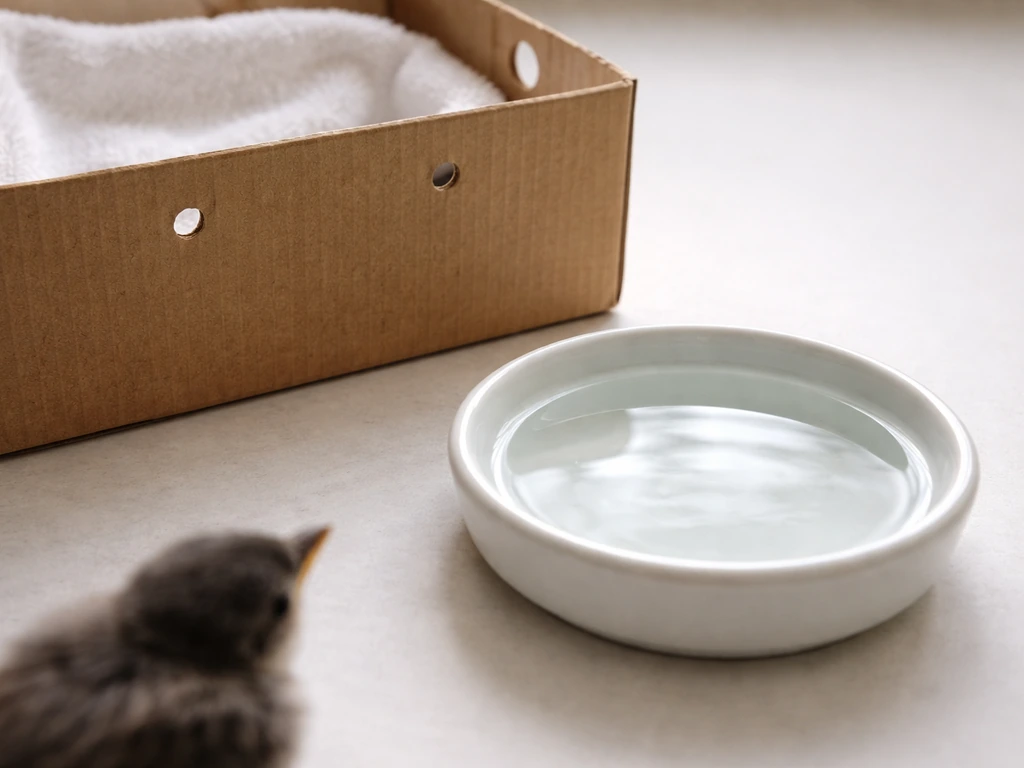
Even if it looks thirsty, do not use a syringe or try to squirt water into the beak. If it is a true, upright, alert fledgling, you can offer plain, clean water passively in a shallow lid in the warm box. If it is weak, chilled, lethargic, injured, or cannot sit upright, skip water and focus on warmth, darkness, and immediate professional help.
How do I tell whether it is a true fledgling or a nestling before deciding about water?
A true fledgling is mostly or fully feathered, can hold itself upright, and can hop around. A nestling is usually mostly bare or patchy down, may have eyes closed or barely open, and cannot hold its head up. If you are unsure, treat it like a nestling (do not offer water) and contact a rehabilitator.
Can I mix electrolytes into water to help dehydration?
Only do this if a licensed wildlife rehabilitator or avian vet specifically tells you to. Plain, clean water is safer for passive offering, while the wrong electrolyte or concentration can worsen dehydration or create other complications.
How much water should I provide if the bird drinks on its own?
You do not measure a target amount. For a small fledgling, a drop or two is enough, and you should let it decide. If it steps away or stops drinking, remove any remaining water so it does not get chilled or contaminated.
Is it okay to offer water outside the box, like in a dish on the ground where I found it?
Usually no. If you keep the fledgling at all, do it in a warm, dark, quiet container to reduce stress. Offering water in a cold, exposed area increases the chance the water chills, which can make the bird weaker faster.
What temperature should the water be?
Use plain, clean water at a mild room temperature, not ice-cold and not hot. If the bird is cold or chilled, warming comes first, because cold temperatures and stress together can suppress drinking and increase risk.
What if the bird falls over when I place the water lid down?
Stop offering water and reassess as a possible weak or injured bird. If it cannot sit upright reliably, it is not the stable scenario where passive drinking is appropriate. Shift to warmth, minimal handling, and contact a rehabilitator immediately.
Can I use a drop of water on the beak to get it to swallow?
Do not. Even tiny amounts applied directly can be redirected into the airway, especially if the bird is stressed or not swallowing normally. Only allow drinking the bird initiates from a shallow container, and only when it is alert and upright.
How long can I wait with the bird before I offer any passive water?
If the bird is truly a stable, alert fledgling, a brief watch and warm, quiet containment while you place calls is appropriate. If you have already stabilized it and you are actively waiting for professional instructions, you can place a shallow lid in the corner. If it does not drink quickly, do not keep re-offering.
What should I do if the bird aspirated or started coughing after water?
Treat it as an emergency. Stop all water attempts, keep the bird warm and quiet in a covered box, and contact an avian vet or wildlife rehabilitator immediately. Coughing or breathing trouble after fluid exposure can indicate aspiration pneumonia developing.
Is it ever safe to give water to an injured adult bird the same way as a fledgling?
Not necessarily. Adults have different swallowing and stress responses, and “how to give a bird water” depends on species, injury type, and the bird’s ability to stand and swallow. For injured birds, follow guidance for injured wild birds or get instructions from a rehabilitator or avian vet first.
Next Article
How to Give a Wild Bird Water Safely Today
Step-by-step how to give a wild bird water safely, including signs to check, what to avoid, and rehab next steps.