The short answer: in most cases, you should not give a sick or injured bird any medicine on your own. The safest path is to stabilize the bird, keep it warm and quiet, and get it to an avian vet or licensed wildlife rehabilitator as fast as possible. That said, there are real situations where you need to act before you can reach a professional, and knowing the right steps can make a genuine difference. This guide walks you through all of it, from assessing the emergency to understanding how medicine is safely given when a vet actually prescribes it.
How to Give Bird Medicine Safely: First Aid Guide
Marcus Holloway
13 Apr 2026
When you should and shouldn't give medicine yourself
Let's be direct: almost every major wildlife organization, from the Center for Wildlife to the Wildlife Center of Virginia, advises rescuers not to give food, water, or medication to a found bird unless a licensed rehabilitator or veterinarian has specifically told you to. The Center for Wildlife’s “Rescued After Hours” guidance also says not to attempt to give animals food, water, or medication unless a licensed rehabilitator or veterinarian has specifically instructed you to advises rescuers not to give food, water, or medication. This isn't bureaucratic caution. Birds have extremely sensitive physiology, and the wrong substance at the wrong dose can kill faster than the original injury.
Human medicines are almost never safe for birds. Common over-the-counter pain relievers like ibuprofen or acetaminophen are not established as safe in birds, and NSAIDs that seem harmless to humans have been documented as toxic to scavenging birds that ingest residues. If you're tempted to crush up a painkiller and mix it in water, please don't. The research just isn't there to support it, and the risk of harm is real.
The one situation where DIY medication makes sense is when a licensed avian vet has examined the bird and given you a specific prescription with dosing instructions to carry out at home. In that case, this guide covers exactly how to do it safely. If you're dealing with a wild bird you just found, jump straight to the assessment section below and focus on stabilization and transport rather than medication.
Assess the bird first: spot emergencies before anything else
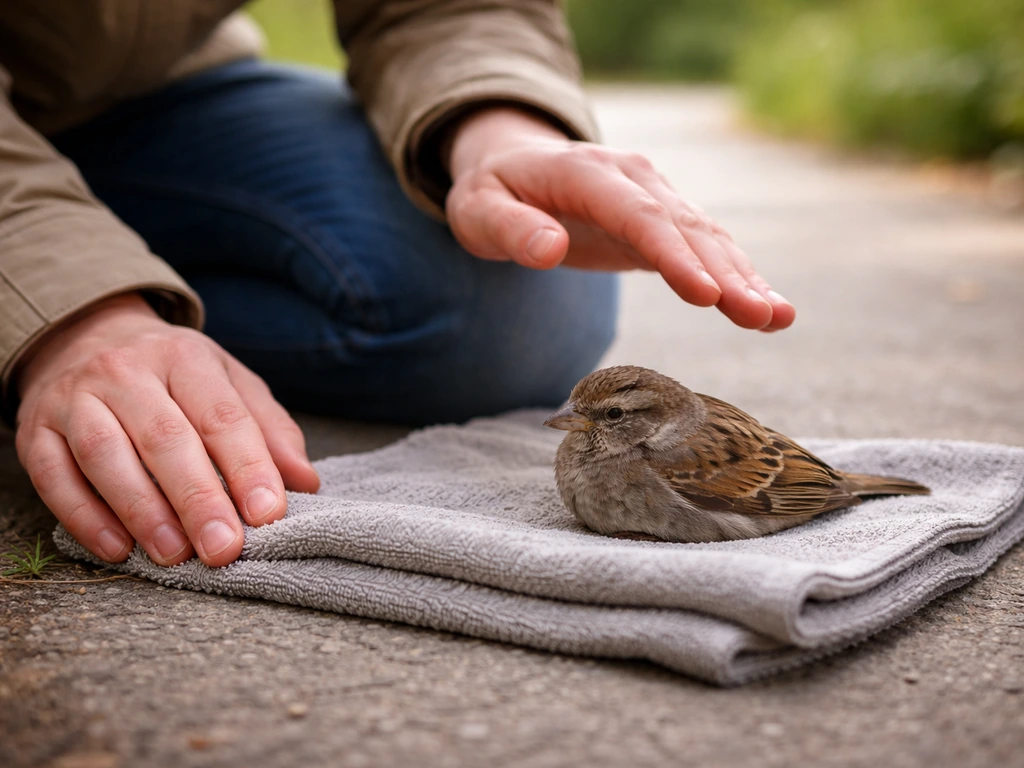
Before you consider any kind of treatment, you need a quick triage. Look at the bird carefully without picking it up yet. You're trying to answer one question: is this a true emergency that needs immediate professional intervention, or is this a situation where calm stabilization can hold things steady while you arrange transport?
The following signs mean you're looking at a critical situation that needs a vet or rehabilitator right now, not in a few hours:
- Active bleeding or an open wound that isn't clotting
- Collapse, inability to stand, or signs of shock (limp body, unresponsive, pale or bluish skin around the beak)
- Labored, open-mouth breathing or audible respiratory distress
- Seizures or convulsions
- A visible broken bone with bone protruding through skin
- Cat or dog bite or puncture wounds (even small ones cause internal damage and rapid infection)
- Maggots, fly eggs, or warbles visible on the skin
- Head tilt or inability to coordinate movement
- Suspected poisoning or toxic exposure
If you're dealing with a baby bird, the rules are even stricter. Do not give a baby bird anything to drink, including water. Tufts Wildlife Clinic advises that you should not give a found sick or injured songbird any food or water while you are arranging proper care Do not give a baby bird anything to drink, including water.. Their anatomy and swallowing coordination are not developed enough to handle it safely, and aspiration is a serious risk. Focus instead on gentle warmth and getting to a professional fast.
For adult birds, a simple rule from Virginia's wildlife guidance is useful: a bird that needs help is one that cannot stand or fly, or that has visible blood or open wounds. If the bird seems alert and is just sitting quietly after a window strike, give it 15 to 30 minutes in a covered, ventilated box before assuming it's truly injured. Many recover on their own.
Also consider whether the bird may have ingested something toxic. The avian respiratory system is especially vulnerable to inhaled chemicals, and substances like Teflon fumes can cause sudden, fatal respiratory failure. If you suspect poisoning, call the ASPCA Animal Poison Control Center (available 24/7) immediately and follow their guidance before attempting anything else.
Choosing the right medicine: vet-prescribed is the only safe option
If a vet has examined the bird and prescribed medication, follow that prescription exactly. Avian medicine is highly species-specific. A dose that's appropriate for a pigeon might be dangerous for a sparrow. Compounding pharmacies that work with avian vets can prepare formulations in the right concentration and flavor for a specific bird, which makes administration far easier than trying to divide a human-grade tablet.
Here's a practical comparison of the two paths people usually consider:
| Option | Safety | Effectiveness | Recommendation |
|---|---|---|---|
| Vet-prescribed avian medication | High (species-specific dose, correct formulation) | High (targeted to diagnosed condition) | Always the right choice |
| Human OTC medicine (e.g., ibuprofen, acetaminophen) | Very low (documented toxicity risk in birds) | Unknown or harmful | Do not use |
| Home remedies (honey, herbal teas, vitamin water) | Low to unknown (can cause aspiration, gut disruption) | Not evidence-based | Do not use |
| Medications prescribed for another pet | Very low (wrong species, wrong dose) | Unpredictable | Do not use |
The bottom line is simple: if it wasn't prescribed by an avian vet for this specific bird, don't give it. There is no safe DIY shortcut when it comes to bird medicine.
How to actually give a bird medicine safely
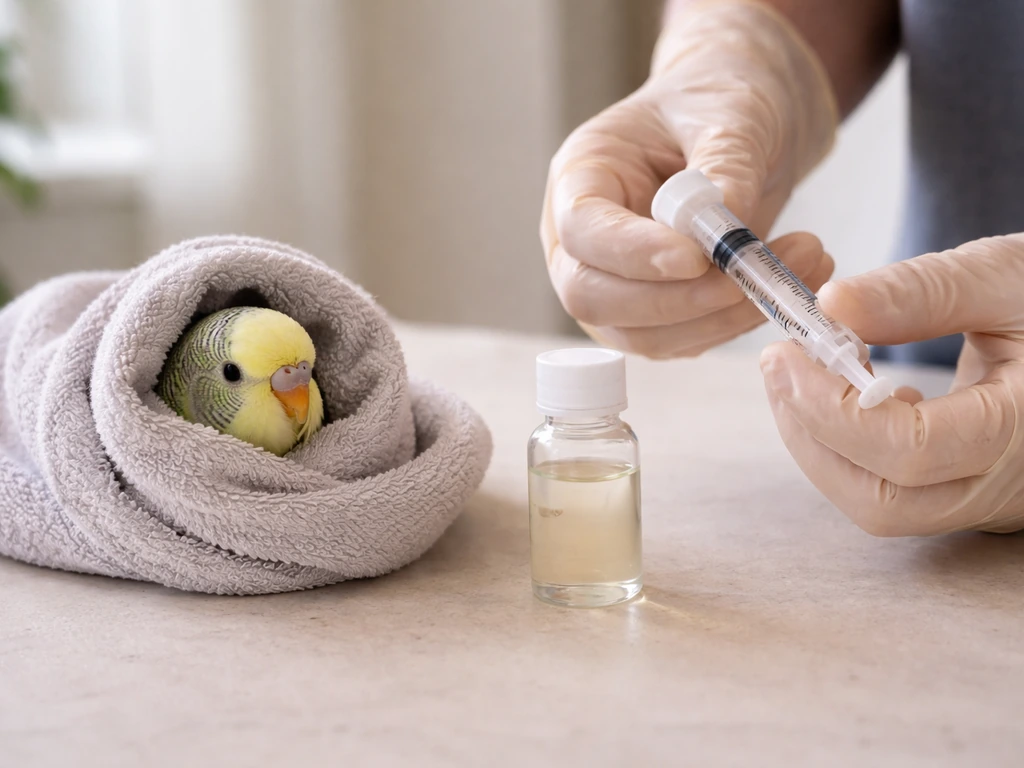
If you're at this stage, a vet has prescribed something and shown you how to administer it, or you're following direct instructions from a rehabilitator. Here's how to do it without causing aspiration or stress injury.
Oral liquid medication via syringe or dropper
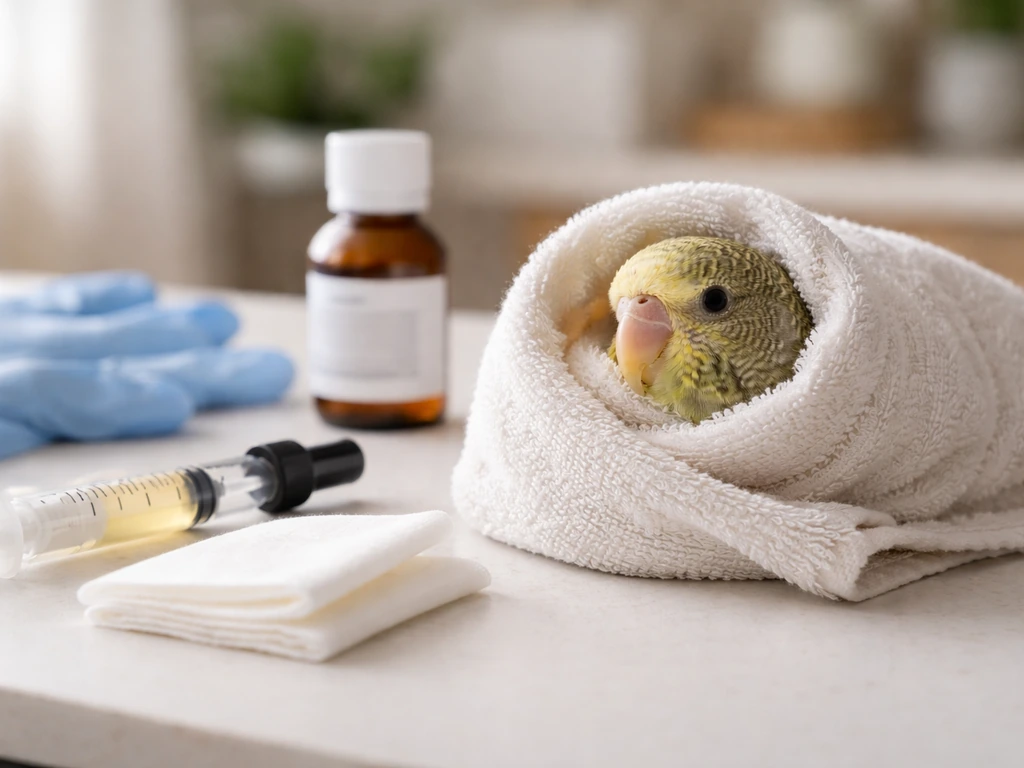
This is the most common method for small birds. Use a small syringe (no needle) or a dropper with the exact volume drawn up in advance. Wrap the bird gently in a small towel to keep it calm and prevent wing flapping, with the head free. Hold the bird upright, never on its back. Tilt the head very slightly and place the tip of the syringe at the side of the beak, not down the throat. Give the liquid slowly, one tiny drop at a time, and pause between drops to let the bird swallow. Going too fast is the number one cause of aspiration, where liquid enters the lungs instead of the stomach. Aspiration can be fatal within hours.
The Merck Veterinary Manual is explicit that force-feeding should not be attempted unless an avian vet has specifically instructed you to do so. If the bird is too weak or unresponsive to swallow on its own, that's a sign it needs more urgent care than you can provide at home.
Eye or ear drops
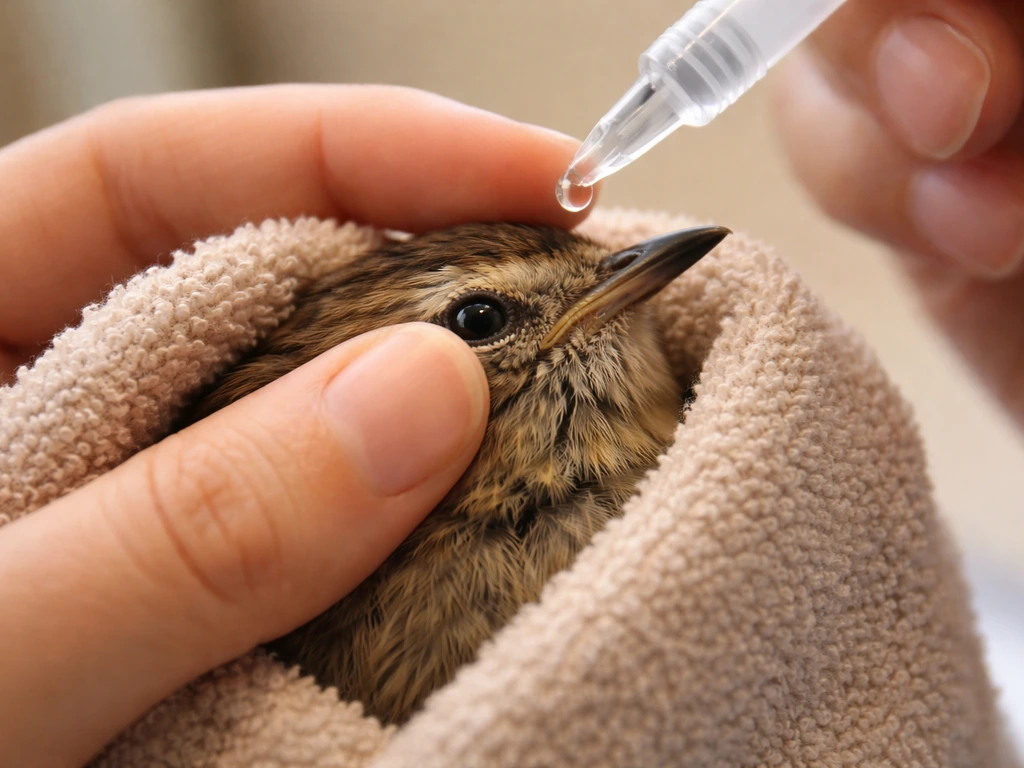
Some medications come as ophthalmic (eye) or otic (ear) drops. Wrap the bird the same way as above. For eye drops, gently hold the eyelid open with one finger and place the prescribed number of drops directly on the eye without touching the dropper to the surface. For ear drops, identify the ear opening (a small opening behind and below the eye, hidden under feathers) and apply directly. Keep the bird still for 30 to 60 seconds afterward so the medication absorbs.
Medication mixed into food
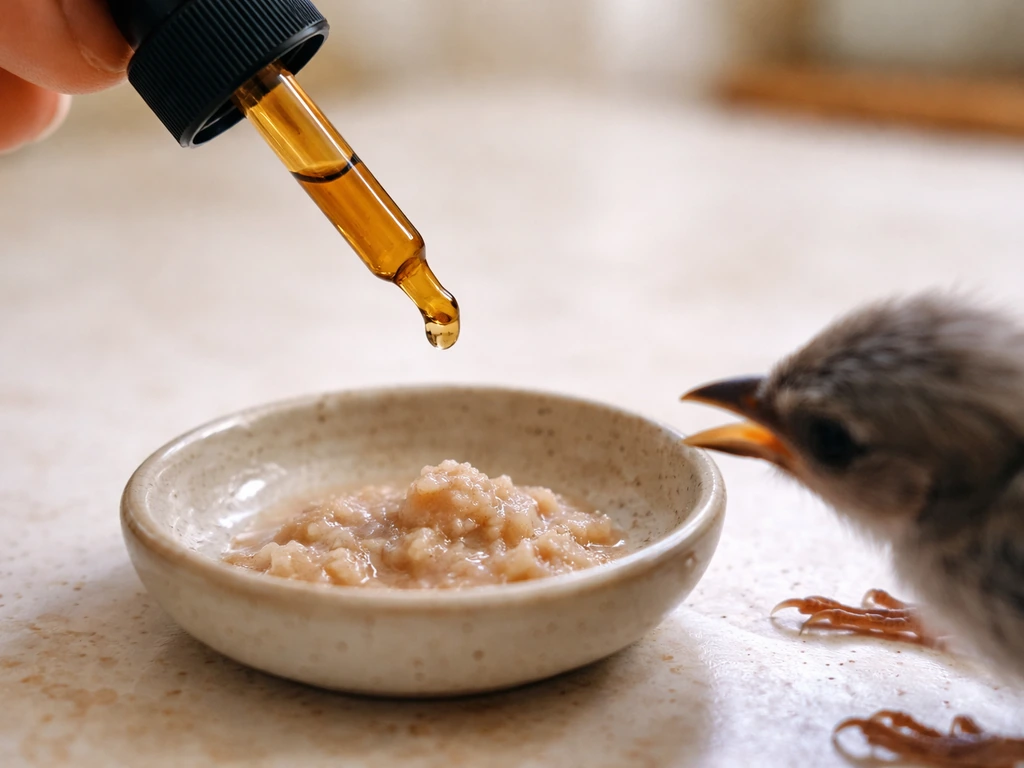
Some avian medications can be mixed into a small amount of a preferred food, like a piece of soft fruit or a small amount of wet food. Only use this method if your vet has confirmed the medication is stable and effective when given this way, and only if the bird is eating voluntarily. Never use this method with a bird that's too sick to eat on its own.
Dosing and timing: follow the prescription and don't improvise
Birds metabolize medications very differently from mammals, and the margin between a therapeutic dose and a toxic one is often quite narrow. Always follow the vet's instructions exactly, including the dose volume, frequency, and duration. Do not increase the dose if the bird seems to be getting worse. That's a sign to call the vet, not to give more medicine.
If you miss a dose, give it as soon as you remember, unless it's almost time for the next one. In that case, skip the missed dose and resume the normal schedule. Never double up doses to compensate for a missed one. With small birds especially, a doubled dose can cross into toxic territory quickly.
Keep a simple log: write down the time of each dose and the amount given. This is especially useful if you're handing the bird off to a rehab center or vet for follow-up, so they know exactly what was given and when.
Aftercare: warmth, quiet, and watching for side effects
Medication is only part of the picture. A sick or injured bird needs a stable, stress-free environment to recover. The single most important thing you can provide, other than the correct medicine, is warmth. A bird that's cold is using enormous energy just to maintain body temperature, which pulls resources away from healing.
A practical heat setup: place a heating pad on its lowest setting under one half of the container only, so the bird can move toward or away from the heat as needed. Aim for an ambient temperature around 85 to 90 degrees Fahrenheit near the warm side. Cover the container with a light cloth to keep it dark and reduce stress. Don't check on the bird constantly. Every time you peek in, you're causing a stress spike that costs the bird energy it can't afford.
For hydration, the approach matters a lot depending on the bird's condition and age. Giving an injured bird water requires care and the right technique to avoid aspiration, especially in a bird that's already weakened. If the bird is a fledgling, the risks are even higher, so review guidance on how to give a fledgling bird water before attempting anything.
Watch for these side effects after giving any medication:
- Increased lethargy or sudden collapse after a dose
- Vomiting or regurgitation (a serious sign in birds)
- Labored breathing or open-mouth breathing that wasn't present before
- Seizures or tremors
- Swelling around the face, eyes, or throat
- No improvement after 24 to 48 hours of treatment
If the bird gets wet during any part of the care process (from liquid medication or hydration attempts), address that quickly. A wet bird loses heat rapidly, which can spiral into shock. Understanding how to dry a bird properly is a practical skill worth knowing before you're in this situation.
One more thing on hydration: if you're caring for a wild bird outdoors between treatments, fresh water availability matters. Understanding how to give a wild bird water appropriately, and in colder weather, knowing how to keep bird water from freezing, are both useful parts of the broader care picture.
When to stop and call a professional immediately
There are clear situations where you need to hand this off right now and stop trying to manage it yourself. Don't wait to see if the bird improves. Don't try one more home remedy. Make the call.
- The bird is in respiratory distress (open-mouth breathing, tail bobbing with each breath, gasping)
- You suspect poisoning or toxic exposure of any kind
- The bird has had a seizure or is having one now
- There is active bleeding that isn't stopping
- You believe the bird has a cat or dog bite, even if you can't see a wound
- The bird is unconscious or completely unresponsive
- The bird has gotten significantly worse after any dose of medication
- You are unsure what species the bird is or what it needs
- More than 24 hours have passed without improvement
To find an avian vet, search for "avian vet near me" or contact your nearest wildlife rehabilitation center. The ASPCA Animal Poison Control Center (1-800-426-4435) handles bird poisoning cases around the clock. For general poison emergencies, US Poison Control (1-800-222-1222) is also a resource. If you've already tried to reach a rehabber after hours, the Tufts Wildlife Clinic has an after-hours line at 508-839-7918 where you can leave a message for guidance.
If you have a pet bird at home and want to understand the basics before an emergency happens, it's worth learning how to give a bird water correctly as part of routine care. Small hydration habits done right prevent a lot of problems down the line.
The hardest part of helping an injured bird is accepting that your instinct to do more is sometimes the thing that causes harm. Keeping the bird warm, dark, quiet, and calm while you arrange expert care is genuinely the most helpful thing most people can do. When medication is needed, let the vet prescribe it and walk you through it. That's not giving up, it's giving the bird the best chance it has.
FAQ
Can I give a found bird antibiotics “just in case” if it looks dirty or scraped?
No. Antibiotics must be chosen for the likely cause and the specific bird species, and the wrong drug or dose can worsen kidney stress or mask symptoms that the vet needs to treat correctly. Focus on warmth and transport, and only use antibiotics if a vet has prescribed them for that exact bird and situation.
What if I only have a pill, how do I make it smaller or crush it safely?
Do not crush, split, or dissolve unless your avian vet has explicitly approved that exact administration method. Some formulations are designed to release medication slowly or are not stable when crushed, and altering them can create an unsafe dose profile or change absorption.
Is it ever okay to give bird medicine if the label says it’s for “birds” but I don’t have a vet prescription?
Usually not. “For birds” on a container does not guarantee safety for a specific species, age, weight, or diagnosis. Birds vary widely in how they metabolize drugs, so use only a medication plan that includes dosing and schedule provided by an avian vet or licensed rehabilitator.
How can I tell whether a bird is too weak to take medication by syringe?
If it cannot swallow, coughs or gags, repeatedly opens its beak without swallowing, or stays limp and unresponsive when upright, do not continue. Those signs suggest aspiration risk or severe illness, and you should shift to urgent professional help rather than trying another attempt.
What should I do if the bird coughs during or right after giving medicine?
Stop immediately and keep the bird warm, quiet, and upright while you seek guidance from an avian vet or rehabilitator. Coughing after liquid dosing can indicate aspiration, which can worsen quickly even if the bird seems okay at first.
If I gave the wrong dose by accident, should I correct it later?
No. Do not “balance it out” with a smaller or larger follow-up dose. Call the prescribing avian vet or an on-call rehabilitator right away with the medication name, concentration, the amount you gave, and the time it was given so they can advise what to do next.
Can I repeat a missed dose or double up if the timing was off?
Do not double. Timing matters because drug levels can build up in small birds. If you are unsure, contact the vet or rehabilitator for instructions rather than guessing about the next dose.
How do I avoid stressing the bird during dosing?
Use the smallest towel wrap that keeps wings contained with the head free, have the syringe or dropper prepared before picking up the bird, and administer slowly with pauses for swallowing. Keep handling time short, dim the environment, and do not keep “checking in” frequently between drops or doses.
Can I mix medication into food if the bird will not eat?
Only if the vet specifically confirmed that method and the bird is eating voluntarily. If the bird is not taking food on its own, mixing or forcing food can lead to aspiration and unpredictable dosing, so switch back to the method your vet prescribed or seek further instructions.
What side effects are “normal,” and what should make me call immediately?
Mild sleepiness can happen, but worsening breathing, persistent coughing, a sudden drop in responsiveness, visible swelling of the face or eyes, uncontrolled bleeding, or seizures are not normal. If you see any of these, stop home medication and contact a professional right away.
Do I need to warm the medication before giving it?
Follow the vet’s instructions only. Do not heat pills or liquid in a way that could change concentration, and avoid extremely warm liquids that can shock the bird. If the medicine feels very cold from storage, ask the prescriber how to handle temperature before the next dose.
How long should I wait before deciding the medicine is not working?
It depends on the drug and diagnosis, so waiting time should be guided by your vet’s plan. If the bird is not improving or is declining after starting treatment, do not add extra doses, call for guidance and transport if needed.
What documentation should I keep for the vet after giving medication?
Write down medication name and concentration, exact dose volume or drop count, time of each dose, how you administered it, and what symptoms changed after dosing. If possible, keep the prescription label and packaging so the vet can confirm drug strength and formulation.
Next Article
How to Keep Bird Water From Freezing: Step-by-Step
Step-by-step humane ways to stop bird water freezing, including safe de-icing, heated options, and what to do if birds s