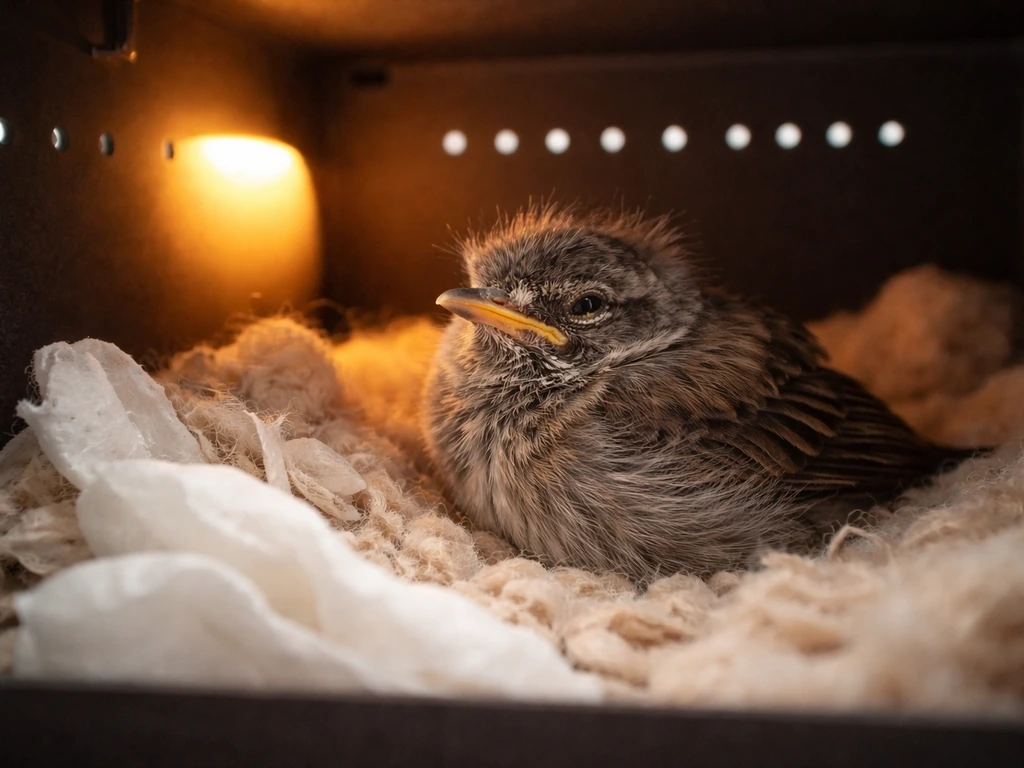
The single most helpful thing you can do right now is stop, slow down, and reduce stimulation around the bird. Put it somewhere warm, dark, and quiet, and leave it alone. That one step, done correctly, will do more to destress a bird than almost anything else you might try. Whether you've found a wild bird on the ground, a bird that flew into a window, or a pet bird that's panicking, the core principle is the same: less is more. Minimize handling, minimize noise, minimize your presence, and let the bird regulate itself. Then you can figure out what it actually needs.
How to Destress a Bird Right Now: Calm Safe Steps
Marcus Holloway
21 May 2026
First: Is this bird just scared, or is it a medical emergency?
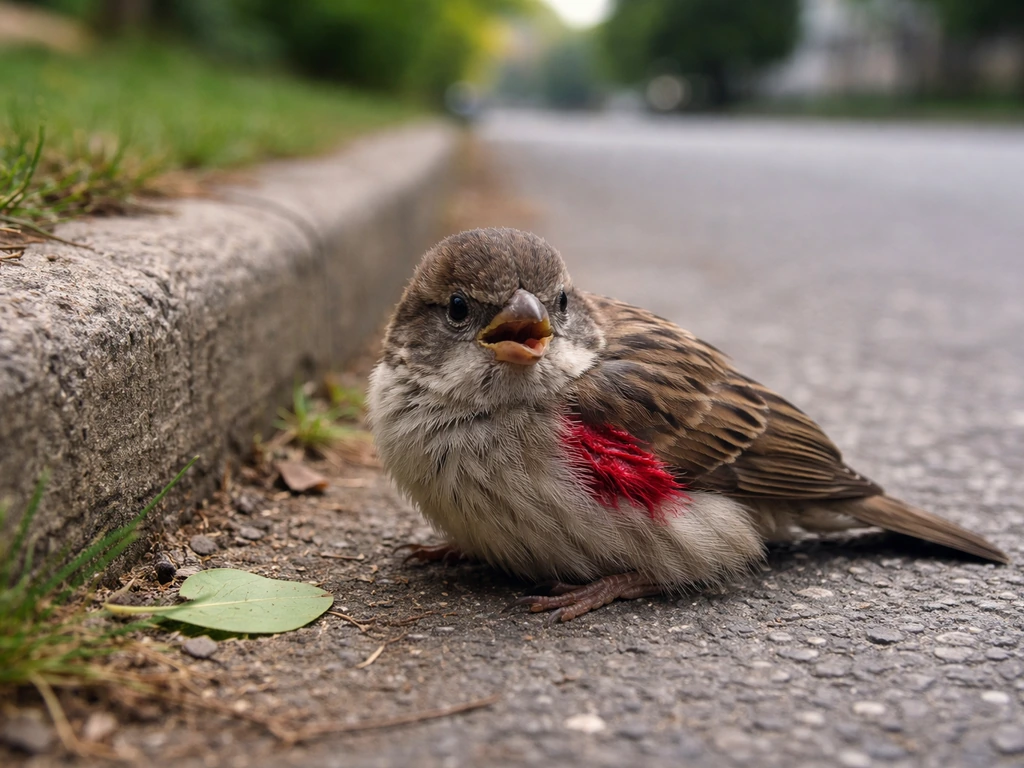
Before you do anything else, take ten seconds to look at the bird without touching it. A scared bird is alert, tries to escape, holds its body upright, and responds to your presence. That bird needs calm containment and quiet time. A medically distressed bird is something different, and it needs professional help fast, not just a dark box.
Look for these red flags that tell you this is a medical situation, not just fear: Severe difficulty breathing, including open-mouth breathing and gasping with a gaped mouth, is one of the emergency warning signs to treat as a medical situation right away.
- Open-mouth breathing, gasping, or panting (not from heat or recent exertion)
- Bleeding that is actively continuing, or blood coming from the mouth, nose, or eyes
- A wing hanging or dragging at an unnatural angle
- The bird cannot stand or keep its head upright
- Seizure-like trembling or complete unresponsiveness
- Labored breathing where the whole body rocks with each breath
If you see any of those signs, the bird still needs a warm, dark, quiet box right now, but you should also be calling a wildlife rehabilitator or avian vet at the same time. Do not wait to see if it gets better on its own. A bird in shock can take four to six hours to stabilize, and without professional guidance it may deteriorate quickly.
If the bird is alert, reactive, and physically intact (no visible injuries, no labored breathing), you're dealing with a frightened or stressed bird and the steps below are your path forward. If you are unsure whether you are dealing with a medical issue, double-check the red flags and then follow the steps in how to help a stressed bird.
Set up a calm, safe space before you do anything else
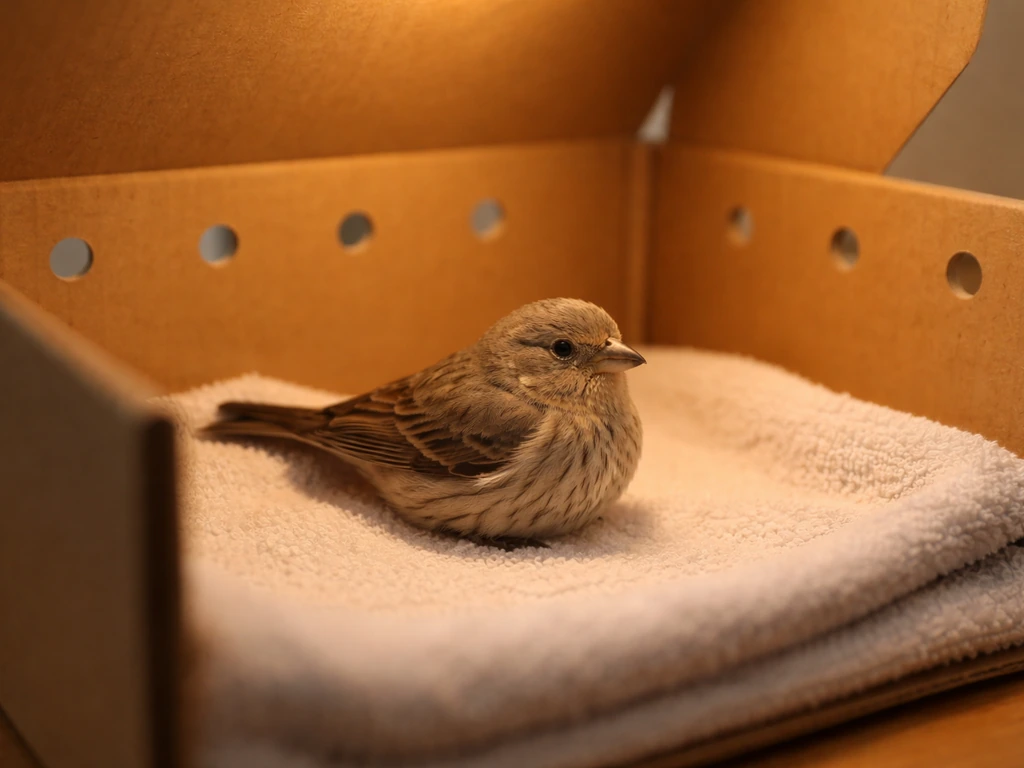
A cardboard box is one of the best tools you have right now. It's dark, it muffles sound, it limits the bird's visual field, and it prevents the bird from hurting itself trying to escape. Use a box that gives the bird enough room to sit without being crammed in, but not so large that it can flap and injure itself. Punch a few small ventilation holes in the sides if there aren't any.
Avoid wire cages for initial containment. Wire can shred feathers and cause injuries if the bird panics and thrashes against the sides. A solid-walled box is safer for transport and short-term housing.
Line the bottom with a non-slip surface like a folded paper towel or a piece of fleece. Place the box in the warmest, quietest room in your home, away from pets, children, TVs, and foot traffic. Darkness reduces stimulation and triggers a calming response in most birds. Keep the lid closed and resist the urge to check on it every few minutes.
Temperature matters a lot. Most injured or stressed birds benefit from gentle warmth, with an enclosure temperature of around 85°F being a commonly recommended baseline for ill or injured birds. You can achieve this by placing a heating pad set to low under one half of the box (never the whole floor, so the bird can move away from the heat if it gets too warm), or by placing a warm water bottle wrapped in a cloth near the bird. Check on the bird every ten to twenty minutes, especially early on, to make sure it isn't overheating.
One important exception: if the bird is showing signs of respiratory distress (open-mouth breathing, panting rapidly), do not use high heat. Provide only mild warmth and make sure there is good ventilation. Heat can worsen respiratory distress significantly.
How to handle the bird safely and minimize the stress you cause
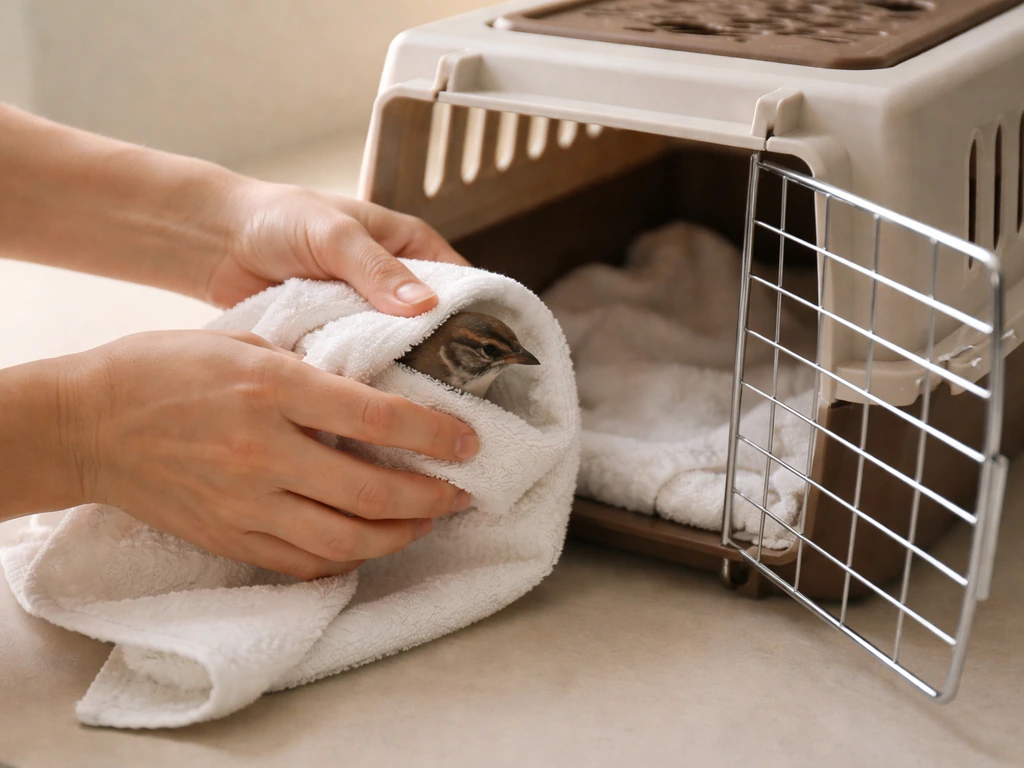
The safest rule is: handle as little as possible. Every time you pick up the bird, you're generating a stress response. That said, you do need to get it into the box, and sometimes you need to move it. Here's how to do that with the least harm.
For most small to medium birds, drape a lightweight towel or piece of fabric loosely over the bird from above, then gently scoop it up from underneath, keeping the wings folded against its body. Don't grip tightly. Birds breathe by expanding their chest wall, so squeezing the body can actually suffocate them. Hold firmly enough that the bird can't escape and injure itself, but loosely enough that you can feel the chest expand.
For larger birds like raptors, herons, or geese, a large towel or blanket works as a full-body wrap. Approach slowly, drape the towel completely over the bird to block its vision, then gather the wings against the body as you secure it. Be aware that raptors have powerful talons and herons have beaks that can strike at eyes, so stay cautious and get help if you're not confident.
Once the bird is in the box, close it and leave it alone. Talking to it, peeking in, or repeatedly opening the lid resets its stress response every time. If you need to transport it, keep the car radio off, drive smoothly, and keep the box away from direct air conditioning vents.
Do's and don'ts: mistakes that make things worse
Well-meaning people often accidentally make things significantly harder for a stressed bird. Here's a clear breakdown of what helps and what doesn't.
| Do | Don't |
|---|---|
| Use a solid-walled box with ventilation holes | Use a wire cage for initial containment |
| Keep the environment warm, dark, and quiet | Place near TVs, speakers, other pets, or children |
| Handle briefly and gently with a covering cloth | Handle repeatedly or for extended periods |
| Let the bird rest undisturbed between checks | Keep opening the box to check on it |
| Offer a shallow dish of water nearby once the bird is calm and alert | Force water or food into the bird's mouth |
| Call a wildlife rehabber or avian vet for guidance | Give any medication without veterinary instruction |
| Check for overheating every 10-20 minutes | Leave a heat source running unmonitored |
| Keep the car quiet during transport | Play music or have loud conversations during transport |
Forcing food or water is one of the most dangerous things you can do. A bird that is in shock, injured, or not fully alert can aspirate liquid directly into its lungs, which is fatal. Don't offer food or water during capture, handling, or transport. Even with good intentions, this step can kill the bird. Wait until the bird is visibly calm, alert, and upright before placing a shallow dish of water nearby, and let the bird choose to drink on its own.
Similarly, never apply any medication, antiseptic, or ointment to a bird without direct instruction from a vet. Medications that are safe for other animals can be toxic to birds, and covering a wound can trap bacteria and worsen infection.
Once the bird is calmer, do a quick basic assessment
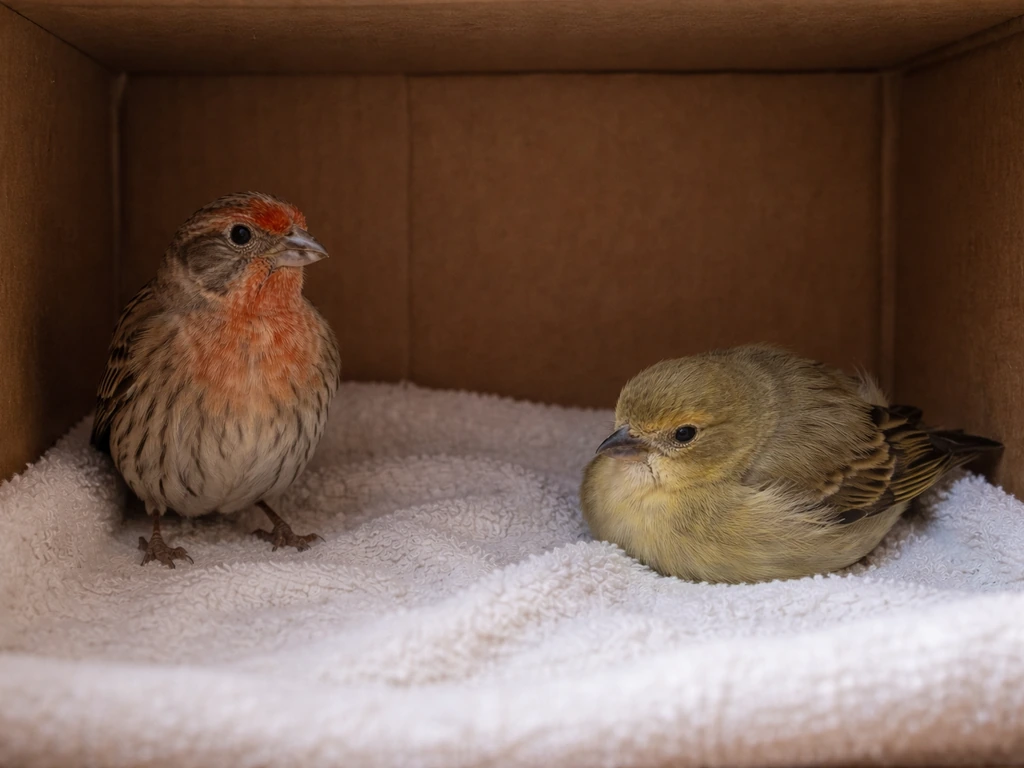
After the bird has had thirty to sixty minutes of quiet rest, take a careful look without fully removing it from the box. You're looking for a few things that will guide your next decision.
- Posture: Is the bird sitting upright, or is it hunched, leaning, or lying flat? Upright is a good sign.
- Breathing: Is it calm and closed-mouth, or still labored and open-mouthed?
- Eyes: Are they open, alert, and tracking movement? Closed or half-closed eyes in a bird that isn't sleeping are a concern.
- Wings: Are both held symmetrically against the body, or is one drooping?
- Legs: Can the bird grip a surface or stand, or does it keep falling over?
- Visible wounds: Any cuts, bleeding areas, or exposed tissue you didn't notice before?
A bird that is upright, alert, breathing calmly, and showing no visible injuries may simply need quiet rest before it can be safely released (for wild birds) or returned to its normal environment. A bird that remains hunched, lethargic, breathing poorly, or unable to stand after that rest period needs professional evaluation.
Also check for signs of hypothermia: shivering, extreme weakness, or a cold feel to the feet and body. A hypothermic bird needs gradual warming immediately. Signs of overheating include panting with the beak open, holding wings away from the body, and visibly distressed rapid breathing. If you see overheating, reduce or remove the heat source and ensure airflow.
Supportive care: what you can safely provide (and what you should leave to professionals)
Supportive care is appropriate only for birds that are alert, calm, and not showing signs of serious injury or illness. Think of it as bridge care while you arrange proper help, not a substitute for it. If your goal is to cure a depressed bird, supportive care is still only the first step, and a wildlife rehabilitator or avian vet can guide the right treatment for the underlying cause bridge care.
Warmth
Gentle, consistent heat is the most universally helpful thing you can provide to a stressed, injured, or orphaned bird. A heating pad on low under half the box, a warm water bottle wrapped in cloth, or a heat lamp positioned to one side of the enclosure (never directly above the bird) can all work. Aim for a warm but not hot environment, roughly 85°F for most ill or injured birds. Neonates and hatchlings need more consistent warmth because they can't regulate their own body temperature at all.
Hydration
Only offer water to a bird that is visibly alert, upright, and responsive. Place a shallow dish of clean water in the box and let the bird drink on its own. Never tilt a bird's head back and drip water into its mouth, and never use a syringe to force fluids unless you have been specifically instructed by a vet. The risk of aspiration is real and serious. If the bird isn't drinking on its own, that's a signal that it needs professional evaluation for proper hydration.
Food
Do not attempt to feed an injured or very stressed bird without veterinary guidance. Even for birds that seem alert, incorrect food choices or force-feeding can cause serious harm. If you're caring for an orphaned bird or need feeding guidance beyond the immediate stabilization period, a wildlife rehabilitator is the right person to consult. A bird that refuses to eat and is not alert enough to perch should be seen by a vet immediately.
When to call a wildlife rehabber or avian vet right now
Some situations don't allow for a wait-and-see approach. Contact a professional immediately if you observe any of the following:
- Active bleeding that isn't stopping
- Blood coming from the mouth, nose, or eyes
- Open-mouth breathing or gasping after the bird has been at rest
- A wing, leg, or neck held at an abnormal angle
- The bird cannot stand or keep its head upright
- Seizures, tremors, or apparent unconsciousness
- The bird is a baby (naked, downy, or with pin feathers) and appears cold or injured
- The bird has been attacked by a cat (cat saliva introduces bacteria that require antibiotic treatment even if wounds look minor)
- The bird has not improved after an hour of quiet rest in a warm, dark space
- You're unsure and the bird looks wrong to you
To find a licensed wildlife rehabilitator in your area, search your country's national wildlife rehab directory or contact your local animal control office, nature center, or veterinary clinic. In the US, the National Wildlife Rehabilitators Association (NWRA) and the Wildlife Rehabilitation Information Directory (WRID) are good starting points. Have the box ready and keep the bird calm while you make the call.
Don't delay calling a professional because you want to try first aid longer. The guidelines are clear: do not postpone getting a bird to a vet in order to apply home care, except for stopping active excessive bleeding if it is safe to do so. The Victorian Wildlife Rehabilitation Guidelines (Part B , Mammals) note that you should not delay transfer to a veterinarian and warn against giving medications unless under veterinary guidance do not delay transfer to a veterinarian.
After the immediate crisis: setting things up to prevent repeat stress
Once the bird is stable, whether you're returning a wild bird to the outdoors or helping a pet bird recover, there are a few things that make a real difference in preventing a repeat episode.
For wild birds being released after a window strike or brief containment: wait until the bird is fully alert, standing, and responsive before opening the box outdoors. Set the open box on the ground in a quiet, sheltered spot and step back. Let the bird leave on its own timeline. Don't toss it into the air or rush it out. If it doesn't leave within a few hours or seems unsteady, call a rehabber.
For birds in active rehabilitation or recovery: keep the enclosure in the quietest part of your home. Limit the number of people who interact with the bird. Cover part of the enclosure to give the bird a sense of shelter. Minimize handling to necessary care only. Human imprinting is a real concern with wild birds, and excessive contact can reduce their chances of a successful return to the wild.
For pet birds that experienced a fear or panic episode: identify what triggered the stress and address it. Common triggers include sudden loud noises, other pets in the room, unfamiliar visitors, or being grabbed unexpectedly. Give the bird time to settle, offer its familiar food and environment, and avoid forcing interaction while it's still unsettled. Helping a bird calm down after a scare, and understanding why it got scared, goes a long way toward preventing the next episode.
If you're working through a longer recovery process after an injury or illness, the guidance on how to rehabilitate a bird and how to help a stressed bird will give you more detailed support for what comes next. The immediate goal right now is simple: quiet, warm, dark, and hands-off. To learn exactly how to comfort a bird in these first moments, focus on quiet reassurance, gentle warmth, and minimal handling. That foundation is where recovery starts. If the bird still seems persistently depressed after it has stabilized, consider checking with an avian vet for targeted next steps on how to cure a depressed bird.
FAQ
How long should I keep a bird in a warm dark box before I check again?
For fear or mild stress, start by leaving it alone and rechecking after about 30 to 60 minutes. If it’s improving, you can continue quiet rest. If there is no change or breathing seems abnormal, treat it as medical and contact a rehabber or avian vet right away.
What if the bird keeps trying to escape or bangs around the box?
Some thrashing early on is common, but repeated frantic attempts can raise injury risk. Keep the box in a darker, quieter spot, avoid opening the lid, and make sure the box is the right size (enough room to sit, not so large that it can flap wildly). If it remains highly panicked beyond the first short rest period, that’s a sign to escalate to professional help.
Can I use a towel “tent” or travel carrier instead of a cardboard box?
A cardboard box is ideal for muffling sound and limiting vision, but a solid-walled container can work if it is dark enough and has ventilation. Avoid carriers with bars or hard interior corners, because sudden movement can cause feather loss or head trauma. If you only have a carrier, cover most of the sides to reduce visual stimulation, while keeping airflow.
Should I warm the bird if it’s wet or freshly found outside?
Yes, but do it gradually and avoid overheating. Use mild warmth on only one side so the bird can move away if it gets too hot, and ensure the enclosure is ventilated. If the bird is very wet, let it warm in a calm environment before attempting any further handling.
How do I tell the difference between stress breathing and respiratory distress?
Mild stress often includes fast movement or alert posture, while respiratory distress is specifically breathing difficulty, such as open-mouth breathing or rapid panting. If you see open-mouth breathing, persistent rapid breathing, or the bird keeps gasping, reduce heat and provide airflow, then contact a professional immediately.
Is it okay to offer electrolyte water or juice instead of plain water?
No, stick to clean water only, and only if the bird is visibly alert and upright. Flavored liquids or electrolyte products can disrupt hydration and increase aspiration risk if the bird is not swallowing normally.
What should I do if the bird won’t drink after I’ve warmed it?
Do not force fluids or keep trying repeatedly. If it remains upright but refuses to drink after quiet stabilization, or if it seems lethargic or unable to stand, that can indicate a health issue. Contact an avian vet or wildlife rehabilitator for proper hydration guidance.
Can I use a heat lamp at home?
Only with careful placement. If you use one, position it to warm one side of the enclosure, keep it away from the bird so it cannot make direct contact, and ensure ventilation. Do not aim it directly above the bird, because overheating and respiratory worsening can happen quickly.
Do I need to keep the bird in darkness 24/7?
Darkness helps reduce stimulation, especially in the first hours. However, once stabilized, you can gradually return to normal indoor light levels while still keeping noise and handling minimal. The key is preventing new stressors, not maintaining total darkness indefinitely.
My pet bird is panicking, should I separate it from the flock and turn off lights and sound?
Usually, yes. Reduce stimulation by moving it to a quiet area with minimal foot traffic, keeping lights calm, and limiting people and other pets. If the bird is showing serious breathing symptoms or collapses, treat it as urgent medical and contact an avian vet.
What’s the safest way to move the bird if I must transport it immediately?
Minimize handling and do it quickly and confidently. Use the towel method described in the article to prevent wing flapping and keep vision blocked, then place the bird into the prepared container and leave it closed. During transport, drive smoothly, keep the car quiet, and avoid direct airflow from vents.
When should I release a wild bird back outside?
Only release when it is fully alert, standing normally, and responsive. Set it down in a sheltered, quiet spot and step back so it can leave on its own. If it does not depart within a few hours or appears unsteady, contact a rehabber rather than trying to “help” it fly.
Should I check the bird’s injuries by removing it from the box?
Avoid unnecessary handling. You can look through the opening or briefly observe without taking it out, then decide whether professional help is needed. If you suspect serious injury, bleeding, or abnormal breathing, prioritize contacting a professional rather than repeated inspection attempts.
Next Article
How to Comfort a Bird: Safe First Steps for Injured or Orphaned
Step-by-step how to comfort a bird: calm first, add warmth shelter, avoid feeding mistakes, and know when to get help.