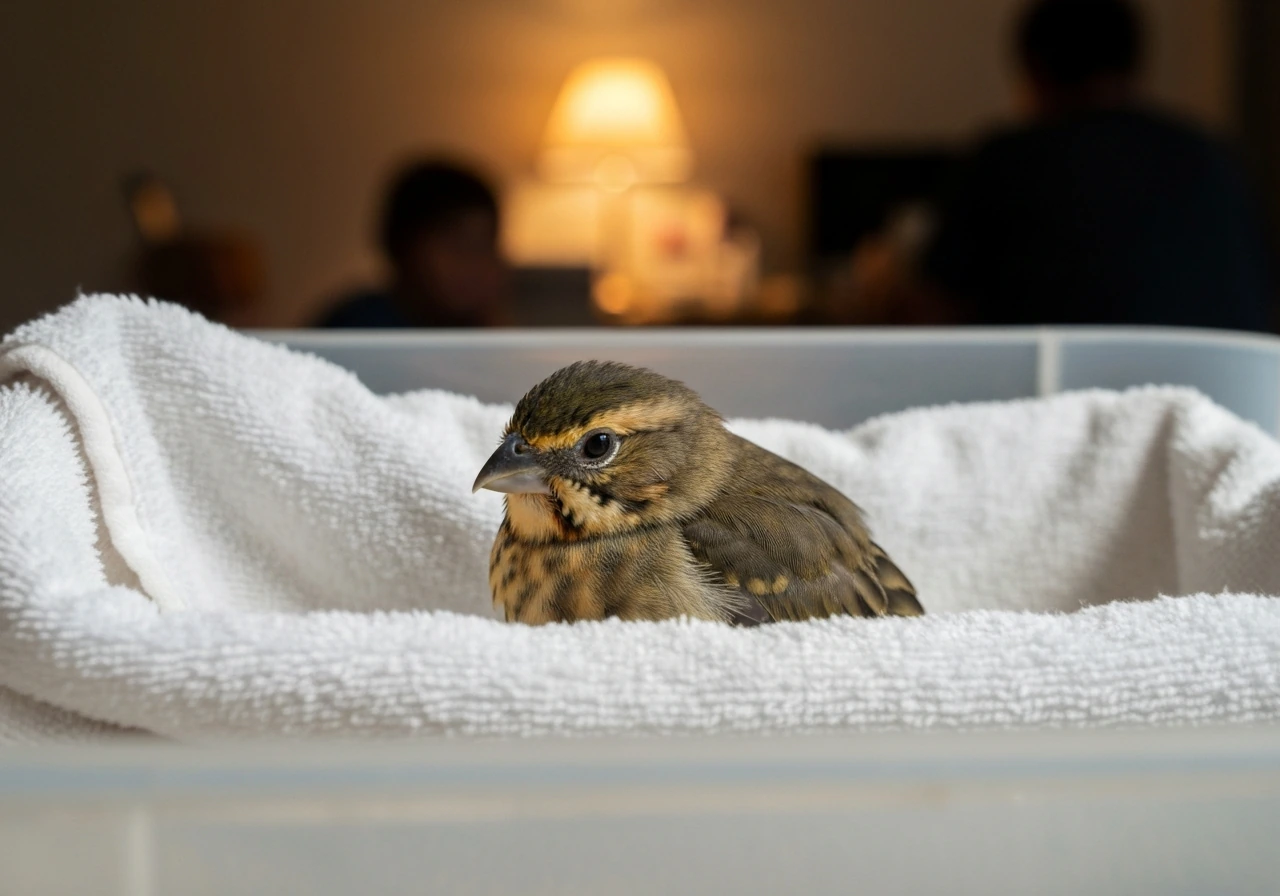
The most important thing you can do for a scared wild bird is stop moving. Freeze where you are, lower yourself slowly if you can, and give the bird space. Most frightened birds just need a few moments without pressure before they recover and fly off on their own. The problem is that a bird sitting on the ground, not flying, looking panicked could be scared, injured, sick, or orphaned, and those situations call for very different responses. This guide walks you through how to read the situation quickly and what to do at each step.
How to Calm a Scared Bird Safely: Step-by-Step Guide
Marcus Holloway
29 Apr 2026
How to tell if it's fear, injury, or illness (and when to get help right away)
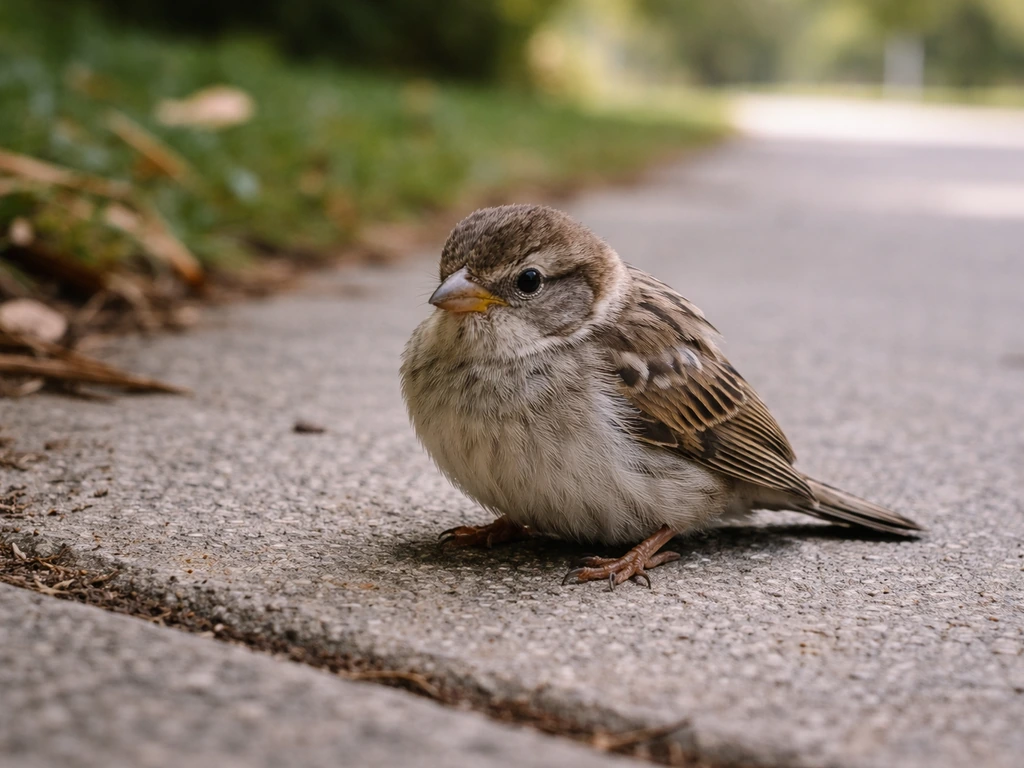
A bird that's only scared will usually fly away the moment it feels safe to do so. It may hop awkwardly or flap with effort, but it moves with purpose and eventually gets airborne. If it does, you're done. Watch from a distance for a minute or two and let it go.
A bird that stays on the ground after you've backed off is telling you something more is going on. If you are unsure whether the bird is frightened versus injured or ill, follow the assessment steps in this guide before deciding on the next move how to tell if it's fear, injury, or illness. That's your cue to look more closely without touching. Watch for these signs that point toward injury or illness rather than pure fear:
- Visible wounds, bleeding, or lacerations anywhere on the body
- A wing drooping asymmetrically or held at an odd angle
- Inability to stand, or standing with legs splayed out
- Eyes swollen shut or only partially open
- Head twisted sharply to one side or appearing upside down
- Open-mouthed, labored, or visibly effortful breathing
- Complete stillness and unresponsiveness even when you're close
Any one of those signs means the bird needs professional assessment, not just a quiet corner to recover in. Head trauma and internal injuries in particular may not be obvious from the outside, so a bird that looks 'mostly okay' after a window strike can still have serious internal damage. Don't wait and see when you spot red flags like these.
One more situation to think about: young birds on the ground. Cornell Lab of Ornithology notes that many fledglings found on the ground are often healthy, and if they match the “fledgling” description with parents nearby, they should be left alone rather than taken in young birds on the ground. A fully feathered fledgling hopping around near shrubs is almost certainly fine. Its parents are likely nearby and it's in the normal leave-the-nest phase. An unfeathered nestling on bare ground, though, has either fallen or been pushed from a nest and genuinely needs help. If you can locate the nest and safely return it, do so. Birds don't reject young because of human scent, despite the old myth.
Immediate steps to calm a wild bird safely
The fastest way to reduce a wild bird's fear is to remove the perceived threat, and in most cases, you are the perceived threat. If you need a quick plan for how to calm a bird down safely, start by removing the perceived threat and giving it space. These steps work whether the bird ends up flying off on its own or needs to be contained for transport.
- Stop all movement the moment you notice the bird is frightened. Sudden stops are less alarming than continued forward motion.
- Back away slowly and give at least 10 to 15 feet of distance. Crouching or sitting low appears less threatening than standing upright.
- Keep quiet. Talking to the bird, even softly, can read as a continued threat. Silence is more calming.
- Remove other people, children, and pets from the area. A dog or cat anywhere in view will keep a bird's stress response at maximum.
- Reduce environmental noise if you can: turn off nearby machinery, mowers, or anything loud in the immediate vicinity.
- Wait and observe for several minutes before doing anything else. A genuinely scared but uninjured bird will usually fly off within that window.
If the bird hasn't moved after five or ten minutes and you've already given plenty of space, move to the next phase of assessment and, if needed, careful containment.
Approach, handling, and creating a low-stress environment
If you've determined the bird can't fly and needs to be contained, the goal from this point is to minimize handling time and keep every action slow and deliberate. Chasing a bird, even a hurt one, causes massive stress and can make injuries worse. Never chase.
How to approach
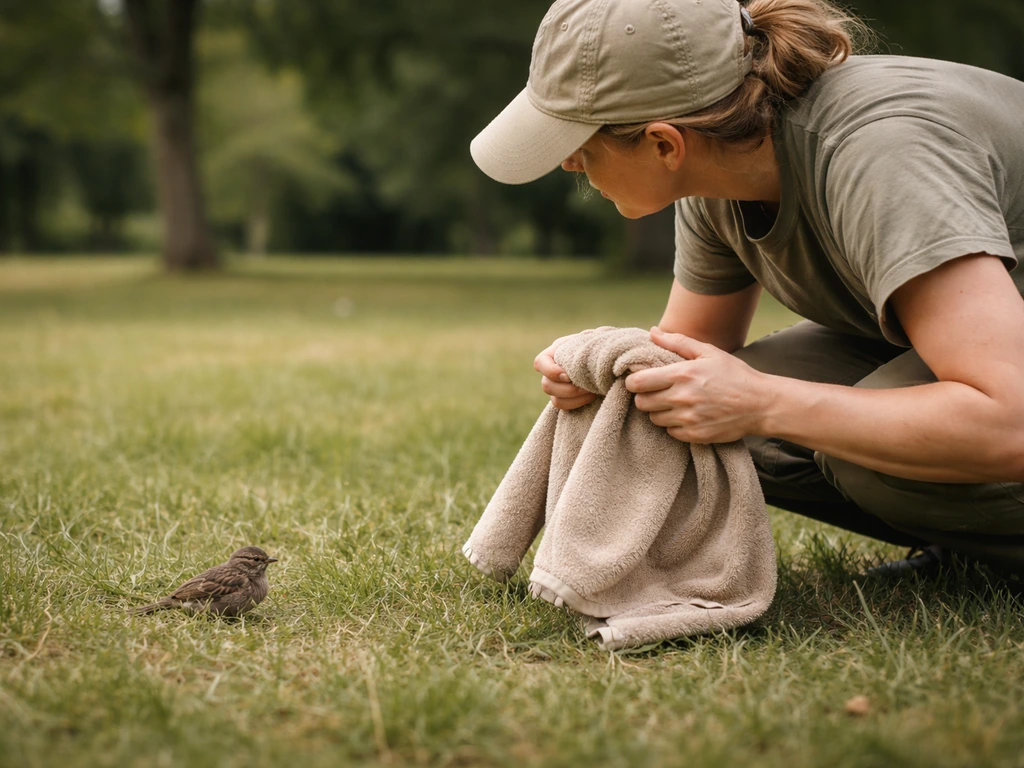
Move toward the bird in a slow arc rather than a straight line. Keep your body low and avoid direct eye contact, which birds read as predatory. Speak as little as possible and keep any movement gradual. Have a light towel in your hands before you get close.
How to handle safely
Drape the towel gently over the bird, ideally covering its head. Covering the head is one of the most effective ways to reduce panic: birds calm down significantly when they can't see. Once the towel is over the bird, place one hand on each side of its body so the wings are held gently against its sides. Lift with both hands, keeping the bird's body supported. Then lower it into a prepared box and slip the towel out before closing the lid.
Wear gloves if you have them, especially for larger birds like raptors or waterfowl, which can bite or scratch hard enough to break skin. For small songbirds, bare hands work fine as long as you move slowly and hold gently.
Setting up a low-stress temporary space
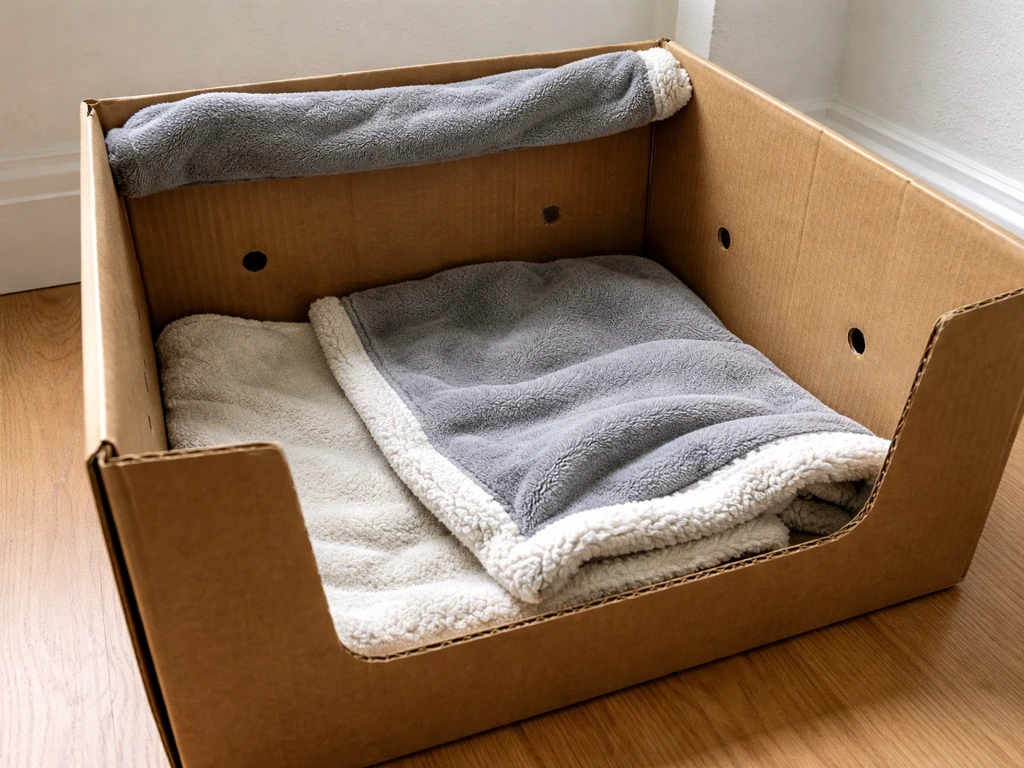
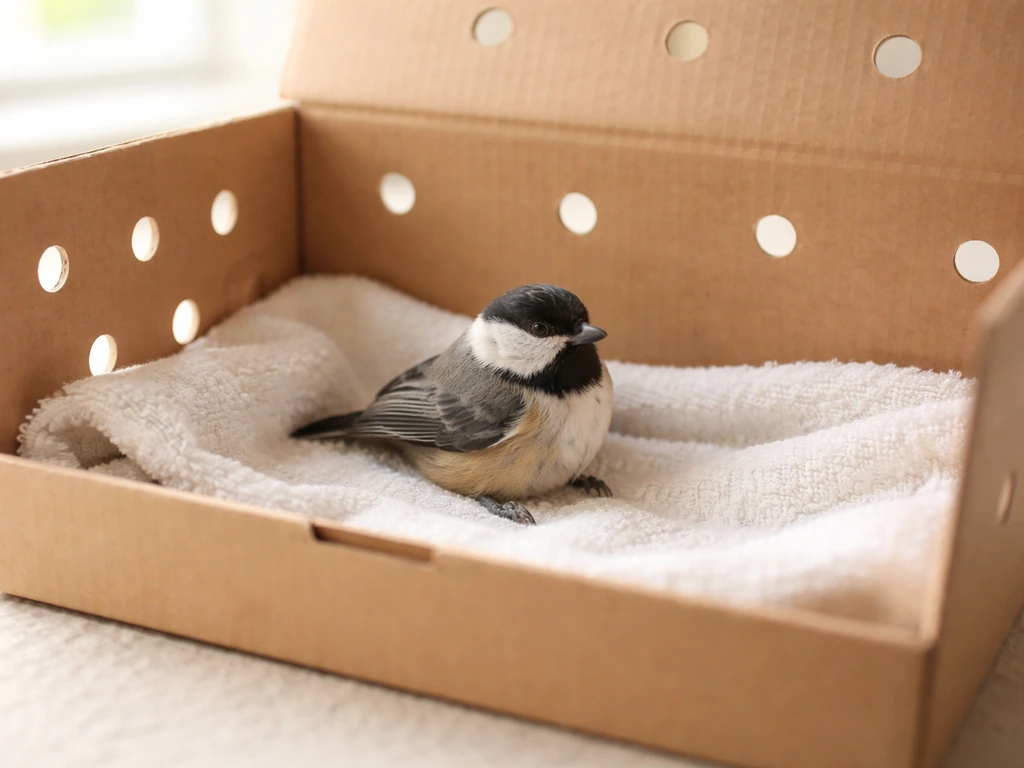
The box itself matters. Use a cardboard box or container with ventilation holes (a few small punctures work). Line the bottom with a non-looping towel or piece of fleece so the bird can grip without its feet getting tangled. Don't use terry cloth or loose-weave fabrics where toenails can snag. Don't put food or water inside. Close the box, place it somewhere dark, warm, and genuinely quiet, away from household noise, pets, and foot traffic. Darkness reduces panic significantly. Never put two birds in the same container.
What to do next: warmth, food, water, and transport
Temperature and warmth
Injured and stressed birds lose body heat fast, especially small ones. A room-temperature environment of around 70 to 75 degrees Fahrenheit is a reasonable target. If it's cold, you can place one end of the box on top of a heating pad set to the lowest setting, leaving the other end unheated so the bird can self-regulate. Never put a heat source under the entire box. Don't use a heat lamp directly over a small bird.
Food and water: don't
This is one of the most important rules and also one of the most commonly broken. Do not give the bird food or water unless a licensed wildlife rehabilitator or veterinarian specifically tells you to. Food can make an injured bird sick and may interfere with any treatment the bird needs. Never put food or water directly into a bird's mouth. Never give a bird milk or any dairy. Even well-intentioned feeding is a real risk, so hold off until you've spoken to a professional.
Getting the bird to help
Once the bird is boxed and settled, your next step is finding a permitted wildlife rehabilitator or avian-experienced veterinarian and getting the bird there as quickly as possible. Transport in the closed, dark box. Keep the car quiet, avoid music or loud conversation, and drive smoothly. The transport environment should stay dark and as stress-free as the box setup you created at home.
Common mistakes that make things worse
Most mistakes people make come from good intentions. Knowing what to avoid is just as useful as knowing the right steps.
- Chasing the bird: this exhausts and terrifies it, and can turn a survivable injury into a fatal one.
- Grabbing the bird bare-handed without covering the head first: the bird goes into full panic and may injure itself thrashing.
- Offering food or water: even a bowl of water can aspirate into the lungs of a weak bird. Skip it entirely.
- Using a wire cage, crate with wide bars, or any container the bird can catch its beak or toes in: this causes additional injury.
- Keeping the bird somewhere bright or noisy: light and sound sustain the fear response. Darkness genuinely helps.
- Repeatedly checking on the bird: every time you open the box, you restart the stress response. Peek only when necessary.
- Assuming all 'resting' birds are fine: a bird sitting still with fluffed feathers and closed eyes is not napping. It's using the last of its energy.
- Attempting home treatment, including home remedies or human medications: these can cause serious harm.
DIY care, wildlife rehab, or a vet: how to decide
Here's a straightforward way to think about it:
| Situation | What to do |
|---|---|
| Bird is scared but flies away on its own | Nothing. It's fine. Walk away. |
| Fledgling on the ground, fully feathered, parents visible or likely nearby | Leave it. Observe from a distance. Only intervene if a cat or predator is present. |
| Nestling (no feathers or very sparse) on the ground, nest locatable | Return to nest if safe to do so. If nest is gone, contact a rehabilitator. |
| Bird cannot fly, no visible injury, seems alert | Box it, keep it warm and dark, contact a wildlife rehabilitator today. |
| Bird has visible injury: bleeding, drooping wing, obvious wound | Box it carefully using towel method, contact a wildlife rehabilitator or vet immediately. |
| Bird shows neurological signs: head tilt, seizure-like movement, can't stand | This is urgent. Contact an avian vet or wildlife rehabilitator right away. |
| Window strike, bird stunned but sitting upright | Box it, keep dark and quiet, monitor. If not recovered in 1 hour, get professional help. |
| Bird is limp, unresponsive, or has eyes swollen shut | Emergency. Get to a vet or rehabilitator as fast as possible. |
For finding a permitted rehabilitator near you, the National Wildlife Rehabilitators Association maintains a searchable directory, and Animal Help Now offers an emergency wildlife line. Always confirm the person has a valid wildlife rehabilitation permit, since handling migratory birds without one is illegal under federal law in the United States. Your state wildlife agency also keeps a list of permitted facilities.
The core principle behind everything here is the same: do less, not more. The less a scared or injured bird is handled, chased, fed, or disturbed, the better its chances. Your job in most situations is simply to create a safe, calm container and get it to someone qualified as quickly as you can. If the bird just needs to destress, focus on keeping it calm and undisturbed rather than trying hands-on DIY care calm down. If you suspect the bird is depressed or lethargic, the safest way to help is to seek guidance from a permitted wildlife rehabilitator rather than trying to treat it yourself. If you suspect the bird needs longer-term recovery, this is when proper guidance on how to rehabilitate a bird becomes essential. That's genuinely the most helpful thing you can do.
FAQ
How long should I wait before I decide a “scared” bird needs more help?
If the bird remains grounded after you back off and it has had about 5 to 10 minutes with plenty of space, treat it as more than fear. At that point, reassess for injury, illness, or orphaning risk and skip any further attempt to “calm it down” on your own.
What if the bird won’t move at all, even when I give it space?
Complete stillness can be a sign of shock, illness, or serious injury rather than simple fear. Avoid approaching repeatedly. Keep distance, reduce noise, and plan for careful containment and professional help if it still does not respond after the waiting window.
Can I use a carrier, pet crate, or shoebox to contain a bird?
You can use a ventilated box or container with non-tangling lining, but avoid tight containers without airflow (plastic tubs, sealed bins, or anything that traps heat). Ventilation holes are important, and the bottom should be something it can grip with minimal risk of foot tangles.
Should I cover the bird right away, or only if it needs to be contained?
Covering is most useful when you are close enough to contain it. For a purely scared bird that is likely to fly away, the safer approach is to freeze and create space first. Use the towel-cover method when the bird is staying put and you need to move it to a box.
Is it safe to touch a scared bird to “help it calm down”?
Minimize contact. Touching and handling are often what escalates stress and can worsen injuries, even if the bird seems small or calm. Only handle if you have to contain it, and then prioritize quick, gentle support with minimal handling time.
What signs mean I should stop treating this as fear and assume injury or illness?
Look for red flags such as bleeding, visible wounds, abnormal posture, difficulty breathing, persistent wobbling, inability to stand, severe lethargy, a ruffled or fluffed-up “chilling” look for more than a moment, or obvious neurologic signs like circling or inability to focus.
If I find a baby bird, how do I tell fear from a nestling that truly needs help?
A fully feathered fledgling that is hopping near cover is often in its normal learning phase. An unfeathered nestling on bare ground is more likely displaced and needs assistance. If you can locate the nest safely and retrieve it without delay, do so, but otherwise focus on contacting a permitted rehabilitator.
Do birds get sick from human scent?
Not in the way the old myth suggests. Human scent is not a reason to abandon a young bird. The bigger concern is whether the bird is actually displaced, injured, or in immediate need of warmth and professional care.
What should I do if the bird is near my house but keeps getting startled by people or pets?
Create a quieter “buffer zone” by moving people and pets away, reducing foot traffic, and keeping the area calm and dim where possible. Do not chase. If it still cannot leave safely, proceed to a planned containment and transport instead of repeated attempts that keep it panicked.
Can I give water or food to keep the bird from getting hungry while I wait for help?
Do not. Do not offer food or water unless a licensed wildlife rehabilitator or veterinarian instructs you to, and never put anything directly into the mouth. Feeding the wrong thing can cause illness and can interfere with later treatment.
Should I warm the bird if it seems cold?
Yes, but carefully. Provide a room-temperature target (around 70 to 75°F), and if it is colder, you can warm one end of the box using a heating pad on the lowest setting so the bird can self-regulate. Avoid heating the entire box and never use a heat lamp directly over a small bird.
Is milk or other “home remedies” ever appropriate?
No. Do not give milk or dairy. Even well-intentioned DIY feeding increases the risk of aspiration and digestive problems, and it can complicate rehabilitation.
How should I transport the bird to a wildlife rehabilitator or vet?
Keep it in the closed, dark, quiet box. Drive smoothly, avoid loud music or conversation, and keep the environment stress-free. Do not open the lid to check on it during transport.
What are the most common mistakes people make when trying to calm a bird?
The usual problems are repeated approaches, chasing, direct eye contact from close range, forcing food or water, putting the bird in an unsafe container without proper ventilation, and delaying professional help after obvious red flags appear.
Do I need to worry about legality if I handle a wild bird?
Yes. In the United States, handling migratory birds without the proper permit is illegal, which is why you should confirm the person or facility you contact has a valid wildlife rehabilitation permit. If you are unsure what species it is, treat it as wild and focus on minimal handling and getting it to permitted help.
Next Article
How to Cure a Depressed Bird: Safe Steps and Red Flags
Learn safe steps to help a lethargic bird, spot red flags, avoid harmful care, and get the right vet or rehab fast.