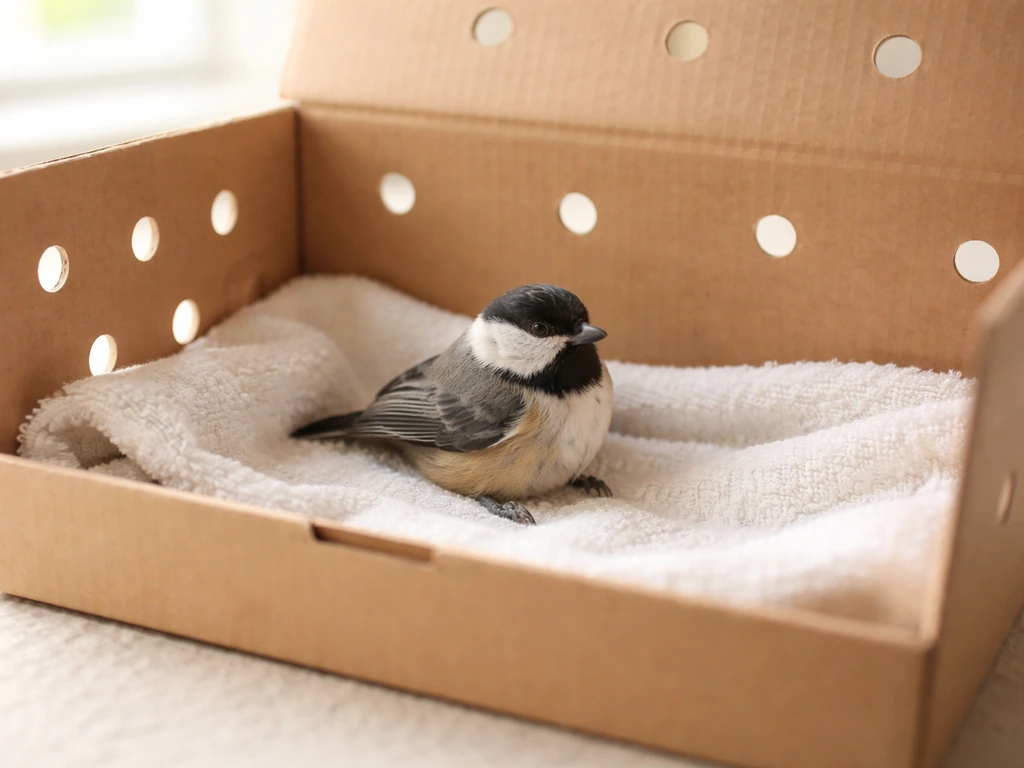
If you've just found a bird that's injured, stunned, or clearly in distress, the single most important thing you can do right now is put it somewhere warm, dark, and quiet, and then stop. If you suspect the bird is depressed or unusually lethargic, still treat it as a medical situation and contact a wildlife rehabilitator right away depressed bird. Don't feed it, don't give it water, don't keep checking on it. USFWS guidance advises not to try to force feed or give water to any bird or animal that you have confined to a box blank" rel="noopener noreferrer">force feed or give water to any bird or animal confined to a box. That dark, calm space is not doing nothing, it's giving the bird the best possible chance while you make one phone call to a wildlife rehabilitator.
How to Comfort a Bird: Safe First Steps for Injured or Orphaned
First: figure out what situation you're actually dealing with
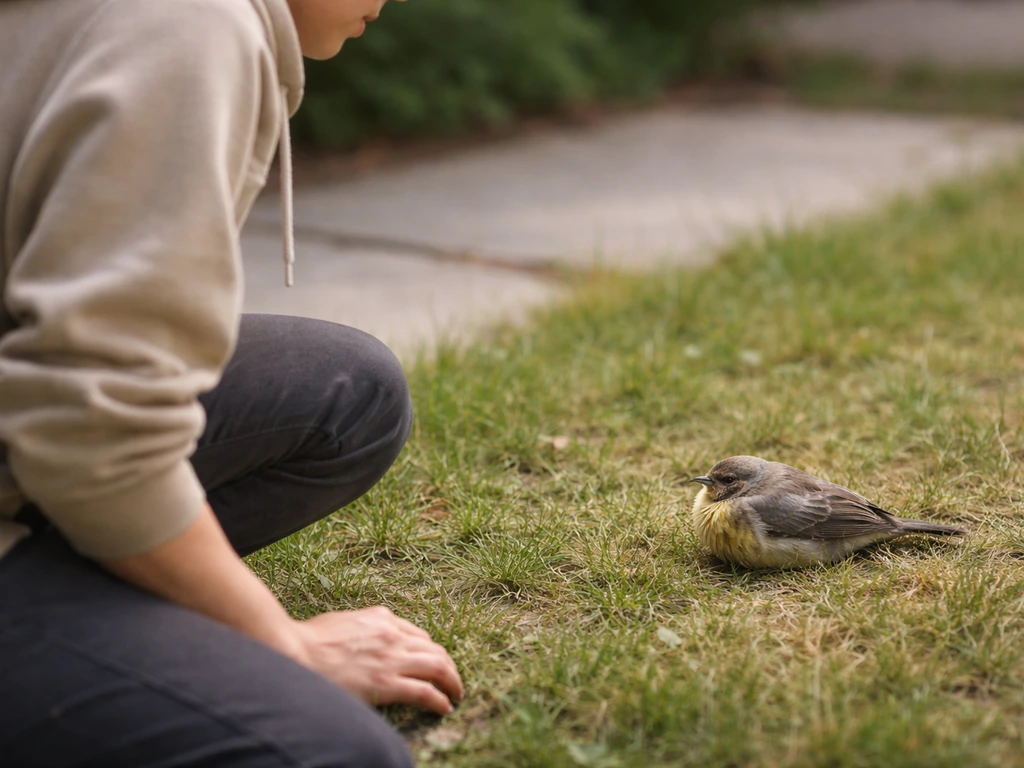
Before you touch the bird, take 30 seconds to assess. The right response depends on what's going on, and rushing in can make things worse.
- Stunned or window-struck bird: The bird is sitting on the ground but looks physically intact, maybe blinking slowly or breathing hard. It may just need 30 to 60 minutes to recover on its own. Contain it safely and wait.
- Visibly injured bird: You can see bleeding, a wing hanging at a wrong angle, an open wound, or the bird is unable to stand. This bird needs professional care, not home treatment.
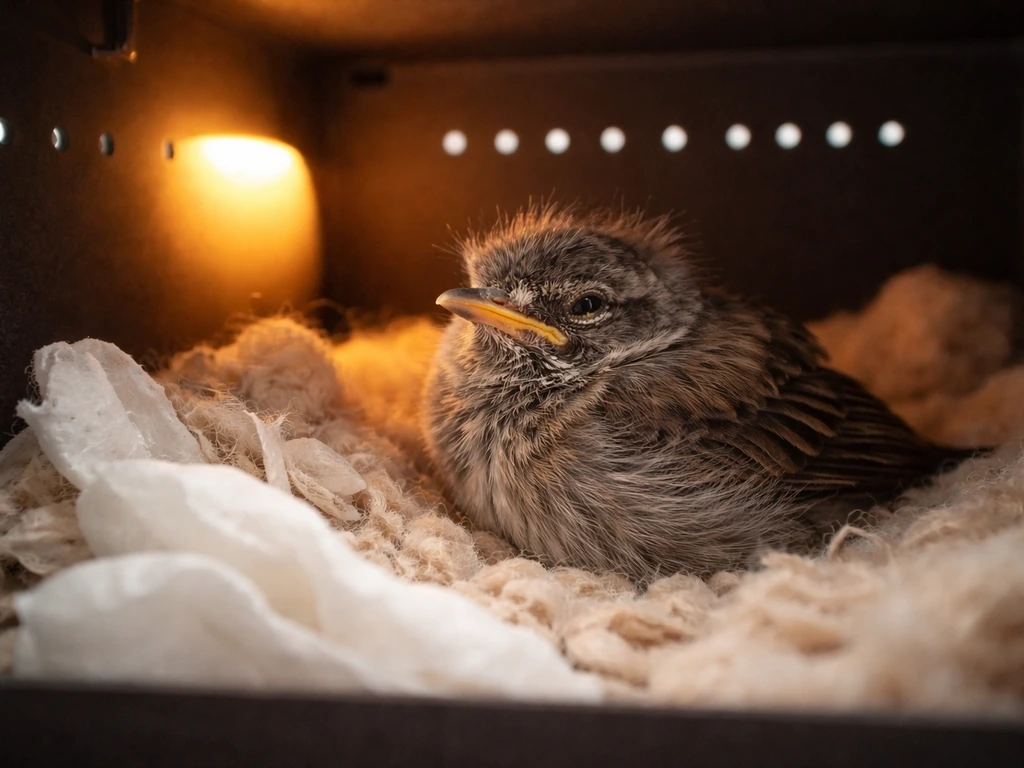
- Orphaned baby or fledgling: A featherless or downy bird with no nest visible, or a hopping bird with short tail feathers (a fledgling, which is normal to find on the ground and usually does not need rescuing). If you're unsure, call a rehabilitator before picking it up.
- Sick bird: Fluffed feathers, closed eyes, labored breathing, discharge from eyes or nostrils, or seizure-like trembling. This bird is in serious trouble and needs a vet or rehabber fast.
- Pet bird emergency: If a domestic bird has escaped, been attacked by another animal, or is showing sudden illness, the approach is similar but your vet is the right call, not a wildlife rehabilitator.
If the bird is in immediate danger from a cat, dog, car traffic, or direct sun, move it to safety first. Everything else comes after.
How to calm a frightened bird without making things worse
A bird that looks injured might actually be in shock. Shock in birds looks like stillness, glazed eyes, rapid breathing, and zero response to you approaching. That's not calm, that's a bird whose system is overwhelmed. The kindest thing you can do is reduce every possible stressor immediately.
Lower your voice to a near-whisper or say nothing at all. Move slowly and deliberately. Don't hover over the bird, predators come from above, and your shadow triggers panic even in a bird that seems unresponsive. Keep children and pets out of the room. Turn off loud music or TV. Close blinds if possible so the space is dim.
You don't need to comfort the bird by touching it or talking to it constantly. Constant handling is stressful, not soothing. The best thing you can do for a frightened or shocked bird is leave it alone in a safe container. If you’re wondering how to help a stressed bird, the key is to reduce stimulation and give it a calm, safe space. Audubon recommends giving the bird about an hour of undisturbed quiet before taking additional action, and that guidance applies here too.
If you're dealing with a bird that's panicking and flapping (rather than stunned), the fastest way to calm it is to cover it gently with a light towel. If the bird is panicking, you can also use calm-voice and slow-movement steps from how to calm a scared bird to keep it from escalating cover it gently with a light towel. Darkness is genuinely calming for most birds, including raptors. That simple step will do more than any amount of soothing words.
Setting up a safe temporary space
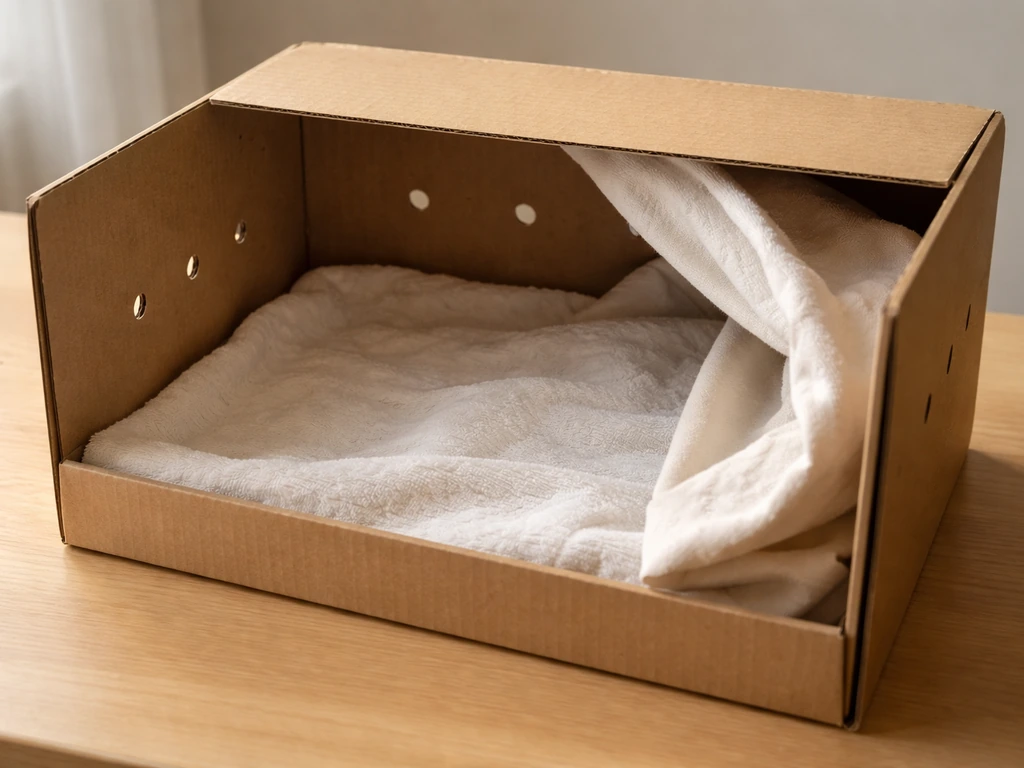
A cardboard box, even a shoebox for smaller birds, is the ideal temporary enclosure. It's dark, enclosed, and easy to ventilate. Here's how to set it up properly:
- Choose a box large enough that the bird can stand upright but not so large it can flap around and injure itself further.
- Poke several small air holes in the lid or upper sides — ventilation at the top is better than at the base, which can cause drafts.
- Line the bottom with a folded cloth or paper towels. This gives the bird something to grip and prevents sliding, which stresses injured birds.
- Do not add water dishes, food, or loose material the bird could become tangled in.
- Close the box and secure the lid so the bird can't escape.
- Place the box in a warm room — roughly room temperature, around 65 to 75°F (18 to 24°C) — away from air vents, drafts, direct sunlight, and noise.
- If it's nighttime and no rescue is available, the bird can safely stay in this dark box until morning.
Warmth matters a lot for birds in shock or distress. They lose body heat quickly. If the room is cool, you can place a heating pad set to low under one half of the box (not the whole bottom, the bird needs to be able to move away if it gets too warm). Never put the bird in direct sunlight or next to a heat source it can't escape.
Handling the bird: what to do and what to avoid
Most of the time, you should handle the bird as little as possible. Every time you pick it up, examine it, or move it, you're adding stress to a system that's already under enormous pressure. Handle once to contain it, and then leave it alone.
When you do need to pick up a bird
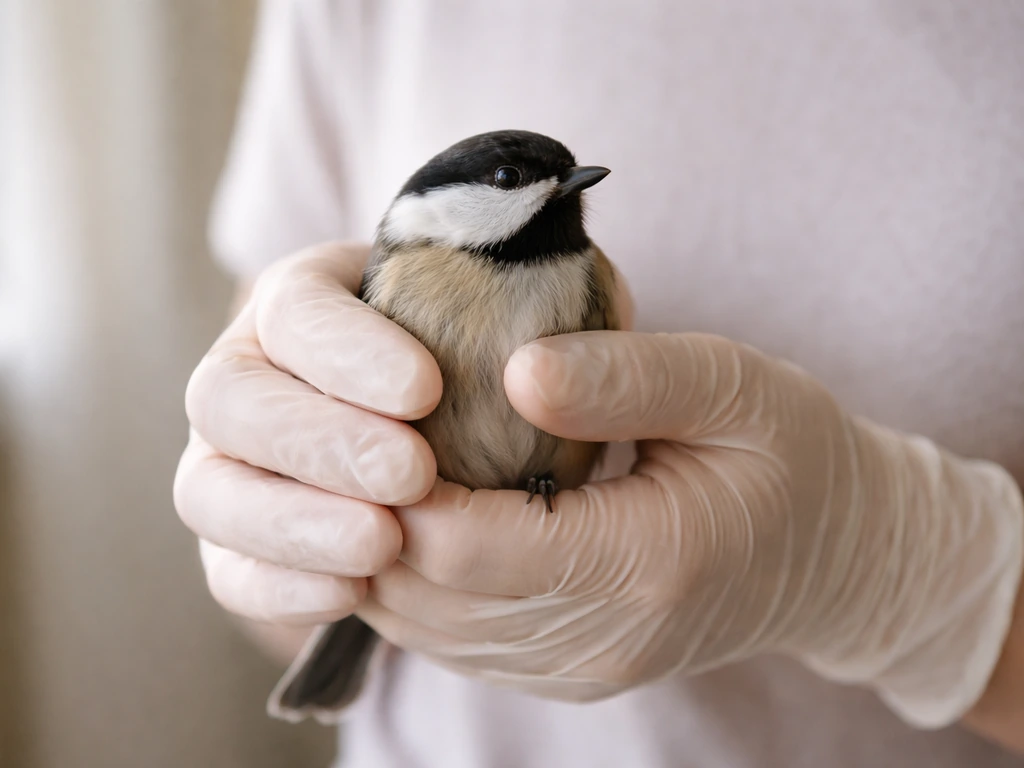
- Wear thin gloves if you have them, especially with larger birds or raptors that can grip hard with their talons. Songbirds are generally safe to handle bare-handed.
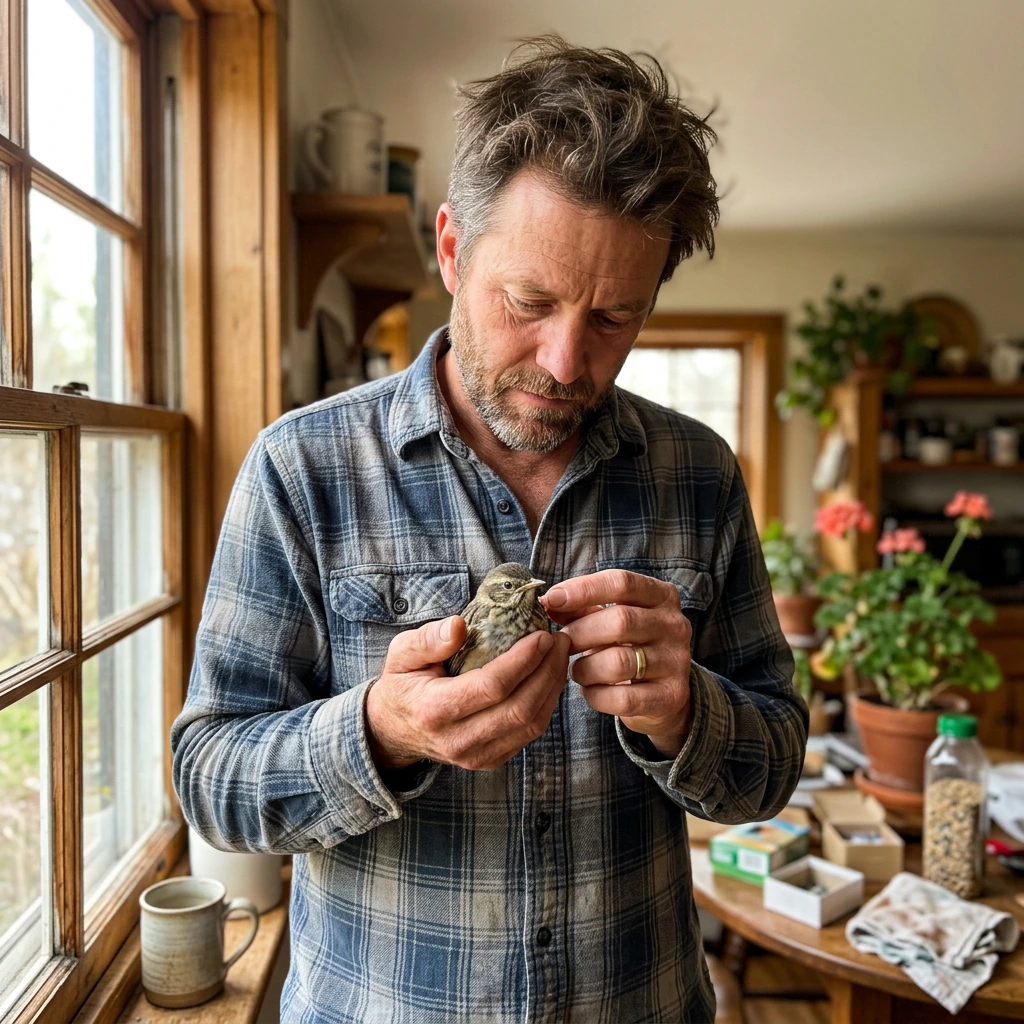
- Drape a light towel or cloth over the bird first, then scoop it up from underneath, letting it sit in your cupped hands or wrapped loosely in the towel.
- Support the body from below so the wings stay gently against the sides. Don't squeeze.
- Keep the beak pointed away from your face and fingers.
- For raptors: approach from behind and above, covering with a towel before picking up. Never grab a raptor by the feet — the grip is powerful and the talons are sharp.
- Place the bird in the box as soon as possible and close the lid.
What not to do
- Don't hold the bird tightly or restrain it against its will for more than a few seconds.
- Don't carry it around in your hands while you figure out what to do next.
- Don't try to straighten a broken wing or splint anything yourself.
- Don't put it in a tank, aquarium, or fully sealed container without airflow.
- Don't place it in a cage with wire mesh it can damage its feathers or beak on.
- Don't keep it in a room with other pets, even if those pets seem calm.
- Don't attempt to bathe the bird or clean wounds unless bleeding is actively happening and life-threatening.
Feeding and water: when to hold off (and why)
This is one of the most important sections in this guide, because the instinct to feed a distressed bird is strong and almost always wrong.
Do not give food or water to an injured or sick wild bird unless a wildlife rehabilitator or vet has specifically told you to. This is the consistent advice from Tufts, Audubon, Cornell, Mass Audubon, and every wildlife organization I've seen weigh in on this. There are real reasons for it: a bird in shock can aspirate water into its lungs. A bird with internal injuries or a broken beak can choke. Baby birds have very specific dietary needs and the wrong food causes rapid, serious harm.
For baby birds especially: never give milk, water, bread, or worm pieces unless instructed by a professional. Baby birds get their hydration from their food, and well-meaning people accidentally drown baby birds by dripping water into their mouths.
If you have a bird that seems healthy enough to be hopping around and is clearly alert (a fledgling you've brought inside temporarily, for example), and a rehabber has told you it's okay to offer something, mealworms or berries appropriate to the species may be acceptable. But the baseline rule is: don't feed unless instructed.
The one narrow exception: if a bird appears dehydrated and a rehabber is more than several hours away and unreachable, some wildlife centers advise offering a few drops of plain water via a dropper to the side of the beak (not down the throat) for adult birds only, and only if the bird is alert and able to swallow on its own. Call first if at all possible.
Basic first aid while you arrange help
You are not a wildlife vet, and you don't need to act like one. Your job is stabilization, not treatment. That said, there are a few situations where doing something is better than doing nothing.
If the bird is bleeding
Apply gentle, steady pressure with a clean cloth or gauze to any visible wound. Don't press hard enough to restrict breathing. If the bleeding is from a broken feather shaft (blood feather), the bleeding may be heavier than it looks, steady pressure for a couple of minutes is the right call. Don't pour antiseptic directly on wounds unless instructed, and don't wrap the bird tightly.
If the bird is cold and not moving much
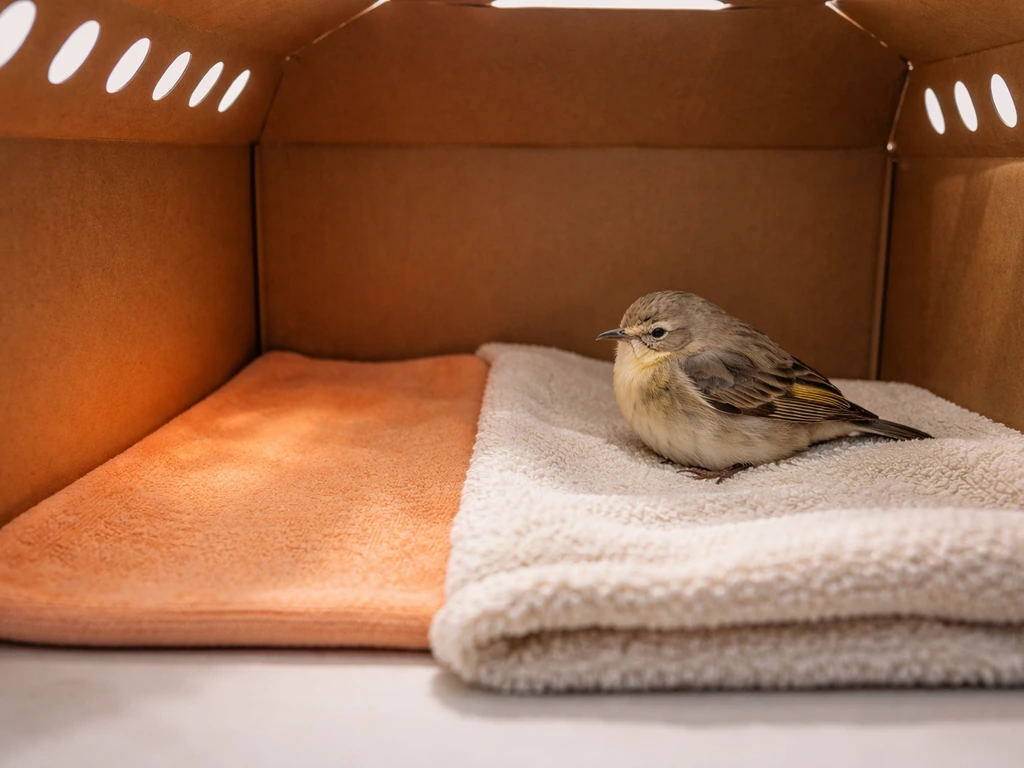
Warmth is the most important first-aid step you can take for a bird in shock. Use the heating-pad-under-half-the-box method described earlier. You can also place a small hand warmer wrapped in a cloth beside the bird (not touching it directly). Get the bird warm before you worry about anything else.
If the bird is having trouble breathing
Keep it calm, keep it warm, and get help immediately. Open-mouth breathing, tail-bobbing with each breath, or a clicking sound while breathing are all signs of serious respiratory distress. Don't attempt any intervention, this is a vet or rehabber situation right now.
What not to attempt
- Do not give any medications, including aspirin, ibuprofen, or anything intended for humans or other animals.
- Do not try to set or splint broken bones.
- Do not attempt CPR unless you've been specifically trained in bird CPR.
- Do not apply antiseptic sprays or hydrogen peroxide to wounds without professional guidance.
When to call for help, who to call, and how to transport
The honest answer is: you should be making this call while the bird is settling into its box, not after you've spent hours trying to handle the situation yourself. Tufts Wildlife Clinic similarly recommends calling a professional wildlife rehabilitator promptly when you find an injured or sick bird, rather than trying to manage it yourself for hours blank" rel="noopener noreferrer">you should be making this call. After you contact a wildlife rehabilitator and transport the bird safely, the next steps are the same kind of care covered in our guide on how to rehabilitate a bird. Most wild birds that appear injured need professional care within hours, not days.
Call now if the bird has any of these
- Visible bleeding that doesn't stop within a few minutes
- A wing or leg hanging at an unnatural angle
- Inability to stand or hold its head up
- Open-mouth breathing or audible breathing sounds
- Eye discharge, seizures, or paralysis
- Any cat or dog attack (even if wounds look minor — punctures cause internal damage and infection quickly)
- You suspect it's been exposed to a toxin or pesticide
Who to contact
Your first call should be to a licensed wildlife rehabilitator. In the US, the best way to find one is through the National Wildlife Rehabilitators Association (nwrawildlife.org) or by calling your state's fish and wildlife agency. Many areas also have local Audubon societies that can point you to the right contact. Keep in mind that it's illegal in most places to keep a wild bird in your home without a permit, even with the best intentions, this isn't about legal risk to you, it's about the bird getting care you genuinely can't provide.
If you can't reach a wildlife rehabilitator, a licensed veterinarian is your next call. Many vets will at least triage a wild bird and stabilize it while you locate a rehabber.
What to tell them
- Where you found the bird (exact location, habitat type)
- What species you think it is, or a description if you're unsure
- What condition it's in: alert, lethargic, bleeding, breathing issues
- What you've done so far: contained it, kept it warm, not fed it
- Your location and how far you are from their facility
Transporting the bird
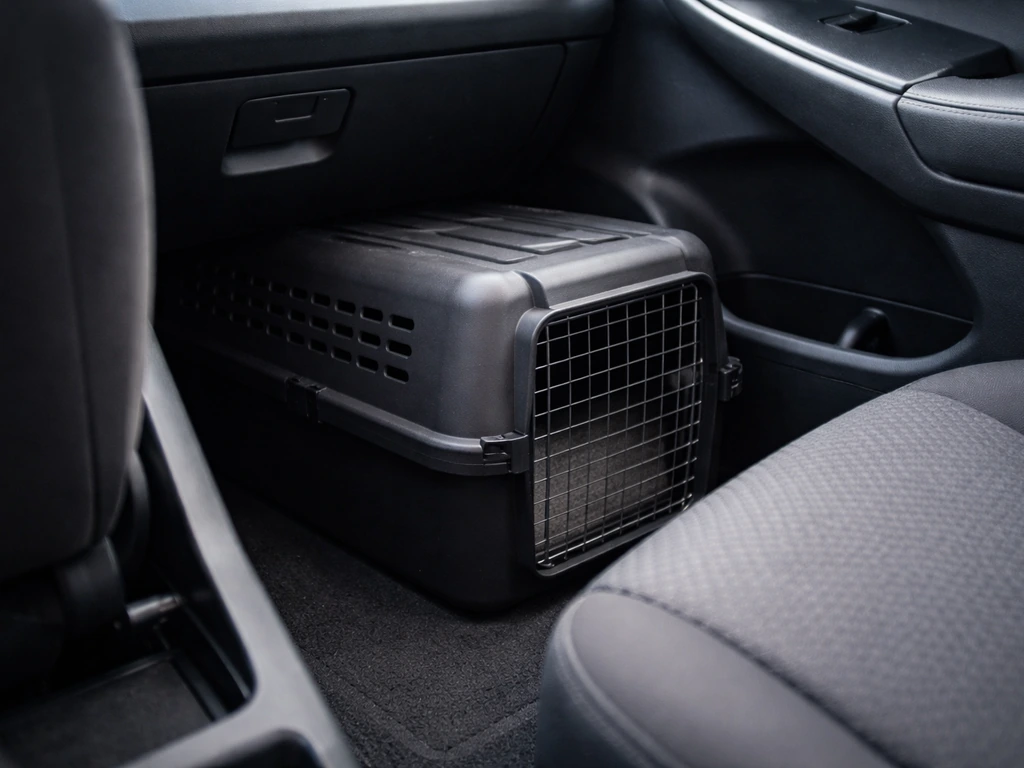
Keep the bird in its dark, ventilated box for transport. Put the box on the floor of the car or wedge it so it won't slide. Keep the car quiet, no loud music. Drive smoothly and avoid sharp turns or sudden braking. Don't open the box to check on the bird during the drive. Keep the car temperature comfortable, not hot. If you have a passenger, they can hold the box steady; otherwise, the floor works fine.
Resist the urge to peek at the bird mid-journey. Every time the box opens, the bird gets another shot of stress hormones. This kind of gentle, low-stimulation approach is a big part of how to destress a bird while you arrange help Every time the box opens. A dark, quiet ride is genuinely the kindest thing you can do in those last miles.
Once you've handed the bird off to a professional, you've done everything right. Comforting a bird isn't about doing a lot, it's about doing the right few things calmly and quickly, and then getting it to someone who can take it the rest of the way.
FAQ
Can I comfort a bird by holding it or letting it cuddle with me?
Usually no. For injured or panicked wild birds, repeated holding and face-to-face attention increases stress. The more comforting option is a dark, ventilated box that limits stimulation, with only minimal handling to move the bird to safety or into transport.
How do I tell if the bird needs “comfort” or emergency treatment for breathing?
If you see open-mouth breathing, tail-bobbing with each breath, or clicking sounds while breathing, treat it as respiratory distress. Stop trying to soothe it, keep it warm and calm in the box, and contact a wildlife rehabilitator or vet immediately.
Should I cover the bird with a towel even if it is already quiet?
Only if it is panicking and flapping. If the bird is stunned but not actively escalating, leaving it in a dark, quiet container is typically enough. If you cover a non-panicking bird, make sure it is not overheated and that the cover does not prevent airflow.
What if the bird won’t stop moving, even after I put it in the box?
Some movement is normal at first, especially during shock. Reassess for external triggers like bright light, loud noise, pets, or drafts, then reduce stimulation further (dim room, quiet voice, no hovering). If it continues to struggle hard or cannot settle within about an hour, escalate to a wildlife rehabilitator for guidance.
Is it okay to play soft music or talk to the bird to comfort it?
Generally avoid. Even “calm” sound can keep the bird alert. Instead, reduce all noise sources (TV, radio) and keep your own voice low or silent so the bird can settle.
How warm should the box be, and how can I tell if it’s too hot or too cold?
Warm enough to support recovery, but not heat to the point the bird can’t escape. Use the heating pad under only half the box, check that the bird can move away from the warm side, and keep the overall setup out of direct sun or near other heat sources.
Can I give the bird water if it seems dehydrated?
Only in a very narrow situation: adult birds that are alert and able to swallow, when a rehabilitator is more than several hours away and you can call first. Do not give water to babies or birds that are lethargic or not swallowing safely.
What should I do if I think it’s a baby bird and not an adult?
Do not assume it is safe to feed. Baby birds have specific diets and hydration needs, and common home foods (milk, bread, worm pieces, random insect types) can harm them. If you find a nestling or fledgling, contact a wildlife rehabilitator to confirm the species-appropriate next step.
If it’s bleeding, should I clean the wound with disinfectant to comfort it?
Don’t pour antiseptic directly on wounds unless a professional instructs you to. Use gentle, steady pressure with a clean cloth or gauze on visible bleeding, avoiding tight wrapping that restricts breathing, then focus on warmth and professional care.
Do I need to check on the bird constantly to see if it’s okay?
No. Frequent opening or repeated handling often raises stress. Keep the bird undisturbed in the box for the initial settling period, then only open if necessary for transport safety or if instructed by a rehabilitator.
What if I can’t transport the bird right away, how long can it wait in the box?
Stabilize it quickly with warmth and a calm, dark container, then contact a rehabilitator as soon as possible. Most wild birds need professional care within hours rather than days, so treat waiting time as a scheduling problem, not something to “soothe through.”
Is there anything I should do to prevent the bird from panicking during transport?
Keep the box closed, dark, and ventilated, secure it so it cannot slide, and drive smoothly with minimal stops. Avoid opening the box to check on the bird, since each opening restarts stress.
How to Calm a Scared Bird Safely: Step-by-Step Guide
Step-by-step humane tips to calm a scared wild bird, spot injury, give basic warmth, and know when to call rehab.