If you have a stressed bird in front of you right now, here is what to do: stop moving, lower your voice, and give the bird space. That single step, reducing stimulation immediately, is the most important thing you can do in the first sixty seconds. Everything else builds from there.
How to Help a Stressed Bird: Calm It Safely Now
Marcus Holloway
15 Apr 2026
Is it stress, or something more serious?
Before you do anything else, take ten seconds to look at the bird without touching it. Stress and injury can look similar from a distance, but the difference matters a lot for what you do next.
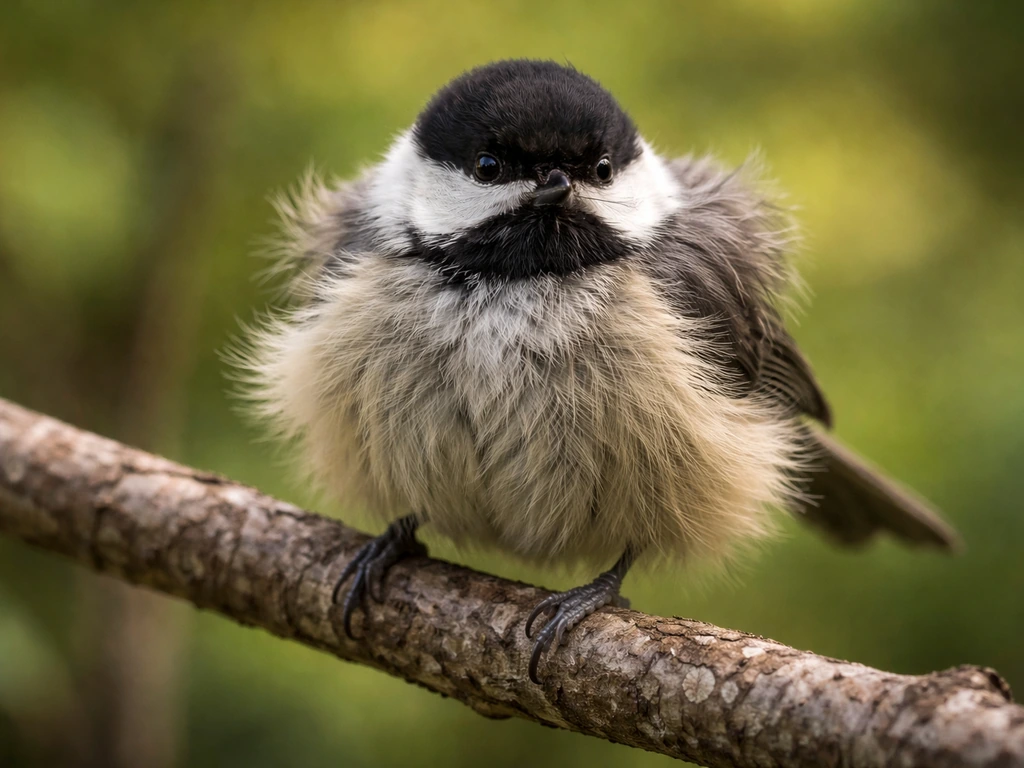
A stressed but physically intact bird usually shows these signs: feathers fluffed or slicked tight against the body, rapid shallow breathing through a closed beak, wide eyes with the pupil dilating and contracting quickly, freezing in place or flapping in short panicked bursts, and droppings that are watery or green-tinged from the adrenaline surge. These are frightening to see, but they are normal fear responses. A quiet, dark, warm space can often turn them around within an hour.
Now here are the signs that tell you this is more than stress. Respiratory red flags include open-beak breathing even when the bird is sitting still, tail bobbing with every breath, wheezing, clicking sounds, or any discharge from the nostrils or mouth. Neurological red flags include a head tilt, stumbling or falling to one side, twitching, or a full seizure.
Trauma red flags include visible bleeding that is not stopping, a wing or leg held at an obviously wrong angle suggesting a broken bone, an eye that looks cloudy, sunken, or injured, or a bird that you watched fly into a window or get hit by a car. If you see any of these, skip the DIY calming section and go straight to the "When not to DIY" section below.
How to approach and handle a stressed bird safely
Your approach is everything. Birds read human body language well, and fast, direct movement toward them reads as a predator attack. Slow down deliberately, move in a wide arc rather than straight toward the bird, and crouch so you are not looming over it. Speak in a low, even tone if you have to speak at all.
Minimize handling as much as possible. If the bird can be guided into a box by gently herding it rather than grabbing it, do that. If you do need to pick it up, use a light towel or cloth, drape it loosely over the bird, and scoop with both hands supporting the body and wings together. Never grab by a wing, leg, or the tail. Hold the bird snugly but not tightly: you want to feel it breathing but you do not want it to be able to thrash and injure itself further. Keep the hold brief. The goal is to move the bird into a secure container, not to hold it.
Wear gloves if you have them, especially with wild birds. This protects you from scratches and bites, and it slightly reduces the direct transfer of human scent, which matters more with some species than others.
Setting up a quiet, secure space for recovery
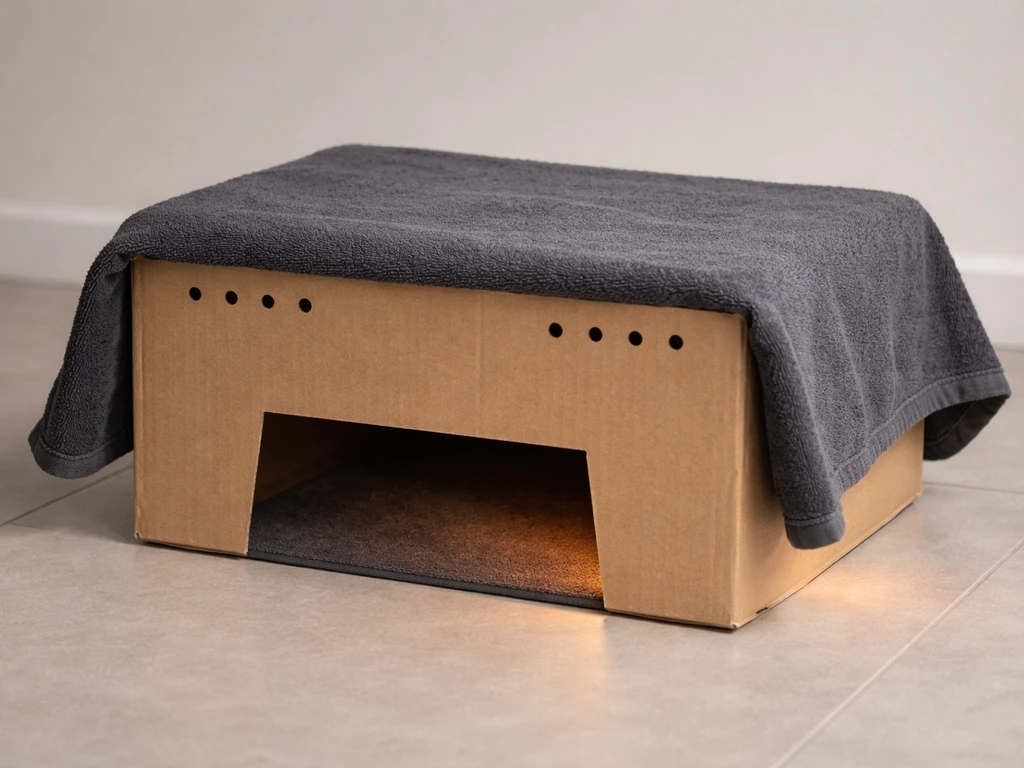
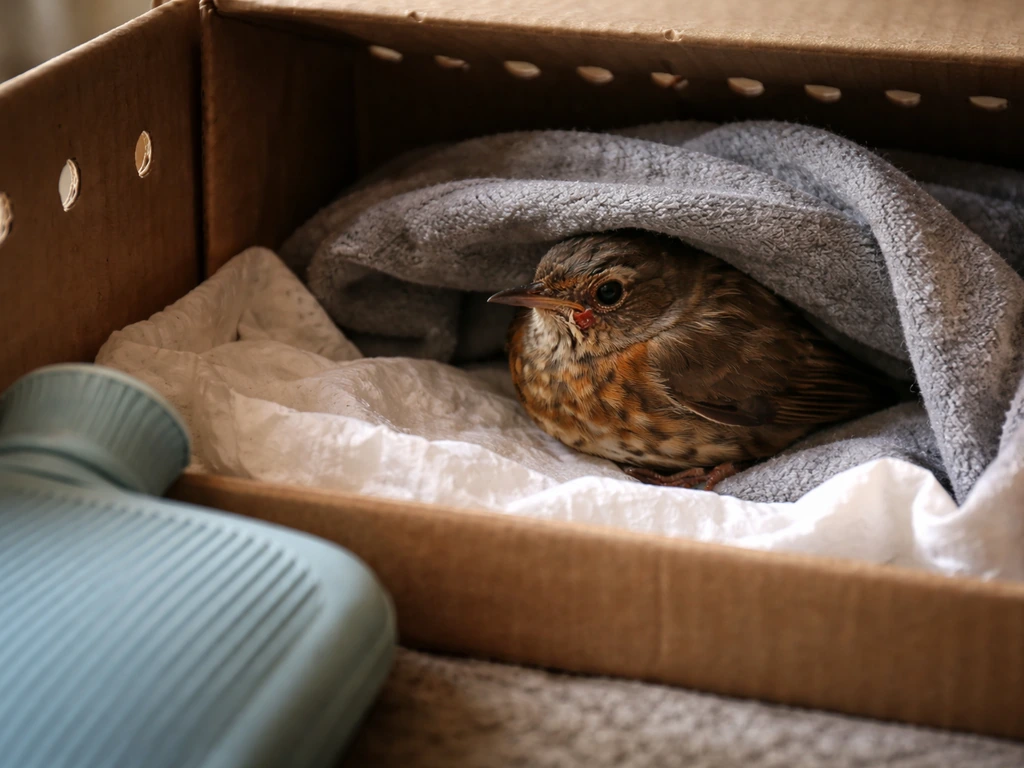
The single best thing you can do for a stressed bird is put it somewhere dark, quiet, warm, and ventilated. This combination drops the bird's perceived threat level dramatically and lets its nervous system start to recover.
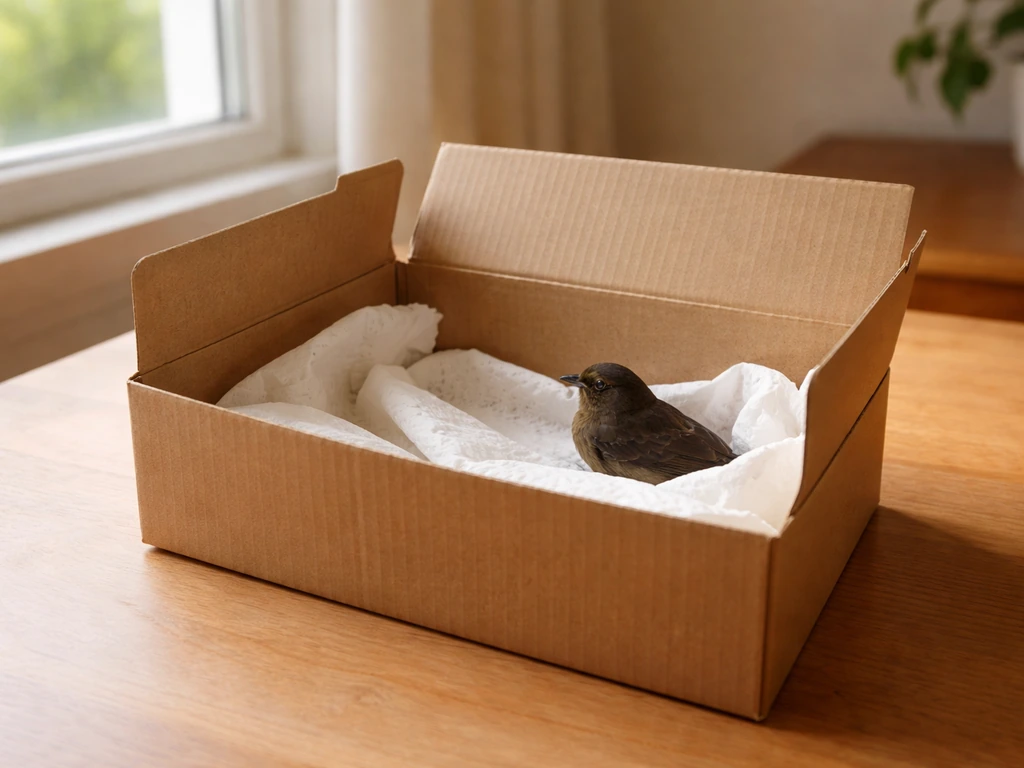
A cardboard box works perfectly. Choose one large enough that the bird can stand upright without its head touching the lid, but not so large that it bounces around inside. Punch several small holes, around the size of a pencil eraser, in the upper sides and lid for airflow. Line the bottom with a non-slip surface: a folded paper towel, a piece of fleece fabric, or even crumpled newspaper. Avoid smooth materials because a bird struggling to grip a slippery floor will stress itself further.
Warmth matters, especially for small birds. A stressed bird burns energy fast and can go into shock if it gets cold. Aim for an ambient temperature of around 85 to 90 degrees Fahrenheit for a very small or very compromised bird. You can achieve this by placing a heating pad set to low under one half of the box only, so the bird can move away from the heat if it gets too warm. Never put the heat source inside the box. If you do not have a heating pad, a water bottle filled with warm (not hot) water wrapped in a cloth and placed beside the box works as a temporary option.
Darkness is not optional, it is a core part of the approach. Covering the box or putting it in a dim room reduces visual stimulation and triggers a calming response in most birds. Think of it as turning down the volume on everything the bird's senses are processing at once. For more detail on how to destress a bird using environmental setup, a quiet, covered box is consistently the first recommendation from wildlife rehabilitators.
Put the box somewhere genuinely quiet: not a kitchen, not near a TV, not in a room with other pets or children moving through. A spare bedroom or a bathroom with the fan off works well. Check that the room temperature itself is not cold, because a warm box in a cold room will lose heat faster than you want.
What to do while the bird is settling
Once the bird is in the box, your job is mostly to leave it alone. This is harder than it sounds when you are worried, but checking on the bird every few minutes prolongs its stress response. Set a timer and check at the 30-minute mark, then every hour after that.
When you do check, open the box slowly and quietly. Look for these positive signs: the bird is standing rather than lying flat, the eyes are alert and tracking you, the breathing is through a closed beak, and the feathers have returned to a more normal position. These are signs the bird is stabilizing.
Here is what not to do during this window, because these are common mistakes that make things worse:
- Do not try to force food or water into the bird's beak. A stressed bird cannot swallow safely and can aspirate liquid into its lungs. If the bird is alert and moving around, you can place a shallow bottle cap of water in the corner of the box, but do not attempt to hand-feed.
- Do not use a wire cage or aquarium without ventilation, which can overheat quickly and also gives the bird too much to see and react to.
- Do not place the box in direct sunlight, even through a window, because it will overheat fast.
- Do not bring in other pets or curious children for a look. The bird can see, hear, and smell threat even through cardboard.
- Do not play calming music or sounds directed at the box. Human ideas of soothing sound are still stimulation to a frightened bird.
If the bird is a pet bird rather than a wild bird, understanding what a calm posture actually looks like for that specific species helps you read improvement accurately. Knowing how to calm a bird down based on its body language signals is a skill that pays off here, because the baseline varies between parrots, canaries, doves, and other species.
When not to DIY: signs that need professional help now
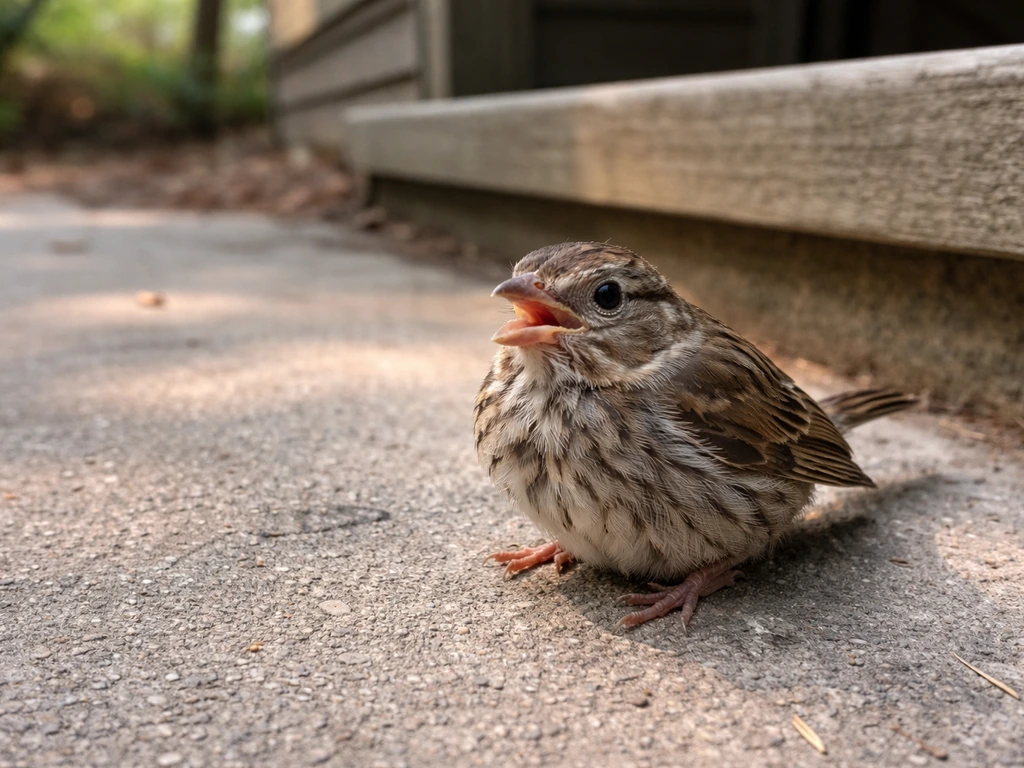
Some situations are not going to resolve with a dark box and quiet. Contact a wildlife rehabilitator or avian veterinarian immediately if you see any of the following.
- Open-mouth breathing or tail bobbing with every breath, wheezing, or clicking sounds when breathing. These are respiratory emergencies.
- Any discharge from the nostrils or mouth.
- Head tilt, stumbling, twitching, or seizure-like movements. These suggest neurological damage.
- Bleeding that is not slowing down after five minutes of gentle pressure.
- A bone visibly out of place, or a wing or leg held at an abnormal angle.
- Any injury to the eye.
- A bird you watched strike a window, get hit by a vehicle, or be caught by a cat or dog, even if it looks okay. Cat and dog punctures cause internal damage and infection that are not visible.
- A bird that is lying flat, unresponsive, or that does not react when you open the box after 30 minutes.
To find a wildlife rehabilitator in the United States, call your state fish and wildlife agency or search the National Wildlife Rehabilitators Association directory online. For pet birds, call an avian veterinarian specifically, not a general practice vet if you can help it, because avian medicine is a specialty. When you call, be ready to describe the species if you know it, the approximate size, what you observed, when it happened, and any specific symptoms from the list above. That information helps them triage the call and tell you whether to come in immediately or hold and monitor.
Learning how to calm a scared bird before transporting it to a vet is also useful, because a bird that is panicking in a box during a car ride will arrive in worse shape than one that has been settled first. Stabilize, then transport.
What comes after the immediate crisis
If the bird is stabilizing after an hour and you are managing a situation that does not require emergency care, here is what the next several hours look like.
Keep the bird in the box for at least two to four hours before considering any next step. Premature release or return to normal conditions can re-trigger the stress response before the bird's system has recovered. If it is a wild bird that was temporarily stunned, and after two to four hours it is standing, alert, and actively trying to get out of the box, that is usually a good sign. Take the box outside to a sheltered area away from traffic, cats, and direct sun. Open it and step back. Give the bird time to orient and fly when it is ready. Do not tip it out.
For pet birds, once they are calmer, think about what caused the stress event in the first place. A bird that stressed because of a predator threat, a loud noise, a new person, or a change in its environment will need those triggers addressed or it will stress again. Knowing how to comfort a bird during and after these episodes, including gradual reintroduction to its normal space, can prevent the next crisis.
Chronic or repeated stress in pet birds can slide into behavioral and physical health problems over time. If your bird is frequently stressed, it is worth addressing the root cause rather than just managing each episode. How to cure a depressed bird covers the longer-term picture when stress becomes a pattern rather than a one-time event.
For wild birds that need more than a few hours of rest before they can be released, or that are not fully recovering on their own, the process shifts from first aid to actual rehabilitation. Understanding how to rehabilitate a bird properly involves nutrition, housing, and a graduated return to normal activity that goes well beyond what most people can manage at home without training. That is exactly why wildlife rehabilitators exist, and getting the bird to one sooner rather than later gives it the best odds.
The short version if you need it right now
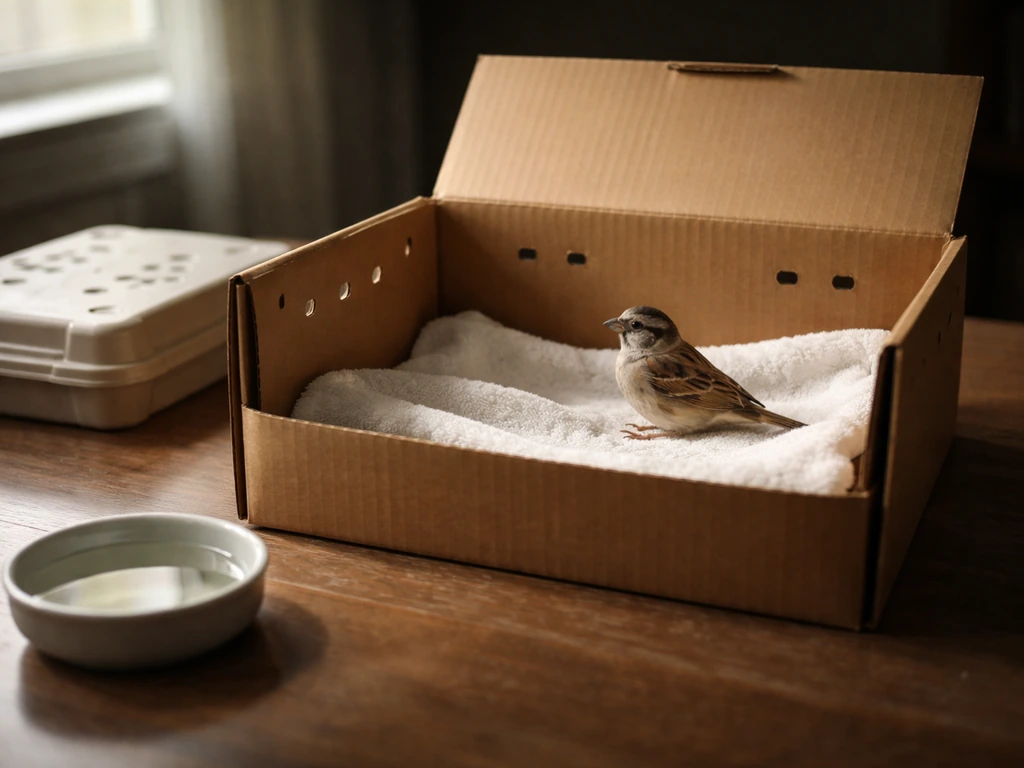
- Stop, slow down, and reduce all stimulation around the bird immediately.
- Spend ten seconds checking for emergency signs: open-mouth breathing, bleeding, twitching, head tilt, eye injury, or known trauma. If present, call a wildlife rehabilitator or avian vet now.
- If no emergency signs, use a cloth or towel to gently move the bird into a ventilated cardboard box lined with a non-slip surface.
- Add gentle warmth from one side only (heating pad on low under half the box, or a warm water bottle wrapped in cloth beside it).
- Cover the box, place it in a quiet, dark room away from pets and people, and leave it alone for 30 minutes.
- Check at 30 minutes. If the bird is standing and alert, continue monitoring hourly. If it is worse or unchanged, call for professional help.
- Do not force food or water. Do not check constantly. Do not put the box in sunlight or a cold room.
- If the bird is a wild bird that fully recovers in two to four hours, release it outside in a sheltered spot and step away. If recovery is incomplete, contact a rehabilitator.
You do not need to be an expert to help a stressed bird through the first critical hour. You just need to move slowly, reduce stimulation, provide warmth and dark, and know when the situation is beyond what a cardboard box can fix.
FAQ
Should I give a stressed bird water or food right away?
Do not offer food or water while the bird is actively breathing hard or showing open-beak breathing. Wait until breathing looks calm (through a closed beak) and the bird is standing normally, because during high stress they may aspirate fluids or food.
What if the bird is shaking, is it still safe to just calm it?
If the bird is shaking but otherwise alert, keep it in the same dark, warm setup and avoid additional handling. Shivering can be a cooling or fear response, but if you also see wheezing, tail bobbing, discharge from the mouth or nostrils, or any stumbling, treat it as a medical red flag and contact an avian vet or wildlife rehabilitator.
How can I tell stress from something neurological if I see wobbliness?
Check whether the bird can stand upright. If it cannot hold posture, has trouble balancing, or tilts its head with twitching or falling to one side, that is beyond “stressed” and you should skip DIY calming and get medical help.
If I need to take the bird to a vet, should I transport it immediately or calm it in place first?
Put the bird in the box first, then decide about transport. If you must move it, do it quietly and minimize jostling, keep the box covered or in a dim carrier, and avoid rushing to “check” constantly during the trip.
Can I cover the box completely or seal it to keep the bird calm?
No. A covered box is helpful, but do not fully seal the container or use airtight materials. You want airflow holes so the bird can breathe comfortably and you can prevent overheating.
How do I know the bird is warm enough without overheating it?
Use warmth carefully. The warm pad or bottle should be under one side only so the bird can move away. If the bird keeps moving toward the cooler side or pants with an open beak, it may be too hot, so reduce warmth or move the box to a slightly cooler room.
What should I do if the bird looks better but still will not stand?
If the bird is lying flat, unable to stand, or has cloudy or sunken eyes, treat that as more than stress. Warmth and darkness can still be used while you arrange help, but the timing should shift quickly to an avian vet or wildlife rehabilitator.
How should I read improvement in a pet bird versus a wild bird?
For a pet bird, watch for species-specific normal behavior. Some species can look “still and quiet” even when they are not fully comfortable, so compare the bird’s breathing and eye posture to its usual baseline, not just whether it is less active.
What is the biggest mistake people make after putting the bird in a box?
Common mistake is checking too often. Use the timer approach: one check at about 30 minutes, then hourly. Repeated opening and talking can restart the fear cycle even if the bird seems to be calming.
When can I release a wild bird, and how should I do it safely?
Yes, but only after stabilization. If after two to four hours the wild bird is standing, alert, and trying to get out, move it to a sheltered outdoor spot away from traffic and step back, then allow it to fly on its own. Do not toss or tip it out.
I do not have a pre-made box with holes, what should I do in a pinch?
If you have no holes, do not run the risk of poor ventilation. In an emergency, you can quickly create airflow openings in the box lid or upper sides with a few small holes before placing the bird in there, then proceed with warmth on one side and keep it dark and quiet.
What should I prepare before I try to guide a bird into a container?
Have a plan before you start handling. Prepare the container, remove hazards like other pets and mirrors or bright lights, and keep your movement slow and indirect. The goal is to avoid “second scares” during setup.
What if the bird seems calmer after an hour, but I’m still worried?
For wild birds, do not assume they are safe to be released if they only look calmer. Full recovery means stable breathing, normal posture, and the ability to orient. If symptoms persist beyond the resting window or any red flags remain, contact a rehabilitator.
Next Article
How to Rehabilitate a Bird: Step-by-Step First Aid
Step-by-step first aid to stabilize injured or orphaned birds, with safe feeding, warmth, do’s and don’ts, and vet timin