If you have a bird sitting at the bottom of its cage, barely moving, with fluffed feathers and half-closed eyes, the word "depressed" is the first thing that comes to mind. But in birds, that look almost never means they are emotionally low. It means something is wrong medically, and it is usually urgent. Birds hide illness until they cannot hide it anymore, so by the time a bird looks visibly "depressed," it has often been struggling for longer than you realize. The good news is that there are clear steps you can take right now, starting with figuring out what you are actually dealing with.
How to Cure a Depressed Bird: Safe Steps and Red Flags
Marcus Holloway
17 Apr 2026
What "depressed" usually means in birds (and why it matters right now)
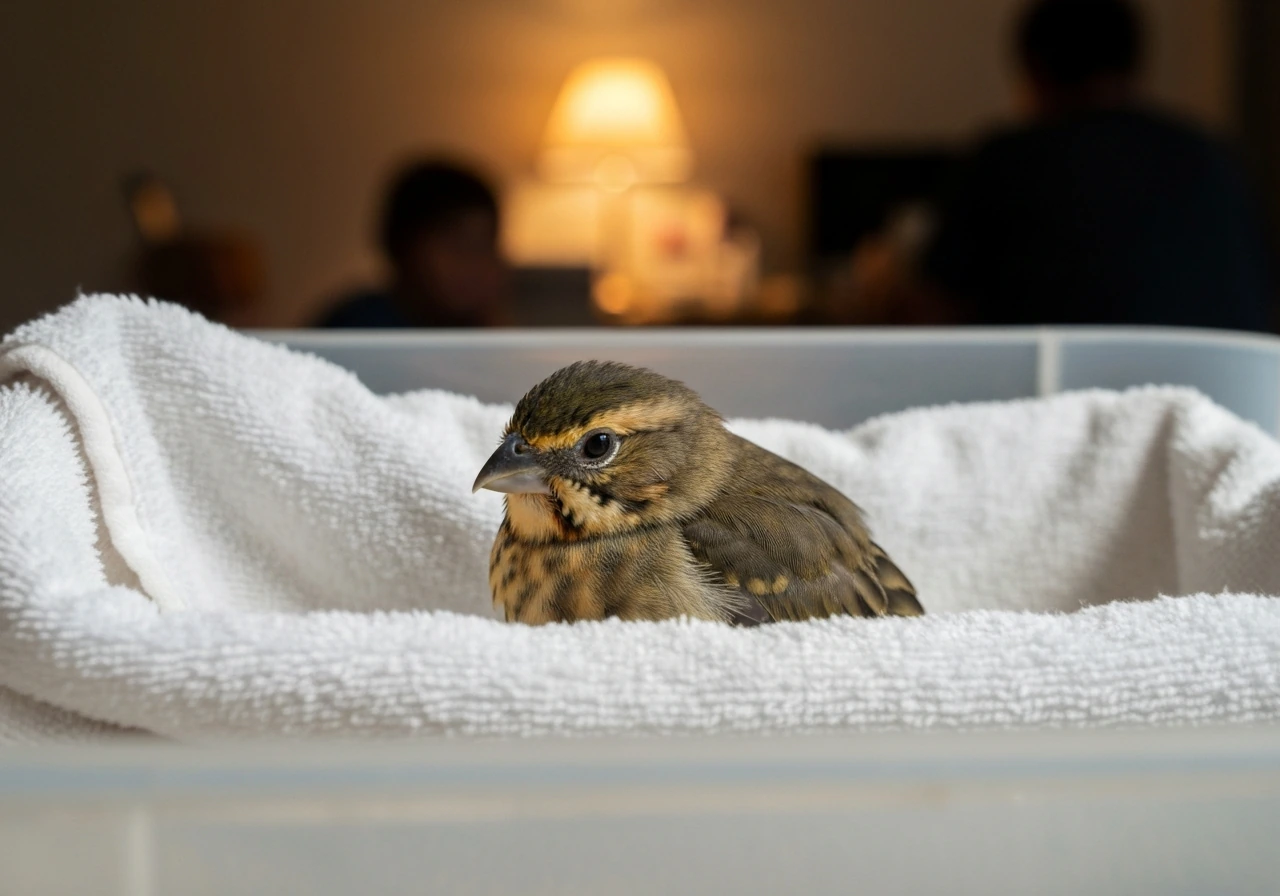
When people say a bird looks depressed, they are describing a cluster of signs: fluffed-up feathers, hunched posture, eyes partially or fully closed, staying in one spot, not eating, not vocalizing, and generally looking like a different bird than usual. These are real, observable signs. But they are not signs of an emotional low. They are the way birds display pain, illness, cold, starvation, dehydration, infection, parasites, or neurological problems.
This matters because "depression" as we think of it is not really a diagnosis you can treat at home. What you can do is treat the underlying cause. A cold bird will perk up once warm. A dehydrated bird needs fluids. An infected bird needs a vet. A bird in shock needs quiet and careful handling. The faster you figure out which category you are dealing with, the better the outcome. This is not a problem you can wait out or manage with extra attention alone.
One more thing worth saying clearly: if this is a wild bird, keeping it as a pet is not the answer. Wild birds need licensed wildlife rehabilitation, not a warm living room. If it is a pet bird, you are dealing with a medical situation that needs an avian vet, not just comfort.
Quick triage: what to check in the first five minutes
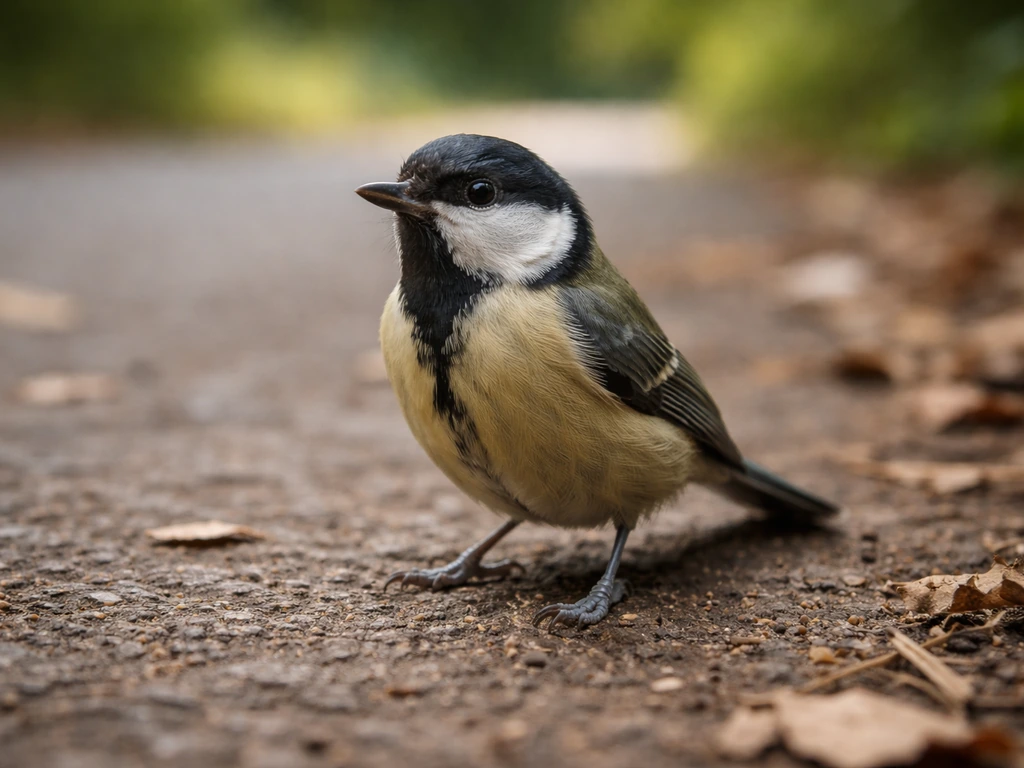
Before you do anything else, assess what you are looking at. You do not need to touch the bird yet. Just observe it closely for one to two minutes. You are checking four things: alertness, breathing, visible injuries, and signs of dehydration.
Alertness
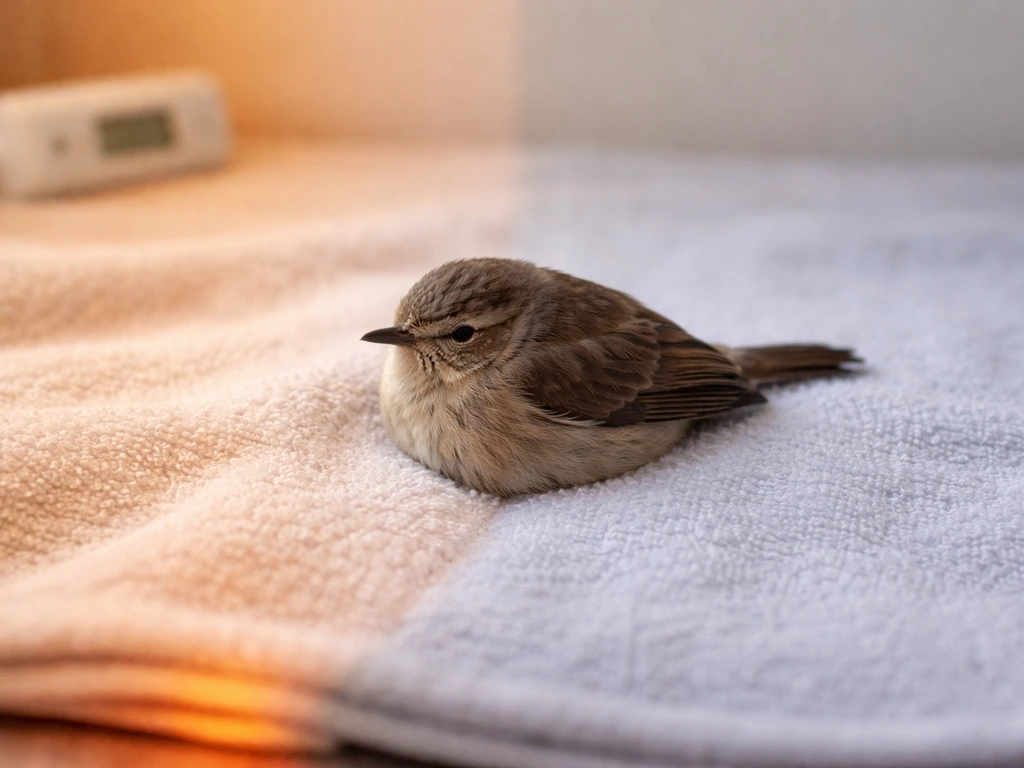
A healthy bird reacts when you approach. A sick bird may not move at all, or only weakly. Fluffed feathers, a hunched stance, eyes fully or partially closed, a head tucked under the wing, and frequent blinking are all signs that something is seriously wrong. If the bird is unresponsive to your presence, that is a red flag.
Breathing
Watch the bird's chest and tail. Tail bobbing with every breath, open-mouthed breathing, audible wheezing or clicking, or a rhythmic heaving of the body all signal respiratory distress. Normal breathing in a bird at rest is quiet and barely visible. If you can see or hear it working to breathe, that is an emergency.
Visible injuries
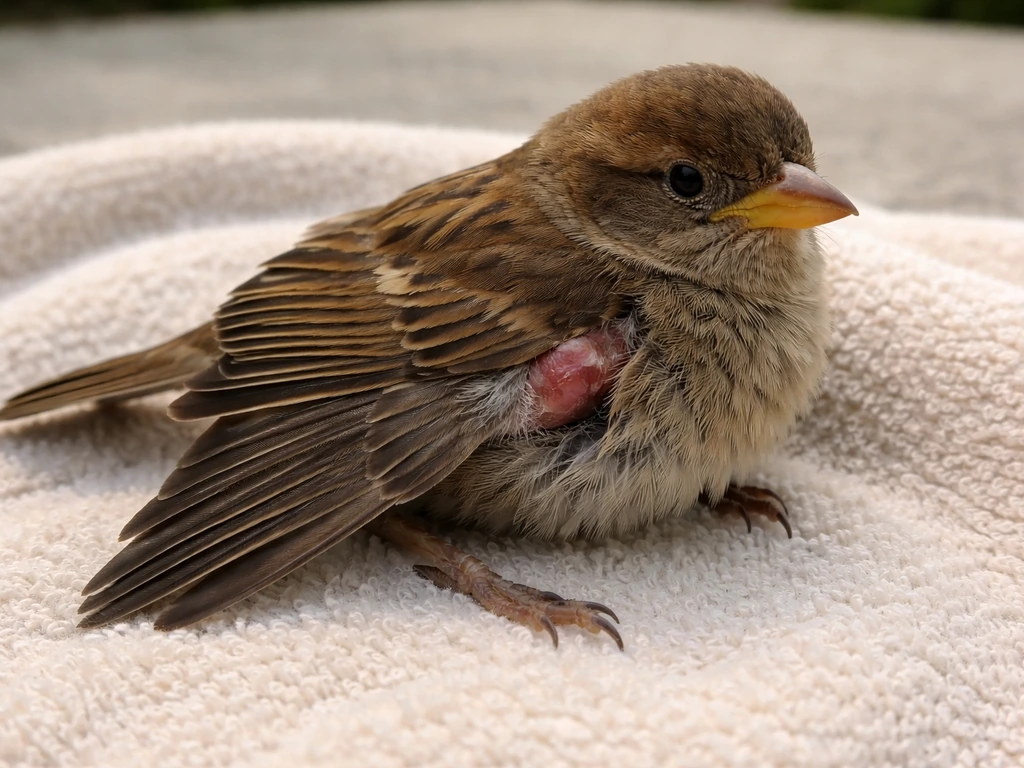
Look for blood, a drooping or asymmetrical wing, an unusually angled leg, wounds, or bare patches of skin where feathers have been pulled out. Check for discharge around the eyes, nostrils, or beak. Swelling anywhere on the body is significant. You do not need to handle the bird to spot most of these.
Hydration
Dehydration is common in sick birds and can be life-threatening quickly. Signs include skin that stays tented if gently pinched (in birds with bare skin patches), sunken eyes, lethargy, and sticky or tacky mucous membranes around the mouth. You can also check the droppings if any are present: very small, dark, or absent droppings often point to not eating or drinking.
What to do immediately at home: warmth, quiet, and containment
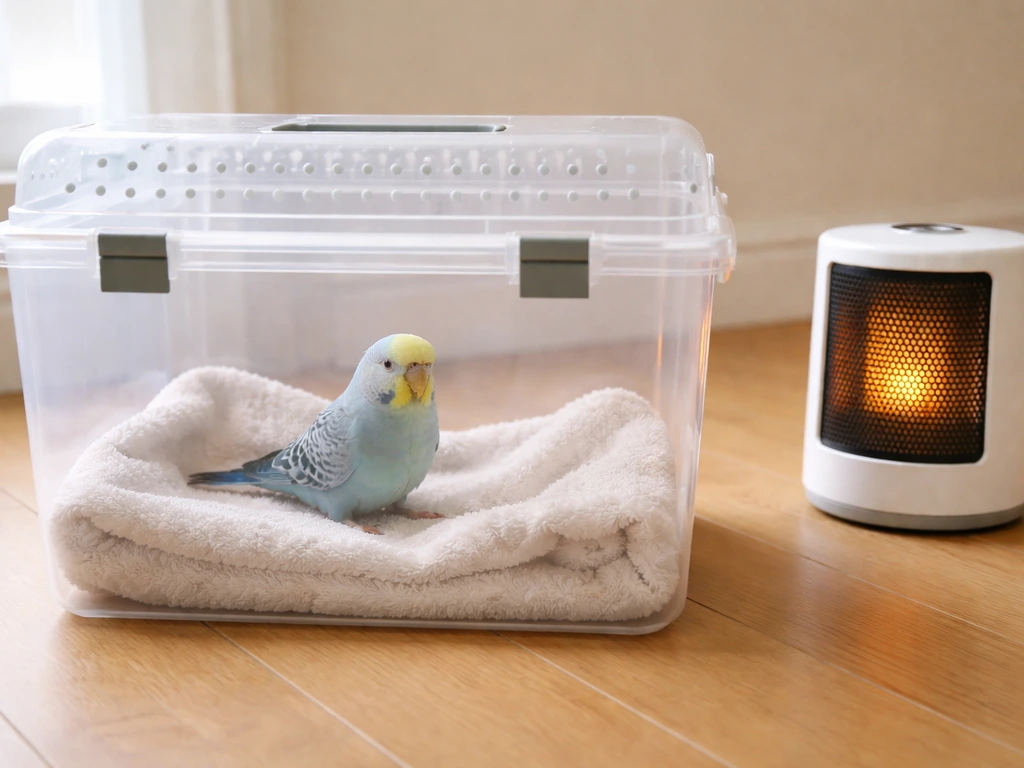
Once you have done your visual assessment, your next job is to stabilize the bird's environment. This alone can make a significant difference, especially for a bird that is cold or in shock. Here is the order of priority.
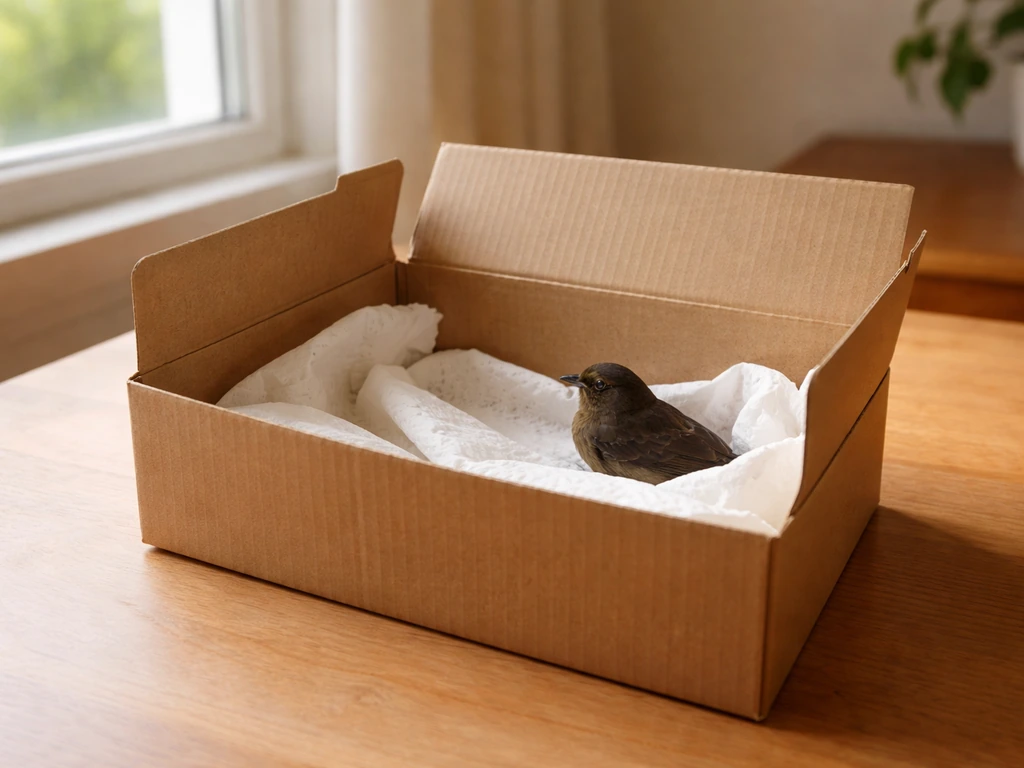
- Contain the bird safely. If it is a wild bird, place it in a cardboard box with small air holes. Line the bottom with a non-fluffy cloth like a folded paper towel or a thin cotton rag. Do not use terrycloth towels because toes get caught. Keep the box in a quiet, dim area away from pets, children, and noise. If it is a pet bird, keep it in its own cage in a calm room.
- Add warmth. A sick bird needs to be at around 85 to 90 degrees Fahrenheit (29 to 32 Celsius). You can achieve this by placing a heating pad on the lowest setting under half of the box only, so the bird can move away from the heat if it gets too warm. A lamp placed near (not directly on) the box also works. Check every 15 minutes to make sure it is not overheating.
- Minimize handling. Every time you pick up the bird, you add stress to an already compromised body. Handle it only when necessary, use a light cloth to cover your hands, and keep interactions short and calm.
- Keep it dark. Darkness reduces stress and encourages rest. A partially covered box or cage with dim lighting is ideal.
- Do not put the bird with other birds. Isolation protects both the sick bird and any healthy birds from potential infection.
If you are not sure how to approach a bird that is frightened as well as sick, understanding how to calm a scared bird before you attempt containment can help you avoid making things worse during capture.
Feeding and fluids: what is safe, what is risky, and when to stop
This is where many well-meaning people accidentally cause harm. The instinct to feed or give water to a sick bird is understandable, but it can be dangerous if done incorrectly.
Do not force food or water into a bird's mouth. Aspiration (fluid going into the lungs) can kill a bird quickly and it is a very real risk when a bird is weak and cannot swallow normally. If a bird is alert, upright, and showing interest in food, you can offer small amounts of appropriate food and fresh water in a shallow dish. But if the bird is limp, unresponsive, or having trouble holding its head up, skip feeding entirely until you reach a professional.
For pet birds: offer their normal food. Do not introduce new foods during illness. Keep water fresh and accessible but do not hold the bird over a bowl.
For wild birds: species matters enormously. Songbirds eat seeds and insects, raptors eat meat, waterbirds eat fish. Offering the wrong food can cause more problems. A general safe option for a conscious wild songbird is a few mealworms or small seeds in a shallow dish. Do not offer bread, milk, crackers, or any human food. Do not give electrolyte solutions designed for humans or sports drinks.
Plain, clean water offered in a very shallow dish (shallow enough that the bird cannot drown if it slumps) is usually safe to offer if the bird is alert. Never use a dropper to put water in a bird's mouth unless you have been trained to do so.
If you are unsure about the right approach to food and fluids, contact a wildlife rehabilitator or avian vet before attempting anything. Getting it wrong can undo everything else you have done right.
Red flags that mean get professional help right now
Some situations are not wait-and-see. If you see any of the following, stop reading and make a call to an avian vet or wildlife rehabilitator immediately.
- Open-mouthed breathing or audible respiratory sounds
- Visible bleeding that has not stopped
- A wing hanging at an abnormal angle (likely a fracture)
- Seizures, tremors, or loss of balance
- The bird is completely unresponsive or unconscious
- Tail bobbing with every breath (serious respiratory distress)
- Eyes swollen shut or significant discharge from eyes, nostrils, or beak
- The bird is cold to the touch and not warming up after 30 minutes in a warm environment
- No droppings in several hours, or droppings that are entirely blood-streaked
Even without these dramatic signs, a bird that is still lethargic, not eating, and fluffed after two to four hours of warmth and quiet should be seen by a professional that day. Do not wait until tomorrow. Birds deteriorate fast.
For a wild bird, call a licensed wildlife rehabilitator first. They are trained specifically for this. You can find one through your local animal control office, the National Wildlife Rehabilitators Association, or by calling a local wildlife sanctuary or zoo. For a pet bird, call an avian vet, not a general practice vet. Avian medicine is a specialty and a general vet may not have the right tools or knowledge.
Reducing stress and supporting recovery at home
If the bird is stable enough to be monitored at home while you arrange professional care, stress reduction is your most important job. Stress hormones in birds are genuinely damaging and can push a vulnerable bird from stable to critical. The goal is to make the bird feel as safe and undisturbed as possible.
Keep the area quiet. No loud music, no TV nearby, no dogs or cats in the same room. Limit the number of people going in and out to check on it. Check once every 30 to 45 minutes, briefly, and resist the urge to pick it up or talk to it constantly. For a pet bird that is used to interaction, a calm, quiet voice at a distance is fine. For a wild bird, minimize all human contact.
Knowing how to calm a bird down during this period is genuinely useful. Covering the cage or box, keeping lighting low, and moving slowly near the bird all activate its sense of safety rather than alarm.
There are also longer-term stress factors worth thinking about for pet birds specifically: changes in household routine, a new pet or person, loss of a companion bird, relocation, or even a rearranged cage can contribute to a prolonged stressed state. For more on this, the guidance on how to help a stressed bird covers the environmental and behavioral triggers that are worth addressing once the immediate health crisis is resolved.
For pet birds in a longer recovery phase after veterinary treatment, creating a consistent daily routine, keeping temperatures stable (around 70 to 80 degrees Fahrenheit for most pet species), and offering enrichment at a low intensity (foraging opportunities, soft ambient sound) can all help. Do not rush to return the bird to full activity before it is ready.
If you want a more complete picture of supportive care beyond the immediate crisis, reading about how to destress a bird during recovery will give you additional practical strategies for the days following initial treatment.
How to document the case and work with professionals
When you call or visit a vet or wildlife rehabilitator, the information you bring makes a real difference. Good notes help professionals make faster, better decisions. Here is what to track and record.
- When and where you found the bird: exact location (address or GPS coordinates if possible), date and time, and the conditions (indoors, near a window, in a yard, found on the ground, etc.).
- What you observed initially: posture, breathing, eye condition, any injuries you could see, and whether the bird could stand or fly.
- What you have done since finding it: whether you provided heat, offered food or water, how long it has been in your care, and whether its condition has changed.
- Droppings: color, consistency, and frequency since you found it. Photograph them if possible. This is one of the most useful diagnostic clues for a vet.
- Any possible exposure: did it hit a window? Was a cat involved? Was there a storm? Is there a known toxin nearby such as a treated lawn or a rodent poison?
- Species if known: even an approximate identification (small brown songbird, large black bird, pigeon-sized, etc.) helps the rehabilitator prepare.
If you have photographs or a short video of the bird's behavior, bring those too. A 30-second clip of how the bird is breathing or moving gives the professional information they cannot get from a description alone.
Once you hand the bird off to a wildlife rehabilitator or leave it with an avian vet, ask what you can expect in terms of timelines and follow-up. Rehabilitation for a malnourished bird might take days. A fractured wing can take six to eight weeks. An infection may resolve faster with the right antibiotics. Ask whether you will be updated on the outcome. Many wildlife rehabilitation centers are understaffed and cannot always call back, but most will tell you what the likely prognosis is when you drop the bird off.
For a broader picture of what the full rehabilitation process looks like, the guide on how to rehabilitate a bird walks through the stages from initial stabilization through release or long-term care, which is helpful context if you end up playing a role in the bird's recovery.
Comparing the most common causes of a "depressed" bird at a glance
| Cause | Key signs | Home action | Urgency |
|---|---|---|---|
| Cold / hypothermia | Cold to touch, very slow movement, barely responsive | Warm to 85-90°F gradually, do not feed yet | High: warm and get help same day |
| Dehydration / starvation | Sunken eyes, small dark droppings, very light weight | Offer shallow water if alert; do not force | High: vet or rehabilitator within hours |
| Injury (fracture, wound) | Drooping wing, visible wound, blood, limping | Contain, keep still, do not manipulate injury | Urgent: vet immediately |
| Respiratory illness / infection | Open-mouth breathing, tail bobbing, nasal discharge | Warmth and quiet only, no food | Emergency: vet immediately |
| Shock (window strike, predator attack) | Stunned, sitting still, normal appearance otherwise | Dark, quiet, warm box; monitor 1-2 hours | Medium: release if recovers; vet if not |
| Parasites | Feather loss, skin lesions, constant scratching, lethargy | Isolate from other birds | Medium-high: vet within 24 hours |
| Chronic stress / behavioral depression (pet birds) | Feather plucking, repetitive behavior, loss of appetite over weeks | Environmental review, enrichment, vet check | Medium: avian vet within days |
The things you should not do
A few common mistakes are worth calling out directly because they happen a lot and they can make things significantly worse.
- Do not attempt to give medication. Human vitamins, antibiotic creams, aspirin, or any other medication not prescribed by an avian vet can be toxic to birds. Even well-intentioned supplements can cause harm.
- Do not force-feed or use a dropper to put water in a weak bird's mouth. Aspiration is a real and fast danger.
- Do not expose the bird to drafts, air conditioning, or cold temperatures even briefly. Sick birds lose heat fast.
- Do not let children or other pets interact with the bird. Even gentle handling adds stress.
- Do not put a wild bird in a cage and decide to keep it. In most countries this is illegal, and wild birds need to be released or placed with trained rehabilitators.
- Do not assume that if the bird eats something, it is okay. A bird can eat and still be critically ill.
- Do not wait more than a few hours if things are not improving.
Comfort matters, but it is not enough on its own
There is something worth acknowledging here: the impulse to comfort a bird that is clearly suffering is a good one. Gentle, calm presence does matter. Knowing how to comfort a bird during a health crisis can reduce its stress response and make the experience less traumatic. But comfort is supportive care, not a cure. It buys time and reduces harm while you get the bird to someone who can actually diagnose and treat the underlying problem. Fluffed or ruffled feathers can be a sign of illness, and the safest next step is to provide veterinary medical care as soon as possible blank" rel="noopener noreferrer">fluffed or ruffled feathers as a sign of illness.
The most helpful thing you can do for a depressed-looking bird is to act quickly, stay calm, keep the environment safe and warm, and get it to the right professional without delay. That combination gives the bird its best chance.
FAQ
How long should I try warming and quieting a sick bird before I call a vet or wildlife rehabilitator?
If the bird is still fluffed and lethargic after a couple of hours of warmth and quiet, treat that as a “not improving” sign and seek professional care the same day. Birds can deteriorate quickly, so don’t extend observation overnight if there is no clear improvement.
Can I give honey, sugar water, or vitamins to help a depressed-looking bird get energy?
Avoid sweeteners, honey, and vitamin supplements unless an avian vet or rehabilitator specifically instructs you. These can upset digestion and, worse, they increase the risk of aspiration if the bird is too weak to swallow normally.
What if I see normal breathing but the bird still won’t eat?
Not eating alone is a serious red flag. Even if breathing looks quiet, a bird that is not taking its usual food within a short timeframe needs same-day guidance from an avian vet or rehabilitator, because lack of intake can quickly worsen dehydration and weakness.
Is it okay to offer water first, even if I’m worried about aspiration?
Only offer fluids that the bird can access easily, like clean water in a very shallow dish. Do not drip water or force anything into the beak, and skip fluids entirely if the bird is limp or cannot hold its head up.
Should I separate a sick pet bird from other birds immediately?
Yes, isolate it from other birds to reduce stress and prevent spread of contagious illness. Keep the sick bird in a warm, quiet area, and wash your hands between handling the sick bird and any healthy birds.
What temperature should I keep the “warm and quiet” setup at for a sick bird?
Aim for comfort without overheating, usually around the low-to-mid 70s Fahrenheit for most pet species unless your vet advises otherwise. Use a safe heat source and avoid direct hot spots, because heat stress can worsen respiratory and dehydration problems.
How can I tell the difference between cold-related puffiness and an illness that is not improving?
Cold birds may become more alert and start moving normally after warming. If the bird stays hunched, eyes remain partially closed, and it does not resume drinking or eating after stabilization time, assume medical illness rather than just “being chilled.”
If it is a wild bird, can I keep it overnight in a box while I figure out what to do?
You can temporarily place it in a quiet, covered, ventilated container to reduce stress while arranging help, but avoid keeping it long without contacting licensed care. Use minimal handling, do not feed human foods, and call a licensed wildlife rehabilitator as your next step.
What should I do if the bird is fluffed but also seems to have diarrhea or very abnormal droppings?
Treat abnormal droppings as a sign of illness affecting intake, digestion, or infection. Keep the bird warm and undisturbed, document what you see (size, color, presence of urine), and get same-day professional advice, especially if droppings are absent or very dark.
Is it safe to give antibiotics or any leftover medication I have at home?
Do not use leftover antibiotics or human medicines. Bird dosing and routes vary widely by species and cause, and wrong drugs can worsen organ stress or mask symptoms, making diagnosis harder for an avian professional.
What information should I gather before calling so the vet or rehabilitator can triage faster?
Share when symptoms started, whether the bird is wild or pet and its species, what it ate or drank last, current body temperature stability (if you know), breathing observations (quiet versus audible effort), and take short photos or a brief video that captures posture and breathing.
Next Article
How to Help a Stressed Bird: Calm It Safely Now
Step-by-step how to calm a stressed bird safely now, stabilize it, and know when to call a vet or rehabber.