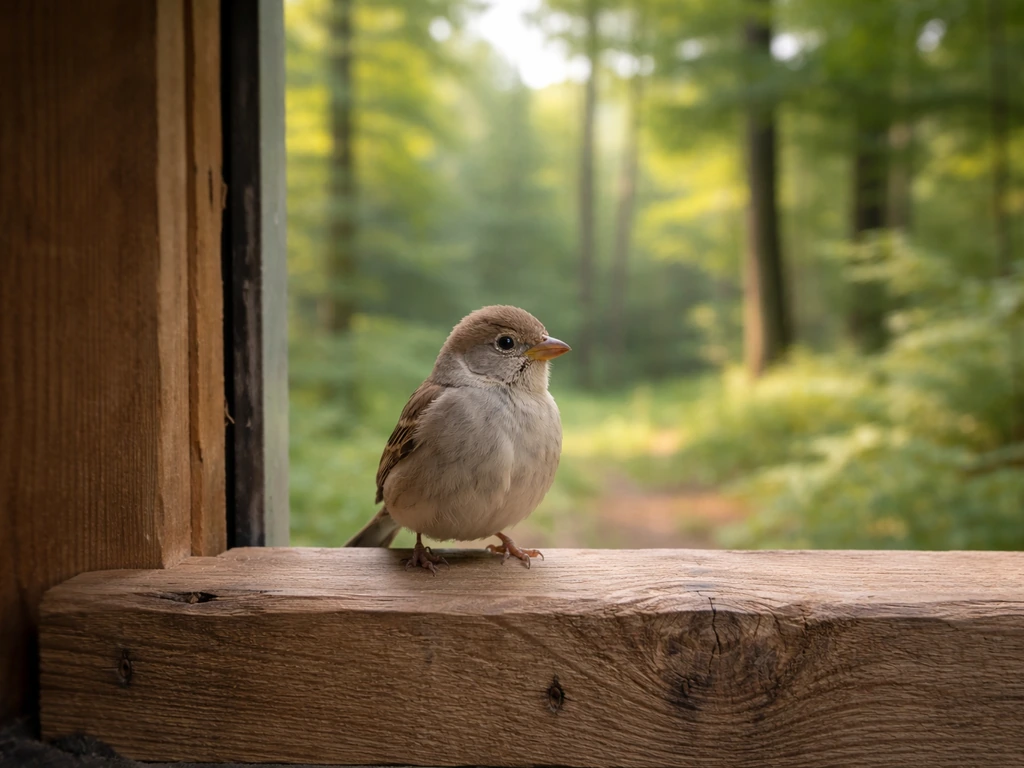
If you have a distressed bird in front of you right now, here is the short answer: stop moving, lower your voice, dim the lights, and get the bird into a warm, dark, quiet space as fast as you can. That single combination, warmth plus darkness plus quiet, is the foundation of calming almost any frightened or injured bird, whether it is your pet parrot or a wild songbird you just found on the sidewalk. Everything else in this guide builds on that.
How to Calm a Bird Down: Safe Steps and First Aid
Marcus Holloway
9 Apr 2026
Read the situation: why your bird is distressed
Before you do anything else, take five seconds to figure out what you are actually dealing with. The cause of the distress changes what you do next, and getting it wrong can make things worse.
A bird can be distressed for several different reasons. Fright is the most common: a sudden noise, a predator, a new person, or even your own quick movements can send a bird into a panic. Handling stress happens when a bird is grabbed or restrained, even gently. Injury or shock can look very similar to pure fear, but the bird may also be unable to hold itself upright, may have visible wounds, or may be breathing with its mouth open.
Overheating or chilling are less obvious but real: a bird left in a hot car or one that has been out in cold rain can become lethargic and unresponsive. Finally, illness, including respiratory infections or toxin exposure, can make a bird agitated and weak at the same time.
Look at the bird without touching it first. Is it alert and reactive, or glassy-eyed and limp? Is it breathing normally through its nostrils, or is its beak open? Can it grip a perch or stand on its own? These observations take thirty seconds and will tell you whether you are dealing with a frightened-but-healthy bird or something that needs emergency care.
Immediate calming steps to reduce fear and stress
The goal right now is to strip away every source of stimulation you can control. Human noise, touch, and eye contact are genuinely stressful to birds, especially wild ones. That means you should lower your voice to a near-whisper or go silent entirely, avoid direct eye contact (a direct stare reads as a predator threat to most birds), and move slowly and predictably. Do not hover over the bird.
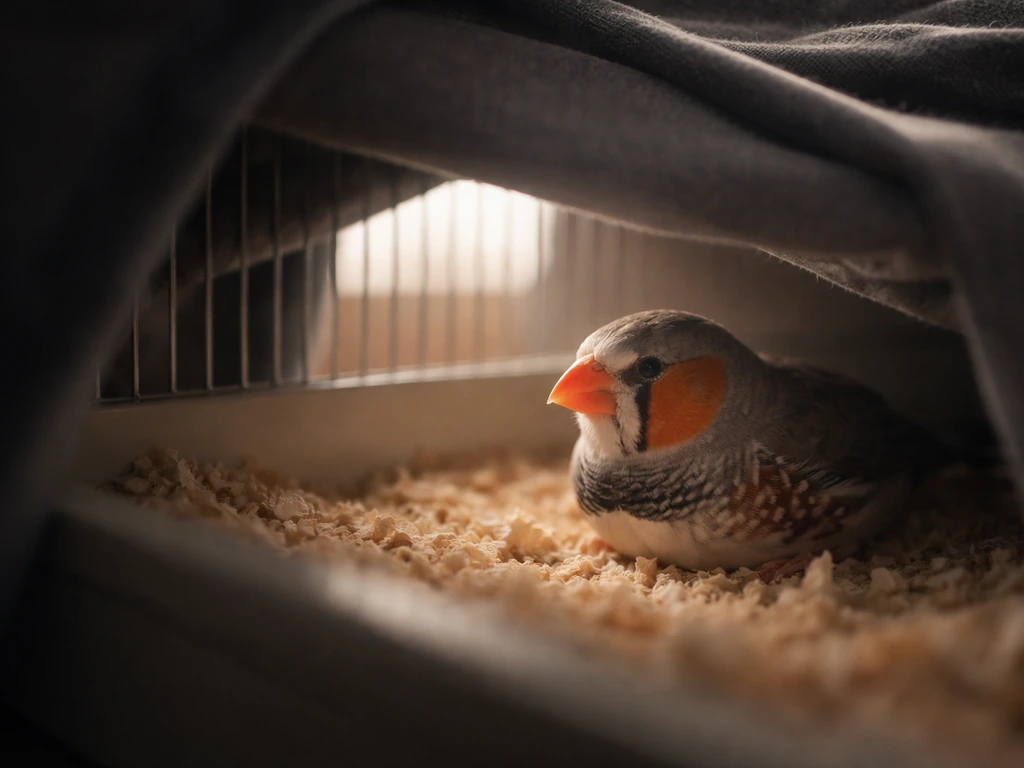
Dim the lights in the room immediately. If you can cover most of a cage or carrier with a towel or cloth, do it. Darkness reduces visual stimulation and tends to slow a bird's panic response quickly. This is why helping a stressed bird almost always starts with covering and quieting the space before anything else.
Move any other pets out of the room. Dogs, cats, and even other birds can keep a distressed bird in a heightened fear state. Close the door, reduce background noise from televisions and music, and let the bird have a few minutes of genuine quiet. You will often see the breathing slow and the posture relax within two to five minutes if the trigger was pure fright.
How to handle and secure a pet bird safely while calming
If the bird needs to be moved, contained, or gently restrained, do it with the least amount of force and the fewest number of touches possible. For a pet bird that is panicked in its cage, start by covering the cage and waiting. Many birds will calm enough on their own that you do not need to handle them at all.
If you do need to pick up or restrain a bird, use a lightweight towel. Drape it over the bird from above and behind rather than approaching from the front. Wrap loosely but firmly enough that the wings are held against the body. Keep your grip around the body, never around the neck or chest in a way that blank" rel="noopener noreferrer">compresses the keel bone or restricts breathing. Birds breathe by expanding their chest wall, so squeezing the body tightly is dangerous.
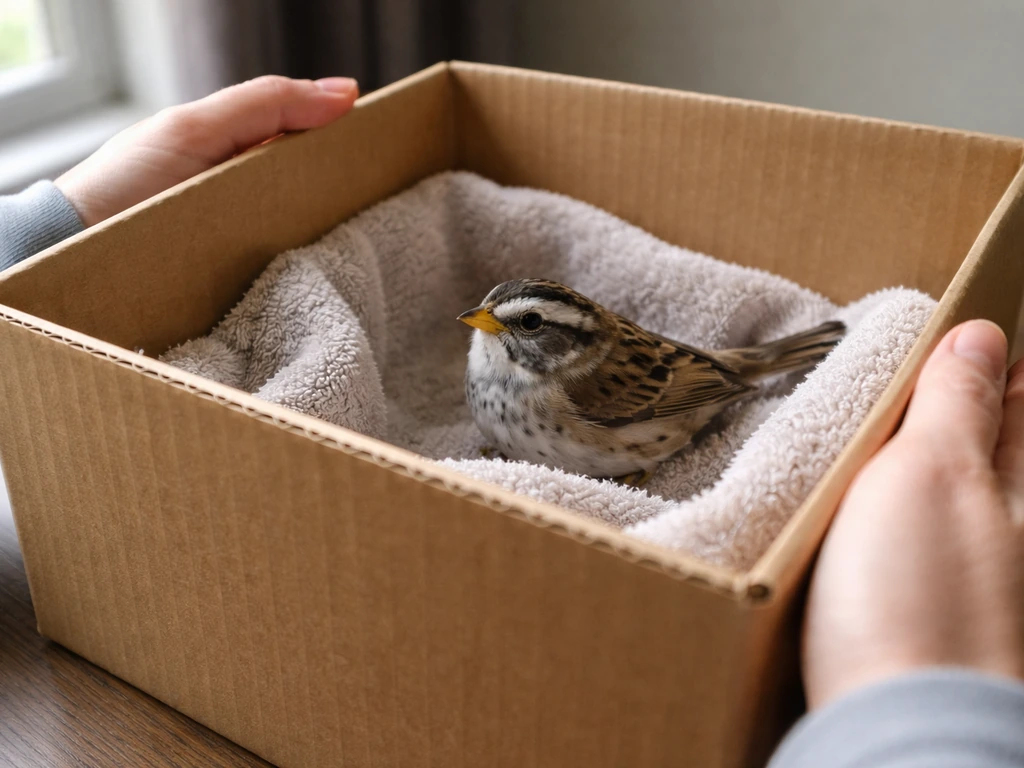
Once you have the bird in a towel, minimize the time it spends in your hands. Transfer it to a secure, ventilated box or carrier as quickly as you can. A cardboard box with small air holes and a soft cloth on the bottom works well for temporary containment. Place the box in a warm, quiet room away from foot traffic and leave it alone. The less you check on it, the faster it will settle.
For a wild bird that is grounded, the same towel approach applies. Come from the side and slightly behind, move slowly, and try to complete the capture in one smooth motion rather than several attempts. Each failed attempt adds significant stress.
Comfort care basics: warmth, darkness, and support
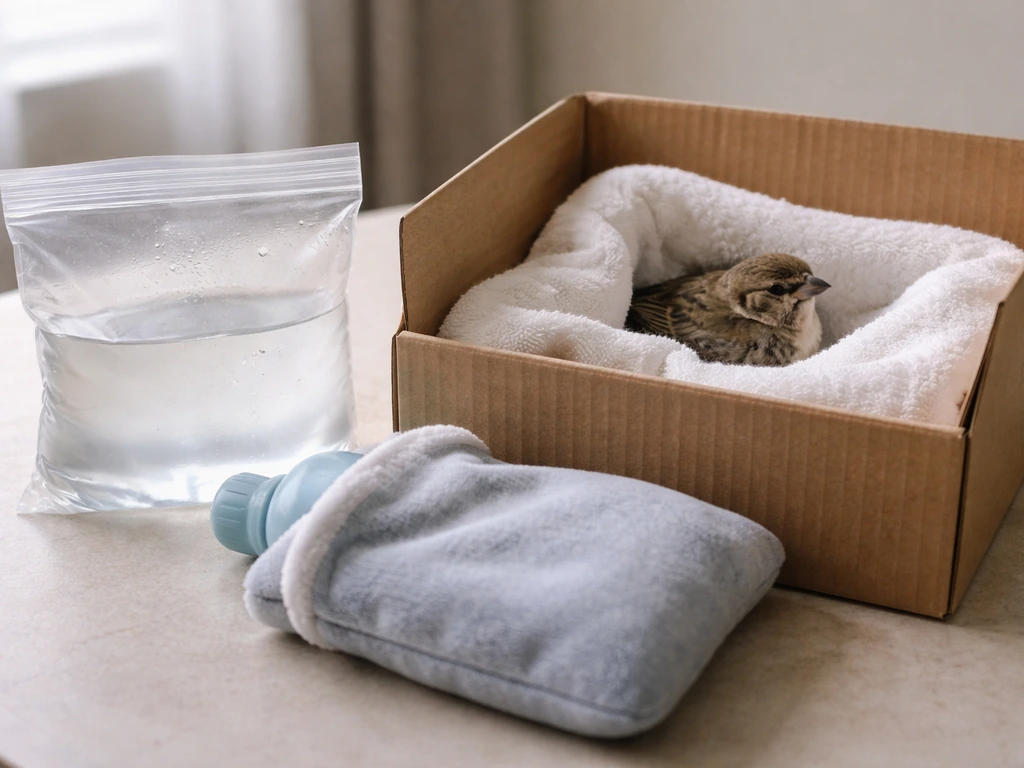
Once the bird is contained and quiet, warmth is the next priority. A bird in shock, pain, or extreme fear burns through its energy reserves rapidly and can become hypothermic faster than you would expect. Aim for an ambient temperature around 85 to 90 degrees Fahrenheit for a bird that is cold, lethargic, or clearly injured. For a bird that is just frightened but otherwise healthy, room temperature with no drafts is fine.
A safe way to add warmth is to fill a zip-lock bag or a rubber hot water bottle with warm (not hot) water, wrap it in a towel, and place it against one side of the box or carrier so the bird can move away from it if it gets too warm. Do not place a heat source directly under the bird and do not use heating pads with automatic shut-offs that cycle on and off, as the temperature fluctuation is disruptive.
Keep the box mostly covered to maintain darkness. Leave one small gap or a few air holes for ventilation, but resist the urge to check on the bird every few minutes. That checking is the most common way well-meaning people accidentally undo the progress the bird just made toward calming down.
Do not offer food or water. This is important and worth repeating: do not drip water into the bird's beak, do not offer seeds or fruit, and do not try to feed a bird anything until you have spoken with a wildlife rehabilitator or avian vet. Fluids can enter the trachea and lungs very easily due to avian airway anatomy, which means well-intentioned hydration can cause aspiration. Baby birds in particular do not drink free water the way mammals do. Wait until you have professional guidance before offering anything by mouth.
What not to do: common mistakes that make things worse
Several common instincts backfire badly when you are trying to calm a bird. Knowing what to avoid is just as important as knowing what to do.
- Do not talk to the bird in a loud, excited, or soothing-but-continuous voice. Constant human sound is a stressor, not a comfort, for most birds.
- Do not make direct, sustained eye contact. It reads as a predator assessment, not reassurance.
- Do not keep picking the bird up to check on it. Every handling event resets the stress response.
- Do not offer food, water, milk, or any liquid by dropper or syringe unless an avian vet or licensed rehabilitator has specifically told you to do so.
- Do not place the bird in a bright, busy area to 'keep an eye on it.' The stimulation will keep it in a fear state.
- Do not put multiple birds together in the same container in an attempt to provide company. An injured or panicked bird can be injured further by a cagemate.
- Do not use essential oil diffusers, scented candles, aerosol sprays, or air fresheners near the bird. Avian respiratory systems are extremely sensitive, and fumes from heated non-stick cookware (Teflon/PTFE) can be lethal even in small amounts.
- Do not attempt to medicate the bird with any human or pet medications. Many medications safe for mammals are toxic to birds.
If you want to go deeper on what destressing a bird actually looks like in practice, the same principles apply: reduce stimulation, add warmth, and keep your hands off unless absolutely necessary.
When it's an emergency: signs that mean vet or rehab help right now
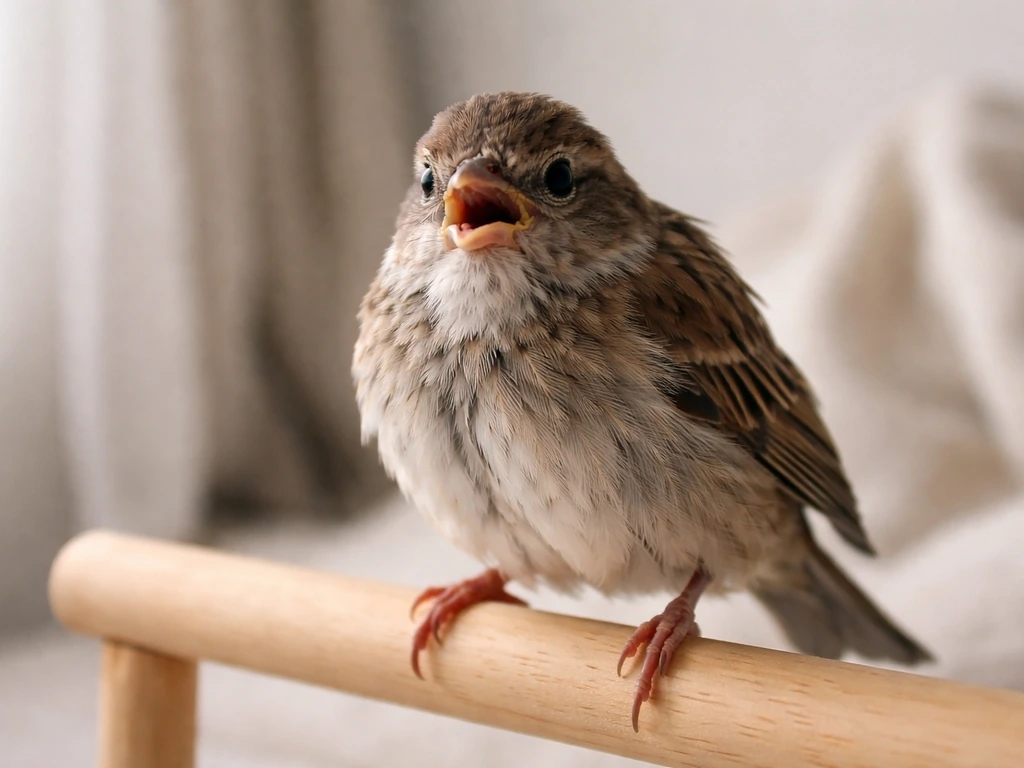
Calming a frightened bird and treating a medical emergency are two different things. Some birds look distressed when they are actually in serious physiological trouble, and no amount of warmth and quiet will fix the underlying problem. You need to know which is which.
Get the bird to an avian vet or wildlife rehabilitator immediately if you see any of the following:
- Open-mouth breathing or breathing with the beak open at rest
- Tail bobbing with every breath (the tail visibly pumps up and down as the bird works to breathe)
- Head or neck stretching upward as if trying to open the airway
- Wheezing, clicking, or rattling sounds with each breath
- Bleeding that does not stop within a few minutes of gentle pressure
- Seizures, tremors, or loss of coordination
- Complete inability to stand or grip a perch combined with extreme lethargy
- Swelling around the eyes or face, or discharge from the eyes or nostrils
- Known or suspected exposure to aerosol sprays, smoke, heated non-stick coatings, or cleaning fumes
Respiratory distress in birds can deteriorate very quickly. Open-mouth breathing, tail bobbing, and neck stretching are signs that the bird is working hard just to move air and that the airway may be significantly compromised. These are not signs that will resolve with rest alone. If you are seeing any of these, the warm-dark-quiet stabilization is still appropriate while you arrange transport, but do not wait to see if it gets better on its own.
If you are unsure whether what you are seeing qualifies as an emergency, treat it as one. It is always better to make an unnecessary call to a vet than to wait too long. Learning how to calm a scared bird is useful, but recognizing when calm is not enough is what actually saves lives.
After calming: next steps and getting professional guidance
Once the bird is stable and settled, your job shifts from immediate calming to arranging appropriate care. For a pet bird that was simply startled and has now returned to normal behavior, monitor it closely for the next few hours. Watch for any of the emergency signs listed above. If everything looks normal, a call to your avian vet for a quick phone assessment is still a good idea, especially if the bird was handled roughly or exposed to anything toxic.
For a wild or injured bird, the calm-and-contained phase is a holding pattern, not a solution. Wild birds need licensed care. To find a permitted wildlife rehabilitator near you, start with the International Wildlife Rehabilitation Council directory, your state's fish and wildlife agency website (most maintain county-by-county lists of permitted rehabilitators), or tools like Animal Help Now, which works after hours when hotlines are closed.
The International Wildlife Rehabilitation Council (IWRC) provides a directory to help locate wildlife rehabilitators, including those outside the United States via email support International Wildlife Rehabilitation Council directory. When you call or hand off the bird, describe what you observed: when you found it, what it was doing, any obvious injuries, and what you have done so far.
Understanding how to rehabilitate a bird goes well beyond what any non-licensed person should attempt at home, which is exactly why connecting with a professional quickly matters so much. Your role in those first hours is stabilization and safe handoff, not treatment.
If you are dealing with a pet bird that seems to have ongoing stress or behavioral issues rather than a one-time scare, it is worth reading about how to cure a depressed bird since chronic stress and depression in pet birds can look similar and have overlapping causes. Likewise, how to comfort a bird that is recovering from a frightening experience covers the longer-term supportive steps once the acute crisis has passed.
The bottom line is this: warmth, darkness, and quiet are the right first moves for almost any distressed bird. Hands off, lights down, noise out. From there, watch for emergency signs, skip the food and water until a professional advises otherwise, and get the bird to qualified help as soon as you can arrange it. You do not need to do more than that to give the bird a real chance.
FAQ
How long should I keep a bird in a warm, dark, quiet space before checking on it?
Usually 2 to 5 minutes is enough to see whether panic is settling. After that, avoid frequent “check-ins.” Instead, do a single quick reassessment of breathing and posture, then leave it alone again. If the bird is still open-mouth breathing, tail-bobbing, or can not grip, treat it as an emergency rather than waiting longer.
Is it okay to turn on lights again after the bird starts to calm down?
Wait until the bird is clearly more settled (normal breathing through the nostrils, upright posture or normal perching attempt). Even then, reintroduce light gradually, and keep the room quiet for at least a short period so the bird does not re-panick from renewed visual stimulation.
Should I try to cover a wild bird with a towel or does that make things worse?
A towel capture can be appropriate, but only if you must move it to safety or prevent harm. Try to approach from the side and slightly behind and aim to complete the move in one smooth attempt. If the bird is only frightened but not in immediate danger, do not chase it, minimize handling, and let darkness and quiet reduce stress first.
What if the bird is still panicked after I cover it and reduce noise?
If it does not improve, the cause may be more than fear, such as injury, shock, overheating, or illness. Recheck for signs like limpness, inability to stand, breathing with the beak open, or abnormal breathing effort. At that point, prioritize professional care and transport rather than repeated attempts to calm it at home.
How can I tell if “warmth” is helping or if I’m overheating the bird?
Warmth should make the bird more responsive, not more lethargic and stressed. If the bird becomes very hot, excessively slack, or worsens quickly, remove the heat source and let it return toward room temperature with no drafts. Use the “side placement” method (heat against one side only) so the bird can move away if it gets too warm.
Can I offer water in a bowl or spray to help a dehydrated bird calm down?
Avoid offering water or food unless a vet or rehabilitator instructs you. Birds can aspirate fluids into the lungs, especially during stress. Even for “grounded” wild birds, do not force drinking or apply beak drips, focus on warmth, darkness, and safe transport for evaluation.
My pet bird is panicking inside its cage, should I cover the whole cage or just the carrier?
Either can work, but covering the cage or carrier helps reduce visual stimulation. Start with a full or near-full cover, leave appropriate ventilation gaps, then wait. Limit touching and do not remove the bird unless you must move it for safety or because it shows emergency breathing or injury signs.
What should I do if the bird is breathing with its mouth open, but it seems calm otherwise?
Mouth-open breathing is a red flag for respiratory distress, even if the bird looks “quiet.” Keep the bird warm, dark, and quiet while you arrange transport, but do not wait for improvement. Contact an avian vet or wildlife rehabilitator immediately.
Is it safe to use a heating pad or microwaveable heat pack near the bird?
Heating pads with automatic cycling and any source placed directly under the bird are not recommended because temperature fluctuations can disrupt stabilization. Use warm water in a bag or hot water bottle, wrap it in a towel, and place it against one side of the container so the bird can move away.
Once the bird looks better, should I put it back outside or back in its normal environment right away?
Not immediately. Even if it settles, monitor for the next several hours for emergency signs or worsening breathing. For wild birds, do not release without professional permission. For pets, avoid normal activity right away, keep conditions calm and stable until you have verified health with a quick vet assessment if there was any handling or suspected exposure to toxins.
Next Article
How to Release a Hand-Reared Bird Safely and Humanely
Step-by-step humane release for hand-reared wild birds: species checks, anti-imprinting care, soft vs hard release, afte