Taking care of a lovebird comes down to getting a few fundamentals right: a safe, warm, stable environment, a solid diet built around pellets and fresh vegetables, daily social interaction, and a sharp eye for early health warning signs. Whether you have a pet lovebird at home or you've just found one that looks sick or injured, this guide covers both situations step by step.
How to Take Care of a Lovebird: Daily Care and Emergency Help
Marcus Holloway
5 Apr 2026
First: Is This a Pet Lovebird or a Found/Sick Bird?
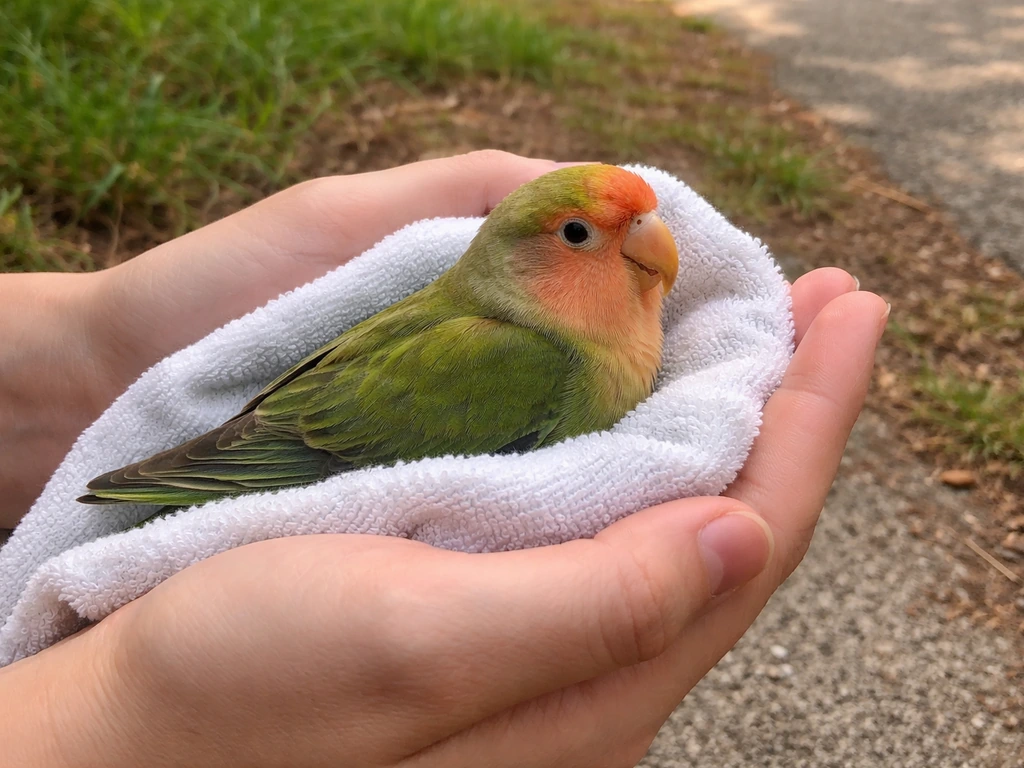
This matters because the first steps are completely different. A healthy pet lovebird needs a routine, enrichment, and good food. A sick, injured, or found lovebird needs warmth, darkness, and a phone call to an avian vet or wildlife rehabilitator before you do almost anything else.
If you found a lovebird outdoors that seems weak, is sitting on the ground, or can't fly, treat it as an emergency situation and skip ahead to the triage sections below. Lovebirds are not native wild birds in most regions, so a bird found outside is almost certainly an escaped or lost pet, and it needs immediate shelter and professional guidance. If you already have a pet lovebird at home and you're here for day-to-day care advice, read straight through.
Setting Up a Safe, Comfortable Space
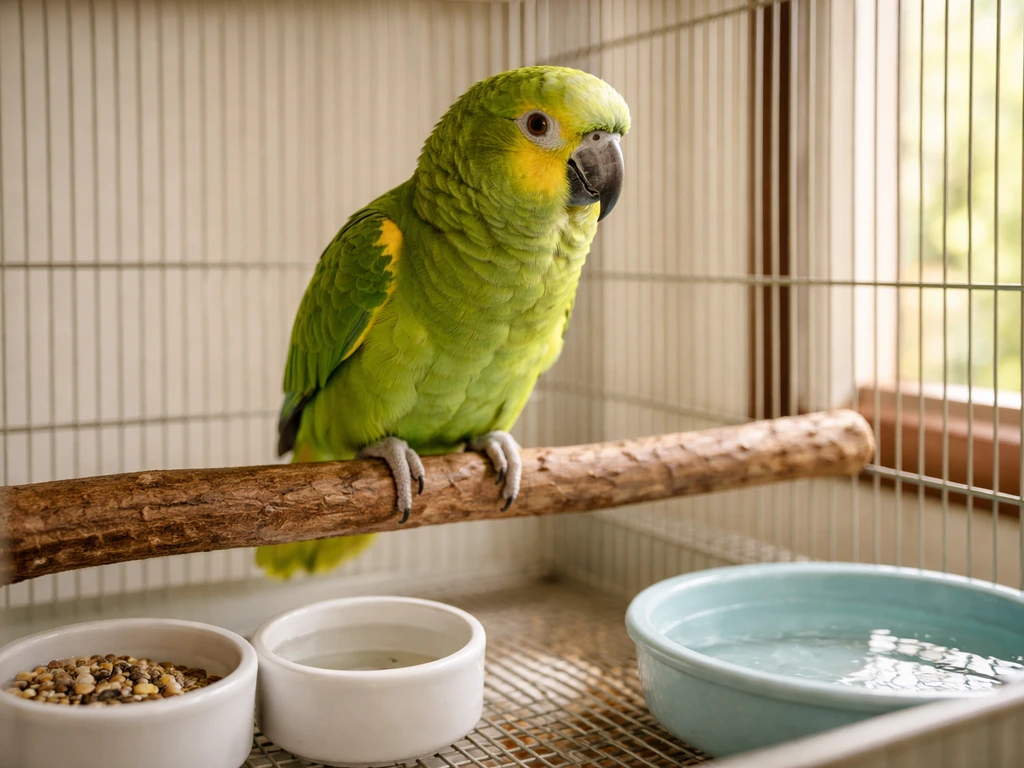
Lovebirds are small but active, so the cage should be as large as you can reasonably provide. A good starting point is 32 inches wide by 20 inches deep, with bar spacing no wider than 5/8 of an inch so the bird can't get its head stuck. Horizontal bars on at least two sides give the bird something to climb, which they love.
Placement matters a lot. Place the cage off the floor in a draft-free, well-lit area, away from air conditioners, heating vents, and windows with direct cold drafts. Keep it away from cats, dogs, and other pets. Lovebirds are prey animals and a cat sitting near the cage, even outside it, causes serious chronic stress.
Temperature should stay between 65 and 80°F. Avoid significant temperature swings, so don't move the cage between a warm room and a cold garage, and don't leave it near a window that gets freezing at night. Extreme temperature changes are one of the fastest ways to make a lovebird sick.
Lighting is something a lot of people overlook. Lovebirds need UV light exposure to produce vitamin D, which is essential for calcium absorption. A few hours of indirect natural light daily, or a full-spectrum bird-safe UV lamp, goes a long way. Just don't place the cage where the bird has no shade, because being unable to escape direct heat is just as harmful.
Avoid plastic inside the cage. Lovebirds are dedicated chewers, and if they chew and swallow plastic, it can cause serious internal damage. Stick to natural wood perches of varying diameters (which also keeps their feet healthy), stainless steel food bowls, and bird-safe rope or wood toys.
If the bird is stressed, such as after a move, a vet visit, or being introduced to a new home, partially covering the cage with a light breathable cloth on two or three sides can help it feel more secure. Just make sure there's always good airflow.
What to Feed a Lovebird (and What to Skip)
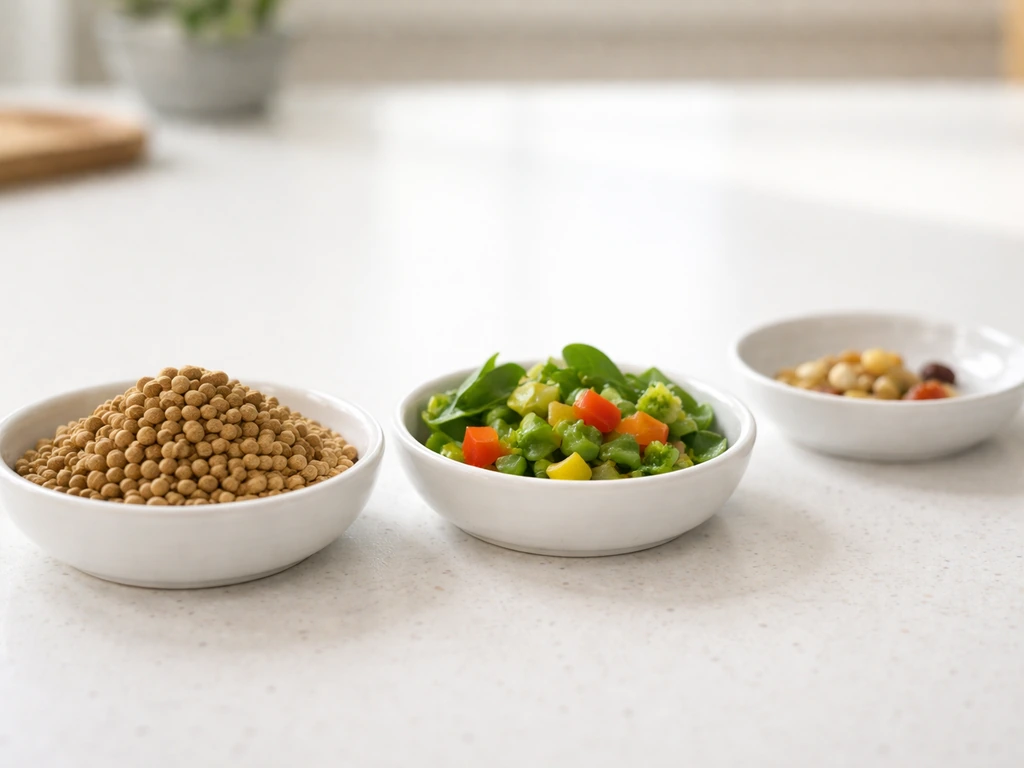
A healthy lovebird diet is built around a high-quality formulated pellet, supplemented with fresh vegetables and small amounts of fruit. Pellets should make up the majority of what's in the bowl, with seeds kept to a minimal portion. Seeds are high in fat and low in key nutrients, and a lovebird eating mostly seeds is a bit like a person living on chips. It tastes good, but it causes real health problems over time.
If your lovebird has been eating mostly seeds and you want to transition to pellets, do it gradually. Mix pellets in with the existing diet and slowly shift the ratio over several weeks. Switching too fast can cause the bird to refuse food entirely, which is dangerous. A vet-supervised pellet transition strategy works best for birds that are particularly resistant.
Good fresh foods to offer include dark leafy greens like kale and romaine, broccoli, carrot, bell pepper, and cooked sweet potato. Offer small amounts of fruit like apple or mango as a treat, not a staple, since fruit is high in sugar. Fresh food should be removed after a few hours so it doesn't spoil and cause bacterial problems.
There are several foods you must never give a lovebird. Avocado contains persin, which causes cardiac toxicity in birds. Chocolate is toxic due to theobromine and caffeine. A veterinary clinic handout on pet bird toxins lists chocolate as toxic, and notes it can cause cardiopulmonary signs and even severe outcomes such as death in birds blank" rel="noopener noreferrer">chocolate is toxic due to theobromine and caffeine. Alcohol and salt are both dangerous: salt can cause dehydration and liver damage even in tiny amounts. When in doubt, don't offer it. What and how you feed a small bird matters more than most people realize, and getting it wrong consistently leads to nutritional disease.
| Food | Safe? | Notes |
|---|---|---|
| High-quality pellets | Yes | Should be the main diet |
| Dark leafy greens | Yes | Kale, romaine, spinach in moderation |
| Bell pepper, broccoli, carrot | Yes | Great fresh options |
| Apple, mango (small amounts) | Yes | Treat only, high in sugar |
| Seeds | Limited | Small portion only, not a staple |
| Avocado | No | Toxic, causes cardiac issues |
| Chocolate | No | Toxic due to theobromine/caffeine |
| Salt | No | Dangerous even in small amounts |
| Alcohol | No | Toxic, never offer |
Daily Care Routine That Actually Works
A consistent daily routine keeps lovebirds healthy and makes it much easier to notice when something is off. Here's what a solid daily routine looks like:
- Refresh food: Remove any leftover fresh food from the previous day, wash the food bowls, and refill with fresh pellets and a new portion of vegetables.
- Change water: Clean and refill the water bottle and water bowl every single day. Bacteria build up fast in standing water, and a sick bird can go downhill quickly from contaminated water.
- Spot-clean the cage: Remove soiled bedding or paper from the cage floor, wipe down any perches with visible droppings, and check for anything the bird may have chewed off toys or perches.
- Check in on the bird: Spend at least 20 to 30 minutes interacting with your lovebird. Talk to it, let it step up on your hand if it's tame, or simply sit near the cage so it gets used to your presence.
- Observe behavior and droppings: A quick daily check of the bird's energy level, posture, and droppings tells you a lot about its health.
Weekly, do a full cage clean: remove everything, scrub the cage with warm soapy water or a bird-safe disinfectant, replace all bedding, and let it dry fully before putting the bird back. This weekly deep clean is not optional. Bacteria, mold, and fungi accumulate in bird cages fast, and a dirty environment is a constant low-level health threat.
Bathing is also part of routine care. Two to three times a week, offer a shallow dish of room-temperature water for the bird to splash in, or gently mist it with a spray bottle. Most lovebirds enjoy this, and it helps keep feathers in good condition. Don't use cold water, and make sure the bird can dry off somewhere warm.
Lovebirds are social birds. In the wild they bond very closely with a mate, and a single pet lovebird needs a lot of human interaction to stay mentally healthy. If you're away for long stretches most days, seriously consider getting a second lovebird. An isolated lovebird can develop feather-destructive behavior and depression. General bird care principles apply here too: enrichment, routine, and attention are as important as food and water.
What Healthy Looks Like (and What Should Concern You)
A healthy lovebird is active, curious, and vocal. It holds its feathers smooth and close to its body (except when relaxed or sleeping), eats well, and produces consistent droppings. Healthy droppings have three distinct parts: a green or brown fecal portion, a chalky white urate portion, and a small clear liquid urine portion. That combination, every time, is a good sign.
Start worrying when you see changes. Red-colored droppings that don't match something the bird ate recently warrant a vet call. Droppings that are entirely liquid, extremely dark, or look like nothing the bird has produced before are red flags. Changes in color, consistency, or frequency are all worth taking seriously.
One of the most important things to understand about birds is that they are wired to hide illness. In the wild, a sick bird that looks sick gets picked off by predators, so they mask symptoms until they can't anymore. By the time a lovebird looks obviously unwell, it may already be quite sick. This is why subtle changes matter. A bird that's sleeping more than usual, sitting fluffed up, eating less, or being unusually quiet deserves a vet visit, not a wait-and-see approach.
Red Flags That Need Immediate Attention
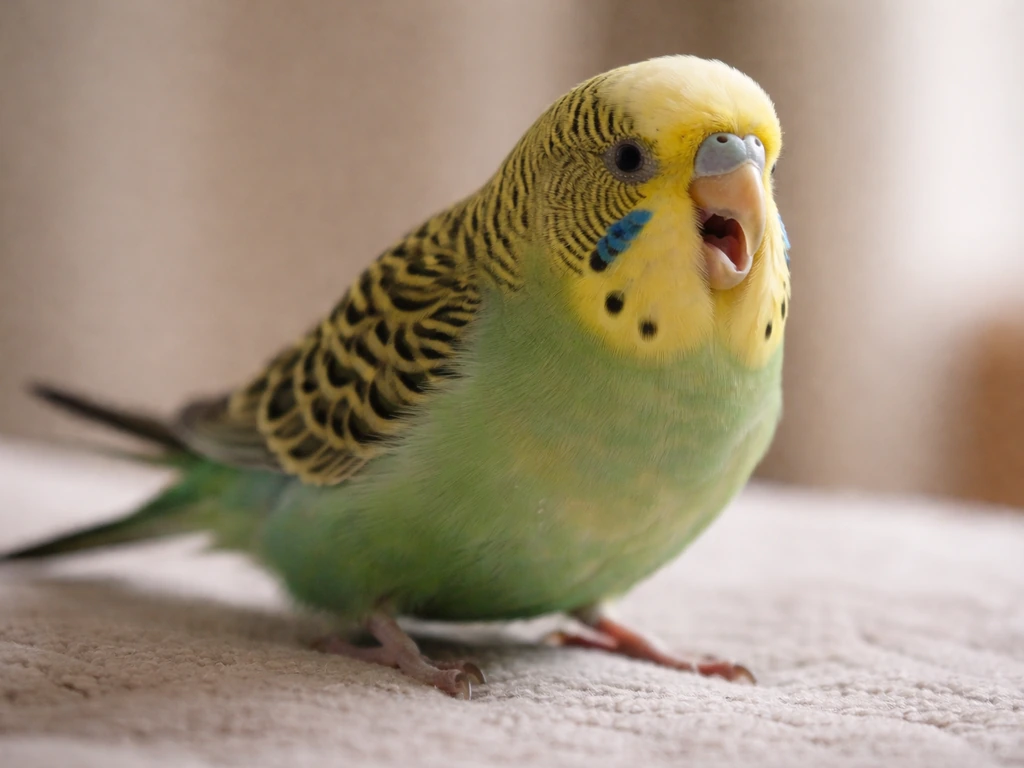
- Open-mouth breathing at rest or labored breathing
- Tail bobbing rhythmically with each breath (this signals respiratory distress)
- Wheezing, clicking, or any unusual sounds when breathing
- Fluffed-up feathers combined with lethargy and not eating
- Discharge from the eyes or nostrils
- Facial or eye swelling
- Loss of balance, falling off the perch, or inability to grip
- Bleeding that doesn't stop within a few minutes
- Vomiting or repeated head-shaking after eating
These are not wait-and-see symptoms. Any one of these is a reason to contact an avian vet the same day, or within the hour if the bird is in clear distress. Respiratory symptoms especially, like open-mouth breathing and tail bobbing, are signs of a crisis in a small bird.
If the Lovebird Is Sick or Injured: What to Do Right Now
This section applies whether you have a pet lovebird that's suddenly unwell or you've found a lovebird that appears injured or sick. The immediate priority is the same: warmth, darkness, quiet, and minimal handling.
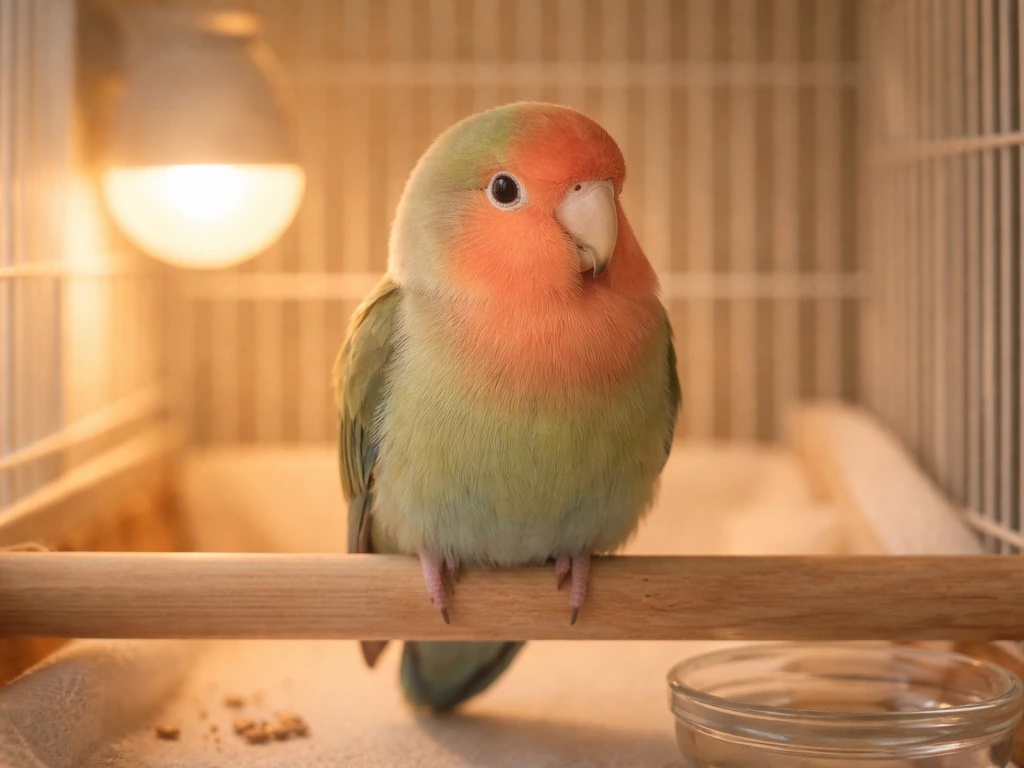
Place the bird in a small cardboard box or a secure carrier lined with a soft cloth or paper towel. Make the environment warm. A healthy lovebird does fine at room temperature, but a sick or injured bird loses body heat fast and hypothermia makes everything worse. You can place the box on top of a heating pad set to the lowest setting, but never place the bird directly on the heat source. Leave one half of the box off the heating pad so the bird can move away from the heat if it needs to.
Keep the box dark by covering it with a light cloth or closing the lid with air holes. Darkness reduces stress and keeps the bird calmer, which is genuinely important when it's already struggling. Keep the space quiet and away from fans, air vents, children, and other pets.
Do not try to force feed or give water to a bird you've found or that is very ill. This is one of the most well-meaning but dangerous things people do. A dehydrated or sick bird's digestion can shut down, and forcing food or water can cause aspiration or make the underlying problem worse. Hold off until a vet or rehabilitator tells you it's safe to offer anything.
If the bird is bleeding, apply gentle pressure with a clean cloth. A broken blood feather (a feather that's still actively growing, with a blood supply) may need to be pulled by a vet if it doesn't stop bleeding on its own. Don't try to pull feathers yourself unless you've been guided through it by a professional.
Avoid the urge to handle the bird repeatedly to check on it. Every time you open the box, you're adding stress. Keep interaction to a minimum until you can get professional help. Birds like lovebirds share many care needs with other small parrots, and if you're also helping a parrot in distress, the same stabilization approach applies.
When to Call a Vet or Rehabber, and How to Prepare
The short answer is: sooner than you think you need to. If the bird is showing any of the red flags listed above, or if you've found a lovebird that can't fly or is sitting on the ground and unresponsive to your approach, call now. Don't wait to see if it improves.
For a pet lovebird, you want an avian veterinarian, not a general small animal vet. Birds have very different physiology from cats and dogs, and an avian specialist will be able to do a proper examination and run the right diagnostics. Search for an avian vet in your area through the Association of Avian Veterinarians directory.
For a found or wild-context bird, contact a licensed wildlife rehabilitator. You can use Animal Help Now's wildlife emergency search to find help near you quickly. Call before you go anywhere, because a rehabilitator can often guide you on exactly what to do in the meantime and whether the bird needs to come in right away.
When you call or arrive, be ready to describe: what you observed (symptoms, behavior changes, any visible injuries), when symptoms started, what the bird has eaten or been offered, its living conditions, and whether it's been exposed to any chemicals, fumes, or potential toxins like non-stick cookware fumes, which are deadly to birds.
Transport the bird in the warm, dark, covered box you already set up. Don't let it ride loose in the car. Keep the heat on if it's cold out, but don't let the car get hot. A consistent, calm, quiet environment during transport is what the bird needs most.
How Lovebirds Compare to Other Small Birds in Care Needs
If you're coming to lovebird care from experience with other small birds, it helps to understand where lovebirds sit on the care spectrum. They need more social interaction than most small birds but are less demanding than larger parrots. They're more destructive chewers than canaries or finches but easier to manage than cockatoos or macaws.
| Care Area | Lovebird | Cockatiel | Canary |
|---|---|---|---|
| Social needs | High (bonds very closely) | Moderate to high | Low (mostly independent) |
| Chewing/destruction | High | Moderate | Low |
| Diet complexity | Moderate (pellets + fresh food) | Moderate | Moderate (seeds + greens) |
| Noise level | Moderate to high | Moderate | Low to moderate (song) |
| Handling tolerance | Can be tame with work | Often naturally tame | Generally not handled much |
| Space needed | Moderate (active bird) | Moderate | Smaller cage acceptable |
If you're also caring for or considering a cockatiel, the care routine for cockatiels has a lot of overlap with lovebirds but with some key differences in social needs and handling. Similarly, if you're managing a canary alongside a lovebird, understanding how to care for a canary will highlight just how different their dietary and interaction needs are from lovebirds.
Keeping a Lovebird Long-Term: The Mindset That Makes It Work
Lovebirds live 10 to 15 years with good care. That's a real commitment, and going in with clear expectations makes the whole experience better for both of you. The birds that thrive are the ones with owners who stick to a consistent daily routine, catch health problems early because they know what normal looks like, and treat the bird as a companion that needs genuine attention, not just food and water.
Get an avian vet exam scheduled within the first few weeks of bringing a lovebird home, and plan on annual wellness checkups after that. Many lovebird health problems, like nutritional deficiencies or early infections, are much easier to treat when caught early. A vet who knows your bird's baseline is an invaluable resource.
Finally, pay attention to behavior as much as physical signs. A lovebird that's less chatty than usual, sleeping at odd times, or not interested in toys it used to love is telling you something. Birds communicate through behavior long before physical symptoms become obvious. Knowing your specific bird's normal personality is your best early warning system. Understanding the broader principles of taking care of a small bird day to day will reinforce everything covered here and help you stay ahead of problems before they become emergencies.
FAQ
How often should I change my lovebird’s food and water?
Aim for fresh pellets and vegetables once daily, and remove uneaten fresh food after a few hours. If your bird is nesting, molting, or eating less than usual, extend observation time for droppings and appetite, but keep the same food safety rule (remove produce before it spoils).
Can my lovebird have a bath every day?
Yes, but keep it controlled. Bath time is usually safest 2 to 3 times weekly, with room-temperature water and a warm drying area afterward. Avoid bathing during illness or right before cold nighttime temperatures, because birds can chill quickly.
What’s more important, a larger cage or the cage location?
Do not offer a “bigger cage” as the only solution. If the cage is large but placement is in a draft, near vents, or in direct sunlight with no shade, your bird can still get stressed or overheat. The ideal setup is off the floor, draft-free, and has both light and a place to retreat from direct heat.
Are any toys or perches off-limits for lovebirds?
Provide for chews, not for luck. Stainless steel and natural wood are generally safer, but also avoid painted wood, treated perches, and anything with unknown coatings. If you are unsure whether a toy is bird-safe, remove it rather than waiting for chewing.
What should I do if my lovebird suddenly stops eating?
If your lovebird stops eating, warmth and calm matter most, then contact an avian vet the same day. Do not try to force food or water, and keep interaction minimal. Weight loss can start quickly in small birds, so a “wait a day” approach is risky.
How do I tell normal variation in droppings from a true emergency?
If droppings are smaller but still formed, appetite is normal, and the bird is otherwise active, it can be temporary (diet change, stress, or too little fresh water). If droppings are consistently watery, very dark, not present, or come with fluffed posture, quiet behavior, or reduced eating, treat it as a same-day vet issue.
My schedule is busy most days, can I still keep one lovebird?
Yes, and it’s a common trap: a single missing day of social time can be stressful, but complete isolation is worse. If you cannot provide direct interaction daily, consider a second lovebird and also add enrichment (safe foraging toys, regular play periods, and consistent routines).
Can I clean the cage every day, or will it stress my lovebird?
If you need to clean daily, spot-clean droppings and food debris, but keep the full cage deep-clean for weekly as a baseline. Also ensure the cage is completely dry before returning the bird, because damp bedding can contribute to bacterial growth.
What pellet brand or type should I use, and how do I switch brands?
Choose pellets that are appropriate for small parrots and store them dry and sealed. Before swapping brands, do a gradual transition over several weeks. If the bird refuses pellets even after gradual mixing, ask your avian vet about a supervised plan rather than switching instantly or increasing seeds.
How much fruit and seeds are actually safe for a lovebird?
Use the smallest amount needed, and portion carefully. Fresh fruit is a treat, and seeds should stay minimal because they can cause nutritional imbalances. If you are unsure how much to give, start with a tiny piece once a week and adjust based on body condition and droppings, ideally with a vet baseline check.
What household fumes are most dangerous, and what should I do if I used them?
Yes, nonstick fumes are a critical risk. If you have recently used nonstick cookware, aerosol cleaners, incense, or heavy fragrances, treat the situation as urgent even if the bird looks okay at first, then call an avian vet or wildlife rehabilitator for guidance.
I found a lovebird outside, should I try to give it water or encourage it to fly?
If you find a bird injured outdoors, prioritize stabilization rather than “helping it fly.” Provide warmth and darkness in a covered, secure container, avoid handling, and call a licensed wildlife rehabilitator immediately. Only address bleeding with gentle pressure using a clean cloth, and do not pull feathers yourself.
How soon should I schedule a first vet visit after bringing home a lovebird, and do I need more than annual checkups?
Plan for an avian wellness exam within the first few weeks, then annual checkups if the bird is stable. If your lovebird has a history of seed-heavy feeding, frequent fluffed resting, or any respiratory symptoms, ask for an earlier follow-up because nutritional deficiencies and early infections may take longer to show.
Next Article
How to Take Care of a Parrot Bird Step by Step Care Guide
Step-by-step parrot bird care: cage, diet, handling, enrichment, sleep, hygiene plus sick or injured first-aid and vet s