If you've found a bird you're calling a 'maya' or myna-type bird and you're wondering whether to feed it right now, the safest first move is to hold off on food and water until you've done a quick condition check. That's not overcautious advice. Feeding the wrong bird the wrong thing the wrong way is one of the fastest routes to aspiration pneumonia or death. This guide walks you through exactly what to assess, how to handle the bird safely, what to feed if feeding is appropriate, and when to stop and get professional help.
How to Feed a Maya Bird: Step-by-Step Emergency Guide
Marcus Holloway
3 May 2026
Emergency check first: what are you actually dealing with?
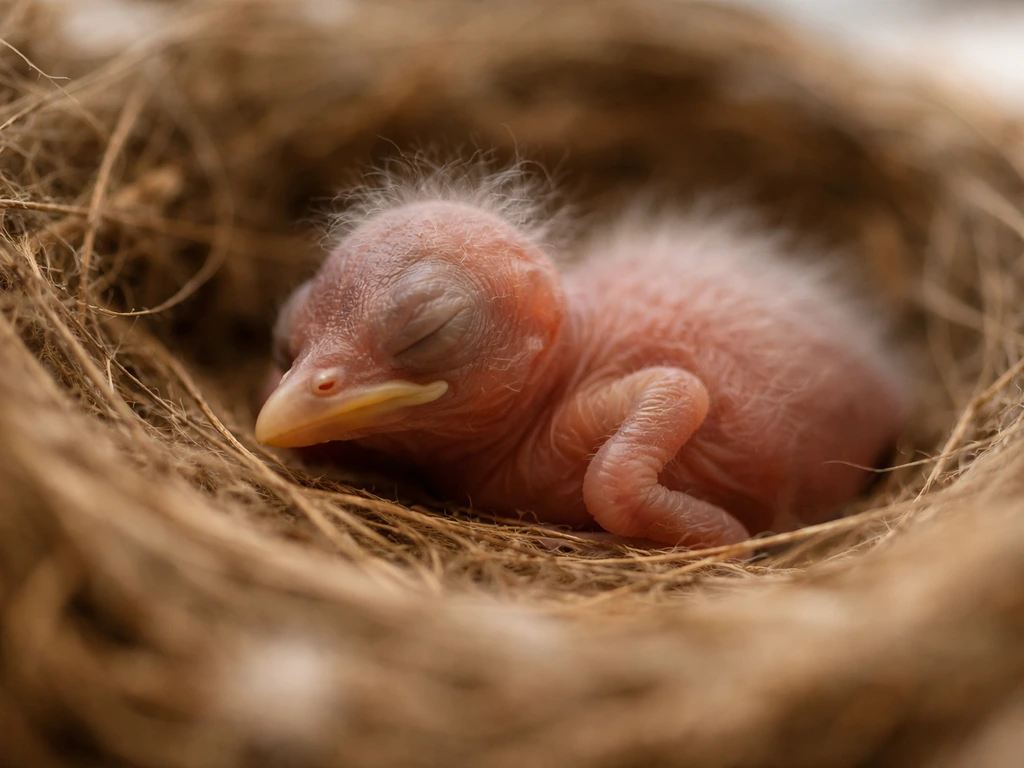
Before anything else, run through these four questions. Your answers will shape every decision that follows.
- Is the bird featherless or mostly bare with closed eyes? That's a hatchling or nestling. It needs professional care immediately. Do not feed or give water.
- Is the bird fully feathered but hopping around on the ground? That's almost certainly a fledgling. It likely doesn't need your help. Watch for a parent returning within 30 to 60 minutes before intervening.
- Is the bird an adult that is injured, stunned, or unable to fly? Stabilize it in a dark, quiet box and contact a wildlife rehabilitator or avian vet. Don't attempt to feed a stunned or visibly injured bird.
- Is the bird alert, opening its mouth, and actively begging? That's the one situation where careful, supervised hand-feeding may be appropriate while you arrange professional help.
The Wildlife Center of Virginia, Cornell Lab, and most wildlife rehab organizations are clear: do not provide food or water to a found bird unless specifically instructed by a professional. That guidance exists because the risks of DIY feeding, especially aspiration and toxic foods, are real. This article helps you bridge the gap until you can reach a rehabilitator, not replace one.
What kind of bird is this, exactly?
The term 'maya bird' is used loosely across Southeast Asia, South Asia, and some Pacific regions to refer to mynas (also spelled mynah), particularly the Common Myna (Acridotheres tristis) and related starling-family birds. If you're in the Philippines, 'maya' sometimes refers to the Eurasian Tree Sparrow instead. The Missouri Department of Conservation notes that Eurasian Tree Sparrows forage for seeds, grains, fruits, and insects (opportunistic omnivory), which matters when deciding what an identified “maya” bird might actually be eating. Knowing which bird you have matters for feeding because diet, life-stage development, and behavior differ between species.
Common Myna identification cues: medium-sized bird, brown body, black head, bright yellow bill and eye patch, white wing patches visible in flight, bold and somewhat confident posture even when injured. Eurasian Tree Sparrow identification cues: small, chestnut-brown cap, black cheek spot on white face, buff underparts, much smaller overall than a myna.
If you genuinely cannot identify the bird, that's a reason to be more cautious, not less. Feeding a bird the wrong diet based on a misidentification can cause harm. In that case, keep the bird warm, dark, and quiet, and prioritize reaching a wildlife rehabilitator or avian vet before attempting any feeding.
How to handle the bird before you feed it
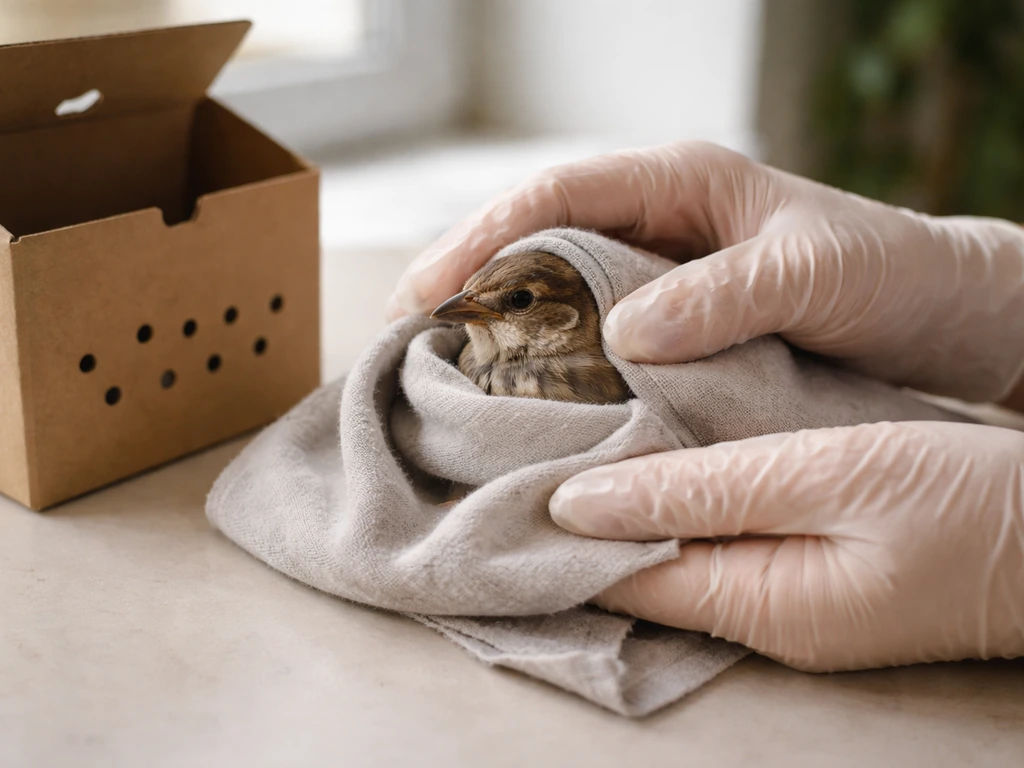
Do this
- Wash your hands before and after handling.
- Use a thin cloth or soft gloves if the bird is panicking. Wrap it loosely to reduce flapping and stress.
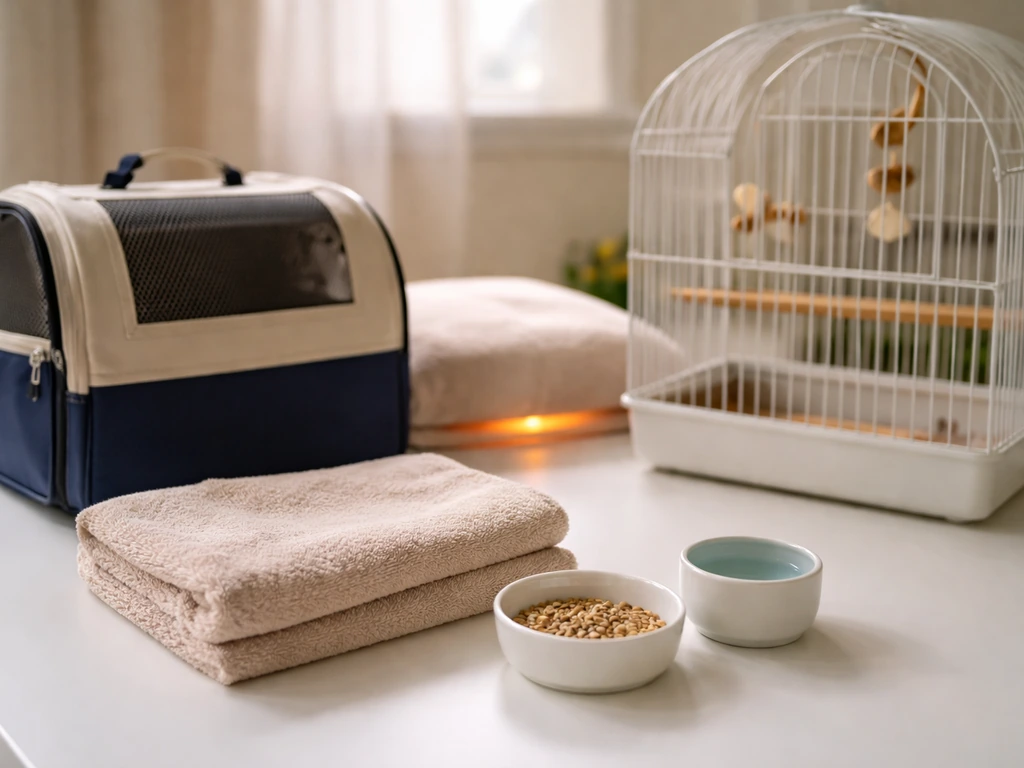
- Place it in a ventilated cardboard box lined with a soft cloth or paper towel. Keep the box in a warm, dark, quiet room.
- Minimize handling time. Every minute of handling is stressful for the bird, and stress can kill a compromised bird faster than hunger.
- Keep the box away from pets, children, and loud noise.
Do not do this
- Do not force the bird's beak open.
- Do not drip or pour water into its mouth. Birds inhale liquid easily and aspiration can be fatal.
- Do not attempt to feed a limp, gasping, or unresponsive bird. It needs a vet, not food.
- Do not keep handling it to check on it. Set it, leave it, and start making calls.
- Do not put it in a sealed container with no airflow.
What to feed based on life stage
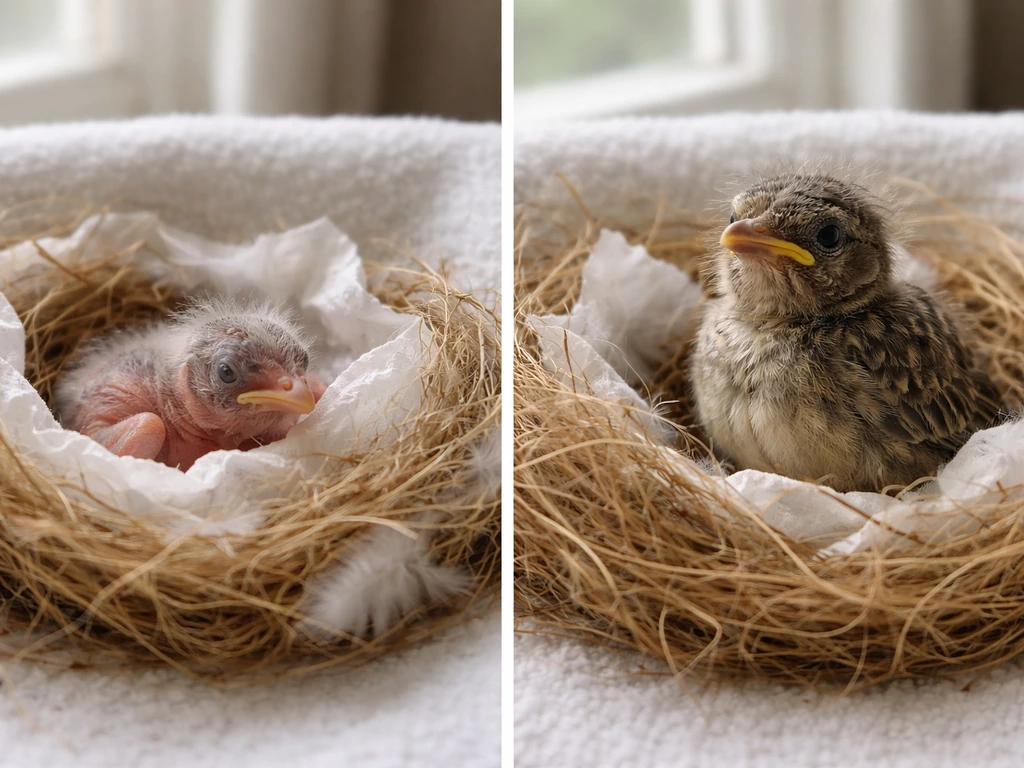
This section applies to birds that are alert, upright, and actively begging. If that's not the case, skip ahead to the section on when to stop and get help.
Hatchlings and nestlings (featherless or downy, eyes closed or just opening)
These birds should not be fed by untrained hands. Their feeding needs are extremely specific, they aspirate easily, and even experienced rehabilitators follow precise volume-per-feed protocols. At day one, a myna chick receives roughly 1 ml per feed and that volume increases carefully day by day. Getting this wrong causes crop problems, aspiration, and death. Get this bird to a rehabilitator today. If you're waiting for transport and the bird is cold, warming it (see the temperature section below) is more urgent than feeding.
Fledglings (fully feathered, short tail feathers, hopping or attempting to fly)
Most fledglings you find on the ground don't need your food. Their parents are often nearby and will continue feeding them for several weeks after they leave the nest. If you've confirmed the parents are absent for over an hour and the bird is in immediate danger (from a cat, a road, or severe weather), you can offer small amounts of appropriate food while arranging rehab.
For myna-type fledglings, appropriate interim foods include small pieces of soft fruit (papaya, banana, mango), mealworms (live or dried and slightly moistened), or a small amount of low-iron softbill pellets softened in water to a mashed consistency. During breeding and rearing, myna parents favor insects like mealworms for their young, so that's your best emergency option. Do not use high-iron pellets, bread, milk, or sugary human food.
Adults (fully grown, injured or stunned)
Adult mynas are true omnivores. In normal life they eat fruit, grains, insects, and even food scraps. An injured adult in a rescue box can be offered small fruit pieces or mealworms once it is alert, upright, and showing interest in food. Never attempt to hand-feed an adult bird that isn't voluntarily eating. Place food in the box and step away.
| Life Stage | Safe Interim Foods | Avoid |
|---|---|---|
| Hatchling/Nestling | None (professional care only) | Everything — do not feed |
| Fledgling (myna-type) | Mealworms, soft fruit (papaya, banana, mango), softened low-iron pellets | Bread, milk, high-iron pellets, sugary foods, raw meat |
| Adult (myna-type) | Small fruit pieces, mealworms, low-iron softbill pellets | Bread, milk, avocado, chocolate, onion, alcohol, caffeine |
| Unknown species | Nothing until identified | Everything until you can confirm species |
How to actually feed the bird (technique and tools)
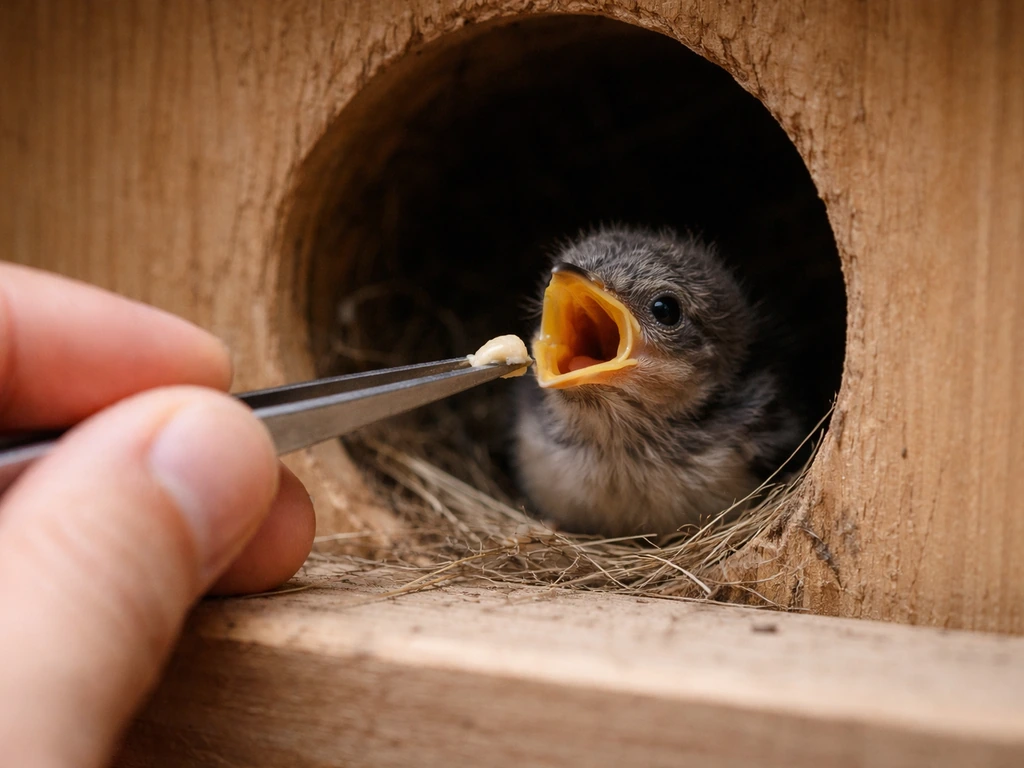
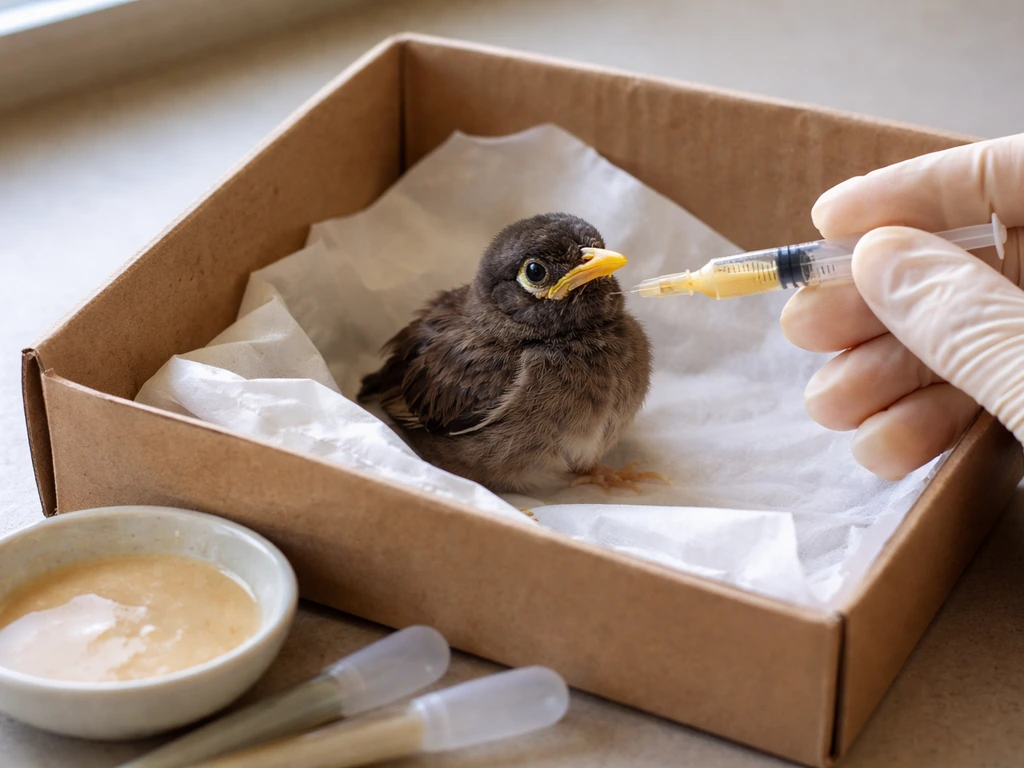
For fledglings that are actively gaping (opening their mouths and begging), you can offer food using blunt-tipped tweezers or clean fingers. Present the food at the entrance of the beak and let the bird take it. Never push food past the back of the throat.
- Warm any formula or softened food to approximately body temperature (around 38 to 40°C or 100 to 104°F). Cold food can cause crop problems. Test it on your wrist — it should feel just warm, not hot.
- Offer one small piece or one small syringe-squirt at a time. Wait for the bird to swallow fully before offering the next.
- Watch the throat for a swallowing motion. If you can see food already filling the throat or the crop area looks noticeably full, stop immediately.
- If using a syringe for liquid formula with a very young bird, place the tip at the side of the beak, never straight down the throat. Deliver the liquid slowly in small amounts to give the bird time to swallow.
- Stop at the first sign of clicking sounds, labored breathing, open-mouth breathing after swallowing, or any change in responsiveness. These are aspiration warning signs and the bird needs a vet urgently.
Hygiene matters at every step. Use clean tools and wash hands before and after. Cross-contamination between birds (if you're handling more than one) can spread disease rapidly, which is why wildlife rehab centers disinfect between every patient.
How often to feed and how much
For a fledgling myna under your temporary care, every two to three hours during daylight hours is a reasonable interim schedule, roughly mimicking what a parent would do. Do not feed at night. Baby birds need rest and their parents stop feeding after dark.
Portion size should be small. Offer two to three small pieces of fruit or three to five mealworms per feeding for a fledgling, then stop and watch. The bird's natural begging response is your best guide: when it stops gaping or turns its head away, it's had enough. Do not try to get one more piece in. Overfeeding leads to regurgitation and aspiration, which can cause pneumonia and death.
The same stop signals apply if you're using formula on a very young bird: stop when begging stops, stop when the crop looks full, and stop if the bird seems uncomfortable or lethargic after feeding. A slight bulge on the right side of the chest just below the throat is the crop. If it's noticeably firm or very distended, you've given too much.
Hydration and temperature: what actually keeps a bird alive
Hydration
For baby and fledgling birds, hydration is usually managed through food moisture, not through separately giving water. If your soft foods and softened pellets have appropriate moisture content, that's typically enough. Do not drip water into a baby bird's mouth. The risk of aspiration is serious and multiple wildlife organizations are explicit about it: no liquids in the mouth of a bird you're not trained to tube-feed.
For alert adults, you can place a shallow dish of water in the recovery box. It should be shallow enough that the bird cannot drown in it (no more than 1 cm deep). Remove it after a few minutes and don't leave it unattended.
Temperature
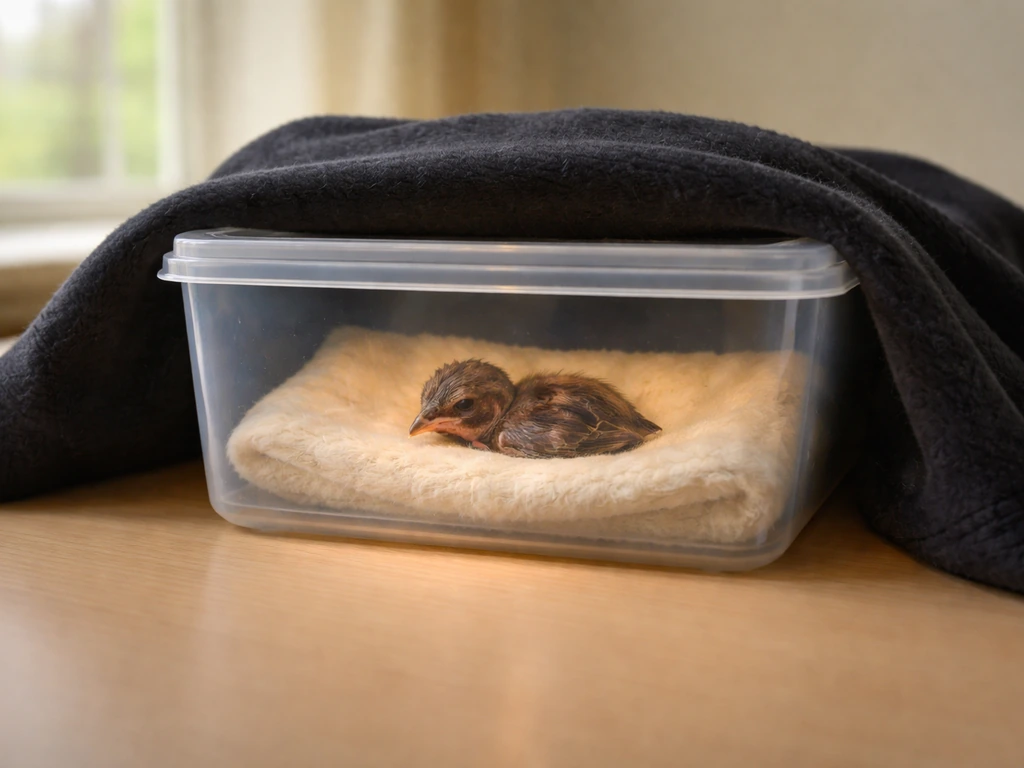
Keeping a baby or compromised bird warm is often more urgent than feeding. Baby birds cannot regulate their own temperature and will deteriorate quickly if they get cold. Aim for a surrounding temperature of around 85 to 90°F (29 to 32°C) for very young birds. Practical options: a hot water bottle wrapped in a towel placed under one half of the box (so the bird can move away if too warm), or a clean sock filled with uncooked rice, microwaved until warm, and wrapped in cloth. The heat source should feel comfortably warm to your hand, not hot. Never place a bird directly on a heat source.
Adult birds in shock also benefit from warmth and darkness. A cool or drafty environment slows recovery. Keep the box somewhere genuinely quiet and warm while you make your next calls.
When to stop DIY and get professional help
DIY care is a bridge, not a solution. For a complete, step-by-step approach to routine feeding, housing, and safety checks, see our guide on how to take care of maya bird. Cockatiels need a different diet and daily care routine than the wild bird types discussed earlier, so seek a cockatiel-specific care guide when you have the right species how to care for a cockatiel bird. These are the signs that the bird needs a wildlife rehabilitator or avian vet today, not tomorrow.
- The bird is a hatchling or nestling (featherless, eyes closed) — this is a professional case from the start.
- The bird is limp, unresponsive, gasping, or has labored breathing at any point.
- You notice clicking or wheezing sounds after feeding — possible aspiration, needs urgent vet attention.
- The crop is still full and hard several hours after feeding (food is not moving through).
- The bird has an obvious injury: broken wing held at odd angle, bleeding, visible wound, or cannot stand.
- The bird is not improving after 24 hours of stabilization.
- You don't know what species it is and cannot confirm appropriate feeding.
Wildlife rehabilitation is regulated in many countries and regions. Licensed rehabilitators have the training, permits, and equipment to give this bird the care it actually needs. Contacting one is not giving up. It's the right next step. If you have a parrot instead of a wild bird, see how to take care of parrot bird for the right diet and daily care.
How to find help today
- Search for 'wildlife rehabilitator near me' or 'avian vet near me' right now.
- In the US, the National Wildlife Rehabilitators Association (NWRA) and your state's fish and wildlife agency both maintain referral lists.
- In the Philippines or Southeast Asia, contact a local bird rescue group or university veterinary program.
- When you call, describe the bird's life stage, current condition, and any feeding you've already done. Don't omit details.
- If no rehabber is immediately available, keep the bird warm, dark, and quiet. Skip feeding until you get professional guidance.
If you're already caring for a bird at home long-term and this emergency has shown you the broader picture of what's involved, the approach to general daily care differs significantly from emergency rescue. Caring for a canary bird day to day follows different feeding, housing, and health-care needs than rescue steps for wild birds general daily care. If this bird is a lovebird, the daily care routine is different, so it helps to follow a lovebird-specific guide for diet, housing, and handling how to take care of love bird. Topics like ongoing parrot care, cockatiel management, or lovebird husbandry share some overlap with myna care but each species has its own nutritional and behavioral needs worth understanding separately.
FAQ
What if the bird is not clearly begging or is weak and floppy?
Offer food only if the bird is alert, upright, and voluntarily begging or showing interest. If the mouth is closed, it is limp, or it cannot hold an upright posture, treat it as an emergency needing warmth, darkness, and rapid rehab or avian vet help, not feeding.
I think it might be a myna fledgling, what food is safest if I am unsure?
For myna-type fledglings, use small, soft, low-risk items you can mash or moisten (soft fruit pieces, mealworms, or softened low-iron softbill pellets). Do not give bread, milk, sugary foods, or any high-iron pellets. If you cannot confirm it is a myna-type fledgling, skip food and focus on warming and contacting a rehabilitator.
Can I give water to a baby or fledgling if it seems thirsty?
Do not offer water by mouth. For interim care, provide hydration through appropriately moist food, and keep any water dish extremely shallow and supervised for alert adults only. If the bird is a baby, do not drip or syringe liquids into the beak, because aspiration risk is high.
What should I do if the bird coughs or regurgitates after I feed it?
If you notice regurgitation, coughing, gasping, or food coming back out, stop feeding immediately and keep the bird warm and quiet. Arrange professional care urgently, because aspiration pneumonia can develop even after brief feeding attempts.
How do I know I gave too much food or the wrong amount?
Overfeeding signs include a crop that looks noticeably firm, very distended, or uncomfortable, and continued lethargy after feeding. Stop immediately when begging stops and do not try to offer “one more bite.” If the crop stays swollen or the bird worsens, seek avian help the same day.
Is it okay to push food farther into the throat to make sure it swallows?
Do not push food past the back of the throat. When using tweezers or fingers, present the food at the beak entrance and let the bird take it. For non-begging birds, never force feeding or attempt hand-feeding.
What if I cannot tell whether it is an adult or a fledgling?
If the bird is likely an adult but you cannot identify it with confidence, err on the side of no hand-feeding. Place a small amount of appropriate food in the box and step away, then monitor for voluntary eating. If it is not voluntarily eating, prioritize warmth and professional help.
Should I feed right away or focus on keeping it warm first?
In many cases you should avoid guessing and call a wildlife rehabilitator when possible, but if you must decide now: cold and vulnerable birds should be warmed first, then short, careful feeding may be used only when the bird is alert and begging. Feeding delays while you arrange transport can be more dangerous than brief warming.
How do I handle feeding schedule and stopping cues across multiple feedings?
If the bird stops gaping, turns away, or seems disinterested, feeding is complete for that session. For interim schedules, stick to daylight-only intervals (about every 2 to 3 hours for fledgling myna-type birds) and resume only when it is actively begging again.
What are the safest basic setup and hygiene steps while I am waiting for help?
For temporary housing, use a quiet recovery box that limits movement, prevents drafts, and includes a gentle heat source option if needed. Avoid placing multiple birds together or reusing unclean tools, since cross-contamination can spread disease quickly.
Next Article
How to Take Care of a Bird: Pet Care and Rescue Steps
Step-by-step bird care for pets and rescues: supplies, feeding, warmth, first aid, red flags, and rehab or vet next step