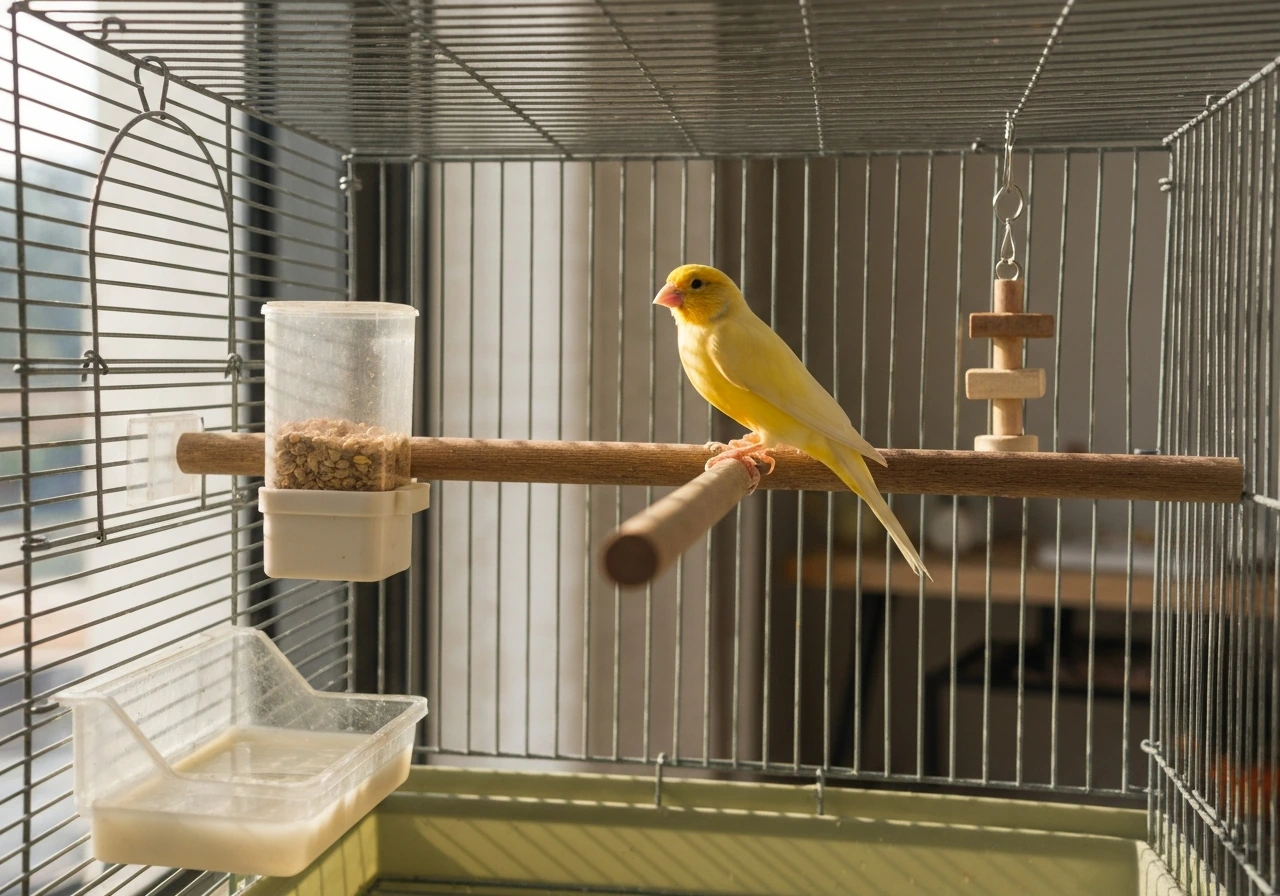
Whether you have a pet bird at home or just found a small bird on the ground outside, the first thing to know is this: the right care depends entirely on which situation you're in. A pet bird needs daily food, warmth, enrichment, and regular health monitoring. A wild bird you've found injured or alone needs something very different, and honestly, less is more. This guide walks you through both, so you can figure out exactly what to do right now.
How to Take Care of a Bird: Pet Care and Rescue Steps
Marcus Holloway
11 Apr 2026
Pet bird vs. wild bird: the care gap is bigger than you think
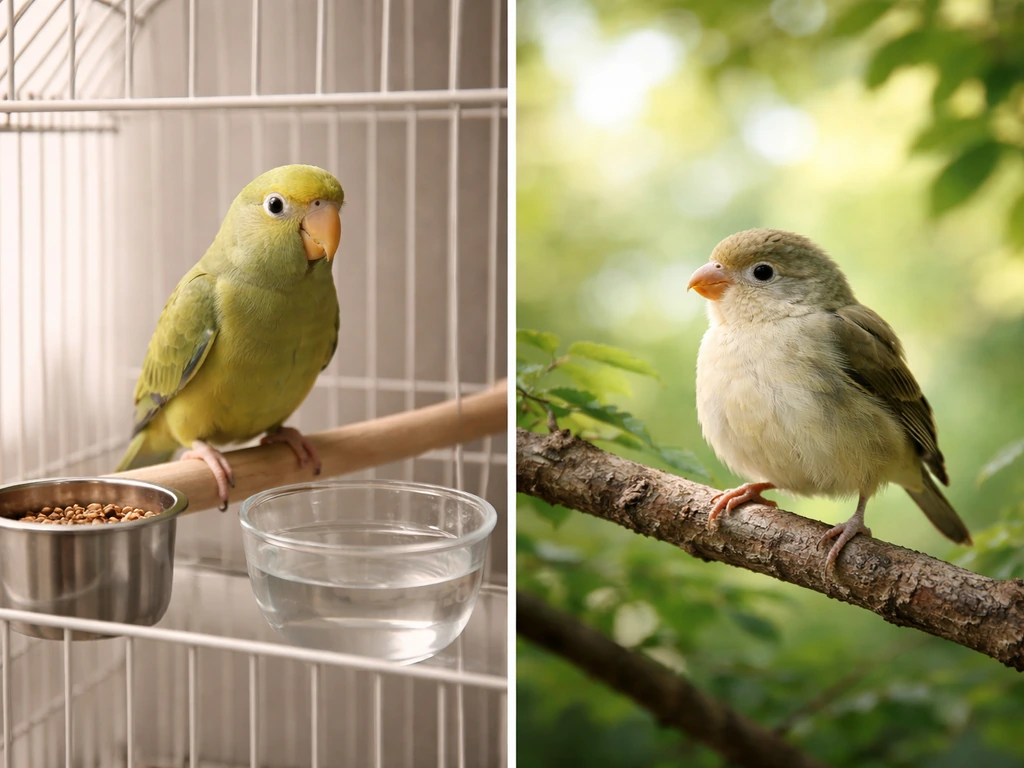
Pet birds (parrots, cockatiels, canaries, lovebirds, finches, and similar species) are domesticated or captive-bred animals. They depend on you entirely for food, water, shelter, and companionship. You can handle them, feed them, and build routines around their needs without any permits or legal hurdles.
Wild birds are a completely different story. In most U.S. states, it is illegal to possess a wild bird without a valid permit. In Washington State, for example, state law explicitly prohibits possessing any wild bird without authorization. On top of that, the federal Migratory Bird Treaty Act means that most songbirds, raptors, and waterfowl are protected under federal law, and a vet who treats one without a federal rehabilitation permit must transfer the bird to a licensed rehabilitator within 24 hours of stabilization. So if you've found a wild bird, your job is not to become its caretaker. Your job is to stabilize it safely and get it to someone licensed to help.
Get your supplies and contacts ready before anything else
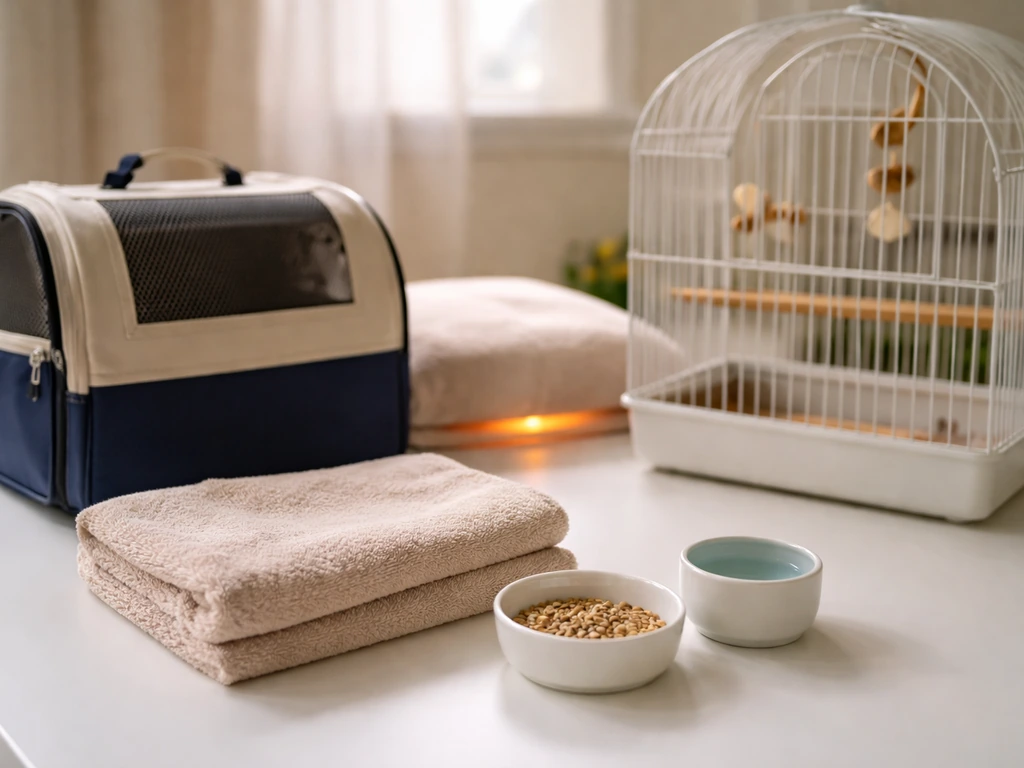
Before you do anything with a bird, take two minutes to gather what you need. Scrambling for supplies while a bird is stressed (or while your pet is showing signs of illness) wastes time and makes things worse.
For a found wild bird
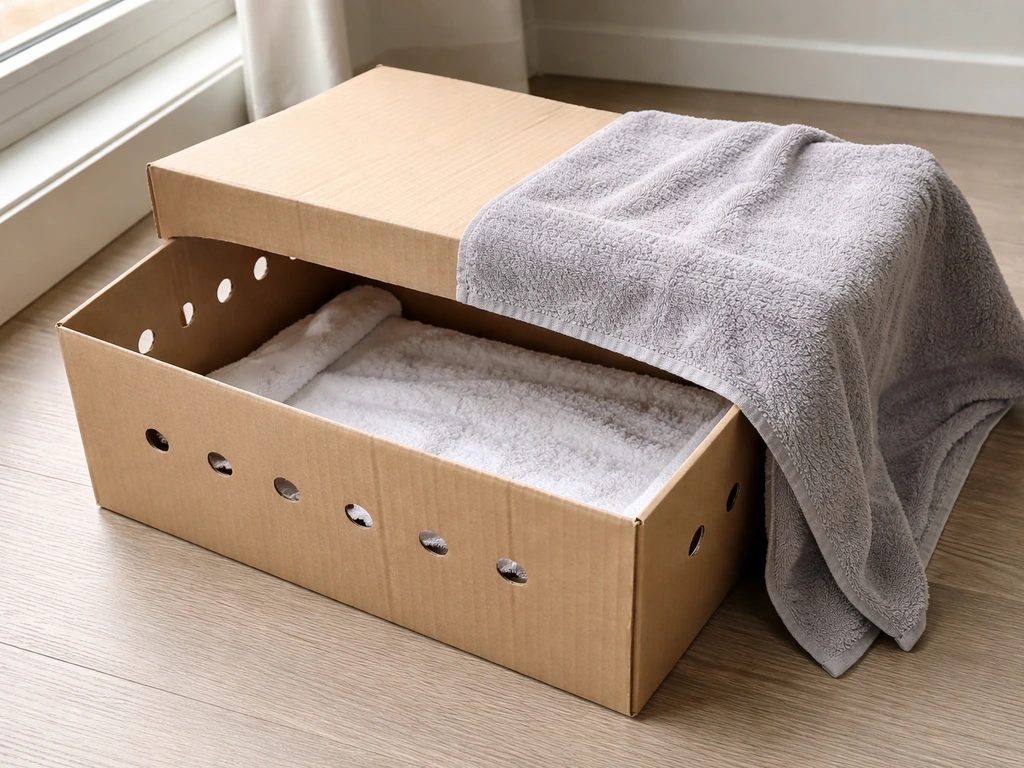
- A cardboard box with a lid, sized so the bird can sit upright but not fly around
- A clean towel or paper towels to line the bottom
- An extra towel to drape over the bird once it's inside
- A heat source: a heating pad set to low placed under half the box, or a warm water bottle wrapped in a cloth placed beside the bird
- The phone number for your nearest licensed wildlife rehabilitator (search NWRA.org or your state wildlife agency's website)
For a pet bird (ongoing or emergency care)
- A well-fitted cage or carrier appropriate for the bird's size
- Species-appropriate food: pellets, seeds, fresh vegetables, and species-specific extras
- Fresh water changed daily
- A small first aid kit: a 3-milliliter syringe (without a needle, for flushing minor wounds), sterile gauze, a mild antiseptic, and styptic powder to stop minor bleeding
- The name and number of an avian veterinarian, ideally before you ever need them
That last point matters more than most people realize. Avian vets are specialists, and not every general vet is comfortable treating birds. Find one in your area now and save the number. If you have a specific pet species, there's more targeted guidance available too: how to take care of a parrot covers the particular needs of psittacines in detail, since parrots have some quirks around diet and enrichment that general guides don't always cover.
Feeding and hydration: what's safe, what's not
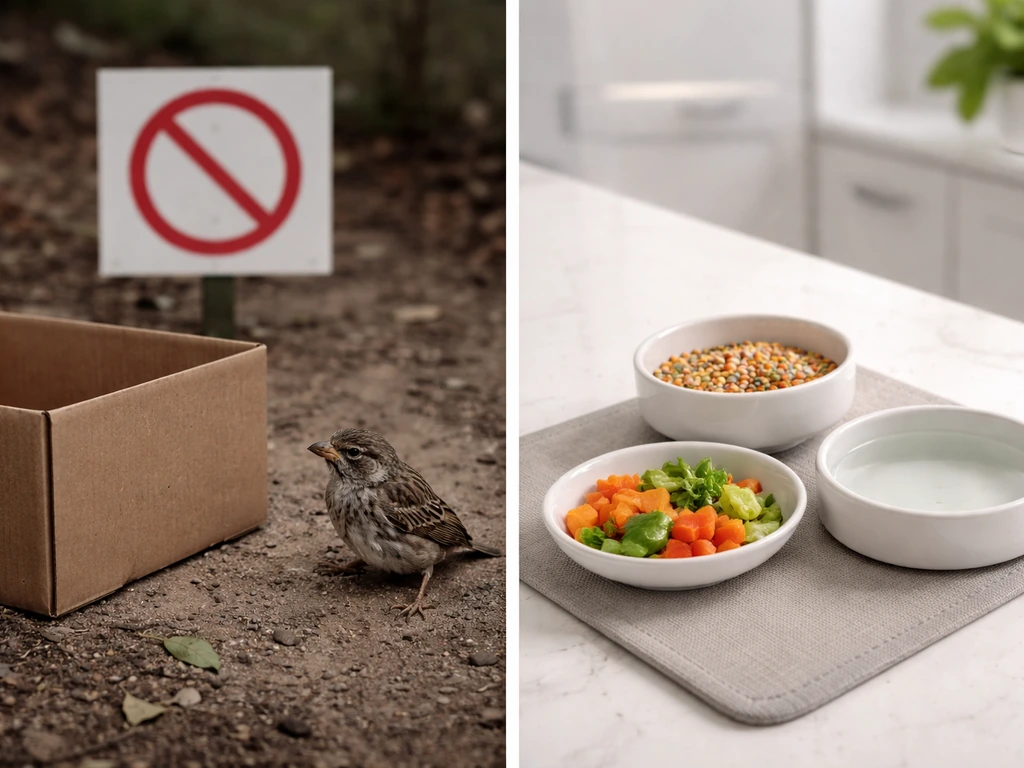
This is where a lot of well-meaning people make mistakes, especially with wild birds. The rules are different depending on who you're caring for.
Wild or injured birds: do not feed or give water
I know it feels wrong, but multiple wildlife rehabilitation organizations are very clear on this: do not give a found wild bird food or water unless a licensed rehabilitator specifically tells you to. The reason isn't cruelty. It's anatomy. Baby birds especially do not drink water the way mammals do, and the entrance to a bird's airway sits at the base of the tongue. If you try to give a nestling water, it can go directly into the lungs and kill the bird. Wrong foods cause the same problem. If a rehabilitator has given you specific instructions, follow those. Otherwise, keep the box warm and quiet and get the bird to help as fast as you can.
Healthy pet birds: daily feeding basics
For a pet bird in good health, feed fresh food at least once a day and remove uneaten perishables within a few hours. A good diet for most small to medium pet birds includes a quality pelleted base, supplemented with fresh vegetables and limited fruit. Seeds are fine as a treat or supplement, but an all-seed diet is nutritionally incomplete for most species. Fresh water should be available at all times and changed every single day. Dirty water is a fast route to bacterial illness.
If you have a cockatiel, their dietary needs are nuanced enough that it's worth reading up specifically. Check out how to care for a cockatiel for species-specific feeding guidance, since they have particular needs around calcium and greens that a generic bird guide won't fully address.
Sick or recovering pet birds: supportive feeding
If your pet bird is ill or recovering from an injury, do not force-feed unless your avian vet has specifically instructed you to and shown you the correct technique. Forcing food into a weak or distressed bird risks aspiration (food entering the airway) and can cause more harm than the original problem. Keep food accessible, keep the bird warm, and let the vet guide your feeding plan.
Housing, warmth, handling, and keeping stress low
Temperature is one of the most critical factors in bird survival, whether you're dealing with a sick pet or a found wild bird. A bird's normal body temperature runs between 103 and 106°F, which is significantly higher than ours. When a bird is ill or injured, it struggles to maintain that temperature on its own and burns through energy trying. A heated environment removes that burden and can genuinely be life-saving.
For a sick or injured pet bird, aim for an ambient temperature of at least 85°F in the recovery enclosure. You can achieve this with a heating pad under half the cage, an infrared heat lamp positioned safely to one side, or a purpose-built hospital cage. Always heat only one side of the enclosure so the bird can move away if it gets too warm.
For a wild bird in a box, the same half-heated approach works. Place a heating pad set to low under one half of the box only. Keep the box in a quiet room away from pets, children, and loud noises. Then minimize contact. The stress of being handled by a human is physiologically harmful to a wild bird, and repeated handling can cause a bird to go into shock.
For pet birds day-to-day, place the cage away from drafts, air conditioning vents, and direct sunlight for long periods. Cover the cage at night to provide darkness and reduce stress. Handle your bird calmly and consistently, especially if it's new to your home. Sudden movements and loud sounds raise stress hormones, which suppresses immune function over time.
First aid steps and the mistakes to avoid
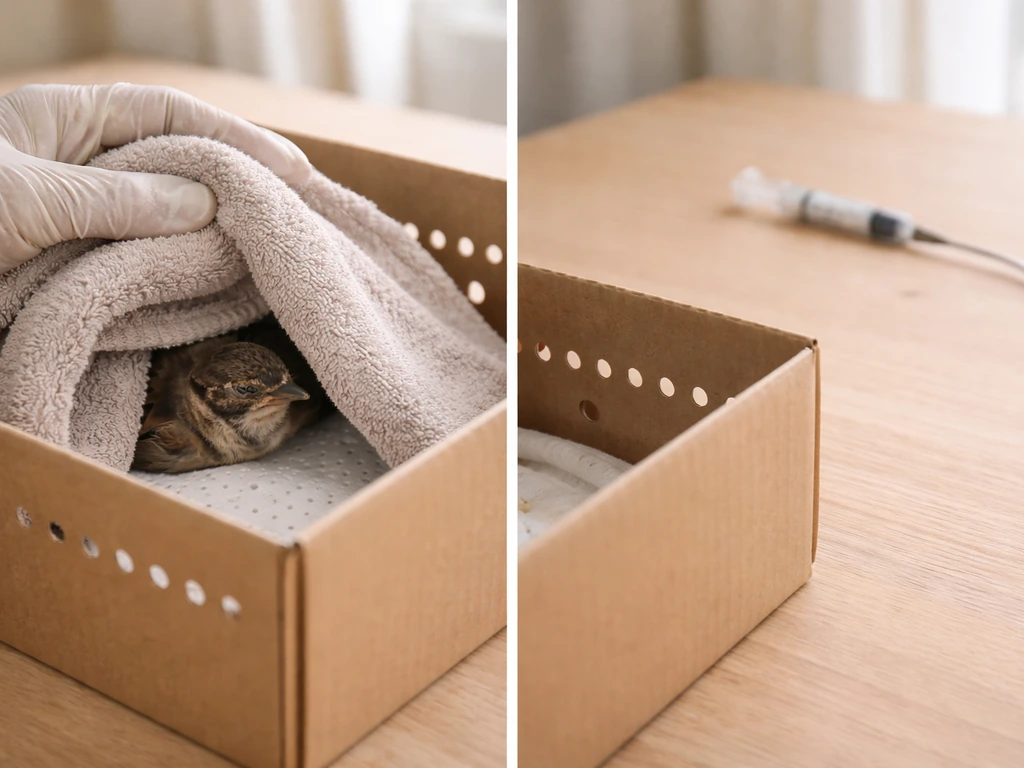
Here's what you can actually do in the first hour of a bird emergency, and what you should not do under any circumstances.
What to do
- Contain the bird safely. For a wild bird, drape a towel over it gently, pick it up without squeezing, and place it in a ventilated box lined with paper towels. For a pet bird in distress, move it to a smaller, calm space.
- Apply warmth as described above, heating only one side of the enclosure.
- For a pet bird with a small wound, you can use a 3-milliliter syringe without a needle to gently flush the wound with clean water or saline. Apply light pressure with sterile gauze if there is minor bleeding.
- Use styptic powder if a nail or feather is bleeding and the bleeding doesn't stop on its own within a minute or two.
- Keep the environment dark, quiet, and calm. This alone reduces shock significantly.
- Call an avian vet or wildlife rehabilitator immediately and describe what you're seeing.
What not to do
- Do not give food or water to a wild bird, a baby bird of any kind, or any bird you suspect has an injury to the beak, throat, or crop.
- Do not force-feed a sick pet bird unless an avian vet has instructed you and demonstrated the technique.
- Do not try to splint a broken wing or leg yourself. Incorrect splinting can make fractures much worse.
- Do not keep a wild bird as a pet or assume you can rehabilitate it yourself. It is illegal and almost always harms the bird.
- Do not handle the bird more than absolutely necessary. Every handling session is a stress event.
- Do not put a wild bird in a cage with bars. An injured bird will flap against the bars and worsen its injuries.
Signs that mean call a vet or rehab right now
Birds hide illness well. By the time you notice something is wrong, it may have been going on for a while. If you see any of the following signs, don't wait to see if the bird improves on its own.
| Sign | What it may indicate | Action |
|---|---|---|
| Sitting on the cage floor or ground, not perching | Severe weakness, injury, or advanced illness | Call avian vet or rehab now |
| Labored breathing, open-mouth breathing, or tail bobbing with each breath | Respiratory distress or infection | Emergency vet visit |
| Visible blood, exposed tissue, or a drooping wing | Trauma or fracture | Contain, keep warm, call immediately |
| Seizures or loss of coordination | Toxin exposure, head trauma, or neurological issue | Emergency vet immediately |
| Discharge from eyes or nostrils | Infection or respiratory illness | Vet appointment same day if possible |
| A baby bird alone on the ground with no parent visible after 1–2 hours | May be orphaned or fallen from nest | Call wildlife rehab before intervening |
| Unresponsive or barely moving | Shock or critical illness | Contain, warm, call immediately |
One important note about baby birds: not every bird on the ground needs rescuing. Fledglings (birds with feathers learning to fly) are often on the ground normally, with parents nearby. If the bird is fully feathered and hopping around, watch from a distance for an hour or two before intervening. If it's a naked or partly feathered nestling with no nest visible, that's a different situation and you should call a rehabilitator for guidance.
To find a licensed wildlife rehabilitator, contact your state's fish and wildlife agency, search the National Wildlife Rehabilitators Association directory, or call a local wildlife sanctuary or nature center. Mass.gov also notes that wildlife rehabilitation permits are governed by state rules and provides statewide context for finding and using rehabilitators contact your state's fish and wildlife agency. Rehabilitators are typically volunteers, not paid staff, so be patient and respectful when you call.
Ongoing care, monitoring, and what comes next
Once the immediate situation is stabilized, the work shifts to consistency and monitoring. For a pet bird, this means building a daily routine: fresh food and water every morning, a quick visual health check (droppings, posture, feather condition, activity level), and weekly cage cleaning. Weigh your bird weekly if possible using a small kitchen scale. A sudden weight loss of even a few grams in a small bird is a red flag.
For songbird species kept as pets, like canaries, the care routine has some differences worth knowing. Caring for a canary involves specific considerations around molting, lighting schedules, and the fact that canaries are not typically hands-on birds the way parrots are.
For lovebirds, bonding and social needs are front and center. Lovebird care requires understanding their pairing behavior and what happens when they're kept singly versus in pairs, which affects both their behavior and stress levels significantly.
If you're caring for a wild bird temporarily while waiting for a rehabilitator, your monitoring job is to keep it warm, dark, and quiet, and to check in visually (not by opening the box repeatedly) every hour or so. Do not check on it constantly. The goal is to get it to a professional, not to bond with it.
For wild birds that recover with a rehabilitator, the goal is always release back to the wild. Reunification with the original location (or nearby habitat) is the humane outcome. For pet birds recovering from illness or injury, work with your avian vet to determine when the bird is ready to return to its normal cage setup, normal diet, and normal social interaction. Rushing that transition can set back recovery.
If you've taken in a maya bird (a common name used for several small Asian songbird species sometimes kept as pets), the care specifics differ from typical parrot or finch care. You can find a detailed breakdown in this guide on how to take care of a maya bird, which covers their housing, feeding, and handling needs specifically. For feeding questions specific to that species, how to feed a maya bird goes into the dietary details you'll need.
The bottom line: take it one step at a time. Contain and warm the bird. Don't feed a wild bird. Do call a professional sooner rather than later. And if it's your pet, build the daily routine now so you catch problems early instead of in a crisis.
FAQ
How can I tell if a bird I found is a fledgling that should be left alone versus a nestling that needs help?
Use a quick visual checklist. Fledglings are usually fully feathered, can hop or flutter, and look “awkward” but active, with a nest out of sight nearby. Nestlings are typically naked or only partly feathered, look very immobile, and there is often no visible nest to place them into. If you cannot identify the stage confidently, treat it as a nestling and contact a rehabilitator for guidance.
Is it okay to give a found wild bird water if it looks dehydrated?
In general, no. Many baby birds have airway anatomy that makes typical water delivery dangerous, and incorrect fluids can worsen the condition. The safer approach is to keep the bird warm, limit handling, and ask a licensed rehabilitator for exact instructions before offering anything.
What should I do if the bird has a wound or bleeding, but I can’t reach a rehabilitator immediately?
Focus on stabilization rather than treatment. Keep the bird warm in a quiet, dark container, minimize handling, and avoid cleaning inside the body or applying ointments unless a professional specifically tells you to. If bleeding is heavy, note what you observe (location and approximate amount) and provide that information when you call.
Can I use a regular heating pad or hot water bottle to warm an injured bird?
Heating pads can work, but only on low and only under part of the enclosure so the bird can move away. Avoid hot water bottles or anything that can leak, overheat, or contact the bird directly. Always keep a half-warm, half-cool setup and stop if the bird appears overheated or pants.
How do I prevent my pet bird from getting cooked or too hot in a recovery cage?
Because birds can overheat quickly, use a one-sided heating setup (warm side and cooler side). Place your bird where it can choose comfort, check behavior and posture, and remove heat if you notice excessive panting, very flattened posture, or distress. If you have a thermometer for the enclosure, aim for the target range and monitor it continuously, not intermittently.
What temperature should I aim for when the bird is in a carrier instead of a cage or box?
Use the same half-warm principle. Warm only one side of the carrier, and create a stable, draft-free microenvironment with a towel as a base, leaving space for the bird to move away from warmth. If you cannot keep the carrier reliably in the needed range, contact an avian vet or rehabilitator sooner rather than relying on makeshift heat.
Should I weigh my bird at home, and how often is safe?
If your bird accepts handling calmly, weekly weighing is useful, sudden changes are meaningful, and it should not replace a vet exam. If weighing causes stress or you cannot do it consistently, prioritize visual checks and the vet plan instead. When you do weigh, use the smallest practical container and record the numbers with the date.
What visual signs are most concerning in a pet bird that is “hiding” illness?
Look for changes in posture (fluffed and staying that way, weakness), breathing effort, activity level, and droppings consistency. Feather condition that rapidly worsens, sitting with eyes closed for extended periods, or not perching normally are also red flags. If you see more than one abnormal sign, treat it as urgent and contact an avian vet.
When a pet bird is ill, should I change the diet immediately or withhold food until the vet calls?
Do not assume you should abruptly remove food. Unless a vet tells you otherwise, keep food accessible and safe, and avoid offering new foods that the bird is not used to. Forcing specific foods without a plan can cause aspiration or worsen stress, so follow your avian vet’s instructions.
My wild bird keeps trying to run or flap in the box, is that dangerous?
It can be, partly due to stress and partly due to risk of injury from collisions. Keep the box dark and quiet, minimize movement and checking, and avoid squeezing in your hands repeatedly. If the bird is frantic, it still needs warmth and calm, then a quick handoff to a rehabilitator.
How long can a wild bird be kept temporarily before transport?
Aim for the shortest time possible. Stabilize warmth and quiet, then call for pickup or directions right away. Since rehabilitation timelines vary, ask the rehabilitator how quickly to bring it in and whether to continue temperature support during transport.
What should I do if I find a bird near a window or after a collision?
Treat it like an emergency because internal injury can occur even if the bird looks “fine.” Keep it warm, limit handling, and contact a rehabilitator or an avian vet. Avoid giving food immediately, and don’t let it fly off before it has been assessed, especially if it’s unsteady or disoriented.
Are there foods that are commonly mistaken as safe for pet birds that can actually be harmful?
Yes, many birds should not have unlimited seed-only mixes, and many “human foods” can be unsafe. Also, abrupt diet changes can trigger gut problems. Stick to a species-appropriate base diet (often pellets for many small to medium birds) plus fresh approved vegetables in measured portions, and confirm any unusual ingredient with an avian vet if you are unsure.
How can I reduce stress for a newly acquired pet bird during the first week?
Use consistency. Place the cage away from drafts and strong noise, keep lighting and routines stable, and handle gently and predictably. Avoid frequent rearranging of the environment and avoid multiple helpers handling the bird, because repeated interruptions can prolong adaptation and weaken immune response.
Next Article
How to Care for a Canary Bird Step by Step Guide
Step-by-step canary care: cage setup, diet, lighting, water, enrichment, and humane first aid for sick or injured birds.