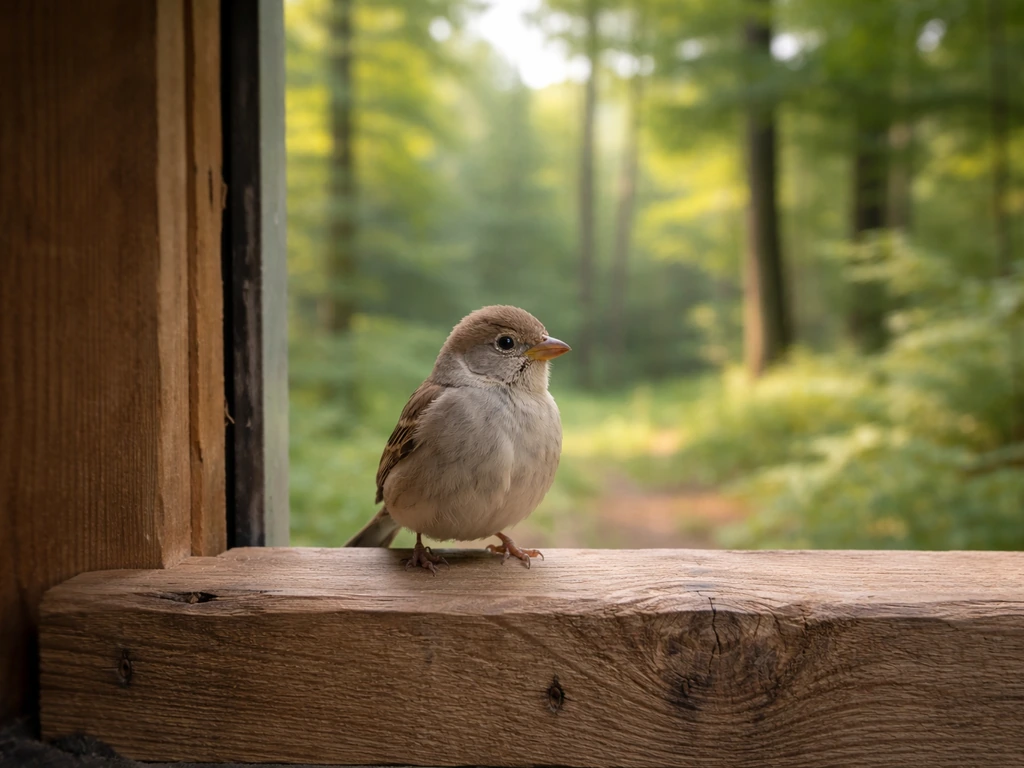
If you've found an injured, sick, or apparently orphaned bird right now, here's the short version: contain it gently, keep it warm and dark and quiet, don't feed it or give it water, and call a licensed wildlife rehabilitator as fast as you can. Everything else in this guide fills in the details of those four steps so you don't accidentally make things worse while you wait for help.
How to Save a Bird: First Aid Steps for Emergencies
Marcus Holloway
7 Apr 2026
How to quickly assess the situation safely
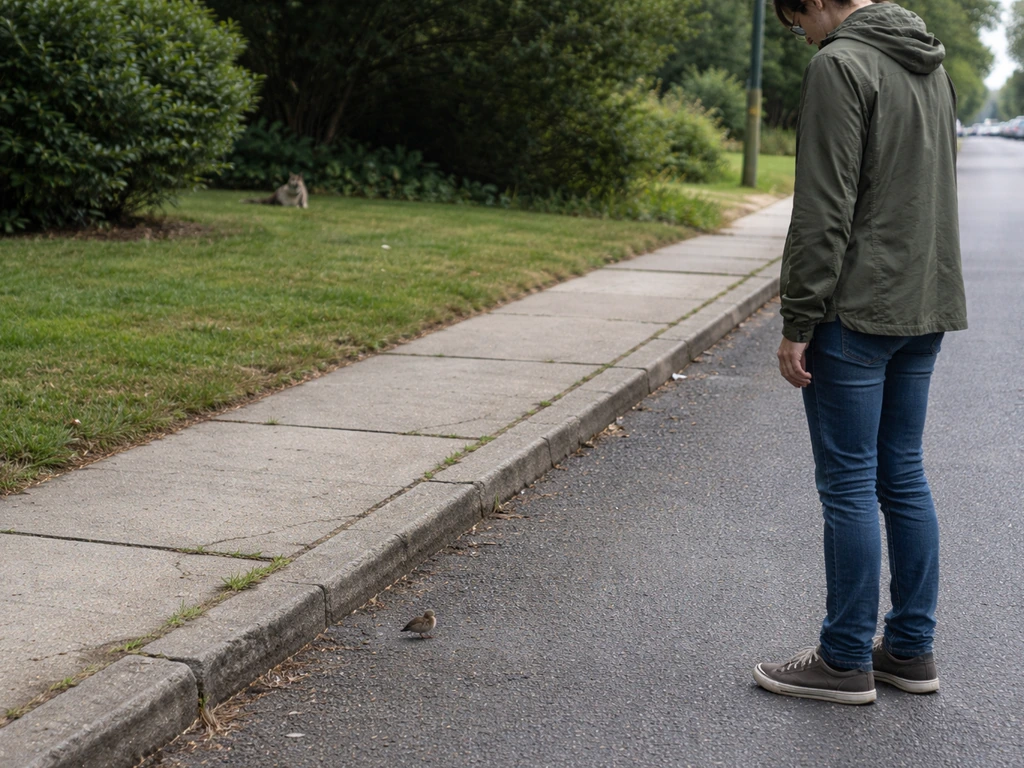
Before you touch anything, take thirty seconds to look. Ask yourself three questions: Is the bird in immediate danger (traffic, a cat nearby, direct sun)? Does it look clearly injured (visible wound, wing held at a wrong angle, blood, inability to move)? Or is it just sitting there looking dazed? Your answer changes what you do next.
A bird that is alert, flapping, and trying to escape when you approach is actually a good sign. A bird that lets you walk right up and pick it up is telling you something is seriously wrong. Signs of real distress include open-mouth breathing, tail bobbing with each breath, a head tilted to one side, a leg or wing dragging, or the bird being completely unresponsive. Rapid or labored breathing, increased movement of the chest, and obvious weakness are all indicators that the bird needs professional care promptly.
Keep yourself safe too. Adult wild birds can scratch, peck, and bite hard enough to break skin. Large birds like herons or raptors can cause real injury. Wear gloves if you have them, or use a towel to cover and pick up the bird. Don't put your face close to it. And wash your hands thoroughly after any contact.
One important thing to resist: the urge to do something immediately just because you feel like you should. Standing back for a minute and observing is almost always the right first move. Many birds, especially fledglings learning to fly, do not need rescuing at all. More on that in the special cases section below.
Immediate first aid basics for common bird problems
"First aid" for a wild bird is mostly about doing less, not more. The single most helpful thing you can do in the first few minutes is reduce the bird's stress, because stress alone can kill a bird that might otherwise survive. Here's how to handle the most common situations.
Window strikes
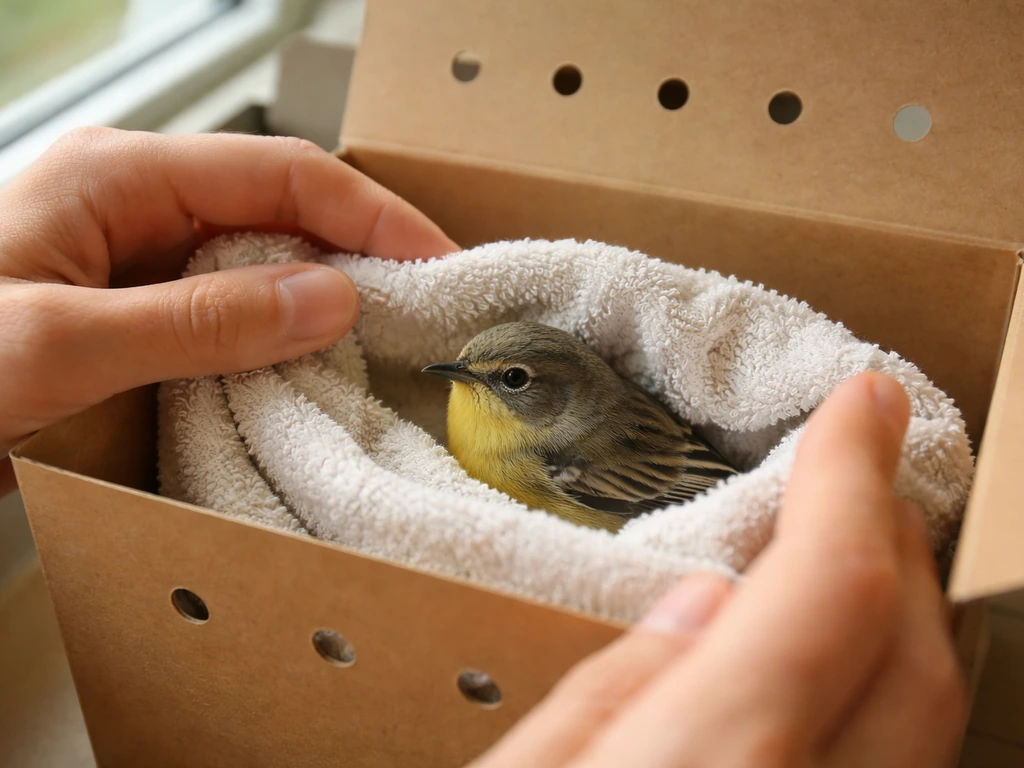
A bird that has flown into a window is often in temporary shock rather than fatally injured. Use a small towel or pillowcase to gently scoop the bird into a secure, ventilated box. Keep it in a dark, quiet area and do not offer food or water. Many window-strike birds recover within an hour or two and can be released. If the bird doesn't improve, or shows signs of ongoing distress, contact a rehabber.
Cat or dog attacks
This is one situation where you should act quickly and not wait to see if the bird improves on its own. Cat saliva in particular contains bacteria that cause a fatal infection in birds within 24 to 48 hours, even when the wound looks minor. If a cat or dog has had the bird in its mouth, a bird after a cat attack needs professional treatment right away, not just monitoring. Contain the bird and get it to a wildlife rehabilitator or avian vet the same day.
Sick or lethargic birds
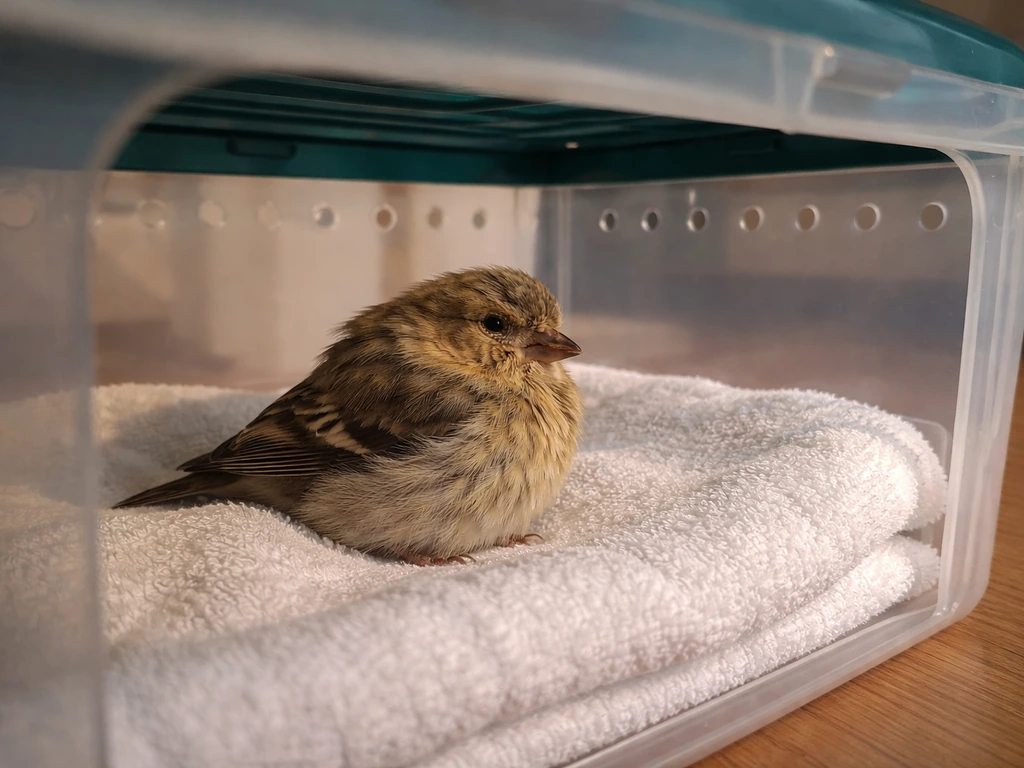
A bird sitting puffed up on the ground, barely moving, and unresponsive to nearby movement is sick. Don't try to diagnose what's wrong. Your job is to contain it safely, keep it warm, and get it to someone qualified. The same applies to birds with obvious wounds or injuries you can see.
Rescue and transport steps: warming, containment, and minimizing stress
Getting the containment and warmth right in the first thirty minutes makes a real difference in whether the bird survives long enough to reach professional care.
Choosing and preparing the container
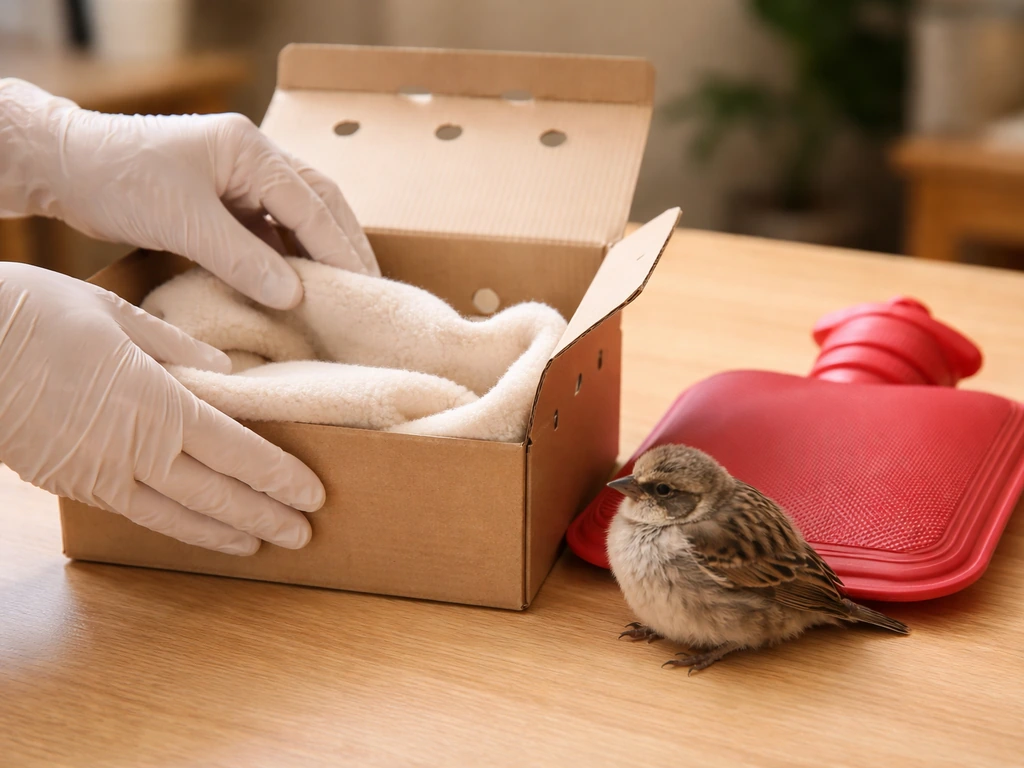
Use a cardboard box or a brown paper bag for a small bird. The container should be just big enough for the bird to stand in without being able to flap around and injure itself further. Line the bottom with a folded towel or paper towels so the bird has something to grip. Make sure there are small ventilation holes, but keep them small enough that the bird can't get its head stuck. A box with a lid that closes securely is better than an open container.
Do not use a wire cage or mesh container for transport. The bird will injure itself trying to escape. Darkness is calming to birds, and a solid-sided box provides both darkness and security.
Keeping the bird warm
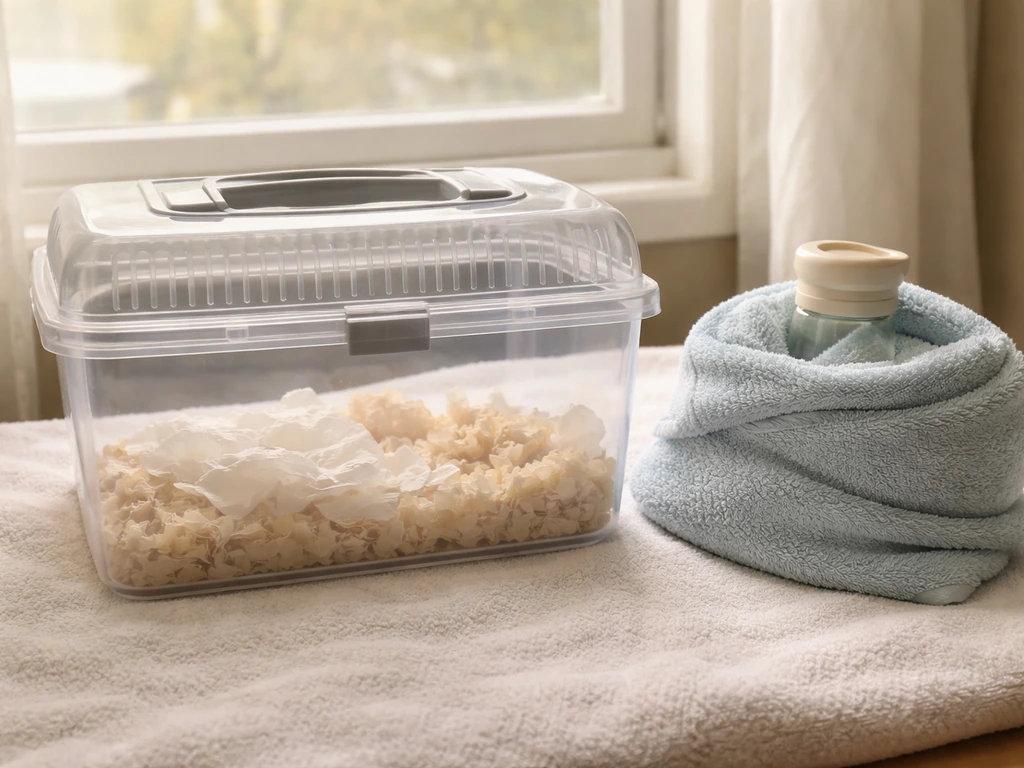
Warmth is critical. Most injured or orphaned birds cannot regulate their own body temperature, and getting cold can kill them quickly. For most adult birds in shock, aim for a gentle ambient warmth of around 80 to 90 degrees Fahrenheit (26 to 32 degrees Celsius). For tiny, unfeathered chicks the target is higher, closer to 100°F (37.8°C). Partially feathered larger chicks do well at around 90 to 95°F (32 to 35°C).
A practical way to achieve this: fill a zip-lock bag or hot water bottle with warm (not hot) water, wrap it in a towel, and place it under one half of the box floor. This lets the bird move toward or away from the heat source. Never place a heat source directly against the bird, and never use a microwave-heated pad that can create hot spots. If you don't have any of these, even placing the box in a warm room away from drafts is better than nothing.
Where to keep the box
Put the box in a semi-dark, quiet room away from children, pets, and noise. Keep it off the floor if cats or dogs are in the house. Don't keep checking on the bird by opening the box; every time you do, you're adding stress. Put the box somewhere calm and leave it alone until you've spoken to a rehabber.
Transporting the bird
When you're ready to move the bird to a rehabber or vet, keep the box as level and stable as possible. Put it on the seat floor of the car, not the seat itself where it can slide. Keep the car quiet and avoid blasting the AC or heat directly at the box. The trip itself is stressful for the bird, so the faster you can complete it, the better.
When to call a wildlife rehabber or avian vet (and what to tell them)
Call a wildlife rehabilitator or avian vet any time you're unsure. Seriously, they would rather you call than not call. Call immediately if:
- The bird has an open wound, broken wing, or visible injury
- It was caught by a cat or dog
- It is bleeding
- It cannot stand or hold its head up
- It is breathing with its mouth open or bobbing its tail with each breath
- It is cold and unresponsive
- You found an unfeathered chick or a very young nestling on the ground
- You have reason to believe the parent is dead
To find a licensed wildlife rehabilitator near you, search the National Wildlife Rehabilitators Association directory, the Wildlife Rehabilitator Finder at NWRA or IWRC, or call your local humane society or animal control office. Your state's fish and wildlife agency can also provide referrals. Some rehabilitation centers will send a trained responder with appropriate equipment if you call them first, so calling before you transport is worth doing.
When you call, be ready to tell them: the species if you know it (or a description of the bird), where you found it, what you observed (how it was behaving, any visible injuries), what you've already done, and how long the bird has been with you. The more specific you are, the faster they can triage and advise you. If you can't reach a rehabber, try an avian vet. Not all vets treat wild birds, but many will stabilize an emergency case or point you to someone who can help.
Special cases: orphaned chicks, fledglings, and egg situations
This section is where most well-meaning people accidentally cause harm. Baby birds are complicated because there's a big difference between a nestling that genuinely needs help and a fledgling that is doing exactly what it's supposed to be doing.
Nestlings: the tiny naked ones
A nestling is a very young bird with no feathers or just pin feathers, eyes sometimes still closed. If you find one on the ground, look for the nest nearby. If you can locate the nest and safely reach it, you can gently place the bird back. The myth that parent birds will reject a chick you've touched is just that: a myth. Birds have a limited sense of smell and will not abandon a chick because it smells like you.
If you can't find the nest, or can't safely return the bird, this is a genuine rescue situation. Keep the bird warm as described above and contact a rehabber right away. Baby songbirds in particular need very specific care that only licensed rehabilitators are equipped to provide. Saving a newborn bird requires careful species-appropriate handling and feeding schedules that go beyond basic first aid, so professional help is essential.
Fledglings: the fluffy hoppers
A fledgling is a bird that has feathers but can't fly well yet. You'll often see them hopping around on the ground looking lost and helpless. They are almost certainly not lost. This is a normal developmental stage. The parents are usually nearby, watching and still feeding the fledgling while it builds strength and learns to fly. In most cases, the best thing you can do is leave it alone.
If you're worried, move away and watch from a distance for at least two hours. If no parent bird comes to feed the fledgling after a couple of hours, or if the fledgling is in a genuinely unsafe location (busy road, no vegetation cover), then it may be time to act. Keep any pets indoors and away from the area while you observe. If you need to move the fledgling out of immediate danger, move it only a short distance, to nearby shrubs or a safer spot in the same area. Do not take it inside unless it is clearly injured.
For more tailored guidance on rescuing a wild bird that appears to be a fledgling, a licensed rehabber can help you determine over the phone whether intervention is actually needed.
Hatchlings and very newly hatched chicks
These are among the most fragile birds you can encounter. If you find a hatchling, the same nestling rules apply: look for the nest first, return it if possible, and call a rehabber immediately if that isn't an option. Keeping one warm while you make that call is the priority. For a step-by-step approach to the youngest birds, the guidance on how to save a hatchling bird goes into detail on temperature management and what to do before help arrives.
What about an egg?
If you find a bird egg on the ground, the situation is tricky legally as well as practically. In the United States, most wild bird eggs are protected under the Migratory Bird Treaty Act, which means you cannot legally possess them without a permit. Maryland DNR explains that the blank" rel="noopener noreferrer">Migratory Bird Treaty Act makes it illegal to disturb nests or eggs without a permit and notes restrictions around possession. If the egg appears to have fallen from a nearby nest and is still intact and warm, you can gently try to return it to the nest. If the nest is destroyed or you don't know where it came from, contact a licensed wildlife rehabilitator. They have the permits and the equipment (like incubators) to handle eggs appropriately. Don't try to incubate a wild bird egg at home.
Small birds specifically
Sparrows, finches, wrens, and other small passerines are especially prone to stress-related death during handling. The faster you can get them contained and quiet, the better. If you're dealing with a small bird and want more specific guidance, the article on how to save a small bird covers the particular challenges of handling birds in this size range.
What not to do: the most common mistakes
Most of the harm done to rescued birds happens with good intentions. Here are the things that look helpful but aren't.
Do not feed the bird
This is the number one mistake. It feels wrong to leave an animal without food, but feeding an injured or shocked bird almost always causes more harm. Incorrect food can cause serious digestive damage or death. Trying to feed a stressed bird can cause it to inhale food into its lungs. A bird in shock cannot properly process food anyway. Every major wildlife authority agrees: do not attempt to feed a wild bird in your care until a rehabilitator specifically instructs you to and tells you exactly what to give.
Do not give water by dripping it into the bird's mouth
Dripping water into a bird's mouth is one of the most common causes of accidental drowning in rescued birds. Birds breathe and swallow through different pathways than mammals, and a bird that is weak or stressed cannot control the flow properly. Never drip, squirt, or force water into a bird's beak. If you feel you must provide some moisture, a very slightly damp paper towel on the floor of the box is the safest option, but honestly, just call a rehabber instead.
Do not try to treat injuries yourself
Bandaging a wing, setting a leg, or cleaning a wound at home sounds helpful but usually isn't. Improper bandaging on a bird wing can cut off circulation within minutes. Birds have very fragile bones, and what looks like a simple break often involves multiple fractures. If there is blood, apply the gentlest possible pressure with a clean cloth and get to a vet or rehabber. Don't attempt to splint, wrap, or do anything beyond basic containment.
Do not keep the bird as a pet or delay getting help
In the U.S., keeping most wild birds without a permit is illegal, even temporarily. Beyond the legal issue, wild birds need species-specific care, diet, and socialization that a home environment simply cannot provide. The longer a wild bird spends in a home setting, the more it can imprint on humans, which reduces its chances of successful release. Your goal is to stabilize the bird and hand it off to a professional as quickly as possible.
Do not over-handle the bird
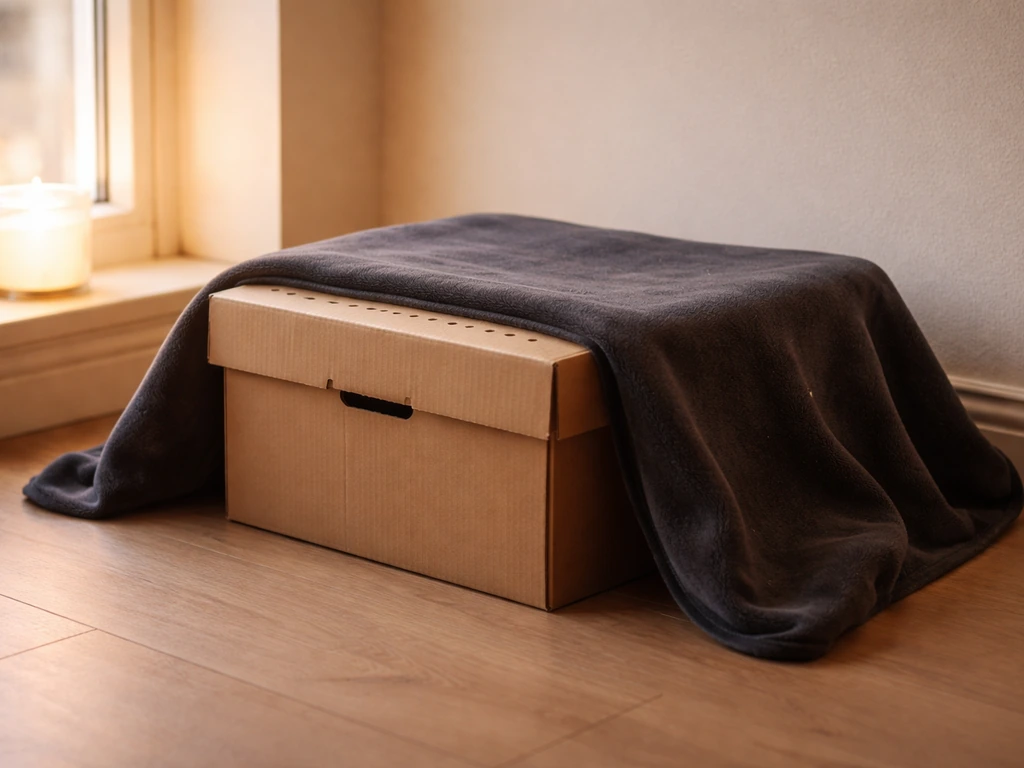
Handling causes stress, and stress kills birds that might otherwise recover. Once the bird is in its box, leave it alone. Don't open the box to check on it every few minutes. Don't show it to your family or neighbors. Don't take it outside to see if it wants to fly. Put it somewhere quiet and leave it until you're ready to transport it or a rehabber gives you further instructions.
| Situation | Right action | What to avoid |
|---|---|---|
| Window strike, bird dazed | Box it, keep warm and dark, wait 1-2 hours, contact rehabber if no improvement | Feeding, dripping water, releasing too soon |
| Cat or dog attack | Box it, contact rehabber or avian vet same day | Waiting to see if it improves on its own |
| Unfeathered nestling on ground | Return to nest if possible, otherwise box and call rehabber | Feeding, keeping it at home, releasing outdoors |
| Fledgling hopping on ground | Observe from distance for 2 hours, intervene only if injured or no parents return | Bringing inside immediately, separating from area |
| Sick or lethargic adult bird | Box it, keep warm and dark, call rehabber or avian vet | Feeding, self-treating, delaying professional help |
| Egg found on ground | Return to nest if intact and nearby, otherwise call rehabber | Attempting home incubation, possessing without a permit |
Your next steps right now
Here's the practical sequence to follow from this moment forward:
- Assess from a distance: is the bird clearly injured or is it a fledgling doing fledgling things?
- If intervention is needed, use a towel to gently place the bird in a ventilated cardboard box lined with paper towels
- Add a gentle heat source (warm water bottle wrapped in a towel) under one half of the box floor
- Put the box in a quiet, semi-dark room away from pets and people
- Do not feed it, do not give water, do not keep opening the box
- Search for a licensed wildlife rehabilitator in your area using your state fish and wildlife agency, the NWRA directory, or by calling your local humane society
- Call the rehabber and describe the bird, the situation, and what you've done
- Transport the bird in the closed box as soon as you have a destination confirmed
That's genuinely it. The most useful thing you can do for a bird in distress is get it contained, warm, dark, and quiet as fast as possible, and then hand the decision-making to someone with the training and legal authorization to actually treat it. You don't need to know the species, the injury, or the prognosis. You just need to be calm, quick, and willing to make a phone call.
FAQ
How long can I keep the bird contained before I get help?
There is no “safe” long wait, but aim to contact a wildlife rehabilitator immediately and transport as soon as they advise. If you must hold it briefly, keep the box in a steady warm, dark, quiet spot and minimize all handling. Also, if the bird worsens after a short period, treat that as a reason to escalate to urgent guidance rather than continuing to wait.
What if the bird is cold but looks otherwise okay, should I warm it slowly or right away?
Warm it right away using the half-box method described in the article, so the bird can move toward or away from heat. Avoid rapid overheating, by using “warm,” not hot water, and never placing a heat source directly against the bird. If the bird seems to perk up, that is a better sign, but you still should call a rehabber for next steps.
Can I give the bird anything “medicinal” like honey, vitamins, or antibiotics?
No. Do not provide any home remedies, supplements, or medications. Even if something seems harmless to you, dosing and effects are species-specific, and many substances can cause aspiration or digestive injury. Your role is stabilization, containment, warmth, darkness, and getting professional direction.
Do I need to wear gloves every time, and what if I do not have gloves?
Gloves help, but they are not the only safety measure. If you lack gloves, use a towel to pick up and cover the bird, keep your face back, and avoid squeezing the body. Afterward, wash hands thoroughly even if you think there was no bite, because saliva and fine debris can still transfer microbes.
What should I do if the bird is panting with its mouth open but no visible wound?
Mouth-open breathing can be a stress or respiratory emergency sign, not something to “monitor.” Contain it, keep it warm and dark, and contact an avian vet or wildlife rehabilitator right away. If you cannot reach a rehabber quickly, call animal control or an emergency veterinary line for guidance on priority and transport.
Is it ever okay to release the bird myself after it looks better?
Sometimes, but only when professionals confirm it. Window-strike birds may recover, yet the article’s key point is to release only if it clearly improves and matches the expected scenario, and to call if distress persists. When in doubt, ask the rehabilitator whether they want the bird brought in, even if it seems temporarily better.
What if I accidentally put water on the bird or forced water into its beak, what’s the next step?
Stop all water attempts immediately. Keep the bird warm, dark, and contained, then call a rehabber or avian vet and tell them exactly what happened (how it was delivered and roughly when). This matters because aspiration risk can lead to sudden breathing problems, even if the bird initially seems okay.
How do I move the bird safely to the car and prevent slipping or heat/cold shocks?
Keep the transport container level and stable, placed on the seat floor rather than on the seat where it can slide. Keep the car quiet, avoid aiming strong air conditioning or heat directly at the box, and plan the trip quickly. If it is very hot or very cold outside, consider pre-adjusting the car temperature before you place the box inside.
Do I have to identify the bird species to get help?
No, but it speeds up triage. If you do not know the species, provide a detailed description (size, color pattern, beak shape if visible, where you found it). If you can take a quick photo from a safe distance without handling or delaying, include that description when you call.
What should I do with a bird that appears to be a fledgling but is on a sidewalk or in a yard with no nearby shrubs?
First, keep pets indoors and watch from a distance for a couple of hours if the location is not directly dangerous. If it is in immediate danger, move it only a short distance to nearby cover in the same general area, such as low vegetation or the closest safer spot, without bringing it inside unless it is clearly injured. If you cannot find any safe cover nearby, ask a rehabber whether temporary containment outdoors or transport is recommended.
Can I keep the bird overnight if I call the rehabber but cannot transport until morning?
Try not to delay, but if you truly cannot transport right away, follow containment and warmth instructions strictly and keep the box untouched in a semi-dark, quiet room. Call back in the evening or leave a voicemail with the exact timing so they know the bird’s current condition. A rehabber may give specific instructions based on species, age (nestling versus fledgling), and symptoms.
What if the bird has a visible bleeding wound, can I stop the bleeding with a bandage?
Avoid bandaging or attempting to set injuries. Apply the gentlest possible pressure with a clean cloth to control bleeding, then contain and warm the bird and contact a vet or rehabber as quickly as possible. If blood soaks through, do not keep removing and reapplying repeatedly, instead add more clean material and continue toward professional care.
Next Article
How to Release a Hand-Reared Bird Safely and Humanely
Step-by-step humane release for hand-reared wild birds: species checks, anti-imprinting care, soft vs hard release, afte