If you've just found a tiny bird on the ground and you're not sure what to do, here's the short answer: take a breath, don't feed it, keep it warm, and figure out what stage it's in before you do anything else. The right action depends almost entirely on whether the bird is a nestling (very young, mostly featherless) or a fledgling (older, feathered, hopping around). Getting that wrong is the most common mistake people make. This guide will walk you through it step by step.
How to Save a Newborn Bird: Humane Step-by-Step Care
Marcus Holloway
11 Apr 2026
First, figure out what stage the bird is in
Before you touch anything, look closely at the bird from a short distance. You're trying to answer one question: how developed is it? There are three stages you'll encounter, and they look quite different.
Hatchling or nestling
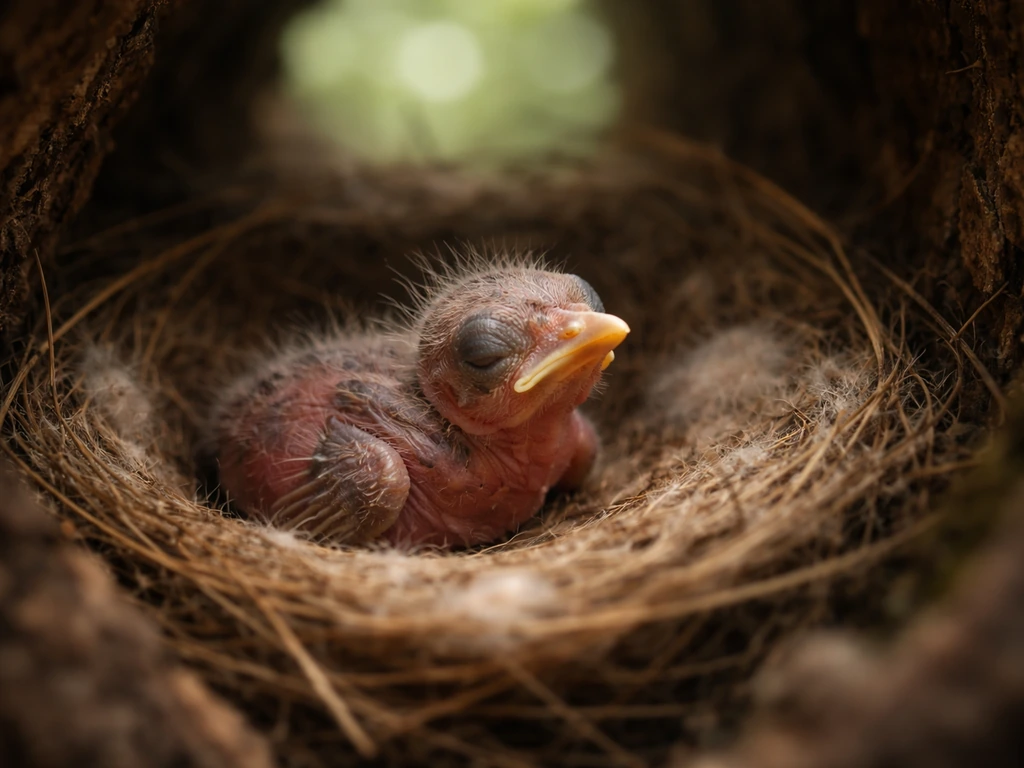
A hatchling is the youngest stage. It's mostly or completely featherless, pink-skinned, and its eyes are likely closed or only just starting to open. It cannot hold itself upright and is completely helpless. A nestling is slightly older, with some pin feathers (those look like small quills or sheaths) starting to come in, but it still can't regulate its own body temperature or survive outside the nest. If the bird you found looks like this, it genuinely needs help getting back to a nest. The U.S. Fish & Wildlife Service specifically flags featherless birds with closed eyes as the ones that actually need human intervention.
Fledgling
A fledgling is mostly feathered but may still have some downy tufts and look a bit scruffy. It can perch, hop, and may even attempt short flaps. Here's the thing: a fledgling on the ground is almost always supposed to be there. This stage is a normal part of development where the bird has left the nest but is still being fed by its parents nearby. Fledglings are what the Washington Department of Fish and Wildlife calls 'branchers' because they move between the ground and low branches. If you see one of these and it's not injured, your instinct to rescue it may actually do more harm than good.
A note on looks being deceiving
Cornell Lab ornithologists point out that even fledglings can still have feather sheaths and patches of down, so they don't always look like a clean, fully feathered bird. That's why behavior matters as much as appearance. Is the bird hopping around and responsive? Fledgling. Is it lying still, unable to lift its head, or completely featherless? Nestling. Saving a hatchling bird requires a very different approach than helping a fledgling, so getting the ID right is the most important first step.
What to do (and not do) right at the scene
The biggest mistakes happen in the first five minutes. People mean well, but some instinctive reactions, like offering water or bread crumbs, can seriously injure or kill a young bird. Here's what to keep in mind from the moment you spot one.
Do these things
- Stay calm and move slowly. Stress alone can harm a fragile bird.
- Observe from a distance first. Check for injury, assess the stage, and look for a nest before touching the bird.
- If you must handle the bird, use clean hands or thin gloves. Keep your grip very gentle and minimal.
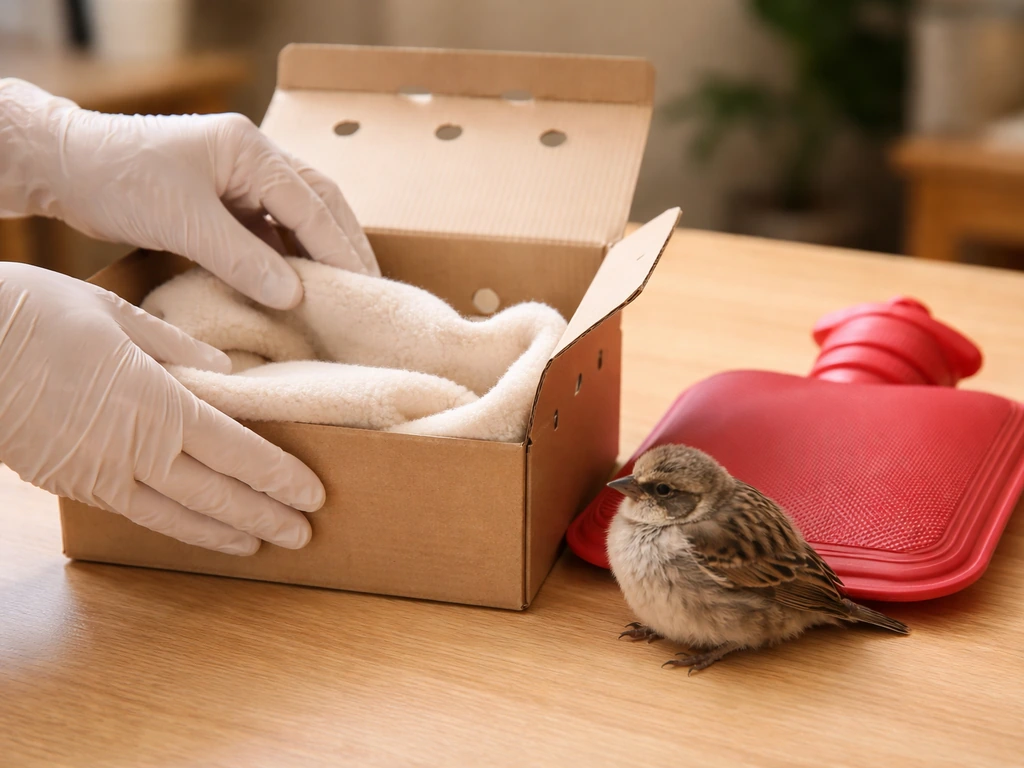
- Keep the bird warm. Cup it gently in your hands or place it in a small box with a soft cloth. Body warmth from your cupped hands works fine for a short period.
- Move it to shade or shelter if it's in immediate danger from sun, rain, or traffic.
- Look for the nest. If you can spot it and safely reach it, placing a nestling back is the right move.
Don't do these things
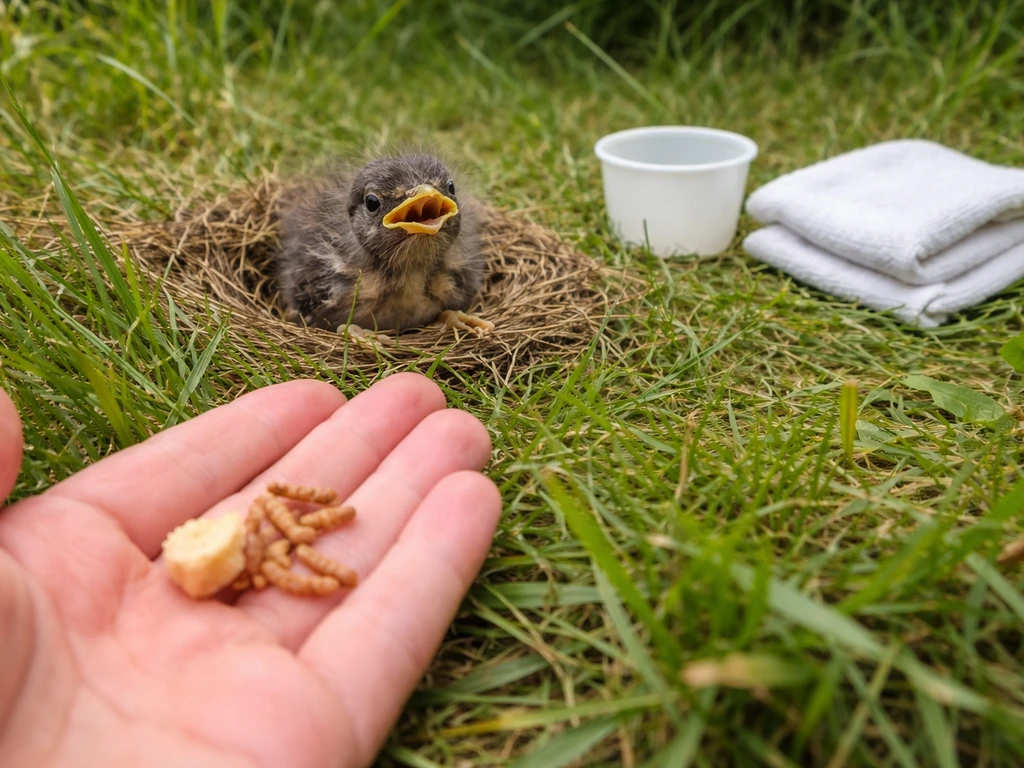
- Do not feed it anything. No water, no bread, no worms, no formula. Young birds can inhale food or liquid into their lungs and develop pneumonia. This is not a minor risk.
- Do not give it water to drink, even from a dropper. Fluids can enter the lungs extremely easily, and it can be fatal.
- Do not keep handling it more than necessary. Every minute of human contact is stressful for the bird.
- Do not put it in a sealed container with no airflow.
- Do not attempt to give any medication.
- Do not try to raise it yourself long-term. Prolonged human contact can cause imprinting, which prevents the bird from surviving in the wild.
The no-food, no-water rule is repeated by virtually every wildlife organization for a reason. The Utah Wildlife Foundation puts it plainly: young birds can inhale food or water and develop pneumonia. The Wild Bird Care Centre adds that baby birds simply do not drink water the way adults do, and fluids entering the lungs can cause death quickly. When in doubt, wait for a professional.
How to help a nestling specifically
If you've confirmed the bird is a nestling (featherless or near-featherless, helpless), the best outcome is getting it back to its nest. Here's how to approach that.
Look for the nest first
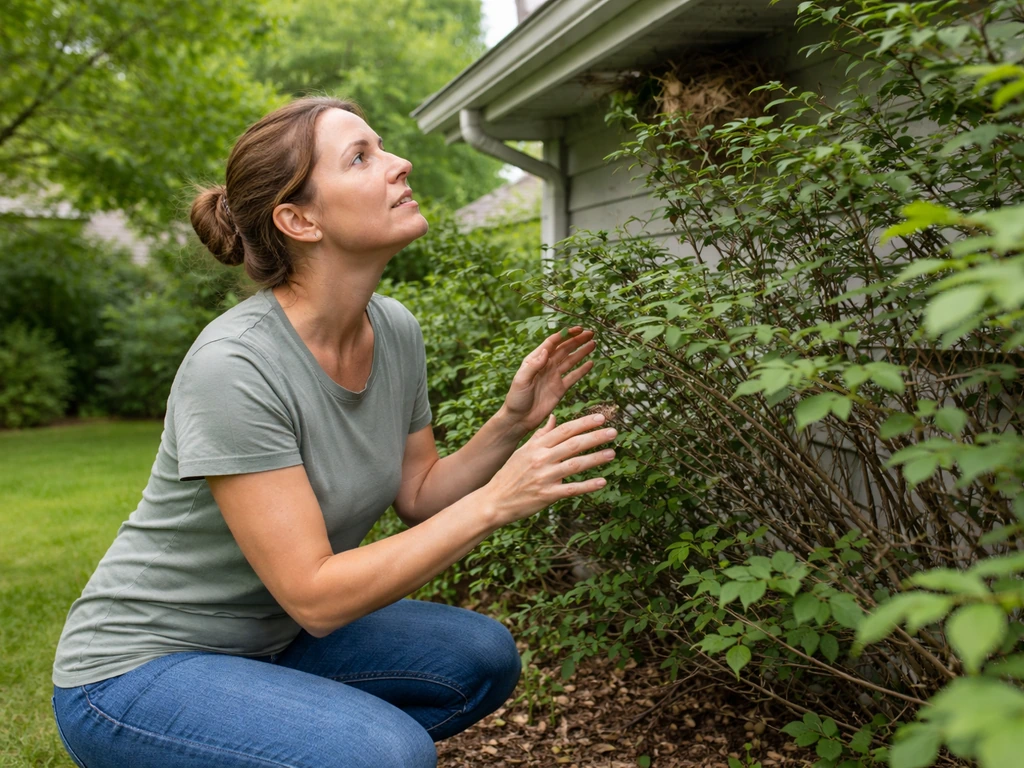
Scan the area above where you found the bird. Check tree branches, shrubs, window ledges, and gutters. Nests are often closer than you think. If you find it and can safely reach it, gently place the nestling back inside. The old myth that a parent will reject a baby because it smells like humans is just that, a myth. Birds have a very limited sense of smell and will continue caring for their young after human handling.
What if you can't find the nest?
The U. S. Fish & Wildlife Service guidance is straightforward here: if you cannot locate the nest, leave the nestling where you found it or move it to a nearby shaded area. Washington Department of Fish & Wildlife also notes that if you can’t find the nest or accessing it is too dangerous, you can [put the baby bird where its parents can find it and where it is safe from cats](https://wdfw.
wa. gov/species-habitats/living/injured-wildlife/baby-birds). Don't carry it far from where it was found. The parents may still be monitoring the area and will return to feed it.
If the nest is destroyed or unreachable, you can fashion a makeshift one using a small container like a blank" rel="noopener noreferrer">berry basket or plastic bowl lined with dry grass or paper towels, wedge it securely in the nearest tree or shrub at roughly the same height as the original nest, and place the bird inside.
Monitor for parent return
Once the nestling is back in or near the nest, step back, go inside, and give the parents space to return. Watch from a distance or through a window. If the parents haven't come back within about two hours, or if the bird's condition worsens, that's your signal to contact a wildlife rehabilitator. Helping a wild bird in distress follows the same principle: give nature a chance first, but know when to step in.
How to handle a fledgling
The number one rule with fledglings: if it's not injured, leave it alone. This is hard advice to follow because a bird on the ground looks vulnerable, but MassWildlife is clear: healthy, active fledglings should be left where they are because their parents are almost certainly nearby and will continue to feed them.
When you can move a fledgling
There are a few situations where moving a fledgling to a safer nearby spot is appropriate. If the bird is in the middle of a road, at risk from a cat or dog, or completely exposed with no shelter nearby, you can gently move it to the closest safe shrub or low branch. The key word is 'nearby.' Don't take it inside or carry it far away. MassWildlife specifically suggests moving it to a sheltered location like a bush while keeping your distance afterward so the parents can resume care.
When a fledgling really does need help
A fledgling needs intervention if it's been attacked by a cat or dog, has visible wounds, is bleeding, cannot stand or right itself, is being ignored by parents after two or more hours of monitoring, or if you find a dead adult nearby and this is clearly its offspring. Cat attacks are particularly serious because even tiny puncture wounds introduce bacteria that can cause fatal infections within 24 to 48 hours. If a bird has been in a cat's mouth, treat it as an emergency regardless of how it looks. Treating a bird after a cat attack covers that specific situation in more detail.
Temporary housing until help arrives
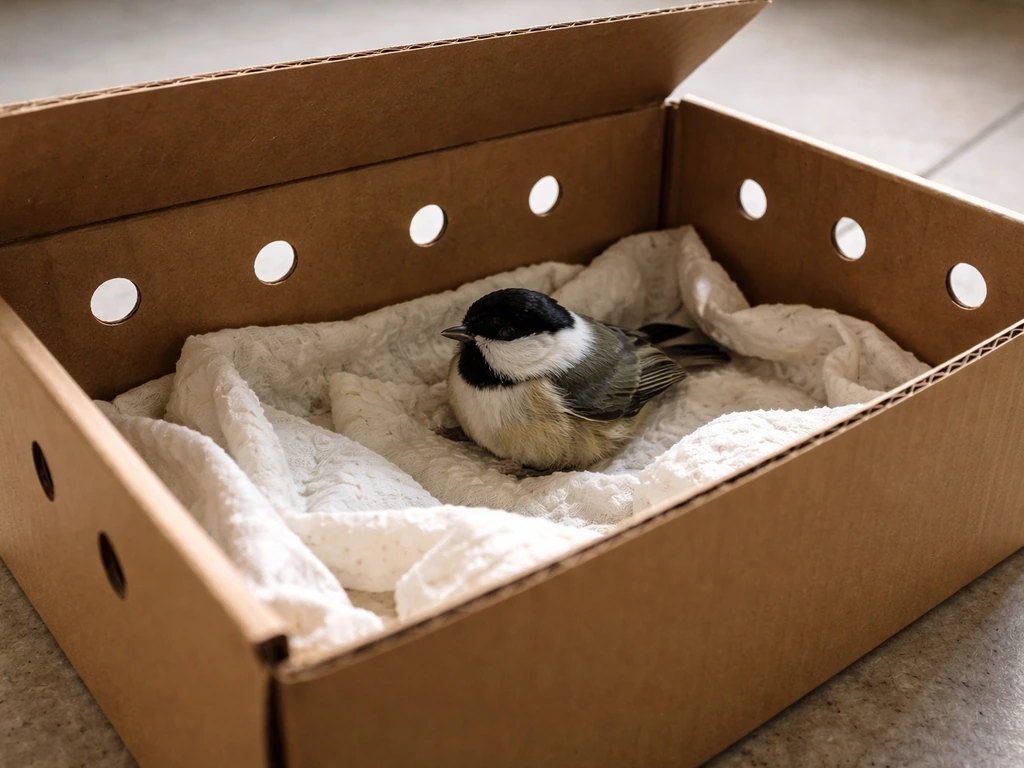
If you need to keep the bird temporarily while you locate a rehabilitator or arrange transport, setting it up properly makes a real difference. The goal is warmth, quiet, darkness, and safety. Nothing more complicated than that.
The container
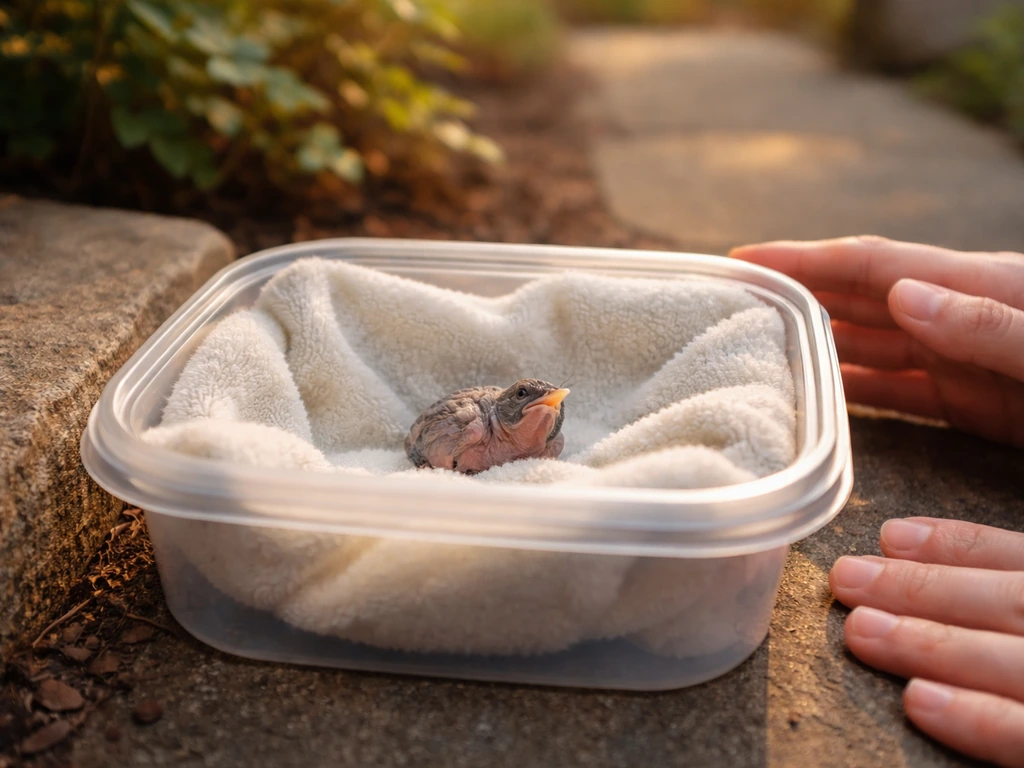
Use a cardboard box or similarly sized container. Line the bottom with a folded paper towel or soft cloth. Poke small holes in the sides for ventilation. Place the bird gently inside. Do not use a glass tank or sealed container with no airflow. The Wildlife Coalition of North Georgia recommends keeping it in a safe, quiet location away from pets, children, and noise.
Keeping it warm
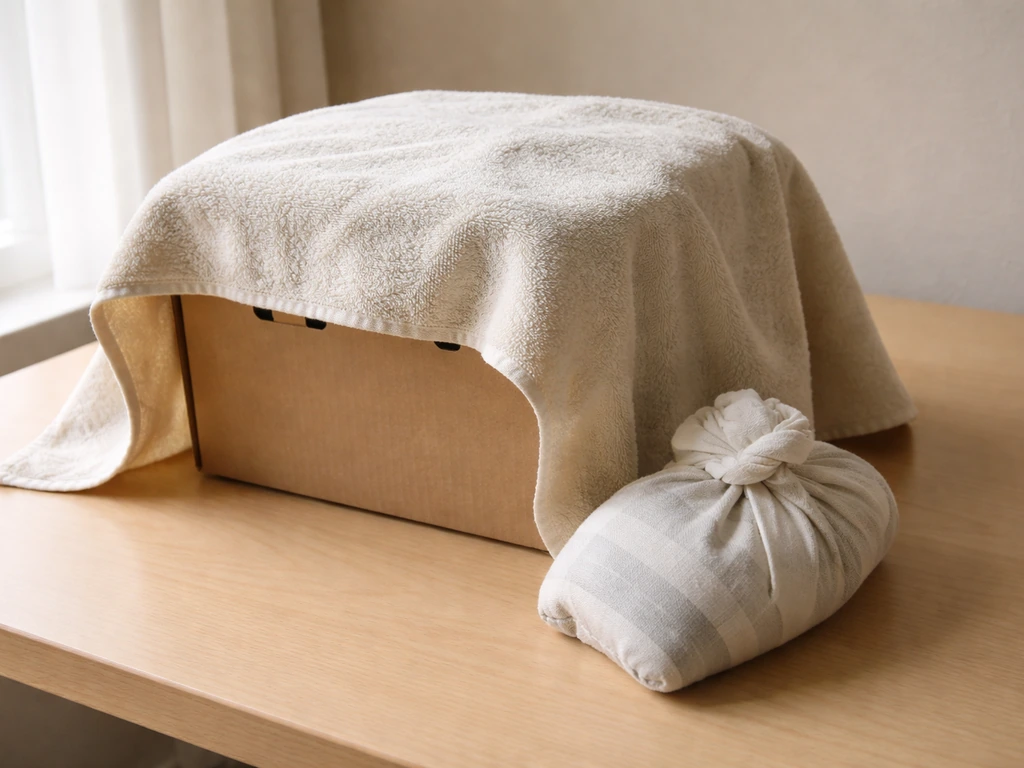
Warmth is critical for nestlings and injured birds because they can't regulate their own body temperature. The Bi-State Wildlife Hotline suggests a DIY option: fill a sock with dry rice, microwave it for one to two minutes, and place it under half the container (not the whole floor) so the bird can move away from the heat if needed.
Toronto Wildlife Centre also recommends temporary housing in a small cardboard box lined with a soft towel, using gentle heat sources like a microwaved rice sock, a hot-water bottle wrapped in a towel, or a heating pad set to “LOW” under half the box temporary housing in a small cardboard box lined with a soft towel and gentle warmth (rice sock, hot-water bottle, or heating pad on “LOW”).
A hot water bottle wrapped in a cloth works the same way. The goal, as Help Wild Birds puts it, is to keep the bird 'warm to the touch, but not hot. ' One important caveat from Bi-State: once the rice sock cools down, it can actually chill the bird rather than warm it, so check and refresh it regularly.
Keeping it calm
Cover the box loosely with a towel or light blanket once the bird is settled. The Wildlife Rehabilitation Center of Northern Utah specifically says to cover the container to keep the animal quiet and calm, and to avoid repeatedly lifting the cover to peek at it. Darkness reduces stress significantly. Keep the box away from TV noise, pets, and foot traffic. Resist the urge to check on it constantly.
No food, no water (this bears repeating)
Even during temporary housing, do not attempt to feed or give water to the bird unless a licensed wildlife rehabilitator has specifically instructed you to do so and told you exactly what to give. The Bi-State Wildlife Hotline's guidance is explicit: until you have species-specific instructions from a professional, don't feed or water the bird. The risk of aspiration pneumonia from even well-intentioned feeding is real and fast-moving.
Nestling vs. fledgling at a glance
| Feature | Nestling / Hatchling | Fledgling |
|---|---|---|
| Feather coverage | Featherless or with early pin feathers | Mostly feathered, may have some down tufts |
| Eyes | Closed or just opening | Open and alert |
| Mobility | Helpless, cannot stand | Hops, perches, may attempt short flights |
| Where you find it | On the ground far from branches or nest | On the ground or low branches near bushes/trees |
| Should you intervene? | Yes, return to nest or contact rehabber | Usually no, leave it and monitor for parents |
| Move it? | Only to return to nest or shade nearby | Only if in immediate danger, move to nearby shelter |
| Urgency | High if parents don't return in 2 hours | Only if injured or parents absent 2+ hours |
Signs you need professional help right now
Some situations go beyond what temporary home care can handle. Contact a licensed wildlife rehabilitator or avian vet immediately if you notice any of the following.
- The bird is gasping, gurgling, or breathing with obvious difficulty.
- It has been in a cat's or dog's mouth, even briefly and even without visible wounds.
- There is visible bleeding, a drooping or twisted wing, or an obviously broken limb.
- The bird is unresponsive, limp, or cannot right itself when placed on a flat surface.
- It appears lethargic and cold even after you've warmed the container.
- You find a dead adult nearby and this young bird appears to be its offspring.
- The parents have not returned after two hours of patient, distant monitoring.
Arizona Game and Fish, in guidance published April 9, 2026, lists these same triggers: sick, injured, or unresponsive animals; animals attacked by cats or dogs; and confirmed dead parents. These are the situations where waiting is not safe.
How to find a rehabilitator and what to do next
In the U.S., you can search for a licensed wildlife rehabilitator through the National Wildlife Rehabilitators Association (nwrawildlife.org) or your state's wildlife agency website. Many states have 24/7 hotlines specifically for wildlife emergencies. The Bi-State Wildlife Hotline, for example, routes callers to licensed rehabbers around the clock in their coverage area. When you call, have this information ready: the species if you know it, where you found the bird, what stage it appears to be in, any visible injuries, and how long it's been in your care.
When transporting the bird to a rehabber or vet, keep it in the lined, covered box. Don't let it overheat in a hot car. Keep the radio off. Don't open the box during the drive to check on it. The calmer the environment, the better the bird's chances.
The broader principle across all of these situations, whether you're dealing with a nestling, a fledgling, or an injured adult, is to do as little as possible and get professional help as fast as possible. Knowing how to help a bird in general comes down to recognizing what's within your ability and what isn't. For young birds, warmth, quiet, and a call to a rehabilitator are genuinely the most useful things you can offer.
If you're dealing with a very small species and want more specific handling guidance, the steps for caring for a small bird cover the particular challenges that come with tiny, fragile birds that are especially vulnerable to chilling and handling stress.
FAQ
I found a featherless bird, but I cannot tell where the nest is, what should I do right away?
If you can see that it is a nestling, the priority is to return it to its nest or a nearby surrogate, not to keep it as a pet. If the bird is featherless and the eyes are closed, even short delays can be risky, so skip attempts to “raise it” and call a wildlife rehabilitator the same day.
When should I move a nestling, and when should I leave it exactly where it is?
For a nestling left in place when the nest cannot be found, avoid moving it “just a little farther.” Place it where you found it or in the nearest shaded, protected spot, then step back. If you can still monitor from a distance, you reduce the chance of repeatedly stressing it or separating it from parents.
What if the bird looks okay at first, but I’m worried later that it’s not being fed?
Do not assume “quiet means fine.” If the bird is worsening, unable to hold posture, suddenly appears cold, or parents do not return after about two hours, treat it as a signal to get professional help. Also treat any bird that has been exposed to rain, strong wind, or cold as higher urgency.
How can I tell whether I should leave a fledgling alone or intervene for safety?
Even when a bird is a fledgling, check for obvious red flags before you decide to leave it alone, such as bleeding, inability to stand or right itself, visible puncture wounds, or a cat or dog involvement. If none of those apply, keep distance and let parents continue feeding.
Is it ever okay to move a fledgling inside, or temporarily keep it?
Yes, but only in limited circumstances. If it is in the middle of a road or in immediate danger from predators, move it to the closest safe shrub or low branch and then back away so parents can resume care. Do not bring it indoors or keep it overnight “until it calms down.”
What should I feed a rescued baby bird, even if I’m sure it is small and hungry?
Never place the bird in a food-focused situation, like offering milk, bread, seed, fruit, or water. Feeding and watering can cause aspiration pneumonia quickly, and the wrong diet can also be dangerous even if the bird seems hungry. The article’s safest default is to wait for species-specific instructions from a licensed rehabilitator.
How should I handle the bird if it has to be moved for safety?
If you must pick it up, handle it as little as possible, support the body fully, and avoid blowing on it or letting it get chilled. Use the lined box setup you already have, keep it covered and dark, and minimize contact duration until you can transfer to a rehabber.
What’s the safest way to keep the bird warm if I’m holding it temporarily?
Use warmth that can be adjusted, not direct heat. The “sock with warm rice under part of the container” method matters because the bird must be able to move away from excess heat. If the bird seems overheated or the warmth source has cooled and stays cold, refresh it and recheck the temperature.
What container should I use while I wait to transport the bird?
Do not use a glass tank or a tightly sealed container with no airflow. Air circulation plus a loose cover helps reduce overheating and stress. Also avoid overheating in a parked car, even for a short time, because internal temperatures can rise fast.
How long can a newborn bird be left before it becomes an emergency?
If the bird appears cold, unresponsive, or the temperature is dropping, contact a rehabilitator immediately and keep the bird warm, quiet, and covered in the meantime. If the bird is a nestling, do not wait days expecting it to recover on its own.
What should I do if I watch for parents and they never come back?
If the parents do not return, that does not always mean you should move it repeatedly. Give space first, then if no return occurs after about two hours, or condition worsens, contact a rehabilitator. Repeatedly relocating the bird can reduce the chance of reunification.
What if I can’t reach a wildlife rehabilitator immediately, especially after a possible cat attack?
If you cannot reach a rehabilitator right away, focus on stabilization: warmth, darkness, quiet, and correct temporary housing, no feeding or watering. If you suspect cat or dog involvement, treat it as urgent and prioritize a faster call, because small puncture wounds can lead to rapid fatal infection.
What should I do if I find a live baby bird near a dead adult bird?
Yes. If you see a dead adult bird nearby and the young bird appears to match it as offspring, contact help immediately and do not delay waiting for parents. This situation often indicates the parents are not available to care for the surviving youngster.
Any tips for transporting a newborn bird without making things worse?
When transporting, keep the box covered and lined, keep it stable, and prevent heat buildup by avoiding direct sun. Minimize opening the container for checks, keep the car calm (no loud music), and plan for quick handoff to a professional rather than long stops.
Next Article
How to Save a Bird: First Aid Steps for Emergencies
Step-by-step bird rescue first aid: assess safely, warm and contain, handle chicks, avoid mistakes, and get vet help fas