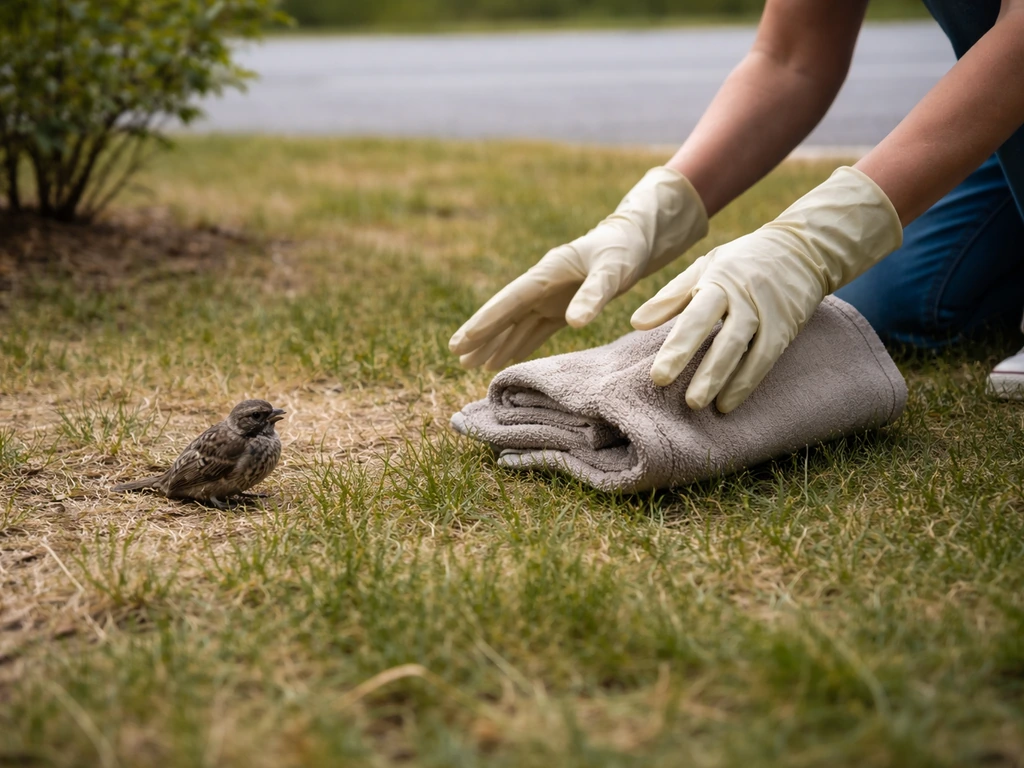
If you've found a hatchling bird, the single most important thing you can do right now is keep it warm, quiet, and dark, and do not feed it or give it water. Wild Nest Bird Rehab’s temporary bird care guidance also warns that if a bird is unstable, you should not put it in a water dish and instead focus on keeping it warm, dark, and quiet in a box with soft bedding unstable birds should not be put in a water dish. That goes against every instinct, but it's the rule that keeps the most hatchlings alive. Your job in the first 30 minutes is to stabilize the bird and get it to a licensed wildlife rehabilitator or avian vet, not to nurse it back to health yourself.
How to Save a Hatchling Bird: Step-by-Step Rescue Plan
Marcus Holloway
16 May 2026
What to do in the first 5 minutes
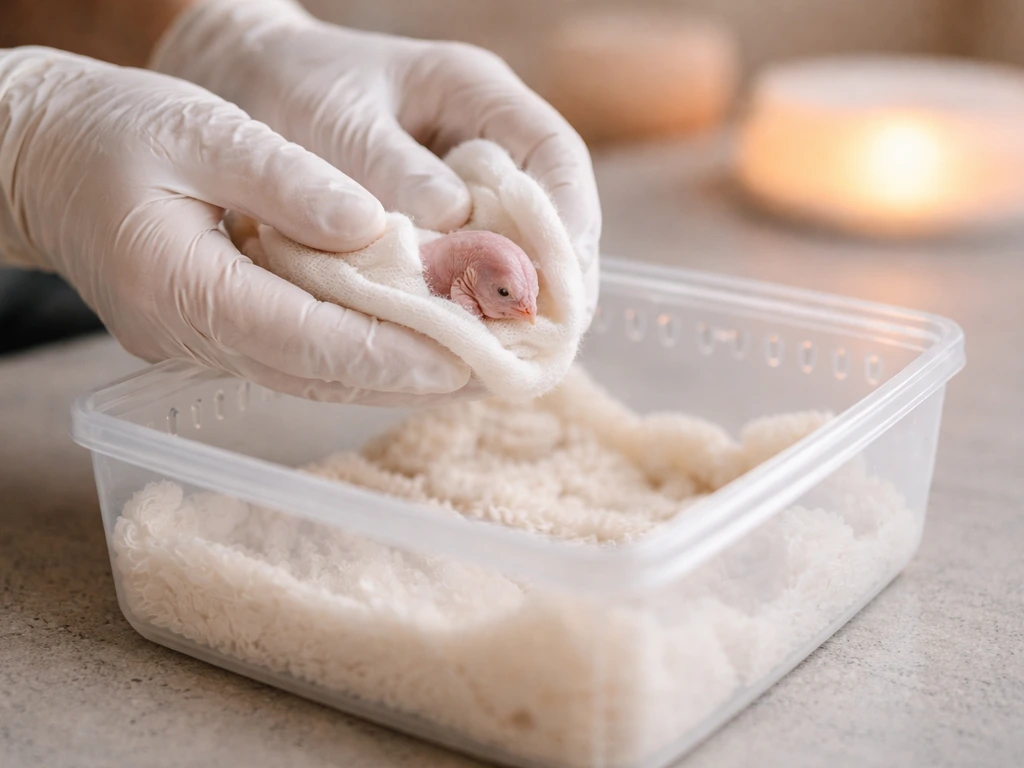
Move quickly but calmly. Pick up the hatchling with clean hands or a soft cloth, being very gentle. Don't squeeze it or hold it tightly. Place it in a small box or container with ventilation holes punched in the lid. Line the bottom with a paper towel or a smooth piece of cloth (not terry cloth, which can snag tiny toes). Put the lid on.
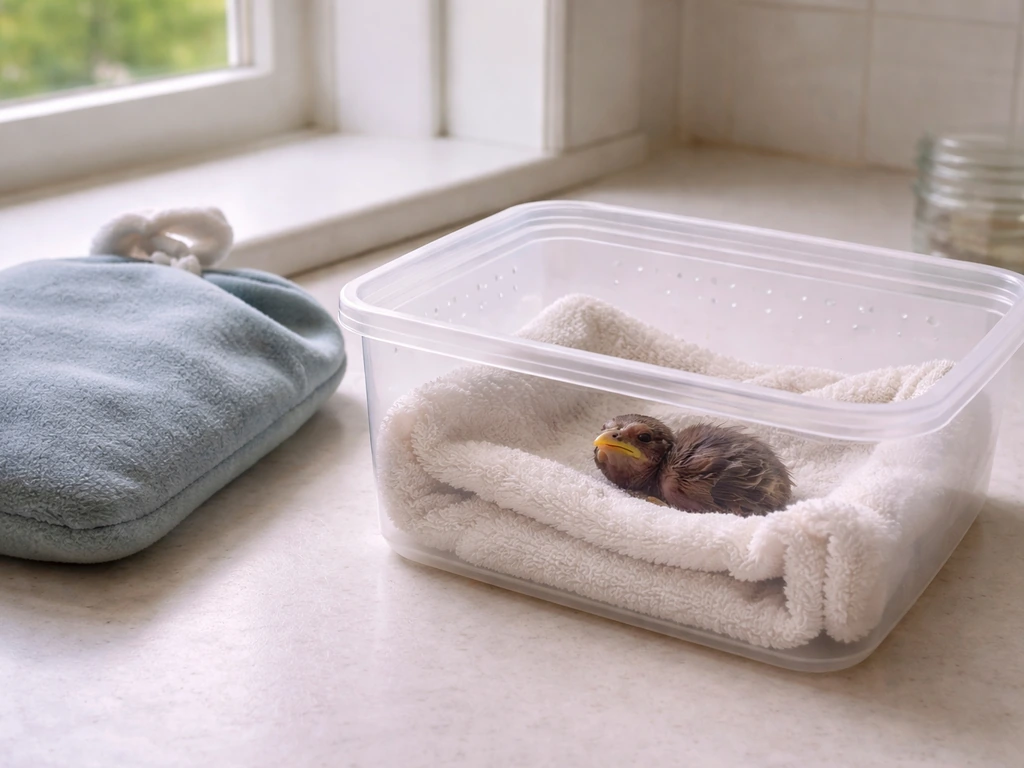
Now set up your heat source. Hatchlings can't regulate their own body temperature, and cold kills faster than almost anything else. A heating pad on its lowest setting, placed under half the box and draped with a towel, works well. Alternatively, fill a sock with dry, uncooked rice, tie it shut, and microwave it for about one minute, then tuck it next to (not under) the bird wrapped in a cloth. A hot water bottle wrapped in a towel is another solid option. The goal temperature for a tiny, featherless hatchling is around 95 to 100°F in the warm zone of the box. The bird needs to be able to move away from the heat source if it gets too warm, so keep one side of the box cooler.
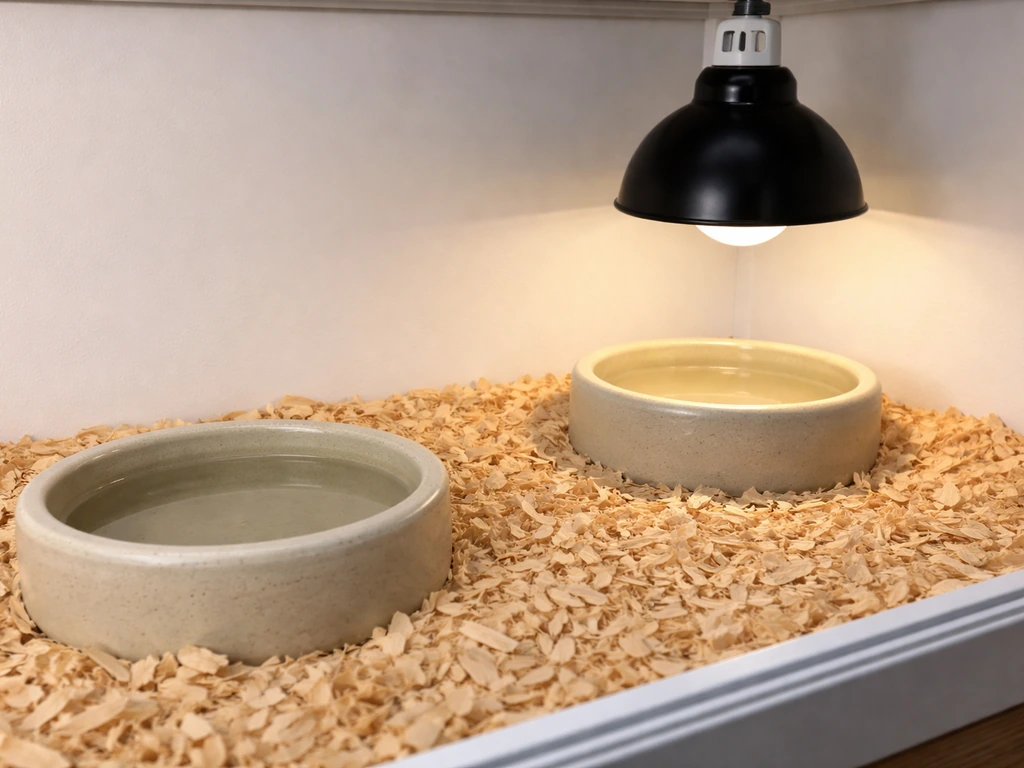
Avoid using a heat lamp or regular lightbulb. Light keeps young birds awake and stressed, and it can cause dehydration or burns on skin that's thinner than paper.
Put the box somewhere quiet, away from pets, children, drafts, fans, and air conditioning. A bathroom counter or a shelf works. Then start making calls.
Before you do anything else, figure out what you actually have
Not every baby bird on the ground needs rescuing. Misidentifying the situation is one of the most common ways people cause harm, so spend two minutes here before committing to a full rescue plan.
Hatchling or nestling
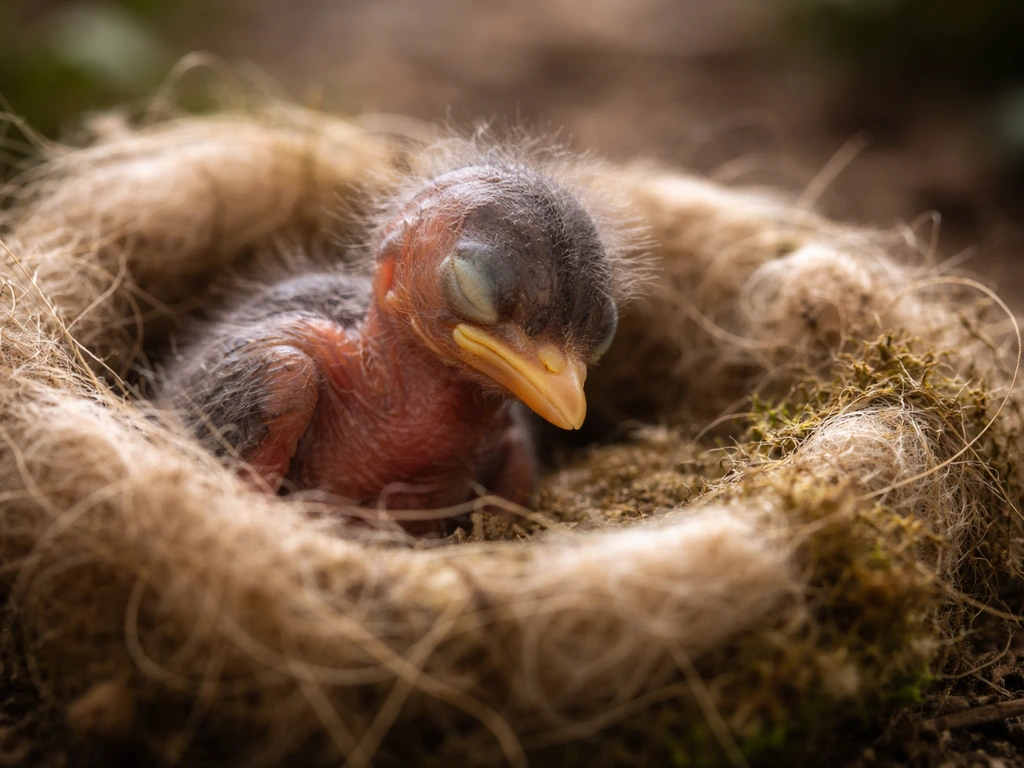
A hatchling is just days old. It has little to no feathers, its eyes may be closed, and it cannot hold its head up for long. It is completely helpless and belongs in a nest with its parents. This is the bird that needs your immediate help. If you can see the nest and reach it safely, gently place the bird back inside. The myth that parent birds will reject a chick that's been touched by humans is not true. Parents identify their chicks by sight and sound, not smell.
Fledgling
A fledgling has most of its feathers, can hop around, and may even make short flights. Finding one on the ground is completely normal. Fledglings spend several days on the ground while their parents continue to feed and watch over them. Unless the bird is clearly injured (bleeding, a drooping wing, obvious trauma) or a cat has gotten to it, leave it where it is and watch from a distance. Picking up a healthy fledgling is one of the most common unnecessary interventions people make.
When is a bird truly orphaned?
Watch from a distance for at least one hour. If no parent appears during that time, if the bird is clearly injured, if you know the parent is dead, or if a cat has had the bird in its mouth, then it genuinely needs help regardless of its age. Cat bites are a special case: even a small puncture delivers bacteria that are lethal to birds within 24 to 48 hours without antibiotic treatment. Any bird that has been in a cat's mouth needs a vet or rehabilitator today, not tomorrow.
Warmth and hydration: what's safe and what isn't
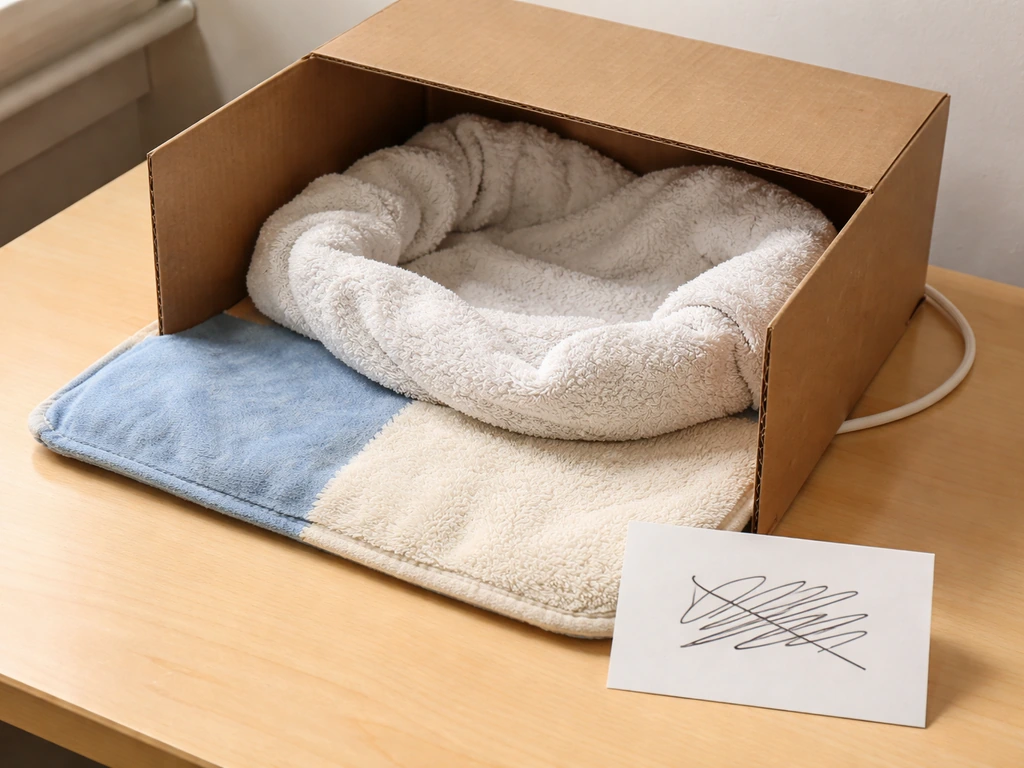
Warmth is the one thing you can and should provide. Hydration is different. Almost every wildlife rehabilitation organization, from the RSPCA to the Wildlife Center of Virginia, says the same thing: do not give a hatchling water. The anatomy of a baby bird makes it very easy for liquid to enter the airway instead of the stomach. A few drops of water given the wrong way can cause the bird to aspirate, and that usually means a slow death from pneumonia. Never squirt water into a bird's mouth.
This feels wrong when the bird is gaping (opening its beak and begging). Resist the urge. A properly warmed hatchling can hold on for a couple of hours without food or water while you get professional help on the line. The risk of doing harm with water is far greater than the risk of a short wait.
Check the heat source every 20 to 30 minutes. If the bird is stretching its neck up and away from the warm side, or breathing with its mouth open, it's too hot. Move the heat source further away or let it cool slightly. A bird that feels cold to the touch, is lethargic, or is huddled and unresponsive needs more warmth.
Feeding hatchlings: the rules, the risks, and the rare exceptions
The default rule is don't feed a hatchling until you've spoken to a wildlife rehabilitator. Incorrect food is one of the leading causes of death in rescued baby birds. Bread, milk, bird seed, water, fruit juice, and worms from your garden are all dangerous or completely wrong for most hatchlings. Seed-eating birds still need insect protein as hatchlings. Giving the wrong food or the wrong amount can cause choking, aspiration, crop impaction, or nutritional deficiencies that cause permanent damage.
That said, if you are more than two hours away from any help and the bird is actively gaping and alert (not lethargic), some rehabilitation guides suggest that moistened kitten kibble, softened until it's mushy and squeezed nearly dry, can be offered in very small pieces placed into the back of the mouth (not dropped in liquid form). This is an emergency measure only, not a feeding plan. Use the smallest amount you can manage, the size of the bird's head is a rough guide for the size of one feeding, and go slowly.
If a rehabilitator gives you instructions over the phone, follow those exactly and ignore what you find on general internet searches. Misinformation is widespread, and the right food varies significantly by species.
How often hatchlings need to eat (for context, not as a DIY plan)
Wildlife professionals feed hatchlings every 15 to 30 minutes during daylight hours. That pace is not manageable for most people, and attempting it without training usually causes more harm than good. This frequency is one of the main reasons these birds need professional care urgently. The goal is to get the bird to rehab within a few hours, not to become its caregiver.
Stop and call immediately if you notice these signs
- The bird stops gaping or becomes suddenly limp during or after feeding
- You see liquid coming from the nostrils
- The bird makes a clicking or wheezing sound when breathing
- There is any food visible in the throat (aspiration risk)
- The bird's crop (the small bulge at the base of the throat) seems hard or distended
Setting up a safe temporary home
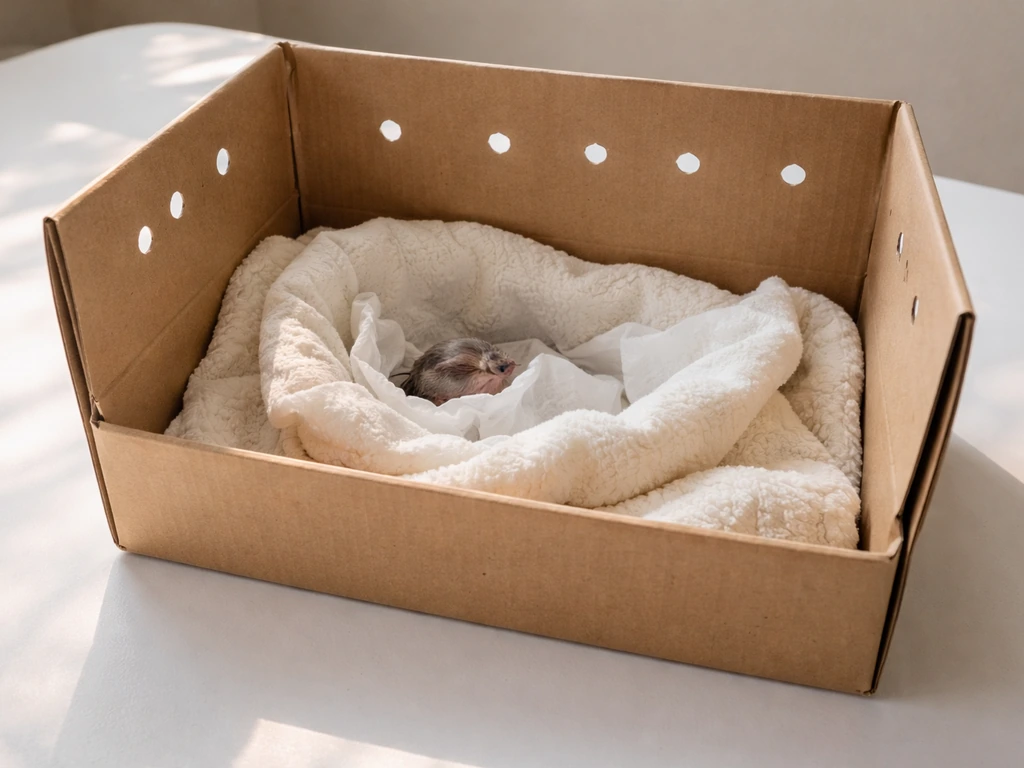
A shoebox or small cardboard box works perfectly. Punch several small holes in the lid and sides for airflow. Line the bottom with a paper towel or a non-fraying cloth. Avoid anything with loops or fibers that could catch on tiny feet or toes. Don't use a wire cage; the bird can injure itself and loses heat quickly through the open sides.
If the bird has no feathers, crumple a paper towel into a shallow cup shape to mimic the bowl of a nest. This gives the bird something to rest against without having to hold itself upright, which uses energy it doesn't have.
Keep the lid on. Darkness reduces stress significantly. Stress uses up energy and raises the bird's heart rate in ways that are genuinely dangerous for a hatchling. Every time you open the box to check, you're setting the bird back. Check only when necessary.
Keep pets completely away from the area. Even the smell of a cat can stress a bird badly. Don't let children handle the bird. And don't talk to it, play music near it, or try to comfort it with your voice. The quieter and darker, the better.
Contacting a wildlife rehabilitator or vet: do this now
In the US, it is illegal under the Migratory Bird Treaty Act to keep most wild birds in your possession without a federal permit, even with the best intentions. That's not meant to scare you; it's meant to push you toward the people who are legally equipped and trained to help. Contact a licensed wildlife rehabilitator as soon as the bird is stabilized.
How to find help fast
- Search 'wildlife rehabilitator near me' or use the National Wildlife Rehabilitators Association (NWRA) or the Animal Help Now app to find local contacts
- Call your local humane society or animal control office — they often have referral lists
- Contact an avian vet if a wildlife rehabber isn't immediately available, especially if the bird is injured
- In the UK, call the RSPCA or a local wildlife hospital
What to tell them when you call
- Where you found the bird (outdoor environment, nearby trees or buildings, urban or rural)
- What it looks like: feathered or featherless, eyes open or closed, approximate size
- Any visible injuries: bleeding, drooping wing, swelling
- Whether it was in a cat's mouth
- What you've done so far: heat source used, whether you offered food or water
- How long you've had it
If you're transporting the bird to a facility, keep the box in a warm car (not too hot), away from air vents, and in a quiet spot. Don't play music. Don't open the box during the drive.
Mistakes that kill hatchlings (and how to avoid them)
Most hatchlings that die in well-meaning hands don't die from lack of care. They die from too much of the wrong kind of care. Here are the most common and most dangerous errors.
| Mistake | Why it's dangerous | What to do instead |
|---|---|---|
| Giving water | Liquid easily enters the airway; aspiration causes lung infection and death | No water. Call a rehabber for guidance if the bird seems dehydrated |
| Feeding bread, seeds, or milk | Nutritionally wrong and can cause choking, crop problems, or aspiration | Nothing until you speak to a professional; moistened kitten kibble only as a last resort |
| Overhandling or talking to the bird | Causes extreme stress, raises heart rate, wastes critical energy | Lid on, box dark and quiet, minimal checks |
| Using a heat lamp or lightbulb | Dries out skin, disrupts sleep cycles, risk of burns | Heating pad on low, hot water bottle, or rice sock wrapped in cloth |
| Making the whole box too warm | Bird can overheat and die; look for open-mouth breathing as a warning sign | Place heat under only half the box so the bird can move away |
| Waiting too long to call for help | Every hour matters; hatchlings deteriorate fast | Call within the first 30 minutes of finding the bird |
| Too much human contact (imprinting) | Birds that imprint on humans can't survive in the wild | Limit all contact to the minimum needed for care |
| Using terry cloth or loopy fabric | Toes get caught; bird panics and injures itself | Use smooth cloth, paper towels, or tissues for lining |
Signs the bird is in a true emergency
These signs mean you need to reach a vet or rehabilitator immediately, not just soon:
- Active bleeding that doesn't stop
- Open-mouth breathing or wheezing that isn't heat-related
- Complete limpness or inability to hold the head up at all (beyond normal hatchling weakness)
- Visible broken bones, a wing hanging at a wrong angle, or an open wound
- Cold to the touch and unresponsive after 20 minutes of appropriate warmth
- Seizure-like trembling or loss of coordination
Your hour-by-hour plan from the moment you find the bird
- Minutes 1 to 5: Pick up gently, place in a ventilated box lined with paper towels, set up a heat source under half the box, lid on, move to a quiet location away from pets and noise
- Minutes 5 to 15: Assess the bird. Is it featherless with eyes closed? It's a hatchling and needs professional care. Did a cat have it? That's an emergency. Can you safely return it to a visible, reachable nest? Try that first
- Minutes 15 to 30: Start calling wildlife rehabilitators or an avian vet. Use the NWRA finder, Animal Help Now, or your local humane society. Have your information ready (location found, description, injuries, what you've done)
- Hour 1: Keep the box warm, dark, and quiet. Check the heat source once. Do not feed or give water unless a rehabilitator has instructed you to and told you exactly how. If the bird is clearly dying (cold, limp, not breathing well), push harder to find emergency vet help
- Hours 1 to 3: Follow the rehabilitator's instructions. If they've told you to bring the bird in, transport it in the warm, dark box and go directly there. If feeding instructions were given, follow them exactly. Continue monitoring for emergency signs
- Beyond 3 hours: If you genuinely cannot reach help and the bird is alert and gaping, you may offer a tiny amount of moistened kitten kibble as described above. But this is a last resort, not a care plan. Keep trying to reach a licensed rehabber
The goal of everything above is one thing: keep the bird alive and stable long enough for someone qualified to take over. If you are trying to save a small bird, focus on safety first, then get it to a licensed wildlife rehabilitator as quickly as you can. You don't need to fix it. You need to not make it worse, keep it warm, and get it to the right person as fast as possible. After that, follow proper guidance on how to save a wild bird long enough to get qualified help. If you want a clear, step-by-step checklist for how to save bird, follow the same order of priorities and avoid any unsafe feeding or handling. If you want the safest help plan, follow the steps in how to save a newborn bird so you know exactly what to do and what to avoid. That's genuinely the best thing you can do for it.
If you've also found an older bird with feathers that can hop or flutter, the situation is a little different and the steps for fledglings, injured adult birds, or birds that have been in a cat's mouth each have their own nuances worth reading through separately.
FAQ
How can I tell if the baby bird is a hatchling or something older when I’m not sure?
Use two quick checks. Hatchlings are usually days old with little or no feathers and cannot hold their head up reliably. Fledglings have most feathers, can hop, and may show some wing movement, even if they look “lost.” If you truly cannot tell, treat it like a hatchling by keeping it warm, dark, and not feeding or giving water until you can talk to a wildlife rehabilitator.
What if the hatchling is wet or cold when I find it?
First, dry it gently by patting with a soft, clean cloth, then start warming immediately using the box setup and a warm zone. Do not use direct hot water, hair dryers, or rapid warming, and do not put it under a faucet. Warming should be gradual enough that the bird can move away from the heat source if it gets too warm.
Is it okay to give a hatchling electrolytes, formula, or sugar water?
No. Any product meant for humans or pets, including electrolytes, baby formula, sugar water, or sports drinks, can be the wrong nutrients and can also increase the risk of aspiration. The article’s “do not feed until you speak to a wildlife rehabilitator” rule applies even if the bird looks thirsty or is gaping.
What should I do if the bird seems to have something stuck in its mouth or is gaping constantly?
Do not try to remove material with fingers, and do not pour water or food in. Gaping can be a begging response, and warmed hatchlings can wait for help. Keep it warm and dark, and call a licensed rehabilitator for species-specific guidance if you are worried about choking or breathing difficulty.
Can I use a towel, blanket, or my hands to keep the bird warm instead of a box?
It is safer to use a ventilated container as described. Loose fabrics can tangle tiny toes and can also make it harder to create a cool side so the bird can regulate exposure. If you must temporarily transport, place the bird in a small ventilated box or container rather than holding it against your body for extended periods.
How long can I keep a hatchling warm before the bird must be seen?
Goal is stabilization first and transfer to a rehabilitator quickly, ideally within a few hours. If you are waiting longer, keep it in the warm zone with the lid on and check temperature regularly, but do not start a feeding schedule. Call ahead so they can advise on whether to wait, where to drop off, and how to maintain safe warmth.
What temperature is safe if the bird is already warm?
Use behavior cues. If the bird stretches away from the warm side or breathes with its mouth open, it is too hot, so move the heat source farther away or reduce the heat. A bird that is cold to the touch or huddled and unresponsive needs more warmth, but still with the option to move to a cooler side.
Do I need to give heat even if the bird seems “fine” and responsive?
Yes, for hatchlings you should still provide warmth. Hatchlings cannot regulate temperature and can deteriorate quickly even if they appear alert. Keep the box quiet, dark, and warm until a professional can assess it.
Should I clean the bird or its nest if it’s dirty?
Avoid washing the bird. If it is visibly messy, you can gently remove debris from the area around it using a dry or slightly damp cloth on your hands, then place it back in the warm, dark container. Immersing or spraying can chill it and increases the chance of liquid entering the airway.
Can I put the hatchling back in a nest even if it falls again or looks abandoned?
If you can safely reach the nest and you are confident it is a hatchling, gently return it and monitor from a distance for at least an hour. If no parent shows up during that time, the bird is injured, or you suspect the parents are gone or the bird was taken by a cat, then treat it as needing help and contact a rehabilitator immediately.
What should I do during transport, especially if it’s cold outside?
Keep the box warm but not overheated, away from vents and direct sunlight. Avoid opening the lid during the drive. A practical approach is to place the box in a quiet spot in the car and use indirect warmth so the bird can stay in its warm zone without getting exposed to hot air.
If the bird has been in a cat’s mouth but seems okay, how urgent is it?
It is urgent. Even minor puncture wounds can be lethal within a day or two due to bacteria. Treat it as a same-day situation: get it to a vet or wildlife rehabilitator today, not “later,” and keep it warm and dark while you arrange transport.
What signs mean I should stop waiting and go straight to help?
Act immediately if you see trouble breathing, open-mouthed breathing, severe lethargy or unresponsiveness, visible trauma, bleeding, a drooping wing, or if the bird has been injured or attacked (including cat exposure). If it is not improving after warming or you suspect aspiration, that is also a reason to escalate quickly.
Is it ever appropriate to wrap the bird in my clothing or put it under a blanket?
Generally no, because it can overheat the bird and reduces ventilation control. The nest-mimicking warmth should come from the controlled heat source in the box, with the option for the bird to move to a cooler side. If you need emergency warmth during setup, do it briefly while you secure the proper container.
Does the Migratory Bird law mean I cannot transport the bird at all?
It means you cannot keep wild birds for longer-term possession without the required federal permit. Transport for rescue to a licensed wildlife rehabilitator is the right path. Your priority is stabilization and getting the bird to legally equipped help as soon as possible.
Who should I call first if there is no wildlife rehab in my area?
Call a licensed wildlife rehabilitator or an avian vet. If you cannot find one quickly, contact your nearest emergency veterinary clinic and explain it is a baby bird rescue, then ask who handles wildlife calls in your region. The key is to get professional instructions instead of relying on general internet feeding advice.
Next Article
How to Save a Wild Bird: Humane Steps and Next Actions
Step-by-step humane rescue for injured or orphaned birds: safety, what to do avoid, transport, and next care.