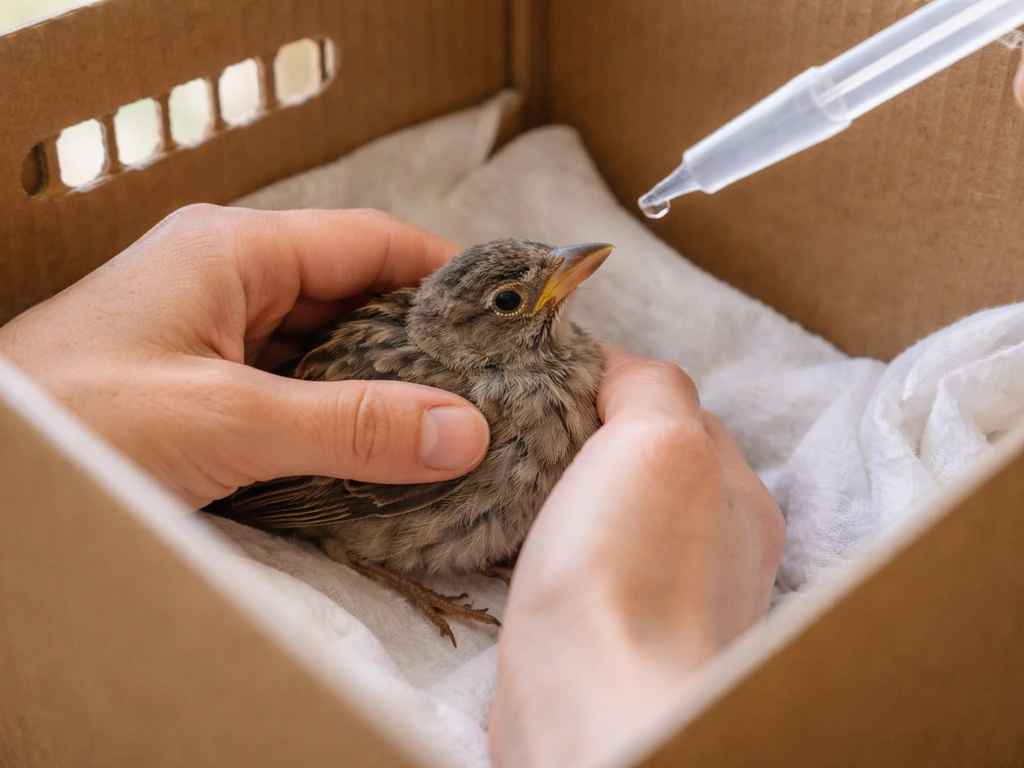
If you have a sick or injured wild bird in your hands right now, the safest first move is usually NOT to give it water. For most wild birds found on the ground, the official guidance from wildlife clinics and rehabilitators is to place the bird in a dark, quiet box and contact a licensed wildlife rehabilitator or avian vet before offering any fluids at all. That said, there are situations where gentle oral hydration can help a bird survive the wait, and knowing the difference between those two scenarios is exactly what this guide is for.
How to Rehydrate a Bird Safely: Emergency Steps
Marcus Holloway
19 May 2026
Recognizing dehydration and when to seek urgent help
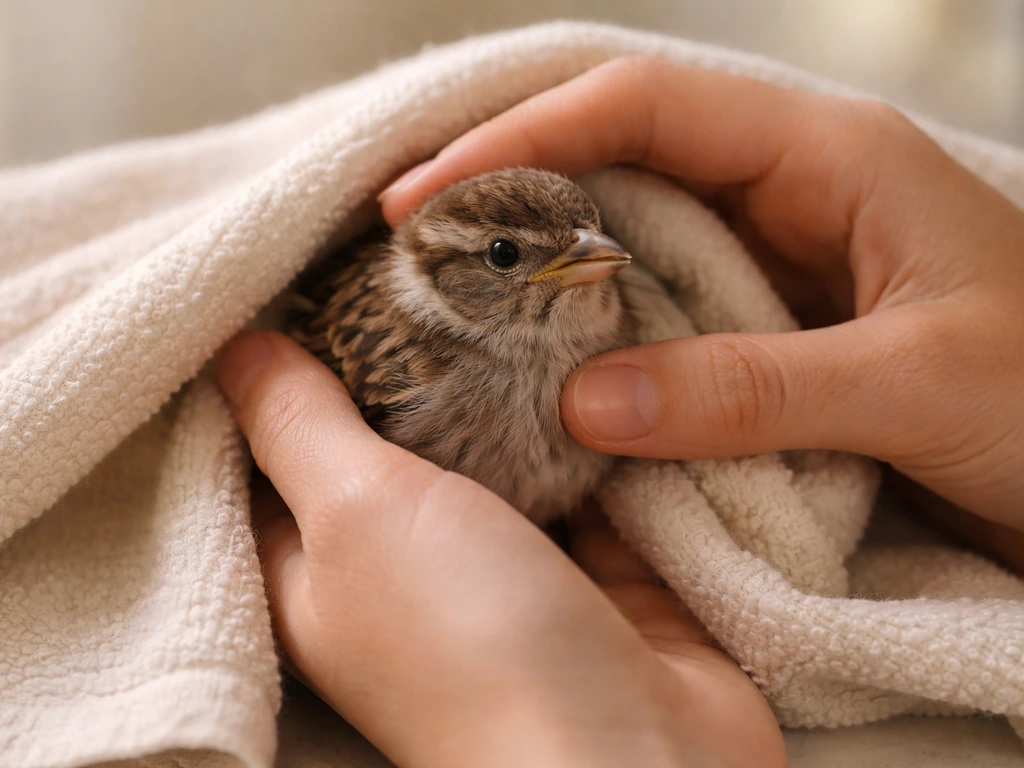
Dehydration in birds can become life-threatening quickly. Research from wildlife rehabilitation training materials notes that death can occur when dehydration reaches levels above 12%, and birds that look only mildly unwell can be much closer to that threshold than they appear.
The most reliable signs of dehydration to look for in a bird include sunken or dull-looking eyes, tacky or dry membranes inside the mouth, thick stringy saliva, and skin around the base of the neck or over the keel that lacks normal suppleness. Unlike dogs and cats, bird skin doesn't "tent" as obviously when you gently pinch it, so this test is less reliable in birds and needs to be interpreted carefully. Lethargy, weakness, and a bird that won't hold its own head up are serious warning signs alongside dehydration.
Some situations mean you should skip home rehydration entirely and go straight to professional help. Contact a wildlife rehabilitator or avian vet immediately if you notice any of the following:
- The bird is bleeding, has visible wounds, or shows signs of trauma (broken wing, leg at an odd angle, puncture marks)
- The bird cannot stand or hold its head up
- The bird is gasping, breathing with its mouth open, or its tail is bobbing with each breath
- There is fluid or discharge at the nostrils
- The bird is completely limp or unconscious
- The bird is a hatchling or very young nestling without feathers
- You suspect poisoning, oil contamination, or cat/dog attack
These red flags mean the dehydration is almost certainly secondary to something more serious, such as shock, trauma, infection, or toxicity, and incorrect home treatment can cause more harm than the dehydration itself. Antibiotics are only appropriate when a vet confirms a specific bacterial infection, because the wrong medicine or dose can worsen illness. Aspiration (fluid entering the airway) is a real and immediate danger in a weakened bird.
Safety first: warmth, stress reduction, and proper handling
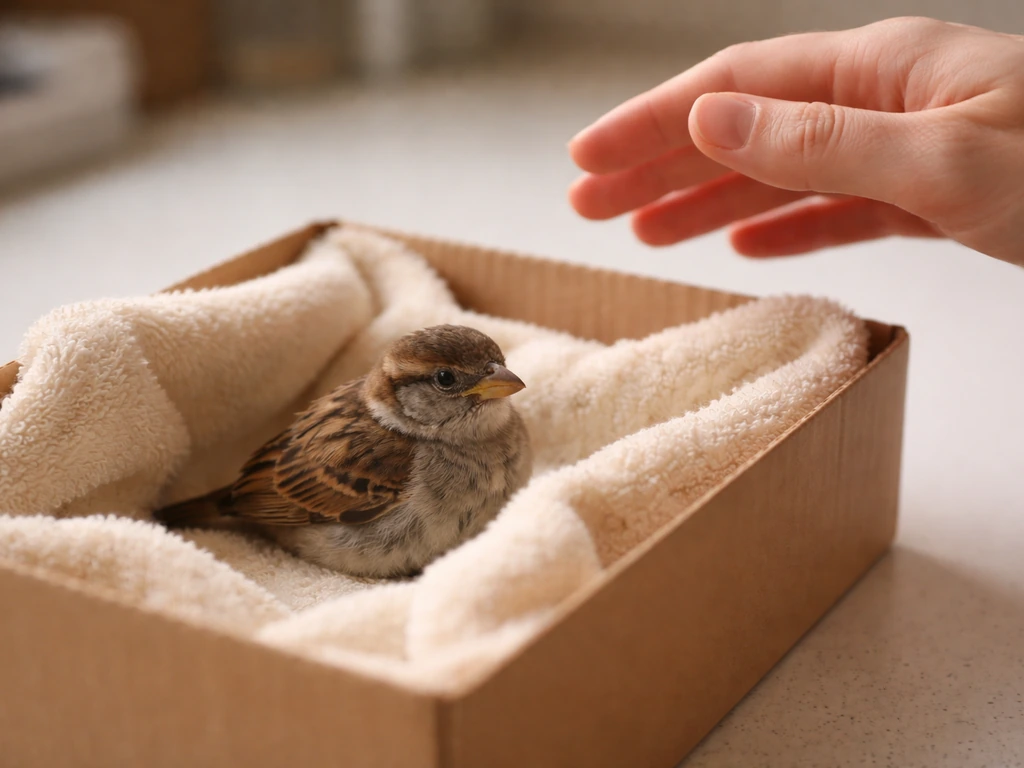
Before you do anything else, reduce the bird's stress. A frightened bird in shock uses energy it doesn't have. The single most helpful thing you can do in the first few minutes is get the bird into a quiet, dark, ventilated box or paper bag with air holes, lined with a soft cloth or paper towels. Keep it away from noise, pets, children, and bright light.
Warmth matters too, especially for small birds. A cool or cold bird cannot absorb or process fluids properly. Place the box on a heating pad set to its lowest setting, with only half the box over the pad so the bird can move off the heat if it gets too warm. Alternatively, a warm water bottle wrapped in a towel works well. Aim to keep the environment around 85 to 90 degrees Fahrenheit for most adult songbirds, and a little warmer for very small or featherless chicks.
When you do need to handle the bird to offer fluids, use a small towel or cloth to gently wrap the body and wings together. This is called a "burrito wrap" and it keeps the bird calm, prevents wing flapping that could cause injury, and gives you control without squeezing. Never hold a bird on its back. Birds have more difficulty breathing in that position, and it adds stress on top of everything else.
How to offer oral hydration safely (step-by-step)
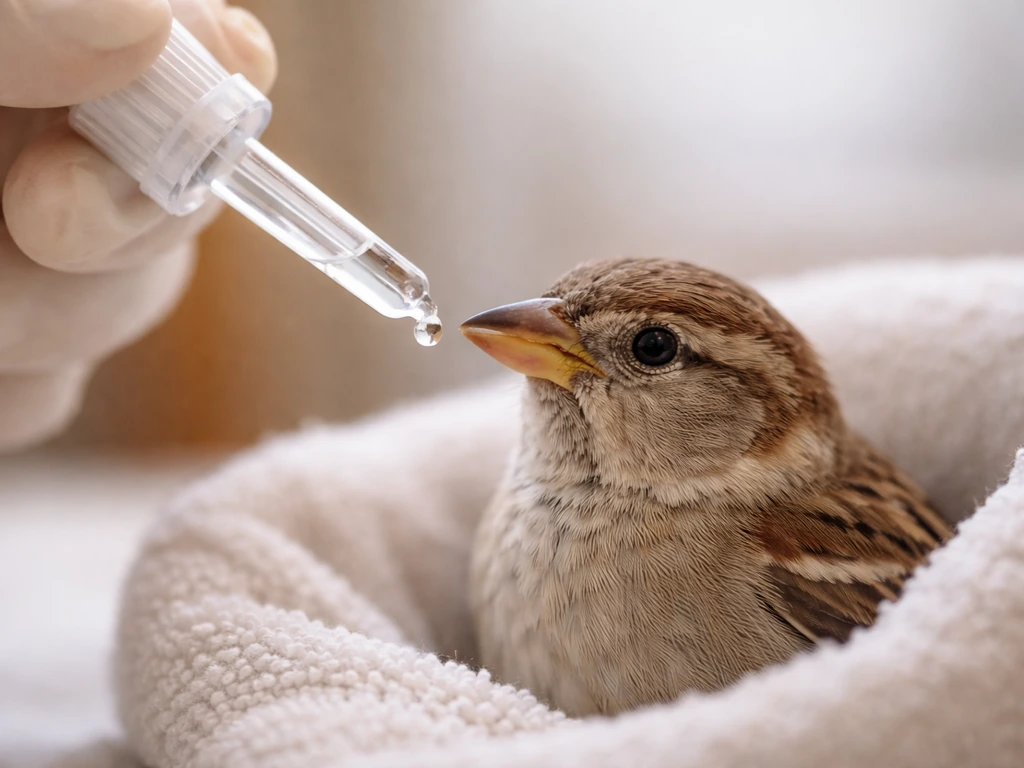
This approach is appropriate only for a fully feathered adult or juvenile bird that is alert enough to hold its own head up, is showing signs of dehydration but no other serious injury, and where you cannot reach a rehabilitator quickly. Once you are ready to help the bird hydrate, follow the step-by-step approach for safe oral hydration. Use this method only when you are confident you understand how to give liquid medicine to a bird safely offer oral hydration. If you have any doubt, call first.
The goal is to replace fluid slowly and carefully, not all at once. Giving too much at once can cause aspiration or overwhelm a compromised digestive system. Use plain, clean water at room temperature or very slightly warm (not cold, not hot). Do not use sports drinks, juice, sugar water, or anything with additives. If your vet or rehabilitator has told you to supplement with calcium, use the correct bird-safe product and dose because calcium mistakes can be dangerous give your bird calcium.
- Warm your clean water to room temperature or just slightly above. Cold water can shock a bird's system.
- Draw a small amount into a 1 ml syringe (no needle), or use a clean eyedropper. Smaller is safer.
- Wrap the bird gently in a soft cloth so its wings are against its body and it can't thrash.
- Hold the bird upright, never on its back, with its head naturally elevated.
- Bring the syringe or dropper to the side of the beak, not the tip and never near the nostrils.
- Release one very small drop at the corner of the beak and let the bird swallow on its own. For small songbirds, a drop of about 0.02 ml is appropriate. Do not squeeze a stream of water in.
- Wait. Watch for the bird to swallow before offering the next drop. If the bird doesn't swallow, stop.
- Offer drops slowly and patiently, a few at a time, with rest periods in between.
- Return the bird to its warm, dark box after each brief hydration attempt. Keep sessions short.
The key word throughout this process is "let." Let the bird swallow. Let it rest. You are not pouring water in; you are offering it. If the bird is actively swallowing and seems more alert after a few drops, that is a good sign. Continue gently, and keep trying to reach a rehabilitator.
A note on fledglings and baby birds
If the bird is a fledgling (feathered but not yet fully flight-capable) or a nestling (partially feathered or naked), the risk of aspiration is significantly higher and the tolerance for error is much lower. Baby birds that are gasping, limp, or not swallowing normally should never receive home fluids. For hatchlings and very young nestlings, attempting home rehydration without professional guidance can be fatal. Get them to a rehabilitator as fast as possible.
If the bird won't swallow or can't drink (what to do next)
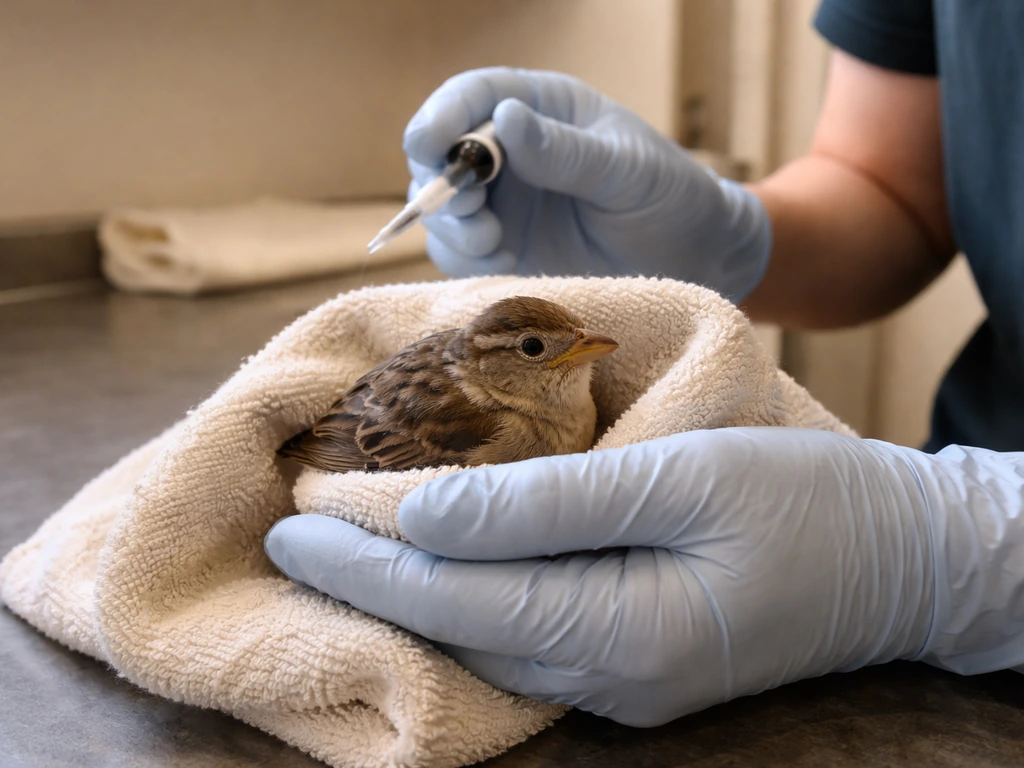
If you offer a drop of water and the bird does not swallow it, or if fluid appears to be going into the nostrils, stop immediately. This is a signal that the bird is too weak to safely receive oral fluids at home, and pushing forward could cause aspiration pneumonia, which is often fatal.
A bird that cannot swallow needs intravenous or subcutaneous fluids administered by a professional. For avian patients, initial warmed crystalloids at 100, 102°F (38, 39°C) are often recommended for the most debilitated birds, with example replacement approaches like 30 ml/kg depending on the clinical route (IV/IO/SC) and the need for close monitoring after stabilization blank" rel="noopener noreferrer">intravenous or subcutaneous fluids. There is no safe home equivalent for this. Your job at that point is to keep the bird warm, dark, and as calm as possible, and get it to help as fast as you can. If the bird cannot safely take oral fluids, your next steps should align with how to treat a dehydrated bird by focusing on warmth, darkness, and getting professional help fast.
If you are already in contact with a wildlife rehabilitator, describe exactly what you are seeing: whether the bird is swallowing, whether it can hold its head up, and what the breathing looks like. They may give you specific guidance for your situation, including whether to attempt any further hydration or to simply transport immediately.
What not to give or do when rehydrating a bird
Some well-meaning attempts at rehydration can make things significantly worse. Here is a clear list of things to avoid:
- Do not force water into the bird's beak or tip its head back and pour. This is the most direct route to aspiration.
- Do not give sports drinks, Pedialyte, juice, sugar water, honey water, or any homemade electrolyte mix unless specifically directed by a rehabilitator or avian vet.
- Do not give cow's milk, alcohol, caffeinated drinks, or anything with artificial sweeteners.
- Do not use very cold or very hot water. Cold can cause shock; hot can scald.
- Do not try to syringe-feed food at the same time as fluids unless you have been trained to do so.
- Do not keep the bird on its back at any point during handling.
- Do not handle the bird more than necessary. Stress is physiologically harmful to an already compromised bird.
- Do not leave the bird in a bright, noisy environment while you figure out next steps.
- Do not give large volumes all at once. Gradual replacement is the goal, not rapid bolus hydration.
It is also worth noting that many wildlife organizations, including Tufts Wildlife Clinic, Mass Audubon, the Wisconsin Humane Society, and the Virginia Department of Wildlife Resources, specifically instruct people NOT to give an injured wild bird food or water at all without professional direction. Their reasoning is sound: the risk of aspiration, incorrect fluid type, or masking an underlying condition outweighs the benefit in most cases. If you are unsure, default to warmth, darkness, and calling a professional.
Supportive first aid after rehydration and monitoring
Once you have offered what fluids you safely can, your role shifts to observation and supportive care. Check on the bird every 15 to 30 minutes without picking it up. You are looking for signs of improvement: the bird holding its head up more steadily, eyes appearing brighter, more awareness of its surroundings, or attempts to move around the box.
Maintain warmth consistently. A bird that gets cold between checks loses ground quickly. If the bird is improving and alert enough, you can place a very small shallow dish of water in the box so it can drink on its own if it chooses. Do not place food in the box unless you have been instructed to do so and know exactly what species-appropriate food means for this particular bird.
Watch carefully for breathing changes. Tail bobbing with each breath, open-mouth breathing, clicking sounds, or any fluid at the nostrils are signs that the situation is deteriorating and immediate professional help is needed. These can indicate aspiration, infection, or worsening shock. If you notice any of these, treat it as an emergency.
Keep a log of what you observe, including the time you found the bird, the signs of dehydration you noticed, what you gave and how much, and how the bird responded. This information is genuinely useful to the rehabilitator or vet who will take over care.
How to find help and transport the bird safely
Finding a licensed wildlife rehabilitator or avian vet is the most important next step in almost every bird emergency. Licensed rehabilitators are authorized to provide the kind of hands-on emergency care, including proper fluid therapy, that an injured wild bird actually needs.
Here is how to find help quickly:
- Search the National Wildlife Rehabilitators Association (NWRA) or Wildlife Rehabilitator directory at wildlifehotline.com or animalhelpnow.org, both of which let you search by location.
- Call your state's wildlife agency directly. For example, Virginia's Department of Wildlife Resources has a toll-free wildlife helpline at 1-855-571-9003 (Monday through Friday, 8 AM to 4 PM). Most states have a similar resource.
- Call a local animal shelter or humane society and ask for a wildlife referral even if they don't handle wildlife themselves. They usually know who does.
- Search for an avian veterinarian (a vet who specializes in birds) using the Association of Avian Veterinarians directory at aav.org.
- Call your local nature center, Audubon chapter, or bird rescue organization. Many have emergency contacts.
When you call, be ready to describe: the species if you know it, the approximate size, where you found it and when, what signs you observed, and what (if anything) you have already done. This helps the professional triage your situation and give you the best immediate guidance.
For transport, keep the bird in the ventilated box, dark and quiet. Do not let it rattle around. A box just large enough for the bird to stand in is better than a large open container. Do not put another animal in with it. Keep the car warm and the radio off. Drive smoothly. The less stimulation the bird experiences during transport, the better its chances.
If you are waiting for a callback or a pickup, continue the same supportive approach: warm, dark, quiet, minimal handling, and check-ins every 30 minutes. Do not let the waiting period become an excuse to try more interventions. Stability and calm are the best things you can give while professional help is on the way.
FAQ
How do I tell the difference between a dehydrated bird and one with something else going on?
Dehydration signs are useful, but if you also see collapse, abnormal breathing sounds, a wing or leg that seems injured, or a bird that cannot hold its head up, dehydration may be secondary to trauma, infection, shock, or toxicity. In those cases, skip home rehydration and focus on warmth, darkness, and immediate professional triage.
Is it ever okay to give a dehydrated bird water in a shallow dish so it can drink itself?
It can be appropriate only after the bird is alert enough to swallow on its own, and only if a drop-style oral attempt showed it can safely swallow. If the bird is gasping, not swallowing normally, fluid touches the nostrils, or the bird is too weak to hold its head up, a dish increases aspiration risk and should be avoided.
Can I use sugar water, electrolyte drinks, or juice if the bird is weak?
No. Use plain, clean water that is room temperature to very slightly warm. Additives can worsen dehydration-related imbalances, increase GI stress, and can raise aspiration risk. If supplementation is needed, it should come from a vet or rehabilitator with the correct bird-safe formulation and dose.
What should I do if the bird swallows a little but then seems worse a few minutes later?
Stop further fluids immediately and treat it as an emergency. Sudden worsening can indicate aspiration, shock progression, or an underlying cause. Keep the bird warm and dark, minimize handling, and contact the rehabilitator or avian vet right away for updated instructions.
How small should the amount of water be when I attempt oral hydration?
Use a minimal, controlled amount (think drop-level) and wait for an active swallow before offering more. Avoid “pushing” liquid into the mouth, and do not repeat attempts rapidly. The bird needs time to swallow safely, and too much too fast is a common mistake that can lead to airway entry.
If the bird won’t swallow, does that mean it is just too frightened to drink?
Not reliably. In birds, inability to swallow often means the bird is too weak for safe oral fluids. If you see no swallowing response or any fluid backing into the nostrils, stop and switch to supportive care (warm, dark, quiet) and fast professional help. There is no safe at-home alternative to IV or subcutaneous fluids.
Can I rehydrate a baby bird (nestling or fledgling) at home if it looks thirsty?
Higher aspiration risk means home fluids are only appropriate in very limited circumstances, and the safest rule is to avoid home hydration if the baby is not swallowing normally, is limp, or is gasping. For hatchlings and very young nestlings, attempting fluids without professional guidance can be fatal. Transport to a rehabilitator as fast as possible.
My bird seems cold, should I warm it before attempting any fluids?
Yes. If the bird is chilled, it cannot process or move fluids safely. Warm the environment first (and ensure the bird can move off heat) before any consideration of oral hydration. Attempting fluids while cold is more likely to cause failure to swallow and increased aspiration risk.
Should I try to give hydration if the bird also has a head injury or is bleeding?
If there is head trauma, severe weakness, or signs that breathing or consciousness is impaired, do not attempt home hydration. Focus on minimizing stress, keeping the bird warm and dark, and contacting a professional urgently, because underlying shock or injury may make oral fluids dangerous.
Does “rehydrating” mean I should also feed the bird right away?
No. Fluid and food are not interchangeable, and giving food before a bird is medically stable can worsen GI issues or aspiration risk. Only offer food if a vet or rehabilitator specifically tells you what the species needs and how to prepare and dose it.
What information should I tell the rehabilitator so they can guide me on hydration?
Describe whether the bird is swallowing, whether it can hold its head up, the breathing pattern (open-mouth breathing, clicking sounds, tail bobbing), and any fluid you attempted to give (amount, color, and whether it reached the nostrils). Include timing, where you found it, and your current temperature control setup (how warm/dark/quiet it is).
If I already gave some water, am I automatically in trouble?
Not automatically, but the key is what happened next. If the bird swallowed normally, did not show nostril fluid, and is now more alert, that can be reassuring. If the bird worsened, started gasping, or you suspect aspiration, stop and treat it as urgent, keeping warmth and darkness constant while waiting for professional guidance.
Next Article
How to Hydrate a Bird Safely: Step-by-Step First Aid
Step-by-step first aid for how to hydrate an injured bird safely, when to wait, and when to call a vet or rehabber.