If you have a dehydrated bird in front of you right now, the most important first steps are warmth, quiet, and careful hydration using plain water or an electrolyte solution offered by dropper at the tip of the beak. If you do need to give liquid medicine, use the safest method for your bird’s age and ability to swallow, and avoid forcing anything that could be aspirated water or an electrolyte solution. Do not squirt water into the bird's mouth, do not force-feed it, and do not offer anything other than water until you know what you're dealing with. If the bird cannot hold its head up or swallow, skip oral fluids entirely and contact a wildlife rehabilitator or avian vet immediately. If your vet determines antibiotics are needed, follow their instructions exactly, because the wrong dose or route can be dangerous for birds contact a wildlife rehabilitator or avian vet immediately.
How to Treat a Dehydrated Bird: Safe First Aid Steps
How to recognize dehydration in birds (and rule out worse problems)
Dehydration in birds is easy to miss because many of the signs are subtle, and some overlap with other serious conditions like respiratory disease, crop stasis, or injury. You're not going to be able to diagnose it with certainty at home, but there are enough clues to help you act sensibly while you arrange professional help.
Look at the droppings first. Healthy bird droppings have three parts: solid dark feces, white or cream-colored urates, and a small amount of clear urine. When a bird is dehydrated, you may see green feces (a sign the gut is not processing food properly), chalky white urates, and excess clear watery urine. If droppings are consistently abnormal for a full day or more, that warrants urgent attention on its own.
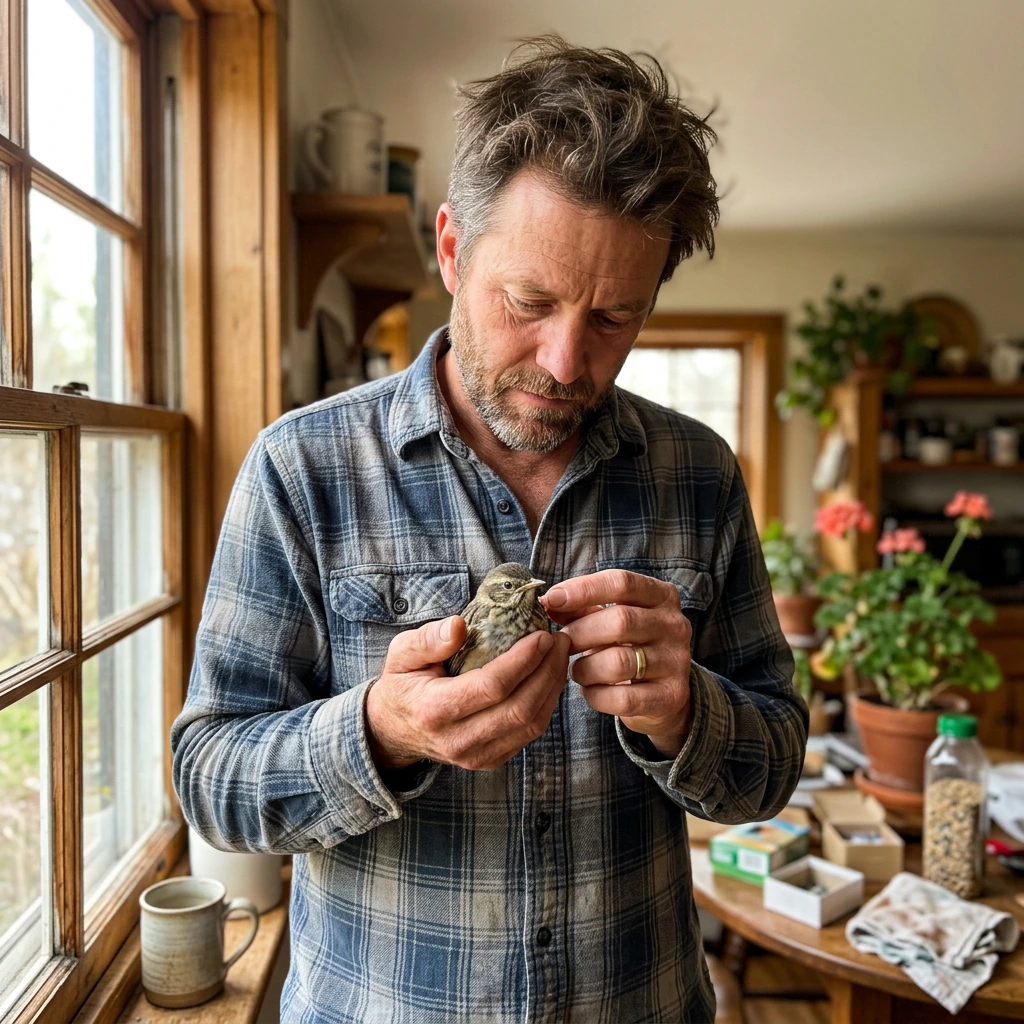
Check skin elasticity if you can do it safely. Gently tent the skin over the keel (the breastbone) between your fingers. In a well-hydrated bird, the skin snaps back quickly. In a dehydrated bird, it feels tacky or sticky and may stay tented for a moment. This is not a perfect test, but it's one of the more accessible physical checks available without equipment.
Also look at the mouth and posture. Dry or tacky oral mucous membranes are a sign of dehydration. A bird that is drooping its head, sitting puffed and fluffed, or leaning heavily on its keel rather than perching is telling you something is seriously wrong. Overheated or heat-stressed birds may hold their beaks open and droop their heads over the edge of a nest or container.
Before you focus entirely on dehydration, quickly rule out other urgent issues. Is the bird breathing with an open beak or making clicking/wheezing sounds? That suggests respiratory distress, not just dehydration. Is there visible injury, blood, or a swollen crop that hasn't emptied in hours? A full, squishy, or sour-smelling crop can indicate crop stasis, which is a separate GI problem that dehydration can worsen but cannot fix on its own. These conditions need veterinary management, not just water.
Immediate safety steps: warm, quiet, and reduce stress
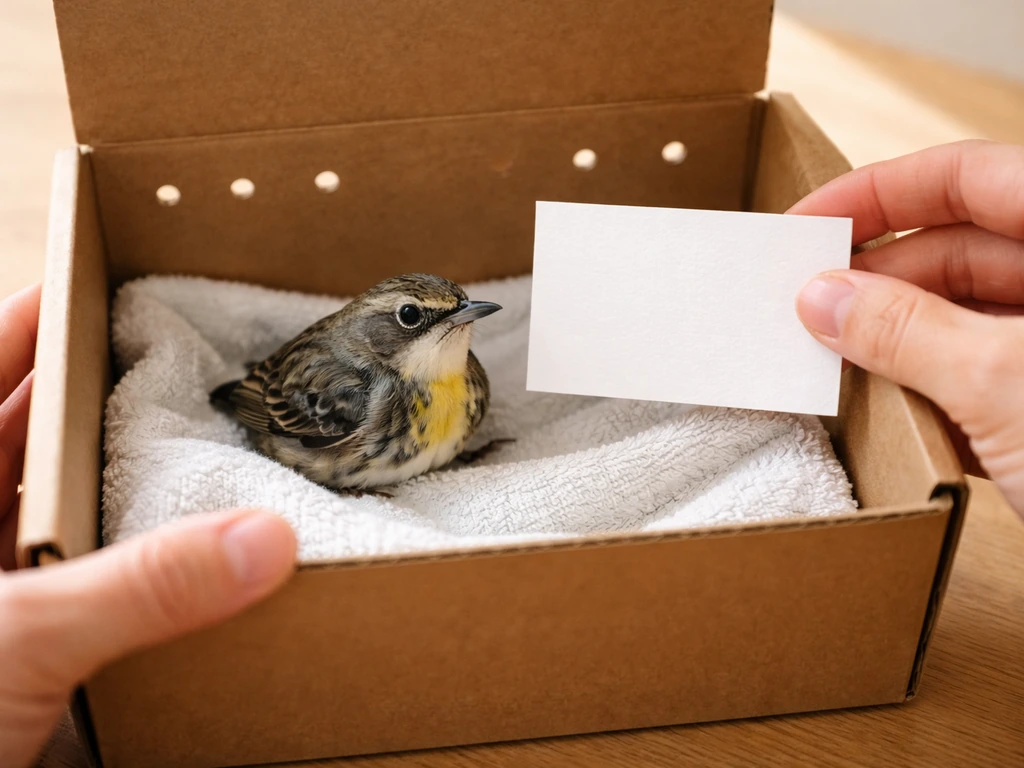
Before you even think about fluid administration, stabilize the bird's environment. A stressed, cold, or frightened bird will go into shock faster, and shock makes dehydration far more dangerous. The single most useful thing you can do in the first 15 minutes is create a safe, warm, dark, quiet space.
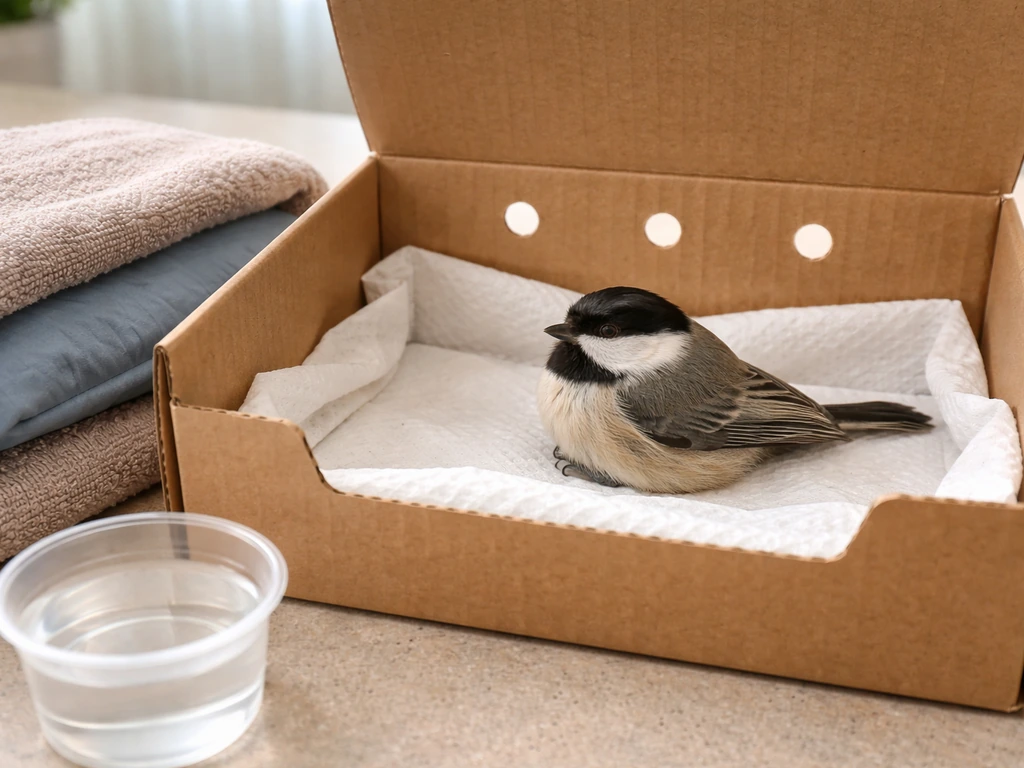
Place the bird in a cardboard box with air holes punched in the sides. Line the bottom with a clean cloth, paper towel, or soft material. Do not use a wire cage or open container where the bird can see activity and be further stressed. Cover the box loosely so it's dim inside. Darkness calms birds quickly.
Warmth is critical, especially for nestlings, fledglings, and any bird that feels cold to the touch. A healthy adult bird can thermoregulate, but a sick or orphaned bird often cannot. Place a heating pad set to LOW under one half of the box only, so the bird can move off the heat if it gets too warm. Alternatively, use a warm water bottle wrapped in a cloth. Target a gentle, consistent warmth, roughly equivalent to a comfortably warm room (around 85-90°F or 29-32°C for nestlings, slightly cooler for adults). Be careful not to overheat: overheating itself causes dehydration-related stress and can make things worse fast.
Minimize handling. Every time you pick up the bird, you are adding stress hormones to an already taxed system. Handle it only when necessary, with calm, deliberate movements, and keep the box away from pets, children, loud music, and direct sunlight.
How to hydrate safely, by age and condition
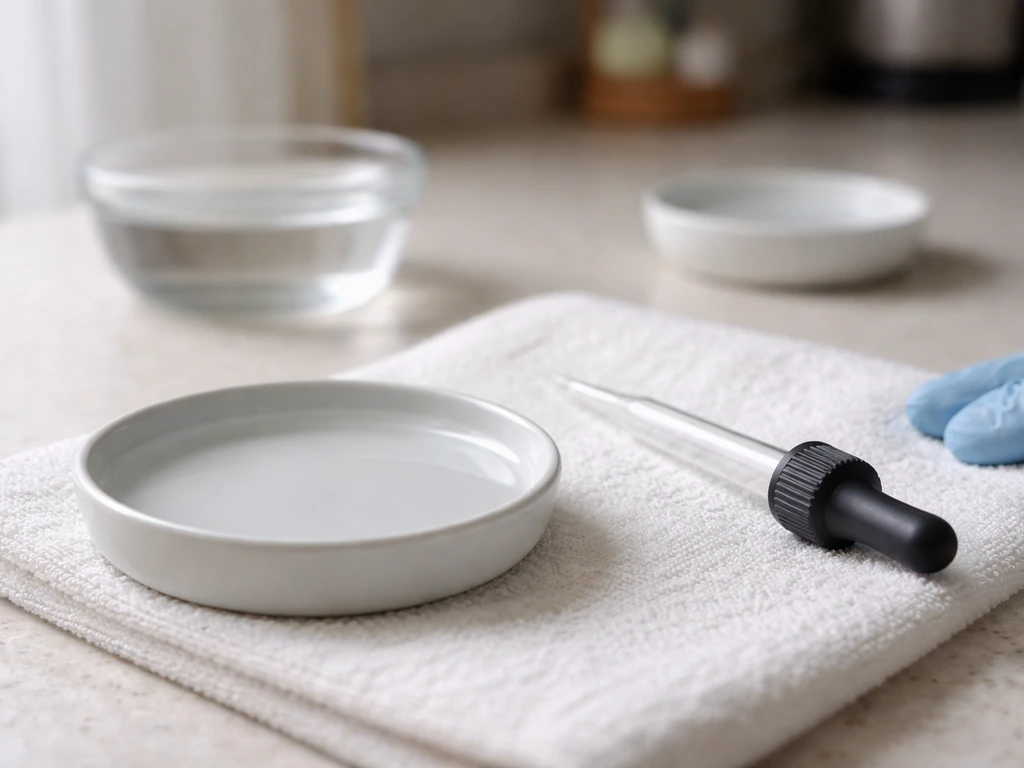
The method you use to offer fluids depends entirely on the bird's age, condition, and whether it can swallow safely on its own. Getting this wrong is one of the most common ways well-meaning people accidentally harm a bird they're trying to help.
The absolute rule before offering any fluid
If the bird cannot hold its head up or cannot swallow, do not attempt oral fluids. This is not a guideline to bend. A bird that is too weak to control its own swallowing will inhale fluid directly into its lungs (aspiration), which can drown it even if the fluid is clean water. If the bird is at this stage, keep it warm and get it to a professional as fast as possible.
Alert adult birds that can hold their head up
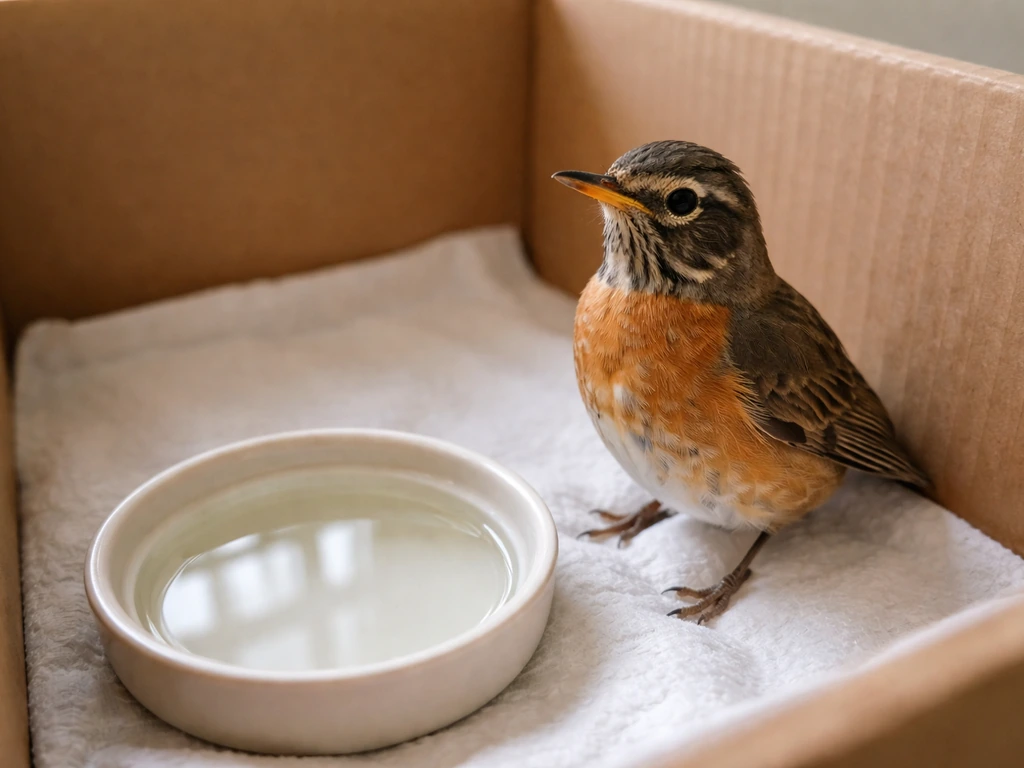
If the bird is alert, upright, and appears able to swallow, offer plain lukewarm water or a diluted electrolyte solution (Pedialyte, unflavored, diluted 50/50 with water is often recommended in rehab settings). Use a plastic eyedropper or small syringe without a needle. Place one small drop at the very tip of the beak and let the bird swallow before offering the next. Do not squirt a stream of liquid, do not tilt the head back, and do not open the beak and pour. Let the bird control the pace. Many birds will begin lapping on their own once they feel the fluid at the beak tip.
Offer a shallow dish of water in the box as well. Some adult birds, especially wild birds that are simply stressed or mildly dehydrated, will drink on their own once they calm down in a quiet environment. Check the dish every 20-30 minutes to see if the water level has dropped.
Nestlings (eyes closed, no feathers, fully dependent)
Nestlings are the highest-risk group. They cannot regulate their temperature, they cannot swallow safely without their heads supported, and they should not receive plain water at all because it lacks the nutrients and electrolytes they need and can cause dangerous dilutional effects. Hydration for nestlings is best provided by a licensed wildlife rehabilitator using appropriate formula and technique. Stabilize with warmth and get help immediately. If transfer will take more than a few hours, contact a rehabilitator by phone for guidance specific to the species and the bird's estimated age.
Fledglings (feathered but still young)
Fledglings are more resilient than nestlings but still fragile. A fledgling that is dehydrated and unable to perch or stand should be treated similarly to the alert adult protocol above, but handled even more gently. Offer single drops of water at the beak tip using a dropper. Do not offer food until the bird is stable, warm, and showing signs of alertness. As Toronto Wildlife Centre notes, a bird that is dehydrated or traumatized may not be strong enough to digest food until it has been stabilized first.
Pacing matters: don't rush rehydration
Rehydration is not a one-time fix. Offering fluids slowly over several hours is safer than flooding the system at once. A severely dehydrated bird needs continued fluid support for the first several days, even after it begins eating again. If you're providing temporary care while arranging a rehab transfer, small amounts every 20-30 minutes is a reasonable approach for an alert bird.
When a bird won't drink on its own
If the bird is alert but simply refusing fluids, try placing it in a slightly warmer, quieter space and waiting 15-20 minutes before trying again. Sometimes stress alone suppresses the drinking response. If it still won't take fluid after several attempts, or if it is getting weaker, that is a red flag for professional intervention. blank" rel="noopener noreferrer">Subcutaneous fluids (given under the skin by a vet or trained rehabilitator using lactated Ringer's solution or Normosol) may be needed for moderate to severe cases. In mild dehydration in birds, a balanced isotonic crystalloid solution such as lactated Ringer’s can be used for rehydration, and subcutaneous fluid administration may be appropriate when bloodwork/biochemistry is not available blank" rel="noopener noreferrer">lactated Ringer's solution. This is not something to attempt at home.
What not to do: common hydration and feeding mistakes
The list of things that harm dehydrated birds at home is unfortunately longer than the list of things that help. Most mistakes come from good intentions combined with human intuition about what "sick" means.
- Never squirt water or any liquid into a bird's mouth. The force can push fluid into the airway and cause aspiration. Even a small amount of fluid in the lungs can be fatal.
- Never offer milk, juice, sports drinks, sugary drinks, or honey water. These are not appropriate for birds and can cause additional harm.
- Never force-feed food to a dehydrated bird. A dehydrated gut cannot process food safely, and forcing it can cause regurgitation, aspiration, or crop stasis.
- Never assume warmth alone will fix dehydration, or that fluids alone will fix a cold bird. Both temperature and hydration need to be addressed together.
- Never use a heating pad set to HIGH or leave it under the entire box. Overheating kills birds and worsens dehydration.
- Never offer oral fluids to a bird that cannot hold its head up or swallow — aspiration risk is too high.
- Never give human medications, electrolyte tablets, or vitamin supplements without guidance from a vet or rehabilitator. Getting the concentration wrong can cause more damage.
- Never delay seeking help because the bird seems to be improving. Apparent stability can reverse quickly in a stressed, dehydrated bird.
When to seek urgent help: red flags and time-critical symptoms
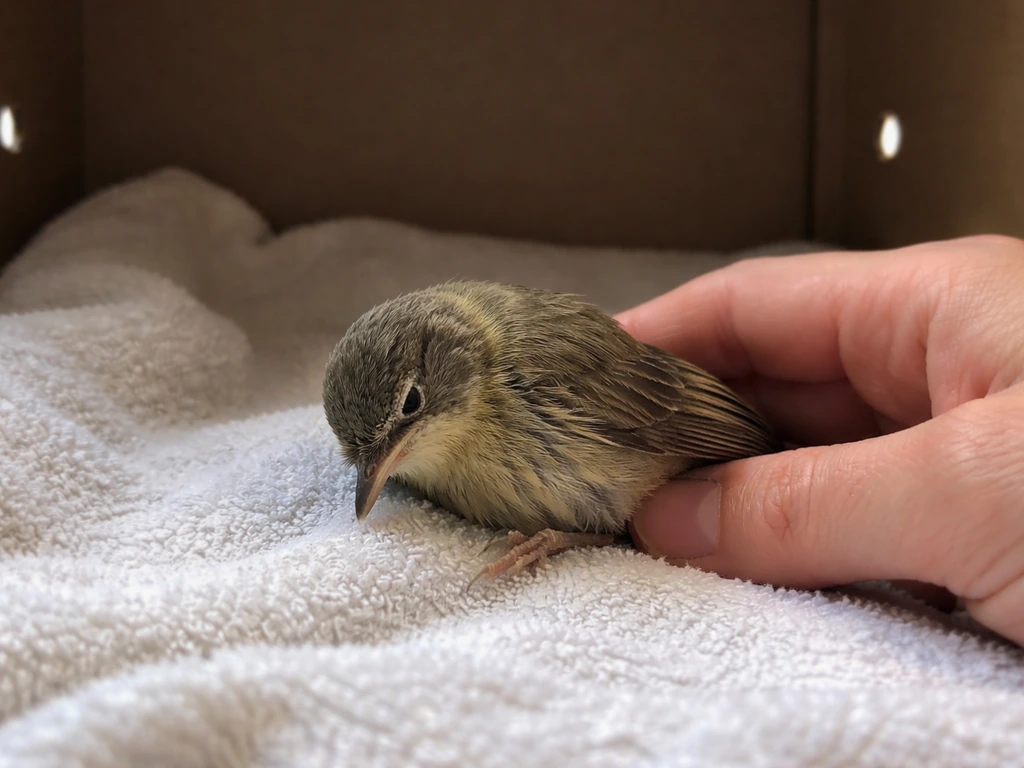
Some situations require professional help right now, not after trying home care for another few hours. If you see any of the following, contact an avian vet or licensed wildlife rehabilitator as your immediate next step, not as a backup plan.
- The bird cannot hold its head up or has no swallowing reflex
- Breathing is labored, noisy, clicking, or the bird is breathing with an open mouth at rest
- The bird is completely unresponsive or barely reacting to handling
- There is visible injury: blood, a broken or drooping wing, a puncture wound, or a swollen area
- The crop is visibly distended, feels mushy, or has a sour smell
- Droppings have been absent for several hours, or are consistently green and watery for more than a day
- The bird is a nestling with no feathers or closed eyes
- The bird appears to be getting weaker after 1-2 hours of supportive care at home
- You are unsure whether you're dealing with dehydration, injury, poisoning, or disease
To find a licensed wildlife rehabilitator in the US, contact your state wildlife agency or search the National Wildlife Rehabilitators Association directory. In Canada, contact your provincial wildlife authority. For pet birds, contact an avian veterinarian specifically, not a general practice vet, if you can access one quickly.
Keep the bird warm and in a dark, quiet box while you make those calls. Do not delay the call to continue trying home remedies if the bird is deteriorating.
Aftercare and monitoring: recovery timeline and hydration checks
If the bird responds well to initial supportive care (becoming more alert, accepting fluid, producing droppings, showing interest in its environment), you are moving in the right direction. But recovery from dehydration in birds is not instant, and continued monitoring matters.
Check droppings every few hours. As hydration improves, droppings should shift from chalky-white and scanty toward a more normal appearance with all three components present. Clear urine returning to the droppings is a good sign. Abnormal green droppings persisting beyond 12-24 hours despite fluid intake suggest something other than simple dehydration is going on.
Watch for active swallowing when you offer fluids, alertness and responsiveness to sound and movement, a return of normal posture (upright, with feathers lying flat rather than puffed), and the bird attempting to move away from your hand when handled. These are all positive recovery indicators.
Continue offering fluids regularly for the first 24-48 hours even if the bird seems to be improving. As noted in rehabilitation protocols, rehydration needs to continue for as long as signs of fluid deficit persist, which can be several days in moderate to severe cases.
Only introduce food once the bird is clearly stable, alert, and actively drinking. Offer species-appropriate food in very small amounts and watch for regurgitation or any sign of crop problems. If you're unsure what to feed a specific species, a rehabilitator or avian vet can guide you. Related topics like how to rehydrate a bird and how to hydrate a bird go into more detail on the fluid-offering process itself if you need step-by-step technique guidance.
Prevention and underlying causes to consider
For wild birds you've found and stabilized, the goal is to transfer to a rehabilitator as soon as possible rather than long-term home care. But if you're managing a pet bird or you encounter dehydration repeatedly, it's worth thinking about what caused it in the first place.
Dehydration in pet birds most commonly results from an empty or blocked water dish, illness suppressing normal drinking, heat exposure without access to shade or water, or stress from environmental changes. Sick birds stop drinking before they stop eating, so a bird that is quiet and inactive should always prompt you to check water intake immediately.
Dehydration can also be a downstream symptom of other conditions. Kidney disease in birds (avian renal disease) directly impairs the body's ability to manage fluid balance, and elevated uric acid levels in the blood (hyperuricemia) are closely linked to both kidney disease and dehydration. A bird that is frequently or chronically dehydrated despite having constant water access needs a veterinary workup, not just more water.
Crop stasis is another condition that dehydration can trigger or worsen: when the gut lacks adequate moisture, food in the crop thickens and stops moving, creating a dangerous obstruction. If a pet bird has recurring crop problems, dehydration management and dietary moisture content are worth discussing with an avian vet. This is not a condition you can manage at home long-term.
For wild birds, the most common underlying issue is simply that something went wrong: a window strike, a cat attack, a hot day with no water source, or an illness that knocked the bird off its feet. In these cases, the dehydration is secondary. Treating the fluid deficit helps, but finding and treating the primary cause is what determines whether the bird survives. That's exactly why getting these birds to a licensed rehabilitator matters so much.
If you're managing a pet bird's longer-term health and want to go deeper on supportive care, topics like how to give liquid medicine to a bird and how to give your bird calcium are worth reading alongside this guide, as birds recovering from illness often need both fluid support and nutritional supplementation under veterinary guidance.
FAQ
Can I use Gatorade or juice instead of an electrolyte solution for rehydrating a dehydrated bird?
Avoid juice and sweet sports drinks, they can worsen dehydration and upset the gut. If you use an electrolyte product, choose an unflavored option intended for oral rehydration, and dilute it as recommended by rehab protocols (for example, 50/50 with water). If you are unsure, plain lukewarm water is safer for an adult that can swallow.
What temperature should the water be when I offer fluids?
Use lukewarm water, warm enough to feel comfortable (similar to room temperature to slightly warm), not hot and not cold. Cold fluids can slow swallowing and worsen stress. If the water has been sitting out and feels cold to the touch, warm it slightly before offering.
How long should I keep trying oral fluids at home before getting professional help?
If the bird is not clearly improving after several attempts over a short period (for example, within 1 to 2 hours), or if it is getting weaker, contact a wildlife rehabilitator or avian vet immediately. Also escalate right away if droppings do not start shifting toward normal after continuous supportive care for many hours, or if swallowing remains weak.
My bird is standing but looks sleepy. Can I still offer dropper fluids?
If the bird is upright enough to control its head and shows signs of swallowing, single drops at the beak tip are reasonable. If it is too drowsy to swallow reliably, keep it warm and seek professional help instead of pushing fluids, because aspiration risk increases with reduced control.
Is it safe to force the beak open so I can get the dropper in?
No. Do not open the beak and pour, and do not force the dropper into the mouth. Place the drop at the very tip of the beak only, let the bird take it, and keep the bird’s head in its natural position so it can swallow safely.
What if the bird vomits or coughs after I give drops of water?
Vomiting or coughing suggests fluid may have been misdirected or aspirated. Stop oral fluids immediately, keep the bird warm and in a dim box, and contact an avian vet or rehabber urgently for advice. Continue to monitor breathing, open-beak posture, and sound.
Should I give oral fluids to nestlings or fledglings at home?
Nestlings should not be given plain water. They need species-appropriate nutrition and hydration technique from a licensed rehabilitator. Fledglings can sometimes be offered single drops if they are alert and able to swallow, but if they cannot perch or swallow safely, do not attempt oral fluids and get professional help.
If the bird starts drinking on its own, do I still need to keep offering fluids?
Yes. Even after self-drinking begins, continue supportive hydration at a steady pace for at least the first 24 to 48 hours, since dehydration recovery is not instant. Watch droppings and posture trends to confirm ongoing improvement rather than stopping after one good drink.
How do I tell dehydration from something like crop stasis or a respiratory problem?
Look for respiratory distress cues like open-beak breathing or clicking or wheezing sounds, those point away from dehydration alone. For crop stasis, suspect a swollen crop that has not emptied over time, sometimes with a sour odor, and do not rely on water to solve it. If you see either pattern, prioritize professional care rather than aggressive rehydration at home.
What should I do if the bird has diarrhea or green droppings?
Green or abnormal droppings can occur with dehydration, but persistent abnormalities for a full day or more suggest something beyond simple fluid loss. Keep the bird warm and hydrated gently if it can swallow, then get professional help. Do not switch to food or medicated mixtures without guidance.
Can I give subcutaneous fluids at home if I have supplies?
Do not attempt injections or subcutaneous fluids at home. Proper fluids, volumes, and placement depend on the bird’s species, age, and severity, and incorrect technique can injure tissues or be ineffective. Reserve this for a vet or trained rehabilitator.
What are common mistakes that make dehydration worse despite home care?
Big ones include forcing liquids (squirt streams, pouring, or head-tilting), offering plain water to nestlings, overheating the bird with no ability to move away from heat, and delaying professional care while repeatedly trying oral fluids when swallowing control is poor. Minimizing stress (dark, quiet box, limited handling) also matters.
Should I change the bird’s diet while it is still dehydrated?
Wait to introduce food until the bird is stable, alert, and actively drinking or showing clear improvement. Offer only species-appropriate food and in small amounts, and stop if you notice regurgitation or crop problems. If the species is unknown, ask a rehabilitator or avian vet for guidance before feeding.
If I suspect dehydration keeps happening in my pet bird, what should I check first?
Start with water access and actual intake, confirm the dish is filled with fresh water and not blocked, and watch if the bird is drinking after illness or heat exposure. If dehydration is recurrent even with constant water, schedule a veterinary workup because kidney disease and elevated uric acid can impair fluid balance. Repeated crop issues should also be discussed with an avian vet.
How to Give Bird Antibiotics Safely: First Aid and Dosage
Step-by-step guidance on when antibiotics are needed for sick birds, safe first aid, dosing rules, and urgent rehab red